
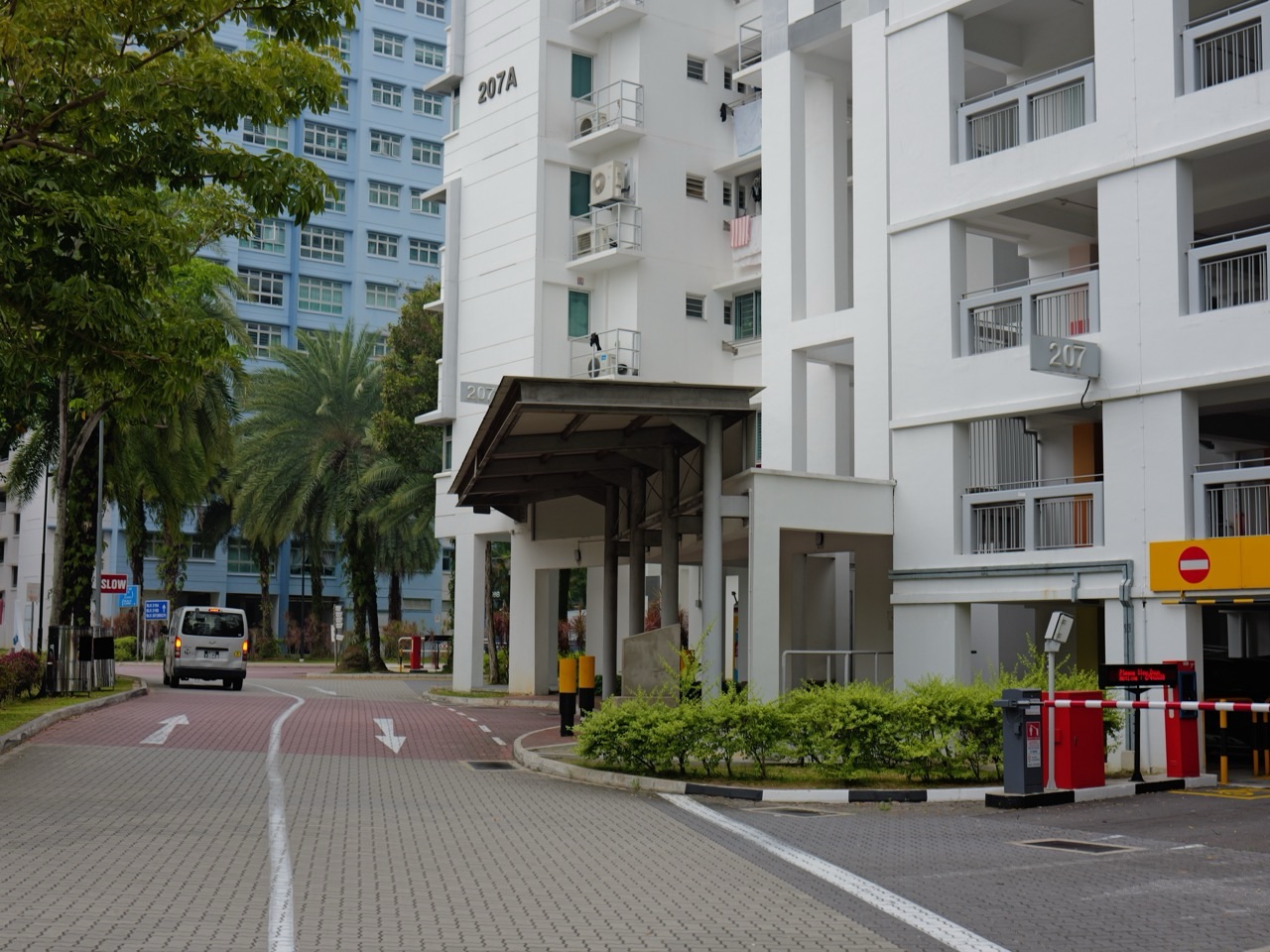
People searching for an affordable rental flat in Punggol need to distinguish between HDB’s Public Rental Scheme, the Parenthood Provisional Housing Scheme (PPHS), and an ordinary privately rented HDB flat. The Public Rental Scheme is a subsidised housing safety net for eligible households without suitable alternative housing and with limited means or support. PPHS helps qualifying families who have booked an uncompleted HDB flat to obtain temporary accommodation while they wait. Open-market HDB rental is an agreement with a private flat owner who must comply with HDB rental rules. The three schemes have different purposes, rents, eligibility and application paths.
For Public Rental, HDB currently assesses applications holistically. The assessment looks at household income, size, housing budget, support available and individual circumstances, instead of promising approval solely because a person earns below one historic figure. A qualifying family applicant generally must be a Singapore Citizen aged at least 21, with an eligible Singapore Citizen or Permanent Resident family member; the Joint Singles Scheme has different age and relationship rules. Families applying for rental housing with children below 21 are supported through ComLink+ Rental Scheme arrangements as part of the assessment and follow-up.
PPHS uses a separate calendar: HDB currently opens applications in even-numbered months, from the 1st to the 14th. Eligible applicants ordinarily have booked an uncompleted flat through a relevant HDB sales exercise, and their application-to-buy household income is generally S$8,000 or less under the scheme. PPHS is balloted according to priority groups and actual available temporary flats. A Punggol address on the eventual BTO project does not guarantee that the temporary PPHS flat offered will also be in Punggol.
This Understanding Punggol | Things to Know guide is grounded in HDB’s official Public Rental and PPHS guidance and MSF’s ComLink+ information checked 23 October 2026. It is written for families in housing difficulty, young couples waiting for keys, singles, caregivers and community helpers. It does not determine individual qualification or promise a specific flat, rental amount or application date. The current HDB decision and actual offer are authoritative.
Choose the correct rental route in one minute
- Cannot afford other housing and have limited family support: check HDB’s Public Rental Scheme first.
- A family with children below 21 in Public Rental: the ComLink+ Rental Scheme offers coordinated social support where eligible.
- Single applicants: see the Joint Singles Scheme, including Operator-Run and Single Room Shared Facilities options.
- Already booked an uncompleted new HDB flat and need interim housing: assess PPHS eligibility.
- Want to rent a whole private-owner HDB flat or bedroom: check ordinary open-market rental, owner permission and tenancy rules—not the subsidised Public Rental Scheme.
- Family Public Rental applicant: ordinarily a Singapore Citizen aged 21+ with a recognised family nucleus under HDB rules.
- Joint Singles age: ordinarily 35+ for singles/divorced/legally separated citizens; widowed or orphaned eligible citizens may qualify from 21 under the stated conditions.
- Public Rental rents: assessed by household situation, flat type and first/second-timer status; published examples can begin in the tens of dollars monthly.
- Public Rental deposit: HDB says pay the one-month deposit and first month’s rent when collecting keys at HDB Hub, not as an advance transfer to an unknown agent.
- PPHS application period: 1st–14th of February, April, June, August, October and December, as currently published.
- PPHS application fee: S$10 non-refundable administrative fee.
- PPHS monthly rents: HDB currently lists S$400–550 (two-room), S$600–900 (three-room), S$800–1,500 (four-room), depending on offered flat.
- Not guaranteed: an approved application does not create an entitlement to any particular Punggol block or instant flat allocation.
1. Why “HDB rental” can mean different things
A parent may ask for “HDB rental help” after an employment setback, while a newly married couple asks the same question because their BTO will not be ready for another year. Both are looking for somewhere to live, but their circumstances invoke different policy aims.
The first family may need a social-housing safety net with financial and family support. The second may have already qualified to buy a flat and be looking for a temporary home. An ordinary tenant may simply be choosing a flat near Punggol Coast for convenience and paying a market rent to its owner.
These distinctions determine application channels, rental calculations and the documents needed. Starting at the correct route can prevent repeated applications and disappointing assumptions.
2. What the Public Rental Scheme is meant to do
HDB’s Public Rental Scheme (PRS) provides highly subsidised rental housing for eligible Singapore households unable to afford other housing options and without sufficient family support. It is not the same as a landlord offering a promotional discount on a commercial flat.
The scheme recognises that a person can face financial, family or care difficulties that constrain access to housing. HDB examines the actual situation, rather than promising any applicant a particular rental unit merely after paying a fee.
The programme is part of Singapore’s housing safety net. Applicants may also benefit from appropriate social work or other support, especially where the housing problem connects with employment, childcare or health.
3. HDB no longer should be explained as one rigid income sentence
Some old articles assert that every Public Rental applicant must earn below exactly S$1,500. HDB’s current eligibility page instead explains that applications are reviewed holistically, taking account of household income, size, housing budget and individual circumstances.
That does not mean household income is irrelevant. It is an important part of the assessment, and the published rent bands still distinguish income categories. But a family should not be told to abandon an enquiry solely because one old FAQ used a historic threshold.
Describe the actual household, its ability to afford other housing, financial obligations and available support accurately. HDB determines which programme and arrangement is appropriate.
4. Public Rental’s Family Scheme requires an eligible nucleus
Under the Family Scheme, the main applicant generally must be a Singapore Citizen aged 21 or older, with another eligible Singapore Citizen or Singapore PR forming the recognised family nucleus. Examples include married couples, a single applicant with parents, orphaned siblings and eligible widowed or divorced parents with children under their care.
Some complicated situations—single unmarried parents, non-citizen single parents of Singapore Citizen children or divorced parents with shared care arrangements—can warrant individual HDB assessment in the interests of children.
A family should not manipulate household relationships on paper to satisfy an informal checklist. The genuine family circumstances and appropriate documents matter.
5. Joint Singles Scheme is a different entry route
HDB’s Joint Singles Scheme (JSS) allows eligible Singapore Citizen singles to apply jointly for certain rental housing. The current criteria distinguish people who are single, divorced or legally separated—generally aged 35+—from widowed or orphaned eligible applicants, who may qualify from age 21.
The proposed applicants must meet the relevant citizenship and other housing requirements. Two people sharing a common interest in cheaper rent are not automatically approved to form a rental pair if one is ineligible.
Read the actual category carefully and identify the intended co-applicant before starting the form. Age and marital status affect which part of the scheme can apply.
6. Operator-Run Joint Singles reduces the need to find a co-applicant
The Joint Singles Scheme Operator-Run (JSS-OR) pilot allows qualifying applicants to apply alone and have a flatmate allocated by an operator under the scheme. This is different from privately selecting a friend and jointly signing an ordinary market lease.
The operator may have rules about shared living, allocation and daily facilities. The applicant’s eligibility remains based on JSS conditions, not simply on a wish for a single room.
For someone without an appropriate co-applicant, the operator-run route may be relevant. It does not guarantee the person will obtain a specific room or be able to choose every feature of a future flatmate.
7. Single Room Shared Facilities has a separate layout
HDB’s Single Room Shared Facilities (SRSF) pilot offers qualifying applicants a private bedroom with shared facilities such as a kitchen, toilet or laundry area, allocated and managed under the programme. The privacy level differs from sharing one undivided room.
The arrangement may suit some people better than traditional shared rental, while others may have accessibility or privacy considerations requiring discussion. Read the actual operator’s rules and available locations.
A scheme described as “single room” should not be mistaken for ordinary private one-bedroom apartment ownership or an automatic self-contained flat.
8. Ownership restrictions are important in Public Rental
HDB’s current PRS guidance says applicants generally should not own, or have an interest or estate in, any property locally or overseas, including residential or certain other property interests. Previous property-sale proceeds may be considered when assessing the household’s housing budget.
A person cannot assume eligibility merely because they currently sleep at a relative’s place while still holding a registered property share elsewhere. Similarly, a previous home sale may affect affordability even when the person no longer owns that home.
Be accurate about past and present ownership. Complex cases may need formal review rather than a blanket yes-or-no answer from a public guide.
9. HDB also examines whether family support is available
PRS is designed for households with limited housing alternatives. HDB considers whether family members can provide suitable accommodation or financial support in line with the scheme’s criteria. This is not a claim that every family can or will support every relative.
A family may have a complicated caregiving situation, overcrowding, strained relationships or safety concerns. Describe those facts truthfully rather than hide them to fit a simple application category.
When a housing question involves serious family conflict or risk, appropriate social services may help assess needs alongside the housing process. A brochure cannot resolve an individual’s family circumstances.
10. Public Rental is not approved by a private property agent
The subsidised Public Rental Scheme is administered by HDB. A stranger advertising that they can guarantee an HDB Public Rental flat for an upfront “allocation fee” is not part of the ordinary authorised application process.
HDB’s official Public Rental application form and instructions provide the required submission route. Applicants may need help with documents or digital access, but the formal decision belongs to HDB.
Always obtain the correct government address and contact through HDB rather than from a messaging group. A legitimate enquiry does not require sharing bank passwords or Singpass codes with an unverified broker.
11. What Public Rental documents are needed?
HDB’s application page lists identity or birth certificate details of proposed occupiers, income documents, and divorce or separation papers where relevant. Joint Singles applications may need co-applicant details and their respective income or status information.
Different family structures can require additional evidence. An applicant should provide accurate records, not guess at income or suppress a dependent child’s details. Sensitive records belong in the official portal or with authorised staff.
Organising documents before submission can reduce avoidable follow-up. The application is also an opportunity to explain any genuinely missing record rather than fabricate a replacement.
12. Application processing is not instant
HDB’s current online Public Rental application page states that a straightforward application takes approximately one month to process, depending on the individual circumstances. Further verification or social assessment may be necessary, especially where the family situation is complex.
That is not a promise that keys will be available one month after the first form. Decision, allocation, offer acceptance and key collection are separate events.
A household facing imminent housing loss should explain the urgency to the responsible HDB team and appropriate support services, rather than assume the standard application form is an emergency accommodation booking.
13. Public Rental rents are highly subsidised but not all equal
HDB calculates Public Rental rent based on factors including household income, one-room versus two-room type, and whether the applicants are first- or second-timers under the scheme’s definitions. Its published table lists examples that can begin at S$26 to S$33 monthly for certain first-timer one-room households with income at or below S$800.
The lowest rate is not a universal rental price for every tenant in a Punggol flat. HDB’s own table shows higher amounts for other income categories, two-room flats and second-timers. Rates and classifications can change.
Only an actual offer sets the applicable rent for a particular household. Do not build a permanent family budget around the first number in a table.
14. Worked Public Rental budget example
Suppose a hypothetical eligible household receives a formal offer at S$75 a month for an appropriate Public Rental flat. The first month and the one-month deposit would amount to S$75 + S$75 = S$150, excluding any other properly described charges.
HDB says these specified payments are made at key collection at HDB Hub under its published process, with no payment required before that stage. A private party asking the applicant for S$500 to “book the queue” should therefore be treated with caution.
This is a mathematical illustration only; real rent and eligibility must come from the HDB offer.
15. First-timer status is not merely “my first rental”
HDB’s Public Rental first/second-timer definitions consider prior subsidised housing ownership and benefits, not simply whether the household rented before. Past purchase of a subsidised HDB flat or receipt of certain public housing subsidies can affect classification.
A family that never rented Public Rental before may still be a second-timer under the published criteria because of earlier subsidised home ownership. The distinction can affect the offered rental rate.
Check the full historical facts and ask HDB for an explanation of the classification. Do not assume an agent’s everyday use of the phrase “first-time tenant” has statutory meaning.
16. Key collection takes place through HDB’s official process
HDB’s rents-and-deposits guidance explains that eligible Public Rental applicants pay the one-month rent deposit and first month’s rent when collecting the keys at HDB Hub. Applicants are not instructed to hand money to a random community contact before an approved offer exists.
Attend the specified appointment with the prescribed identity documentation, complete the actual agreement and understand the rent collection method and reporting obligations.
A signed tenancy grants limited rights under the scheme, not ownership of the flat. The household must continue to comply with lease conditions and relevant occupancy rules.
17. Public Rental and ComLink+ serve connected needs
HDB says all families in Public Rental housing with children below 21 enter the ComLink+ Rental Scheme pathway, with social support intended to help families make progress in stability and opportunity. HDB and MSF coordinate with other agencies and community partners where appropriate.
This recognises that housing affordability, employment, childcare, debt and children’s development can be related. A subsidised unit is valuable, but some households need help beyond the keys and tenancy agreement.
ComLink+ support is not a guarantee of unlimited cash or a particular job. The actual programmes and progress arrangements depend on the family’s assessed situation.
18. What a ComLink+ family coach may do
The ComLink+ framework brings family coaches or relevant social-service professionals into longer-term support for eligible households. They may work with families on aspirations, practical barriers, referrals and progress in areas such as employment, children’s learning, housing or financial stability.
The family should identify the actual case contact and discuss goals they can reasonably sustain. A coach may coordinate support but cannot override every HDB condition or grant immediate admission to a school or childcare centre.
Our Punggol ComCare and ComLink+ systems guide explains the separate financial assistance and casework systems.
19. Public Rental is not the same as ComCare
ComCare is a financial assistance and social-support framework assessed through MSF’s Social Service Offices, while Public Rental is HDB housing assistance. A household may be relevant to both, but the approval criteria and service responsibilities differ.
A Punggol family dealing with immediate food or basic expense hardship should not assume submitting an HDB rental application automatically creates a ComCare payment. Similarly, a ComCare approval is not itself a Public Rental tenancy.
If several problems overlap, explain them and ask about coordinated support through the appropriate agencies, rather than submitting contradictory information on unrelated forms.
20. PPHS has a fundamentally different purpose
The Parenthood Provisional Housing Scheme (PPHS) provides temporary rental flats for qualifying families already waiting for an uncompleted new flat booked through relevant HDB sales exercises. It helps bridge the period before their permanent housing is ready.
That purpose is different from PRS, where families may be unable to afford ordinary housing and have limited alternatives. PPHS applicants are generally on an ownership pathway with a future booked flat.
Do not apply for PPHS simply because a commercial rental is expensive, if the household has not booked an eligible uncompleted HDB flat and met the scheme’s other conditions.
21. Which family structures may qualify for PPHS?
HDB lists eligible categories such as qualifying married couples, fiancé/fiancée applicants, and divorced or widowed parents with children who booked an uncompleted flat, subject to first- and second-timer status and other requirements.
The person must meet citizenship and household conditions, including a Singapore Citizen with another Singapore Citizen or PR in the PPHS household. All relevant people should match the booked-flat sales application, with a formal way to request addition of a subsequently born child.
The actual HDB record and relationship documentation determine eligibility. Being engaged without a booked qualifying flat is not sufficient by itself.
22. PPHS has an S$8,000 income criterion
HDB’s current PPHS conditions generally specify monthly household income of S$8,000 or below, assessed based on the household’s application to buy the uncompleted flat. Where income has since changed, HDB describes a request route for reviewing the current circumstances.
This criterion differs from PRS’s holistic assessment. A household cannot take the Public Rental income explanation and use it to ignore PPHS’s stated income rule.
When asking HDB for consideration, provide the requested authentic information. A salary figure from a year-old screenshot may not reflect the legally relevant record.
23. PPHS has ownership and applicant consistency rules
HDB generally requires household members to be part of the booked-flat sales application and not already own an HDB flat, subject to exceptions and conditions for co-ownership with relatives. Where applicants own an existing HDB interest, they may need to relinquish it within a defined period following PPHS key collection.
A young couple should not hide a share in a family flat to gain temporary rental housing. The ownership situation needs genuine review.
Likewise, a newborn after the sales application can require official addition to the household record. Check HDB’s MyRequest process rather than omit the child in a second application.
24. Fiancé/fiancée PPHS users have a marriage deadline
For PPHS applicants under the Fiancé/Fiancée Scheme, HDB requires the couple to register their marriage within three months of collecting the PPHS flat keys. This is a distinct date from the later key collection of their permanent booked flat and its applicable conditions.
A couple planning a large wedding much later should check this obligation early. A commercial venue deposit or family preference cannot override the HDB rental requirement.
Our Understanding Punggol marriage registration and HDB housing guide covers the legal ROM/ROMM steps separately.
25. PPHS application windows are not always open
Under the current process, applications open in even-numbered months, generally 1st through 14th: February, April, June, August, October and December. The available PPHS flats and site expiry dates are published for the relevant exercise.
A person reading this guide on 23 October 2026 has already passed the ordinary October 1–14 application window. The next ordinary window would be 1–14 December 2026, assuming HDB keeps the current schedule. Check the actual announcement before relying on that expectation.
A PPHS application cannot be forced through an unofficial agent when the official exercise is closed.
26. A S$10 PPHS application fee is not a guarantee
HDB currently charges a S$10 non-refundable PPHS administrative fee for each valid application. Paying it submits the application under the scheme’s process; it does not buy a particular flat or guarantee a successful ballot.
A family should first inspect available sites, rent bands and the expected handover date of its permanent home. An application for a site that expires too early may create another relocation problem.
Keep official payment acknowledgement and wait for the actual result. A small application fee is not evidence that other checks can be skipped.
27. PPHS applications are balloted by priority categories
HDB publishes priority groups for allocating PPHS selection opportunities. The highest priority can include families with a Singapore Citizen child aged 18 or younger and qualifying expectant married parents with the specified documentary confirmation.
Other families such as married couples without a qualifying child or fiancé/fiancée couples have different priority categories. Co-sharing arrangements can receive additional priority under applicable rules.
Priority is not an absolute guarantee. The supply of particular flat types and sites remains limited. Applicants should consider practical alternatives if the exercise is unsuccessful.
28. PPHS temporary flats may be shared
Eligible PPHS households can sometimes arrange to share a temporary flat with another qualifying PPHS household. HDB’s current rules include limits of six occupants for three-room flats and eight for four-room or larger flats in relevant shared arrangements.
The households need to coordinate before applying and follow HDB’s disclosure and assessment process. A privately arranged informal subletting agreement is not equivalent to an approved PPHS sharing arrangement.
The decision should also consider privacy, children’s routines and how the households will handle common spaces. A short-term budget saving may not be useful if the living arrangement is unworkable.
29. PPHS rents are not Public Rental rents
HDB’s current PPHS rent table lists S$400–550 for two-room flats, S$600–900 for three-room flats, and S$800–1,500 for four-room flats, depending on site and size. These amounts are much higher than some Public Rental subsidised rents because the schemes serve different purposes and populations.
Do not compare a low PRS rate with a PPHS flat and conclude one provider is overcharging. The eligibility and subsidy objectives differ. PPHS applicants also need to consider the cost of running an interim household while preparing to pay for the new flat.
The actual offered rent appears in the relevant HDB exercise, not in a Punggol market-rate advertisement.
30. Worked PPHS upfront payment example
Suppose a fictional family selects a PPHS three-room flat at S$700 monthly rent. The first month’s rent and one-month deposit total S$1,400, before applicable lease stamp fees and any other required costs.
HDB says rent, deposit and stamp fees are paid when signing the tenancy agreement, after a successful selection, under the official process. The example does not establish the actual rent at any site.
Set aside enough for the interim move and later move to the permanent flat. PPHS is not a free-housing programme or a general cash grant.
31. PPHS selection and key collection have distinct steps
After balloting, successful PPHS applicants receive an opportunity to select from available units using the prescribed BookingSG process. The available choice depends on the queue position and remaining supply. The family then attends HDB Hub to sign the tenancy agreement, pay required amounts and collect keys.
A ballot result is not itself a signed lease, and a selected unit can carry site expiry conditions. HDB specifies what happens if an applicant fails to select or pay after opportunities have been offered.
Keep the official emails and exact address. A PPHS flat being in a different town from the family’s future Punggol BTO can materially affect everyday travel.
32. PPHS tenancy is not permanent
HDB’s current PPHS process normally grants an initial tenancy of up to three years, subject to the site’s expiry and the family’s expected permanent-home completion. Extension may be considered in relevant circumstances, but should not be treated as an unlimited right to stay.
The tenancy is intended to end around the permanent flat’s completion milestone, with an HDB-published relationship to the probable completion date and the site expiry, whichever is earlier. A new flat’s construction delays may affect the practical decision.
Families should keep dates for permanent flat progress, PPHS lease expiry and moving notice requirements. An interim home should not create an unplanned second period of housing insecurity.
33. Choosing PPHS location requires real travel planning
A couple may be buying in Punggol because work or school is nearby, but the PPHS supply shown in one exercise could be elsewhere. The family should check the site, public transport connections, school journey, accessible routes and cost of moving twice.
Choosing the lowest temporary rent may not be optimal when it creates significant commuting expense or caregiving difficulties. Conversely, renting privately in the desired neighbourhood may cost more than the family can comfortably afford.
Use actual transit and travel information rather than assume all north-east towns are interchangeable. Our Understanding Punggol MRT and LRT guide helps distinguish real routes.
34. Public Rental flat access is not guaranteed in Punggol itself
HDB manages supply and eligibility nationally. A household applying because it currently stays in Punggol should tell HDB about genuine needs, but there may be limited relevant Public Rental stock at the desired location or flat type.
A family should not assume that applying through an online form creates a legal reservation in its preferred precinct. The actual offer and HDB decision determine location.
If location is important because of disability, schooling or caregiving, explain the real reasons and provide appropriate supporting information. A legitimate need is more useful to the assessment than an unsupported demand for a particular block.
35. Public Rental households still need a workable budget
Highly subsidised rent helps address housing affordability, but the household may still have food, transport, utilities, childcare and care costs. A flat does not automatically come with cash for every other category.
When household income is unstable, residents can consider appropriate ComCare assessment or other government support. These services have distinct eligibility criteria. An SSO can help identify broader hardship needs.
A practical budget should not assume every support programme can be added together at its maximum advertised amount. Use actual approved support and current bills.
36. Reporting changes protects the tenancy
A subsidised rental household may have changes in income, family composition, occupancy or other circumstances during its tenancy. HDB can require notification or reassessment under the agreement and scheme rules. Accurate records help determine continuing eligibility and suitable support.
Do not quietly add unrelated long-term occupants or rent out part of the Public Rental flat without permission. The public-housing tenancy is not ordinary private property for the tenant to commercialise.
Ask HDB about legitimate changes rather than rely on neighbour advice. Prompt clarification is safer than finding out during enforcement or lease renewal.
37. Safety, respect and neighbour relations still matter
Public Rental and PPHS residents share HDB corridors, lifts and common facilities with neighbours. Tenants should follow applicable fire safety, cleanliness and estate rules, while respecting the rights and dignity of other households.
Financial hardship should not be treated as evidence of poor conduct, and subsidised residents should not be stigmatised. Conversely, being in a public programme does not remove normal responsibilities for shared areas and authorised occupancy.
For an actual common-area problem, identify the Town Council or relevant agency rather than blame an entire housing category. Good estate living depends on the behaviour of individuals.
38. Worked scenario: a family struggling with housing costs
Imagine a fictional family with two children, one adult recovering from illness and unstable income. The family cannot afford a market rental and has limited support. Its first step can be to describe its genuine circumstances through HDB’s Public Rental application, supplying the required identification, income and family records.
If eligible, the family may receive appropriate Public Rental housing and, because it has children below 21, ComLink+ related support. Food and medical expenses may be assessed through separate channels.
The outcome is not automatic. The scenario shows why a combined housing and social-support response may be more helpful than telling the family to search for a cheaper private bedroom.
39. Worked scenario: two eligible single applicants
Two qualifying Singapore Citizens who meet the relevant Joint Singles Scheme age and housing conditions are seeking stable accommodation. They check JSS and provide the specified documents. Alternatively, if they have no suitable co-applicant, they ask whether the JSS-OR or SRSF pilot route is appropriate.
A shared-living arrangement includes privacy and facilities, not just rental price. Applicants should understand what kind of space and operator rules they may receive.
The agency determines eligibility and available allocation. The example does not mean every pair of single adults automatically qualifies.
40. Worked scenario: an expectant couple waiting for BTO
A qualifying married couple has booked an uncompleted new HDB flat, expects a baby and has household income within PPHS rules. They read the upcoming even-month application calendar, check available flat sites and prepare the prescribed medical document confirming expected delivery if relevant to priority.
After submitting, they wait for the actual ballot result and consider alternatives. If selected, they budget the rent, deposit, stamp fees and later move to the permanent flat.
The family should not treat an expectant-parent priority as a guarantee of a particular Punggol location. Supply and formal assessment still matter.
41. Worked scenario: PPHS applicants nearing permanent flat completion
Suppose a fictional household’s permanent Punggol BTO probable completion date is only three months away, and an offered PPHS site’s expiry would occur soon afterward. The family should assess whether moving into that temporary flat is actually practical or whether the cost of moving twice would outweigh the limited interim benefit.
HDB’s guidance recommends applying only where the PPHS site expiry is suitably later than the booked flat’s probable completion date, with attention to the transition period.
This scenario illustrates why a scheme can be legitimate yet unsuitable for a specific timing problem. A smaller number of realistic moves may serve the household better.
42. Common misconceptions about HDB rental assistance
Myth one: Public Rental and PPHS are the same. One is a housing safety net; the other is temporary housing for qualifying booked-flat applicants. Myth two: all PRS applicants above a single historic income number are automatically ineligible. HDB’s current page emphasises holistic assessment.
Myth three: any two friends may automatically apply under Joint Singles. Age, citizenship and other conditions apply. Myth four: a Public Rental applicant must pay an agent before HDB considers the case. HDB publishes its own application and payment process.
Myth five: PPHS rents begin at the lowest PRS rental amounts. The schemes have distinct rent tables. Myth six: PPHS applicants can apply every day of the year. Ordinary applications have defined even-month windows. Myth seven: a future Punggol BTO booking guarantees a temporary Punggol PPHS flat. Location depends on actual supply.
43. Practical Punggol rental assistance checklist
- Identify whether the issue is genuine housing hardship, a temporary wait for BTO or an ordinary market rental.
- For PRS, describe finances, household size, support and housing alternatives accurately.
- Check the Family Scheme, Joint Singles or eligible operator-run options.
- Gather valid identity, relationship, income and property-ownership documents.
- Use the official HDB application, not an unofficial allocation intermediary.
- Remember PRS application review and flat allocation are different stages.
- Do not pay a private person to “reserve” Public Rental housing.
- If children are under 21, ask about the ComLink+ Rental Scheme support.
- For PPHS, confirm the booked uncompleted flat and citizenship/household requirements.
- Check the income criterion and legitimate exceptions through HDB.
- Mark the 1st–14th of the next applicable even-month application window.
- Review real PPHS sites, expiry dates and rent before applying.
- Budget the application fee, rent, deposit, stamping and moving expenses.
- Read the balloting, selection, co-sharing and tenancy conditions.
- Check any fiancé/fiancée marriage-registration obligations.
- Make an ordinary household budget for utilities and day-to-day costs.
- Notify HDB of significant changes in the approved household.
- Use separate social-assistance routes for additional hardship needs.
Frequently asked questions
Is the HDB Public Rental Scheme the same as PPHS?
No. PRS supports eligible families with limited housing alternatives; PPHS provides temporary rental accommodation to eligible families waiting for an uncompleted HDB flat they have booked.
Is there an absolute S$1,500 income cutoff for every PRS case?
HDB’s current eligibility page describes a holistic assessment of income, family size, budget and circumstances rather than presenting one figure as the sole test. The rental-rate table has income categories.
Can a single resident apply for Public Rental?
Some eligible single Singapore Citizens may qualify under the Joint Singles Scheme or its operator-run variants, with age, status and other conditions.
How much is Public Rental rent?
The amount depends on income, flat type and first/second-timer status. HDB’s current published table includes very low subsidised monthly rents for qualifying categories, but actual rent comes from the offer.
Must Public Rental applicants pay a private deposit before approval?
No. HDB says the first month’s rent and the one-month deposit under the current PRS process are paid at key collection, not to an unsolicited third-party agent.
Do families with children receive ComLink+ support?
HDB says rental families with children below 21 fall under the ComLink+ Rental Scheme support arrangements, subject to the applicable housing eligibility assessment.
When can a couple apply for PPHS?
The current HDB PPHS window opens the 1st–14th of even-numbered months, with actual offered flats published for each exercise.
What is the PPHS monthly rental range?
Current HDB published ranges are S$400–550 for two-room, S$600–900 for three-room and S$800–1,500 for four-room temporary flats, depending on location and actual allocation.
Do PPHS fiancé/fiancée applicants need to marry?
Yes, the current PPHS rules require qualifying fiancé/fiancée applicants to register marriage within three months of collecting the PPHS flat keys.
Can I insist on a PPHS or Public Rental flat in Punggol?
An applicant can explain a genuine location need, but approval and allocation depend on HDB rules and actual supply. No particular Punggol flat is guaranteed by submitting an application.
Official sources and connected Punggol guides
- HDB: Public Rental Scheme eligibility and holistic assessment.
- HDB: Public Rental online application.
- HDB: Public Rental rents, deposits and first/second-timer rules.
- HDB: ComLink+ Rental Scheme for families.
- HDB: Parenthood Provisional Housing Scheme.
- HDB: PPHS eligibility, households and income requirements.
- HDB: PPHS application windows, balloting and booking.
- HDB: PPHS rent and deposit table.
- HDB: PPHS tenancy conditions.
- MSF: ComLink+ social and family support.
- Understanding Punggol: ComCare and Social Service Offices.
- Understanding Punggol: Ordinary HDB private-owner renting and stamp duty.
- Understanding Punggol: BTO, resale and housing eligibility.
- Understanding Punggol: Marriage registration and HDB family requirements.
- Understanding Punggol: Public transport routes and travel.
The practical principle: know which rental question you are asking. Public Rental is a subsidised safety net, ComLink+ adds relevant family support, Joint Singles offers specific single-person pathways, and PPHS bridges a qualifying family toward an already booked flat. Apply through HDB with accurate facts and plan around actual approval and supply.


