
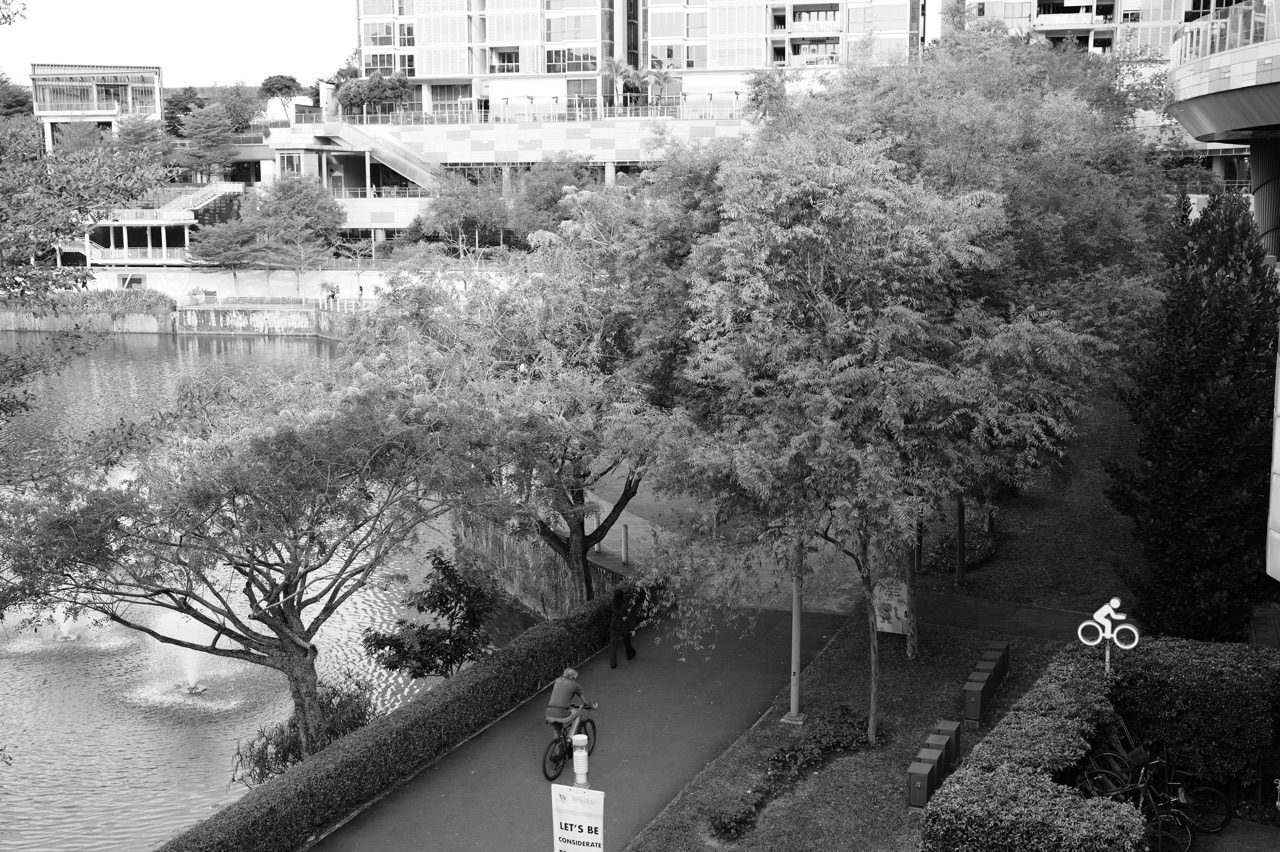
The top 10 things to do in Punggol for Physiotherapy students are to model the walking cycle, calculate hypothetical cadence and speed, study joint movement planes, distinguish general exercise advice from clinical prescription, learn appropriate activity preparation, build a small lever model, map fall-prevention environments, analyse sit-to-stand as a function, plan safe public participation routes and understand AHPC-regulated practice alongside AIC rehabilitation referrals.
Best first Physiotherapy learning task: sketch stance and swing phases of gait, then solve a clearly invented steps-per-minute problem. A short Punggol Waterway Park Connector walk can provide the ordinary movement context without making a resident a patient or setting speed targets. For environmental safety, use HealthHub’s fall-prevention guidance and a fictional floorplan rather than testing an older person. These activities build reasoning, not clinical competence.
In Singapore, physiotherapists are regulated by AHPC and need professional registration and a valid Practising Certificate to practise. This October 2026 student guide does not prescribe exercise, diagnose gait disorders, provide injury recovery instructions or replace a treating clinician. All measurements in its worked examples are hypothetical unless explicitly attributed to an original official source.
How physiotherapy differs from a general sports workout
- Movement analysis: understand how motion occurs and how a task is organised.
- Clinical reasoning: consider an individual’s history, goals, safety and relevant assessment findings.
- Exercise prescription: adjust activities to the person, condition and precautions under qualified care.
- Functional recovery: relate movement capabilities to meaningful daily tasks and participation.
- Prevention: distinguish population advice from individual fall-risk or injury assessment.
- Ethics: use privacy, consent, proper registration and supervision.
- Student scope: practise diagrams, fictional calculations and safe design observations before approved clinical placement.
Three essential distinctions before any field project
First, an observation is not a diagnosis. Seeing somebody walk slowly, use a mobility aid or pause at a bench reveals a visible action, not its clinical cause. A valid assessment requires context, consent, history and professional methods. Second, a physical-activity guideline is not an individual treatment dose. HPB advice for generally healthy adults does not tell a recently discharged patient what they should attempt. Third, a theoretical model is not an operating medical service. AHPC’s regulated titles and AIC referral pathways are real; a student-created flowchart has no authority to book or deliver therapy.
Learning can still be practical. A sketch shows the order of movements, a small lever demonstrates external moments and a paper map reveals how environmental barriers may matter. Work should be repeatable and honest about uncertainty. If the learner uses numbers, include units and identify them as fictional. If the learner uses a public place, record only the venue’s actual accessible information and any lawful general observations.
Punggol offers paths, transport links and community services, but none should be turned into an unapproved clinical training venue. Respect ordinary users. A family member’s rehabilitation after stroke, fracture or surgery is private medical care, not convenient student data. Clinical support should come through the person’s healthcare team and authorised rehabilitation provider.
Ten Physiotherapy learning activities
1. Understand a walking cycle using a stick-figure model
Where: A desk study inspired by the walking paths at Punggol Waterway Park.
Why the question matters
Gait is a sequence of coordinated movements, not merely the distance somebody covers. Physiotherapy learners study when a foot is in contact with the ground, when it advances, and how the trunk and limbs contribute. The Waterway Park Connector offers a real context for why walking matters in everyday life, while a paper figure lets students learn phase terminology without assessing unsuspecting pedestrians. A casual look at someone’s movement is not a clinical gait analysis and cannot support diagnosis of injury, neurological disease or fall risk.
Safe learning method
Read appropriate introductory gait material from an approved course and sketch a person in four simple positions: initial foot contact, supporting the body’s weight, lifting the foot and bringing it forward. Label these as an educational simplification of a full gait cycle, not a timed biomechanical recording. At home a comfortable consenting adult may describe their own normal walk, but avoid making the learner prescribe corrections. Focus on consistent diagram orientation and clear terminology. Use NParks’ path information only to anchor the everyday context.
Worked reasoning example
A student labels the entire time from lifting a foot to setting it down as the stance phase. Their diagram confuses time spent bearing weight with time spent moving the foot through the air. After checking the phase definitions, they redraw the support and swing portions separately. They can now explain that a gait cycle includes both without calculating an individual person’s stride asymmetry. The improvement is conceptual accuracy, not evidence of a therapeutic outcome.
A more advanced question
Discuss how a person’s task changes when carrying a bag, walking beside a child or approaching a crossing. These are contextual influences on movement, but they do not prove pathology. Create two hypothetical motion timelines and ask which observations would require instrumented assessment. A professional analysis can include detailed kinematics and kinetics; a student stick figure is an introductory representation only.
Safety and professional boundaries
Never video strangers’ gait as a diagnostic case, make passers-by perform tests, or encourage public-path races. The park connector is shared by cyclists and walkers. Clinical diagnosis and intervention belong to registered physiotherapists with proper assessment and consent.
Official source: Understand a walking cycle using a stick-figure model. Confirm the current service rules before using this information.
2. Calculate cadence and average walking speed from fictional data
Where: At home, using a short Punggol route as a descriptive context.
Why the question matters
Cadence measures steps per unit time, while speed relates distance to time. They are connected but not identical because average step length also matters. A student can practise correct units without tracking actual commuters or making a family member speed-walk to generate interesting numbers. A model also reveals why a single total journey time cannot diagnose weakness or efficiency: the route may include stairs, waiting, rain or rest.
Safe learning method
Create a clearly fictional worksheet with step count, observation time and an assumed average step length. Calculate cadence in steps per minute and speed in metres per second or kilometres per hour. Display all units and distinguish the assumed step length from a measured value. Compare two hypothetical walkers with equal cadence but different step length. Discuss why their movement outcomes might differ and why no clinical judgement can be made from these few invented parameters. Use LTA and NParks to check a real route only if someone actually plans an ordinary visit.
Worked reasoning example
Illustrative dataset: a model walker takes 90 steps in one minute at an assumed average step length of 0.6m. Distance = 54m in 60 seconds, so average speed is 0.9m/s, or 3.24km/h. A second imaginary walker takes the same 90 steps with a 0.7m average step length, reaching 63m and 1.05m/s. The calculation shows why cadence alone does not determine speed. No number represents a real Punggol resident.
A more advanced question
Ask how measurement uncertainty enters if a pedometer misses steps or a route includes a stop. Estimate which data need direct measurement before comparing two actual people. Discuss that clinical gait analysis looks beyond cadence and speed to safety, context and the person’s goals. Averages across a short walk cannot determine whether someone is fit to return to work or sport.
Safety and professional boundaries
Do not set gait targets, use fictitious speeds as normative clinical values or encourage frail people to attempt timed walking tests. Avoid identifying individual passers-by by gait pattern.
Official source: Calculate cadence and average walking speed from fictional data. Confirm the current service rules before using this information.
3. Draw joint planes and normal movement directions without forced stretching
Where: A school biomechanics diagram or safe home table.
Why the question matters
Physiotherapy involves understanding anatomy and movement, including flexion, extension, abduction and rotation. Beginners can easily confuse a movement’s anatomical direction with how it appears from a particular camera angle. A simple paper body outline and arrows introduces the sagittal, frontal and transverse planes. The activity deliberately avoids testing other people’s joint range or pushing beyond comfort. A student who recognises a movement from a drawing has not thereby learned to perform a valid clinical range-of-motion examination.
Safe learning method
Use a permitted anatomy reference and draw a front and side view of a generic person. Label the three anatomical planes and add arrows for everyday examples like bending an elbow or turning the head. Write the starting anatomical position and movement description before attaching a term. Have a consenting classmate review the drawings rather than act out extreme motions. If a movement feels uncomfortable, use only the paper model. Ask whether the same physical motion would be described differently if the figure’s viewpoint changes.
Worked reasoning example
A learner sees an illustrated elbow bending and labels it shoulder abduction because the arm seems to move away from the picture’s centre. The correct question is which joint moves and in which anatomical plane. After drawing the elbow and shoulder separately, the student correctly classifies the elbow’s changing angle and no longer treats image direction as the anatomical axis.
A more advanced question
Create a concept table linking joint, movement and a normal everyday task, such as reaching for a safe desk object. Explain why different people may use compensatory movement patterns and why a clinician needs assessment rather than assuming one diagram applies to everyone. Add clear notes on the limits of two-dimensional drawings for three-dimensional joint motion.
Safety and professional boundaries
Do not force stretches, perform provocative joint tests or make individual clinical claims from photographs. Patients recovering from surgery or injury require their treating clinician’s movement precautions.
Official source: Draw joint planes and normal movement directions without forced stretching. Confirm the current service rules before using this information.
4. Separate general exercise guidelines from a patient-specific rehabilitation prescription
Where: HealthHub’s physical-activity information studied from a Punggol home or library.
Why the question matters
Health Promotion Board’s general adult physical-activity guidance encourages 150–300 minutes of moderate activity weekly and muscle-strengthening work on at least two days, where appropriate. These public-health recommendations are not a safe personal rehabilitation prescription for someone after a stroke, fracture or surgery. Physiotherapy students must distinguish broad population guidance from individual goals, medical restrictions, capacity, risk factors and supervised progression. A person may need a professionally modified plan even when a general public article describes an activity as beneficial.
Safe learning method
Read the official HealthHub guidance and create two columns: general recommendation and individual information a treating professional would need. In a fictional case, a previously inactive healthy adult wants to build an enjoyable walking habit; in another, an adult has been recently discharged after significant illness. Write why simply assigning the same duration to both is inappropriate. Do not invent a pulse range, resistance load or weekly progression for the second person. Discuss consultation and safety first.
Worked reasoning example
A learner reads ‘150 minutes’ and tells a recently discharged patient to walk thirty minutes each weekday without assessment. The number comes from general guidance, not their case. The corrected explanation identifies the person’s condition, goals and restrictions as clinical unknowns and routes decisions to the treating team. The student can still explain the difference between community-health messaging and clinical rehabilitation without pretending to prescribe.
A more advanced question
Explain how the concept of gradual progression differs from a fixed universal schedule. Discuss the roles of perceived exertion, symptoms, recovery and motivation, while acknowledging that clinical monitoring needs professional judgement. Compare an exercise programme’s prescribed dose with ordinary incidental movement and ask how outcomes should be evaluated.
Safety and professional boundaries
Do not provide personalised exercise prescriptions, recommend ignoring clinical precautions or tell unwell people to continue through concerning symptoms. HealthHub advises seeking medical guidance when unsure about safe physical activity.
Official source: Separate general exercise guidelines from a patient-specific rehabilitation prescription. Confirm the current service rules before using this information.
5. Explore warm-up and recovery concepts without claiming to treat injuries
Where: A private educational session using HealthHub’s safe activity advice.
Why the question matters
Warming up prepares a person gradually for activity; cooling down and recovery involve multiple physiological and behavioural processes. HealthHub advises beginners to start slowly, adjust intensity and pay attention to unusual symptoms. Physiotherapy students may be tempted to apply athletic ideas to patients, but recovery from injury can involve contraindications and tailored assessment. An age-appropriate theoretical lesson can show the distinction without asking anyone with symptoms to perform a trial.
Safe learning method
Use a fictional scenario of a healthy adult preparing for a comfortable ordinary walk along a Punggol path. On paper, divide the session into preparation, comfortable movement and a gradual finish. Identify why weather, footwear, terrain, sleep and recovery matter. Do not specify a medical rehabilitation dose. For a student with their own health concerns, perform no exercise test; use a theoretical plan and consult a qualified practitioner as needed. Compare the language of a public fitness guide with that of a supervised clinical programme.
Worked reasoning example
A student writes that a ten-second stretch will prevent every future running injury. That outcome is not supported by the cited general guidance. The revised statement explains that gradual activity preparation and appropriate training may be useful, while injury prevention depends on multiple factors and individual circumstances. A responsible physiotherapy learner communicates uncertainty instead of offering a guarantee.
A more advanced question
Develop a ‘stop or adjust’ decision tree for a fictional non-emergency session, with an explicit referral to professional guidance for pain, unusual dizziness or illness. Compare fatigue after ordinary activity with signs that require stopping and seeking care, using official advice rather than student-generated diagnostic thresholds.
Safety and professional boundaries
Do not ask people to exercise through sharp pain, chest discomfort, dizziness or weakness. This discussion is not a substitute for clinical screening, physiotherapy or acute medical assessment.
Official source: Explore warm-up and recovery concepts without claiming to treat injuries. Confirm the current service rules before using this information.
6. Build a cardboard lever model to explore moment arms
Where: At-home desk experiment using paper, ruler and small harmless counters.
Why the question matters
Muscles produce moments about joints, so physiotherapy learners need a basic understanding of how force, distance and position interact. A paper lever model makes the relationship between load, pivot and moment arm visible while avoiding manipulation of any person’s limbs. It also shows why a simplified lever model is not a direct measurement of muscle strength or joint loading in a living body. Real muscles have changing lines of pull, multiple joints and complex tissue behaviour.
Safe learning method
Place a ruler on a stable desk over a small non-slip pivot under adult supervision, using a very small load that cannot fall or injure anyone. Draw the setup with a force arrow, pivot and perpendicular distance. Use fictional force and distance values to calculate an idealised moment. Move the load farther in the drawing and discuss the change under constant assumed force. Keep the actual model gentle and do not use heavy weights, springs or human joints for resistance testing.
Worked reasoning example
Illustrative mechanical calculation: a force of 2N acting perpendicular to a lever 0.15m from its pivot creates 0.30N·m of moment. If the same ideal force acts at 0.30m, the model moment is 0.60N·m. A student who concludes that a real shoulder muscle therefore doubles force when the arm extends has confused external moment with muscle force. The correct conclusion applies only to the idealised geometry and conditions.
A more advanced question
Discuss opposing forces and static balance qualitatively. Explain why muscle force, joint reaction and external load must be considered together in a real biomechanical model. A student can sketch how changing an object’s distance from the body may alter required moments, while leaving actual ergonomic advice and clinical load limits to competent professionals.
Safety and professional boundaries
Do not lift heavy objects, apply weights to recovering joints or infer safe exercise loads from the small ruler experiment. Do not use the model to fit braces or mobility devices.
Official source: Build a cardboard lever model to explore moment arms. Confirm the current service rules before using this information.
7. Study fall-prevention environments without conducting fall-risk tests
Where: A Punggol home layout sketch and HealthHub’s fall-prevention guidance.
Why the question matters
HealthHub identifies fall risks associated with environmental hazards such as loose rugs, poor lighting, clutter and unsuitable steps, alongside personal factors including balance, vision, medicines and medical conditions. An unqualified student can learn environmental reasoning without asking an older person to stand on one leg or deliberately walk on an unstable surface. A risk factor is not proof that a particular person will fall, and an informal checklist cannot replace a qualified assessment of an individual.
Safe learning method
Draw a fictional two-room HDB flat plan with an ordinary path from bedroom to bathroom. Insert harmless imaginary hazards such as a loose cable and a poorly lit turn. Use HealthHub guidance to list possible risk-reduction design questions and who could assess them. If evaluating your own household, only note and correct safe ordinary clutter that you have permission to move. For mobility modifications, grab-bar installation or individual balance concerns, ask a registered clinician or appropriately qualified contractor.
Worked reasoning example
A student sees a family member use a walking aid and writes that the person must have fallen recently. The observation does not establish that history. The revised project studies a generic environmental hazard: a cable crossing a walkway can be a trip risk in a fictional room, so safe cable management is a sensible design consideration. The student does not diagnose a person from equipment use.
A more advanced question
Discuss how lighting, footwear, medications and individual movement needs interact. Which parts are facility design questions and which require medical or therapy assessment? Make a referral pathway diagram that starts with the person’s concern rather than a student-imposed test. Distinguish primary prevention from rehabilitation after a fall.
Safety and professional boundaries
Do not conduct balance tests on frail people, remove prescribed aids or install clinical safety equipment without proper advice. Urgent symptoms or injuries require appropriate medical attention.
Official source: Study fall-prevention environments without conducting fall-risk tests. Confirm the current service rules before using this information.
8. Understand functional movement without using a sit-to-stand contest
Where: A paper diagram of a chair transfer in a home or classroom.
Why the question matters
Standing from a chair is a meaningful daily movement combining lower-limb strength, balance, coordination and environment. It is also a common subject of functional assessment, which is why students must not turn it into a timed public competition or a home test for vulnerable people. The educational goal is to describe the stages and how chair height, foot placement or support might matter, while recognising that a real rehabilitation plan needs individual clinical assessment and sometimes medical precautions.
Safe learning method
Draw a safe fictional person seated on a suitable chair, shifting their centre of mass and coming to a standing posture. Label stages conceptually, without telling a recovering patient how to perform them. Compare two model chairs of different hypothetical heights in side-view drawings, noting the physical task may change. Discuss why a stable chair and clear floor are relevant generally. If a learner wants to observe their own ordinary movement, keep it comfortable and stop without assessment if symptoms arise.
Worked reasoning example
A student writes that a person who stands slowly must have weak leg muscles. Slow movement could have many reasons, including deliberate caution or context. The corrected note describes only the timing seen, without making a diagnosis. The student then asks what clinical history, physical examination and goal information would be needed before interpreting a functional test result.
A more advanced question
Build a force diagram for a generic idealised sit-to-stand motion and identify the difference between external support and internal muscle demand. A paper model can show that changing the support configuration alters forces. It does not provide a safe clinical technique for transferring a person with neurological or orthopaedic injury.
Safety and professional boundaries
No timed sit-to-stand testing of seniors or patients for a student project, no manual lifting without training and no advice to ignore prescribed aids or precautions.
Official source: Understand functional movement without using a sit-to-stand contest. Confirm the current service rules before using this information.
9. Review path, rest and transport choices for a rehabilitation-related community outing
Where: One Punggol public destinations and the NParks Punggol Waterway Park Connector.
Why the question matters
A therapy-related goal might involve returning to a familiar leisure or community activity, not just achieving a performance metric in a clinic. NParks labels the named waterway connector wheelchair friendly, and One Punggol co-locates library, dining and community activities. For a student, the legitimate inquiry is how real-world barriers and choices affect participation. The term wheelchair friendly on an official connector page does not guarantee every entry, side path, bench or temporarily diverted route is suitable for a particular user.
Safe learning method
Invent a person cleared by their treating professional for ordinary community outings and give them a goal such as visiting a public library with family. Map the known public route, rest options to verify, transport back and an alternative if rain begins. Ask what a physiotherapist might need to know about functional movement and safety, and what an occupational therapist might contribute about the activity itself. Keep route facts attributable and unknown conditions explicitly marked. Do not create individual exercise instructions.
Worked reasoning example
An educational case sets a destination at One Punggol but makes the only route a long walk because the connector is scenic. The fictional person prefers a shorter, sheltered journey. The student’s revision prioritises the person’s stated goal and checks transport and rest choices before recommending any option. The result is a better participation plan, not proof of recovery or a prescribed walking distance.
A more advanced question
Discuss when patient goals, clinical safety considerations and built-environment access could conflict. An interdisciplinary team may work with family and community providers, with actual services chosen through professional assessment. Develop a two-column information handoff: facts known about the route and personal health facts that should only be handled by authorised clinicians.
Safety and professional boundaries
Do not promise the entire 8.4km connector is suitable for a recovering patient or undertake field mobility tests on strangers. Watch for lightning, heat and transport disruptions and follow actual treating-team advice for real rehabilitation journeys.
Official source: Review path, rest and transport choices for a rehabilitation-related community outing. Confirm the current service rules before using this information.
10. Learn AHPC registration and AIC rehabilitation referral boundaries
Where: AHPC and AIC official online guidance, researched privately from Punggol.
Why the question matters
AHPC regulates physiotherapists in Singapore under the Allied Health Professions Act and requires registration plus a valid Practising Certificate for independent professional work. AIC’s Community Rehabilitation page describes physiotherapy for movement-related difficulties after injury or illness, and HealthHub describes home therapy pathways for eligible clients. This is a critical distinction for students: a supervised education experience, a public exercise video and an actual clinical rehabilitation plan have different authority, risk and confidentiality requirements.
Safe learning method
Read the AHPC registration page, recognised qualifications list and AIC’s current service guide. Construct a fictional referral journey for an adult recovering after a fracture: treating medical team, assessment, therapy provider, goals, review and possible community transition. Label referral and subsidy requirements as items to confirm, not universal guarantees. Prepare a learner portfolio with one safe biomechanics diagram, one data-unit check, one environmental case and one statement of limits. No real patient information should be included.
Worked reasoning example
A learner finishes a paper gait exercise and creates an online booking page describing themselves as a practising physiotherapist. That misstates professional status and may create legal and safety risks. The corrected portfolio states ‘Physiotherapy student learning exercise’, cites AHPC rules and does not invite patients to receive services. A later formal clinical placement would require an approved institution and supervision, not a self-created visit to a care centre.
A more advanced question
Discuss collaboration with occupational therapy, speech-language therapy, nursing and physicians while distinguishing scopes. A rehabilitation team may share a goal of safe community participation, but different clinicians assess and intervene within their competences. Ask what evidence would be needed to judge a treatment effective in an actual patient, and why a desk model is insufficient.
Safety and professional boundaries
Do not promise same-day community rehab intake, exact subsidies or clinical results. Never obtain patient records or attend appointments without explicit authorised arrangements. AHPC’s approved titles must not be used falsely.
Official source: Learn AHPC registration and AIC rehabilitation referral boundaries. Confirm the current service rules before using this information.
Three educational sessions suitable for a beginner
A gait and measurement desk session
Create a simple stick-figure diagram of a normal gait cycle. Use fictional step counts to calculate cadence and speed with explicit units. Have a peer check whether support and swing were labelled correctly and whether a missing step length was silently assumed. Correct the first error and record what changed. Do not film real patients or timed-walk other people for a project.
A movement and fall-prevention concepts workshop
Study HealthHub’s fall-prevention factors and sketch a fictional home environment. Mark loose cords, unclear paths and possible lighting issues without accusing any real homeowner. Pair it with a cardboard lever model using harmless small weights and hypothetical moments. The first part concerns environmental risk factors; the second is a mechanics concept. Neither authorises personal clinical treatment or safe-load recommendations.
A community rehabilitation and participation desk project
Choose a fictional recovering adult whose goal is to visit a library with family. Read AIC’s real service descriptions and LTA’s current transport information. List referral questions for the clinical team separately from public route questions. Explain that the actual person’s condition, therapist assessment, care eligibility and wishes determine real decisions. The final project is an accurate care-navigation model rather than a plan imposed on anyone.
What to include in a Physiotherapy student portfolio
- A specific learning question and the relevant clinical or biomechanical concept.
- A labelled diagram with appropriate units and stated assumptions.
- A fictional worked example and a correction of a common error.
- Original primary-source references to AHPC, AIC, HealthHub or LTA.
- An explanation of what a paper model cannot establish clinically.
- No identifiable patients, confidential case records or unsupervised treatment footage.
- One ethical reflection identifying when registered professional advice is necessary.
- A clear title describing the work as student education, not a clinical assessment.
Frequently asked questions
Can Physiotherapy be learned through public Punggol places?
Yes, as movement and environment education, without undertaking clinical assessment or treatment in public.
Is this a home physiotherapy programme?
No. It offers student reasoning exercises, not an individual treatment prescription.
Do physiotherapists have to register in Singapore?
Yes. AHPC registration and a valid Practising Certificate are required for regulated professional practice.
How is Physiotherapy different from Occupational Therapy?
Both can be part of rehabilitation, but Physiotherapy generally focuses strongly on movement-related assessment and intervention, while OT centres meaningful daily occupations.
What is gait analysis?
The structured examination of walking patterns, which in clinical contexts requires appropriate measures, history and professional competence.
What are stance and swing?
Broad phases of a gait cycle involving support on the foot and advancement of the foot, respectively.
What is cadence?
Steps taken per unit time, often represented in steps per minute.
Can cadence alone diagnose walking difficulties?
No. Step length, context, safety, individual factors and clinical evidence also matter.
Can students time older residents walking at Waterway Park?
Not as an unsanctioned clinical test. Do not recruit or assess strangers without proper consent, supervision and ethics approval.
How long is Punggol Waterway Park Connector?
NParks lists a named 8.4-kilometre route; there is no need to walk the full distance for a classroom task.
What are the three anatomical planes?
Sagittal, frontal and transverse—conceptual planes for describing movement in the body.
Can I prescribe joint stretches from a diagram?
No. Individual rehabilitation exercises require appropriate qualified assessment.
What is a force moment?
A turning effect related to the force and its perpendicular distance from an axis or pivot in an idealised mechanical model.
Is an idealised lever calculation a real muscle-strength measurement?
No. Human muscles and joints involve complex three-dimensional forces and physiology.
What physical activity does HPB recommend for adults?
General guidance commonly advises 150–300 minutes of moderate activity weekly and muscle strengthening on at least two days, subject to individual suitability.
Does that guideline apply unchanged after an operation?
No. Post-operative or injury-specific activity should follow the treating team’s precautions and plan.
Can a photo show someone has high fall risk?
No. Risk depends on multiple personal and environmental factors requiring proper assessment.
What does AIC community rehabilitation include?
AIC describes rehabilitation services including Physiotherapy and speech therapy for eligible people with rehabilitation needs.
Does AIC guarantee a free same-day therapist in Punggol?
No. Services depend on eligibility, referral, provider availability and applicable costs and subsidies.
What should a student do if an exercise causes pain or dizziness?
Stop; seek appropriate qualified or urgent medical advice as indicated rather than continuing a student trial.
Primary references and related Punggol guides
- Understand a walking cycle using a stick-figure model
- Calculate cadence and average walking speed from fictional data
- Draw joint planes and normal movement directions without forced stretching
- Separate general exercise guidelines from a patient-specific rehabilitation prescription
- Explore warm-up and recovery concepts without claiming to treat injuries
- Build a cardboard lever model to explore moment arms
- Study fall-prevention environments without conducting fall-risk tests
- Understand functional movement without using a sit-to-stand contest
- Review path, rest and transport choices for a rehabilitation-related community outing
- Learn AHPC registration and AIC rehabilitation referral boundaries
- AHPC recognised physiotherapy qualifications, September 2026
- HealthHub fall-prevention and exercise safety
- HealthHub gradual activity guidance
- OT participation and daily-activity analysis
- Nursing student patient safety and professional communication
- Sports Science learning distinct from rehabilitation
- eduKateSG structured diagnosis and worked examples
Build movement reasoning before attempting clinical intervention
Punggol’s paths and shared facilities can make human movement easier to visualise, but a real person’s recovery requires the expertise and judgement of registered professionals. Start with labelled diagrams, harmless models and honest data assumptions. Know the difference between public-health activity advice and a personalised rehabilitation plan, protect privacy and use the appropriate AHPC and AIC sources when learning about professional care.


