
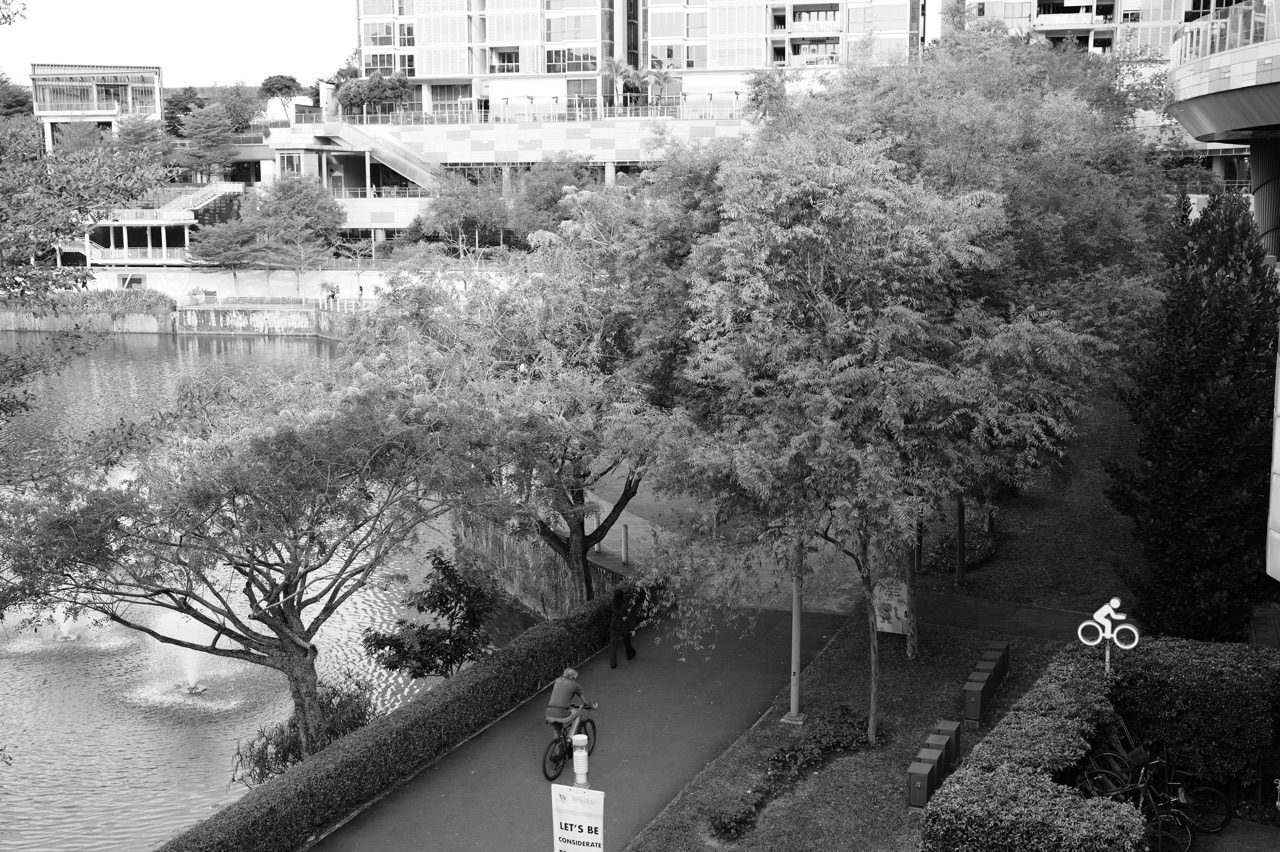
The top 10 things to do in Punggol for Sports Science students are to use the talk test to interpret exercise intensity, calculate comfortable walking pace on a short connector segment, understand warm-up and cool-down phases, describe everyday movement mechanics, study balance with safe desk models, compare normal cycling effort, prepare a weather-aware activity decision, keep a voluntary training-and-recovery log, examine teamwork through an authorised recreational game and design a fair, privacy-respecting sports-science report.
Best first activity: choose a short normal walk at Punggol Waterway Park when conditions are suitable, then discuss perceived effort and how distance and elapsed time are recorded. Singapore’s physical-activity guidance uses the talk test as one way to understand light, moderate and vigorous intensity. It does not mean everyone should use the same pace, heart rate or training programme. A completely indoor paper model is equally valid if the weather, user readiness or route makes outdoor activity unsuitable.
This October 2026 article teaches scientific reasoning through movement rather than prescribing athletic performance. The worked distances and times are illustrative unless explicitly identified as real published route facts. Personal physical responses differ, and anyone with relevant health concerns should follow qualified medical or exercise-professional advice instead of pushing through symptoms for a worksheet.
Choose one Sports Science learning goal
- Primary learners: name light and moderate activity, observe ordinary movement and talk about safe rest.
- Lower Secondary: compare speed, duration, movement stages and the effect of different conditions.
- Upper Secondary: design a fair repeated observation, understand confounders and analyse small datasets cautiously.
- Interested in team games: study communication and spatial decisions through a legitimately accessible programme.
- Do not wish to exercise: use Sports Singapore’s guidelines, diagram a movement or work with explicitly fictional data.
- Need an outdoor plan: check NEA current advisories, transport, shade, accessible routes and individual readiness before leaving.
The sports-science difference between external work and internal effort
A distance or elapsed time describes an external task. The effort experienced by the person depends on many internal and environmental factors. Two people might cover the same stretch with different perceived exertion, and that difference alone does not establish who is healthier. Sports Science is concerned with measurement definitions and limitations, not simply rewarding faster performance.
The talk test is helpful because it uses breathing and speech during activity, but it does not replace medical screening or an individual training plan. HealthHub explains that conversation becomes less easy as exertion increases. It is inappropriate to make a beginner deliberately breathless to satisfy a science project. If a normal safe activity feels excessively demanding or causes concerning symptoms, stop and seek appropriate care.
Good movement projects also have ethics. The activity should be voluntary, suitable and private. A student cannot film anonymous park walkers to make claims about their gait or medical state without appropriate permission and research arrangements. Original diagrams, personal observations and fictional numerical datasets often teach the method more safely and clearly.
Ten Punggol sports-science activities
1. Use the talk test to understand perceived exercise intensity
Where: A short comfortable public section of Punggol Waterway Park Connector.
The science behind the activity
HealthHub and the Singapore Physical Activity Guidelines explain exercise-intensity categories using conversational ability. Light activity generally allows talking and singing, moderate activity permits conversation but makes singing difficult, and vigorous activity makes speech difficult. These are broad guides, not a medical threshold that every person must reach. For Sports Science students, this is an approachable example of a human-response measure that varies among people and conditions.
A safe procedure
Begin only if the activity suits the participant’s age, ability and health. Choose a short safe route and ordinary pace without trying to force hard breathing. Ask the participant to rate effort in simple words—comfortable, somewhat challenging or difficult to talk—during an agreed voluntary check. Record the weather, whether the person stopped and the chosen duration. Compare the reported effort with the intended light or moderate activity range and discuss why different individuals can experience different effort on the same path.
Worked Punggol example
An illustrative pair of participants walks an equal 400m section. One reports comfortable conversation, while the other says speaking full sentences feels harder. The distance is the same but internal effort differs. It would be incorrect to diagnose a fitness deficiency or force the second person to continue at the first person’s speed. The valid observation is an individual difference under the particular conditions.
An advanced question
Ask what else might influence the result: temperature, sleep, experience, slope, recent activity and comfort with speaking during walking. A formal training study would use controlled procedures and appropriate screening. Your notebook should make clear that a talk test is a practical guide rather than a calibrated laboratory measure of oxygen consumption.
Risk and evidence limits
Stop or slow down if there is unusual breathlessness, chest discomfort, dizziness or other concerning symptoms, and seek appropriate medical care. Do not use deliberately exhausting activity for a school task or treat another person’s health as a classroom variable.
Official reference: Use the talk test to understand perceived exercise intensity. Use current facility and environmental advice.
2. Calculate a short route’s average speed without conducting a race
Where: An unobstructed, appropriate short section of Punggol Waterway Park Connector.
The science behind the activity
The named NParks connector is 8.4km, but a Sports Science learning sample can be a few hundred metres instead of the entire length. Average movement speed is useful for pacing analysis when the path length and timing are defined. It is not a measure of cardiovascular health on its own. Different stopping choices, route surfaces and participant preferences change the measured value, so a good study notes how the observation was made.
A safe procedure
Use a safely mapped short public segment and allow the participant to walk at a personally comfortable pace. Record the estimated route distance, elapsed time and rest periods without obstructing other path users. On paper calculate speed as distance divided by time with consistent units. If making repeated observations, use the same defined segment and distinguish the time spent moving from total elapsed time. Do not infer a walking speed directly from NParks’ general route length or a live travel estimate.
Worked Punggol example
Illustrative data only: a participant walks an estimated 360m in six minutes. Six minutes is 0.1 hours and 360m is 0.36km, so the arithmetic average is 3.6km/h. If the same outward section is walked back, total distance and timing must be recorded again; the return is not guaranteed to match. The calculation is not a claim that every visitor reaches 3.6km/h at Punggol.
An advanced question
Discuss measurement error when a map estimates distance, a stopwatch is started late or participants stop for traffic. If you want to compare two days, note weather and route conditions. An improvement conclusion requires more than one convenient observation and should not become a pressure campaign to make someone walk faster.
Risk and evidence limits
No sprint trials on a shared path, no obstacle markers on public pavements and no exercise in unsafe weather. The safety and accessibility of the route matter more than a neat speed statistic.
Official reference: Calculate a short route’s average speed without conducting a race. Use current facility and environmental advice.
3. Explore why warm-up and cool-down phases serve different roles
Where: A suitable home exercise area or genuinely open public fitness space in Punggol.
The science behind the activity
The Singapore Physical Activity Guidelines include basic safety practices such as an appropriate warm-up and cool-down, and recommend gradual increases in activity. Preparing to move can raise body temperature and familiarise joints and muscles with the intended range of movement. Gradually winding down differs from suddenly stopping after a strenuous effort. For students, the key distinction is to describe the purpose of each phase rather than memorise one supposedly universal stretching routine.
A safe procedure
Choose low-risk normal movements with adequate room, such as easy walking in place, gentle shoulder movement or a comfortable range of motion that suits the individual. Ask what the main planned activity requires. Sketch a beginning phase, the chosen light activity and a concluding slower phase, without prescribing fixed exercises to a person whose needs are unknown. Observe how reported readiness and breathing change during a safe voluntary session. Record what the participant did, not what a perfect athlete should do.
Worked Punggol example
A novice plans to start with a fast jog and finish by sitting immediately. After reading the official safety guidance, their paper schedule adds a gradual start and a slower finish. They identify the revised session as more appropriate for their beginner status. They do not claim that a single observation proves injury prevention or that everyone must use the identical sequence.
An advanced question
Discuss why a dynamic movement before an activity differs from holding a static position for flexibility and why suitability depends on the sport, fitness level and individual limitations. If a school team requires a specialist warm-up, follow the coach and appropriate professional advice rather than replacing it with this general exercise.
Risk and evidence limits
Do not perform forced stretches, painful joint positions or unsupported balance challenges. Anyone with relevant conditions or symptoms should seek qualified advice on suitability before beginning unfamiliar activity.
Official reference: Explore why warm-up and cool-down phases serve different roles. Use current facility and environmental advice.
4. Build a movement-observation notebook rather than judging someone’s technique
Where: A private voluntary movement session or an approved community activity.
The science behind the activity
Sports biomechanics investigates positions, forces, speed and coordination. A student can learn to describe movement phases without making medical or professional judgements about strangers walking on a park path. Real technique assessments require context, experience, appropriate equipment and consent. A simple educational sequence—prepare, move and finish—creates a starting framework that respects differences in body shape, confidence and mobility.
A safe procedure
Choose an age-appropriate harmless movement the learner already performs comfortably, such as rising from an ordinary stable chair. The participant may voluntarily describe the action. Write what is observable: initial support, movement direction, changes in joint position and final stable posture. Avoid filming people without permission and avoid making medical conclusions from appearance. Use stick figures to represent phases instead of diagnosing a supposed fault. If a movement is uncomfortable, stop and select an entirely different desk-only example.
Worked Punggol example
A student draws three phases of a voluntary chair rise: sitting, moving upward and standing. They notice that the diagram needs an arrow showing the centre of mass shifting relative to the support base. The work improves when they label the observed action rather than claim that one posture reveals the participant’s injury risk or strength. It is a qualitative biomechanics description, not a clinical test.
An advanced question
Compare the role of movement description and a causal performance claim. Even if two chair rises look different, that does not establish why: footwear, surface height, mobility, balance preference and many unmeasured factors may matter. A research study would require suitable criteria, informed consent and careful design.
Risk and evidence limits
Do not pressure anyone to perform a movement for grading or publish identifiable videos of other residents. No one’s disability or health status should be guessed from gait or posture.
Official reference: Build a movement-observation notebook rather than judging someone’s technique. Use current facility and environmental advice.
5. Investigate balance using stable, supported everyday movement
Where: A quiet safe indoor home space, using Age-appropriate activities only.
The science behind the activity
Singapore’s Physical Activity Guidelines identify balance as one of the physical capacities developed through movement. Balance depends on sensory input, muscular control and the task environment. A simple discussion of stable stance can teach sports-science concepts without forcing a one-leg endurance contest or asking older adults to risk a fall. The important research question is how changing support and environment may alter the demands of a task.
A safe procedure
Use a tabletop model or observe an ordinary comfortable standing posture, with a stable nearby support if necessary. Draw a base-of-support outline for a pair of feet and locate a conceptual centre of mass in a stick figure. Move a small cardboard model’s support points on paper to discuss how a narrower base could reduce margin for stability. Participants need not physically close their eyes or stand on one leg. If an individual wishes to practise balance, follow a suitable professional or supervised programme.
Worked Punggol example
A paper figure has a wide base and an imagined centre-of-mass projection near the middle. When the drawn base is narrowed, the margin between the projection and the edge becomes smaller in the simplified model. This demonstrates a mechanical concept, not a prediction that a real person must fall with a certain stance. Students should distinguish a schematic from a medical or fitness evaluation.
An advanced question
Ask what the model leaves out: rapid muscular adjustments, vision, joint feedback and the movement of body segments. Discuss why elite sport balance, rehabilitation balance and safe everyday mobility may require different methods and professional supervision.
Risk and evidence limits
Never blindfold participants, ask someone to balance on a park rail or create an unstable surface for an untrained visitor. A research notebook is not worth a preventable fall.
Official reference: Investigate balance using stable, supported everyday movement. Use current facility and environmental advice.
6. Compare cycling effort and route conditions without timed competition
Where: Punggol Waterway Park Connector or a suitable public cycling route used normally.
The science behind the activity
NParks provides shared park connector routes, while Singapore’s physical activity guidance recognises leisure cycling as one example of moderate activity for some individuals. Yet cycling effort depends on speed, wind, gradient, equipment, skill and personal fitness. The same route may be easy for one rider and demanding for another. Sports Science can study effort and environmental context without staging races or using the public path as a laboratory.
A safe procedure
Choose a lawful, suitable cycling trip only for someone competent and properly equipped. Plan the route and road-sharing etiquette before leaving. Rather than measuring maximum speed, record ordinary experience: weather, surface, pauses, perceived effort and approximate duration. A student can compare two fictional scenarios on paper—headwind versus no wind—without encouraging anyone to cycle into bad weather. Check that any equipment and protective gear meet current relevant requirements.
Worked Punggol example
A student sees that a rider took longer to complete the same path on a windy day, and immediately concludes that the rider has become less fit. The evidence does not support this; wind, path traffic and stopping times may explain the change. Their corrected log lists these uncontrolled factors. The lesson is that performance measurements reflect both the person and the environment.
An advanced question
Model work against resistance qualitatively using a toy wheel on two desk surfaces rather than changing conditions on the path. Discuss why cycling average speed is influenced by turns, braking and shared use, and why an algorithm that ranks people by time alone can be unfair.
Risk and evidence limits
Obey park connector and road rules; do not set up timing gates, cones or camera tripods on shared paths. Do not recommend higher speeds or hazardous practice for children.
Official reference: Compare cycling effort and route conditions without timed competition. Use current facility and environmental advice.
7. Build a heat-and-weather training decision around NEA information
Where: An indoor planning session for Waterway Park, Punggol Point or an authorised court.
The science behind the activity
Singapore’s warm humid climate changes the practical demands of outdoor exercise. Sport Singapore’s guidelines emphasise environmental awareness, hydration, suitable clothing, gradual acclimatisation and rest, while NEA publishes current weather, rain and environmental alerts. An effective sports-science field plan acknowledges these constraints rather than treating every beautiful waterfront as appropriate for exercise at noon or during lightning.
A safe procedure
Before a normal optional outdoor session, read NEA myENV for current lightning, heavy rain and relevant environmental guidance, then consider the specific route’s shade and return access. Make a decision tree: safe conditions and suitable individual readiness permit a modest activity; warnings or concerning symptoms trigger modification, postponement or appropriate medical assistance. Do not choose a fixed water intake or heart-rate target for everyone. Note that weather conditions can shift during the activity.
Worked Punggol example
A group prepares a comfortable park walk but finds an official lightning warning. The plan moves to an appropriate indoor alternative or is rescheduled. A student writes that this is a good training decision, not a missed opportunity to prove discipline. They learn that managing exposure is part of exercise science and that a well-timed cancellation protects participants.
An advanced question
Distinguish air temperature, humidity, radiation and airflow as contributors to thermal stress. A single phone temperature reading does not measure every aspect of exposure. Propose which additional measures a formal sports event would need, while keeping the actual family plan conservative and in line with official advice.
Risk and evidence limits
Never deliberately exercise in intense heat or haze to compare responses. Anyone experiencing unusual dizziness, chest pain, severe weakness or significant heat symptoms should stop and obtain suitable urgent medical help.
Official reference: Build a heat-and-weather training decision around NEA information. Use current facility and environmental advice.
8. Keep a short voluntary training-and-recovery log
Where: At home following a normal appropriate week of Punggol activities.
The science behind the activity
Adaptation to activity involves the interplay of training, rest, sleep and everyday life. HealthHub discusses sleep and physical activity as related habits, while the Singapore Physical Activity Guidelines recommend progressing gradually. A beginner’s personal log can reveal whether someone has consistently allowed recovery and chosen realistic goals. It cannot diagnose overtraining, hormonal changes or mental health conditions from a handful of self-reports.
A safe procedure
Create a seven-day private log with columns for activity type, approximate duration, perceived effort, sleep opportunity and whether the person felt comfortable continuing their routine. Keep all entries voluntary and avoid comparing private health details among classmates. Include rest days without assigning them negative scores. Review the week for one practical change, such as adjusting an overly ambitious schedule or choosing a suitable easier activity.
Worked Punggol example
A fictional log shows three easy walks, one recreational game and several rest or ordinary school days. The student initially labels a rest day as failure. After reading physical activity guidance, they recognise that activity, rest and consistency must be considered together. They revise the table to include a neutral ‘rest and recovery’ category, without using it as a medical prediction of readiness.
An advanced question
Ask what the dataset cannot establish: one week of subjective ratings is not a controlled trial of fitness gain. A longer study would require consistent measures, appropriate participant permission and factors such as illness, exams and environment. For school projects, use anonymised fictional values rather than a classmate’s actual health records.
Risk and evidence limits
Do not set universal sleep quotas or intense training volume without considering age and individual needs. If someone is unwell, injured or recovering, seek appropriate professional advice rather than following a generic online schedule.
Official reference: Keep a short voluntary training-and-recovery log. Use current facility and environmental advice.
9. Study teamwork and decision-making through an authorised casual court game
Where: One Punggol Community Club sports facilities, when a genuinely suitable court or session is available.
The science behind the activity
The People’s Association documents that One Punggol Community Club includes multipurpose sports facilities and courts for badminton, futsal and basketball. A small suitable game can teach spatial awareness, communication and decision-making, but facility listings do not confirm a free walk-in court at a chosen hour. Sports Science can examine team coordination while respecting privacy and avoiding unsupported claims about someone’s concentration or social ability.
A safe procedure
Check the operator’s current programme or booking rules. If a court or activity is legitimately available, participate only in a suitable recreational way under the relevant safety conditions. Choose one simple group goal—passing accurately to an open player or communicating before movement—and reflect afterward. Rather than scoring individual people’s psychology, record the team’s agreed rule and what helped them coordinate. A paper tactical board can demonstrate the principle without using an actual court.
Worked Punggol example
A hypothetical three-person passing drill uses a rule: call for the ball before passing, then move to create a clear option. The group reports that the drill felt easier when positions were agreed in advance. This is a descriptive learning reflection, not controlled evidence that communication caused a particular percentage of performance improvement.
An advanced question
Draw a small state diagram for the ball’s location, possible passing options and decision points. Ask how changing defenders or space affects available options. A proper experimental claim would need repeatable conditions and a more systematic sample than one informal game.
Risk and evidence limits
Do not assume court availability or free access. Protect people from overexertion and collisions, respect the operator’s rules and obtain permission before filming or collecting participant performance data.
Official reference: Study teamwork and decision-making through an authorised casual court game. Use current facility and environmental advice.
10. Design a fair sports-science report with ethics and limitations
Where: A desk study using your own consenting exercise experience or fictional data.
The science behind the activity
The final skill is designing a comparison that another reader can evaluate. Sports Science can use timed walks, skill drills or perception ratings, but findings are affected by route conditions, participant differences and small samples. A student’s data should not be turned into a diagnosis or ranking of classmates. The Singapore Physical Activity Guidelines describe broad population advice; a school project must also respect individual readiness, privacy and any institutional requirements for research with people.
A safe procedure
Choose one narrow question, such as whether a fictional warm-up schedule changes the measured trial duration in a desk dataset. Write which variable changes, what is measured and which conditions should be kept stable. If real participants are involved, obtain the appropriate informed consent and school approval before gathering identifiable data; avoid sensitive measurements altogether for a beginner project. Use fictional records if the objective is statistical technique, and document the difference clearly.
Worked Punggol example
Illustrative fictional walk times over three sessions are 10, 11 and 9 minutes. The mean is 10 minutes; these numbers do not establish whether any participant improved or why. A student who claims a specific exercise programme increased fitness after this tiny dataset is overreaching. A better report says the sample mean and identifies missing baseline, inconsistent weather and participant variation.
An advanced question
Describe the difference between within-person repeated measures and comparing different people. Write down confounders, measurement error and the role of random variation. A sound report is willing to conclude ‘inconclusive under these conditions’ when the data do not justify a stronger statement.
Risk and evidence limits
Never run exercise trials on unconsenting people, record minors’ health information casually or require exertion beyond someone’s comfort. A student report is not a professional sports assessment or medical clearance.
Official reference: Design a fair sports-science report with ethics and limitations. Use current facility and environmental advice.
Three reasonable learning sessions
A twenty-minute movement-literacy outing
Choose a short familiar open route, check weather and agree on a comfortable pace. Observe a few minutes of ordinary walking, the ability to converse and any rest taken. Do not turn the session into a competition. At home calculate a clearly labelled average speed if the distance was reliably estimated, then explain why that number does not measure all fitness components. A paper reflection can finish the activity.
A supervised indoor movement-and-balance study
Use the Singapore Physical Activity Guidelines to discuss aerobic activity, muscular strength, flexibility and balance. Sketch a chair-rise sequence or use a tabletop centre-of-mass model. Ask what different tasks demand, without making a vulnerable person perform a risky test. Record what the model deliberately leaves out. This is a legitimate Sports Science lesson even with no measured heart rate.
A community-teamwork or data-design afternoon
Check any genuinely bookable One Punggol Community Club sports activity, or work with a fictional passing-game diagram. Analyse where players might move and how a simple call could support coordination. If using data, design a small table with context, participant consent and clearly stated metrics. Never present assumed attendance or court availability as a confirmed booking.
How to separate fitness components
- Aerobic activity: involves sustained movement that challenges circulation and breathing according to personal ability.
- Muscular strength: relates to generating force against a load, not simply walking quickly.
- Balance: involves maintaining control under the task conditions, affected by sensory and muscular systems.
- Flexibility and mobility: concern joint motion and the ability to use a suitable range comfortably.
- Skill and coordination: involve timing and organisation of movement in a particular task.
- Recovery: includes sensible rest and broader routines that let a person adapt over time.
No one number demonstrates all six qualities. A faster route time does not certify strength, balance or health. A good student selects the metric associated with the actual question and acknowledges what it does not measure.
Frequently asked questions
What does Sports Science study?
Movement, performance, training responses, biomechanics, coordination, recovery and methods for testing related questions.
What is the Singapore Physical Activity Guidelines resource?
A Sport Singapore and Health Promotion Board-backed national reference for age-appropriate physical activity and reducing sedentary behaviour.
What is the talk test?
An approximate guide to activity intensity based on how comfortably a person can speak or sing while moving.
Does moderate intensity mean one fixed speed for everyone?
No. Effort depends on age, fitness, health, environment and the individual.
Can children use the Punggol Waterway Park Connector for a science task?
Yes, for a suitable short ordinary observation under supervision, not a forced race or hazardous exertion test.
Is the Punggol Waterway Park Connector 8.4km?
NParks lists the named connector as 8.4km, but a class can choose a far shorter appropriate segment.
How do I calculate average speed?
Distance divided by elapsed time, with matching units and a clear statement about pauses.
Does a faster time necessarily mean better fitness?
Not necessarily. Weather, route, technique, rest, readiness and measurement differences may affect results.
Why warm up before an activity?
An appropriate gradual start helps prepare for a chosen task; follow suitable official or professional guidance.
Should every child follow the same warm-up?
No. Activities must suit age, mobility, sport and individual needs.
Is balance always measured by standing on one leg?
No. Balance depends on the task; safe desk models and functional observations can teach concepts without risky tests.
Can we measure cycling speeds on a shared path?
Do not conduct races, set up obstacles or interfere with public users. Normal travel can prompt paper analysis instead.
Which weather information is useful before Punggol exercise?
NEA myENV provides current lightning, rain and environmental advisories relevant to outdoor planning.
What should I do if exercise produces chest pain or dizziness?
Stop and seek appropriate medical or emergency help; do not continue to complete an experiment.
Are there public sports facilities at One Punggol?
PA lists courts and sports-capable facilities, subject to current bookings, programmes and operator rules.
Is a court automatically available to students?
No. A facility directory does not establish an open unbooked session.
Can sleep affect how exercise feels?
Sleep and overall recovery can influence daily readiness, but a one-week log cannot establish an individual medical explanation.
Should we publish classmates’ exercise scores?
Avoid identifiable health or performance data without appropriate permission and safeguards; fictional examples are safer.
What is a confounder in a sports-science comparison?
A factor such as temperature, route, experience or fatigue that may affect the measured outcome independently of the intended variable.
Can a paper model count as a Sports Science activity?
Yes. It can explain movement mechanics, study design and testing limits without imposing physical demands.
Is this a training or medical prescription?
No. It is educational and is not a substitute for professional individual assessment.
Official resources and related Punggol guides
- Use the talk test to understand perceived exercise intensity
- Calculate a short route’s average speed without conducting a race
- Explore why warm-up and cool-down phases serve different roles
- Build a movement-observation notebook rather than judging someone’s technique
- Investigate balance using stable, supported everyday movement
- Compare cycling effort and route conditions without timed competition
- Build a heat-and-weather training decision around NEA information
- Keep a short voluntary training-and-recovery log
- Study teamwork and decision-making through an authorised casual court game
- Design a fair sports-science report with ethics and limitations
- HealthHub talk test and intensity
- Singapore Physical Activity Guidelines
- NEA current weather and environmental alerts
- Related Punggol exercise-intensity explanation
- Related Punggol triathlon safety and transitions
- Related Punggol running locations and routes
- Related Punggol statistics and study design
- eduKateSG evidence-led worked-example teaching
The right result is a safer, better-defined question
Sports Science is useful when it explains what a movement measure really means, why a comparison might be unfair and how an activity can remain appropriate for the person doing it. Punggol’s parks and community spaces make good contexts for questions about pacing, coordination and recovery, but no result is worth unsafe exertion or an unwarranted judgement about another person’s health. Choose a small task, document the conditions and let the evidence set the strength of the conclusion.


