
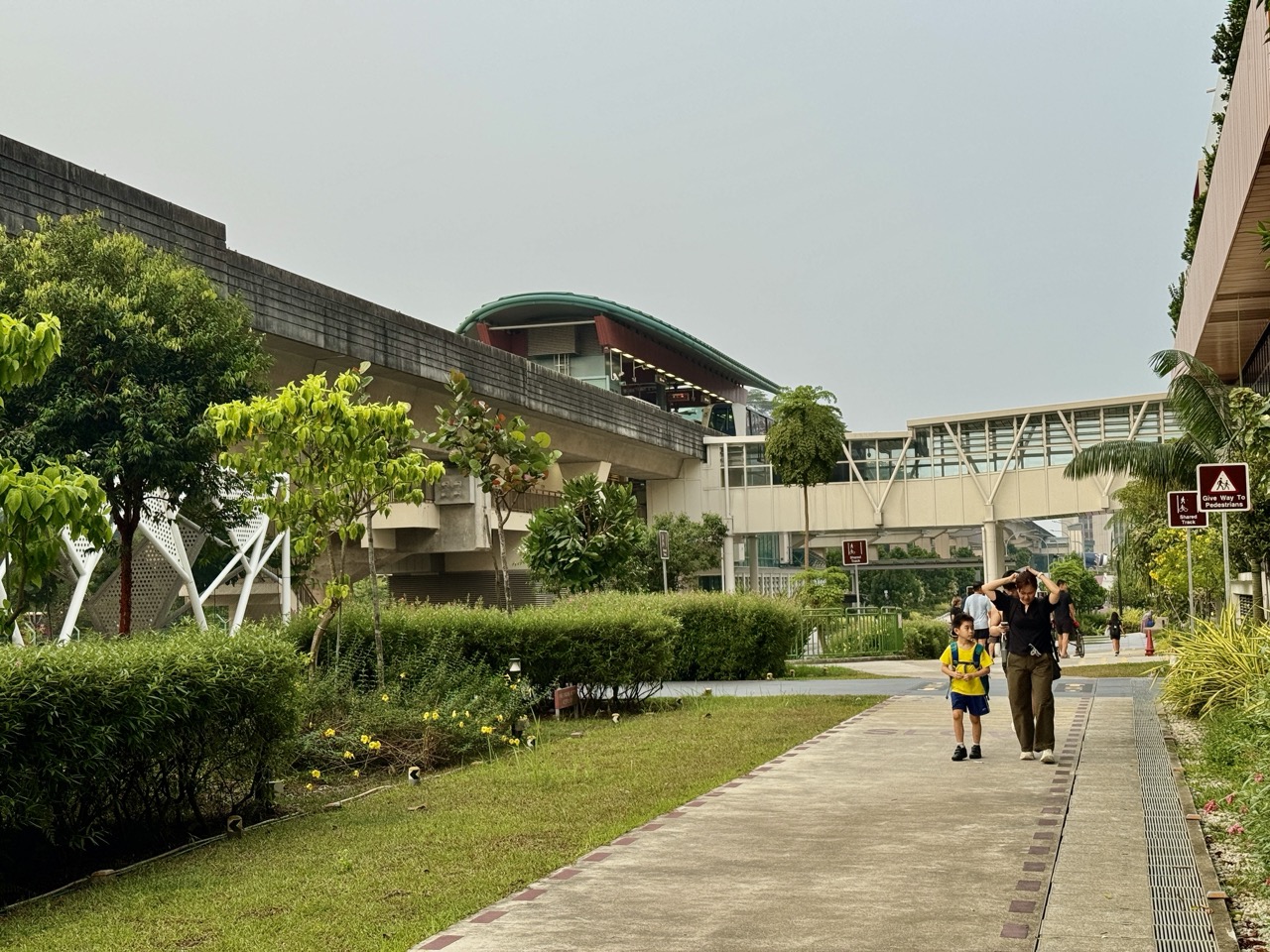
The top 10 things to do in Punggol for Occupational Therapy students are to map an everyday errand at One Punggol, examine accessible library borrowing, analyse a public transport-to-destination journey, break down lunch packing into safe steps, compare everyday object usability, design a plain-language routine card, think about sensory-friendly environments without diagnosing anyone, plan meaningful Waterway Park leisure, study real AIC community rehabilitation routes and build an ethical learning portfolio around AHPC professional requirements.
Best first OT learning activity: select a fictional person’s meaningful daily goal, such as borrowing a book at Punggol Regional Library, and map every step needed to do it. Distinguish what the public facility provides from what the learner has merely assumed about a person’s capacity. For a hands-on exercise, analyse packing a harmless lunch bag at home, using your own routine rather than a real patient’s records. This is task analysis, not occupational therapy treatment.
This October 2026 guide is for students exploring allied health and occupational science. Occupational therapists are regulated in Singapore: AHPC requires professional registration and a valid Practising Certificate before practice. Every scenario here is an educational model, with no medical diagnosis, individual rehabilitation plan, unapproved observation of service users or access to confidential clinical records.
What occupational therapy students are actually trying to understand
- Occupation: the personally meaningful everyday activity, such as reading, self-care, meals, study, work or leisure.
- Person: goals, preferences, strengths and needs that should come from the person and proper assessment, not stereotypes.
- Environment: physical layout, information, social expectations, timing and access.
- Task: individual steps, sequence, objects, cognitive demands and possible points of failure.
- Participation: whether the person can engage in what matters to them, not just finish an arbitrary speed test.
- Clinical boundary: observation and student modelling differ from regulated assessment and treatment.
The person–occupation–environment question
Many students begin by asking whether a building is accessible, but occupational reasoning begins more precisely: accessible for which activity, for whom and under which conditions? A level entrance may help someone reach a library, but the desired occupation also involves finding information, handling materials, understanding borrowing rules and returning home. Conversely, a person may prefer assistance with a task even when they can technically complete it alone. Student analysis should preserve that individuality rather than declare independence as the only successful outcome.
A simple project follows a recurring process. Define the goal in the user’s words if that is legitimately available, describe the task, check the relevant public service information, identify unknowns, build a harmless prototype and test it with informed volunteers where appropriate. Record whether the exercise changed the clarity of the prototype—not whether it treated a clinical condition. An occupational therapist would use professional knowledge, consent, assessment and supervision for actual decisions.
Do not confuse the regulated allied health professions. Physiotherapy often focuses on movement-related rehabilitation, speech-language therapy on communication or swallowing, and occupational therapy on enabling participation in meaningful activities. In actual care, the professions may collaborate and boundaries overlap, but a single student demonstration cannot replace any of them.
Ten Punggol OT learning experiences
1. Map one everyday occupation at One Punggol instead of diagnosing visitors
Where: One Punggol integrated community hub at 1 Punggol Drive.
Why the activity matters
Occupational therapy focuses on participation in meaningful everyday activities—what professionals often call occupations. These can include self-care, productive activities, leisure and participation in the community. The People’s Association describes One Punggol as an integrated hub connecting a community club, regional library, hawker centre and other services. That makes it an unusually concrete setting for learning that a person’s goal is not merely to ‘enter a building’: it may be to borrow a book independently, enjoy a meal with family or complete an ordinary errand. The correct unit of analysis is the desired activity in its context, not an amateur conclusion about a stranger’s disability.
Safe learning steps
Choose one invented user and task, such as a parent who wants to return a library book and collect a meal with a young child. Define what success looks like: correct destination, safe transport, carrying the item, completing the transaction and leaving comfortably. From current PA public directories, draw the broad relationships among services. If making a normal visit, note only signage, public lifts or accessible circulation from lawful public areas. Build a task table with environment, objects, decisions, time, other people and potential supports. Mark all features not actually verified as questions rather than completed assessments.
Original worked example
Fictional example: a resident hopes to borrow a book while accompanying a family member using a stroller. The student’s initial ‘treatment plan’ simply says to practise walking faster. That does not address the meaningful activity, which involves identifying the entrance, handling the book, finding an appropriate lift and navigating with the other person. A better task analysis asks which step actually creates difficulty and what options the service offers. No clinical diagnosis or therapy recommendation is made about a real patron.
Extension and reasoning check
Write two possible task sequences: library then hawker centre, or meal then library. Consider fatigue, opening hours, food hygiene and how many items the fictional person must carry. Discuss why a solution helpful for one family may not be helpful for someone seeking quiet, privacy or a shorter visit. Separate design questions from questions requiring an individual’s own preferences and an occupational therapist’s professional assessment.
Professional, access and privacy limits
Do not interview care-service users, observe medical appointments or photograph children and patients for homework. PA’s co-located facilities are not open clinical placements. Students may study public navigation, but only AHPC-registered practitioners with valid practising certificates may provide regulated occupational therapy in Singapore.
Official source: Map one everyday occupation at One Punggol instead of diagnosing visitors. Verify current service conditions before visiting.
2. Study Punggol Regional Library’s inclusive borrowing journey
Where: Punggol Regional Library across Levels 1–5 of One Punggol.
Why the activity matters
Punggol Regional Library is described by PA and NLB as an inclusive library with spaces, technology and collections intended to serve people with different access needs, including physical, sensory and learning differences. In occupational therapy terms, borrowing a book combines environmental access, information processing, hand function, motivation, routine and social interaction. The presence of an assistive feature is not a guarantee that every individual can use it without support. Students should appreciate that access is both physical and cognitive rather than simply a ramp at an entrance.
Safe learning steps
Select a public library task such as identifying a title, moving to a shelf and completing a standard borrowing step. Using the official library guide, list the decisions and possible access supports. If visiting, follow library rules and observe general wayfinding only, avoiding the collection of identifiable patrons’ data. In a paper mock-up, redesign a borrowing instruction card with readable text, meaningful icons and a clear recovery step if the first instruction fails. Test it with a consenting peer who does not have prior knowledge of the mock-up; this is a usability exercise, not a clinical trial.
Original worked example
A student makes a self-service instruction poster with tiny text, eight arrows and an unexplained symbol. A peer cannot determine where to begin. After the test, the student numbers four actions, enlarges key words and labels the help option clearly. This shows improvement in task clarity within one controlled test. It does not establish compliance with disability standards or measure the experience of all library users.
Extension and reasoning check
Ask what changes if the fictional patron is carrying bags, has limited energy, does not read the main display language fluently, or wants a sensory quieter route. Compare the role of staff assistance with the role of a clear independent interface. Make two versions of the instruction: one short text and one visual sequence, ensuring both lead to the same task outcome.
Professional, access and privacy limits
NLB equipment such as Borrow-n-Go and specialist learning areas have current usage, eligibility and staffing conditions. Do not borrow anyone else’s assistive aid or expect visitors to demonstrate their difficulties. Protect privacy and ask staff about current features rather than inventing a device’s availability.
Official source: Study Punggol Regional Library’s inclusive borrowing journey. Verify current service conditions before visiting.
3. Analyse the first-and-last-mile journey to a useful destination
Where: Punggol MRT, nearby LRT services and publicly open routes to One Punggol.
Why the activity matters
Occupational participation is often constrained not by a task itself but by reaching the place where it occurs. Punggol MRT connects to two LRT loops and One Punggol has public approaches described through PA’s visitor information. The journey includes signage, wait times, exits, crossings, lift availability and the final doorway. A general statement that Singapore rail is barrier-free does not certify every external segment, lift or temporary diversion on a particular date. A task-centred observation considers an actual destination and a return plan.
Safe learning steps
Use LTA’s current journey planner and the community hub’s official map to choose one realistic public origin and destination. Draw a chain of stages: start, rail or bus choice, station exit, pedestrian segment, building entry and specific public service. Highlight where the person must make a decision. Label known facts and unknown conditions separately. Build a fallback if a link is temporarily unavailable. Do not push a person in a wheelchair or close your eyes on station steps as a simulation of disability; consult official access information and voluntary user experience instead.
Original worked example
Fictional visitor: someone has an appointment at a public community service at One Punggol and needs a predictable route with few changes. A student’s first route plan chooses the shortest map distance but ignores a level change. The improved plan identifies the need to confirm a usable lift or a suitable alternate path before recommending that option. The exercise demonstrates decision quality, not a guarantee of step-free travel from a desk map.
Extension and reasoning check
Compare travel options using several criteria: time, uncertainty, shelter, rest opportunities, number of decisions and personal preference. Discuss why the mathematically shortest route can be a poor occupation-supporting route for a particular person. Draft two neutral wayfinding captions and let a consenting peer test whether the destination is clear without following any real commuter.
Professional, access and privacy limits
Public transport service information is time-sensitive; never invent lift availability or claim a current accessible trip from a historical schematic alone. Avoid intrusive passenger observations, filming and obstruction at station gates or corridors.
Official source: Analyse the first-and-last-mile journey to a useful destination. Verify current service conditions before visiting.
4. Break down a safe lunch-packing routine into manageable steps
Where: A private kitchen table in a Punggol home, using familiar non-hazardous materials.
Why the activity matters
Task analysis is a useful academic tool for understanding how an activity is sequenced and why one step depends on another. Packing a normal lunch involves planning, attention, fine manipulation, time and hygiene. A student can learn these demands without trying to test another person’s impairment or provide personal treatment. The important distinction is between a classroom analysis of an ordinary occupation and an assessment or intervention performed by a regulated clinician.
Safe learning steps
With an adult’s permission, use clean unbreakable empty containers, a napkin and a closed water bottle. Write a ten-step task list beginning with checking what is required and ending with the bag being ready to carry. Identify the steps that need both hands, a memory decision or an arrangement of objects. Ask a consenting peer to follow the written list. Watch for unclear wording in the instructions rather than judging the peer’s physical performance. Change one ambiguous step and run the harmless activity again with the same materials.
Original worked example
The student’s initial instruction says ‘pack everything neatly’ with no reference to what belongs in the bag. A peer packs the napkin but leaves out the container. The revision lists each required item and adds a final visual check. The improved procedure reduces ambiguity without changing any person’s abilities. The student correctly concludes that clearer instructions improved this particular simulation, not that a patient has received effective therapy.
Extension and reasoning check
Compare a word-only task card with a three-image checklist using original sketches. Consider circumstances such as holding a child’s hand, having limited workspace or returning to the kitchen after an interruption. Which environmental changes would reduce memory load or unnecessary reaching? Discuss why a clinician would require the individual’s own priorities, performance context and safety needs before recommending an adaptation.
Professional, access and privacy limits
Do not use sharp knives, hot stoves, cleaning chemicals or breakable items for this class task. Never create a ‘disability simulation’ by restraining another person or exposing them to hazards. Actual support for swallowing or feeding difficulties requires professional assessment.
Official source: Break down a safe lunch-packing routine into manageable steps. Verify current service conditions before visiting.
5. Compare everyday tool usability without prescribing assistive devices
Where: A home desk with safe household objects and illustrated alternative designs.
Why the activity matters
A grip, jar lid, pen or reusable water bottle can be easier or harder to handle depending on its shape, friction, force, context and the user. Occupational therapy students can explore these relationships through universal-design principles without telling people to purchase particular medical devices. A tool that looks convenient to one learner is not necessarily suitable for someone with pain, reduced sensation or a specific medical condition. Testing must remain a harmless consumer-design exercise.
Safe learning steps
Choose two ordinary clean non-electrical items, such as different sizes of empty reusable containers. Describe their shape, mass, opening method and grip surface from a design perspective. Ask a consenting unimpaired peer to perform a routine normal task with each and report subjective preference. Do not time them competitively or simulate a health impairment. Sketch one hypothetical redesign and ask whether it would create new problems, such as leakage or difficulty cleaning. Keep all claims limited to the actual observation.
Original worked example
A student assumes a larger handle is always more accessible. Their peer finds it easier to grasp but more awkward to store and wash. The corrected design analysis identifies competing goals—grip comfort, safety, weight, storage and cleaning—instead of claiming that one shape universally supports all users. A clinical recommendation would require a qualified assessment, not this exercise.
Extension and reasoning check
Use BCA’s Universal Design principles to ask about flexibility, intuitive operation and low physical effort. Compare an object whose instructions are obvious to a new user with another that has hidden controls. Create a paper evaluation rubric and ask whether the result changes when the task is performed in an unfamiliar room or while carrying another object.
Professional, access and privacy limits
Do not test sharp tools, power equipment, medication dispensers or unsafe medical devices. Do not recommend a specific mobility aid, splint or orthosis for a real individual’s condition. Clinical fitting and intervention belong to appropriately registered professionals.
Official source: Compare everyday tool usability without prescribing assistive devices. Verify current service conditions before visiting.
6. Design a plain-language routine card for a fictional library visit
Where: At home using public Punggol library and transport information.
Why the activity matters
A task may become more manageable when its steps are represented in a predictable and understandable sequence. Visual schedules, clear labels and recoverable instructions can benefit different users, but students should not assume a visual schedule treats a diagnosis. The educational focus is whether an instruction gives a first-time reader enough information to begin, proceed and recover from an error. An effective occupation-supporting aid respects the user’s preferences, language and access needs.
Safe learning steps
Invent a visitor whose goal is to borrow one book and return home. Create a five-stage paper card: get ready, find the correct route, locate the library, choose a book, complete borrowing and return. Give each stage a simple original pictogram and two or three plain-language words. Ask a consenting classmate to explain the sequence. Check every actual place name and borrowing condition with current NLB or PA information. If the tester cannot tell whether a stage is required or optional, revise the label rather than diagnosing the tester.
Original worked example
The card’s fourth picture shows an arrow and an unexplained letter B. One reader interprets B as bus and another as borrow. The learner replaces it with ‘Borrow book’ and an unambiguous symbol. The correction improves the interface within a small peer test but does not establish accessibility for every reader, especially people with different visual or language needs.
Extension and reasoning check
Design a second version in another language only with appropriate translation checking, or a version with a clear help request step. Discuss why pictures may be culturally ambiguous and why too many instructions can create new cognitive demands. Ask what evidence a professional would need before choosing among a paper schedule, a phone reminder or no aid at all for an individual.
Professional, access and privacy limits
Do not use actual patient’s goals or therapy documents without authorisation. Protect children’s personal routines and addresses. This is an inclusive communication prototype, not a prescribed rehabilitation programme.
Official source: Design a plain-language routine card for a fictional library visit. Verify current service conditions before visiting.
7. Study sensory preferences as a design question, not a diagnosis
Where: A personal study space and official general information about Punggol Regional Library.
Why the activity matters
A public library may offer areas that differ in sound, light, activity and opportunities for quiet engagement. Students can learn that sensory experiences and preferences vary among individuals, but cannot diagnose autism, sensory processing differences or mental health conditions by watching someone seek a quiet seat. A sound meter on an uncalibrated phone and a single photo do not provide a clinical profile. The defensible educational question is whether an environment offers clear, usable choices for activities.
Safe learning steps
Use a fictional reader who prefers lower background noise while studying. Draw two hypothetical arrangements: an active collaborative area and a quiet reading area, with clear paths between them. Ask which design choices affect the fictional person’s ability to concentrate on reading and which may help others who prefer social interaction. If visiting the real library, observe only public posted rules, published inclusive features and your own experience. Avoid recording other patrons, especially children.
Original worked example
A learner observes someone wearing headphones and writes, ‘This person must have a sensory disorder.’ The visible action does not establish any condition. The corrected note says headphones can be used for several reasons and the person’s motive is unknown. The student turns to a design question: how can a building communicate which spaces are intended for different activities?
Extension and reasoning check
Compare environmental adaptation with a task adaptation using two fictional examples. A person might choose a quieter room or a different time for a demanding activity. A qualified occupational therapist would explore the person’s real goals and needs before selecting changes. Write one neutral question a professional might ask, rather than a conclusion about the user’s identity.
Professional, access and privacy limits
Do not conduct informal diagnosis, take noise readings near visitors without permissions or claim a library’s inclusive branding guarantees every device or quiet room is currently available. Respect confidentiality and site rules.
Official source: Study sensory preferences as a design question, not a diagnosis. Verify current service conditions before visiting.
8. Plan meaningful leisure participation on a short Punggol Waterway route
Where: Punggol Waterway Park public paths and its separately named park connector.
Why the activity matters
Leisure is a meaningful occupation, not merely a bonus after basic survival tasks. NParks lists the 8.4-kilometre waterway park connector as wheelchair friendly and publishes separate information about Punggol Waterway Park’s public paths. A useful design study begins with why the person wants to go—to enjoy scenery, observe birds or spend time with family—and then checks whether the proposed outing supports that goal. An official connector category cannot certify every particular entrance, weather condition, bench or connecting retail facility.
Safe learning steps
Choose a fictional family member who wants a short scenic break rather than a long-distance walk. Identify one currently described public path segment, a reasonable turnaround point and a backup indoor activity using current NParks and NEA guidance. Make a route card with estimated—not invented exact—length, weather checks, likely seating or rest questions and transport home. Use the public map and label unknown features to verify. No wheelchair borrowing or simulated mobility limitation is needed.
Original worked example
A student sees ‘wheelchair friendly’ on the connector page and plans the entire 8.4km as compulsory for a user with low stamina. The activity’s purpose was a relaxing view, not completion of a distance target. The revised plan chooses a short segment with options to rest or turn around and asks what the actual participant would prefer. That is occupation-centred reasoning rather than measuring success by kilometres.
Extension and reasoning check
Compare different choices with the same destination: a more sheltered route, a longer scenic route or a brief visit with a seated rest. Which option fits the stated goal and the fictional time window? Add uncertainty about weather and access, then explain why a clinical mobility prescription would need a registered therapist’s direct assessment.
Professional, access and privacy limits
Never promise safety or step-free access for unverified side paths. Follow NParks and NEA conditions and do not set up testing stations on shared pedestrian and cycling space.
Official source: Plan meaningful leisure participation on a short Punggol Waterway route. Verify current service conditions before visiting.
9. Understand home-therapy and community-rehab routes without self-referral claims
Where: AIC’s official care-services information, researched privately from Punggol.
Why the activity matters
AIC and HealthHub describe community rehabilitation, home therapy and care coordination for people with differing needs. Home therapy can include occupational therapy, physiotherapy and speech therapy for eligible individuals who have difficulty travelling, and appropriate access routes depend on the person’s circumstances, referrals and provider. This is relevant to Punggol students because rehabilitation is not limited to hospital wards. The home environment, caregiver support and actual daily goals matter, but the student cannot promise a specific programme or subsidy from a generic listing.
Safe learning steps
Use AIC’s official community rehabilitation and HealthHub’s community care descriptions to build a service-navigation diagram. Start with a fictional eligible adult who wants to resume a practical household activity after hospital discharge. Mark questions about clinician assessment, referral, provider availability, cost, subsidy, home needs and follow-up. Explain what each professional role focuses on without prescribing care. If an actual family needs assistance, direct them to the appropriate treating team or official care-navigation channel, not to a student-created form.
Original worked example
A learner reads ‘home therapy available’ and writes that every Punggol resident is entitled to a free occupational therapist at home the next day. The cited services have eligibility and cost arrangements, and provider capacity is not established by the directory. The corrected flowchart asks how a person is assessed and referred and identifies price or subsidy information as something to confirm in the actual case.
Extension and reasoning check
Distinguish a clinical goal (such as functional recovery), the person’s desired occupation (preparing breakfast), and an environmental support question (working height and storage). An OT student can explain this relationship conceptually, but hands-on prescription of modifications or a treatment schedule belongs with registered professionals.
Professional, access and privacy limits
Never collect medical records, offer unsolicited home visits, practise therapy on someone recovering from injury or guarantee care availability. The AHPC registration and Practising Certificate requirement applies before regulated OT practice.
Official source: Understand home-therapy and community-rehab routes without self-referral claims. Verify current service conditions before visiting.
10. Review the professional boundaries through AHPC and create an OT learning portfolio
Where: Home, school or approved field education connected to recognised training.
Why the activity matters
The Allied Health Professions Council regulates occupational therapists under the Allied Health Professions Act 2011. A person practising the profession in Singapore needs registration and a valid Practising Certificate. This matters to learners because an educational activity, a clinical placement and an independent intervention are not interchangeable. Students can build safe competencies in task analysis, communication, environmental reasoning and reflective practice before undertaking supervised professional placements, but they must not assume a career interest authorises clinical assessment or use of a protected professional title.
Safe learning steps
Read AHPC’s registers, recognised-qualifications information and current requirements, which were updated in 2026 for locally trained entrants. Create an evidence-led portfolio with one task analysis, one inclusive wayfinding prototype, one ethical case reflection, official reference links and the student’s limitations. Mark any mock user as fictional. Keep a corrections section noting which assumption was revised after checking the professional guidance. Ask the relevant education provider about actual placement eligibility and supervision rather than inventing a placement at Punggol Polyclinic or One Punggol.
Original worked example
A student’s portfolio cover says ‘Punggol Occupational Therapist’ after completing a weekend project. AHPC protects the relevant professional titles and requires registration and a current Practising Certificate for practice. The corrected cover identifies the student as an ‘Occupational Therapy student project’ with all scenarios clearly educational. The change is not cosmetic: it stops a reader from mistaking a student’s ideas for qualified clinical advice.
Extension and reasoning check
Prepare a professional reasoning worksheet with four columns: occupation desired, barriers hypothesised, evidence needed and registered professional or service responsible for assessment. Add a personal reflection about confidentiality, consent and what to do when a question exceeds student competence. Good clinical professionalism includes saying ‘I need supervision’ before attempting a procedure.
Professional, access and privacy limits
Do not provide diagnoses, home modifications as personalised treatment, medical-device prescriptions or recovery guarantees. Do not claim SIT, NUHS or an AIC-listed provider has accepted a student placement without actual documentation.
Official source: Review the professional boundaries through AHPC and create an OT learning portfolio. Verify current service conditions before visiting.
Three complete student OT exercises
An indoor occupation-analysis session
Choose a safe household task such as preparing a school bag or arranging reading materials. Use clean non-hazardous objects and no physical restrictions. Write a task sequence, identify which steps depend on the previous steps, and let a consenting peer test your instructions. If the task fails, change the wording or environment once and test again. The result belongs to this specific peer exercise; it is not a recommendation for any real patient.
A public-space access study at One Punggol
Read PA’s library and community-hub details, then select one public destination such as the regional library. On a suitable ordinary visit, look only at public route signs, lifts and help information. Record the path without identifying people nearby. At home create a clear wayfinding card, mark what is unverified, and ask a reader unfamiliar with One Punggol to interpret the instructions. Keep personal data and sensitive-care spaces outside the project.
A community participation desktop study
Read AIC’s community rehabilitation guidance and HealthHub’s home-care information. Construct a hypothetical discharge-to-home scenario and list the questions the real treating team would need to answer. Focus on what the fictional person wants to do at home and why professional referral, caregiver consent and home context matter. Do not promise a subsidy, home visit, clinical result or service slot.
How to document learning without turning into a clinical case record
- State the fictional or self-observed activity and its everyday purpose.
- Identify the official source for any real venue, service or professional rule.
- Separate task demand from assumptions about a person’s health or ability.
- Use safe volunteer or personal demonstrations without unnecessary personal data.
- Record one problem in instructions or design and one controlled correction.
- Respect privacy and seek explicit appropriate permissions for recording.
- Do not invent a diagnosis, referral, protected professional title or treatment plan.
- Describe the limitations of the test and what would require qualified clinical assessment.
Frequently asked questions
What is occupational therapy?
It is a regulated allied health profession focused on supporting participation in meaningful everyday activities, in the person’s real environments.
Can OT students learn from public Punggol places?
Yes. Public wayfinding, library borrowing, leisure choices and community services provide opportunities to study task and environmental design without practising therapy.
Is occupational therapy the same as physiotherapy?
They overlap in rehabilitation teams but have distinct professional scopes and emphases. Do not assume one replaces the other.
Do OT students need AHPC registration?
Students can undertake approved supervised training, but independent regulated practice requires AHPC registration and a valid Practising Certificate.
Can I call myself an occupational therapist after writing a blog project?
No. Professional titles are regulated; a student project should identify itself accurately as educational.
Why is One Punggol a useful study site?
It co-locates library, dining and community services, making everyday multi-purpose journeys visible as design problems.
Is Punggol Regional Library inclusive?
PA and NLB describe it as an inclusive library with spaces and technologies for diverse needs; particular devices have usage and availability rules.
May I assess a stranger’s disability during a library visit?
No. Observation of a public environment does not establish clinical permission or reveal someone’s diagnosis.
What is task analysis?
Breaking a purposeful activity into actions, decisions, materials and environmental demands so its structure can be understood.
What is an everyday occupation?
Activities that matter in daily life, including self-care, learning, home tasks, leisure and social participation.
Can I recommend a splint or mobility aid to a real Punggol resident?
Not as an unqualified student. Fitting and clinical recommendations require appropriate qualified professional assessment.
Can I simulate a disability by using a wheelchair?
Do not borrow equipment or stage risky simulations. Learn from respectful voluntary user consultation and relevant accessibility guidance.
Do community rehabilitation services include occupational therapy?
AIC and HealthHub describe therapy pathways including OT in some community and home services; availability and eligibility must be confirmed individually.
Is a home therapy session free to everyone?
No blanket guarantee exists. Referral, clinical need, provider availability, costs and subsidies depend on the actual circumstances.
What is a visual schedule?
A sequence of pictures and words that may help organise tasks; its suitability for a particular person needs appropriate context.
Does choosing quiet space indicate autism?
No. Ordinary sensory preferences cannot be used to diagnose another person’s condition.
What can be studied along Punggol Waterway?
Purposeful leisure, route planning, user choice, rest opportunities and wayfinding, within lawful public access.
Does a wheelchair-friendly route label cover every adjacent doorway?
No. Check the specific entrance, connection and temporary conditions before drawing conclusions.
What belongs in an OT student portfolio?
Clearly labelled task analysis, design mock-ups, verified source information, feedback, revisions and statements of professional limits.
Does this article provide personalised rehabilitation advice?
No. It is a student learning guide and cannot substitute for a registered allied health professional.
Primary sources and related Punggol guides
- Map one everyday occupation at One Punggol instead of diagnosing visitors
- Study Punggol Regional Library’s inclusive borrowing journey
- Analyse the first-and-last-mile journey to a useful destination
- Break down a safe lunch-packing routine into manageable steps
- Compare everyday tool usability without prescribing assistive devices
- Design a plain-language routine card for a fictional library visit
- Study sensory preferences as a design question, not a diagnosis
- Plan meaningful leisure participation on a short Punggol Waterway route
- Understand home-therapy and community-rehab routes without self-referral claims
- Review the professional boundaries through AHPC and create an OT learning portfolio
- AHPC recognised qualifications, September 2026
- AIC community rehabilitation overview
- HealthHub community and home care
- Nursing student safety and community care
- Accessibility design field exercises
- Public route and outing considerations
- eduKateSG structured worked-example learning reference
Begin with an occupation that matters, then understand the environment
Punggol’s integrated community services, library and public paths offer useful student contexts, but the real purpose of occupational therapy is not passing a building checklist. It is supporting people to participate in meaningful life activities. Learn to describe tasks carefully, recognise uncertainty, respect individual choices and know when a qualified, registered therapist must take over.


