
The top 10 things to do in Punggol for Nursing students are to read Singapore Nursing Board competencies, map an accredited SIT Punggol study pathway, analyse a fictional patient visit to SingHealth Punggol Polyclinic, study the donor journey at Bloodbank@One Punggol, practise ordinary hand hygiene, build a privacy-safe simulated handover, validate fictional vital-sign data, learn community falls-prevention principles, follow SCDF’s authorised first-response training pathway and practise compassionate teach-back communication.
Best first step: begin with the Singapore Nursing Board’s Code for Nurses and Midwives, practice scope and competency framework, then choose a small desk exercise you can complete without accessing patients. Punggol has unusually concrete local reference points: the Singapore Institute of Technology’s accredited Nursing degree at its Punggol campus, SingHealth Punggol Polyclinic at Oasis Terraces and HSA’s Bloodbank@One Punggol at the One Punggol community hub. These are distinct institutions, locations and services.
This October 2026 guide is educational. It does not authorise visitors or school pupils to observe patient consultations, perform clinical procedures, test somebody’s health, access records or practise on real patients. The activities focus on professional roles, patient safety, source reading, simulated communication, data quality, consent and formal training. Official 2026 source material is identified throughout; every scenario and numerical practice exercise is fictional.
Choose a Nursing learning activity by stage
- Exploring a nursing career: read SNB’s accredited programme list, SIT’s Punggol location and the difference between RN and EN preparation.
- Early Nursing student: examine professional boundaries, confidentiality, hand hygiene, plain-language communication and a simulated patient journey.
- Working on clinical reasoning: use explicitly fictional records to practise missing-data detection and a concise information handover.
- Interested in community care: review falls-prevention resources, a blood-donation centre’s genuine public guidance and respectful patient education.
- Interested in emergency response: use SCDF’s official Responders Plus training pathway rather than improvising physical procedures.
- Needs genuine clinical placement: follow a regulated education programme and its authorised supervised placement arrangements, not public walk-in observation.
What separates Nursing learning from ordinary health-interest reading?
Nursing practice is regulated, supervised and accountable. A patient can be vulnerable, information is private and seemingly simple tasks can carry clinical consequences. A learner who has read about a procedure may understand some of its steps but has not thereby demonstrated the competency, judgement or authority required to perform it. The Singapore Nursing Board’s current professional guidance should be the baseline before any career decision or study of clinical duties.
That principle also explains why this guide focuses on simulation and public service information. A clinic’s public visitor page can teach navigation, flow and communication. HSA’s donor information can teach eligibility, consent and safety as a documented process. HealthHub’s hygiene guide can teach a broadly appropriate household habit. None of those pages is permission to treat real people, interpret test results or record patients. A responsible Nursing student knows when a topic requires formal skills teaching.
A strong learning notebook has a source, a scenario, a boundary and a correction. The source tells the student what the responsible authority actually states. The scenario is explicitly invented and has no patient identifier. The boundary says what cannot be concluded or performed. The correction identifies which reasoning or communication step was initially unclear. This makes a substantial educational exercise possible without unnecessarily exposing anyone to risk.
Ten Punggol Nursing activities explained
1. Read Singapore Nursing Board competencies before assuming a student may practise independently
Where: Singapore Nursing Board guidelines, studied at home or Punggol Regional Library.
Professional or educational reason
Nursing has a professional regulatory framework, unlike a generic health-interest activity. The Singapore Nursing Board is the national regulatory authority for nurses and midwives and maintains the Code for Nurses and Midwives, the Scope of Professional Nursing and Midwifery Practice, and separate core competencies for Registered Nurses and Enrolled Nurses. These documents establish a formal context for safe professional work. A student can study them without assuming that reading a clinical procedure qualifies them to provide that procedure to somebody. Nursing competence involves knowledge, supervision, judgement, communication, legal accountability and demonstrated performance.
Step-by-step safe learning task
Start with SNB’s official Guidelines and Standards index, last updated in January 2026. Make a source table recording the title and intended audience of each document. Choose three broad responsibilities for a beginner’s study: maintaining confidentiality, working within the appropriate role, and escalating concerns through authorised clinical supervision. Write one fictional scenario for each. For example, a visitor asks a student in a public corridor to interpret somebody’s blood test results. Ask what additional permissions, training, professional boundaries and patient information would be necessary before anyone should respond.
Worked Punggol example
A fictional first-year student notices that a relative wants them to look at a personal medical record and give a diagnosis during a family gathering. Their initial instinct is to answer because they have read a chapter about the condition. After consulting SNB’s professional framework, they recognise that unverified details, lack of clinical authority and the need for qualified review make this inappropriate. They can offer to help the relative find the proper healthcare contact, not offer a diagnosis. The lesson is recognising one’s scope and responsibility, not being unwilling to help.
What to study next
Compare Registered Nurse and Enrolled Nurse standards at a high level and identify why the existence of two competency frameworks matters. Avoid drawing conclusions about permitted medication administration from an isolated phrase without the full scope, training and workplace context. Create a flowchart for a student facing an unfamiliar task: identify role and setting; verify instruction and supervision; recognise risk; consult a qualified educator or supervisor; and document as permitted. The flowchart is a decision aid for learning, not a replacement for an employer’s clinical policy.
Clinical boundaries and safety
No clinical procedures, medicines, injections, wound treatment, patient monitoring or diagnoses should be performed in a family or public space as a school exercise. SNB registration/enrolment and formal accredited education control professional standing. An education article does not grant permission to practise nursing or access patient information.
Official source: Read Singapore Nursing Board competencies before assuming a student may practise independently. Verify current professional or venue requirements before a real visit.
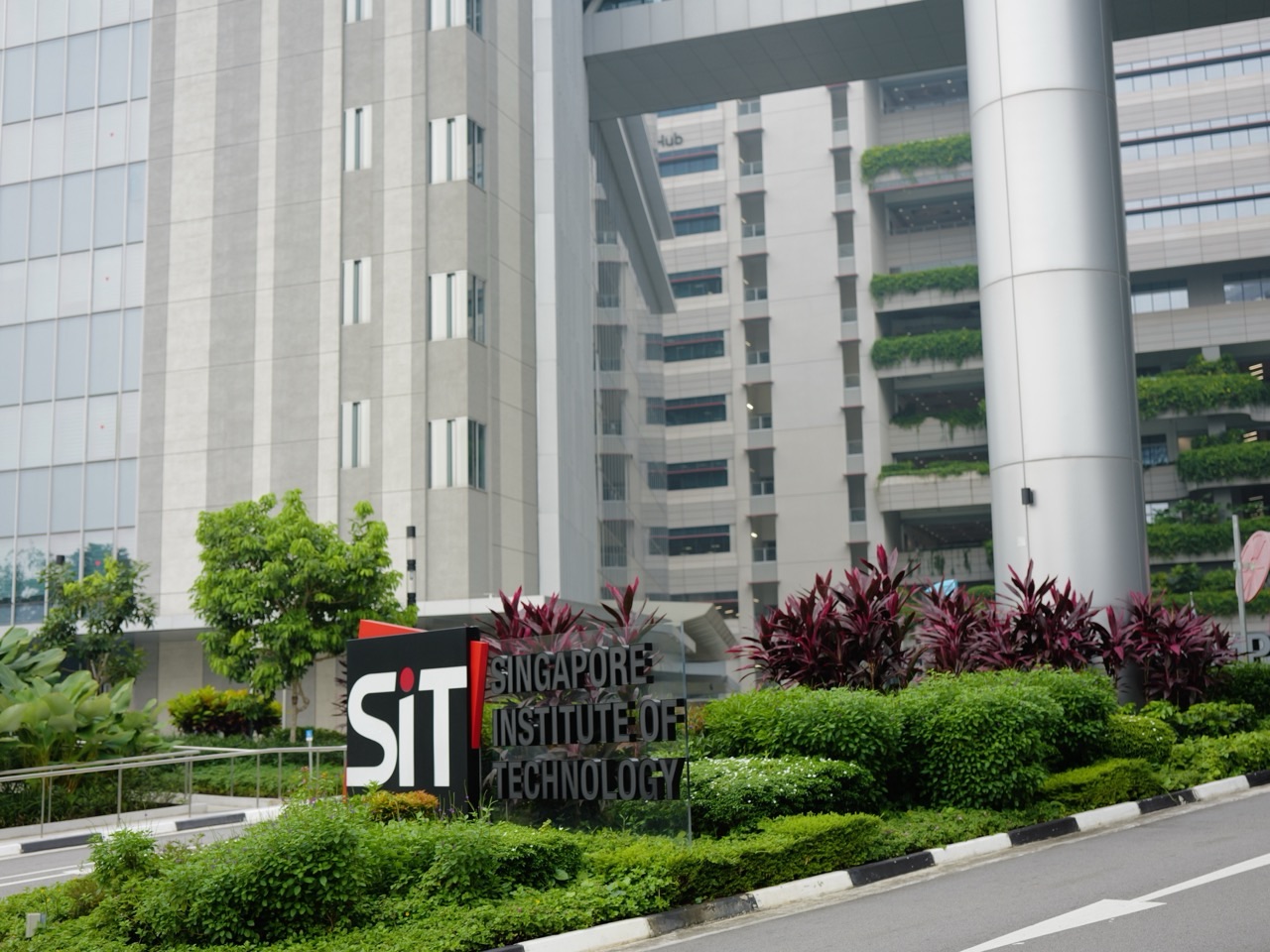
2. Map the accredited Nursing study pathway at SIT Punggol without assuming campus access
Where: Singapore Institute of Technology, Punggol campus, and SNB’s accredited programme listing.
Professional or educational reason
SNB’s current list of programmes leading to registration identifies Singapore Institute of Technology’s Bachelor of Science in Nursing, with a three-year duration, as a pre-registration nursing programme. The listing locates the programme at SIT Punggol Campus, Block 13, 13 New Punggol Road. This matters because ‘nursing degree’ can refer to different pre-registration and post-registration pathways. The names, award levels, eligibility requirements and intended professional outcomes should be checked against accreditation, not inferred from a university’s reputation or a social-media advertisement.
Step-by-step safe learning task
Read the SNB pre-registration programme page and the relevant current SIT admissions information. Build a one-page pathway showing potential entry requirements, study duration, clinical placement or simulation requirements as actually stated by the institution, qualification and the separate SNB registration process. Mark any admission conditions still to be verified. Write down three questions a prospective student should ask an authorised course representative, such as which academic qualifications qualify, which clinical learning environments are assigned and how professional fitness requirements are assessed. Do not turn a building’s public exterior into a claim that laboratories offer walk-in tours.
Worked Punggol example
A school leaver sees an older webpage about a university nursing programme and assumes every nursing qualification immediately qualifies someone as a Registered Nurse. The SNB list makes the specific accredited programme and its pathway clear, while registration itself is a separate professional step. The learner corrects their chart to show approved programme completion followed by the applicable registration or enrolment process, subject to SNB’s current requirements. The correction prevents a misleading career promise.
What to study next
Compare the RN pre-registration listings for SIT, NUS and the listed polytechnics without ranking them by prestige or claiming admission to all. Identify which programmes confer a degree, which confer a diploma and what official professional status graduates may apply for. Discuss how simulation, clinical placement, patient communication and assessment can all be part of nursing education while remaining unavailable for unsupervised public practice. A student can also research SIT’s location in Punggol Digital District, separating public community areas from teaching space.
Clinical boundaries and safety
Only authorised students, staff and invited participants may enter restricted classes or simulation labs. A published programme description does not guarantee an open day, available application place or successful professional registration. Never invent clinical placement availability or future employment outcomes.
Official source: Map the accredited Nursing study pathway at SIT Punggol without assuming campus access. Verify current professional or venue requirements before a real visit.
3. Study a primary-care patient’s journey through Punggol Polyclinic on paper
Where: SingHealth Polyclinics – Punggol, 681 Punggol Drive, Oasis Terraces #02-01.
Professional or educational reason
SingHealth’s official Punggol Polyclinic page identifies the location at Oasis Terraces near Oasis LRT and explains a patient-facing arrival process involving registration, a queue ticket and service-specific directions. For a Nursing student, the lesson is continuity of care and patient-centred communication, not access to treatment rooms as a casual visitor. An appointment, triage, a consultation, diagnostics and follow-up can be distinct stages. A clear journey map can reveal where patients need understandable information and why sensitive information should not be overheard or recorded by unauthorised observers.
Step-by-step safe learning task
Read the Punggol Polyclinic public visitor page and draw a fictional journey from arrival to leaving. Use only steps the operator actually describes; mark clinical triage, consultation or testing as hypothetical stages if they are not confirmed for the scenario. For a fictional older patient with difficulty reading small text, propose how clear signage and appropriate staff assistance might support the visit. Ask which information a nurse could legitimately share in a real setting and which requires secure handling. If visiting the shopping centre for an unrelated public errand, do not enter the clinic to observe people or gather data.
Worked Punggol example
A student draws a generic flowchart that sends every patient straight from check-in to an X-ray and then to pharmacy. The clinic’s real processes depend on the service and appointment, so the chart overstates a universal route. The corrected diagram includes decision branches: consultation required, tests ordered if clinically indicated, and next steps explained by authorised staff. It also clearly marks which details come from the public page versus classroom assumptions. This teaches safe workflow design and prevents false patient instructions.
What to study next
Develop a communication card with three fictional patient questions: ‘Where do I register?’, ‘What do I do if I cannot find the room?’ and ‘Who can explain the next step of my appointment?’ Write clear, neutral responses that refer the person to actual clinic staff rather than replacing their instructions. Add a teach-back prompt that checks understanding without demanding private health details. Discuss barriers such as language, hearing, fatigue or mobility without claiming one hypothetical patient represents every visitor.
Clinical boundaries and safety
Punggol Polyclinic is operated by SingHealth Polyclinics; do not confuse it with a different healthcare cluster. The centre is a patient-care environment, not a freely accessible nursing observation lab. Actual appointment and operating hours must be checked with the clinic, and patient privacy takes precedence over fieldwork.
Official source: Study a primary-care patient’s journey through Punggol Polyclinic on paper. Verify current professional or venue requirements before a real visit.
4. Learn the blood-donation patient journey from HSA’s Bloodbank@One Punggol guidance
Where: Bloodbank@One Punggol, One Punggol, 1 Punggol Drive #02-38.
Professional or educational reason
HSA’s official September 2026 donation-location page identifies Bloodbank@One Punggol at One Punggol #02-38, and states that the location performs whole-blood donation only. HSA also lists the bloodbank’s weekday and weekend sessions and separate screening criteria. For Nursing students, this is a valuable desk study of donor assessment, safety, informed participation and clear communication. It does not mean the bloodbank offers clinical demonstrations to students or that a young learner may donate blood simply because the centre is nearby.
Step-by-step safe learning task
Read HSA’s current location and eligibility pages together, recording their review dates. Build a fictional donor pathway: pre-visit self-check, actual screening by HSA professionals, informed consent and blood donation only if clinically eligible, followed by the operator’s post-donation instructions. Do not make up specific thresholds beyond those confirmed by HSA, and do not interpret a general eligibility checker as final approval. A prospective eligible donor can use the real HSA booking channel if they independently want to donate; students should not arrive to watch phlebotomy or request access to sensitive records.
Worked Punggol example
An enthusiastic Secondary student reads that a donor usually needs to weigh at least 45kg and announces that a person meeting this criterion is automatically eligible. HSA’s current eligibility guide makes clear that screening includes health, recent illness, medication, travel and haemoglobin considerations, and that staff make the final assessment. The corrected statement says the weight criterion is only one part of eligibility and no donation should occur without official screening. This is careful clinical reasoning rather than informal diagnosis.
What to study next
Compare the roles of donor education, donor screening and donation care, using HSA’s public material. Design a plain-language card explaining what information a person should check before making a trip, while referring medical questions to HSA staff. For an older Nursing student, discuss why donor confidentiality and appropriate adverse-event reporting depend on the operator’s trained professionals. No one should attempt a blood collection simulation with a needle or a person at home.
Clinical boundaries and safety
HSA’s current listing says only whole-blood donations are available at the Punggol site. The website lists Monday and Wednesday–Friday noon to 8pm and Saturday–Sunday 9.30am to 5pm, with Tuesday and public holidays closed, but check the actual date and any revised notice. Blood donation is voluntary and requires professional eligibility assessment; do not turn it into a compulsory student assignment.
Official source: Learn the blood-donation patient journey from HSA’s Bloodbank@One Punggol guidance. Verify current professional or venue requirements before a real visit.
5. Practise proper hand hygiene using official HealthHub guidance
Where: A clean sink at home or in an approved school demonstration area.
Professional or educational reason
HealthHub’s official hand-hygiene educational page explains that washing hands well helps reduce transmission of germs and describes an eight-step handwashing approach. It calls for thorough scrubbing for at least twenty seconds and identifies fingertips, between fingers, backs of hands, thumbs and wrists as areas people often miss. Infection prevention is a foundational Nursing concern, but repeating a public health habit is different from performing clinical aseptic technique or issuing medical orders. Students can safely learn the ordinary habit without access to patients, cultures or disinfectant experiments.
Step-by-step safe learning task
At a normal household sink, use water and ordinary hand soap as recommended by HealthHub. Read the current step guide and practise the sequence at a comfortable pace, covering the areas it identifies. Dry hands in the usual hygienic way. If the student is learning to explain the habit, write a short teaching script that addresses when handwashing matters. Check understanding by asking a willing family member to paraphrase the purpose, not by inspecting or grading their hands without consent. Keep the demonstration hygienic and modest, without suggesting it creates clinical sterile hands.
Worked Punggol example
A student washes palms quickly and announces that all hand hygiene is complete. The HealthHub guide highlights other parts of the hands that also require attention. The student changes the demonstration to include between fingers, fingertips, thumbs, backs and other areas identified by the guide, using adequate time. The correction concerns coverage and technique rather than a claim that a visual inspection has proved every microorganism was removed.
What to study next
Create a fictional patient-education leaflet with three short messages: what to do, when it is useful and how a person can ask questions if physical or sensory needs make the steps difficult. Compare clear plain-language instructions with dense technical wording. An advanced Nursing student can use SNB professional materials to distinguish everyday household hygiene from the formal clinical infection-control protocols applied during patient care. Those protocols must be learned and assessed in authorised settings.
Clinical boundaries and safety
Do not culture bacteria, use unknown disinfectants, mix cleaning chemicals or perform clinical procedures in household conditions. HealthHub’s consumer guide does not replace workplace infection-prevention and control procedures or a professional student’s required supervised assessment.
Official source: Practise proper hand hygiene using official HealthHub guidance. Verify current professional or venue requirements before a real visit.
6. Build a fictional clinical communication handover without real patient data
Where: Home or school study table, using SNB’s professional conduct and communication expectations.
Professional or educational reason
Patient safety depends on information being communicated accurately to the right authorised team. Nursing students can practise concise structured handover thinking without copying a real medical chart. The important habits are identifying the situation, supplying relevant background, describing observed information in an appropriate way and knowing when to escalate uncertainty. A classroom exercise should show what the student actually knows versus what has been inferred. It should not encourage an unregistered learner to diagnose or recommend medication.
Step-by-step safe learning task
Write a clearly fictional case with no real name, identity number, address, institution record or medical file. Use a structure suitable for educational handover, such as Situation, Background, Assessment and Recommendation, while making clear that formal workplace tools depend on local policy and professional supervision. In the situation section state why help is being requested; in background summarise only the relevant invented context; in the assessment section record reported observations without overstating them; and in the recommendation section ask for an appropriate authorised review rather than prescribing treatment.
Worked Punggol example
Fictional simulation: ‘A classmate in a role-play says they feel unwell.’ The initial handover states a severe diagnosis despite having no evidence. The corrected version says: ‘This is a hypothetical participant reporting feeling unwell; no clinical observations or diagnosis have been established; an appropriately qualified professional would need to assess a real patient.’ The improved handover is more accurate because it clearly names the information gap. Students can demonstrate clarity without impersonating a professional or collecting someone else’s symptoms.
What to study next
Run an information-loss test with two consenting students using only invented details. One reads the fictional handover, the other repeats the key facts. Compare what was lost and whether irrelevant material obscured the main issue. Revise the handover for clarity. Then add a privacy test: would the exercise still work if the names and identifying details were removed? If yes, keep them out. Discuss escalation thresholds only through the actual school’s approved teaching protocols.
Clinical boundaries and safety
Never use identifiable patients, real medical records, private nursing handover messages or medication prescriptions as classroom data without authorisation. A simulated handover is not permission to assess a patient or provide clinical instructions.
Official source: Build a fictional clinical communication handover without real patient data. Verify current professional or venue requirements before a real visit.
7. Learn vital-sign data literacy with invented numbers, not health assessments of strangers
Where: A private study space, with hypothetical clinical records clearly labelled fictional.
Professional or educational reason
Nursing education includes observation, interpretation, documentation and escalation, but vital signs such as temperature, pulse, respiration and blood pressure must be assessed in context by appropriately trained personnel. Students can develop arithmetic and data-quality skills using made-up measurements without turning a family walk into a medical screening or using one reading to diagnose disease. The most useful beginner lesson is that a number without a timestamp, unit, device details or clinical context can be misleading.
Step-by-step safe learning task
Create an invented four-row table with time, a single fictional measured variable, its unit, and a missing or suspicious value. For example, use body temperature in degrees Celsius for a pure data-validation exercise, choosing numbers that are not attributed to any real individual. Ask which rows have complete data, whether the entries use consistent units, and what should happen when a reading is missing. Students should not label a simulated numeric change as a diagnosis; they should identify uncertainty and the need for a trained clinical assessment in real cases.
Worked Punggol example
A fictional dataset contains 36.6°C at 08:00, 36.8°C at 10:00, a blank at noon and 37.0°C at 14:00. The difference between the first and last invented values is 0.4°C. A careless chart might replace the blank with 0°C and show a huge temperature plunge. The corrected chart preserves the missing observation, labels it as unknown and states that the example demonstrates data handling, not a patient’s actual condition or an interpretation of health status.
What to study next
Design a safe form with required fields: measurement time, unit, method or instrument reference, data entry verification and a status field for missing readings. Ask why patient identification is necessary within an actual authorised medical record but should not be included in a public educational demonstration. More advanced students can consider why repeated values and changes over time need clinical context, equipment quality and professional interpretation rather than numerical thresholds alone.
Clinical boundaries and safety
Do not take strangers’ vital signs, use clinical equipment without permission, interpret a relative’s readings as a substitute for a doctor or publish private health records. Actual clinical assessment, escalation and documentation are governed by trained nursing staff and institutional policy.
Official source: Learn vital-sign data literacy with invented numbers, not health assessments of strangers. Verify current professional or venue requirements before a real visit.
8. Compare safe falls-prevention education with unsupervised mobility testing
Where: Home desk research using Health Promotion Board and MOH community falls-prevention resources.
Professional or educational reason
The Health Promotion Board publishes clinical guidance on falls prevention for older adults living in the community. For Nursing learners, falls risk is a practical question about environment, mobility, medication context and individual circumstances. A student’s immediate task is to recognise why prevention may require coordinated professional assessment. An educational review of public guidance does not justify asking an older relative to perform a balance test or walk without their usual assistance. Respecting dignity and safety is part of the professional outlook.
Step-by-step safe learning task
Read HPB’s available falls-prevention clinical guidance and create a desk-based risk-environment checklist using a completely fictional home plan. Include lighting, cluttered passage, stable walking surfaces, secure storage and a clear route to necessary items. Label which points are general environmental considerations and which would require clinician-led assessment. If reviewing your own home, remove an ordinary safe obstacle or improve lighting through appropriate household means rather than performing physical tests on a person. Keep medical or mobility decisions with qualified professionals.
Worked Punggol example
A fictional student notices a relative uses a walking aid and suggests taking it away to test whether they are really stable. That could create risk and disrespects the person’s support needs. The corrected educational exercise maps the home environment and asks what professional advice or accessible design would help maintain safe movement. The student can improve a cluttered pathway without attempting to diagnose or test balance.
What to study next
Prepare a plain-language conversation for a nurse and a fictional client about concerns with moving safely at home. Include open-ended questions, respect for preferences and a reminder that a clinician can coordinate appropriate advice. The student should learn the difference between empowering a person and making decisions for them. Add a documentation note explaining that an actual professional assessment belongs in the secure authorised clinical system.
Clinical boundaries and safety
Never stage falls, remove aids, attempt unsupervised gait or balance tests, move a person against their preference or give medication advice. Medical or rehabilitation questions require relevant clinicians, not a casual household experiment.
Official source: Compare safe falls-prevention education with unsupervised mobility testing. Verify current professional or venue requirements before a real visit.
9. Learn the proper route to emergency first-response training instead of practising on a person
Where: SCDF Responders Plus Programme information, with formal sessions arranged through authorised providers.
Professional or educational reason
SCDF’s Responders Plus Programme provides an online component covering basic first aid, CPR-AED and emergency preparedness and an in-person practical component at designated SCDF Division Headquarters. The official page describes an approximately forty-five-minute online course and four-hour hands-on component. These are community emergency-preparedness opportunities, not substitutes for an SNB-accredited nursing degree or supervised clinical placement. Nursing students can nevertheless learn the importance of validated training, scope and team response from the programme’s structure.
Step-by-step safe learning task
Read SCDF’s RPP page and determine which components, dates and registration steps are currently offered. Begin with the genuine online theory programme if eligible and interested. For hands-on competencies, apply through the official registration route and use only approved training devices under an instructor. On paper, compare what a trained community first responder can reasonably do under current SCDF guidance with the much broader professional role of a registered nurse. Avoid creating your own demonstration that involves chest compressions on a family member or operating a real AED for fun.
Worked Punggol example
A Secondary student watches a short CPR video and announces that they are now certified to perform every emergency medical procedure. The official RPP descriptions include actual programme structure and formal learning, and professional Nursing registration is an entirely separate SNB process. The student revises the claim: watching an online video can introduce concepts, while practical competence, certification and clinical authority each depend on their relevant requirements. The correction avoids dangerous overconfidence.
What to study next
Draw a simulated emergency communications chain without performing medical interventions: recognise a possible urgent problem, call the correct emergency service, share accurate location information, follow authorised instructions and allow responders access. In a real emergency the SCDF call-taker guides the response. Discuss why team roles, safe scene assessment and an accurate handover matter across both community response and nursing practice.
Clinical boundaries and safety
Never make test calls to 995, initiate a fake myResponder incident, remove an AED from public deployment or practise shocks or compressions on an unsuspecting person. Formal medical techniques require authorised training and real emergencies require immediate official guidance.
Official source: Learn the proper route to emergency first-response training instead of practising on a person. Verify current professional or venue requirements before a real visit.
10. Practise respectful patient education and teach-back using a completely fictional case
Where: Home or authorised school setting with SNB, HSA and HealthHub as source references.
Professional or educational reason
A nursing professional must be able to explain an approved care instruction in a form a patient can understand. The teach-back approach asks a person to describe in their own words what they understood, rather than merely agreeing or saying ‘yes’. For a student exercise, the content should be simple and safe, such as explaining where official clinic information can be found or why standard handwashing matters. It must not involve telling a real person to change prescribed treatment or interpreting their medical diagnosis. Communication quality is not the same as speaking at great length.
Step-by-step safe learning task
Choose a factual consumer health message from HealthHub, for example the importance of ordinary soap-and-water hand hygiene. Write a thirty-second explanation using everyday language and no unexplained abbreviations. Ask a consenting family member to paraphrase the steps in a hypothetical role-play. Listen for the first part that is unclear and revise the wording. If the learner’s own explanation was ambiguous, take responsibility for the communication instead of blaming the listener. Record the resulting revised script, not the person’s private health details.
Worked Punggol example
A student tells a fictional visitor, ‘Apply an antimicrobial intervention according to protocol.’ The visitor cannot tell what action is meant. The student replaces it with plain language about washing hands thoroughly with soap and water and checking the official guide for details. The listener can now explain the intended everyday action back in their own words. This is a communication improvement, not a clinical treatment or instruction to discontinue any prescribed plan.
What to study next
Try a second scenario about finding the correct Punggol Polyclinic registration point from the operator’s public page. Write a short explanation, then ask the listener what they would do if they cannot find the right room. A good response includes seeking authorised staff help. Add an accessibility variation for limited vision or language comfort without pretending that one family member represents every patient. An advanced student can use professional SNB communication standards for a reflective note about dignity and consent.
Clinical boundaries and safety
Use fictional identities and avoid collecting real diagnoses, medications, personal numbers or patient responses. Do not convert the role-play into unsolicited medical advice. Actual discharge teaching and clinical consent follow institutional and professional rules.
Official source: Practise respectful patient education and teach-back using a completely fictional case. Verify current professional or venue requirements before a real visit.
Three realistic Nursing learning itineraries
A two-hour source-led Nursing preparation session
Begin with SNB’s Guidelines and Standards and its approved pre-registration programmes page. Identify which document describes professional registration, which describes role competencies and which lists SIT’s particular degree programme. Spend about thirty minutes building a simple education pathway and another thirty writing a fictional situation where a student must seek supervision. Finish with a short reflection on confidentiality and scope. The work is appropriate for a prospective student and requires no clinical equipment or patient contact.
A community-service mapping afternoon
Use SingHealth’s official Punggol Polyclinic page and HSA’s Bloodbank@One Punggol page from home. Mark the correct two separate locations: Punggol Polyclinic at Oasis Terraces, #02-01, and Bloodbank@One Punggol at One Punggol, #02-38. Create two public-facing information cards showing the actual operator, address and questions visitors should check before travelling. Compare how the services handle public arrivals and eligibility. Do not attempt to observe patients, access donation areas as a researcher or infer confidential workflow steps from a waiting room.
A safe communication-and-data workshop
At a private study table, prepare an entirely fictional set of four timed observations, with a deliberately missing value. Ask the student to preserve that gap rather than silently invent a replacement. Then write a short role-play in which the learner describes the missing information and asks an appropriate supervisor for clarification without diagnosing anyone. Close with a safe household handwashing practice and a teach-back check. The workshop develops precision and communication, not clinical authorisation.
Four errors to look for in a student’s first Nursing exercise
Mistake one: confusing eligibility with actual professional status
A student sees that an education programme is SNB-accredited and writes that admission alone grants the right to practise nursing. Accreditation describes the educational programme’s relevant approved status; completion and the appropriate registration or enrolment requirements are separate. The correction should name the actual programme, intended qualification, route to professional eligibility and responsible regulator. This prevents the student from overclaiming authority.
Mistake two: collapsing different Punggol healthcare services into one place
A study map can accidentally place Punggol Polyclinic at One Punggol because both names contain the town. The operator’s actual records correct the error: SingHealth Punggol Polyclinic is in Oasis Terraces, while HSA’s bloodbank is within One Punggol. A wrong address is not a small cosmetic mistake in healthcare information; it can send a person to an unrelated venue. Check the complete address and operator on the exact authoritative page before publication.
Mistake three: treating an invented reading as a patient’s diagnosis
Fictional temperature or pulse numbers are useful for practising units, missing values and documentation. They are not records of an actual person. Replacing a blank entry with zero, adding a medical label without a clinical context or using a simulation to advise someone to change treatment would cross an important boundary. Correct the dataset first and explain the clinical questions that require supervised professional assessment.
Mistake four: confusing watching training content with competency
An online SCDF RPP module introduces community lifesaving knowledge, but watching a video or reading an article does not establish competency for every practical procedure. SNB’s professional requirements are separate again. The corrected progression names the actual theory course, practical training component and the credential or supervision relevant to the intended activity. A student should never create an unsafe practice scenario to prove confidence.
What a safe and credible student portfolio contains
- A one-page SNB source index with document titles and review dates.
- A nursing-education pathway using current accredited programme details.
- A fictional clinic journey that labels real public information separately from imagined clinical branches.
- A blood-donation eligibility flow diagram with a clear note that HSA staff make the final decision.
- A HealthHub-based household hygiene explanation written in plain language.
- A fully invented structured handover with no private patient information.
- A toy dataset retaining timestamps, units and missing values.
- A falls-prevention environmental checklist that does not test a person’s balance.
- A formal training enquiry using SCDF’s genuine programme rather than improvised physical simulation.
- A dated reflection identifying one corrected error and its implications for patient dignity or safety.
Frequently asked questions
Can I study Nursing in Punggol?
Yes. SNB lists Singapore Institute of Technology’s Bachelor of Science in Nursing at SIT’s Punggol campus among accredited programmes leading toward Registered Nurse registration, subject to the actual education and professional requirements.
Where does SNB list SIT’s Nursing programme?
Its accredited pre-registration programme list identifies SIT Punggol Campus, Block 13, 13 New Punggol Road, with the relevant Nursing degree details.
Is a Nursing degree the same as SNB registration?
No. Successful completion of an eligible accredited programme and the professional registration or enrolment process are distinct requirements.
Can a Secondary student practise clinical nursing at home?
No. They can study approved educational materials and complete harmless simulations, but real patient procedures require appropriate professional authority and supervision.
Who regulates nurses in Singapore?
The Singapore Nursing Board regulates nurses and midwives and publishes the relevant professional standards and accredited programme information.
Where is Punggol Polyclinic?
SingHealth Polyclinics – Punggol is at 681 Punggol Drive, Oasis Terraces #02-01, near Oasis LRT.
Is Punggol Polyclinic at One Punggol community hub?
No. It is at Oasis Terraces; HSA’s Bloodbank@One Punggol is within the One Punggol hub.
Can I visit Punggol Polyclinic simply to observe real patients for a school project?
Do not do so without specific formal authorisation. Patient privacy and clinical access rules apply.
Where is Bloodbank@One Punggol?
HSA lists One Punggol, 1 Punggol Drive #02-38, Singapore 828629.
Can I donate any type of blood product at Bloodbank@One Punggol?
HSA’s current location listing states whole-blood donation only at this site; other collection services may be available at different bloodbanks.
Does HSA’s eligibility checker guarantee acceptance?
No. HSA states that a medical screening professional at the bloodbank makes the final eligibility assessment.
Can a 16-year-old donate blood in Singapore?
HSA has age-related eligibility rules, including additional parental consent requirements for eligible minors; check its current donor guidance and final professional assessment.
Does completing the HealthHub handwashing guide make someone clinically sterile?
No. It teaches ordinary hand hygiene and does not substitute for the formal infection-control protocols required in clinical care.
How long does HealthHub recommend scrubbing with soap and water?
Its public guidance describes thorough washing for at least twenty seconds using the prescribed handwashing sequence.
What is a structured nursing handover?
An organised communication of relevant context and observations to an authorised professional, following the applicable clinical institution’s protocol.
Can Nursing students use real hospital records in a class presentation?
Only where specifically authorised and protected by institutional privacy and professional rules. Fictional or approved anonymised teaching cases are preferable.
Can a pulse or temperature reading alone diagnose an illness?
No. Clinical interpretation depends on the context, measurement quality, other information and qualified assessment.
What should be done with a missing measurement in a practice dataset?
Preserve it as missing or unknown; do not silently substitute a value that was never measured.
Can a student test an older relative’s balance for a Nursing assignment?
Not as an unsupervised exercise. Use approved educational materials and refer real falls concerns to relevant healthcare professionals.
What is SCDF’s Responders Plus Programme?
It is an official community emergency-preparedness training pathway with online and in-person components covering first aid, CPR-AED and related skills.
Does SCDF RPP qualify someone as a Registered Nurse?
No. Community response training and SNB professional nursing education and registration are different pathways.
Can I practise CPR on someone at home after watching a video?
Do not conduct improvised practice on a person. Use approved courses and suitable training equipment, and follow real emergency-service instructions in emergencies.
What is teach-back communication?
A communication technique in which the listener explains key information in their own words, helping the educator check and improve clarity.
Why is patient privacy central to nursing study?
Personal health information is sensitive and should only be handled for authorised professional or educational purposes under appropriate rules.
What belongs in an early Nursing student’s portfolio?
Current regulatory references, a documented study pathway, safe fictional workflows, communication scripts, data-quality exercises and reflections on boundaries and improvement.
Official nursing sources and related eduKate Punggol resources
- Read Singapore Nursing Board competencies before assuming a student may practise independently
- Map the accredited Nursing study pathway at SIT Punggol without assuming campus access
- Study a primary-care patient’s journey through Punggol Polyclinic on paper
- Learn the blood-donation patient journey from HSA’s Bloodbank@One Punggol guidance
- Practise proper hand hygiene using official HealthHub guidance
- Build a fictional clinical communication handover without real patient data
- Learn vital-sign data literacy with invented numbers, not health assessments of strangers
- Compare safe falls-prevention education with unsupervised mobility testing
- Learn the proper route to emergency first-response training instead of practising on a person
- Practise respectful patient education and teach-back using a completely fictional case
- SNB current registration guidance for local graduates
- HSA blood donor eligibility and professional screening
- HSA Bloodbank@One Punggol location, hours and whole-blood service
- SNB standards for nursing education
- SCDF myResponder and Community First Responders
- Punggol Polyclinic location, appointment and service guide
- Related Punggol public health and prevention learning
- Related family communication and age-appropriate learning
- Punggol privacy, professional rules and source analysis
- eduKateSG worked-example and error-diagnosis learning reference
Safe nursing learning starts by knowing what is yours to do
Punggol provides real Nursing-related reference points through SIT’s accredited education, SingHealth’s primary-care services, HSA’s blood-donation network and Singapore’s community emergency training. Their value to a beginning student lies in understanding systems, communication, patient dignity and professional boundaries—not gaining unofficial access to people or procedures. Choose one question, read the correct authority, practise with an explicitly fictional case and describe the first error you corrected. That is a reliable foundation for the supervised clinical learning that formal Nursing education requires.


