
The top 10 things to do in Punggol for Journalism students are to write a verified news lead from Punggol Coast MRT’s opening, check the phased Heritage Trail, keep ethical field notes at Waterway Park, conduct a willing family interview, caption a Punggol night-market photograph accurately, make a properly labelled environmental data chart, cover a real REACH public consultation, verify food-safety claims through SFA, report two verified MRT artworks and publish a short source-led article with a corrections log.
Best first reporting assignment: write one 35-word lead about a documented Punggol event using the agency’s original announcement. Distinguish the date it was announced from when it occurred. A second strong option is a ten-minute lawful observation from a safe Waterway Park viewpoint, with a notebook recording only what was actually seen. Neither exercise requires claiming a press credential, photographing strangers intrusively or gaining access to private premises.
This October 2026 guide is about producing trustworthy local journalism, rather than simply spotting fake news. It develops news selection, interviewing, photography, data journalism, attribution, fair reporting and corrections. Public facts are sourced to LTA, JTC, NParks, NLB, NEA, REACH, SFA and SBS Transit; invented interview or numerical examples are identified as fiction, not current Punggol events.
Choose your newsroom skill
- News writing: answer who, what, when, where and why in a useful lead.
- Reporting: keep a dated fact-and-observation ledger and distinguish it from promotion.
- Interviews: preserve the speaker’s meaning, consent and context.
- Photographs: verify the photographer, date, precise place and caption claim.
- Data: label units, time frames, regional scope, missing values and source.
- Public policy coverage: separate consultations, proposals and final decisions.
- Fairness: identify the correct licensed food establishment before reporting claims.
- Arts reporting: distinguish artist attributions, operator descriptions and personal interpretation.
- Editing: provide a corrections path and publish only what the evidence supports.
A news report is a promise to the reader
A local news story should answer an immediate reader question without requiring an entire investigation to learn the most important fact. ‘Punggol Coast MRT opened in December 2024’ is useful background. ‘Punggol Coast MRT opens today’ would be wrong if published in October 2026. ‘A market near Punggol MRT looks busy in this photograph’ is a possible observation, but not proof of today’s opening or annual attendance. Journalism is making each sentence as precise as the original evidence permits.
Different sources have different authority. LTA is a primary source for railway openings, NParks for park gate hours, SFA for food-establishment grades, NLB for its exhibition and SBS Transit for its Art-in-Transit descriptions. An interviewed resident can provide a firsthand recollection or preference but not a substitute for an operating notice. A photographer’s caption may identify when an image was made; a search-engine preview may not. Students should keep a source ledger instead of relying on a collection of unsaved browser tabs.
Good reporting is also a craft of limitation. A sample of three people does not represent Punggol’s entire population. A library exhibition cannot confirm a rumoured construction date on its own. An agency’s consultation page cannot establish that the proposed policy has been adopted. A robust article names the missing evidence openly rather than filling it with plausible details.
Ten journalism assignments around Punggol
1. Write a five-Ws news lead using Punggol Coast MRT’s opening
Where: At home or the library, with LTA’s dated Punggol Coast opening announcement.
Why this assignment matters
A news lead answers the reader’s immediate question before decorative background. The Land Transport Authority’s October 2024 announcement identified the opening of Punggol Coast MRT on 10 December 2024 along the North East Line. A journalist must distinguish the announcement date from the date passenger service began. When students use a historical event as a reporting exercise, they should not describe the opening as happening today. The five Ws—who, what, when, where and why—help structure a factual lead without pretending that every detail has equal news value.
Reporting workflow
Read the original LTA release rather than a social snippet. On a worksheet write the issuing organisation, actual event, scheduled date, line and intended area served. Draft a 35-word lead with an accurate past tense. Check whether the date refers to the report or event. Then add a second paragraph explaining the broader district connectivity using LTA or JTC as the source. Keep quotes only if actually present in a source and cite them accurately.
Worked Punggol editing example
Weak lead: ‘Punggol is finally getting a new MRT station today!’ It is misleading in October 2026. Better lead: ‘Punggol Coast MRT, the North East Line extension serving Punggol Digital District, opened for passenger service on 10 December 2024, following LTA’s October announcement.’ The improvement is verified chronology and clear relevance, not lengthier prose.
A more demanding follow-up
Ask the student to update the historical brief for 2026 without claiming a new opening. A responsible update could focus on currently documented public district amenities and explain what remains planned. Create a correction log for any sentence that shifts accidentally from ‘was announced’ to ‘is operating’ without evidence. Try a second lead that targets a commuter rather than a town-planning reader, preserving the same facts.
Ethics and source limitations
Never fabricate eyewitness quotations, event attendance, ridership numbers or a photo from a date you did not attend. A station’s public opening does not make university offices and business premises open to reporters.
Official source: Write a five-Ws news lead using Punggol Coast MRT’s opening. Check any time-sensitive claim again immediately before publication.
2. Build a source list before reporting Punggol Heritage Trail
Where: JTC’s current community page and the official first-stretch heritage opening material.
Why this assignment matters
One common failure in local journalism is writing from a future map as though every proposed amenity is physically usable. JTC identifies the first 400 metres of the Punggol Heritage Trail as open, while the full planned route is about 1.3 kilometres. A credible news brief must use the correct project phase, refer to the current operating description and tell visitors what can be relied upon. A headline that omits ‘first phase’ can mislead even when every number in the story appears somewhere in a document.
Reporting workflow
Collect a dated source ledger with the first-stretch opening announcement, JTC’s current page and one historical reference about Old Punggol Road. For each, write what it can establish: date opened, currently confirmed portion or heritage context. Draft a short brief leading with the documented portion. Add a clearly labelled ‘still to verify’ sentence for any other section. Do not use a map graphic without its planned-versus-open legend.
Worked Punggol editing example
Draft headline: ‘Entire 1.3km Punggol Heritage Trail Now Open.’ It is unsupported if the current primary page confirms only the first 400 metres. Revised headline: ‘First Opened Section of Punggol Heritage Trail Connects District Visitors With Old Road History.’ A reporter can then cite JTC for the exact open length and seek a later official update before describing full access.
A more demanding follow-up
Create a source hierarchy separating the project owner’s operating updates, a contemporaneous announcement, an artist’s rendering and a secondary visitor blog. Compare which supports a practical travel instruction. A student should learn that newer writing can still recycle an older map and that even official forecast dates may change before actual opening.
Ethics and source limitations
Never enter fenced trail sections to ‘verify’ future works or publish unofficial entry shortcuts. Current on-site signs and construction safety always outrank a photo or archive.
Official source: Build a source list before reporting Punggol Heritage Trail. Check any time-sensitive claim again immediately before publication.
3. Take a lawful ten-minute observation notebook at Waterway Park
Where: A small open portion of Punggol Waterway Park where stopping is safe.
Why this assignment matters
Local reporting needs observations distinct from promotional adjectives. NParks documents named bridges, park zones and public facilities; a journalist can then describe what actually happened at a specific place and time. An individual ten-minute observation does not constitute a survey of all visitors or all seasons. Writing ‘the park was crowded’ needs context: crowded compared with what and measured how? The basic craft is recording verifiable detail while respecting other park users.
Reporting workflow
Before visiting, select one safe public viewpoint and read the NParks guide. Record a timestamp, weather conditions, signs, sounds and visible circulation without identifying strangers. Describe one factual feature, such as a verified named bridge if its location is certain, and one observation such as a temporary path diversion if actually seen. Write five neutral sentences before making any judgement. Leave out any wildlife species whose identity you cannot establish and any crowd estimate not based on a defensible method.
Worked Punggol editing example
First note: ‘Everyone in Punggol enjoys cycling by the waterway.’ This claim is not supported by a short observation. Better: ‘During a ten-minute observation from a lawful Waterway Park viewpoint, some cyclists used the shared path, while other visitors walked.’ The revised note is still informative but does not assign preferences to every resident.
A more demanding follow-up
Write the same facts for two audiences: a visitor wanting practical path guidance and a planner asking about circulation. Keep the observed data identical and change only the explanation of why it matters. Discuss how a journalist can tailor a lead without distorting the underlying evidence. Include a small uncertainty note where a direction sign or temporary barrier was not visible.
Ethics and source limitations
Do not stop in the middle of a cycle lane, film identifiable children or gather private interviews from strangers without appropriate permission. NParks rules may regulate organised filming separately from ordinary observation.
Official source: Take a lawful ten-minute observation notebook at Waterway Park. Check any time-sensitive claim again immediately before publication.
4. Conduct a consent-first interview about a Punggol experience
Where: A willing family member or adult who agrees to a private interview.
Why this assignment matters
An interview gives a person a voice, not automatic verification of every external fact. NLB’s Punggol Stories uses local memories alongside researched collections, illustrating why testimony should be preserved with its context and checked against documents where appropriate. An ethical student journalist should make the purpose clear, respect voluntary participation and avoid extracting emotional or identifying details merely to make a feature seem more dramatic.
Reporting workflow
Choose a simple topic such as a favourite route, change in daily shopping habits or experience of borrowing books. Explain whether the interview is for private classwork or publication and obtain appropriate informed permission. Prepare six open-ended questions; ask the person to distinguish what they remember from what they know through records. Take notes or record only with agreement. Afterwards verify externally checkable statements such as the opening year of a transport station using the appropriate original authority. Keep unverified memories attributed as recollections.
Worked Punggol editing example
A relative says, ‘I remember the waterway being much quieter when we first visited.’ The journalist can accurately write that the relative remembers it feeling quieter, if permission was given. They cannot turn that into ‘official visitor volume has doubled’ without attendance data. The distinction between observed sentiment and quantified change prevents the story from falsely claiming precision.
A more demanding follow-up
Create a transcript audit that compares a raw answer with the short quotation selected for the article. Does trimming change the speaker’s meaning? If the interviewer misheard a place name, request clarification rather than silently choosing the better-known landmark. A useful journalism portfolio includes notes showing why an attributed quote is faithful.
Ethics and source limitations
Avoid interviewing identifiable minors or vulnerable people without the appropriate safeguards. Do not publish a person’s home address, school identifiers or private contacts. Consent for a classroom interview is not automatically permission for public video distribution.
Official source: Conduct a consent-first interview about a Punggol experience. Check any time-sensitive claim again immediately before publication.
5. Compare a news photograph with what its caption actually proves
Where: An existing lawful Punggol Pasar Malam photograph or a photographer-owned local image.
Why this assignment matters
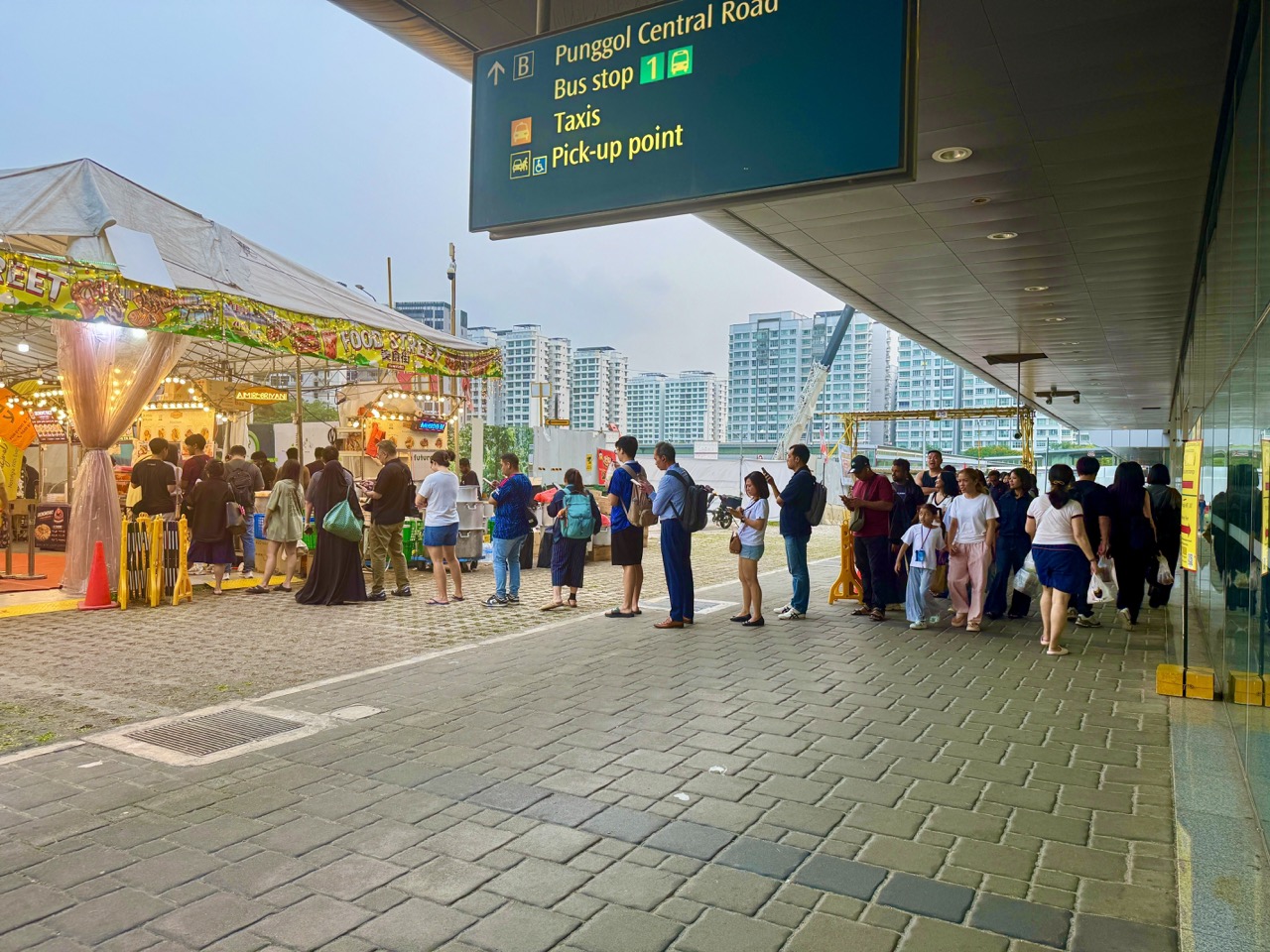
A picture of a queue may be genuine, but it cannot by itself establish the average waiting time, the number of customers during a whole event or whether that market is operating this evening. Good photojournalism preserves the source, date and place rather than using an image merely because it makes a story look busy. For example, a Punggol MRT night-market image can show people queued when it was taken, but a headline about future market dates needs a fresh organiser confirmation.
Reporting workflow
Use a photograph you own or are licensed to study. Record its original filename or credits, capture date when verified, exact location supported by trustworthy evidence and what is clearly visible. Write one factual caption and one misleading caption only in a private exercise. Ask a peer to identify which words in the misleading caption add unsupported claims. If reporting an event currently, independently verify the organiser, current operating period and access rules; do not recycle an undated photograph as proof that an event is live.
Worked Punggol editing example
A picture shows a line of people near Punggol MRT. Weak caption: ‘Thousands of Punggol residents queuing for hours tonight.’ The photograph provides no verified total, average wait or live date. Responsible caption: ‘Visitors queue at a Punggol night market near the MRT in this photographer’s dated image; event operating dates require separate confirmation.’ Even this wording needs the owner and location verified.
A more demanding follow-up
Check how a crop might remove the shopfront or public sign necessary to distinguish locations. Compare a full-frame image and a cropped frame while retaining truthful context. Ask whether a truthful image can still mislead through an inaccurate headline or publication date. Maintain rights and privacy records for any subsequent use.
Ethics and source limitations
Do not post identifiable people, especially children, without considering consent, privacy and venue rules. Do not use fake crowds, AI-manipulated evidence or third-party photos without clear disclosure and lawful reuse.
Official source: Compare a news photograph with what its caption actually proves. Check any time-sensitive claim again immediately before publication.
6. Turn official NEA air-quality data into a responsible small news chart
Where: Home or library research using NEA’s current air-quality explanations.
Why this assignment matters
Environmental data reporting fails when a chart drops its units or scope. NEA explains that Singapore’s one-hour PM2.5 values and 24-hour PSI are distinct measures and identifies Punggol among the towns in its North air-quality reporting region. A regional value should not be relabelled as a sensor at a particular Punggol street. Journalists should attach the data’s exact time, period, original agency and relevance to the reader before drawing a trend.
Reporting workflow
Read NEA’s air-quality FAQ. Prepare a fictional five-record PM2.5 example with clear unit µg/m³ and distinct timestamps, explicitly labelling it a teaching dataset. Display a missing value as missing rather than zero and show an appropriate axis. Write a report explaining the value and its time window without making personal-health claims. If using real information, retrieve a lawful official current dataset and preserve the timestamp and reporting region. Never pair an old screenshot with a ‘live’ headline.
Worked Punggol editing example
Fictional values 10, 12, missing, 20 and 18 µg/m³ have a valid-entry mean of 15 µg/m³. A draft story says ‘Punggol household pollution is exactly 15 today.’ The data were invented, and even an authentic North-region result would not represent a particular home. The corrected caption says ‘illustrative regional PM2.5 handling example—not actual readings’. Accuracy begins with naming what the numbers are.
A more demanding follow-up
Compare an hourly measure with a rolling 24-hour index and ask whether they can be averaged into one value. They cannot be treated as the same unit. Add an editorial question about why a short series does not prove the source of pollution; attribution requires independent meteorological and emissions evidence. A good data journalist distinguishes association from causal explanation.
Ethics and source limitations
Do not publish fictional alerts as current public-health warnings. For real decisions about outdoor activity, direct readers to NEA’s current advisories and professional health guidance where appropriate.
Official source: Turn official NEA air-quality data into a responsible small news chart. Check any time-sensitive claim again immediately before publication.
7. Report an open REACH consultation without presenting it as a vote
Where: Singapore’s live REACH public consultations listing; Punggol used only as a reader context.
Why this assignment matters
REACH’s consultation portal carries exercises from different government agencies with distinct periods, questions and status labels. Journalists who cover policy should distinguish the opening of a consultation from the adoption of a policy. REACH says feedback submitted through consultation pages goes directly to the responsible agency; it is not a public plebiscite whose outcome is automatically determined by the number of comments. A local reporter may explain why an islandwide proposal matters to Punggol residents while remaining neutral about whether readers should support it.
Reporting workflow
Choose a genuinely open consultation from the official REACH list and record the ministry or agency, question being asked, opening and closing dates and current status. Draft a 100-word neutral brief with the source linked. Create a short paragraph identifying the possible relevance to local users without inventing their opinions. If the issue is sensitive, seek attributable viewpoints from different directly affected parties with informed permission, and distinguish stated preferences from representative research. Do not manufacture quotes.
Worked Punggol editing example
Bad lead: ‘Government has decided to change the scheme after Punggol residents voted.’ A consultation listing proves that input is being invited; it does not establish implementation or a Punggol vote. A better lead says the named agency is seeking feedback by the listed deadline and summarises what the draft proposal covers. The updated status should be checked on publication day.
A more demanding follow-up
When the exercise closes, compare what the source later publishes: summary of responses, revised proposal or final regulatory change. Report each stage with the correct tense. Identify whose perspectives were included and which evidence is still missing. This teaches procedural accuracy without campaigning for a policy outcome.
Ethics and source limitations
Do not submit feedback impersonating another person or claim to speak for all residents. Consultations may close or change, so the date and status must be verified immediately before publishing any event-style call to action.
Official source: Report an open REACH consultation without presenting it as a vote. Check any time-sensitive claim again immediately before publication.
8. Verify a food-safety grade before making any allegation about a stall
Where: Punggol hawker or dining context, studied via SFA’s official SAFE guidance.
Why this assignment matters
The Singapore Food Agency implemented its Safety Assurance for Food Establishments framework on 19 January 2026, with grades A, B, C and NEW according to the applicable track-record rules. Individual food stalls are covered in the relevant category, while an entire hawker centre’s primary operator is not necessarily graded as one kitchen. A claim about a named business can affect reputation and livelihood, so reporting requires exact entity identification, an up-to-date official record and careful language.
Reporting workflow
Read SFA’s SAFE framework page and the track-record search tool. In a simulated reporting task use a fictitious stall, clearly marking it as imaginary. Explain how the real licensed establishment would be matched with its licence or SFA QR information if a legitimate news story required checking. Keep old A-to-D grading descriptions separate from the current system. Never assume a customer star rating proves the hygiene grade or assign a grade to a whole hawker centre based on one stall.
Worked Punggol editing example
A forwarded screenshot says ‘Punggol Hawker Centre has a D-grade in the 2026 SAFE system’. The new system does not use D as a current grade. That is sufficient to flag the wording as outdated or inconsistent, but not sufficient to accuse any real named stall of a violation. A proper correction would explain the new framework and withhold an individual business claim until its current official record is verified.
A more demanding follow-up
Draft two questions for an SFA press enquiry: which licence record applies and what period the grade reflects. Ask what a new operator’s NEW classification signifies and why it should not be reported as evidence of a major lapse. This exercise develops procedural fairness and careful attribution in reporting about vulnerable reputations.
Ethics and source limitations
Do not publicly allege health offences or photograph a specific business as guilty from a fictional case. Editorial accuracy and any applicable defamation or privacy risks need professional consideration for actual reporting.
Official source: Verify a food-safety grade before making any allegation about a stall. Check any time-sensitive claim again immediately before publication.
9. Report the meaning of rail artwork rather than inventing the artist’s words
Where: Punggol MRT NE17 and Punggol Coast MRT NE18, SBS Transit Art in Transit descriptions.
Why this assignment matters
SBS Transit identifies Water, Landscape and Future by Goh Beng Kwan at Punggol MRT and TRAJECTORIES by Zul Othman at Punggol Coast MRT. The works provide source-backed opportunities for local arts journalism, but it is essential to distinguish the operator’s description, the artist’s own statement if actually published and a reporter’s interpretation. A visual observation cannot establish what the artist personally thought unless there is an attributable interview or statement.
Reporting workflow
Read the SBS Transit operator descriptions and create a small fact card for each artwork: exact title, artist, rail station and publicly described theme or medium. From permitted public viewing positions if travelling, describe one visual feature without blocking commuters. Draft a short arts lead that credits the artist correctly. In a separate review paragraph explain a personal reading using words such as ‘the reporter interprets’ rather than putting quotation marks around something never said.
Worked Punggol editing example
A student writes ‘Zul Othman said Punggol’s future must be a digital utopia’ based only on TRAJECTORIES’ imagery. The quote is invented. A corrected sentence attributes to SBS Transit that the work reflects Punggol’s transformation through the artist’s personal connection, then identifies the student’s own interpretation as such. The report remains engaging while separating documentation and commentary.
A more demanding follow-up
Compare the two artworks as a reported cultural feature about different artistic approaches to memory and landscape. Avoid converting a personal preference into an objective ranking without criteria. If an interview with an artist is ever arranged, confirm identity and consent and preserve direct quotes accurately.
Ethics and source limitations
MRT passenger areas have safety and photography rules. Do not film intrusively, use equipment that impedes movement or enter restricted station facilities to see an artwork more closely.
Official source: Report the meaning of rail artwork rather than inventing the artist’s words. Check any time-sensitive claim again immediately before publication.
10. Publish a short local report with a real corrections log
Where: A Punggol school or private writing desk using official local sources.
Why this assignment matters
A finished journalism exercise combines a sharp lead, reliable sourcing, accurate image description and an accountable correction process. NLB’s S.U.R.E. approach—Source, Understand, Research, Evaluate—provides a useful final audit, but an original news report goes further: it states the angle, attributes quotes and data, checks operational details and allows a reader to retrieve sources. A correction should be recorded if the article sent people to a wrong station or treated a planned trail as open.
Reporting workflow
Choose one narrow non-defamatory topic from this guide. Write a factual lead and a paragraph explaining why the news matters, cite at least two appropriate sources where possible, and add a properly attributed image caption if you have a lawful image. Review every date, number, place name and quotation against the source. Create a private ledger listing any change made during editing. Invite a reader to identify what action they could safely take from the report, then correct information that is missing or misleading.
Worked Punggol editing example
A draft story calls the coastal rail terminal ‘Punggol Point MRT’. That combines Punggol Point LRT with Punggol Coast MRT, two different places. The editor checks LTA’s map and corrects the station name and route before publication. The corrections log records the original mistake, its source of confusion and the verified replacement. The result is more useful than silently ignoring the issue.
A more demanding follow-up
Use a small post-publication check a few days later for changeable facts such as opening hours or consultation deadlines. Update material errors transparently; archived facts need not be rewritten into present tense. A good portfolio includes the original assignment brief, final article, source list, image rights record and one concrete correction. It should not claim professional newsroom approval without it.
Ethics and source limitations
Do not publish schoolchildren’s private details, invented quotations, fake interviews or unsupported accusations. Student reporting should follow teacher/editor rules, applicable site terms and informed consent. No research goal authorises trespassing or interrupting public operations.
Official source: Publish a short local report with a real corrections log. Check any time-sensitive claim again immediately before publication.
Three complete local journalism exercises
A desk-only news brief with a source ledger
Choose LTA’s Punggol Coast MRT opening or JTC’s first Heritage Trail segment. Make a two-column ledger of exact claim and authoritative source, then write a 35-word lead and a 100-word explanation. Verify all dates, distinguish operating facilities from planned features and identify the first sentence that could mislead a visitor. Correct it and retain the revised version. This is a complete evidence-led reporting task even if the student never leaves home.
A safe public observation and caption assignment
From a lawful point at Waterway Park, observe for ten minutes without blocking the shared path. Write what is visible, the time, weather and one possible follow-up question. If no photography permission or clear privacy basis exists, use an original sketch instead of recording bystanders. Compare a literal factual caption with a speculative one and explain why the latter needs additional evidence. Finish with a short location-accurate paragraph.
A consent-first human-interest feature
Interview a consenting adult privately about a non-sensitive part of everyday life in Punggol. Make the intended use clear and preserve original statements accurately. Check external facts separately with official sources, such as a station’s opening or the function of a community hub. Write the person’s memory as their memory, not a universal town history. Before sharing outside class, confirm consent, privacy and image or audio rights.
A news editing checklist that prevents predictable errors
- State the central news fact in the opening paragraph.
- Verify event date separately from article publication and document-update dates.
- Identify the exact agency responsible for each operational claim.
- Use the correct Punggol park, transport station and facility names.
- Separate interview recollection, measured data and reporter interpretation.
- Avoid presenting a plan, proposed policy or promotion as an active service.
- Check all numbers for units, timestamps, geography and relevant denominators.
- Protect the privacy of interviewees, children and bystanders.
- Review image copyright, capture date, location and caption accuracy.
- Preserve a short dated correction record for any material factual repair.
Frequently asked questions
What makes a good Punggol news lead?
It gives the main verified fact promptly, including who, what, where and when where relevant, while linking to the correct original source.
Can students report on events they did not personally attend?
Yes, with proper attribution to original records and clear distinction from firsthand observation. Never pretend to be an eyewitness.
When did Punggol Coast MRT open?
LTA scheduled and opened passenger service on 10 December 2024; an article published in 2026 should use past tense.
Can an old planning map establish that a trail is fully open?
No. JTC’s current operating information identifies the first 400m of the planned Punggol Heritage Trail as open.
Can a news student observe Punggol Waterway Park?
Yes, from lawful public routes while following park rules and not disturbing visitors. Organised filming has separate conditions.
Can one observation describe what every resident thinks?
No. A small sample cannot represent the whole town without an appropriate research method.
Do journalists need consent for interviews?
Explain the purpose and use, follow school/editorial and applicable legal requirements, and obtain appropriate agreement especially for identifiable or sensitive recordings.
Can a quote be shortened?
Only without changing its meaning; retain accurate source records and any relevant conditions attached to the interview.
Does a photograph of a night-market queue prove the market operates today?
No. The image’s actual capture date and organiser’s current event dates are separate facts.
Can a reporter reuse any image found in a search engine?
No. Check photographer, image rights, licensing and context rather than assuming public visibility grants reuse rights.
What region does NEA assign Punggol for air-quality reporting?
NEA’s FAQ places Punggol within the North reporting region; that is not a street-level or private indoor reading.
Why do news charts need timestamps?
Because the same measure can change, and an authentic old value may be misleading when labelled live.
What does REACH consultation status mean?
It indicates whether a listed agency feedback exercise is open, closed or at another review stage, not automatically an adopted policy.
Can reporters present consultations as public referendums?
No. REACH consultations are feedback processes for agencies, not binding votes.
What is the SAFE food-establishment system in 2026?
SFA’s framework started on 19 January 2026 and uses track-record-based categories including A, B, C and NEW.
Can a grade for one hawker stall describe an entire hawker centre?
No. Identify the exact licensed establishment and confirm its current SFA record before reporting a grade.
Which artworks can be covered at Punggol MRT stations?
SBS Transit identifies Water, Landscape and Future by Goh Beng Kwan and TRAJECTORIES by Zul Othman at two different stations.
Can an arts writer invent an artist quote?
No. The operator’s description and the writer’s interpretation must be attributed separately from any actual artist statement.
What belongs in a corrections log?
The erroneous claim, accurate replacement, supporting source, date and whether readers’ decisions may have been affected.
Does a student need a professional press pass?
No for ordinary source-led classroom writing; a press pass does not grant entry to private sites or override venue and privacy rules.
Official primary sources and related Punggol guides
- Write a five-Ws news lead using Punggol Coast MRT’s opening
- Build a source list before reporting Punggol Heritage Trail
- Take a lawful ten-minute observation notebook at Waterway Park
- Conduct a consent-first interview about a Punggol experience
- Compare a news photograph with what its caption actually proves
- Turn official NEA air-quality data into a responsible small news chart
- Report an open REACH consultation without presenting it as a vote
- Verify a food-safety grade before making any allegation about a stall
- Report the meaning of rail artwork rather than inventing the artist’s words
- Publish a short local report with a real corrections log
- SFA actual licensed establishment SAFE grade lookup
- REACH explanations of agency feedback routing
- Related Punggol media literacy and source checks
- Related Punggol film and ethical production
- Punggol archives and historical source provenance
- eduKateSG first-error diagnosis and worked-example model
A trustworthy local report knows precisely what it can prove
Punggol’s changing transport, waterways, exhibitions and public services provide meaningful journalism assignments. Start with one reader question, find original evidence, collect only lawful observations and put the supported fact first. Good student reporting becomes valuable when the writer knows when to attribute, when to seek a second source, and when to correct a sentence that seemed convincing but went beyond the evidence.


