
The top 10 things to do in Punggol for Media Literacy students are to apply NLB’s S.U.R.E. method at Punggol Regional Library, distinguish Punggol Park from Waterway Park, verify Coney Island’s gate hours, separate the opened Heritage Trail from its full plan, tell Punggol Coast MRT from Punggol Point LRT, check timestamps on NEA haze screenshots, read JTC solar estimates accurately, verify SFA SAFE food grades, trace the origin of historical or AI-created images and practise checking suspicious local payment or school messages through ScamShield.
Best first activity: pick one concrete Punggol claim, then use NLB’s Source, Understand, Research and Evaluate checklist. For example, NParks identifies Punggol Park as being in Hougang, not the same place as Punggol Waterway Park. For something time-sensitive like opening hours, school procedures or train service, read the present official page rather than relying on an undated social-media screenshot.
This October 2026 guide is for Primary, Secondary and JC readers learning to navigate a world of search results, reposted images, generative AI, promotional language and rapidly changing local developments. It does not ask students to distrust everything. It teaches them to match the exact claim to the right source, preserve dates and uncertainty, and avoid spreading unverified allegations or scams.
NLB’s S.U.R.E. method in four questions
- Source: who created the information and who is accountable for it?
- Understand: what does the claim actually say, and what wording could be misunderstood?
- Research: what primary record, official document or independent source could verify it?
- Evaluate: does the evidence support the whole statement, a narrower statement or no clear conclusion?
Good fact-checking starts with a single claim
A long travel article can contain genuine information and one wrong place name; a government development announcement can be authentic while describing a future plan rather than a completed facility. Media literacy works best when students identify a testable sentence instead of labelling an entire source true or false based on a title. Separate the original wording, source date, verification source, and corrected conclusion.
A second discipline is knowing what the authority can answer. NParks confirms park locations and visitor information. LTA confirms rail network and service matters. JTC explains its district and planned facilities. NEA explains air-quality metrics. SFA maintains relevant food establishment records. NLB preserves library and historical sources. A source that is trustworthy on one topic is not automatically the best authority for another.
The third discipline is keeping a gap when information is unavailable. An image without provenance should remain unverified, not automatically declared AI-generated. A planning timeline should remain a projection until a genuine opening notice establishes completion. A screenshot of a regional measurement should not be inflated into evidence about every Punggol home. The gap makes the report more useful.
Ten practical Punggol media-literacy exercises
1. Apply NLB’s S.U.R.E. method at Punggol Regional Library
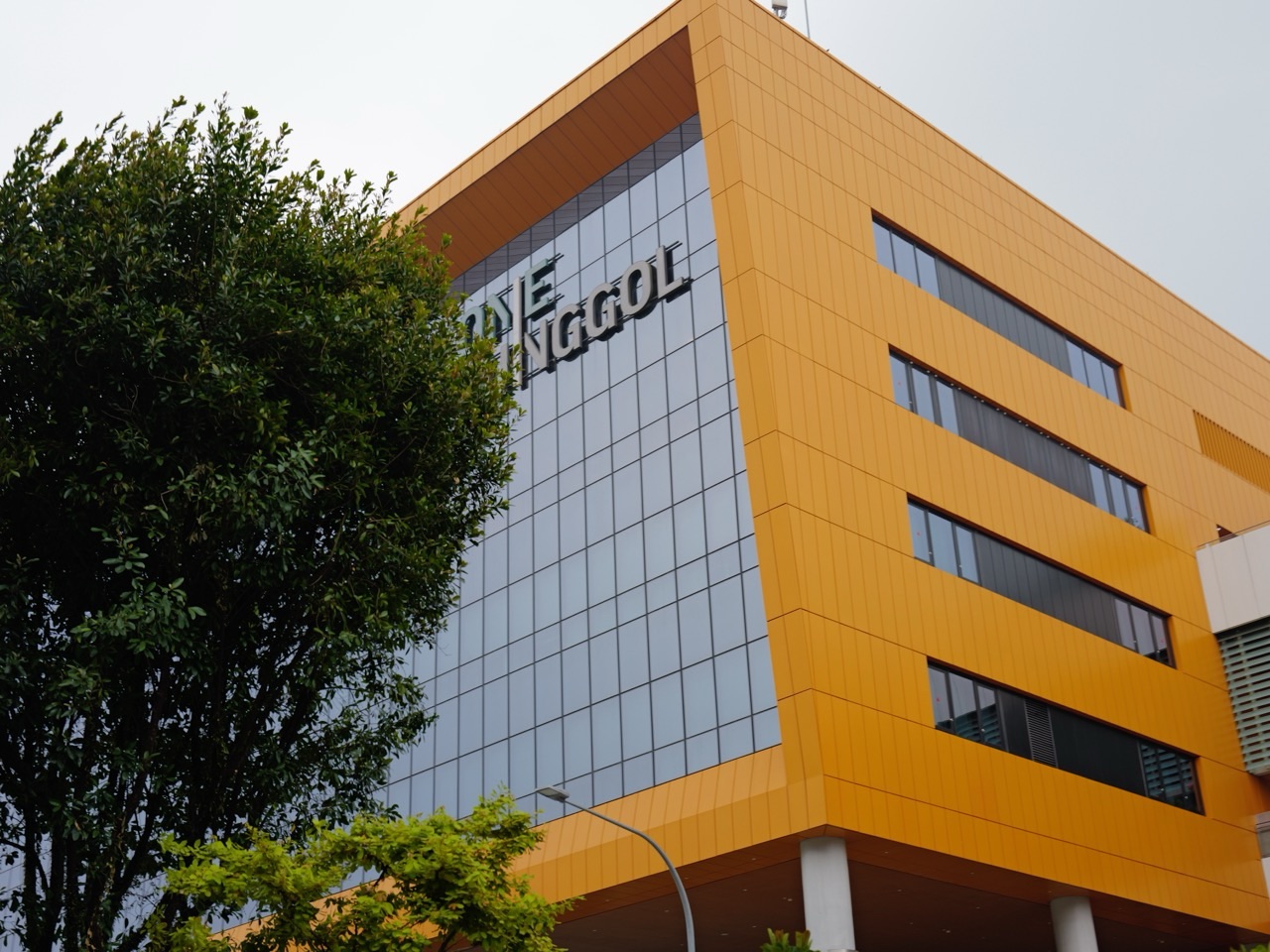
Where: Punggol Regional Library at One Punggol, Levels 1–5, plus NLB’s online courseware.
Why this claim is worth checking
The National Library Board’s S.U.R.E. programme spells out Source, Understand, Research and Evaluate. It offers levels for Primary, Secondary and pre-university learners, so media literacy is not simply calling a story fake based on a feeling. Punggol Regional Library provides an ordinary local setting where students can select a subject, trace a source and ask what it actually supports. An attractive title or popular social-media post does not replace a clear author, original publication and context.
How to verify the information
Choose one narrow factual claim about Punggol, such as where a park is located. In a notebook write the full claim without changing its meaning. Under Source, identify the author or institution; under Understand, define what the claim is asking; under Research, look for the relevant primary authority; and under Evaluate, decide whether the authority supports the exact assertion, only part of it, or none of it. Record the URL, date and scope. Do not reproduce copyrighted articles in full.
A worked correction
A student finds a travel post titled ‘Best Punggol Parks’ and copies its location caption without checking. Using S.U.R.E., they discover that the page mixes nearby districts and Punggol proper. The student corrects the caption and adds a citation rather than dismissing all local travel writing as unreliable. The useful behaviour is matching each claim to appropriate evidence, not judging a whole publication by a single error.
The harder question
Ask two classmates to verify the same hypothetical claim independently and compare not only their conclusions but their source paths. If they agree, check whether they both copied the same unverified source. Independent corroboration matters only when the underlying evidence is not the same repeated mistake. Older students can discuss source provenance, conflicts of interest and the distinction between a factual source and opinion.
Privacy, copyright and safety limits
Library facilities have normal access and programme rules; ordinary browsing is not permission for a noisy private workshop. Do not publish photographs of other patrons without consent. The S.U.R.E. learning framework is a method, not a machine that automatically certifies every fact.
Primary or programme source: Apply NLB’s S.U.R.E. method at Punggol Regional Library. Recheck dates for time-sensitive claims.
2. Catch the common Punggol Park versus Punggol Waterway Park mix-up
Where: NParks’ official park pages, checked from home or at a public library.
Why this claim is worth checking
NParks places Punggol Park at the junction of Hougang Avenues 8 and 10, while Punggol Waterway Park is in the Punggol town waterway corridor. An article may use both names in one list, but its location description should not silently merge the two places. This is a strong local fact-checking exercise because the place names appear similar and readers may assume they describe the same destination.
How to verify the information
Open NParks’ individual official park pages, not only a search engine snippet. Record each full name, location and distinctive visitor information. Check whether the secondary source says ‘in Punggol’, ‘near Punggol’ or ‘accessible from Punggol’, because those are different claims. Write a corrected two-sentence description that preserves the original article’s helpful intent while correcting the misleading geography. If using a map, label the real park rather than pinning a name to a guessed point.
A worked correction
An illustrative blog caption says Punggol Park’s lake is beside Waterway Point. NParks instead locates Punggol Park in Hougang, so the combined claim is incorrect. A corrected caption might say ‘Punggol Waterway Park is the landscaped town waterway park; Punggol Park is a separate park in Hougang’. This does not require accusing the original writer of deliberate deception; it establishes the actual referents.
The harder question
Write a short place-name glossary with separate entries for Punggol Point, Punggol Coast, Punggol Waterway Park and Punggol Park. Explain why search terms can mix them up. Check which agency manages or documents each place, noting that the correct authority will depend on whether the subject is a park, station or town facility.
Privacy, copyright and safety limits
Do not invent nearby travel times or precise coordinates from memory. Public place names may remain similar while service and maintenance information changes; use current operator details for a visit.
Primary or programme source: Catch the common Punggol Park versus Punggol Waterway Park mix-up. Recheck dates for time-sensitive claims.
3. Verify Coney Island opening hours rather than trusting a viral evening itinerary
Where: NParks’ Coney Island Park visitor page and public entrance signs.
Why this claim is worth checking
NParks lists Coney Island Park as open from 7am to 7pm. Yet an appealing nightlife itinerary might recommend entering the rustic island at 8pm based on unrelated promenade photos. A media-literate reader should ask whether the photograph shows the island, another coastal area or an image from a different date. Operating hours are actionable facts: errors can cause wasted trips or unsafe decisions.
How to verify the information
Begin with the statement ‘Coney Island is open at night’ on a fictional sample itinerary. Find the park’s actual official opening hours and exact permitted entrances. Separate the island park from public Punggol Point Park or other nearby promenades with different hours. If visiting, check on-site closures and allow a suitable exit buffer. Write a source note including access date, because a future change must not be judged using a screenshot without a date.
A worked correction
A parent sees a night photo with the caption ‘Coney Island after 9pm’. The photo might depict a nearby coast or simply be mislabelled. The parent does not infer the island gate must be open from the image. NParks’ published 7am–7pm hours provide the relevant visitor fact, and the family chooses an appropriate daytime alternative.
The harder question
Ask which evidence could support a claim about a temporary extended opening or special event. An official dated notice for the relevant date might change the answer, while a generic old video does not. The important skill is checking the specific day and source rather than memorising a rule without context.
Privacy, copyright and safety limits
Do not enter a closed park to investigate whether the rumour is true. Avoid risky after-dark routes, and distinguish photography rights from physical access permissions.
Primary or programme source: Verify Coney Island opening hours rather than trusting a viral evening itinerary. Recheck dates for time-sensitive claims.
4. Separate the opened Heritage Trail from the full 1.3km masterplan
Where: JTC’s Punggol Digital District community page and the signed public Heritage Trail.
Why this claim is worth checking
JTC’s current Punggol Digital District community page says the first 400 metres of Punggol Heritage Trail are open, while the complete planned trail is 1.3km. The original official 2025 opening announcement described further work expected by end-2026, but a projected completion date is not proof that every metre is open on the day a family travels. This is a classic case of media headlines mixing announcement, plan, partial delivery and live operating status.
How to verify the information
Read the current JTC community page and the dated 23 August 2025 announcement separately. In a table record what was announced, when the first section opened, what length was explicitly confirmed and which portion remains described as planned or requiring further confirmation. If visiting, use only current signs and open public entrances. Never draw a walking route through a fenced section because it appears as one connected line on a promotional map.
A worked correction
A travel article says ‘Walk Punggol’s completed 1.3km Heritage Trail today’ and cites a 2025 announcement that expected later completion. The reader checks JTC’s current amenity listing, which explicitly confirms the first 400m. A corrected guide advertises the confirmed public section and tells visitors to verify any additional openings before attempting the longer route.
The harder question
Compare the wording of planned, slated, under construction, opened and operating. Ask what a primary source would need to say to justify changing a map label to fully open. A source’s publication date and the actual event date must also be recorded separately.
Privacy, copyright and safety limits
Construction conditions can change; current site barriers and authority notices govern access. Do not describe a future opening as an accomplished fact or use a planning illustration as permission to enter.
Primary or programme source: Separate the opened Heritage Trail from the full 1.3km masterplan. Recheck dates for time-sensitive claims.
5. Fact-check a misleading Punggol Coast versus Punggol Point transport post
Where: LTA’s official North East Line and Punggol LRT network information.
Why this claim is worth checking
Punggol Coast MRT (NE18) and Punggol Point LRT (PW3) are different places reached by different parts of the rail system. A short post that casually swaps them can misdirect visitors, especially if it claims a seaside attraction sits at a station whose name sounds similar. LTA’s route and station information is the appropriate authority for a rail claim; a photo of a train alone is not enough to identify the stop.
How to verify the information
Use LTA’s current operating rail map. Write the station codes and identify which line or loop each belongs to. Read a fictional social-media caption stating that both names refer to the same station. Evaluate whether the official map supports that claim and produce a corrected description. If the post contains a journey duration, do not replace it with a guessed number; use LTA’s current journey planner when the date and origin are known.
A worked correction
A visitor searches for Punggol Point Park and is told to get off at Punggol Coast MRT because its name sounds coastal. The official rail map shows the distinct stations, so the person checks a legitimate current route to the real park. The correction is about the precise destination, not about which station is more fashionable or new.
The harder question
Explain why a station code can be more reliable than a casual short name and why abbreviations need context. Create a fake-to-correct comparison card containing only the station name, line and a source URL. Train the habit of verifying a proposed route before leaving, not simply trusting an attractive route video.
Privacy, copyright and safety limits
Service directions, transfer patterns and temporary changes are time-sensitive. Do not invent a live fare or train interval from an undated guide.
Primary or programme source: Fact-check a misleading Punggol Coast versus Punggol Point transport post. Recheck dates for time-sensitive claims.
6. Check the timestamp and region on a Punggol haze screenshot
Where: NEA myENV environmental information, viewed safely indoors.
Why this claim is worth checking
A screenshot of an authentic NEA reading can still mislead if reposted on a different day or stripped of its reporting region. The one-hour PM2.5 concentration and 24-hour PSI are also not interchangeable. A post claiming ‘Punggol’s exact air quality now’ from a regional number may overstate the geographic precision of the source. Media literacy and statistics meet at metadata: value, unit, time, place and source.
How to verify the information
Use NEA’s official app guide to locate the separate air-quality metrics. Create a fictional sample screenshot or use a non-sensitive older image only with its actual timestamp visible. Build a five-field source card: source, retrieval time, reference period, geographic region and unit. Compare what the original panel actually states with a fabricated viral caption such as ‘this proves the haze is gone at my block’. Write a correction that points to the current official advisory for real decisions.
A worked correction
A student sees an undated social post saying PSI 40 means the one-hour PM2.5 was 40µg/m³ throughout Punggol. The original NEA interface separates the PSI index from one-hour concentration data and labels regions. The corrected explanation identifies the two distinct measurements and avoids inventing current numbers. The social post may have combined two real-looking values incorrectly, even without using a false image.
The harder question
Ask what would be required to infer individual exposure. A regional environmental record would need to be complemented by location, activity, indoor conditions and a suitable personal measurement method. A source that is authentic but irrelevant to the question is still inadequate evidence.
Privacy, copyright and safety limits
Do not circulate fabricated current warnings or give health advice from an old screenshot. Consult current NEA advisories and appropriate medical guidance when needed.
Primary or programme source: Check the timestamp and region on a Punggol haze screenshot. Recheck dates for time-sensitive claims.
7. Learn to read JTC’s expected solar output as a projection, not a live meter
Where: JTC Punggol Digital District sustainability page.
Why this claim is worth checking
JTC states an expectation of about 3,000MWh of annual rooftop solar output and provides other projected environmental benefits for Punggol Digital District. A student reading a headline may accidentally convert ‘expected’ into ‘already achieved’. A technically precise number can still be a model output rather than an observed result. Media literacy requires paying attention to verbs, time periods and whether a figure was independently measured.
How to verify the information
Copy the exact meaning of a relevant JTC claim in your own words, preserving words such as expected, estimated and annual. In a second column write what a stronger claim like ‘the district produced 3,000MWh last year’ would require: actual metered data over a defined year. Separate electricity energy from instantaneous power and from carbon emissions. If making a classroom conversion, state which number came from JTC and which result is merely your own arithmetic.
A worked correction
A fictional article says, ‘JTC confirmed that Punggol Digital District now generates exactly 3,000MWh every year.’ The source expresses an annual expected output, which is not the same as confirming every operating year. A corrected sentence attributes the estimate to JTC and avoids asserting measured operational production. The numerical value remains useful when its status is accurately expressed.
The harder question
Compare project targets, commissioning reports, annual operating data and promotional summaries. Ask whether two reports describe the same system boundaries and period. This exercise illustrates why an impressive infographic needs context, not just a large coloured number.
Privacy, copyright and safety limits
Do not attempt to obtain private smart-grid data or access technical spaces. Cite the published source and keep your representation faithful to its claim.
Primary or programme source: Learn to read JTC’s expected solar output as a projection, not a live meter. Recheck dates for time-sensitive claims.
8. Verify a food-safety grade instead of repeating a Punggol stall rumour
Where: SFA’s licensed-establishment SAFE grade tool and a genuine public food outlet.
Why this claim is worth checking
SFA introduced its Safety Assurance for Food Establishments grading system in January 2026. A New grade indicates a newer establishment in the scheme’s track-record context; a casual blog may mistakenly present NEW as a failed inspection. Other rumours may show an outdated grade or a different licensed premise. SFA’s actual establishment search and licence QR code are far more reliable than an unattributed image of a letter grade.
How to verify the information
Choose a fictional claim about an imaginary stall, or check a genuine outlet with its current licence information and location. Verify the legal establishment identity, category, grade and timing against SFA’s official record. Compare that with the wording of the claim, recognising that a grade is not a laboratory test of a particular plate of food. Do not circulate unverified allegations about a real business in a class project.
A worked correction
A student sees an image cropped to the word NEW and a comment saying the outlet has been punished by regulators. The SFA framework describes NEW as a category for businesses with less than one year of operation. The student corrects the interpretation and explains why the cropped image lacked context. They do not then declare the food risk-free; they simply state what the grade does and does not mean.
The harder question
Ask what additional evidence would be necessary for a current hygiene violation claim. An authorised suspension or SFA public notice is different from a subjective dining complaint. A media-literate review can report service experience while avoiding unsupported statements about foodborne pathogens.
Privacy, copyright and safety limits
Do not enter stall kitchens or gather sensitive business information. Grades can change; verify them from the current authority tool rather than copying previous-year ratings.
Primary or programme source: Verify a food-safety grade instead of repeating a Punggol stall rumour. Recheck dates for time-sensitive claims.
9. Distinguish archival Punggol photographs from AI-generated or miscaptioned imagery
Where: NLB’s Punggol Stories exhibition, official archive credits and personal research desk.
Why this claim is worth checking
Punggol Stories at Punggol Regional Library presents local history and NLB’s collection context, including earlier kampong and farming life. A vivid image online may be authentic but taken elsewhere, cropped, artistically reconstructed or generated. No visual inspection method can always prove an image is artificial, especially after editing and recompression. The strongest fact-check uses provenance: who created it, when, where it originated and what the accompanying archival record says.
How to verify the information
Begin with a properly credited NLB exhibition image or a public catalogue description. Record the collection, creator if provided, date represented and original caption. Compare it with a completely fictional social post claiming to show the same scene. Ask what proof is missing if only pixels are provided. Use reverse-image searches or source tracing where available, but avoid uploading copyrighted or private photos to unknown services. Label any digital reconstruction as illustrative rather than archived history.
A worked correction
A student’s poster shows a polished picture of an old Punggol fishing village generated for a fictional story, then captions it ‘photograph, 1938’. The caption is unjustified because the picture is a contemporary illustration with no 1938 photographic provenance. The corrected poster reads ‘artist’s imaginative illustration of an earlier coastal setting’ and cites NLB separately for verifiable historical facts.
The harder question
Discuss why file metadata can be missing or modified and why an AI image detection score is not absolute proof. A source can be verified through collection records, publication lineage and genuine creator attribution, not simply a pixel-level guess. Compare ethical uses of illustration with misleading presentation as documentary evidence.
Privacy, copyright and safety limits
Do not invent named historical witnesses or reuse archival images without checking rights. Avoid uploading identifiable strangers’ photos to external detectors without consent, and distinguish ‘unverified’ from ‘definitely fake’.
Primary or programme source: Distinguish archival Punggol photographs from AI-generated or miscaptioned imagery. Recheck dates for time-sensitive claims.
10. Practise verifying a suspicious Punggol job, school or payment message
Where: Official ScamShield website, app or 1799 helpline, using invented practice messages at home.
Why this claim is worth checking
ScamShield’s October 2026 public education materials emphasise checking unexpected payment, work and investment claims. Its official app can help identify suspicious numbers, messages and links, and 1799 offers advice. A media-literate student must recognise that false authority can be built through a school name, a government-looking logo or a local community-group reference. Urgency, secrecy and requests for credentials are more important warning signals than whether a message sounds grammatically polished.
How to verify the information
Use a fictional message that claims a Punggol tuition or community programme needs an immediate payment through an unfamiliar link. Identify the alleged sender, the requested action, the supporting evidence and the independent verified contact route. Read ScamShield’s official guidance, then rehearse stopping rather than following a suspicious link. With a real questionable message, use the authorised ScamShield check or 1799 while protecting sensitive data and seek direct confirmation from the genuine institution.
A worked correction
A message says a child has won a Punggol school place but must send a Singpass code or pay a transfer fee immediately. The parent verifies the actual school or relevant MOE process through official contact channels rather than using the message’s link. A corrected family note separates a school’s real admission rules from the scammer’s unsupported offer. The practice scenario is fictional and should never be forwarded as though it really happened.
The harder question
Create a decision tree for unexpected job offers, advance payment requests and account-reset prompts. Discuss why HTTPS or a familiar logo alone is insufficient. Evaluate what a genuine official agency would actually require through its documented process, and how users can verify the sender independently.
Privacy, copyright and safety limits
Never share real passwords, OTPs, bank details or live malicious links for a classroom demonstration. If an incident has already caused harm, follow immediate bank, police and relevant official reporting steps. ScamShield is a helpful checking resource, not an infallible automatic verdict.
Primary or programme source: Practise verifying a suspicious Punggol job, school or payment message. Recheck dates for time-sensitive claims.
Three projects that can be completed without publishing anything false
A library source-tracing afternoon
Visit or study Punggol Regional Library’s S.U.R.E. resources and NLB’s Punggol Stories exhibition information. Choose one piece of genuine historical material and write a two-sentence factual summary with its proper collection credit. Then create a separate clearly labelled fictional illustration or hypothetical caption and explain why it cannot replace archival evidence. The result teaches attribution and the boundary between storytelling and history.
An opening-status comparison table
Using current NParks and JTC pages, compare Coney Island’s published gate hours with the status of the first opened Heritage Trail section and the fuller project plan. Write columns for the exact agency wording, event date, published date, last checked date, and what a visitor may safely infer. This is more reliable than memorising a promotional slogan or sharing an attractive future map.
A household message-verification practice
Build three invented text messages: an urgent fake school payment, a suspicious job offer requiring an advance fee and an apparently official login warning. For each, identify the sender claim and the requested action, then locate the authentic organisation using its own website or verified contact route. Rehearse using ScamShield’s official checking tools when appropriate. No real password, OTP or live malicious URL belongs in the exercise.
How to annotate a Punggol claim correctly
Use a compact evidence card with five fields: verbatim or accurately paraphrased claim; who said it; when; what reliable source says; and the precise conclusion. If the source confirms only part of a claim, do not hide the remaining uncertainty. A strong correction may use wording such as ‘JTC confirms the first 400 metres as open on its current page; the remainder is described as part of the full planned route’. This avoids treating old expected completion dates as fresh evidence.
If a screenshot shows an official source but omits the retrieval time, look up the current original source rather than deciding the screenshot is fraudulent. Authentic information can be stale. Conversely, a new attractive visual can be fabricated. Freshness and provenance are separate checks. A post can also be framed misleadingly while every number in it is real—for example, if an annual energy estimate is described as an instantaneous output.
Common media-literacy mistakes to catch
- Believing a claim just because a local place name sounds familiar.
- Treating Punggol Park and Punggol Waterway Park as one attraction.
- Using a night photograph to assume Coney Island’s gates are open late.
- Calling a planned Heritage Trail section fully opened without checking JTC’s current status.
- Swapping Punggol Coast MRT with Punggol Point LRT.
- Using an undated PSI screenshot as a live PM2.5 concentration at a private block.
- Turning an expected solar energy figure into measured operating performance.
- Assuming a food outlet’s NEW grade means a failed safety inspection.
- Declaring an image authentic or AI-generated without adequate provenance.
- Clicking an urgent job or school payment link because it has a familiar logo.
Frequently asked questions
What is media literacy?
The ability to find, understand, evaluate and use information responsibly while recognising evidence limits, persuasion, mistakes and manipulation.
What does S.U.R.E. mean?
NLB’s framework stands for Source, Understand, Research and Evaluate.
Can children learn S.U.R.E. at different ages?
NLB offers Basic, Intermediate and Advanced school resources, including materials for Primary, Secondary and pre-university learners.
Where can I practise local fact-checking?
Use Punggol Regional Library, official agency pages and carefully selected public observations without collecting strangers’ data.
Is Punggol Park in Punggol town?
NParks places Punggol Park in Hougang at the junction of Avenues 8 and 10. It is distinct from Punggol Waterway Park.
Is Coney Island Park open at night?
NParks lists 7am to 7pm, subject to current closures and special official notices.
Is the entire Punggol Heritage Trail confirmed open?
JTC’s current community page explicitly confirms the first 400m and separately describes the future complete 1.3km route; verify any newer section before planning travel.
What is the difference between Punggol Coast and Punggol Point stations?
Punggol Coast is NE18 on the North East Line; Punggol Point is PW3 on the Punggol West LRT Loop.
Why does a screenshot need a timestamp?
An authentic reading, price or opening status may no longer describe the current situation.
Are 24-hour PSI and one-hour PM2.5 the same?
No. They are distinct NEA indicators with different meanings and reporting periods.
What is a projection?
An expectation or modelled future result, not by itself evidence of a completed outcome.
How does JTC describe annual solar production?
JTC estimates about 3,000MWh annually for rooftop solar in Punggol Digital District; it is not a visitor-observed live reading.
Does SAFE grade NEW mean an outlet failed inspection?
No. Under SFA’s framework NEW identifies relevant establishments operating for less than one year.
Can a genuine photograph still be misleading?
Yes. It might be cropped, old, taken elsewhere or given an incorrect caption.
Does an AI image detector prove authenticity?
Not automatically. Provenance, original collection information and source context remain important.
Can I reproduce archival photos in my school article?
Check the holding institution’s rights and permitted reuse conditions, and provide appropriate credits.
Should I share an unverified rumour to ask friends if it is true?
Avoid amplifying it, especially if it identifies a person or business. Verify privately through the relevant authentic source first.
What is ScamShield’s official helpline?
The 24-hour ScamShield helpline is 1799.
Does an HTTPS lock guarantee a message is legitimate?
No. An encrypted connection is not proof that the sender or claim is authentic.
How do I finish a strong fact-check?
Quote or accurately describe the claim, cite the original authority, explain the date and scope, and state what remains unverified.
Primary fact-checking resources and related Punggol guides
- Apply NLB’s S.U.R.E. method at Punggol Regional Library
- Catch the common Punggol Park versus Punggol Waterway Park mix-up
- Verify Coney Island opening hours rather than trusting a viral evening itinerary
- Separate the opened Heritage Trail from the full 1.3km masterplan
- Fact-check a misleading Punggol Coast versus Punggol Point transport post
- Check the timestamp and region on a Punggol haze screenshot
- Learn to read JTC’s expected solar output as a projection, not a live meter
- Verify a food-safety grade instead of repeating a Punggol stall rumour
- Distinguish archival Punggol photographs from AI-generated or miscaptioned imagery
- Practise verifying a suspicious Punggol job, school or payment message
- NLB S.U.R.E. Basic, Intermediate and Advanced media-literacy courseware
- ScamShield October 2026 CHECK campaign
- ScamShield 1799 helpline
- Punggol historical-source verification
- Punggol close reading and source context
- Punggol online safety and official apps
- Punggol chart bias and numerical claims
- eduKateSG precise reasoning and worked-correction standard
The best correction is specific, sourced and fair
Punggol’s places, people and public systems are interesting enough without fabricated opening dates, miscaptioned photographs or invented environmental numbers. Check the claim rather than assuming the author’s motive, find the appropriate original source, correct only what the evidence justifies and preserve uncertainty where necessary. That habit makes readers more confident without asking them to believe blindly.


