
The quick answer: Families in Punggol can celebrate different cultures and plan school life respectfully by keeping three calendars separate: Singapore’s gazetted public holidays, MOE’s actual school terms and designated school holidays, and the family’s own occasions or religious observances. These calendars overlap sometimes, but they are not the same. A neighbourhood festival does not automatically close schools; a school Racial Harmony Day event is not the same thing as a religious holiday; and a university or polytechnic may follow a different academic calendar from a primary pupil.
For the practical 2027 calendar, Singapore’s Ministry of Manpower has gazetted Chinese New Year on 6–7 February, Hari Raya Puasa on 10 March, Vesak Day on 20 May, Deepavali on 28 October and Christmas Day on 25 December, alongside other public holidays. MOE publishes separate school terms, scheduled school holidays and reporting dates. Check each institution’s own notices before arranging childcare, leave, examinations or family travel.
This Life in Punggol guide is about how multicultural family life and learning fit together, from preschool and Primary 1 to secondary school, post-secondary study and university. It is not a religious instruction manual, a guide claiming that every family observes the same traditions, or a replacement for MOE’s National Education commemorative days. It helps children learn to be curious and respectful while adults keep actual school responsibilities clear.
Public holidays, school holidays and family celebrations are different
A gazetted public holiday is a date set out in Singapore’s official public-holiday calendar. A school holiday may arise from MOE’s term schedule or designated school events. A family occasion may be a festival, reunion, wedding, birthday or faith-related observance that the household chooses to mark, whether or not it appears on either official calendar.
These distinctions matter for working parents. A grandparent may be free on a public holiday while a parent working shifts is not, and a polytechnic student may still have an independent assignment even when the younger child’s school is closed. Do not assume everybody in the same Punggol flat has identical obligations.
Place confirmed dates on a shared family calendar with the institution and source noted. Treat a rumoured event as provisional until the school, university or organiser publishes its actual instructions.
The verified 2027 holiday dates that families can use
MOM’s Public Holidays for 2027 lists the eleven gazetted public holidays. Chinese New Year falls on Saturday 6 and Sunday 7 February, with Monday 8 February a public holiday in lieu. Hari Raya Puasa is Wednesday 10 March. Hari Raya Haji is Monday 17 May, Vesak Day Thursday 20 May, Deepavali Thursday 28 October, and Christmas Day Saturday 25 December.
Good Friday is Friday 26 March 2027, National Day is Monday 9 August, and New Year’s Day is Friday 1 January. These are the gazetted dates for that year, not a recurring fixed annual timetable for every future year. Some dates, particularly those linked to religious calendars, change from year to year.
For a future-year plan, check MOM’s live public-holidays page again. A parent should not paste the 2027 list unchanged into a 2028 school calendar.
MOE’s 2027 school terms add another layer
MOE’s 2027 school calendar distinguishes school terms, term breaks and special school holidays. For many MOE primary and secondary pupils, the 2027 school year begins in early January, while Kindergarten 1 and Primary 1 start on 4 January, and Kindergarten 2 and Primary 2–6 start on 5 January. The actual school’s current notices remain important.
During 2027, there is a March break, a mid-year break, a September break and year-end holidays. These do not mean every day in between is identical for every level or school: examination venues, orientations and authorised activities may have specific arrangements.
A university student’s trimester or programme calendar can be different again. Do not cancel a tertiary group-project commitment because the household’s youngest child has a school holiday.
Four National Education commemorative days are not four religious festivals
Singapore schools recognise Total Defence Day, International Friendship Day, Racial Harmony Day and National Day as four key National Education commemorative days. A 2026 MOE secondary-school National Education guide identifies Total Defence Day with 15 February, International Friendship Day with the third Friday of Term 2, Racial Harmony Day with 21 July and National Day with 9 August.
These school activities help students understand shared history, citizenship, friendships and living together in a diverse society. They should not be collapsed into “every child must celebrate every religion”. Schools decide actual activity arrangements and communication through their approved channels.
Families can support the educational aim by discussing why neighbours may hold different beliefs while respecting equal dignity and community rules. A respectful question is more useful than an assumption about how a classmate worships or celebrates.
Racial Harmony Day is a chance to learn, not a costume contest
A school may hold activities involving cultural understanding, conversations, food histories or appropriate attire, depending on its own programme. Before buying or borrowing clothing, read the actual event instructions and ask whether participation or an alternative is available under school rules.
Treat cultural clothing with respect, not as a novelty. Students should understand that one garment does not define an entire community and that classmates are not obligated to explain private beliefs or dress in a certain way for others’ entertainment.
A good home conversation might ask which cultural practice the learner heard about, what they verified and what questions remain. Avoid imposing a single stereotype on everyone who shares a broad ethnic label.
International Friendship Day extends the view beyond Singapore
The school commemorative day gives pupils a chance to think about relationships across borders and cultural differences. A younger child can learn that countries have different languages and practices; an older student can study trade-offs in cooperation, evidence and current global issues.
Families in Punggol may know neighbours who have studied or worked overseas. If they are willing, conversations can broaden understanding, but an individual’s personal story should not be presented as a definitive account of a whole country.
For formal Social Studies or humanities learning, encourage pupils to examine reliable sources and relevant contexts instead of repeating viral claims about other nationalities. Respectful curiosity requires both empathy and accuracy.
A family can celebrate without prescribing a neighbour’s tradition
Punggol’s HDB neighbourhoods bring together people with different languages, beliefs and family customs. A household celebrating Chinese New Year may have traditions unlike another Chinese family’s. The same applies to Muslim, Hindu, Buddhist, Christian and other residents, and to people who do not observe a particular festival religiously.
Ask the host what is appropriate when invited. Do not assume a dish, greeting, place of worship or dress expectation without checking. If uncertain, a simple respectful question is often better than copying an online list of supposed rules.
Participation may be a friendly greeting or shared meal rather than attendance at a religious service. Everyone should be allowed to keep their own boundaries without being accused of disliking their neighbours.
Preschool children can learn through everyday greetings
At preschool age, a child may encounter seasonal decorations, family visitors or unfamiliar foods. Adults can name what they see and explain in simple language that different families may mark different occasions. There is no need to deliver a complex theology lesson when a child simply wants to know why a neighbour’s doorway looks different.
Teach polite curiosity. A child can ask, “What does your family do on this day?” when the setting and relationship make that appropriate. They should also learn that some questions are private, and a person may not wish to answer.
Play, stories and family conversation are useful. A child does not need to memorise a catalogue of festivals to practise basic respect for people around them.
Primary 1 to 2: use real words in a meaningful context
When a young pupil receives a school notice about a cultural activity, read it together. Identify the event, date, what the school asks students to do and what is optional. This is a simple comprehension exercise grounded in a real document.
The parent can explain one relevant term accurately and allow the child to ask a question. Avoid inventing a festival story from a social-media caption. Where uncertain, consult a reliable cultural or institutional source rather than teach a stereotype confidently.
Then return to daily life. The point of reading the notice is to know what happens next and understand why, not to turn the family dinner into another examination.
Primary 3 to 4: distinguish observation and explanation
A pupil may observe lanterns, festive food stalls or decorations around Punggol. These are facts about what was seen. Their purpose, cultural significance and history need suitable sources. A display does not establish that every nearby family participates in the same tradition.
Choose one question: Who organises this event? What does the official description say? Is it a religious observance, a cultural performance or a commercial activity? A learner can compare the evidence without needing to interview strangers or take photographs of children.
A short accurate account teaches more than an elaborate paragraph filled with invented cultural explanations. Respectful writing identifies the limits of the student’s own knowledge.
Primary 5 and 6: connect the calendar to planning skills
Upper-primary pupils can learn to compare dates, school deadlines and home responsibilities. They might discover that a public holiday falls close to a project due date, then practise setting a realistic work plan. This is not permission to ignore school obligations or assume a deadline automatically moves.
Ask the child what can be completed before a family visit, what truly requires an adult and what time should be reserved for rest. A small decision made from accurate information is a useful part of growing independence.
As PSLE approaches, the family should protect both legitimate revision and meaningful relationships. A festival invitation need not become a choice between abandoning all study and forbidding family participation. Realistic time allocation is more constructive.
A worked Mathematics example using a 2027 holiday
Consider a fictional household that plans a gathering on a Saturday and expects six adults and four children. That is 6 + 4 = 10 people. Suppose a recipe safely serves five portions and scaling is appropriate. Making ten portions requires a multiplier of 10 ÷ 5 = 2.
If the original recipe uses 250 g of a particular ingredient, the doubled quantity is 500 g, assuming all ingredients scale proportionally. This is an educational arithmetic example, not a food-safety standard or dietary recommendation.
The learner should also ask whether the serving assumption is realistic and whether guests have dietary restrictions. Good Mathematics identifies quantities; considerate family planning asks whether the plan actually serves the people invited.
Schoolwork does not have to erase cultural participation
Some families feel pressure to shorten every celebration during examination years. Others struggle to find study time around many invitations. A workable plan distinguishes true academic deadlines from optional practice and identifies which family events matter most.
A secondary learner can complete a targeted correction task before a gathering and enjoy the occasion without carrying a pile of worksheets into every conversation. A post-secondary student may have an assignment due during an apparent public break; they should confirm the actual institution’s rules rather than presume an extension.
Parents can support discipline without implying that an interested student has to choose between educational ambition and meaningful family culture.
Secondary-school students can examine cultural claims critically
A teenager may encounter viral posts about a festival, a religion or a cultural group. Teach them to ask who made the claim, what evidence supports it and whether another viewpoint is being omitted. A respectful student does not have to accept every statement as true; critical thinking and social harmony can work together.
The National Library Board’s S.U.R.E. framework encourages checking sources, understanding context, researching and evaluating evidence. These habits apply to both historical claims and current event listings.
Do not ask classmates to represent an entire ethnicity or faith during an argument. Use authoritative published material and allow individuals to describe only their own experience if they wish.
A multicultural school event is not a substitute for National Education lessons
Schools may run student performances, discussions or creative activities to explore diversity. Such events can be engaging, but their educational value depends on accurate explanation, thoughtful reflection and respect for participants.
A colourful photograph of several costumes cannot by itself show that students understood Singapore’s historical context. A better reflection asks what pupils learned about living together fairly, how they handled disagreement and which assumptions were corrected.
The school’s actual curriculum and authorised activity leaders determine the event’s learning purpose. Parents should not invent a compulsory attendance rule based on another school’s social media page.
When school offers a food-tasting activity
Food is a friendly way to encounter cultural traditions, but individual dietary and religious restrictions, allergies and personal choices must be taken seriously. A pupil should never be pressured to taste an unfamiliar ingredient to demonstrate respect.
Parents should read school notices about what may be brought and what needs to be disclosed through the approved process. Labelling a food dish inaccurately can be misleading, especially where dietary or religious concerns matter.
At home, families can discuss a recipe’s origin with appropriate humility. A single household dish may have many versions, and authenticity should not be decided by a student’s confidence.
Punggol neighbourhood festivities are not school events
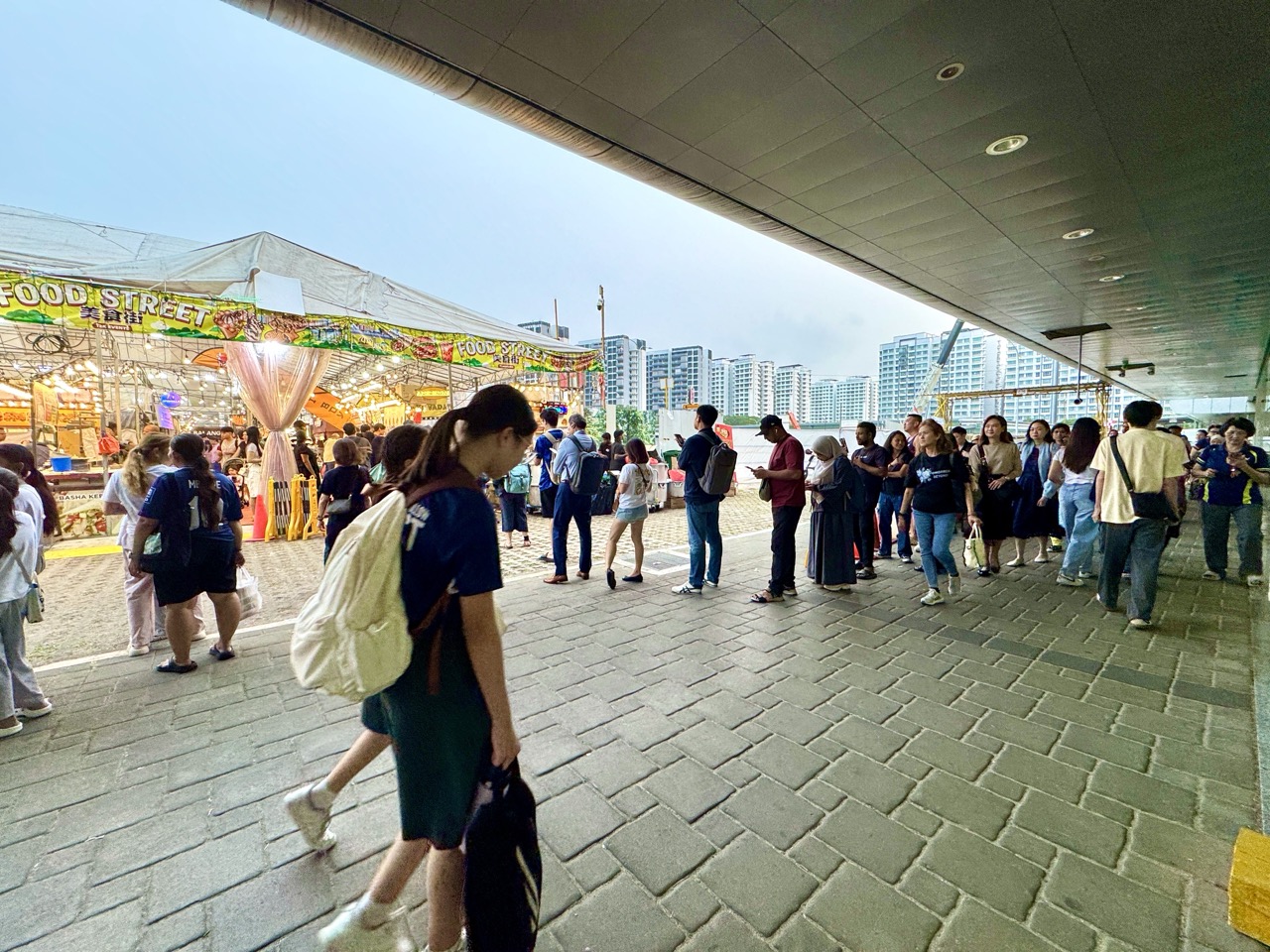
A pasar malam, mall display, community activity or outdoor market may have its own organiser, permits, opening dates and admission conditions. Its presence in Punggol does not make it an official school activity or guarantee that the entire estate will follow one schedule.
Check organiser announcements and public conditions before planning a family visit. For outdoor events, check weather and relevant environmental advice. A public event can be enjoyable for several generations, but children require age-appropriate supervision.
Our Punggol events and bookings guide helps readers identify the correct organising service for different venues.
Choose an invitation responsibly, not by popularity
A family may receive invitations to more gatherings than it can comfortably attend. Ask what the event involves, how to travel, whether the child has obligations and whether any dietary, mobility or other needs matter. Declining politely can be more respectful than accepting and repeatedly cancelling.
Do not treat a neighbour’s celebration as a networking opportunity to obtain tuition recommendations, school admission advantages or employment favours. Good community relations rest on reciprocal respect rather than hidden transactions.
Children can practise writing a courteous response: thanking a host, asking an appropriate question or declining without inventing an excuse. This is everyday language learning with a real social purpose.
Public holidays and childcare need separate confirmation
A working parent should not assume that every student-care operator, preschool provider and tertiary institution follows the same closure schedule as the gazetted public holidays. The provider’s actual operating days, holiday coverage and authorised collection arrangements must be checked.
A holiday on a Monday may change the family’s work and care sequence. Record which adult is genuinely available instead of assigning a grandparent or older sibling automatically. An undergraduate with project commitments may still need to study independently.
Our student-care handoff guide and multi-student family calendar cover the operational dependencies.
University and polytechnic students have different calendars
A student attending SIT Punggol may study on a trimester schedule. A polytechnic or ITE learner may have projects, practicals or attachments. A public holiday is relevant, but it does not define every academic deadline or independent task.
Check the actual course calendar, lecturer instructions and workplace arrangements. A university student should increasingly take responsibility for communicating which days they are available for family gatherings and whether another commitment overlaps.
Parents can invite the student to participate without implying that absence from one family event proves disloyalty. Education, employment preparation and family belonging are all legitimate considerations.
Working adults may have public-holiday obligations
MOM’s public holiday entitlement guidance describes the entitlements for employees covered by the Employment Act, including arrangements where a person works on a public holiday. Work schedules and employment coverage can affect the family’s actual availability.
Do not assume every caregiver works the same Monday-to-Friday pattern or will receive a day off on exactly the same date. Shift-working families need a realistic plan that protects rest and children’s supervision.
A child’s school event and a parent’s employment right are related logistical concerns but governed by different authorities. The employer’s approved roster and official employment requirements cannot be replaced by a neighbourhood festival flyer.
A family event budget should remain truthful
Suppose a fictional family allocates $45 for ingredients, $18 for shared transport and $12 for materials used in a small craft activity. The total is $45 + $18 + $12 = $75. Those numbers are teaching examples, not Punggol event prices or suggested spending thresholds.
The budget may be reduced by using existing household supplies or choosing a simpler gathering. More expensive food or decoration does not automatically mean greater cultural respect. What matters is the suitability of the arrangement and the relationships it supports.
Children can help calculate quantities and compare options without being made responsible for adult financial anxiety. A good educational activity keeps the arithmetic clear and the human occasion enjoyable.
Be careful with photographs and public sharing
Festive school and community events often produce attractive images. Before posting, consider whether children, guests or performers consented to identifiable photographs and whether a setting restricts filming. A social-media album can reach far beyond the people who were present.
Do not use a classmate’s clothing, prayer practice or family celebration as content for public jokes or stereotypes. If the student is writing about an event, encourage accurate description and appropriate permission.
Respect for privacy is part of multicultural literacy, not a separate burden added after the celebration. A person can enjoy sharing food or stories without agreeing to become a photograph in someone else’s portfolio.
Heritage sources can deepen, but not replace, family stories
An older relative may remember earlier Punggol community celebrations or neighbourhood gatherings. Their account is valuable personal memory, but it should be identified as such. The NLB Punggol Stories exhibition provides curated local heritage material to compare with individual recollections.
A child can ask the relative what they personally experienced, roughly when it happened and which parts came from others. Then they can check relevant public facts without trying to prove every family memory right or wrong.
The strongest outcome is careful listening and accurate attribution. A respectful conversation does not require publishing private family details.
Plan one celebration with a learner of each age
A preschooler may help with a safe decoration or greeting. An upper-primary pupil can work out a simple ingredient proportion. A secondary student can research the history of an event and check sources. A tertiary student might manage a budget or explain a cultural question without assuming personal expertise in every tradition.
No child should be pressured to perform a ceremony outside their beliefs or preferences. Participation can be adapted respectfully. Family members have different capacities and obligations, especially where disability, health or shift work affects the plan.
The educational value is an appropriately scaled contribution that respects the actual people involved, not an identical task for everyone.
A four-week multicultural family learning plan
Week 1 — Check real dates. Compare MOM’s current public-holiday list, MOE’s calendar and each institution’s notices. Mark family occasions separately. Identify childcare or work commitments before promising attendance.
Week 2 — Ask and listen. Choose one cultural or family-history question. Use reliable sources and invite a willing relative to describe personal experience. Avoid making an individual speak for an entire community.
Week 3 — Participate appropriately. Attend a suitable invitation or public event if desired, respecting hosts, dietary needs, filming rules and safety. Allow leisure to remain enjoyable rather than force a school report.
Week 4 — Reflect. Ask what the learner discovered, what they can support with evidence and which assumptions changed. Make only modest claims about learning; a short event does not automatically prove broad cultural competence.
Case study: a Primary 3 pupil prepares for Racial Harmony Day
A fictional Punggol child receives a school notice about a Racial Harmony Day activity. The family begins by checking what the school actually asks students to bring. They avoid buying an elaborate costume or assuming that every classmate will participate in the same way.
The child reads one age-appropriate cultural source and prepares a respectful question. After the activity, they explain one thing they learned and one detail they would like to verify further.
The result is meaningful curiosity and correct compliance with school instructions, not proof that wearing a particular garment makes the child culturally knowledgeable.
Case study: a Secondary 4 learner balances revision and a family gathering
A teenager has a genuine examination-revision need and receives an invitation to a family occasion. The adults initially argue that attending proves the child lacks discipline. The student shows the actual assessment calendar and the specific misconceptions they need to correct.
The family agrees a realistic study block, travel plan and time to enjoy the gathering. The student attempts a fresh revision question afterward to check understanding rather than counting social hours as lost academic performance.
This illustrates informed scheduling. It does not assume family celebrations always take priority over compulsory course obligations or the opposite.
Case study: an SIT undergraduate joins a neighbourhood event
A fictional undergraduate at SIT Punggol is invited to an evening community activity. The student has an applied-project deadline and a morning laboratory session. The family first assumes that the nearby campus means attendance is easy.
The learner checks the real timetable and agrees to attend only the part of the event that fits. They contribute to a respectful conversation but do not film others without permission or claim the event qualifies for academic credit.
The outcome is a realistic balance of adult study, community participation and privacy. Campus proximity creates possibilities; it does not abolish obligations.
Ten frequently asked questions
Is Racial Harmony Day a Singapore public holiday?
No. It is a National Education commemorative day in schools, not one of MOM’s gazetted public holidays.
Does every Punggol school hold the same cultural event?
No. National education frameworks exist, but the actual programme and instructions are determined by the relevant school or institution.
When is Deepavali in 2027?
MOM lists Thursday 28 October 2027 as Deepavali. Check the current official list before making plans for other years.
Are Chinese New Year and school holidays the same calendar?
No. Public-holiday dates and MOE term breaks are published separately, though they may overlap.
Must a child wear traditional clothing on Racial Harmony Day?
Follow the actual school’s event notice. Do not assume a compulsory requirement or make cultural participation into a costume competition.
Can a family celebrate a festival without sharing a religion?
Respectful greetings, conversation or suitable social participation may be possible, depending on the host and each person’s beliefs and boundaries.
Does a pasar malam count as school CCA or VIA credit?
Not automatically. School recognition depends on approved programme rules, not merely attending a community event.
Do polytechnic and university students have the same days off as primary pupils?
Not necessarily. Course calendars, practicals and project obligations can differ. Confirm with the actual institution.
Can a child take photographs of classmates at cultural events?
Follow school and consent rules. Do not assume a public celebration removes privacy protections for children.
What is a useful educational outcome from a festival?
One accurate explanation, respectful interaction or corrected assumption supported by reliable evidence is more meaningful than a long copied description.
Official sources and more Punggol reading
The authorities for dates and school purpose are MOM Public Holidays 2027, MOM Public Holidays, MOE Calendar, MOE National Education at Regent Secondary, MOE National Education at Millennia Institute, NLB S.U.R.E. and NLB Punggol Stories. The budget, examples and household cases are fictional learning illustrations rather than observations about identifiable families.
For connected topics, read Life in Punggol | Growing Up Bilingual, school-holiday learning and rest, Parent WhatsApp Groups and Verification and the family school calendar. A multicultural family calendar succeeds when people can honour their own traditions, remain considerate of neighbours and fulfil real educational and caregiving responsibilities without confusing one kind of occasion with another.


