
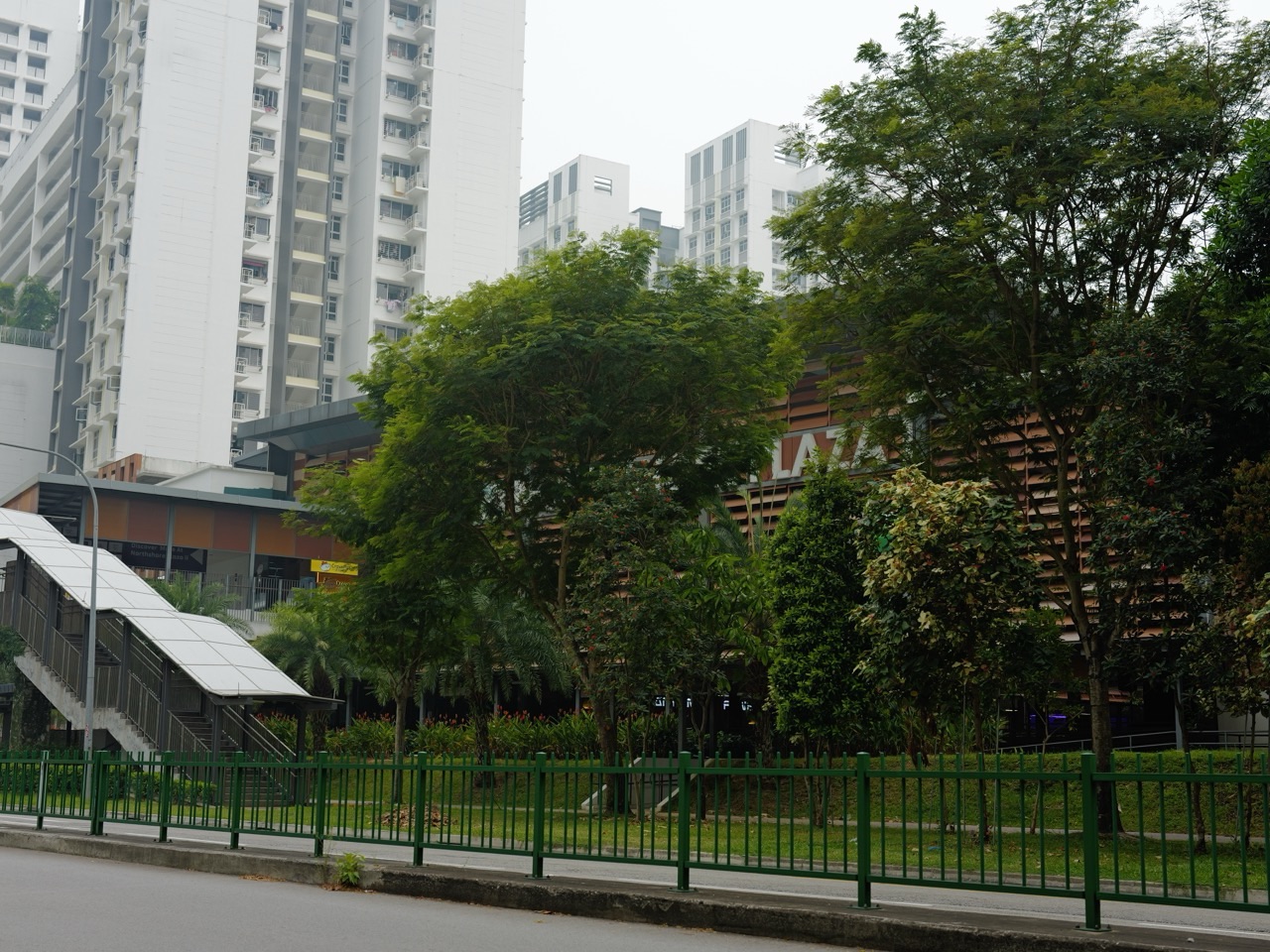

Quick answer: Punggol’s trees are living infrastructure. Roots can interact with surrounding soil and pavements, branches can be professionally pruned to maintain safety and clearance, and a green walking route can still contain an accessibility hazard. A raised slab does not prove the nearest tree caused it. Nor does pruning prove a tree is diseased or about to fall. For a real hazard, avoid the affected area, record a precise location and let the asset manager arrange an appropriate inspection.
A tree-lined path near a Punggol home can make a hot day easier. Families welcome the shade, children notice flowers, and neighbours appreciate greenery between buildings. But the landscape also changes. Roots grow, soil settles, leaves fall, contractors conduct work and pedestrians keep using the same pavement. The result is a very practical question: how do we protect walking access while maintaining healthy urban trees?
This guide is for Punggol residents who want to understand tree pruning, root growth, uneven public pathways, blocked sightlines and who to contact. It does not attempt to assess the health or structural stability of a particular tree from a photograph. An official inspection may consider factors that cannot be established from a casual walk. The useful goal here is more modest and more reliable: recognise what you can see, understand why it matters, and use the right response.
1. A tree and a footpath need some of the same ground
An urban tree needs enough soil, air, moisture and space to grow roots and support its canopy. A pavement needs a reasonably predictable walking surface and enough width for people to pass safely. In a new residential estate the planting verge can look generous because the trees are relatively young. Years later, their roots and branches may occupy much more space while the hard surfaces around them have not changed. Urban design must work with that gradual biological change.
Treating a tree only as decoration misses its long-term behaviour. Roots can occupy space well beyond the trunk; a small opening in a pavement does not reveal the entire system underneath. Likewise, a footpath is more than a strip of concrete. It may be the only step-free connection between a block and a bus stop, school gate or public facility. These two functions have to coexist and sometimes require engineering or arboricultural adjustment.
The correct question is not whether Punggol should have trees or pavements. It is whether a particular location offers enough room for both, and what maintenance will keep the arrangement safe. Removing a tree at the first sign of damaged paving can be an unnecessarily crude response. Ignoring a trip hazard because greenery is precious is also unsatisfactory. Public safety and long-term landscape care belong in the same decision.
A Punggol example
Suppose a slab beside a planted verge rises slightly above its neighbour. A resident can describe the changed surface and its effect on walking without touching roots or guessing the cause. A useful photograph includes the defect and enough context to locate it. That information permits the managing authority to inspect both the paving and the nearby planting rather than being forced to act on an unsupported diagnosis.
2. Roots follow growing conditions; they do not deliberately attack concrete
Tree roots expand where the conditions are useful for the plant. Moisture, oxygen, soil structure and physical obstacles influence their growth. Some roots may grow close to the surface and interact with the edges of paving. That is a biological process, not evidence that the tree is ‘trying to break’ a path. At the same time, soils can settle, paving can wear and earlier construction can leave weaknesses. A cracked or raised surface can have more than one possible cause.
An NParks advisory about the Rail Corridor, published in May 2026, gives a helpful Singapore example. It explains that some mature tree roots there grew close to the surface and contributed to uneven trail sections. NParks described monitoring and patch repairs as a way to balance visitor safety with conserving established trees. That account concerns the Rail Corridor; it does not establish the cause of any specific defect in Punggol. The point is the principle of balancing two legitimate purposes.
Residents should therefore resist two tempting shortcuts. Do not conclude that a root must be cut simply because it is visible, and do not conclude that an uneven pavement must remain permanently untouched because a tree is nearby. Qualified personnel can consider changes in surface treatment, route alignment, tree condition or other site-specific measures. Their decision should use an assessment of the actual place rather than a universal slogan.
A Punggol example
A child points to a visible root beside a footpath and says it broke the pavement. The parent can respond: ‘It may have contributed, but we cannot know just by looking.’ That answer is scientifically stronger than either certainty or dismissal. If a trip hazard exists, avoid it and report the surface condition.
3. Small changes in paving can create large access problems
Someone walking quickly in daylight may step over a small uneven slab without noticing it. For a person using a walking frame, wheelchair or stroller, the same change can interrupt the whole route. It can catch a small wheel, require awkward lifting or force the pedestrian into an adjacent cycling path. Accessibility is not only about whether a ramp exists at the destination. It is about whether the entire journey can be used continuously and predictably.
Weather alters the risk. Rain can cover an edge with water, wet leaves can make a smooth surface slippery, and poor lighting can conceal a trip point. A defect that seemed manageable at noon may become more difficult after sunset. A report should distinguish the underlying feature from the conditions that made it hazardous. Specific observations help the responsible authority understand how a problem affects users rather than only what it looks like in a photograph.
OneService’s guidance on footpath maintenance says LTA or the relevant Town Council may inspect and arrange repairs depending on the location. For an immediate tripping risk, it identifies the appropriate urgent channels, while non-urgent feedback can go through OneService. This distinction matters because the authority that maintains a tree is not automatically the authority responsible for the walking surface under it.
A Punggol example
An older relative regularly uses a step-free route from home to the LRT. A raised edge now forces a detour near moving bicycles. The family identifies a safe alternative and reports the exact section of path. The issue can be framed as loss of accessible passage, regardless of whether tree roots, settlement or another process is eventually found responsible.
4. Why established shade is valuable
Shade from trees can reduce direct solar exposure on a walking route. Families in Punggol often cross several open spaces when travelling between blocks, shops, transport and parks. The difference between an exposed pavement and a shaded approach can influence when an older adult chooses to walk and whether a parent with a baby feels comfortable outdoors. That value develops gradually as the canopy matures and cannot be fully recreated by installing a young replacement tree.
A shaded route is not automatically the best or safest route. Slope, surface condition, visibility, road crossings and continuity still matter. The direction of the sun changes during the day, meaning that a path shaded in the morning may be exposed at lunchtime. A nearby shelter could offer more dependable protection from rain than foliage. Practical route selection considers all these variables instead of reducing the decision to the number of trees.
It is also important not to overstate cooling claims. A photograph of a leafy street does not establish an exact temperature reduction, and local comfort depends on humidity, wind, surfaces and solar exposure. The honest description is that tree canopies can contribute shade and a more pleasant walking environment. Quantitative claims about a specific Punggol street would require measurements under appropriate conditions.
A Punggol example
A family compares two routes to a community facility. One is shady but includes a rough section of pavement; the other is smooth but more exposed. The better choice may differ for a wheelchair user, a child walking independently or a person travelling in the early morning. There is no reason to insist one route is always best.
5. Pruning is maintenance, not a diagnosis
Pruning means removing selected branches or other plant parts for a defined purpose. Those purposes can include structural development, clearance, plant health and safety. It does not automatically mean a whole tree will be felled. Nor does it prove the tree was diseased. A tree may be maintained because branches extend into a road environment or reduce visibility, while another may require attention to damaged or dead branches.
In June 2025, NParks and the Landscape Industry Association announced work on a national standard for tree pruning in tropical urban landscapes. Their explanation emphasised professional practices that take safety, functionality and ecology into account. By 2026 the standards programme was being incorporated into professional training. This helps residents understand why urban pruning should not be an informal weekend job with household tools: cut location, technique and tree condition have long-term consequences.
After pruning, a tree can look dramatically different. A photograph showing fewer branches records a change but cannot establish why that change was made. Residents concerned about specific work can check a notice or ask the managing authority about the programme. They should avoid standing beneath active maintenance operations or crossing temporary barriers just to obtain a close-up picture.
A Punggol example
Workers trim branches near a pedestrian approach to Northshore. Rather than announcing that the tree is being removed, the resident observes the work area from the permitted route and checks the posted notice. If the diversion blocks wheelchair access, that access problem is the immediate issue to raise.
6. More cutting is not always better care
The request ‘cut all the branches because leaves keep falling’ sounds simple, but excessive or poorly planned pruning can affect tree health and structure. Skilled arboricultural work aims to address a specific objective while retaining an appropriate form. A few targeted cuts may solve an obstruction more effectively than reducing the entire canopy. Residents can reasonably ask for safe access without dictating a treatment that has not been assessed.
Unnecessary pruning also changes the shade experienced by pedestrians. A bench sheltered by foliage may become exposed until growth returns. That consideration does not override necessary safety maintenance. It simply shows that urban trees serve several functions at once. The strongest management decision balances those functions with the site’s physical constraints and the relevant professional guidance.
Good requests are specific. A branch obstructs the view of a traffic sign from a particular direction. A low limb interferes with a path. A broken branch appears to be suspended overhead. These observations justify inspection without a resident declaring that every low branch is unacceptable or that the entire tree should be removed. In many cases, the issue is better defined by an affected user or route than by a guess about tree condition.
A Punggol example
A group says branches make a footpath feel dark. Rather than demanding that the entire canopy be cut, identify the exact stretch, time and nature of the visibility problem. It may involve vegetation, lighting or both. That gives the manager more than one safe and proportionate option.
7. Road crossings have their own visibility requirements
A crossing is a place where motorists, cyclists and pedestrians must see and anticipate each other’s movements. Vegetation that blocks a view can therefore create a road-safety issue even when it is healthy and visually attractive. The relevant question is not only whether a tree looks neat but whether a person approaching the crossing can see the other road users and signs in time.
LTA stated in November 2023 that greenery should not obstruct sightlines at zebra crossings. It also described regular NParks maintenance of roadside greenery and inter-agency work where overgrown planting compromises visibility. This is a useful example of shared responsibility: road safety and vegetation maintenance meet at one location, but they are not identical jobs. A good complaint may need to reach the right part of the public system rather than one generic property manager.
Report sightlines precisely. Name the crossing and state the direction from which the view is blocked. Photograph from a safe pedestrian position, not from the roadway. A large view showing the approach can be more informative than a close-up of leaves. Avoid alleging that the entire junction is unlawful or dangerous without a proper assessment; simply describe the actual visibility concern.
A Punggol example
A hedge near a crossing seems to conceal an approaching cyclist. The family uses the crossing cautiously, notes the street and approach direction, and reports the condition. They do not stand in a traffic lane to prove their point. Their evidence is useful because it identifies a specific, observable sightline.
8. Fallen leaves are not the same as a fallen tree
Leaf fall is normal for many plants, even in a tropical climate. The amount and timing vary across species and weather conditions. Wind and heavy rain can move leaves into drains, corners and slopes. A few leaves on a clear path do not necessarily indicate neglect, poor plant health or a serious hazard. Equally, an accumulation that makes a ramp slippery or blocks an inlet may deserve prompt cleaning.
The practical issue is the surface condition. Wet leaves can reduce grip, and dense piles may conceal uneven paving. Litter mixed with leaves can be carried toward drains. These are often housekeeping or drainage concerns rather than reasons to remove a tree. Describing which surface is affected and whether the problem recurs is more useful than assuming pruning would solve it.
Residents should not sweep private garden waste into public drains or move heavy fallen branches without appropriate equipment. A neighbourhood cleanup can help with ordinary litter where safe and permitted, but traffic lanes and restricted work areas are not places for volunteers to improvise. The staff responsible for public cleaning and greenery management need accurate information about the location and kind of accumulation.
A Punggol example
A few leaves beside a bench may be part of normal daily conditions. A thick wet layer covering the only ramp to a nearby block is a different matter. Report the ramp obstruction and suggest cleaning or inspection, not the immediate removal of every nearby tree.
9. Tree roots and rain gardens have different functions
Punggol contains landscaped drainage features, including documented rain gardens and swales at Waterway Ridges. Those engineered features can slow and treat stormwater according to their design. A tree pit, by contrast, may primarily exist to provide growing space for a tree. Although roots and soil influence water movement, it would be inaccurate to call every low planted area a functioning rain garden.
The two kinds of infrastructure may share physical space, and they can affect each other. Construction or changes in ground levels can alter a drainage route. A tree growing near a designed planted basin may require attention to rooting conditions. But seeing standing water near a tree does not prove that roots have blocked a drain, and seeing a planted depression does not prove that all stormwater is meant to soak into that point.
The right response is to use verified plans for hidden hydraulic functions and visible observations for ordinary public reports. Do not dig into a tree pit, reshape a swale, cut roots or pour chemicals into drainage features. This article concerns the interaction between greenery and access; a separate Punggol guide explains stormwater systems in more detail.
A Punggol example
Following rain, a planted area holds shallow water while the adjacent path remains clear. The family records the observation without declaring a fault. If water instead blocks the walking route, report the actual access problem. The appearance of a tree nearby does not establish which part of the system needs repair.
10. Construction works can affect roots beyond the trunk
Roadworks and building projects can involve excavations, heavy vehicles and temporary material storage close to trees. Roots may extend beyond the apparent planting pit, so work that seems distant from the trunk can still affect growing conditions. Soil compaction and damaged roots are concerns that professionals consider when planning work near mature greenery. Residents should not use the exposed edge of a trench to determine the extent of root damage.
Sometimes preserving a tree requires adjusting the surrounding path or protecting an area during works. This can make a temporary diversion feel inconvenient, but the decision may involve safety, utilities, construction sequencing and tree health. Conversely, a developer may need approval for changes affecting greenery. The public should not assume every visible barrier is solely for tree protection or that every trench automatically means damage has occurred.
The appropriate action is to follow official work notices, stay outside the work zone and report concrete hazards. A resident can point out an unsafe detour or obstruction without entering a trench or moving survey markers. The separate article on Punggol construction hoardings addresses public-route management; the focus here is that trees need professional consideration during physical changes to surrounding ground.
A Punggol example
A fenced worksite lies near a familiar mature tree. The family uses the signposted detour and checks for a step-free alternative. If the path is inaccessible to somebody using a wheelchair, they report that specific issue. They do not enter the site to inspect the roots for themselves.
11. Broken branches require a different safety response
There is a major practical difference between a small twig on the grass, a heavy fallen limb across a walkway and a partly detached branch hanging overhead. The last may create an unpredictable hazard. The resident’s first decision should concern distance and safe passage, not how to obtain the most dramatic photograph. Moving underneath a hanging branch or shaking it to test whether it is stable is unsafe.
Do not attempt to cut public trees with ropes, ladders, saws or borrowed poles. Professional teams assess nearby traffic, equipment, access and the potential movement of branches. If there is an immediate threat to people, use the appropriate urgent contact; otherwise notify the owner or municipal feedback channel while keeping clear. A safe alternate path is preferable to squeezing through the affected area.
A useful report identifies the branch and its effect on access. State whether it is on the ground, blocking a route or visibly suspended overhead. Provide the nearest block or path marker. Avoid concluding that the entire tree is about to collapse unless a qualified assessment supports that claim. Action and accuracy can coexist even when the cause remains unknown.
A Punggol example
A branch hangs over a path near a park after a storm. The family turns back and reports it from a safe location. Nobody walks beneath it to count the branches or to check whether it is firmly attached. The sensible choice is separation from the hazard and an appropriate professional response.
12. What tree inspections do
Tree inspection can involve the examination of visible form, branching, site conditions and symptoms that warrant further investigation. NParks has discussed the use of trained landscape workers, digital inspection methods and advanced diagnostic tools for mature trees requiring closer assessment. That public information makes an important point: assessing a tree is not simply a matter of deciding whether its leaves look green.
A risk assessment is also not a lifelong guarantee. Weather, biological processes and accidental damage can change conditions. A visually unusual tree may be sound, and a superficially healthy tree may need specialist attention. Online commenters are rarely able to distinguish these situations from a single photograph. Professional judgement is especially important when decisions could remove an established tree or affect public safety.
Residents make a valuable contribution by reporting changes that may deserve assessment, such as a recently broken large branch, a new obstruction or a damaged path beside a tree. They do not have to certify the cause. In a public report, ‘appears newly cracked at this point’ is appropriate; ‘has internal decay and will fail tonight’ is not justified without evidence.
A Punggol example
A neighbour claims a tree has root rot based on a phone photo. Another resident can reply by directing attention to the actual location and proposing official inspection rather than spreading a definitive diagnosis. If access is unsafe in the meantime, avoid the area. Scientific caution should not prevent ordinary safety precautions.
13. Ownership changes from place to place
Trees and paths in Punggol may sit beside HDB estates, public roads, parks, private developments, malls or other premises. The same walk can pass through areas managed by different bodies without a gate marking the change. It is therefore unwise to assume NParks owns every tree, LTA owns every footpath, or one Town Council maintains all objects visible from an HDB block.
HDB’s explanation of Town Council responsibilities includes the management of common property within HDB towns. LTA publicly describes coordinating with NParks on roadside vegetation affecting visibility. OneService helps route many municipal issues where members of the public do not know who owns the asset. The correct first step is to identify the exact feature and site, not to infer ownership from the nearest familiar sign.
Private strata developments may have management corporations and site-specific arrangements. A tree beside a mall frontage or condominium entrance may be maintained differently from public roadside greenery. This does not stop residents from reporting a visible hazard. It means a report should describe the place well enough for the receiving organisation to determine the correct operator and whether the problem falls under its remit.
A Punggol example
A branch overhangs a route between an HDB block and a mall entrance. Rather than arguing about which agency planted it, record the side of the path, closest building and affected movement. A precise location is easier to route correctly than an unsupported ownership claim.
14. Punggol greenery changes as estates mature
Young housing estates often look more open because recently planted trees have not reached their mature canopy size. Over several years, the streetscape can become noticeably greener. That change produces benefits but can also prompt different maintenance demands. Older roots, branches and shaded areas have to be considered alongside roads, drains and building entrances that were originally constructed to serve residents.
Punggol also contains older natural and cultural landscapes within its newer urban development. NParks’ 2025/26 reporting describes the first 400 metres of the Punggol Heritage Trail opening in August 2025, retaining the undulating terrain and mature greenery associated with former Old Punggol Road. This is a specific example of conserving the character of a place as surrounding uses change, not a statement that every tree in Punggol has heritage designation.
When residents compare old and new photographs, they should consider date, viewpoint and construction stage. A tree that appears smaller in an old photo may have grown; a planting area may have been redesigned; or the photographs may show different sides of a precinct. Proper historical comparison can help explain changes without turning a remembered impression into an unsupported claim about maintenance quality.
A Punggol example
A family compares a 2016 estate photo with a 2026 photo. They record the exact location and note which trees, paths and buildings can actually be matched. They avoid concluding that the whole town became greener by the same amount, because one viewpoint is only one piece of evidence.
15. Visibility is not just about pruning
A path can feel poorly lit because of a faulty lamp, a long distance between light sources, vegetation or the way lighting falls across its surface. These possibilities call for different responses. Cutting branches unnecessarily may not fix a broken light. Replacing a light may not correct a foliage obstruction at a crossing. A report is more useful when it distinguishes which parts of the walking environment are affected.
Conditions also vary during the evening. Reflections from wet paving, shadows and approaching bicycles may influence how comfortable a route feels. A child walking beside a parent may not have the same field of view as an adult. Before proposing a major change, note which direction presents the problem and whether the route remains usable for other people.
The practical safety decision is simple: choose a well-maintained route and report defects. Do not attempt to work on public lamps, wire temporary lights into estate installations or prune a public tree. The relevant agencies can evaluate whether the needed action is electrical, horticultural, civil or a combination.
A Punggol example
A resident notices that the approach to a crossing is hard to see after dark. They record the exact side of the road and explain whether a light appears off or vegetation blocks a view. That gives the responding manager an actionable distinction rather than a demand to ‘make everything brighter’.
16. Safety barriers are not optional shortcuts
Professional tree maintenance can involve workers at height, cutting tools, trucks and the movement of large branches. A work-zone barrier protects both the public and the people performing the task. A resident may not see active cutting at the moment of passing, but machinery positioning, inspection and site preparation can still make the area unsafe. The correct behaviour is to follow the diversion.
Some works also require ground investigation or reinstatement. A pavement may remain closed even after the most visible pruning has finished. A pedestrian can reasonably ask for an accessible diversion, but the answer is not to move the barrier or climb over equipment. Families should check the route early when moving with a stroller or walking aid, because a temporary closure may make an otherwise short trip much longer.
Work duration should not be guessed from photographs. A short closure can require subsequent inspection, while another may be completed quickly. Check the current notice or manager for status. Residents who report a blocked accessible route should explain what alternative was missing rather than accuse workers of doing nothing because they were not using a chainsaw when observed.
A Punggol example
A pathway is cordoned off for tree maintenance, and a parent finds that the signed diversion leads to steps. The appropriate report describes the accessibility gap and requests a usable temporary route. The parent does not wheel the stroller through the worksite.
17. Wet weather changes the decision
Singapore’s thunderstorms can produce strong wind, heavy rain and reduced visibility. A tree-lined path should be enjoyed with attention to conditions, not treated as an all-weather shelter. NParks advises people to avoid forested areas during and immediately after bad weather because of risks from trees and branches. That advice concerns such environments generally; it does not mean every neighbourhood footpath must always be avoided whenever it rains.
After severe weather, a prudent resident looks for fallen debris, newly damaged branches, unexpected pooling and changes to the route. If the path appears unsafe, use an alternative. It is not necessary to perform a tree inspection yourself, and it is certainly not safe to shake a branch or test a soft edge of the ground. The absence of obvious damage from a distance is also not a reason to ignore a closure notice.
A good report is dated and conditional. ‘This limb was over the path after the storm at 5 pm’ is more reliable than ‘this tree always loses branches’. Likewise, one muddy patch does not prove a permanent drainage defect. Careful information improves the chance that the responsible team will inspect the right location and understand what changed.
A Punggol example
A family planned a long waterfront walk but sees heavy-rain warnings. They choose an indoor alternative and revisit the route under better conditions. That is an ordinary, intelligent adjustment, not a judgement that the parks or tree-management programme has failed.
18. How to report tree and pavement concerns clearly
Start with the affected asset: a tree branch, a footpath surface, a crossing sightline or an obstructed drain. Then record the precise location, a useful landmark and the observed problem. A photo from a safe position may help, especially when the issue is difficult to describe. Explain the impact: pedestrians cannot see approaching vehicles, a wheelchair ramp is blocked, or a branch hangs over a route.
OneService accepts municipal reports and can direct them to responsible agencies or Town Councils. Its October 2026 information describes the app and chatbot as channels for issues including fallen trees and damaged facilities. For urgent danger, ordinary app feedback may be too slow; use the appropriate immediate response. There is no benefit in risking injury to improve a photo. A clear written description can be enough to communicate immediate concern to a responder.
Save the case number and follow up with meaningful new information if needed. Do not duplicate complaints with changing stories. A report should not include unnecessary images of identifiable residents or speculate about a neighbour’s motives. The object is to have a safe public asset assessed, not to conduct a social-media investigation.
A Punggol example
Write ‘Uneven paving beside Block X, on the approach to the crossing from the Waterway side; catches stroller wheels; observed after rain at 7 pm.’ Include a wider location photo where safe. That report is actionable regardless of whether the root system is later found to be part of the cause.
19. A useful fieldwork exercise for schoolchildren
Punggol’s tree-lined paths are a convenient place to teach observational science. Children can note the presence of shade, the shape of paths, and the distance between planting and walking surfaces. They can compare a younger planted tree with a mature canopy from a safe public path. The goal is not to identify every species or assess structural risk, but to connect biological growth with the physical design of the neighbourhood.
Ask pupils to separate observation, possible explanation and evidence needed. ‘One slab is higher than the next’ is an observation. ‘A root may contribute’ is a hypothesis. ‘A qualified person must assess the cause’ identifies a necessary next step. At upper levels, students can discuss why urban planning involves trade-offs between mature trees, available soil, pedestrian safety and maintenance resources.
The exercise should not involve lifting paving, digging in tree pits, pulling leaves from public plants or climbing into restricted areas. Drawings, notes, official NParks materials and dated photographs are sufficient. A good report can include uncertainty; in fact, its credibility often improves when a student explains what has not been established.
A Punggol example
A Primary child writes three observations on a route to the library: ‘Bench shaded at 10 am’, ‘raised slab near the corner’, and ‘clear zebra crossing’. The parent helps the child distinguish these facts from guesses about the cause. The result is a small but serious lesson in public evidence.
20. Three principles worth remembering
First, a tree is not merely a permanent decoration. It grows and changes, and the surrounding street must accommodate maintenance over time. Second, pedestrian access is not a minor extra. A small physical defect can make an entire route difficult or unsafe for a particular resident. Third, technical diagnoses belong to qualified people; residents contribute best by making precise observations and avoiding hazardous areas.
These principles explain why the best response sometimes involves pruning, sometimes pavement repair, sometimes cleaning and sometimes a change in route design. They also explain why two similar-looking locations may receive different treatments. An urban tree beside a busy crossing has different physical demands from a tree in a wide park lawn. The right intervention depends on the specific site and purpose.
The lasting task for residents is practical stewardship: use safe routes, respect maintenance barriers, keep personal clutter out of shared passages, and report genuine defects through the right channel. That preserves the value of Punggol’s greenery without treating it as an excuse to overlook path safety. The result is a neighbourhood where people and trees can continue sharing space as both grow older.
A Punggol example
At the end of a family walk, ask three questions: What made this route pleasant? What made it difficult? What evidence do we have for the causes we suggested? The discussion can be honest and useful without prescribing tree surgery or claiming the town has a single universal solution.
Four practical case studies
The wheelchair detour
A family wants to take an older relative from an HDB estate to a nearby waterfront path. A pleasant shortcut is shaded, but one uneven section catches a wheelchair’s front wheels. They do not try to cut the root beside the path or conclude that the tree is unsound. They select a continuous alternative route and report the surface defect with a nearby block number and a description of its effect on accessibility. The responsible team can then inspect the paving and planting arrangement. The family has acted on a real hazard without pretending to know its engineering cause.
The obscured zebra crossing
An adult notices foliage blocking a sign or approach view at a crossing. They take a photograph from a safe pedestrian standing point rather than entering traffic. The report states the crossing, the direction of approach and precisely what is difficult to see. LTA’s and NParks’ publicly described coordination makes this a sensible issue to route through official channels. The family does not allege that every crossing in Punggol is similarly affected. A narrow, accurate report is more useful than a dramatic generalisation.
The branch after a storm
After strong winds, a heavy limb appears partly detached above a public footpath. The priority is to turn back, keep children away and notify the appropriate response channel. Nobody stands beneath the branch to assess its connection to the trunk. The family reports what is visible and where. They do not assume neighbouring trees are dangerous or try to clear the hazard with a borrowed saw. Once authorised staff have assessed and addressed the site, the path can be reconsidered.
The premature pruning rumour
A neighbourhood chat circulates a photograph of a newly pruned tree and claims that an entire green corridor is about to disappear. No dated project notice or official plan is attached. A resident checks the exact location and the operator’s published information before repeating the claim. The work might be routine maintenance, a targeted safety intervention or part of a larger project; the photograph alone does not decide. The community gains more from a verified scope of work than from amplifying speculation about the future of Punggol’s greenery.
Frequently asked questions
Does a visible root mean a tree is unsafe?
No. Root appearance alone is not a professional risk assessment. If the path is unsafe, report the pavement condition and avoid the affected route.
Do roots always cause cracked pavement?
No. Root growth can contribute in some cases, but settlement, wear and previous works may also affect paving. The actual cause requires assessment.
Why do workers prune Punggol roadside trees?
Possible reasons include safe clearance, plant health and structural management. Check a local work notice or managing authority for the purpose of a particular operation.
Can residents trim branches hanging over a public path?
Do not carry out unauthorised tree work. Notify the asset manager so qualified personnel can assess and perform the work.
Who repairs an uneven footpath?
LTA or the relevant Town Council may handle the issue depending on where it is situated. OneService can help route a report.
Are all Punggol roadside trees managed by NParks?
No universal assumption is safe. Roadsides, HDB common property, parks and private sites can have different management arrangements.
Should I enter a tree-work zone when no worker is visible?
No. Respect the barrier and use the signed alternative. Worksite hazards and closures can continue between visible operations.
Can I report a branch without knowing its species?
Yes. An exact location and clear description of the hazard matter more than a guessed species name.
Does pruning always mean the tree will be removed?
No. Pruning and felling are different actions, and only the specific project information can establish what is planned.
Are wet leaves a tree-health problem?
Not necessarily. They may be normal leaf litter, but a slippery accumulation on a ramp or walkway can justify a cleaning or safety report.
What should children learn from this topic?
They can learn how living roots interact with built surfaces, why professional care matters and how to separate observation from unsupported explanation.
What is the simplest action for a new resident?
Find the safer walking routes, identify the local management channels, and report specific hazards rather than trying to diagnose or repair trees yourself.
Official sources and useful reading
NParks and LIAS: National tree-pruning standards and professional tree care
NParks: Technology and professional tree-management inspections
NParks Rail Corridor advisory: Mature roots and uneven trail surfaces
LTA: Roadside planting and crossing visibility
OneService: Footpath maintenance and routing repairs
OneService App and Chatbot, updated October 2026
HDB: Functions of HDB Branches and Town Councils
NParks Annual Report 2025/26: Punggol Heritage Trail and mature greenery
More Punggol reading
Things to Know About Punggol | Green Roofs, Sky Gardens and Shade
Things to Know About Punggol | Sheltered Walkways, Ramps and Step-Free Routes
Things to Know About Punggol | Rain Gardens, Swales and Stormwater
Things to Know About Punggol | Construction Hoardings and Safe Pedestrian Diversions
Punggol’s greenery and its paths are parts of one working neighbourhood. The useful skill is to respect both the living landscape and the people who need safe access to it.


