
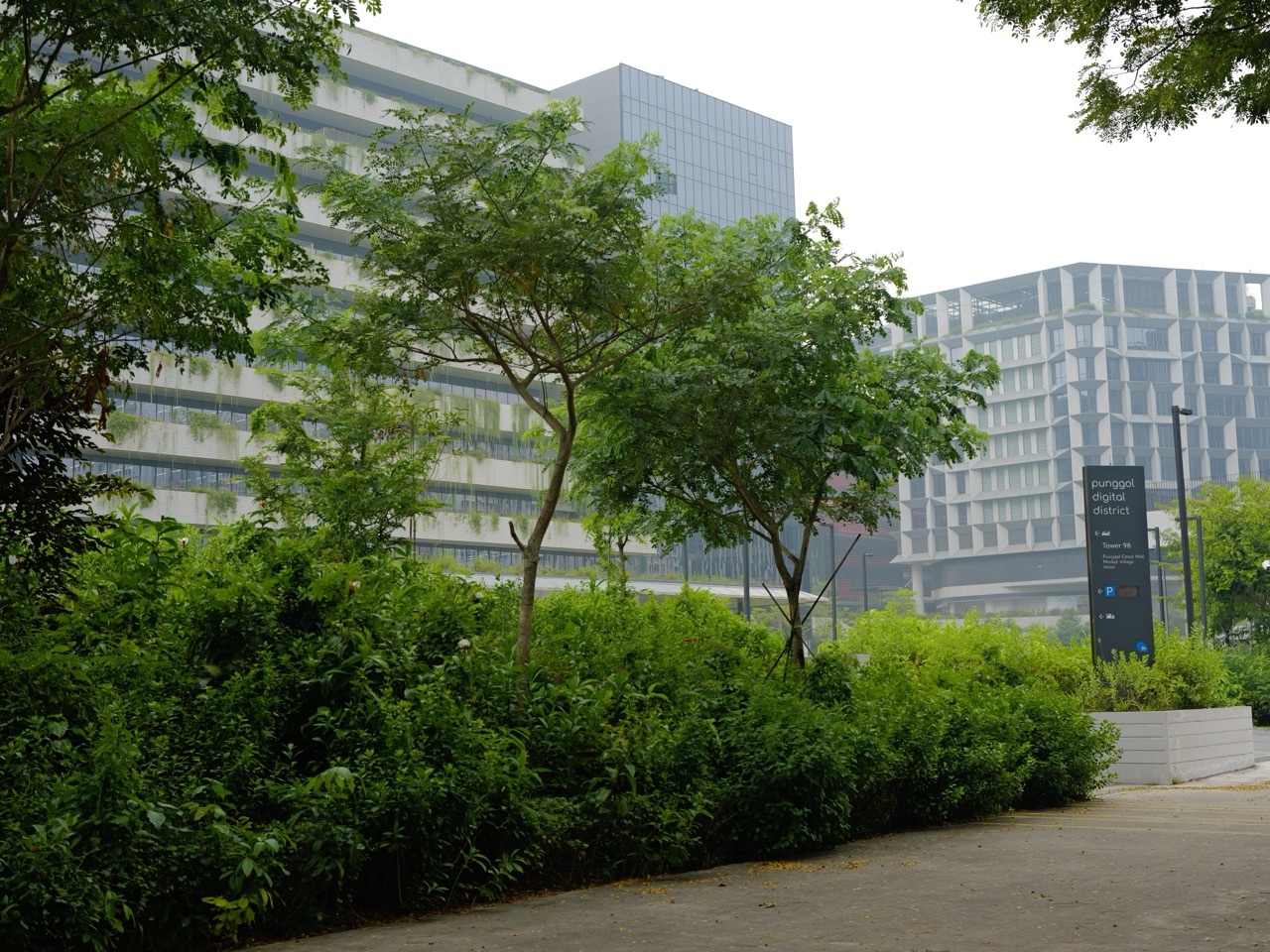
Quick answer: Singapore’s JTC has announced LaunchPad @ Punggol Digital District (LaunchPad @ PDD), a new startup environment scheduled to open in phases from late 2026. It will place developing businesses near SIT and a district designed for work in smart-city technology, fintech, robotics and cybersecurity. JTC says community-building has already begun and gives an official founder enquiry contact. For Punggol Primary and Secondary students, however, LaunchPad is not a newly announced school or a free-access children’s incubator. The educational opportunity is to learn what real entrepreneurship requires: understanding a customer’s problem, testing a small idea, measuring costs, collecting feedback responsibly and accepting when the evidence does not support the first plan. See JTC’s 2026 LaunchPad announcement and JTC’s current PDD business page.
As at 23 October 2026, a phased future opening is not proof that every space, event or industry testbed is operating today. Access and enterprise support depend on JTC’s actual procedures and programme rules. This article is designed for Punggol families navigating the education route from Primary school through Secondary, ITE, polytechnic, JC, university and working life. It shows how to learn from a nearby enterprise ecosystem without inventing registration rights, promising funding or treating an informal school market project as an established company.
For young readers the most useful starting question is simple: What problem can you understand well enough to improve? A student who begins with that question may discover valuable skills in Science, Mathematics, English, design or computing. A student who starts only with the fantasy of becoming a millionaire is less likely to learn why real companies must meet customers’ needs, comply with rules, pay costs, protect data and operate reliably.
What JTC’s LaunchPad @ PDD announcement actually means
| Published information | What it supports | Important limit |
|---|---|---|
| Opening planned in phases from late 2026 | A developing startup site inside PDD | Not all units, events or services are necessarily available now |
| Focus on smart city, fintech, robotics, cybersecurity | Potential industry context for entrepreneurship | Not a guarantee of school student placement or investment |
| District includes SIT and Open Digital Platform | Proximity to university and industrial testbedding | Proximity does not grant access to datasets or infrastructure |
| JTC plans partnerships, mentoring and workshops | A community-development direction | Specific events require their own official dates and eligibility |
| JTC provides an enquiry route for founders | An authoritative first contact for suitable enterprises | An email enquiry is not a lease, funding award or incubator admission |
JTC’s March 2026 masterplan explains that the LaunchPad would support startups able to develop innovations for the surrounding district. PDD’s Open Digital Platform (ODP) is part of the broader testbedding environment, supporting digital simulations and authorised integrations with district infrastructure. These are institutional capabilities. It would be misleading for a student project to claim it can control lifts, read private sensors or access testbed systems simply because the district has ODP.
The opening status matters for publishers as well as families. An article about a planned location must distinguish the announced intention, a confirmed opening and a particular event or tenancy. An impressive technology image does not prove that a shop, lab, co-working desk or mentoring programme can be booked at a given time. Residents should use JTC’s current pages and actual organiser correspondence before relying on access or schedule information.
How a startup differs from a school business assignment
A class may sell bookmarks at a school bazaar or present a proposed app. These can be excellent educational activities, but they do not automatically establish a company with legal obligations and paying customers. A startup is an attempt to build an organisation around a product or service under substantial uncertainty. It must investigate whether the problem matters enough for someone to use or pay for a solution, whether delivery can be sustained and what laws or safeguards apply.
A school assignment has a defined assessment; a customer decides on usefulness independently of the teacher’s marking scheme. A pretty prototype may score well for art but still confuse its intended audience. A product that earns revenue for a weekend may be unsuitable as a long-term business if each sale costs more to fulfil than it brings in. Learning to distinguish these outcomes is exactly why students should practise entrepreneurship rather than merely perform it.
For minors, teachers and parents should avoid interpreting startup enthusiasm as permission to register contracts, run payment accounts, collect customer information or conduct experiments in public without adult oversight. School-based investigations can use fictional customer scenarios, safe observations or carefully supervised and consented activities. The aim is to develop useful judgement before taking on real obligations.
A five-stage entrepreneurship method suitable for families
Stage 1 — Find a real and specific inconvenience
A project becomes clearer when it begins with one type of person facing one repeatable problem. ‘People need better technology’ is too broad. A more useful student brief might be: ‘A fictional family finds it difficult to keep track of which borrowed books must be returned each week.’ The student can describe the existing routine, what goes wrong, how often it occurs and what a successful change would look like. A narrow problem is easier to test.
Emphasise the word fictional when using invented people or data. If students investigate a real community need, they should seek suitable consent and avoid collecting sensitive details without proper guidance. Children should never approach strangers to ask for financial records or private account information as a ‘market survey’.
Stage 2 — Build the smallest useful hypothesis
A hypothesis should say what will change, for whom and how the team could tell whether it worked. A family might compare a paper borrowing calendar with a simple colour-coded reminder. The student needs to decide whether the supposed benefit is fewer forgotten returns, less time spent searching or easier understanding. If they cannot define the outcome, adding software features is unlikely to fix the project.
Successful entrepreneurship learning often begins with deliberately modest technology. A paper card, labelled storage box or simple prototype may reveal the user need more clearly than an expensive application. That does not make innovation unambitious. It reduces the cost of discovering a mistake.
Stage 3 — Test without manipulating the result
When a student asks a friend to try an idea, they should avoid coaching the friend toward the desired answer. A better experiment gives a neutral task, records whether the participant completes it, asks what was confusing and states what was not tested. Participation must be voluntary and suited to the school or family’s safeguarding rules.
Students should distinguish preference from behaviour. A person may say that a concept looks useful yet decline to use it in everyday life. That difference is important evidence. Ask what the test established and what remains only a guess.
Stage 4 — Estimate costs and obligations
Even a fictional product involves costs: materials, packaging, maintenance, storage, transport and the time needed to deliver it. For digital services, there may be hosting, support, security or licensing expenses. A student should learn that a selling price is not the same as profit, and that a prototype without a secure operating process is not ready for real users.
If a project might eventually be offered publicly, consult applicable school policies, consumer laws, intellectual-property terms, privacy obligations and age-related requirements before taking real payments or signing agreements. Learning a business model in class should not become an unmanaged business venture.
Stage 5 — Decide whether to continue, change or stop
The most valuable outcome of an experiment may be discovering that people do not need the proposed product. An excellent student can explain the finding and redirect the effort toward a better question. This protects against the misconception that entrepreneurship means never abandoning an idea. Founders make many decisions with limited information; the skill is to learn accurately and use resources responsibly.
Worked financial example: gross revenue versus contribution
Illustrative school scenario only. Suppose a group creates simple handcrafted reading cards at an imaginary school event. They sell 60 cards at S$3 each, generating S$180 in gross sales. If card, printing and packaging materials cost S$1.20 per card, the direct variable cost for 60 cards is S$72. The amount left after those materials, before other costs, is S$108.
Now suppose the class also spent an assumed S$45 on fixed event materials and display supplies. Subtracting that amount leaves S$63 in this simplified model, before labour, taxes or other obligations. These numbers are invented teaching values, not an actual event budget. A learner should be able to explain why S$180 in sales is not S$180 in profit and why volunteer hours have value even if no wages are paid during the exercise.
| Model variable | Assumed value | Calculation |
|---|---|---|
| Selling price | S$3.00/card | Hypothetical |
| Units sold | 60 | Hypothetical |
| Revenue | S$180.00 | 60 × S$3.00 |
| Variable material cost | S$1.20/card | Hypothetical |
| Total variable cost | S$72.00 | 60 × S$1.20 |
| Contribution after materials | S$108.00 | S$180 − S$72 |
| Illustrative fixed costs | S$45.00 | Hypothetical |
| Balance before other costs | S$63.00 | S$108 − S$45 |
Ask the student what changes if only 30 cards sell, or if half the stock is defective. Would the production cost be fully recoverable? Are unused materials wasted? This makes fractions, ratio, cost accounting and decision-making part of a concrete project. It also teaches an essential entrepreneurial responsibility: never promise a benefit based on sales numbers without naming expenses and assumptions.
Worked example: test the break-even point
Using the same invented card project, the contribution per card before fixed costs is S$3.00 − S$1.20 = S$1.80. If fixed expenses are S$45, the simple break-even count is S$45 ÷ S$1.80 = 25 cards, assuming every unit has the same selling price and direct cost and there are no additional charges. Students should state that this model ignores many practical constraints.
The result is meaningful only when those assumptions are visible. If a project uses electronic payment fees, substantial transport or other overhead, the break-even estimate changes. A parent can ask the child to design two scenarios and compare them. This is an appropriate school mathematics task, not a reason for an underage learner to begin a real business without guidance.
Worked example: customer feedback without misleading statistics
Suppose ten classmates voluntarily examine a paper prototype and seven say they understand it without explanation. The simple observed proportion is 7/10 = 70%. That does not show that 70% of Punggol residents would use the product. The sample is small, may be unrepresentative and measures immediate comprehension rather than willingness to pay or long-term usefulness.
A stronger report says exactly who was tested, the task, the conditions and what was observed. The student may write, ‘Seven of ten consenting classmates completed the hypothetical task without assistance; three became confused at the second step.’ Their next action is to improve that step and repeat an appropriate test. This teaches data literacy and honest market research, not aggressive selling.
Four Punggol-inspired project briefs that require no startup access
Project A — A clearer family book-return system
Create two reminder formats using paper or a simple spreadsheet. Let consenting family members try both across a hypothetical schedule. Record whether they understand the due date and action required. The user problem is small, but the educational process is complete: identify the audience, design alternatives, test, revise and explain limitations.
Project B — A fictional school lost-item label
Ask whether a better labelling system could help an imaginary school recover unnamed items. Students must respect privacy: a label should not publish a child’s full name and contact details unnecessarily. Make two mock-ups and test comprehension using fictional belongings. The goal is a safer, clearer service design, not collecting real names from lost items at school.
Project C — A low-waste packaging comparison
Choose two teacher-approved packaging ideas for a fictional handmade product. Compare material mass, construction time, legibility and protective function. Students can calculate hypothetical costs and describe whether one approach uses fewer resources without damaging the contents. Avoid claiming environmental superiority without considering production, disposal and the wider life cycle.
Project D — A senior-friendly digital instruction card
Design a one-page guide for a fictional older adult using an everyday device feature. Use dummy information and no private banking credentials. Compare large-print and small-print layouts in a permitted classroom demonstration. Consider language, icon clarity, sequence and the availability of help. A student can learn inclusive design without handling a stranger’s phone or finances.
The school pathway from Primary to university entrepreneurship
| Stage | Core habit | Appropriate project |
|---|---|---|
| Primary 1–2 | Understand needs and make something understandable | Paper reminder and oral explanation |
| Primary 3–4 | Measure time, cost and feedback | Simple comparative worksheet with units |
| Primary 5–6 | Use fractions, percentages and responsible surveys | Small fictional market calculation |
| Secondary 1–2 | Frame a user problem and assess prototypes | Iterative design brief and test log |
| Secondary 3–4 | Compare expenses, constraints and assumptions | Business model and transparent costing |
| ITE, polytechnic or JC | Connect specialised skills to customer evidence | Assessed course project with proper permissions |
| University | Research, incubator or venture-building under programme rules | Formal project and responsible validation |
| Working adult | Assess actual business feasibility and regulatory duties | Authorised entrepreneurial enquiry with JTC or appropriate provider |
How the Punggol Digital District environment connects to learning
JTC emphasises PDD as a place where businesses, SIT and supporting infrastructure are near one another. For a student, that opens an interdisciplinary conversation: a smart city solution is never just code. It must be understandable to the people it serves, secure enough for its purpose, technically supportable, financially viable and compatible with urban safety and environmental needs. These are useful questions for secondary Social Studies, Science, Mathematics and design classes.
The Open Digital Platform and digital-twin capabilities described by JTC are significant precisely because they create a controlled environment for authorised innovation. They are not permission for schoolchildren to take data from private systems or connect prototypes to lifts or gantries. A school can build a hypothetical district map and simulated data to explore the same reasoning without touching live infrastructure. A good teacher labels those assets as invented educational models.
An imagined smart-building application might claim to reduce energy use, but the student should ask what comparison supports the claim. An imagined food-delivery application might promise faster service, but the student must consider pedestrian safety, accessibility, handling of personal data and what happens after the system fails. The entrepreneurial mindset is not simply ‘launch quickly’. It is ‘test responsibly before making a promise’.
A school entrepreneurship notebook worth keeping
- Write the problem in one sentence and identify the intended user, without collecting unnecessary personal details.
- Record what evidence suggests the problem exists and what remains an assumption.
- Explain one simple prototype and why it is a suitable first test.
- Name three alternatives considered and the practical reason each was rejected or postponed.
- Use units correctly in costs, time, quantities and basic analysis.
- Document all test results, including non-use and negative feedback.
- Describe who gave consent, where the task occurred and any restrictions on data.
- Explain what changed after the evidence was reviewed.
- State which claims remain speculative and whether the project is still only a classroom exercise.
- End with a next action that is safe, realistic and proportionate to the learner’s age.
Frequently asked questions
Has LaunchPad @ PDD opened fully?
JTC’s published plan states phased opening from late 2026. That is not proof that every space or programme is currently operating; check JTC’s current information.
Can my Primary-school child join LaunchPad?
LaunchPad is a startup environment, not a published general Primary-school enrichment programme. Use age-appropriate school activities rather than assuming admission.
Are students entitled to use PDD’s digital twin?
No public entitlement follows from the existence of the platform. Work with authorised organisers and simulated classroom data.
Does living in Punggol qualify a family for startup funding?
No such general residence-based entitlement has been established. Funding depends on the relevant current scheme and applicant rules.
Can a Secondary student run a small business project?
A supervised school project can teach valuable skills, but actual trading, contracts, payments and data use require appropriate school, parental and legal consideration.
Does every prototype need software?
No. Paper, cardboard and a simple documented process may provide better early evidence of user needs.
Is a successful bazaar the same as a scalable startup?
No. A short event can teach selling and costing but does not prove sustainable demand or operational viability.
What is a minimum viable product?
It is a deliberately limited version of a solution designed to test a specific important hypothesis, not a guarantee of commercial readiness.
Will startup founders necessarily hire students?
No. Hiring depends on actual vacancies, skills, selection and relevant legal requirements.
Can families enter tenants’ offices for project interviews?
Not without permission. Do not treat a public district as an invitation to enter private spaces or approach employees indiscriminately.
Where should a founder send an official enquiry?
Use the current JTC LaunchPad @ PDD page and published contact route, ensuring the enquiry concerns an actual eligible venture.
What is the first useful skill to practise?
Clearly describing a problem, testing a modest change and accepting evidence that challenges the original idea.
The right next action for a Punggol family
Ask the child to identify one inconvenience affecting a clearly defined fictional user. Help them design a small paper solution, calculate one realistic cost, collect feedback with consent and write what remains uncertain. They do not need an office lease, a special title or access to industrial infrastructure. If their interests develop into serious tertiary or adult entrepreneurship, then the appropriate formal programme or official business enquiry becomes relevant.
For operating status and direct founder enquiries, use LaunchPad @ PDD: opening status and enquiry and JTC’s official business information. For broader young-learner activities, see Things to do in Punggol for young entrepreneurs. This page has a different purpose: it explains the education process and shows how to practise it with evidence.
The opportunity represented by LaunchPad @ PDD is not a promise of immediate commercial success. It is a developing local environment where real companies will confront real customer and engineering problems. The educational response is to teach Punggol students the habits needed to understand those problems: curiosity, respectful inquiry, numerical accuracy, testing, clear communication, ethical judgement and willingness to revise.
A six-week student innovation challenge inspired by Punggol
Week 1 — Observe without inventing a customer story
Students should begin with a small, observable problem rather than a solution they already want to sell. They could investigate why a fictional family repeatedly misplaces household items, why a paper instruction is misunderstood or why an imaginary timetable is difficult to follow. Ask what evidence actually supports the problem. If a child has seen the inconvenience once, they should not automatically call it a widespread community issue.
The class writes a problem statement with three parts: intended user, present obstacle and effect. An example is, ‘A fictional busy household needs a clearer way to remember library due dates because the current paper note is easy to overlook.’ This statement is modest enough to investigate. Students should also list the information they do not know, including whether the imagined household would use a new method willingly.
Week 2 — Explore existing alternatives
Before sketching a product, compare at least three plausible existing solutions. A reminder could be printed, posted on a calendar, placed in a shared digital note or integrated into an existing application. A teenager may discover that the problem is largely solved already. Recognising that fact is sound market research, not failure. If a team proposes an additional app, it should explain the advantage over tools already used by the audience.
Ask teams to consider effort as well as money. A solution requiring several daily steps may not be adopted even when it costs nothing. Students can score alternatives against simple criteria: ease of understanding, time required, risk of missed information and maintenance burden. They should disclose that their scores are judgments, not official customer satisfaction measurements.
Week 3 — Prototype using cheap, reversible materials
Use paper, cardboard, a simple spreadsheet or an ordinary slide deck. Have each team define the smallest feature that tests the most uncertain assumption. For a due-date reminder, this might be whether a person understands the date and action in under ten seconds. The purpose is not to produce an impressive interface; it is to make the assumption testable.
Avoid spending family money on subscriptions, unusual hardware or branded prototype kits before the problem has been validated. The class should be able to explain why the first test does or does not need technology. A paper model with one strong feature may teach more than a half-finished application whose major functions cannot be demonstrated.
Week 4 — Conduct a fair and ethical small test
Obtain suitable consent and follow school safeguards. If classmates volunteer as testers, give them the same task without telling them which design is expected to win. Record how many complete the task, whether they hesitate and what they say is confusing. Don’t photograph faces or collect contact details unless an approved educational purpose genuinely requires it.
The test population matters. Ten classmates might be suitable for judging whether a label is understandable to those classmates; they do not represent all elderly people, working adults or Punggol residents. A good student can state that limitation and describe what further evidence would be needed before broader deployment.
Week 5 — Revise the weakest feature
A team that receives three pieces of criticism should not change everything at once. Pick the issue most likely to prevent useful operation and explain why. For example, if users cannot tell which button is the next step, improve the label and order. Retest with an appropriate task. Keep both versions to show how feedback changed the work.
Teams should resist the temptation to hide original mistakes in the final presentation. A dated before-and-after image or diagram shows that the learner can make decisions from evidence. It also prevents teachers and parents from mistaking visual polish for problem-solving skill. A good prototype is an argument that can be examined, not merely a sales pitch.
Week 6 — Present the decision, including when to stop
The final project report should identify the user need, existing alternatives, chosen hypothesis, prototype, test method, results and one unresolved issue. It should include a basic cost estimate with clear units. Then ask the team whether it would continue, simplify, redesign or stop. The reasoned decision matters more than whether everyone announces an intention to become a founder.
If the test shows that a basic paper solution works better than a complex app, that can be an excellent result. It reveals that students understand constraints and are willing to abandon unnecessary technology. This habit will matter in any future digital-district industry because unnecessary complexity is costly to build and maintain.
What the Open Digital Platform does not make available to a school project
JTC’s description of PDD includes the Open Digital Platform and digital-twin opportunities to test industrial innovations. The word ‘open’ should not be misread as permission to connect arbitrary devices, obtain sensitive building-system data or control physical infrastructure. Access for industry projects depends on authorised partnerships, cybersecurity safeguards, data governance and the particular use case. A hypothetical school proposal can explain what information a system would need without claiming the district actually provides that information to pupils.
For a school exercise, make up a small building with ten fictional rooms, invented temperature readings and a calendar of assumed occupancy. The challenge is to develop a rule for a simple planning decision while noting its trade-offs. The student should label the entire dataset as fictional. That protects readers from interpreting a teaching model as evidence about the energy use or operation of a real PDD building.
Another team can design a hypothetical parcel-collection service and compare predicted time savings with the cost of operating equipment. It should consider accessibility, safe pedestrian paths, maintenance and the person’s right to refuse a service. Neither group needs to connect to live infrastructure. The learning lies in reasoning about a real type of problem without bypassing public safety or organisational permissions.
Why good founders need good English
A vague product brief causes practical problems. If one teammate thinks ‘fast’ means a one-second response while another thinks it means completing a task within five minutes, their design choices may conflict. English helps entrepreneurs write measurable requirements, explain a product without exaggeration, document customer feedback and describe a failed test clearly enough for a teammate to reproduce it.
A useful secondary-school writing exercise asks students to replace unclear claims. ‘The app is easy’ becomes ‘In this fictional test, eight of ten consenting participants completed the first task without additional explanation.’ ‘Everyone wants it’ becomes ‘This small test does not establish wider demand.’ Such revisions are more than grammar corrections: they sharpen the distinction between belief and evidence.
A project pitch can have a confident tone without hiding uncertainty. The student might explain the intended audience, the evidence they have, a clear limitation and the next test they propose. Parents should reward precision rather than encouraging their child to sound like a polished salesperson before the product has earned trust.
Mathematics as a protection against bad enterprise decisions
The arithmetic of entrepreneurship is straightforward at first, but it can be misused. Revenue, cash received, gross margin, contribution, fixed cost and profit describe different things. A project with high sales can still lose money. A product can have a profitable unit margin yet fail to cover fixed costs at the volume actually sold. Students should be able to say which quantity they have calculated and which expenses remain unknown.
Imagine the fictional card project has a return or rejection rate of ten percent. If 100 cards are made, approximately 90 may be acceptable under that hypothetical assumption. The cost per saleable card rises because materials were spent on rejected cards too. A beginner who divides the total materials bill by 100 rather than 90 may understate the effective cost. This is a meaningful connection between percentages, yield and a business decision.
A second worked question could ask what happens when sales are lower than forecast. If the group produces 80 items but sells only 45, the remaining stock may tie up money or need storage. Students can record the difference between stock produced and stock sold and discuss how much evidence was available before deciding on quantity. The aim is careful estimation, not maximising sales at any cost.
School science and the design of responsible products
Scientific habits help founders avoid assuming that a change caused an observed improvement. A team might redesign a paper reminder and then see better task completion, but perhaps the test participants also received clearer instructions or had more practice. If several things changed, the result cannot be attributed confidently to the redesigned reminder. A fair test varies as little as is practical and describes the remaining confounders.
Students can compare two packaging ideas by recording mass, construction time and whether the imaginary product remains protected. The conclusion should not be ‘The lighter package is greener’ without examining the wider environmental effects and whether it still performs its function. This teaches a responsible version of innovation: better solutions meet a need without hiding costs transferred to people or the environment.
The emerging digital district makes such interdisciplinary questions visible. Real robotics companies must consider physical safety and power, fintech companies must consider trust and privacy, and cybersecurity companies must consider authorised scope. A school innovation that ignores the subject’s safety obligations is not ready for deployment merely because the prototype appears to work.
A realistic customer interview without exploiting people
Good market research uses respectful, proportionate questions. An adult organiser or teacher should approve any real interactions involving children. Ask about the task a person is trying to complete rather than requesting sensitive documents or pressuring them to reveal income. A student can learn a great deal by inviting a consenting classmate to complete a fictional task and watching where the instructions are confusing.
Avoid leading questions such as ‘Isn’t our amazing app useful?’ A better question is ‘What part of this instruction was unclear?’ or ‘What would you normally do instead?’ An interviewer should be willing to hear that the current solution is good enough. The ethical purpose of research is understanding, not persuading respondents to validate the team’s preferred product.
When a student writes up interview findings, it should not include personal identifiers that are irrelevant to the learning objective. Report a summary such as ‘Three volunteers said the label was too small’ rather than publishing who they were. This is particularly important for fintech or community products that might involve financial, health or family information.
Three bad signals in a ‘startup opportunity’ advertisement
Unverified access to organisations
An advertisement may imply that because its event takes place near SIT or PDD, participants will meet a university researcher, secure an internship or access a testbed. Ask for the actual organiser, confirmed partner and written description of what participants receive. A photograph outside a building does not verify a partnership. A Punggol address alone is not an educational credential.
Promises of guaranteed funding or employment
Genuine enterprise support schemes have eligibility requirements, evaluation processes and limited resources. An introductory talk cannot promise that every participant will win a grant or secure a job with a tenant. Parents should be cautious about payment demands linked to extravagant income promises and should verify any named support scheme through its official agency.
No meaningful assessment or feedback
If a course consists entirely of motivational talks without an opportunity to test a user problem, perform calculations, receive critique or revise a product, it may be useful inspiration but not substantial enterprise education. A well-designed course explains the learning outcomes and shows how the learner’s independent capability will be evaluated.
How a student can use Punggol’s existing learning institutions
A Punggol resident does not need to wait for LaunchPad to open to begin learning. School lessons provide mathematics, communication, scientific inquiry and design foundations. Public library resources can support reading, research and age-appropriate making activities subject to current programming. Approved school clubs and projects can provide teamwork and mentorship without claims of corporate partnership.
ITE, polytechnic, JC and university learners can seek properly supervised course projects or opportunities established by their own institutions. Those arrangements differ from asking JTC for business space. Prospective founders who are already adults should verify the tenancy, mentoring and programme conditions of the actual LaunchPad offering. The fact that several stages of learning exist in the same region does not make their application criteria identical.
Parents should consider travel time, course load, school assessment periods, family budget and how much independent work the learner can realistically sustain. An excellent small project completed over several weeks may be better evidence of capability than repeated paid workshops that the child does not have time to reflect on.
A twelve-question comparison before joining a youth innovation programme
- What specific capability should the learner demonstrate by the end?
- Who is the organiser, and is any institution’s participation verified directly?
- Is the activity designed for the learner’s school level and prior knowledge?
- Will students define a user need before choosing technology?
- Can they test prototypes and revise them after criticism?
- Are costs, materials, deadlines, cancellations and refunds disclosed?
- How are photographs, student information, feedback and other data handled?
- Are adults appropriately supervising interactions with community members?
- Does the activity require any trading or legal commitment, and if so who is responsible?
- Does the programme distinguish a classroom simulation from an actual business?
- Will students produce an original work log rather than just an attendance certificate?
- Is there a safe, useful learning alternative if places are unavailable?
What successful entrepreneurship learning looks like after six months
The aim is not that every child forms a company. A stronger outcome is a learner who can identify a narrowly defined problem, research how others address it, propose an affordable test, calculate its costs, collect ethical feedback and change direction when the evidence demands. Those capabilities support university projects, professional engineering, financial analysis, product management, community leadership and ordinary household decisions.
A young learner might discover a passion for writing instructions and accessibility rather than coding. Another may enjoy testing the mathematics of a product. A third may prefer scientific experiments or helping people understand technology safely. These are not failures of entrepreneurship. They are discoveries about the kinds of valuable work the learner may choose to pursue later.
Punggol’s developing startup ecosystem supplies an authentic reason to ask these questions. LaunchPad @ PDD may eventually bring more local enterprise stories into public view, but the educational responsibility remains constant: distinguish confirmed opportunities from proposals, follow the rules of the actual organiser, and teach children to build evidence before making promises.
A final case study: when the evidence says not to launch
Consider a fictional team proposing an app to organise school reading notes. Its first model works, but classmates report that the existing school platform already meets the need and that learning an additional application would create confusion. The team can still earn strong educational credit by documenting this result and deciding not to proceed with a separate service. The development cost and future maintenance obligation would not be justified by the limited benefit. This is a disciplined entrepreneurial decision, even though no product is sold.
Ask the team to prepare a ‘decision memo’ explaining what was tested, how many participants were involved, what alternatives were available, what remained uncertain and why the current plan was stopped. A classmate could challenge the conclusion by suggesting a narrower group with a different need. The team should distinguish this new hypothesis from the already observed facts. This trains reasoning under uncertainty and demonstrates that responsible innovation does not demand permanent attachment to the first idea.
The difference between a mentor, investor, customer and regulator
Students may hear all four words during a discussion of startups. A mentor offers perspective, but does not necessarily decide what the founder should do. An investor may supply funds under agreed conditions and may seek financial returns. A customer judges whether a product is useful enough to adopt or purchase. A regulator defines and enforces obligations in an area such as safety, privacy or financial services. These roles can interact, but none substitutes for the others.
For a simple group assignment, assign fictional role cards and ask how each person would evaluate the same product. The customer wants clarity and reliability; the mentor asks how the founder will learn from failure; an investor examines feasibility and risks; the regulator asks whether duties are met. This model is not an account of any particular JTC programme. It helps children understand why an idea can be attractive to one audience but still require additional work before real deployment.
Keep educational ambition separate from commercial pressure
A student may genuinely enjoy producing a small product yet feel pressured when adults turn the exercise into a competition over sales, followers or investment. Entrepreneurship education should build agency, not force children to manage adult financial or legal duties prematurely. Parents can agree on a learning objective, modest resource limit and defined end date, and leave children free to discover that a different academic field interests them more.
The strongest family conversation asks what the student has understood that they could not explain before. Can they calculate a margin, identify a confounder in a user test, protect participant privacy and state when permission is required? Those are lasting capabilities. LaunchPad @ PDD can become a visible example of serious enterprise work, but the child’s progress should be judged by evidence of learning rather than by a fantasy of instant startup success.


