
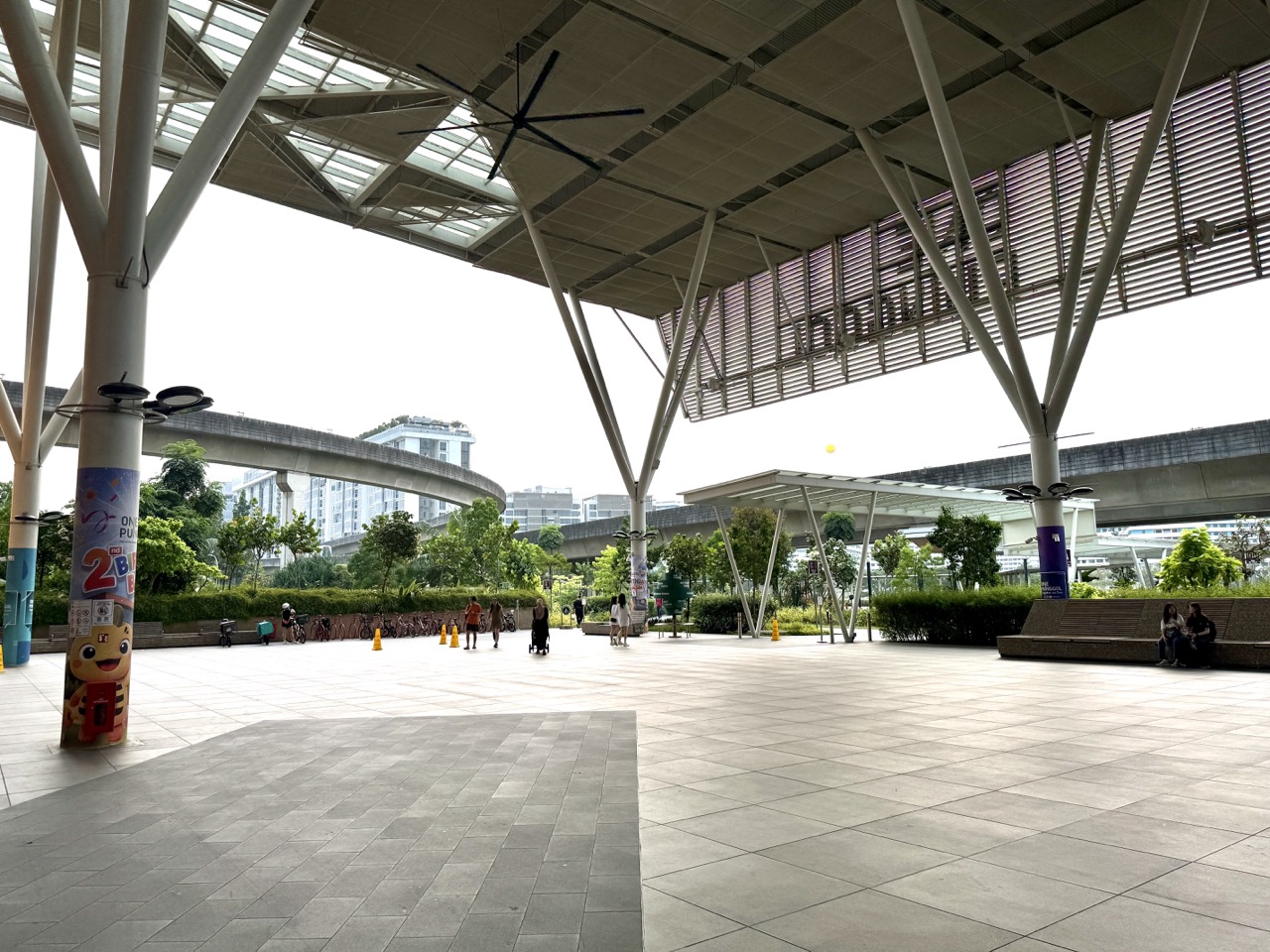
Where can a beginner living in Punggol play padel in 2026? Look at The Sports Arina @ Jalan Kayu, a multigame venue beside the Thanggam LRT area on Fernvale Road in neighbouring Sengkang/Fernvale. Padel directories list three sheltered or covered courts there, and the venue uses Playtomic for bookings. Publicly advertised court rates are around S$50 per off-peak hour and S$90 per peak hour, but these are reference prices, not a live checkout. Important: directories disagree on whether the street number is 20A or 28 Fernvale Road, so use the precise address and entrance supplied by the current operator booking rather than guessing.
This padel for beginners near Punggol 2026 guide explains what padel actually is, how it differs from pickleball and squash, why glass rebounds matter, how underhand serves work, how to split a doubles-court cost, the current 2026 Jalan Kayu venue context, resident-rate eligibility, safe movement, lessons, a four-week introduction and what a Punggol family should check before travelling. It follows the quick-answer-and-first-principles approach of the eduKateSG Clementi standard while avoiding duplicate court-directory content.
Padel near Punggol: the quick answers
| Question | Verified or well-supported answer | Important check |
|---|---|---|
| Is there padel in Punggol Town? | No specific public Punggol Town padel venue is verified here. | The cited Jalan Kayu venue is in Fernvale, not Punggol. |
| Where is the nearby venue? | The Sports Arina @ Jalan Kayu on Fernvale Road, close to Thanggam LRT. | Third-party street numbers conflict: confirm via Playtomic. |
| How many courts? | Local padel directories list three covered courts. | Check actual court setup and availability. |
| How do bookings work? | Playtomic club listing and booking system. | Use current venue-specific payment and cancellation terms. |
| What are published public prices? | About S$50 off-peak / S$90 peak per hour. | Not a guarantee; confirm duration and checkout. |
| Who gets resident rates? | Reports identify a Jalan Kayu area resident-verification programme. | Living in Punggol does not automatically qualify. |
| How many play? | Standard padel is doubles, four players in pairs. | Choose a suitable lesson if you have no group. |
| What size is the court? | International rules use a 20m by 10m enclosed court. | It is not just a repainted badminton court. |
| How is the serve made? | After a bounce on the server’s side, struck at/below waist height diagonally. | A tennis overhead serve is not the normal padel serve. |
| Are wall bounces allowed? | Yes, subject to rally and enclosure rules. | Learn how ball-to-wall sequences work safely. |
| Can a beginner borrow a racket? | The venue guide advertises rental and coaching services. | Confirm size, stock and charges before booking. |
| What matters first? | Controlled contact, serve, legal rebound and partner communication. | Do not attempt advanced wall shots without suitable instruction. |
1. Padel is its own sport, not a nickname for pickleball
Padel, pickleball, tennis and squash are related in the broad sense that players strike a ball using a racket or paddle, but they differ in equipment, court design and gameplay. Padel normally uses an enclosed rectangular court with glass and fencing, a net separating doubles teams, a solid perforated racket and a ball similar to tennis in appearance. The walls are not simply barriers; rebounds can be part of legal play.
Pickleball has a smaller open court, a different plastic ball, a designated non-volley zone and its own serve/return rules. Squash is played by players sharing a court and striking the front wall rather than a divided net court. None of these sports may simply use a booked court for another sport without operator permission. The Punggol Pickleball for Beginners and Badminton for Beginners guides explain those other first lessons.
Padel’s distinguishing feature is that a correctly rebounding ball can remain in play after contacting court glass. A complete newcomer may instinctively stop when a ball passes them and hits a rear wall. The game instead asks players to judge whether they can let it rebound and make a controlled return. This makes padel a reasoning and timing challenge, not merely a smaller version of tennis. A good coach builds this understanding progressively.
Because most recreational padel is doubles, it can be social. However, four people sharing a court need to communicate and respect each other’s striking space. Beginners should not chase a ball into a glass panel or crowd a teammate attempting a return. Court safety and partner awareness are foundational, not advanced topics.
2. The Jalan Kayu hub opened in 2026—and it is not inside Punggol Town
The Sports Arina @ Jalan Kayu is a new multi-sports venue associated with the Fernvale and Thanggam LRT area. A July 2026 local sports venue review describes padel, pickleball, badminton, futsal and other services at the newly opened complex. Independent padel directories list three padel courts in a sheltered or covered setup. This is a concrete North-East option for Punggol residents, but calling it “Punggol Padel Stadium” would be geographically wrong.
The booking platform’s TSA @ Jalan Kayu club page identifies padel among supported sports and describes weekday and weekend operating hours. Some published directories use a street number of 20A Fernvale Road and postal code 799951, while other lifestyle reports use 28 Fernvale Road; the club booking site lists Fernvale Road more generally with a different postal notation. Without direct on-site confirmation, presenting one of these as universally correct would be unwarranted.
For a real visit, choose the club inside Playtomic, confirm the session and use the final entrance, directions and contact instructions from the operator. This is especially important when Punggol friends arrange to meet separately. One may travel from Northshore, another from Matilda and another via Punggol MRT; they must arrive at the same venue, not at competing map pins separated by an uncertain street number.
Thanggam LRT is on the Sengkang West Loop, not the Punggol LRT. A Punggol resident travelling by train must account for transfer to Sengkang and the appropriate loop or use another current transport option. Avoid inventing an exact journey time without knowing the person’s starting block, direction and time of day. The useful principle is to plan the whole route, including the return after an evening game.
3. What does the venue charge, and why should Punggol residents check resident eligibility?
July 2026 local reports and padel venue directories describe public court rental at about S$50 per off-peak hour and S$90 per peak hour. The same reports mention a lower resident category around S$40 off-peak and S$81 peak, after verification tied to the Jalan Kayu area. The numbers represent published reporting, not a provider-issued promise of an available court at a particular price. Check Playtomic for the real selected date, duration, fees, payment and cancellation.
A subtle local issue is the word resident. A person living somewhere in Punggol cannot assume they qualify for a Jalan Kayu SMC benefit. Resident privileges may require proof of an eligible address through an operator verification process. Do not apply the lower rate in a family budget unless the actual payer or booking account qualifies and the platform confirms it.
| Published hourly example | Public price | Reported eligible resident price | Planning caveat |
|---|---|---|---|
| Off-peak | S$50 | S$40 | Verify eligible address and rate. |
| Peak | S$90 | S$81 | Check evenings, weekends and public holidays. |
| 90-minute off-peak public illustration | S$75 | S$60 if proportional and eligible | Only if operator offers that duration/rate calculation. |
| 90-minute peak public illustration | S$135 | S$121.50 if proportional and eligible | No guarantee of chosen slot or checkout. |
This table makes time units explicit. A 90-minute court is not the same product as a one-hour court, and a padel directory may display 90-minute prices while a venue report gives hourly rates. If the pricing is proportional, one and a half hours at S$50 per hour would be S$75. But live platforms may offer different durations, bundled session fees, GST treatments or promotions. Use the checkout to establish the true amount.
The sport is typically doubles. Four friends sharing a hypothetical S$75 off-peak 90-minute court would contribute S$18.75 each before rackets, balls, booking fees or transport, assuming the operator permits and charges exactly that amount. At S$135 peak, the same split would be S$33.75 each. Those are mathematical planning examples rather than confirmed quotations. A session with fewer than four players may cost more per person and be less suitable for standard doubles play.
4. How to book a real court without confusing sports and platforms
The Sports Arina @ Jalan Kayu appears in the Playtomic club network for padel, badminton and pickleball. The correct procedure is to search for that exact club, choose padel rather than a different racket sport, select a suitable number of participants, and confirm the date, duration and terms. A venue may have many courts for other sports while only three are set up for padel. Do not assume an available pickleball slot is an available padel court.
If new to Playtomic, check account registration, payment method, cancellation deadline and whether the group must reserve the whole court or individual places in an organised class. Court rental is not the same as coaching. One person may book the court while four friends share the cost, but the booking holder must follow the provider’s actual rules and communicate the confirmed time and court number accurately.
A beginner may not yet know three other people who want to play. Ask whether the venue or a recognised coach offers an introductory class or a beginner-friendly organised game. Some social matchmaking services may list sessions, but their age, level, cancellation and coach arrangements differ. A single reported October social match is not proof of a permanent weekly beginner programme. Verify each organiser before paying.
5. The official 20-by-10 metre court and the meaning of glass
The International Padel Federation’s official rules documentation specifies a regulation doubles court measuring 20 metres long and 10 metres wide within its enclosure. The court has a net and defined service boxes, with glass or other permitted wall sections and metallic fencing. Those dimensions matter because padel is not simply tennis on a randomly reduced floor space.
A beginner should identify the back glass, side glass, fencing, service line and entrance before attempting full rallies. Not every part of an enclosure behaves the same way on a bouncing ball, and formal rules have detailed provisions for which rebounds are legal. The coach can demonstrate a simple controlled rear-glass return once the learner is ready. Do not leap into a pane or throw equipment toward the glass.
The same controlled approach applies to the court door and any out-of-court play area. Professional-level out-of-court retrieval is a specialised permitted activity only where the court design and safety zone satisfy rules. A novice should not run through an open entrance to chase an impossible ball or collide with spectators. Beginners can enjoy many rallies without any athletic dives or dramatic wall moves.
6. Underhand serve: bounce first, then strike at or below the waist
The FIP’s current rules provide a distinctive serve. The server stands in the correct area, drops or bounces the ball in the prescribed service space, then strikes it at or below waist height diagonally into the opposite service box. At least one foot remains in contact with the ground. The receiver must let the serve bounce before returning it. This is very different from a tennis overhead serve and also different from the pickleball two-bounce sequence.
For a newcomer, it is enough to know that a serve starts a controlled point; it is not a chance to swing overarm at maximum speed. A coach may break the task into knowing the correct service zone, timing a comfortable contact and judging the legal diagonal landing. An early goal is a reliable legal serve, not an ace. A service fault leads to a second attempt under formal rules, with a double fault losing the point.
The precise service and let conditions are in the federation’s Rules of Padel, effective 1 January 2026. A beginner should follow the qualified instructor and current competition rules rather than an old social clip, especially as international formats can change. This webpage provides sport literacy, not a detailed referee certification or practical training substitute.
7. First serve, first return and when the wall becomes part of play
| Situation | General learning concept | Beginner decision |
|---|---|---|
| Starting the point | A bounced underhand serve goes diagonally. | Aim for controlled consistent contact. |
| Receiving the serve | Receiver lets the service ball bounce. | Do not volley a legal serve before it lands. |
| Normal rally | Players exchange legal returns over the net. | Focus on the ball’s floor bounce and walls. |
| Back glass after a legal bounce | Some rebounds may be playable. | Learn under coached demonstration. |
| Ball bounces twice on your court | Point is normally lost. | Do not chase dangerously after the second bounce. |
| Ball contacts your body | A fault/point consequence applies under rules. | Prioritise safety rather than lunging into it. |
| Overcrowded partner position | Clear communication is needed. | Do not swing through a teammate’s space. |
A beginner who has played tennis may be tempted to hit every ball before it touches the back glass. In padel, a legal bounce followed by a glass rebound can create a playable opportunity, so patience and positioning matter. The ball’s spin and angle can make a shot difficult to predict; these are skills best introduced progressively. There is no need to attempt a difficult rear-glass recovery during the first ten minutes of a session.
A good first lesson can use controlled partner feeds, simple return shots and easy cooperative rallies that stay mostly away from the enclosure. Once players feel comfortable with contact and position, they can explore rebound cases. This mirrors first-principles teaching: understanding the basic rule makes the complex version less confusing. Speed and spectacular shots come later if desired.
8. Padel racket, ball, shoes and what renters must ask
A padel racket is a solid-faced perforated racket, not a strung tennis racket and not the same paddle used for pickleball. Padel balls are pressurised sporting balls with their own governing-body specifications. A complete beginner should ask the provider whether suitable rental rackets and balls are available rather than buying a premium model before trying. Some venue listings advertise racket rental and coaching but do not guarantee that every particular size or quantity is available.
Court footwear matters because the game includes lateral movement, turning and quick stops. The correct grip depends on the playing surface, and unsuitable or worn shoes may increase slipping. Ask the operator what soles it permits. Bring appropriate clothing and water, and allow time to adjust to the enclosed court’s movement. Wear any additional support prescribed for personal medical needs, but do not rely on marketing claims that one shoe eliminates injuries.
A beginner should also inspect the court surface and equipment at the start. If glass or fencing appears damaged, the floor is wet or the gate is not secure, inform staff before playing. Never try to repair facility fixtures yourself or continue through a hazardous setup simply because the court was prepaid.
9. Scoring: what is like tennis and what differs
Traditional padel uses a tennis-like game-and-set structure with points commonly announced as love, fifteen, thirty, forty and game, with deuce and tiebreak provisions. The international federation also recognises permitted alternative scoring methods for certain events. A friendly beginner game may be shortened by agreement, while an organised competition follows its applicable current rules. Ask the instructor to explain which scoring system is used in your session.
The more important beginner rules at first are serving, returning the serve after a bounce, keeping the ball within permitted boundaries and avoiding unsafe contact. It is okay to practise without scoring while learning how glass rebounds work. A person who cannot yet sustain a rally gains little from arguing about a deuce procedure after every missed ball.
One useful exercise in understanding is to compare the same word in another sport: squash usually uses point-a-rally scoring to eleven, while padel’s traditional games use tennis-like points. Pickleball has different serve and non-volley rules. Learning the distinctions improves sport literacy and helps a reader select the game they genuinely enjoy, rather than assuming all paddle sports are identical.
10. Four-person doubles: social, but still a coordination challenge
In normal padel doubles, two partners cover each half of the court. They need to communicate clearly about balls travelling between them, play at a level that suits the group and recognise how to avoid collisions with each other or the enclosure. Some experienced players use advanced tactical formations, but a first-timer can start with a basic agreement about who takes a ball and how to move safely.
A group containing two experienced players and two beginners should not begin at full competitive pace. Instead, agree to practise gentle serves, controlled returns and short cooperative rallies, rotating partners when appropriate. A beginner may need more time to process how the ball bounces off glass. Helping a new player enjoy the experience creates a group that can meet again, which may be a better goal than a lopsided first match.
A person who comes alone can explore an authorised introductory class or an organiser-led beginner social session rather than impersonating a group of four at checkout. Matchmaking programmes can be useful when correctly labelled and run responsibly. However, a public listing for one session does not guarantee a permanent club, suitable coaching or live vacancy. Check the actual organiser, level and payment terms.
11. A four-stage learning progression without pressure
| Stage | Question to answer | Suitable first action | What counts as progress |
|---|---|---|---|
| 1 — Confirm | Do I have the correct court, time and participants? | Book real padel in Playtomic and check equipment. | No confusion about access or fees. |
| 2 — Control | Can I return a slow ball and serve safely? | Learn racket grip, bounce-and-serve and steady returns. | Controlled contact, not power. |
| 3 — Rebound | Can I understand when a back-glass ball is playable? | Practise coached simple wall rebounds. | Better anticipation without unsafe collisions. |
| 4 — Decide | Do I enjoy doubles and the venue journey? | Try a relaxed game or suitable class. | An affordable repeatable activity. |
This is an illustrative sequence, not a four-week coaching qualification or a prediction of improvement by a specific date. Some learners already play tennis or squash and adapt quickly. Others may need several sessions for the first legal serve to feel comfortable. The group can slow down and repeat an earlier stage whenever necessary. Learning is more enjoyable when a person’s starting point determines progression.
If someone has recent surgery, a knee or ankle injury, significant balance problems or another relevant condition, seek appropriate healthcare advice. Padel involves sudden movements even at beginner levels. It is not universally low-impact merely because the court is smaller than a tennis court. A class instructor should be able to adapt activity or advise when a participant needs specialist input.
12. Travel from Punggol: the Thanggam LRT distinction
The Sports Arina is promoted as close to Thanggam LRT, in the Sengkang West area. For a Punggol resident planning public transport, the Sengkang LRT network is a distinct system from Punggol LRT even though both meet the North East Line. Consider transfers and the last suitable service for a late-evening game. A family with children may prefer an earlier session because travel and changing time extend beyond the one-hour booking.
The conflicting street numbers in public directories deserve explicit attention. An April 2026 local review gives 20A Fernvale Road in one listing while a July 2026 report gives 28 Fernvale Road; the booking site identifies the club on Fernvale Road with its own postcode text. A cautious reader should use the venue’s current directions from Playtomic or contact the operator to resolve the exact entrance rather than relying on this article to choose an uncertain number.
When the booking confirmation arrives, share the location pin supplied by the operator with all four players. Do not simply tell friends to meet “in Punggol” or “at the new sports centre”. The local geography is part of planning. A confirmed court can still be missed if two members are looking for a different building.
13. An original budget: hourly public rate versus four-person value
Suppose four friends consider a hypothetical ninety-minute off-peak court calculated at the published S$50-an-hour reference rate. The court would cost S$75, or S$18.75 per person if split evenly. The same ninety minutes at S$90 an hour would cost S$135, or S$33.75 per person. The price difference is S$60 for the group in this illustration. This is simple Mathematics, not a real-time booking quote.
Now add equipment. If the operator charges a separate rental fee for two rackets, those users will pay more unless the group agrees to share total expenses. A newcomer booking an instructor-led class may pay for coaching in addition to or instead of full-court rental, depending on the product. The important comparison is between like-for-like services: rental, supervised learning and organiser-led social games are not the same thing.
The group must also check resident-rate qualification. If only one friend has an eligible Jalan Kayu SMC address, a claimed resident discount might not extend to every player or to a booking made under an ineligible account. Ask the actual operator how its verification works. A Punggol postal address alone should not be treated as a discount pass.
14. Three realistic Punggol beginner situations
A group of four pickleball players wants to try padel
The friends already understand doubles and assume the games are nearly identical. At Jalan Kayu they see glass walls, different rackets and an underhand bounce serve. Instead of organising immediate competitive matches, they choose a suitable introductory lesson or simple cooperative rallies. They discover that a pickleball booking does not authorise use of the padel setup. Their skill from another sport helps, but they still need to learn the correct rules.
A parent wants a new activity for a teenager
The parent sees an attractive padel social-media clip and tries to reserve a 9pm weekend slot. They then calculate the journey home from the child’s actual Punggol block and consider homework, sleep and other sports commitments. They check age requirements and suitable beginner coaching, and decide whether an earlier class or another activity fits better. A sport should complement a student’s wellbeing, not become another exhausting obligation.
Two neighbours do not have a complete doubles group
The neighbours want to try padel but can only find two interested people. They could book a whole doubles court and practise under a qualified instructor, but that may be costly and not the usual recreational group format. They enquire about a beginner class or approved social game that can provide suitable partners. They read registration and cancellation terms before paying rather than guessing that strangers will fill the remaining positions.
15. Why the booking platform, not an old rate table, decides the current session
Local sports venues change prices, peak periods, operating times and room availability. A directory may have been accurate when published but become stale after a new promotion or a court renovation. Playtomic’s club interface is the place where a user should identify the actual sport and session. It is also where the platform may show terms for cancellation or payment. This article supplies context so readers can interpret the choices; it does not assert that a given court is vacant now.
There is no need to hide that some published information conflicts. Honest local reporting should distinguish a venue’s real existence from its street-number ambiguity, a reference price from a checkout price, and a training advertisement from a confirmed enrolment. That precision is more useful for SEO visitors making a decision than repeating twenty unqualified claims about being the best nearby padel centre.
After the session, ask whether the group would return, whether the sport suits everyone’s skill and whether travel and cost are practical. An enjoyable single experiment can be worthwhile even if nobody joins a league. A sustainable habit is more likely when the group understands the budget and chooses an accessible schedule.
16. Safety in a covered court
A covered padel court can protect players from direct rain, but conditions inside can still be warm, humid or crowded. Court surfaces may become slippery through moisture, and intense rallies can challenge joints and balance. Follow the operator’s cleaning and safety decisions. Stop for sharp pain, dizziness, chest discomfort or concerning symptoms. Indoor or sheltered does not automatically mean that a particular person is medically fit to participate.
Singapore’s heat and haze information can still affect the journey and indoor experience. Check MSS heat-stress guidance and the official haze advisory as appropriate, with relevant healthcare advice for vulnerable participants. During a thunderstorm, follow venue instructions and use a safe travel plan rather than assuming all covered outdoor facilities remain accessible regardless of lightning risk.
The enclosed glass design creates its own responsibility. Do not deliberately collide with the walls, swing through another player or chase a ball outside an authorised exit. Courts have specific access and safety requirements, and formal out-of-court play is not a beginner trick. The best opening lesson teaches how to control the ball and keep a safe gap around partners.
17. Comparing padel, pickleball and squash for a Punggol budget
| Factor | Padel at Jalan Kayu | Pickleball | Squash |
|---|---|---|---|
| Normal group | Four for doubles. | Two or four. | Usually two for singles. |
| Playing space | 20 × 10m enclosed with rebounds. | Open smaller net court and kitchen. | Shared four-walled court. |
| Booking example | Published S$50–S$90/hr public reference. | Depends on specific court and operator. | SAFRA member court rates published separately. |
| First distinctive rule | Bounce serve at/below waist; wall rebounds. | Two-bounce rule and non-volley zone. | Front wall, tin and one bounce. |
| Punggol geography | Fernvale near Thanggam LRT, not in Punggol Town. | Several operators; check actual Punggol listings. | SAFRA Tampines/Toa Payoh or SportSG centres, not SAFRA Punggol. |
| Safety priority | Partner spacing and glass awareness. | Shared court etiquette and movement. | Racket collision and eye protection. |
The comparison is not a ranking of which sport is healthiest. It shows why a person should name the actual activity before trying to book it. Prices and travel differ, and the choice may depend on whether you have one friend, three friends or a need for qualified individual instruction. A household with no access to a car may prefer the route that fits public transport, even if the game itself is less fashionable.
For complete beginners, a suitable qualified class can be more useful than buying equipment and renting a court without understanding the rules. But a simple social introduction with patient experienced friends can also be enjoyable where permitted. Keep individual health, age and class suitability central.
18. Full first-padel-session checklist
- Confirm The Sports Arina @ Jalan Kayu and the actual Fernvale Road entrance in the current booking.
- Remember it is in the Sengkang/Fernvale area, not a Punggol Town facility.
- Choose padel, not badminton or pickleball, in the booking system.
- Check exact court, time, session duration and current price on Playtomic.
- Confirm whether the group qualifies for any resident discount rather than assuming a Punggol address does.
- Arrange four players or a real beginner lesson as appropriate.
- Ask whether suitable rackets, balls and coaching are supplied or separately charged.
- Use footwear appropriate to the actual court surface.
- Learn the glass boundaries and don’t collide with walls during a rally.
- Practise the bounced underhand diagonal serve before advanced returns.
- Let the serve bounce before returning under standard rules.
- Make clear partner calls and avoid unsafe swinging near others.
- Read cancellation, weather and payment conditions.
- Plan the return via Thanggam/Sengkang or another confirmed route.
- Stop for injuries, illness or concerning symptoms and seek appropriate care.
19. Frequently asked questions about padel near Punggol
Are there padel courts inside Punggol Town?
No particular public Punggol Town padel court is confirmed by the sources used here; the nearby venue is in Fernvale/Jalan Kayu.
Where is The Sports Arina Jalan Kayu?
On Fernvale Road near Thanggam LRT. Published street numbers conflict; verify exact entrance through the operator’s booking.
How many padel courts are there?
Local directories list three covered courts at the Jalan Kayu venue; check actual inventory.
How do I book?
The venue uses Playtomic; choose the exact sport and club and confirm payment and terms.
Is padel the same as pickleball?
No. Padel has enclosed wall rebounds, different equipment and different service rules.
How large is a regulation padel court?
The FIP doubles court is 20m long by 10m wide.
How many players are typical?
Four players for a normal doubles match.
What does padel cost near Punggol?
Reported public hourly rates are around S$50 off-peak and S$90 peak; confirm real checkout.
Does a Punggol resident get a Jalan Kayu resident rate?
Not automatically. The concession is tied to the venue’s eligible local resident-verification policy.
Can I book only one place in a social game?
Some organisers may offer individual player places; confirm the specific session, level, host and terms.
What is the serve in padel?
A ball bounced on the server’s side then struck at or below waist height diagonally under the standard rules.
Can I hit the ball after it rebounds from the glass?
Yes in legal circumstances; learn court boundaries and rebound timing under instruction.
Can I use a pickleball paddle?
No; padel uses its own racket and appropriate balls.
Does racket rental come with every booking?
Not guaranteed. Confirm available gear and charges with the venue.
Can I play in thunderstorms if the court is covered?
Follow operator safety decisions and relevant weather guidance; coverage does not guarantee all conditions are safe.
Can children play?
Some programmes may be appropriate for children, subject to age, coach and venue requirements.
Do I need an expensive racket first?
No. Try suitable provided or rented equipment if available before buying.
Why do directories give different addresses?
Some report 20A and others 28 Fernvale Road. Use the provider’s current booking and actual entrance directions.
Is padel a good fitness activity?
It can provide enjoyable movement, but intensity varies and individual injury and recovery needs remain important.
What if our group has only two people?
Explore a coached introduction or authorised social session; a standard padel match is usually doubles.
Is court rental the same as coaching?
No. Ask if coaching is explicitly included and authorised.
Other sports to try when comparing padel from Punggol
A practical choice considers whether you prefer glass-wall doubles, solo squash, a coached fencing introduction or a no-tackle team game.
- Fencing for Beginners in Punggol. Youth classes advertised at Punggol West CC, three fencing weapons, beginner safety and genuine enrolment checks.
- Squash for Beginners from Punggol. SAFRA Tampines/Toa Payoh courts, October 2026 restrictions, beginner balls, eye safety and rental costs.
- Touch Rugby for Beginners from Punggol. Six-touch, no-tackle rules, Touch Singapore’s club pathway and why a Punggol field needs permission.
Connected reading in eduKate’s Punggol sports library
- Life in Punggol — Master Lifestyle Hub
- Pickleball for Beginners in Punggol
- Badminton for Beginners in Punggol
- Tennis for Beginners in Punggol
- Low-Cost Fitness in Punggol
- Teenage Life, CCA and Exercise in Punggol
- Weekend Sport and Recovery
- eduKateSG — Punggol Transport Geography
- eduKateSG — Clementi First-Principles Learning
Official and current source references
- Playtomic — TSA Jalan Kayu Club and Current Booking
- TheSmartLocal — July 2026 Venue Address, Pricing and Resident Verification
- Padel Singapore — TSA Jalan Kayu Courts and Published Rates
- Padel.sg — Singapore Court and Booking Platform Comparison
- Play Padel Singapore — North-East and Islandwide Clubs
- International Padel Federation — Current Official Rules
- FIP — Rules of Padel, Applicable from 1 January 2026
- MSS — Heat Stress
- Official Singapore Haze Guidance
Reviewed 23 October 2026. This is educational padel and local booking guidance, not live court availability, a confirmed price or private coaching. The venue is at Fernvale/Jalan Kayu, not in Punggol Town, and published street numbers vary; resolve the entrance through the current operator. Rates and resident eligibility must be checked at checkout. Fictional examples demonstrate planning decisions.


