
Quick answer, checked 23 October 2026: Riviera LRT station on Punggol’s East Loop is planned to become an interchange with the underground Cross Island Line–Punggol Extension (CRL-Punggol Extension), which the Land Transport Authority (LTA) targets for completion in 2032. Riviera is the interchange identified as PE4/CP3 in LTA’s rail-network plans. The future 7.3-km extension links Punggol, Riviera, Elias and Pasir Ris, connecting Punggol’s LRT and North-East Line network more directly with eastern Singapore. In October 2026 the project is still under construction: there is no working CRL transfer at Riviera, no publicly confirmed first-train date and no reason to assume future fares or exact journey times.
For east Punggol households, that change is not merely another station name. It creates a second major point where local travel can connect with the larger rail network. Today, Riviera is primarily part of the neighbourhood LRT system. In the proposed 2032 map, it becomes a place where a commuter could change between the elevated LRT and underground CRL. This is particularly relevant to people living near Punggol East, Punggol Central, Coral Edge, Kadaloor and neighbouring parts of the East Loop.
This article answers a narrower question than our existing Cross Island Line Punggol Extension guide: what exactly will a Riviera interchange mean for daily transfers, family travel, construction-period routines and the decisions people face before 2032? We will keep the route planning practical, distinguish confirmed engineering facts from illustrative journeys, and avoid treating the planned network as operational.
The Riviera interchange in one table
| Question | Verified information / boundary |
| Existing station | Riviera LRT, PE4, on Punggol LRT East Loop |
| Planned rail connection | Riviera underground CRL station, designated CP3 in LTA diagrams |
| Extension | Approximately 7.3 km of the Cross Island Line–Punggol Extension |
| Four stations | Punggol, Riviera, Elias and Pasir Ris |
| Major interchange links | Punggol with North-East Line; Riviera with LRT; Pasir Ris with East-West Line and CRL network |
| Completion horizon | Targeted 2032; not a confirmed passenger-opening day |
| Current works | Station and tunnel design/construction progressing according to LTA’s March 2026 rail update |
| What is not yet fixed for personal planning | Exact transfer walking time, full public station layout, opening day, fare implications and first- or last-train timetable |
LTA’s Cross Island Line project page describes the four-station Punggol Extension and the 2032 target. Its March 2026 rail development factsheet confirms that stations are being designed and constructed. These are the principal sources for the future-status statements here.
What Riviera does today
Riviera currently helps local travellers move around Punggol’s eastern neighbourhoods using the LRT East Loop. East Loop services connect people to Punggol’s main station, where the North-East Line offers a route towards Sengkang, Hougang, Serangoon and central Singapore. The LRT system is valuable for the short neighbourhood legs of longer trips. It gives many residents an alternative to driving from their HDB block to the main MRT or using a separate bus journey just to reach the rail network.
But today Riviera is not an underground Cross Island Line interchange. If a trip requires eastern Singapore, a traveller must choose among existing MRT, bus and road routes. Construction barriers, works signs or an excavated site do not turn the station into a functioning transfer. This sounds obvious, yet route descriptions online sometimes mix completed stations with future alignments, which can lead visitors to plan an impossible transfer.
For a family moving to Punggol in 2026, current service is the appropriate basis for a school or work commute. Future rail convenience may be a reason to keep an eye on the area, but it cannot replace a journey that must happen next Monday. Check an official journey planner for current services, then treat the 2032 station as a separate long-range possibility.

What is planned to change in 2032
The future interchange would join two different kinds of rail. The present LRT serves the local Punggol loop, with frequent neighbourhood station stops. The CRL is a larger, underground mass-transit line intended to provide cross-regional connectivity. When the planned interchange becomes operational, a passenger near an East Loop stop could potentially board the LRT to Riviera and transfer to the CRL rather than travelling first to Punggol MRT for every eastbound journey.
LTA identifies the CRL–Punggol Extension as a direct connection between Punggol/Sengkang and eastern districts such as Pasir Ris and Tampines North. At Pasir Ris, the line connects with the East-West Line and the wider Cross Island Line route. The benefit is not that all destinations suddenly become one ride away. It is that a new set of transfers becomes available, offering alternatives when travel is currently circuitous.
For a student travelling to a school in the east, that may mean fewer awkward changes after the network opens. For an adult employed around Pasir Ris or an eastern job hub, it could reduce reliance on routes that first head south through central interchanges. For a family visiting relatives in the east, a more direct rail map may make public transport more attractive. None of these examples is a guaranteed minute saving, because actual gains depend on the origin, destination and service pattern.
An important distinction: CRL Phase 1, the Punggol Extension, Phase 2 and Phase 3 have different schedules. LTA targets Phase 1 for 2030 and the Punggol Extension and Phase 2 for 2032. Phase 3, heading farther west, is a later development. It is therefore wrong to claim that the entire eventual Cross Island Line across Singapore will be completed together with the Riviera connection in 2032.
The exact role of Riviera compared with Punggol MRT
Punggol MRT is already the main North-East Line interchange and town-centre transit node. The future CRL extension is also planned to connect at Punggol. Riviera is different because it serves the East Loop catchment and becomes a second LRT-to-CRL interchange within the town. These nodes overlap in function but are not interchangeable for every traveller. The best route may change depending on whether someone lives closer to Riviera, a different East Loop stop or the Punggol main interchange.
Think of two households. One is within comfortable walking distance of Riviera. The second is closer to Punggol MRT. In the future, both may be able to access the CRL. For the first, Riviera may be the most direct entry; for the second, Punggol may still be easier. A third household near Kadaloor might compare riding the LRT to Riviera with continuing to Punggol. That choice will be shaped by actual transfer paths, waiting times, crowds, accessibility and weather.
The lesson is that a “nearer interchange” does not always imply a shorter total journey. A route includes walking to the platform, waiting, riding, transferring, and walking at the destination. A nominally fast train can lose its advantage if the transfer requires a long and difficult walk. This is why the future station layout and operational timetables matter as much as the coloured line on a network map.
The interchange versus a normal station
A normal rail station lets a passenger enter or leave one service. An interchange must manage movement between services, including circulation space, escalators, lifts, signs, crowding and contingency arrangements. The new Riviera connection is expected to bridge different infrastructure levels: the existing elevated LRT and a new underground station. However, readers should not infer the exact location or number of escalators and fare gates from a schematic map. Those details require published architectural plans or an opened station.
An interchange also affects people who do not transfer. Some enter directly from nearby homes; some accompany children; others use mobility aids, bicycles or strollers. The design needs to reconcile these different flows with station security and pedestrian access at street level. Once construction is complete, local residents should assess the real route from their own block to the accessible entrance rather than assume that a station label represents one single front door.
How construction has been progressing
LTA awarded the civil contract for the Riviera station work in 2022, with construction expected to begin in the first quarter of 2023. The project includes ground-improvement and excavation works that require engineering controls and, where necessary, phased traffic diversions. LTA has since stated in March 2026 that the Punggol Extension’s station design and construction are progressing. That is strong evidence the planned interchange is actively being built, but it does not provide a firm day for passenger service.
The civil-engineering release identifies Riviera’s future station location along Punggol East and Punggol Central. It also describes a large tunnel-boring machine, approximately 12 metres in diameter, planned for a single tunnel accommodating two tracks along a substantial segment. The stated tunnel is approximately 4.3 km long and around 25 metres below ground. These are engineering-plan figures from the contract announcement, not measurements a resident can verify from a roadside hoarding.
Why use such substantial tunnelling equipment? A deep rail project must create a safe path beneath a dense urban environment while managing soil, water and the stability of nearby structures. Large railway tunnels carry their own safety and maintenance requirements. The contractor and LTA are responsible for detailed engineering, construction supervision and monitoring. A reader does not need to evaluate underground support designs to understand that the visible surface works are only one part of a much larger project.
The project-specific source is LTA’s September 2022 award of the Riviera civil contract. When discussing dated engineering proposals, the article uses “announced” or “planned”, not “built exactly as stated”, because construction programmes may be refined within regulatory and safety processes.
What an active construction site means for daily life
Residents may notice fencing, traffic diversions, works vehicles, changes to footpaths and new directional signs during underground station construction. Exact impacts vary by stage. One week a route may be largely unchanged; another week a crossing may be shifted to enable safe work. A prudent family leaves a time buffer for the school run and treats on-site official signage as more authoritative than an old screenshot of a walking route.
A sensible detour is not necessarily the shortest line across a map. Use approved crossings, sheltered paths where available and accessible routes suitable for the travelling party. Do not step into a barricaded verge, walk along a vehicle access road or duck around a hoarding because the usual shortcut has disappeared. Children should be given simple consistent rules, especially where busy traffic and construction deliveries operate near one another.
If a diversion affects a mobility aid, contact the appropriate project office or LTA channel to report the practical obstacle with location and date. A specific report—“the temporary ramp at this crossing was blocked at 7.40 am”—is much more actionable than “Riviera works are inconvenient”. Photographs can help, provided they are taken safely from public locations without breaching site or personal privacy.
How to build a household travel plan for 2026–2032
| Period | What you can plan confidently | What remains provisional |
| October 2026 | Use operating LRT, MRT, buses and legal pedestrian routes | The future Riviera CRL transfer and its journey times |
| During construction | Follow current works notices and update school-run routes | Specific future diversion dates not yet published |
| Approaching 2032 | Look for LTA operating and commissioning announcements | Exact public opening date until officially declared |
| After passenger opening | Test the actual route, fares and transfers in real conditions | Assumed time savings based only on preliminary maps |
| Following network changes | Review bus and household travel choices against actual service | Whether every prior bus route will remain identical |
The safe planning approach has two layers. Layer one is the trip that works now, with a documented alternative in case of a service disruption. Layer two is a future option added only after LTA has confirmed and opened the station. Families should not delete the first layer because a project has a target year. This is especially important for students whose school reporting time leaves little flexibility.
Worked journey A: a student travelling to Pasir Ris
Imagine a secondary-school student living near Kadaloor LRT whose school requires travel to the Pasir Ris area. In 2026, the student uses the currently available bus and train network. Their parent should test the trip at the actual school-day departure time, including walking, waiting, transfers and what happens when it rains. If a direct bus is practical, that route might be better than a multi-stage rail journey. No future project announcement changes the student’s current reporting requirement.
In the post-2032 scenario, the student could compare the LRT-to-Riviera-to-CRL route with the operating alternatives. They would need to consider how many East Loop stops are involved, the transfer walk at Riviera, the train journey to Pasir Ris and the last leg to the school. The new alignment creates a plausible improvement, but its exact value cannot be calculated honestly until service details exist. This is an example of route method, not a promised 2032 timetable.
The student can make a small worksheet with columns for walking, waiting, train movement, transfer and contingency time. In 2026 the family fills only verified current figures, measured on real journeys. After opening they can add new figures from the operating timetable and their own test ride. This teaches time budgeting and builds a practical habit of using evidence instead of relying on an attractive transit diagram.
Worked journey B: an adult working in eastern Singapore
Consider a Punggol resident who works near an industrial or commercial destination served from Pasir Ris. Today that person may rely on a bus connection, a combination of rail lines or driving. The appropriate choice depends on their exact office location, shift time and whether the last walk is safe. An early shift may have very different public-transport availability from a nine-to-five office. A new line will not help if an employee’s shift ends after the last available train.
When Riviera interchange opens, the worker should compare four components: the first leg to Riviera, the transfer, the CRL journey and the final leg from the destination station. If the future service offers fewer transfers, that is useful, but transfer quality and the final walk remain important. Some workers may still prefer buses or other routes. Large transport projects improve the set of available choices; they do not prescribe a single commute for everyone.
A worker thinking about changing jobs before 2032 should assess compensation and travel with today’s actual network. It is unwise to accept a shift arrangement that is unmanageable now on the assumption that a later rail line will resolve the problem. A future transport improvement is a bonus if and when it materialises, not a substitute for an employment agreement that can be fulfilled from the start.
Worked journey C: a family visiting relatives across the northeast
A grandparent living near Pasir Ris and grandchildren living near Punggol may benefit from a more straightforward future rail journey. The planning question is not only train speed. It includes lift access at both ends, level changes, seating availability, crowding and the safety of travelling with groceries or a stroller. One additional transfer can be a substantial burden for someone whose mobility is limited.
The family can test the route after it opens with a relaxed, non-time-critical visit. Identify the easiest accessible entrance, compare escalator and lift paths and avoid the busiest commuting hour if that is more comfortable. If everyone finds the journey manageable, the family might arrange more frequent visits. That is a human benefit that cannot be reduced to an official minute-saving estimate.
What the extension means for Punggol Digital District
Punggol Digital District combines offices, the SIT campus, public facilities and residential neighbourhoods. Connectivity matters because workers, students and visitors come from many parts of Singapore. A direct rail link to eastern districts can widen practical access to jobs and academic activities. At the same time, the district already has Punggol Coast MRT on the North-East Line, so future route planning should consider both the existing coast-side access and the new CRL branch.
A student arriving from Pasir Ris may someday be able to travel towards Punggol by CRL and decide whether to use the Punggol interchange, Riviera and LRT, or other services for the final destination. The best choice cannot be settled using distance on a simple schematic alone. Wayfinding inside PDD, the walk to an SIT building, and the actual transit schedule all affect the outcome.
For employers, an extra rail connection can expand the area from which commuting is practical. But claims about employment growth must be sourced to actual investment and hiring evidence. The existence of a line does not create a fixed number of jobs. For the district’s broader work and education model, see Understanding Punggol Digital District, SIT and jobs. This article keeps its focus on the Riviera transfer itself.
How property discussions can misuse a planned interchange
Property marketing often places a future train symbol next to a development and treats it as immediate convenience. Buyers and tenants should separate current walkability from future connectivity. A home that is comfortable for the present school run may become more convenient in 2032; a home that is difficult to live in now does not become sensible solely because a line is being built. Pricing is affected by many factors beyond a single rail project.
For any advertised “near Riviera interchange” home, ask for a pedestrian route from the actual building lobby to the existing station, with legal crossings. If the future entrance location is not publicly confirmed in an accessible site plan, do not manufacture a walking time. Consider how construction affects the surrounding streets during the interim years. Then examine the usual housing questions—budget, tenure, maintenance, living space, school access and community needs—on their own merits.
The uncertainty is especially important for families moving because of a child’s school placement. School admission and catchment arrangements have their own official rules, and a forthcoming rail line does not create a new school-place entitlement. Never conflate “living near a station” with guaranteed school admission, shorter tuition travel or a particular future resale outcome.
The engineering challenge beneath everyday roads
An underground rail connection has to fit around utilities, existing roads, foundations, drainage and the operation of nearby buildings. Its planning and construction involve geotechnical investigations, safe excavation, tunnel lining, ventilation, power, signalling and fire-life-safety systems. These are interdependent elements; an underground station is not complete just because visible concrete has appeared at street level.
The Riviera engineering contract includes ground-improvement and protection arrangements intended to minimise impacts on surrounding structures, as well as traffic diversions managed in phases. Such controls are not an admission that every nearby building is unsafe. They are part of how responsible underground construction is planned. If people have concerns about vibration or access, they should use the official reporting channels and give specific details rather than rely on viral rumours about tunnel safety.
There is a useful school science question here: how can a city add infrastructure beneath an already inhabited town? The answer combines surveying, soil mechanics, structural design and continuous measurement. Students can learn from the published project facts without going near restricted works. The original LTA release is the appropriate source for approved contractor arrangements and planned tunnelling measures; casual roadside observation is not sufficient to infer how an underground component has been built.
Why the 2032 date needs careful wording
Government rail programmes commonly publish a targeted completion or opening horizon years in advance. That gives the public a meaningful planning anchor and allows employers, land planners and residents to understand the intended network. It does not mean there is a guaranteed train service on 1 January of the target year. Before passenger service, systems typically require testing, integration and regulatory readiness. Only LTA can confirm the relevant commissioning and opening milestones.
The Cross Island Line programme also includes segments with later deadlines. If a future trip relies on a distant Phase 3 station that will not yet be operational in 2032, treating the whole line as complete would create false expectations. Read maps with phases and dates attached. When an attractive projected time saving involves a connection not yet in service, label the calculation as an official future projection or an illustrative model, not a current journey time.
A sound future headline therefore uses verbs such as “planned”, “targeted”, “will connect when open” or “expected” where appropriate. It avoids “Riviera is now a CRL interchange” until passenger service starts. This distinction is essential for visitors who may land on the article years after it was written and need to tell which instructions are usable today.
Accessibility: the true value of a transfer
For a wheelchair user, a station transfer may involve lifts, slopes, queuing space and the number of level changes. A rail line can be closer in geographical distance but harder in physical effort. For a parent pushing a stroller, the route through fare gates and lift access may be the decisive factor. For someone with low vision, tactile guidance, signs and predictable circulation can matter more than a small time saving. Operational details should be checked after official opening.
During construction, temporary paths also deserve attention. Where a previously accessible crossing is diverted, the new route should be assessed against the user’s needs. Report obstacles rather than taking unsafe shortcuts. For students who need predictable routines, parents can use updated route photographs, rehearsed transfer steps and a written contact plan before asking the child to make a new trip independently.
The 2032 opening will offer an opportunity to compare accessibility in the actual station. A family could evaluate one weekday journey, then a quieter weekend journey, recording lift wait times and platform changes if those details matter. It would be irresponsible to promise barrier-free convenience from an artist’s impression alone, however carefully the project is designed.
Fare questions: what can be answered now?
Fares are a common concern because a new transfer can change route distance and the number of journeys made. As of this 2026 article, the future transfer is not open and its precise fare effect on an individual journey cannot be confirmed from a route diagram. Singapore’s public-transport fare framework and concessions are governed by current rules, which may be updated before 2032. Families should not infer that a new line means free transfers or a fixed dollar saving.
For current trips, use official fare information from the Public Transport Council or Land Transport Authority, together with the actual operating itinerary. Concession eligibility depends on the traveller and pass conditions. A student with a school concession may have a different marginal cost from an adult making occasional journeys. When the CRL service begins, recheck the fare structure rather than reusing numbers from 2026.
The broader lesson is to separate three quantities: travel time, travel cost and ease of travel. A route may be faster but more expensive, cheaper but less comfortable, or slightly longer but easier for a person with a stroller. A family makes a better decision when these are measured independently rather than hidden inside one label, “best route”.
Three situations where Riviera may not be the best transfer
You live closer to the Punggol main interchange
A resident near Punggol MRT may find it simpler to enter the future CRL at Punggol itself. Riding an LRT out to Riviera just because the new interchange is being discussed could add an unnecessary leg. The correct origin matters.
Your destination is already easy on the North-East Line
For journeys towards Sengkang, Hougang and other NEL-connected places, the established NEL may remain the most direct service. A shiny new line does not eliminate the usefulness of current routes. Compare end-to-end travel rather than choosing the most recent infrastructure.
You travel outside normal peak working hours
Shift workers and late-night visitors need to check first and last trains, buses and safe walking routes. A transfer that works in the afternoon may not operate after the last service. Future timetables cannot be assumed in 2026, so the travel plan must be based on what is available when the trip actually happens.
A practical family worksheet for the first month of operation
| Question | What to record when the CRL actually opens |
| Origin | The exact HDB block, school gate or workplace entrance |
| Access leg | Walking time and conditions to the chosen station |
| Waiting | Actual observed waits at the time you normally travel |
| Transfer | Route through Riviera, including lift and escalator choices if relevant |
| Mainline ride | Time between the actual open CRL stations |
| Final walk | Time from exit to the real destination, not just its nearest station |
| Reliability | What happened on several ordinary days, not one demonstration ride |
| Backup | Bus, other rail route or household pickup if the intended service is disrupted |
The worksheet is especially useful because people often compare a remembered “usual commute” with the fastest advertised part of a new journey. That is not like-for-like. A fair test includes door-to-door time and similar conditions across both routes. It is also worth considering the burden of each transfer: standing on a platform and waiting with a tired child may feel very different from walking the same number of minutes in a quiet environment.
Planning before the line opens: school, work and family priorities
- For students: Preserve a reliable present-day school journey and review the route after official service starts.
- For workers: Do not accept an impractical 2026 shift based on a planned 2032 transport connection.
- For older adults: Prioritise lift access, crossings and a comfortable first and last leg, not just a map distance.
- For property decision-makers: Distinguish current walking access and construction inconvenience from future potential.
- For local businesses: Treat future footfall as a hypothesis to test, not a guaranteed sales projection.
- For schools and educators: Use the project as a case study in maps, networks, engineering and evidence-based planning without sending students near works zones.
A household with multiple needs may prefer a written decision sequence. First confirm the purpose of the trip. Next identify the current operating route. Then check the individual’s accessibility or supervision needs. Only after that should the family compare a future corridor as it becomes available. This sequence avoids the common error of allowing the newest piece of infrastructure to dominate a decision before basic requirements have been met.
A small Mathematics lesson from an MRT interchange
Suppose two hypothetical routes are being compared. Route A takes a 6-minute walk, a 4-minute wait, a 24-minute ride and a 7-minute final walk: total 41 minutes. Route B has a 5-minute walk, a 3-minute wait, a 13-minute rail ride, a 6-minute transfer, an 8-minute second ride and a 7-minute final walk: total 42 minutes. Despite having one faster train segment, Route B is a minute longer end to end. These numbers are illustrative arithmetic, not measured Punggol travel times or projections from LTA.
Now add uncertainty. A train that arrives every few minutes changes average waiting time; a transfer with a long vertical circulation route can vary with crowds; rain can alter walking pace. The family can create a range rather than one apparently exact prediction. For example, a journey may be treated as “around 40–50 minutes under the conditions we observed” only if those are actual observations. For the future CRL, no comparable observation is yet possible.
This is a valuable teaching example because it shows why official time-saving projections use specified origin-destination pairs and assumptions. Quoting one projected saving as though it applies to every Punggol commuter is not sound analysis. A journalist or student should always ask: “From where to where, at what time, using which open phases, and compared with which existing route?”
A useful source-checking exercise for 2032 announcements
When a new claim appears, classify its source. An LTA release can confirm official project intent, scope and milestone changes. A contractor announcement may describe engineering work but not passenger-service commencement. A property advertisement has a sales purpose and may emphasise proximity while omitting journey limitations. A social photograph may show progress without proving a station is ready. Each is a different form of evidence, and none should be treated as interchangeable.
Check dates carefully. A 2022 contract note may remain accurate about the planned route, while a 2026 construction factsheet is stronger on current progress. An opening notice issued later would supersede an older target on passenger-service timing. This approach is how a future town guide stays useful as a multi-year project develops: update the status with the right authority, preserve the history of earlier expectations, and explain what changed.
How the new line may affect buses and active mobility
Major rail openings can change how people choose their journeys. Some passengers switch from buses to trains; others continue to use a bus because it is closer to home or avoids transfers. Whether any particular Punggol bus service changes as a consequence of the CRL will depend on future network reviews and official transport decisions. Do not infer specific cancellations or new routes from the rail project’s existence.
Cycling and walking can complement rail when safe connections exist. A household may someday cycle or walk to the new interchange, depending on the final station environment and active-mobility regulations. But there is no basis for promising a specific new bicycle parking capacity or sheltered path from every neighbouring HDB estate before the relevant plans are published. The right approach is to observe official layouts and use legally designated parking and paths.
A good transport system offers options rather than forcing everyone into one mode. Families with a child, heavy groceries or a mobility aid may use different access methods on different days. The effect of Riviera’s new role should therefore be measured by practical choice and reliability as much as by the number of new rail stations.
What remains unknown as of October 2026
- The exact day on which the Riviera CRL interchange will begin carrying passengers.
- The definitive end-to-end walking time between the existing LRT platforms and future CRL platforms.
- The final public-entry arrangements and the most convenient exit for each nearby residential block.
- The eventual train frequencies, first/last trains and precise fare outcomes.
- Any specific future bus-service revisions following opening.
- A verified journey-time saving for an individual family’s origin and destination.
- The future property-price effect of the interchange.
- Any change to school-admission rules, which are governed separately by MOE and schools.
These are not criticisms of the rail project. They are details typically resolved or announced closer to operation. A responsible future guide can explain a line’s direction and intended benefits without manufacturing facts beyond what the responsible authority has made public.
Frequently asked questions
Will Riviera LRT become a Cross Island Line interchange?
Yes. LTA’s plans identify Riviera as an interchange between the existing Punggol LRT and the underground CRL–Punggol Extension, targeted for completion in 2032.
Is Riviera already connected to the CRL in 2026?
No. Riviera currently operates as part of the Punggol LRT East Loop. The underground CRL connection is a future facility under construction.
What are the future stations on the Punggol Extension?
The four stations identified by LTA are Punggol, Riviera, Elias and Pasir Ris. Pasir Ris also links to the existing East-West Line and the Cross Island Line network.
Will the interchange open on 1 January 2032?
No such date is confirmed by the project material used here. The year 2032 is the targeted completion horizon, not a specific day of passenger operation.
Can I travel directly from Riviera to Pasir Ris after opening?
The planned rail alignment places both stations on the same Punggol Extension, with Elias between them. Actual service patterns should be confirmed in the official opening timetable.
Will I still be able to use the LRT during construction?
The existing service remains the relevant operational network, but specific construction works or planned maintenance can affect local access and operating arrangements. Check LTA and operator notices for actual temporary changes.
Will my flat become more valuable?
A new rail connection may influence convenience, but this does not guarantee a particular price outcome. Housing values depend on supply, rules, condition, budget, interest rates, amenities and other factors. Do not use speculative appreciation as a substitute for financial planning.
Will fares be cheaper?
Not automatically. The future line’s fare impact for any specific journey depends on the applicable tariff, concessions and actual route. Use current official fares for present travel and recheck when service opens.
Is the entire Cross Island Line opening in 2032?
No. The Cross Island Line is a multi-phase programme. LTA targets Phase 1 for 2030 and Phase 2 plus the Punggol Extension for 2032; later phases have separate timelines.
Is Riviera the same as Punggol Coast MRT?
No. Riviera is currently a station on the Punggol LRT East Loop and the site of the planned CRL interchange. Punggol Coast is a different MRT station on the North-East Line serving the northern Punggol Digital District and SIT area.
Where can I check construction diversion notices?
Start with the official LTA website and site signage for the affected junction. Use the precise location, notice date and pedestrian route rather than relying solely on an old mapping screenshot.
Where should a new Punggol resident start planning?
Use today’s operational MRT, LRT and bus services. Our guide to living near Riviera LRT explains the current residential setting. Add the future CRL option only once its operation is officially confirmed.
Official sources and related reading
- LTA: Cross Island Line project page — phases, four-station extension and target years.
- LTA: Next phase of rail development, March 2026 — confirms current station works and 2032 horizon.
- LTA: Riviera station civil contract, September 2022 — location, engineering plan, contractor and planned construction measures.
- LTA: final civil contract for CRL–Punggol Extension, January 2023 — extension and its four stations.
- eduKatePunggol: whole Punggol Extension overview — a concise overview of stations and the wider alignment.
- eduKatePunggol: living near Riviera LRT today — local housing and current station context.
- eduKatePunggol: project timeline — places the 2032 rail target alongside other developments.
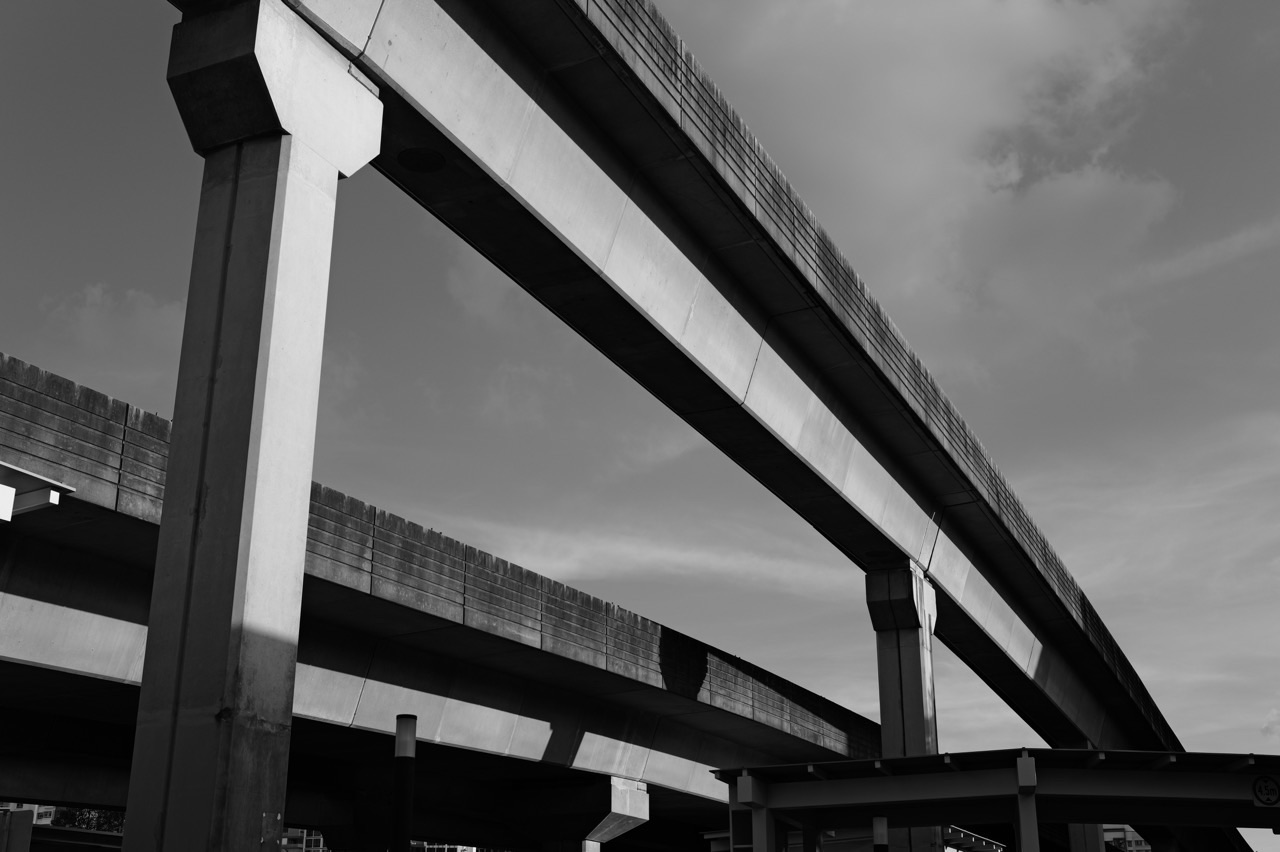
Editorial note, 23 October 2026: Route illustrations and sample arithmetic are explicitly hypothetical. This article does not supply future train timetables, fares, station entrances or guaranteed property outcomes. The photographs illustrate Punggol’s current rail network; they are not falsely presented as finished Riviera CRL facilities.


