
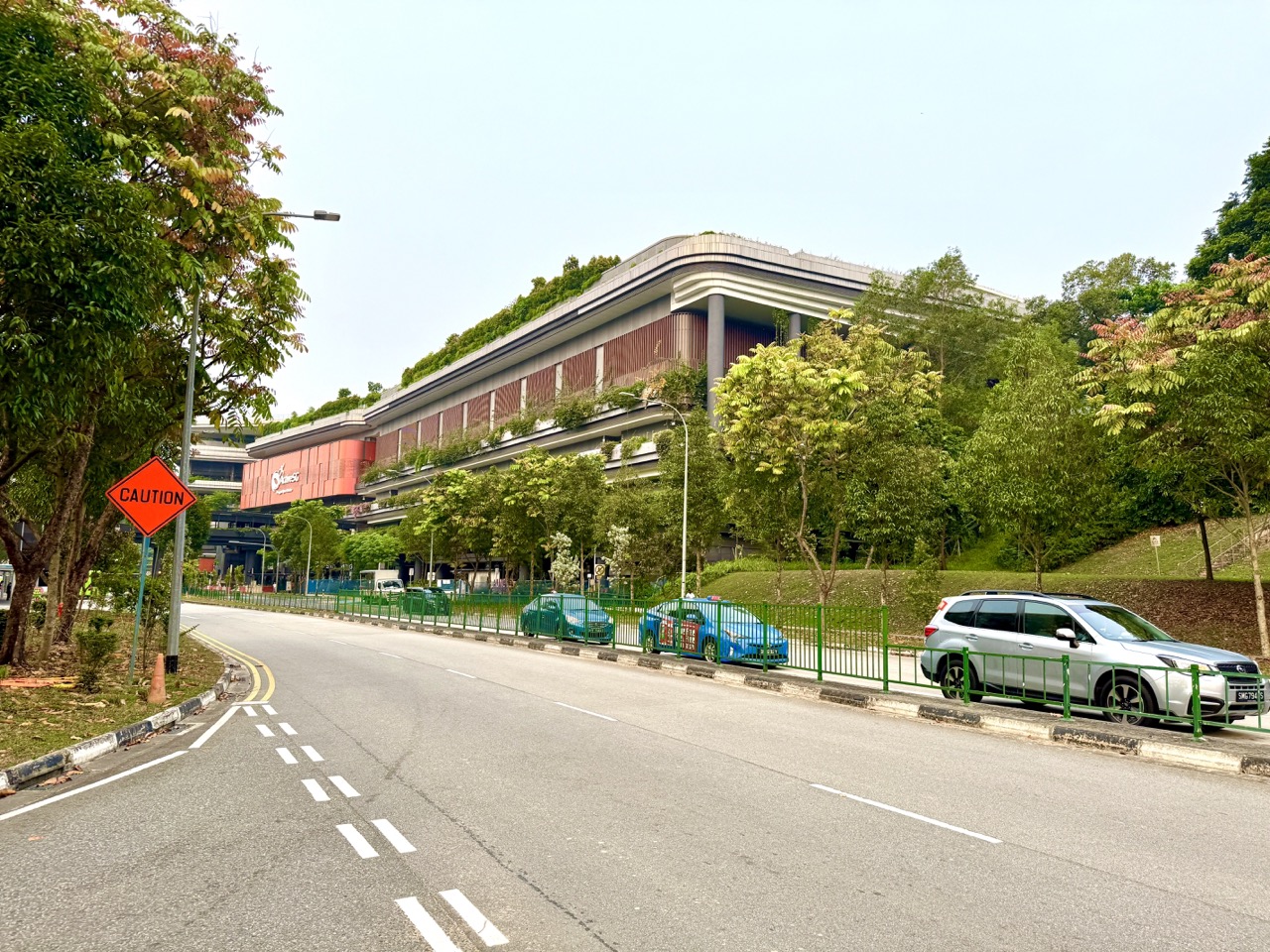
Quick answer, checked 23 October 2026: The Punggol Regional Sport Centre at 11 Sentul Crescent is a major upcoming addition to public sports facilities. Sport Singapore continues to list it among upcoming facilities, and earlier government materials set a 2026 opening target; an exact confirmed public opening and booking start day is not established by the official information checked for this article. Plans include a 5,000-seat football stadium, five swimming pools, an indoor hall sized for 20 badminton courts, team-sport courts, a gym and fitness studios, tennis and futsal areas, an archery facility and water-sports provision. The important future story is not only which doors open first. It is how access to this mix of facilities could change the way Punggol children, teenagers, adults and older residents build a sustainable sporting life.
There is a lovely idea in that possibility. A child who enjoys splashing in the water may one day learn swimming skills close to home. A parent who once drove elsewhere for badminton might be able to play with friends after work. A teenager may discover a sports club, practise regularly and learn to enjoy improvement even without becoming a national athlete. The centre can create opportunities for those things, but there is a boundary: the building itself does not guarantee a school team, a specific coach, an affordable programme or an available court at your preferred time. Those depend on actual operations and bookings once services begin.
This article is about the next stage of Punggol’s sports participation and what people can do to prepare. For the exact facility inventory and opening-status checks, use our main Punggol Regional Sport Centre guide. Here, we work through realistic family training paths, how to choose a sport, booking decisions, safe coaching, affordability, everyday routines and the difference between access and results.
Future Punggol sport facilities at a glance
| Facility or feature | Officially announced plan | Why it may matter |
| Football stadium | Approximately 5,000 seats | A local setting capable of hosting football and other suitable sporting events |
| Swimming complex | Five pools in the announced mix | Different aquatic activities, learning and training needs subject to operating arrangements |
| Indoor sport hall | Space for 20 badminton courts | More potential indoor opportunities for racket sports |
| Team sport hall | Three convertible basketball courts announced | Flexible indoor group-sport spaces |
| Fitness | Gym and fitness studios | Structured or independent adult exercise opportunities |
| Court sports | Sheltered tennis and futsal courts | Potential for better all-weather practice options |
| Water activities | Water-sports centre near the Waterway | Specialist activities subject to safety, programme rules and booking |
| Archery | Training centre or field in published plans | A specialist discipline requiring supervision and operational rules |
| Timing | An official 2026 target, with SportSG still presenting it as upcoming | Do not assume public entry, prices or first sessions before confirmation |
The facility mix is recorded in MCCY’s published sports-sector plan and the Sport Singapore Sports Facilities Master Plan. SportSG’s 2026 Committee of Supply overview still includes Punggol Regional Sport Centre in the upcoming facilities list. These sources ground the planned functions but do not, by themselves, provide a ready-to-book session timetable.
First understand the difference between a facility and a programme
A sports hall is a physical space with a floor, equipment rules, safety requirements and capacity limits. A programme is an organised learning or participation arrangement: coaching, a beginners’ group, a club, a league or an event. The existence of the first does not establish the availability of the second. This distinction protects families from paying a deposit for a “Punggol Regional Sport Centre course” that an independent advertiser may not have authority to run.
A court can be public-bookable for some time slots, assigned to events at other times, or unavailable during maintenance. Likewise, a pool can be designed for swimming without every session being a public-lane session. The right question is therefore not simply “Will Punggol have badminton courts?” It is “On the day and time our group is free, is a suitable court offered, what are its rules, who is allowed to book it, and what does it cost?” Those answers should come from the relevant booking operator after it publishes its facility listings.
For children, coaching arrangements need another layer of checking: coach qualifications, class size, adult supervision, safety procedures, age suitability and the child’s comfort. A future building may be excellent, but a rushed or poorly supervised lesson remains an unsatisfactory experience. The ideal sporting routine combines usable facilities with the right teaching environment and realistic schedules.

Why a regional centre is different from a neighbourhood court
Punggol already has places to exercise: playgrounds, basketball and badminton spaces, park connectors, cycling routes and school sports facilities made available through established schemes. These are valuable because they are close to homes and often suitable for quick, informal activity. A regional sport centre has a different function. It brings several specialist sports facilities together so residents may be able to move from casual participation to organised learning, regular practice and suitable competitions within one larger precinct.
For a beginner, the most important difference might be having an accessible public pool. For a community football team, it could be proximity to a stadium or associated programmes. For an older adult, the attraction may be a gym or fitness class close enough to attend twice a week. For a family of four, it might mean different members doing different activities in the same general location. These are plausible use cases, not a schedule of programmes that has already been confirmed.
The centre’s location near One Punggol, SAFRA Punggol and the Punggol Waterway also offers a distinctive combination of sport, community and open space. A family visit need not be framed as a demanding “sports day” with a full itinerary. Once facilities are operational, someone could exercise while another family member reads, eats or takes a gentle walk nearby, using only public areas and respecting each venue’s rules.
The swimming opportunity: water confidence before medals
Five pools in the published facility plan make the new complex significant for local access to swimming, but a family should not leap from that figure to assume every pool serves the same purpose. Training, teaching, competition and leisure water spaces can differ in depth, dimensions and management. The official operator will determine which activities are permitted at which times. Parents should always check the exact pool type and restrictions, especially when bringing young swimmers.
A good swimming pathway begins with water safety. Children need to learn how to enter and leave the water safely, recognise their limits, follow pool rules and respond appropriately if they are tired or frightened. Formal progress may include recognised swimming and water-safety programmes. Singapore’s SwimSafer 2.0 has six progressive levels intended to develop water safety and swimming skills. But a new centre’s timetable should not be assumed to include a specific SwimSafer course until officially announced.
Some children are enthusiastic on the first day; others take much longer to become comfortable with putting their faces in the water. Comparing siblings can make both experiences harder. A reasonable goal for a nervous beginner might be to enter the water calmly with qualified support and follow basic instructions. A more advanced swimmer might focus on technique and stamina under coaching. Neither pathway requires a parent to buy expensive equipment or promise a competitive future in advance.
Water confidence is not permission for unsupervised swimming. Parents and caregivers should follow the venue’s rules and keep children properly supervised; even confident swimmers can encounter difficulty. Avoid assuming that an indoor or sheltered pool eliminates all risk. If a child has particular support needs, discuss suitable instruction with the programme provider before enrolment. The opportunity to learn nearby is valuable precisely when safety and suitability come first.
The badminton opportunity: consistency beats a perfect court
Twenty badminton-court-sized playing areas in the announced hall is an impressive capacity, but the practical value appears when a family can play regularly. A student who practises once every few months rarely develops the same coordination as one who enjoys a manageable, repeated routine. The sport is an excellent example of how basic movement, anticipation, communication and patience can matter more than a brand-new racket.
A beginner can learn with low-intensity rallies: ready position, simple forehand contact, movement back to the centre and a friendly counting game. The next stage might add serving rules, court boundaries and the habit of recovering after a missed shot. For a family group, success could mean completing ten cooperative returns, not defeating a child at singles. Parents who treat every shot as a test can make the sport less enjoyable than it needs to be.
Booking remains the major unknown before opening. A hall that contains many courts may still be busy at popular evening and weekend times. Future users should learn the booking system, follow the release and balloting rules that apply then and have a secondary activity for days without availability. The existing Punggol badminton, tennis and pickleball court guide covers venues that are usable today versus facilities that are still to come.
Football and team sports: more than a spectator seat
A 5,000-seat football stadium changes the type of sporting event the town may be equipped to host. Yet a spectator-capable stadium is not automatically an open pitch for casual residents. Event booking, surface preservation, club arrangements and public access must be managed. A family should not assume they can enter and use a professional-standard field whenever the stadium is not hosting a match.
For aspiring footballers, the strongest preparation still begins with playable space and good habits: ball control, passing, spatial awareness, cooperation and fitness suitable for age and ability. A student can practise with a small group on a legal neighbourhood court or school field when it is open to the public. The new centre may later offer additional opportunities through programmes or events, but it should not become an excuse to postpone today’s practice.
Team sports also teach a more subtle skill: handling mistakes as a group. A missed pass or dropped ball is not a moral failing. Coaches can help players call for the ball, acknowledge an error, reorganise and try again. This can be powerful for children who are still building confidence in school or social settings. A larger venue may create a more visible stage, but the culture of a team remains the responsibility of people using it.
Tennis, futsal, archery and water sports: choose the right entry point
The published plan includes sheltered tennis and futsal areas, specialist archery facilities and a water-sports centre linked with the Punggol Waterway setting. These broaden the menu beyond the sports most commonly played at neighbourhood courts. However, specialist facilities often have strict equipment, supervision, age and safety rules. A parent should not assume that a child can walk in for unsupervised archery or borrow a watercraft simply because the relevant facility exists.
Tennis and futsal differ in movement patterns and group structure. Tennis builds repeated racket-ball contact, positioning and decision-making, while futsal emphasises compact-space movement, rapid passing and team organisation. Either may suit a child who enjoys active problem solving. The choice should consider actual enjoyment, available coaching and transport, not a belief that one sport is inherently more prestigious.
Archery requires controlled equipment handling and a managed shooting environment. The sport’s appeal may lie in attention, repetition and technical precision rather than speed. But precision cannot replace strict safety procedures. All participation should follow qualified supervision and venue instructions. Water sports demand similarly careful attention to weather, water conditions, appropriate protective equipment and activity-specific rules. These are not ordinary playground activities, regardless of how attractive the Waterway looks.
The gym and fitness studio: a path for adults with busy lives
The proposed gym and fitness studios are perhaps less glamorous than a stadium, yet they may be used more frequently by local adults. Many residents do not need an elite training facility. They need an exercise space they can reach between work and family commitments, with equipment suited to their fitness level and a schedule they can maintain. The centre could reduce the friction of starting and sticking with an activity, subject to eventual hours, pricing and access.
Beginners can start with familiar, manageable movement patterns under suitable instruction when needed. Strength training, cardiovascular work and mobility practice all serve different purposes; no single piece of equipment is a complete fitness plan. People who are new to exercise should progress gradually and choose appropriate activities, while those with medical limitations may need individual advice from qualified healthcare professionals. The article is about future facility access, not a medical exercise prescription.
A practical routine should be sustainable around work and caregiving. A person who can attend a fitness session once or twice most weeks may make better use of the new centre than someone who buys an ambitious pass and rarely attends. Before committing to recurring payments, check cancellation terms, facility hours, peak congestion and the actual journey from home. Fitness becomes part of life when the logistical demands are realistic.
What this could mean for Punggol schools
The centre may offer nearby venues for training, school-linked events or community sport, but school access would depend on agreements, slots, transport and school arrangements. A primary or secondary school does not automatically acquire a permanent lane or court when a public facility opens. Parents should continue to rely on the school’s actual CCA and physical-education information rather than assume new programmes will appear on a particular date.
For students considering a CCA, the practical questions remain familiar. How many sessions per week? Can the child manage schoolwork, rest and travel? Is the training level suitable? Does the teacher or coach give constructive feedback? Are there additional equipment or competition costs? A regional sports facility can make opportunities more visible, but overcommitting a student can still undermine their enjoyment and recovery.
Sport can connect with academic learning without making every outing a lesson. In Mathematics, students can compare court dimensions, elapsed time and rates using actual published measurements. In Science, they can explore forces, motion and energy safely through ordinary sports observation. In English, they can practise precise instructions and reflective writing. These links are worthwhile when they deepen curiosity, not when children are compelled to turn every family activity into homework.
Worked case: a Primary 3 child choosing a first sport
Imagine a nine-year-old in Punggol who enjoys running during recess but has never attended a structured sporting programme. When the new centre opens, the child might want badminton because friends play it, or swimming because the pools look exciting. Rather than buying a year-long package immediately, the family can look for a legitimate introductory lesson or a short, age-suitable session. The aim is to see how the child responds to the activity, coach, group size and journey.
During the first two sessions, observe practical signals. Does the child feel comfortable asking for help? Can they follow essential safety instructions? Does the coach correct errors respectfully? Are the physical demands suitable for the child’s level? An enjoyable beginner experience can establish the basis for steady participation. A negative reaction does not prove the child “is not sporty”; the activity, group or timing may simply be a poor fit.
After four or six sessions, ask the child what they enjoy and what they find difficult. If they like the sport, consider a routine that protects homework, sleep and family time. If not, try another form of movement. The new centre’s value is partly its variety: a child may discover a sport that was previously inconvenient to access. There is no need to convert that discovery into a high-pressure ambition to represent Singapore.
Worked case: a Secondary 2 student in a school team
Consider a student who already plays badminton for school and hopes to improve their footwork. A newly available public court could provide extra practice outside official CCA sessions, if they can book an appropriate slot. But the student should not replace supervised coaching with excessive independent practice or ignore recovery. The sensible plan is to discuss a narrow skill target with the school coach, practise that target safely and record progress over several weeks.
One measured goal might be to improve consistency on a particular simple drill, using the same conditions and honest count each session. The student records successful repetitions and notes whether fatigue or rushed positioning affected results. Improvement can be celebrated without inflating a single successful day into a performance guarantee. If booking slots are scarce, the student can practise permitted movement patterns at home without creating a noise or safety problem for neighbours.
The lesson applies to many sports: progress depends on the quality, consistency and suitability of training, not simply on access to an impressive building. A regional centre creates additional capacity in the local ecosystem; the school, student and coach still do the work of turning it into learning.
Worked case: two working parents and one crowded weekend
Imagine both parents work full-time, one child wants to swim and another enjoys team games. Saturday is the only long shared period. They could plan a staggered visit to a large sports precinct after verified programmes become available. One adult supervises the swimming lesson while the other manages the second child’s activity, then the family meets for a relaxed meal. This is an illustrative family routine, not an announced arrangement for concurrent classes at Punggol.
The important preparation is logistical. Check whether the activities actually run at compatible times, what supervision each requires and whether the family can travel without rushing. If a single missed bus makes the schedule collapse, it may be better to alternate sports by week. A sustainable plan is more valuable than squeezing every available facility into the same outing.
Parents should also compare the total cost, not just the headline lesson fee. Add transport, equipment, refreshments and the cost of rescheduling. A nearby facility may reduce some expenses, but it does not guarantee the whole activity is cheap. Conversely, parks and free-to-play courts can remain the best option for a family that wants enjoyable movement without formal lessons.
Worked case: a senior who wants to stay active
An older Punggol resident might prefer a gentle class, a walking routine or light exercise at a gym with appropriate support. The future centre may expand nearby choices, but that does not mean every senior should use a gym or train at the same intensity. A comfortable activity, clear access route and consistent timing are more important than joining the most fashionable programme. Someone managing a health condition should seek individual advice before starting an unfamiliar demanding activity.
A good first visit could be an orientation rather than a workout. Find the entrance, ask staff which areas are public, locate the accessible route and review the published programme schedule. If a suitable class exists, start at a manageable level with opportunities to ask questions. The best indicator of fit may be whether the participant looks forward to returning next week rather than how exhausted they feel afterward.
The community aspect also matters. An exercise routine can create regular social contact, particularly for residents who spend many weekdays alone. But people vary in their preferences; some enjoy groups, others prefer quiet independent activity. Inclusive sport provision should respect both styles instead of equating a lively group class with the only successful outcome.
How bookings will work: what to do and what not to guess
Sport Singapore’s current MyActiveSG+ platform supports facility booking, balloting and purchases of relevant passes and programmes, with specific terms. It is reasonable to expect official digital systems to play an important role in public-facility access, but the new centre’s individual offerings must first be listed by the operator. Do not claim a court is already bookable when the public opening has not been verified.
When a facility is listed, read the exact name, date, duration, court or pool type, eligibility restrictions, equipment rules and cancellation terms. An automated confirmation should come through the authorised booking process. Screenshots from social media are not a reliable substitute for a valid reservation. A person should never transfer a deposit to an unfamiliar private account simply because someone claims to be reserving scarce new-court slots.
If an opening is announced, demand may be intense at first. Families can reduce frustration by identifying more than one suitable time and keeping a backup activity. A court that is unavailable at 7 pm on a Friday may be quiet at a different hour, but do not assume any particular period will be free. Observe real booking patterns over several weeks rather than forming a permanent conclusion from the opening weekend.
Sport centre opening versus public booking: a careful distinction
| Milestone | What it proves | What it does not prove |
| Building exterior appears complete | Visible construction has progressed | That pool and court operations have commenced |
| Retail or commercial-space tender | Preparation for potential tenants or services | Public opening date or current usable sports facilities |
| Official launch ceremony | A project milestone or formal event | That every service is bookable that same day |
| SportSG facility listing goes live | A specific facility has a published operating/booking presence | That every slot, programme or activity is available |
| Booking confirmation issued | A particular user has reserved a stated session | Access to other spaces or permission to coach commercially |
| Course advertisement appears | A provider is advertising a service | That the provider is authorised or SportSG-endorsed |
This distinction is especially important when a new facility is visible from a public road. A handsome building with finished cladding may still require certification, equipment commissioning, staffing and phased operational checks. Photographs are useful for documenting the town’s changing streetscape, but they do not reveal what a family can book. This article’s photographs are of the actual exterior, and the caption intentionally makes that boundary clear.
Safe coaching is part of the future value
A community sports venue should help people develop skill in an environment of respect and trust. Singapore’s National Registry of Coaches (NROC) provides a way to learn about qualified coaches and professional standards. For a paid programme, ask about the coach’s relevant qualifications, current standing, first-aid preparedness and practical experience with the age group or ability level of the participants.
Sport Singapore’s Safe Sport framework emphasises a sporting environment free from harassment and abuse. Parents should examine basic safeguarding arrangements: how staff supervise children, whether there are transparent pick-up rules, how complaints are handled and whether a child can report discomfort without retaliation. A coach who shames a beginner or uses unsafe physical pressure is not justified by the desire to improve performance.
When participants need additional support because of disability, communication needs or physical limitations, the conversation should focus on what adaptations are appropriate and what the programme can safely provide. A generic “everyone welcome” line is a positive invitation, but practical inclusion needs trained people, usable spaces and realistic arrangements. Ask the operator in advance about actual access rather than relying on a broad label.
Accessibility: a venue for more than athletes
A modern sports centre should be evaluated by how people use its routes, facilities and information. A person with a wheelchair may need step-free access to reception, a pool or spectator space. A parent with a stroller needs a safe place to move between levels. Some users benefit from clear signage and predictable quiet waiting areas. These needs matter alongside the number of courts, but their exact implementation should be confirmed against the actual operating facility, not inferred from promotional art.
A family visit can reveal useful details that a facility list cannot: how far the nearest drop-off is from the correct entrance, whether lifts are well signed, how slippery circulation surfaces become when wet, and where someone can sit during a break. Observations should be specific and dated. If access proves difficult, report the location and problem through the venue’s official feedback process rather than making a sweeping statement about all visitors.
Inclusion is also economic. If a sport requires costly equipment, a long journey and frequent paid coaching, a public facility alone may not be sufficient. Parents can look for free-to-play time, introductory activities and equipment lending where officially offered. A family should not assume every programme has a subsidy, but it can compare published fees and choose according to household priorities.

Sports participation without a big budget
Residents should not wait for a regional complex to begin moving. Punggol’s waterway paths, parks, neighbourhood courts and existing school Dual-Use Scheme facilities can already offer useful opportunities. Public outdoor exercise can be simple: a brisk walk, a family ball game in a permitted area, or a short session of basic movement skills at a playground. Avoid obstructing others or playing in places that are not designated for the activity.
MCCY and SportSG describe the Dual-Use Scheme as a way to make selected school halls and fields accessible for community sport outside school use, subject to bookings and site rules. Those venues can remain valuable after the new centre opens. A diversified sports ecosystem is stronger than a model in which every family must travel to one flagship facility for all activity.
To compare cost fairly, create a monthly budget with actual prices once available. Include court rental divided among players, transport, admission, equipment, coaching and refreshments. Use a realistic attendance rate. A subscription used twice a month can be more expensive per session than a simpler pay-as-you-go arrangement, depending on actual terms. The most affordable option is not always the best one, but hidden fees should not decide for the family.
A six-week beginner plan that does not depend on an opening date
| Weeks | Practical goal | What to measure |
| 1 | Choose one enjoyable activity and a currently open, appropriate location | How easy it was to start and whether participants felt comfortable |
| 2 | Repeat the activity at a sustainable time | Attendance and recovery, not maximum intensity |
| 3 | Practise one simple skill with safe instruction | A consistent observation, such as cooperative passes or controlled movements |
| 4 | Review the timetable and household budget | Whether activity fits work, school and rest |
| 5 | Try an appropriate variation or friendly group activity | Enjoyment, confidence and respect for others |
| 6 | Decide what routine to keep or adjust | A plan the family can maintain even without the new sports venue |
These are illustrative planning steps, not a prescribed clinical exercise programme. They can begin before Punggol Regional Sport Centre opens and can continue afterward. This matters because a sporting habit should not be held hostage to a construction timetable. The centre is an additional resource, not the moment when a resident first becomes allowed to exercise.
A practical review question at the end of each week is simple: “What made this easy to repeat, and what made it harder?” If the main barrier was travel, a closer future venue may genuinely help. If the barrier was an uncomfortable coaching environment or a poor fit with the family’s schedule, changing buildings will not solve it. Good decisions identify the actual constraint.
What competition and athlete pathways might look like
A regional venue with specialist infrastructure may provide an attractive setting for events and advanced training. But no athlete should assume an automatic progression from booking a court to being selected for a school, national or professional team. Athletic development depends on coaching quality, years of suitable practice, competition opportunities, well-being, financial support and the individual’s motivation. It also involves setbacks that cannot be removed by better buildings.
For a teenager who is motivated to compete, an appropriate pathway is to consult their school CCA teacher or recognised sports association about selection criteria and suitable development programmes. They can document training, attend official trials where eligible and pursue education alongside sport. An operator’s planned event calendar or a venue’s spectator capacity is not proof that a particular championship will be scheduled.
For most residents, the measure of success will be entirely different: playing regularly with friends, learning to swim safely, gaining confidence or enjoying movement in later life. These are important public outcomes even when nobody wins a medal. A well-used neighbourhood sports ecosystem should make room for competitive and non-competitive ambitions without shaming people who exercise simply because it feels good.
What the new centre could mean for everyday Punggol commerce
Large sports facilities can attract visitors and create demand for nearby food, transport and services, particularly around organised events. Punggol Regional Sport Centre is close to other community and recreation amenities, so people may combine sport with shopping or a meal. But an event’s actual visitor count and commercial effect are not known until a programme is confirmed and attendance occurs. A food stall should not build a revenue forecast around a supposed stadium schedule that has not been released.
A small business can learn from real demand after opening: observe lawful public footfall at specific hours, keep sales records and adjust staffing gradually. Weekend activities may have different peaks from weekday fitness, while school-holiday demand can differ from ordinary term time. Commercial certainty comes from repeated measurements, not one eye-catching image of the new stadium.
For residents, a busier public venue can bring both convenience and crowd management challenges. Walking, public transit and cycling may be attractive where routes are safe. At larger events, families should follow official arrival and departure advice and avoid assuming that parking or ride-hailing pickup will be easy. The best journey depends on the actual event, crowds and venue rules.
The centre’s location: planning a realistic visit
The new centre is at 11 Sentul Crescent near One Punggol and the Punggol Waterway. The surrounding precinct already contains useful public destinations, including the regional library, hawker centre and green paths. That makes it possible to imagine a family visit with different needs. Yet visitors should not follow a generic “five-minute walk” claim without checking where they begin, which entrance is actually open and whether temporary works affect pedestrian crossings.
Sam Kee LRT and Punggol MRT are relevant parts of the wider transport network; the most convenient option will depend on the person’s starting point and the confirmed venue entrances. Families with a stroller or mobility aid should check step-free access. People driving should rely on posted parking instructions rather than treating roadside drop-offs as unofficial parking spaces. The urban design benefit of a community sports precinct is most valuable when arrival is straightforward and safe.
If the public opening is phased, different activities may have different entrances, check-in procedures or start dates. That is not unusual for a large facility. Read the instructions for the specific pool, court or class you intend to use, and ensure every child in the group knows where to meet an adult afterward. Avoid relying on a visual tour or commercial tenant announcement as proof that the relevant sports area is ready.
A checklist before paying for the first class
- Confirm the venue is operating. Check the official facility listing and public opening announcement.
- Check who runs the programme. A private coach, school and public operator are not interchangeable.
- Verify suitability. Ask about participant age, ability level, supervision, class size and any equipment rules.
- Check the full cost. Include enrolment, lessons, admission, equipment, transport and cancellation terms.
- Check credentials. For coaching, consult recognised qualifications and Safe Sport expectations.
- Choose a workable time. A class that clashes with regular school or caregiver commitments is unlikely to last.
- Keep records. Retain legitimate booking confirmations and receipts, and know the operator’s contact channel.
A provider’s promise of a “priority opening slot” deserves scrutiny. It may be legitimate if the operator has expressly announced a programme, but vague marketing language is not enough. Ask for the named organiser, facility, schedule, terms and verification route. Be especially wary of requests to transfer money to personal accounts in exchange for supposedly scarce public-facility privileges.
How to judge the first month of public operation
| What to check | Evidence to use | Avoid this conclusion |
| Opening status | Official SportSG facility or event notice | Exterior looks ready, so every space is open |
| Swimming access | Specific published pool listing and opening hours | All five proposed pools have identical public hours |
| Court rental | Published bookings and confirmed availability | Twenty planned courts mean a guaranteed Friday slot |
| Coaching | Named authorised programme and qualified staff | Every course with Punggol in its title is endorsed |
| Accessibility | Actual entrances, lifts, surfaces and assistance arrangements | All spaces are equally suitable for every visitor |
| Value for money | Total household costs over several sessions | The cheapest headline fee is always the best choice |
| Safety | Venue rules, supervision and Safe Sport channels | An impressive building replaces proper human oversight |
The table encourages visitors to assess the specific service they will use rather than the district’s marketing narrative. A pool can open with one set of hours while a studio uses another. An individual court booking may be available one week and blocked for maintenance the next. A course can be excellent for advanced players but unsuitable for a complete beginner. These are ordinary operational distinctions, not reasons to judge a whole project prematurely.
Why the project has taken time
Large public sport developments require construction, equipment procurement, structural and safety systems, staffing and final operational arrangements. The new Punggol venue includes aquatic and specialist spaces whose preparation involves more than completing the exterior. Government publications have described a 2026 opening target, but the absence of an exact public opening day at the date checked should be reported transparently. Do not turn a target quarter or year into a promise to parents.
A commercial-space tender for Punggol Sport Centre appeared on the ActiveSG platform in September 2026, with a stated marketing period. That shows preparation for an associated commercial use, not that the stadium, swimming pools and sports halls have already entered public service. Tender schedules and sports-operation schedules are different forms of evidence, and one should not be substituted for the other.
The responsible status message is therefore: the centre has a clear physical location, an established government facility plan and an announced completion/opening horizon, but readers should check official operating notices before visiting specifically to use it. That boundary will become outdated after an opening is confirmed, so the article should be checked again at that point rather than making speculative promises today.
Five family profiles and different sport choices
The child who is shy in large groups
A high-capacity sports venue can be noisy, but a child’s best entry may be a small introductory session or a quieter activity. Discuss class size and teaching style, and avoid treating reluctance as disobedience. If the child enjoys swimming or an individual sport, that is a legitimate starting point. The venue should be selected for its actual programme environment, not the assumption that a new complex automatically provides calmer teaching.
The teenager who already trains competitively
This student may value quality practice space, coaching continuity and access to recognised competitions. They should coordinate additional sessions with their school or club coach, protect rest time and use the new facilities only when the session and equipment are appropriate. More training hours are not always better, particularly if they compromise school commitments or the student’s enjoyment.
The parent who has fifteen spare minutes
For someone with a very short time window, the nearest usable park or neighbourhood exercise station may be better than a large regional centre requiring travel, changing and check-in. That is not a failure to appreciate the new facility. Good sport participation matches the environment to the time available. A new complex expands options, but free, local and informal movement remains important.
The adult returning after years of inactivity
A welcoming introductory programme, reasonable access costs and a steady routine may be more important than specialised equipment. The person can compare fitness studios with walking and community activities. Progress can be measured by consistency and comfort rather than dramatic before-and-after transformations. Individual health concerns should be discussed with appropriate qualified professionals.
The multigenerational family
A facility precinct may support a shared outing even when family members choose different levels of activity. One person might attend an organised session, another take a walk and a third relax at a nearby public venue. The plan works only if supervision, meeting points, timing and accessibility are handled well. Families should not leave children unsupervised in order to synchronise adult exercise sessions.
How sport supports learning without becoming another examination
A child who practises a movement, notices an error and tries again is experiencing iterative learning. This resembles good problem solving in Mathematics and Science: understand the task, test an approach, observe feedback and improve. An encouraging coach can make that process visible without turning the court into a classroom. The experience can help children become comfortable with learning from an imperfect first attempt.
Sports also bring language into action. Clear calls, agreed rules, respectful disagreement and honest reflection matter during team play. Students learn to give a brief instruction under time pressure and listen to others. For children who find written explanation difficult, a post-session note can begin with one simple sentence: “Today I practised … and the next thing I want to improve is …” That connects lived experience to communication without requiring an essay after every game.
The physical geography of a sports centre offers natural mathematics problems too. Students can compare the dimensions of different courts from verified standards, calculate the cost of a rented session shared among players, or represent practice results in a table. They should use published or actually measured numbers and label assumptions. The goal is mathematical accuracy, not inventing sporting performance data to make an attractive chart.
What residents can do before the opening is confirmed
- Choose an activity you or your child genuinely enjoy and can access today.
- Confirm current park, court, pool or Dual-Use Scheme availability through operating sources.
- Build a realistic weekly routine that includes rest, school, work and family obligations.
- For lessons, learn how to check coach qualifications and appropriate safeguarding practices.
- Monitor SportSG and MyActiveSG+ for the specific future facility listing rather than a rumoured opening day.
- Keep a backup venue and a budget that does not depend on an unavailable future session.
- When opening is announced, test one modest visit before committing to long-term recurring bookings.
The plan can begin immediately. A family does not have to wait for a ribbon-cutting to discover whether walking, swimming, badminton, football or a gentle exercise class is enjoyable. The regional sports centre will ideally make some of those activities easier to access when it enters operation. Until then, the best preparation is to establish the healthy, safe and repeatable behaviours that will make a new facility worth using.
Frequently asked questions
Is Punggol Regional Sport Centre open as at 23 October 2026?
SportSG’s official project materials still identify it as an upcoming facility at the time checked. Earlier government publications described a 2026 target, but a confirmed public opening day is not established here. Check the official ActiveSG/SportSG listing before planning a visit to use facilities.
Where is the centre located?
The project is at 11 Sentul Crescent, Punggol, near One Punggol and the Waterway. Current entrance, parking, drop-off and public-transport instructions should be checked after the venue’s operating arrangements are announced.
How many swimming pools are planned?
Government planning material describes a swimming complex with five pools. That does not establish the operating timetable, admission conditions or public access to every pool at the same time.
How many badminton courts will there be?
The published indoor hall plan provides for 20 badminton-court-sized playing areas. Individual court use, sports configuration and bookable slots will depend on the operator’s actual arrangements.
Will there be a stadium?
A football stadium with approximately 5,000 seats is part of the announced facility mix. Spectator events and public pitch availability must be separately confirmed.
Can I book a court today for a future date?
Do not assume so. A booking is real only when the authorised platform shows that specific facility and issues a valid confirmation. Do not pay a stranger to secure a supposed first-day court slot.
Will the new centre run SwimSafer?
Swimming and water-safety programmes may be relevant to its future operation, but a specific SwimSafer timetable at the new venue should only be treated as confirmed when the responsible operator publishes it. Use SportSG’s SwimSafer information for the present framework.
Will school CCAs automatically train there?
No blanket allocation is announced by the facility plan. Schools and sports programmes must confirm their own schedules, permission and access arrangements.
Will everything be free?
No such claim follows from public ownership. Some activities may be free, while facilities, programmes and passes can have published charges. Check the actual price and eligibility for each service.
Is there a water-sports centre?
Water-sports provision forms part of the public facility plan. Specific permitted activities, operators, equipment, safety requirements and launch arrangements should be confirmed after opening.
Can adults and seniors participate?
The facility mix includes opportunities beyond children’s sport, but suitability will depend on the programmes and individual needs. Ask the actual provider about prerequisites, access and safe participation.
How do I check a coach?
Start with Sport Singapore’s National Registry of Coaches and the coach’s specific discipline, qualifications and Safe Sport practices. Check the programme organiser separately; a qualified coach’s status does not automatically authorise every claimed venue booking.
Where can we exercise while the new centre is unavailable?
Use operating Punggol parks, suitable neighbourhood facilities, active-mobility routes and currently bookable school Dual-Use Scheme venues. Our Punggol swimming options guide distinguishes public pools, water play and the not-yet-open centre.
Primary sources and related guides
- MCCY: planned Punggol sport facility mix — stadium, pools, badminton, team sports and specialist facilities.
- MCCY: Sports Facilities Master Plan update — broader community access and facility context.
- Sport Singapore: Sports Facilities Master Plan — Punggol Regional Sport Centre in the national infrastructure programme.
- SportSG: 2026 Committee of Supply — current upcoming-status context.
- MyActiveSG+ — current rules and platform for passes, programmes and facility bookings.
- Sport Singapore: National Registry of Coaches — coaching standards and verification.
- Sport Singapore: Safe Sport — participant safety and safeguarding expectations.
- eduKatePunggol: sport centre status and facility guide — dedicated opening-status page.
- eduKatePunggol: current court choices — where to play before the new centre begins operations.
Update boundary, 23 October 2026: This article distinguishes government-announced facility plans from individual programmes not yet announced. It makes no promise of a public opening day, a particular coach, fee, competition, booking slot or school allocation. The photographs are genuine recent eduKatePunggol exterior images; exterior completion is not proof that indoor facilities are open.


