
Singapore’s next wave of adult education includes an important change announced for late 2026: about 200 Workforce Skills Qualifications (WSQ) full-qualification courses are expected to become eligible under the SkillsFuture Level-Up Programme from the fourth quarter of 2026. MOE identified areas including healthcare, information and communications, engineering, media and early childhood. For a Punggol resident considering a career change, the opportunity is not merely to attend another short workshop, but to investigate a more substantial training route with a defined qualification.

The important qualification is that an expected catalogue expansion is not the same as every WSQ course automatically becoming eligible. Full-qualification status, the specific course, approved provider, commencement date, funding rules and personal eligibility still need to be confirmed. A marketing brochure bearing the WSQ logo does not prove that an applicant qualifies for a particular allowance or that the course will lead to a regulated job.
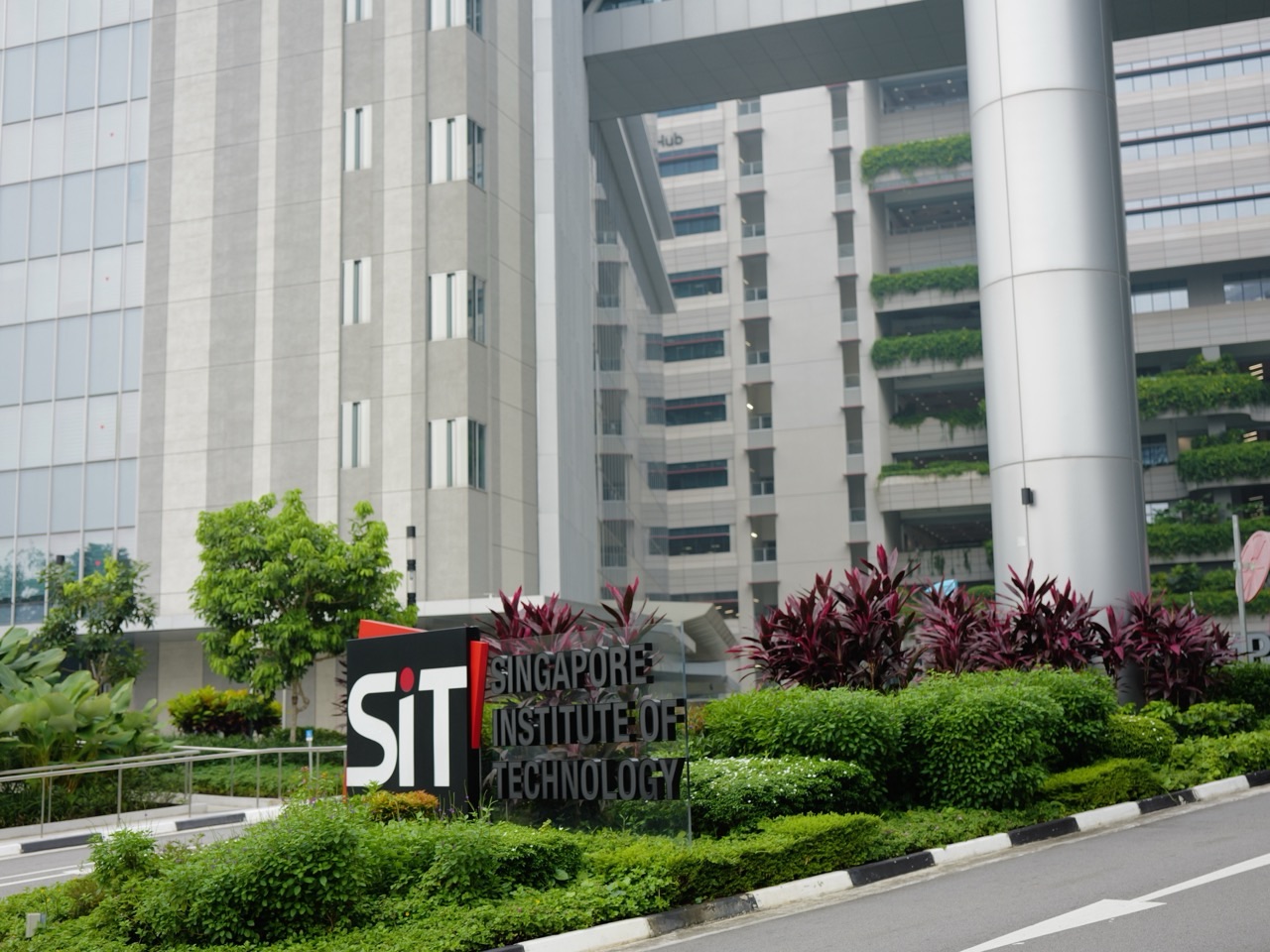
Punggol’s Singapore Institute of Technology campus and the Punggol Digital District make skills and applied learning unusually visible in the town. Yet these nearby institutions do not turn all adult courses into SIT programmes, guarantee local class availability, or promise employment. The practical job for a resident is to work backwards from a realistic occupational goal, verify the actual qualification and funding, and decide whether the learning schedule and assessments are sustainable.
The 50-Second Decision Guide
Confirmed 2026 policy: MOE announced that the SkillsFuture Level-Up course catalogue will expand to include qualifying WSQ full-qualification programmes. Around 200 courses were expected from Q4 2026, across several sectors. Treat that as a national expected expansion unless the current live course catalogue confirms the particular programme.
Who should investigate: Adults seeking a recognised, substantive skills qualification for an existing job, transition or new specialism, especially those considering long-form learning rather than isolated single-day courses.
Two funding pathways to distinguish: SkillsFuture Level-Up support for eligible mid-career Singapore Citizens aged 40 and above, and Workfare Skills Support (WSS) Level-Up for eligible lower-wage workers under its separate rules. They are not one interchangeable benefit.
Critical provider check: A 2026 SSG information memorandum says a WSQ full qualification must be awarded through an approved provider offering the full-qualification course, with all constituent modular Statements of Attainment obtained from the same approved provider for that qualification.
Next action: Identify a real job outcome, find the official course listing, confirm the full qualification and provider, request the written fee and funding breakdown, then compare the weekly workload with family and employment responsibilities before paying.
What Changed in the 2026 Education Announcements?
MOE’s March 2026 Committee of Supply announcement described a course-catalogue expansion to help adults undertake more substantial upskilling and reskilling. The number stated was around 200 WSQ full qualifications expected to qualify from Q4 2026. The named sectors were healthcare, information and communications, engineering, media and early childhood, illustrating a wide spread of potential career needs.
This is different from asserting that 200 new physical campuses are opening, that 200 courses will be offered in Punggol, or that every qualification is immediately available online. MOE’s statement concerns courses supported under a national programme. The delivery location, format, exact qualifications and eligibility must be checked separately.
The wider policy direction also includes tighter integration of skills training and employment services through the announced merger of SkillsFuture Singapore and Workforce Singapore into a new statutory board. The announcement describes better linkage between acquiring skills and obtaining suitable employment outcomes. A merger of public functions, however, does not erase the contractual requirements of existing courses.
For a resident, the distinction is practical. The headline makes it worthwhile to recheck the available learning routes. It does not justify enrolling in the first advertised course with a familiar acronym.
What Exactly Is a WSQ Qualification?
Singapore Workforce Skills Qualifications is a national system for training, developing, assessing and certifying workforce-related competencies. Skills are related to jobs and occupational requirements, with reference to Skills Frameworks where relevant. WSQ should be understood as a credential system, not as the name of one school or one uniform set of lessons.
A modular WSQ course may lead to a Statement of Attainment, commonly abbreviated SOA. That can certify that a defined component of learning and assessment has been completed. A WSQ full qualification is a more substantial award comprising the required competencies and components of the approved qualification.
The distinction matters because the 2026 catalogue announcement specifically concerns full-qualification programmes. A provider’s introductory workshop may be useful but does not become a full qualification merely because it is marketed near a longer course. Conversely, a full qualification can involve multiple assessed components, attendance requirements and a more demanding time commitment.
Before choosing, write down the exact award title, programme structure, entry requirements and issuing arrangement. ‘A course in digital skills’ is a topic. ‘This named WSQ full qualification offered by this approved provider’ is a verifiable education product.
The Same-Provider Rule Is Easy to Miss
SSG’s February 2026 information memorandum explains that WSQ full qualifications can only be awarded by approved registered training providers delivering full-qualification courses. It also says that the modular Statements of Attainment required to stack toward that full qualification must be obtained from the same SSG-approved provider awarding the qualification.
This is a crucial practical rule because an adult may otherwise collect separate WSQ modules from several training centres while assuming the certificates automatically combine into the desired full qualification. The training may still teach useful skills, but the learner cannot safely infer that every completed component will count towards a particular full award.
Ask the awarding provider for the written list of required modules, the permitted sequence, expiry or validity conditions where applicable, recognition of any prior completed work under its approved rules, and the process for declaring an intention to earn the full qualification.
A programme that cannot explain who is authorised to award the full qualification and how its modules fit together should not be bought on the strength of a salesperson’s verbal reassurance. Verify the course and provider against the relevant official SSG information.
What Is SkillsFuture Level-Up?
The SkillsFuture Level-Up Programme was designed to support substantial upskilling among mid-career Singaporeans. It includes specified credit and training support arrangements for eligible Singapore Citizens aged 40 and above, with details depending on the type and mode of course. Not all courses qualify for all forms of support.
There is a difference between a course-fee subsidy, SkillsFuture Credit and a training allowance. A subsidy reduces an eligible fee according to a scheme. SkillsFuture Credit is used against eligible courses within applicable rules. A training allowance aims to help offset some costs or forgone income during substantial training, subject to its own application and conditions.
These supports should never be added together as if they were an unconditional cash voucher. A learner needs an official quotation showing gross course fee, applicable subsidies, credit usage, remaining payable amount, allowance eligibility if any and what happens if the course is deferred or withdrawn.
The 2026 WSQ announcement widens the set of full qualifications expected to be considered in the course catalogue. The existence of the policy does not establish that a particular 40-year-old applicant automatically receives the full maximum benefit, or that every relevant provider is accepting enrolment at the same time.
What Is Workfare Skills Support Level-Up?
Workfare Skills Support Level-Up, also referred to as WSS Level-Up, is designed to support eligible lower-wage workers undertaking long-form training. Its own requirements and entitlements differ from SkillsFuture Level-Up. Official 2026 announcements explain that long-form WSQ full qualifications are being brought into the range of supported training from Q4 2026.
WSS Level-Up can support suitable full-time or part-time training under the scheme’s rules. WSS Basic, by contrast, addresses other training arrangements including shorter courses, with different payments and conditions. The exact course class and application route determine which mechanism may apply.
A learner must not assume eligibility based only on hearing that they are ‘lower wage’ or on being offered a place by a provider. Citizenship, employment, income, training history and other scheme details need checking at the relevant current authority. Eligibility can also change when a person’s circumstances change.
The right question for a course adviser is not ‘Can I get government money?’ It is ‘Which exact course and qualification are on the current eligible list, which scheme applies to me, and which documents and dates control the application?’
Why a Skills Framework Helps Before Course Shopping
Singapore’s Skills Frameworks describe job roles and the knowledge and competencies relevant to them. This can help an adult distinguish a vague ambition from a learnable occupational transition. Someone attracted to the word ‘cybersecurity’ may discover that real roles vary significantly in prerequisites, tools and working conditions.
Start with a job description from a genuine employer or a verified occupational profile. Identify the tasks performed in an ordinary working week, the technical and interpersonal skills required, the qualifications accepted and whether separate registration or licensing is necessary.
Next, compare that occupational requirement with the actual WSQ programme’s learning outcomes. Does the course teach the relevant skills at the right level? Does it assess applied performance? Is the content current enough for the intended job? Does it help create credible evidence of competence beyond attendance?
A course can be nationally recognised and still be a poor match for a particular learner’s target role. Recognition is a necessary piece of due diligence, not a guarantee of suitability.
The Distinction Between Learning and Employability
An education provider controls teaching, assessment and its own stated qualification process. An employer controls hiring within applicable law and organisational requirements. The fact that a course is funded does not automatically create a job offer, preferred employer treatment or a fixed salary uplift.
A trainee should therefore plan for two related outcomes. First, a learning outcome: what can the person actually do reliably after the programme? Second, an employment outcome: how can they demonstrate that competence to a relevant employer, and what additional requirements remain?
For example, a technical course may teach safe operating principles and assessment routines. A hiring organisation may still require relevant experience, shift availability, a separate certification or a recruitment process. A media programme may teach production tools, but a portfolio and references may remain important.
A credible adviser will explain the boundary rather than blur it. The job transition is more likely to work when the learner understands the employer’s actual requirements before choosing training.
Why Punggol Digital District Is Relevant but Not a Shortcut
The Punggol Digital District brings an existing SIT campus close to a developing cluster of businesses and facilities. Its education–industry setting can make applied learning, innovation and workforce skills more visible to residents. It is reasonable for a learner to use this environment to explore occupational interests and discuss technological change.
But geography does not grant academic credit. Being able to see SIT from an MRT or LRT route does not make a WSQ course a university degree. Nor does the district guarantee a particular training provider has classrooms in Punggol or that every tenant will recruit graduates.
The useful benefit is contextual. A resident might be able to observe how jobs combine engineering, data, services, healthcare technology, operations or cybersecurity. That observation can sharpen the questions asked of a training programme: What will I learn? What problems will I solve? How will my skill be demonstrated?
Keep a clear map of institutions. JTC plans and manages the district, SIT governs its own programmes, training providers run their approved courses and employers make independent hiring decisions.
Choosing Between a Short Module and a Full Qualification
A short, targeted module may be ideal when a worker needs one new skill in a current role. A full qualification may be more appropriate when the learner needs a coherent set of competencies to undertake a different job or move into a more demanding occupational pathway.
The longer choice is not automatically the better one. A parent with limited study time might gain immediate value from an approved short course that solves a workplace problem. Another adult making a serious career transition may need sustained practice, multiple assessments and a formal qualification.
Ask what the role actually requires. If employers accept demonstrated skill and experience in a narrow tool, a long qualification could be unnecessary. If the role needs a recognised body of competencies or progression route, a small collection of unrelated workshops may be insufficient.
A sensible comparison looks at cost, duration, entry criteria, assessment standard, workload, employer relevance and progression—not the number of certificates advertised.
A Practical Full-Qualification Verification Checklist
First, verify the exact course title as recorded by the approved provider and the relevant official catalogue. Similar advertising titles can refer to different qualifications. Record the course code or official identifier when available.
Second, confirm the awarding arrangement. Is this a full qualification or a modular SOA? Is the provider approved for the full award? Does the same-provider stacking rule affect your prior modules?
Third, check eligibility under the specific funding scheme. Do not accept a generic promise that ‘everyone gets SkillsFuture’. Ask for a written calculation and the authority that sets the rules.
Fourth, examine curriculum and assessment. How many contact hours and independent study hours are expected? Which activities are assessed? Are there workplace components, and how are students supported who need to resit an assessment?
Fifth, verify practical arrangements: location, accessibility, evening or weekend timing, attendance requirements, payment terms, refund rules, deferral conditions and the assistance available if family circumstances change.
Finally, speak to a credible employer or industry contact about the relevance of the award to real entry-level positions. A course is an educational commitment; due diligence should occur before the fee is paid.
Case Study: A Punggol Worker Considering Healthcare
Imagine an adult employed in a customer-facing role who is interested in healthcare support work. The person may be drawn to the new catalogue because healthcare is one of the broad sectors named by MOE. It would be a mistake to assume any healthcare-labelled WSQ programme is sufficient to become a nurse or another regulated professional.
The first step is to identify a precise job: for example, an assistant-level support role or an administrative function in a healthcare organisation. Then review its actual tasks, working hours, relevant training expectations and whether the occupation has mandatory professional registration. Different jobs have different entry requirements.
Next, compare a real full qualification with those tasks. Does the learner need practical communication, infection control awareness, record-handling skills or specialised clinical competencies? Which can be taught in the selected programme, and what additional employer training may be required?
The example is hypothetical and makes no claim that a particular new healthcare course has opened in Punggol. It illustrates the value of starting from a real job rather than a broad sector headline.
Case Study: A Parent Exploring Information and Communications
Suppose a mid-career Punggol parent has used spreadsheets and office applications for years and is attracted to a technology career. The advertised programme sounds exciting, but ‘ICT’ spans support operations, data analysis, development, security and infrastructure. The first problem is choosing a role at a realistic entry point.
The parent compares job listings, identifies common tasks and tests a small piece of work before committing to long-form study. For a data-focused role, that might involve explaining a simple chart or cleaning a small dataset. For support work, it could be identifying a device fault, documenting a reproducible problem and communicating a resolution.
A full qualification is suitable only if its actual outcomes match the chosen pathway. The learner should ask how the course assesses independent performance, whether it requires prior technical knowledge and which further practice or experience employers expect.
The presence of digital businesses in Punggol does not automatically make the job transition easy, but it can motivate more grounded occupational research.
Case Study: A Technician Considering Engineering Reskilling
An experienced technician may already possess valuable knowledge that is not expressed in a formal credential. A long course can potentially build on that foundation, but its level must be appropriate. Too basic a programme wastes time; one with prerequisites the learner lacks may create avoidable failure.
Begin with the work the technician already performs: fault finding, reading diagrams, observing safety procedures, documenting measurements and communicating with colleagues. Map the target role’s additional requirements. Perhaps it involves automated systems, electric equipment, quality assurance or another specialised domain.
Then inspect whether a WSQ full qualification covers the relevant competencies in sufficient depth. Ask about lab access, hands-on assessment and any separate licensing or authorisation requirements. A certificate is not a substitute for permission to perform legally restricted work.
The educational goal is transferable reasoning. The learner should be able to explain a diagnosis, choose a safe procedure and adapt to a new situation, not merely reproduce steps from a familiar training demonstration.
Case Study: A Media Worker Looking for a More Durable Portfolio
A resident working in freelance media may already know how to use a camera, edit footage or create social content. The challenge may be developing a wider production workflow, consistent technical standards and business communication rather than learning an introductory app.
The person should inspect what a prospective WSQ full qualification assesses. Does it cover planning, production, quality control, collaboration, safety, ethics or delivery? Does the qualification help develop work samples that clients and employers can evaluate?
A course may be valuable even without guaranteeing employment if it strengthens a real capability, such as producing a clear brief, managing revisions, explaining technical choices or delivering reliably. Conversely, a long programme full of content the learner already knows may not offer enough incremental value.
Keep the qualification and portfolio as separate evidence. The credential describes an assessed programme; the portfolio demonstrates particular work. Employers and clients may consider both for different reasons.
Case Study: Early Childhood Education Requires Careful Checks
Early childhood is one of the areas named in the planned 2026 WSQ full-qualification catalogue expansion. A Punggol resident interested in working with young children may therefore want to examine new options. Yet specific preschool roles can have professional or regulatory requirements outside a general training advertisement.
The candidate should identify the role and consult current ECDA and provider information about recognised qualifications, training pathways and any requirements for employment in that role. A broad WSQ label is not by itself proof that an individual can be registered or employed in a regulated educator position.
Practical readiness also matters. Teaching young children involves communication with families, safeguarding, planning, observation and responding patiently to different developmental needs. A suitable programme should develop relevant competence rather than offering only a course certificate.
Before paying, verify whether the exact award is accepted for the intended job and what subsequent steps are needed. Do not assume a new catalogue entry changes the statutory rules of a profession.
Case Study: A Lower-Wage Worker with a Part-Time Schedule
Consider a worker whose income is needed for household bills. A full-time course may look like a fast route to a new occupation, but stopping work could put the family under pressure. The worker may therefore consider a part-time long-form programme.
WSS Level-Up and other support mechanisms may be relevant under their specific eligibility rules. The person should check the actual amount, duration, application timing and approved course rather than building a budget around a general headline. A part-time allowance is not necessarily equal to the wages or time lost during training.
The learning schedule must include travel, childcare, assignments, assessments and rest. A course meeting twice a week may still require substantial independent preparation. The worker should discuss shift predictability with the employer or family before enrolling.
A sustainable pathway may take longer but produce better completion prospects. The test is whether the learner can remain financially and physically able to progress through the entire qualification.
How to Calculate the True Learning Commitment
Course advertisements commonly display classroom hours. The total commitment also includes commuting, assignments, practical preparation, assessment, revision and administrative steps. For Punggol households with caregiving responsibilities, the unlisted hours can be decisive.
Draw a normal week. Mark paid work, fixed caregiving, essential household tasks and minimum sleep. Insert the published lessons. Then add realistic blocks for travel and independent learning. Do not use every remaining half-hour; unexpected work changes and family needs require buffer time.
A person who has two evening lessons and a weekend practical assessment may face difficulty even if the stated contact hours appear manageable. The constraint may be childcare pickup, last-train timing or a shift roster, not academic ability.
Compare two providers using the same method. Course A may have lower fees but require more unpaid weekday time. Course B may cost more but align better with regular working hours. The better choice depends on genuine total burden and expected outcome, not just the brochure price.
Cost Is More Than the Course Fee
An adult learning budget should distinguish the gross tuition fee from subsidies, non-subsidised components, required materials, transport, device needs, assessment resit costs and the possible effect on income. Only count a grant or allowance after its eligibility and payment conditions are confirmed.
Consider a purely hypothetical calculation: a learner may receive a fee reduction on an approved course but still need a laptop, travel money and several hours each week for practice. Those costs are not evidence that the subsidy has failed; they are part of the decision that the family must anticipate.
Ask the provider for a written, itemised quotation. If an allowance is expected, identify whether it is paid in advance, during the course or after conditions are met. Do not assume it can pay an invoice due before the allowance arrives.
Be cautious about pressure to register immediately to ‘lock in’ a government benefit. A legitimate scheme should have official published terms that can be checked independently of an individual salesperson.
Assessments Matter More Than Attendance Certificates
A meaningful full qualification should test whether the learner can perform relevant tasks at the stated standard. Attendance may be required, but showing up is not the same as demonstrating competence. Ask how the assessment is designed and what feedback is available.
For a technical learner, assessment may involve interpreting data, making a safe decision or demonstrating an operational procedure. For a service learner, it might involve communication and problem resolution. The exact design depends on the approved programme and should be explained by the provider.
Ask what happens if the first attempt is unsuccessful. Is reassessment possible? What are the conditions and charges? Can the learner revisit a specific gap, practise with guidance and attempt a new version of the task?
A high-quality course gives the adult a way to see progress before the final certificate. It should identify the limiting skill, offer purposeful practice and check that the learner can transfer competence to a genuinely unfamiliar situation.
Recognition, Accreditation and Professional Licensing
WSQ accreditation means the training and assessment sit within the appropriate national skills qualification framework. That is valuable, but it is not identical to recognition by every employer, admission to every diploma programme or permission to work in a regulated profession.
Professional licensing may be required for some roles, and another organisation may set admission or conversion criteria. A learner considering a career change should list these conditions early, before devoting months to a programme that does not meet the intended threshold.
Ask three distinct questions: Is the WSQ qualification authentic and properly issued? Does the prospective employer or industry value it for the targeted role? Are there additional licences, registrations or qualifications required before employment? These answers can differ.
For progression into ITE, Polytechnic or university study, check the receiving institution’s current admission criteria. Do not assume a WSQ full qualification automatically equals a similarly named academic diploma or degree.
What WSQ 2.0 Could Mean for Course Choice
SSG’s course-accreditation information describes a transition to WSQ 2.0, with new course criteria more closely tied to industry-relevant skills and sector needs. The Training Partners Gateway provides guidance on which kinds of courses may be accredited, how full qualifications are approved and how frameworks evolve.
For a learner, the principle is that programme content should be checked against current occupational skill needs, not treated as permanently unchanged. A course might have a familiar title but updated units, assessments or entry requirements. A provider may also have restrictions on which qualifications it can offer.
Do not attempt to infer personal eligibility from provider-facing regulatory documents. These documents help explain why the official catalogue and exact course version matter; the learner should still confirm the programme’s live conditions through the relevant provider and authority.
The phrase ‘2.0’ is not a promise of an instant upgrade to every person’s certificate. It describes a changing framework, whose actual consequences must be checked in current published policy and approval information.
How to Evaluate a Training Provider
Begin with the provider’s official registration and the course’s current approval status. Confirm the exact legal provider name, the location and the qualification it is authorised to issue. If the programme is offered through partners, ask who owns teaching, assessment and certificate issuance.
Read the timetable, learning outcomes, assessment rules and refund terms. Speak with an adviser who can explain the difference between modular SOAs and a full qualification. A vague answer such as ‘all our courses are government recognised’ is not enough.
Look for practical teaching quality: clear explanations, applied exercises, timely feedback, opportunities to repair misunderstandings and honest descriptions of prerequisite skills. A programme designed for experienced workers may be inappropriate for a beginner, even if the course has funding support.
Request information in writing. Screenshots of promotional claims are not a substitute for current official course listings, fee agreements and award conditions. A careful decision is especially important when a family is committing both money and scarce evening time.
A Simple Eight-Week Pre-Enrolment Plan
Week one: Choose one realistic occupational goal. Read several genuine job descriptions and list recurring tasks, qualifications and working conditions.
Week two: Map the skills you already have. Record evidence from paid work, projects or volunteer experience. Identify the most significant gap.
Week three: Search the current official course catalogue for relevant programmes. Distinguish a WSQ full qualification from a standalone module and verify the provider.
Week four: Confirm admission, attendance, assessment and the same-provider rule for required modules. Do not assume prior certificates will combine automatically.
Week five: Obtain a detailed written budget, including fee subsidy and personal eligibility for any credit or allowance. Identify when payments are due.
Week six: Place the timetable into a normal household week. Include work, childcare, commuting, practice and rest. Speak with anyone whose responsibilities may change.
Week seven: Compare a second credible route, including the possibility that a shorter course or another qualification fits better.
Week eight: Make the decision with the full evidence available. If key conditions are unresolved, clarify them with the responsible organisation rather than relying on a promotional deadline.
This is an illustrative decision framework, not an eight-week government application process.
The Parent-and-Student Dimension of Adult Learning
Many Punggol adults considering long-form training are also parents. Their children may see a caregiver attending lessons, preparing for assessments and making career decisions. This can model lifelong learning in a concrete way, but it can also create additional pressure on family routines.
Explain the reason for the training in age-appropriate language: ‘I want to learn a new skill that could help me do a different kind of work.’ Tell children which evenings will change and which important family routines will remain protected. Avoid promising a new salary or job before those outcomes exist.
When a parent studies, the household may need a shared desk schedule, predictable quiet times and a plan for care when assessments run late. The adult deserves a sustainable routine as much as a schoolchild does.
The most valuable lesson for children is not that adults always succeed on their first attempt. It is that adults assess a problem, practise deliberately, ask for feedback and adjust their plan when evidence changes.
Studying Independently Before Committing Money
A small trial can reveal whether a proposed pathway suits you. Try a short, lawful introductory resource on a key skill. Complete a realistic beginner task and describe what you found difficult. Then identify whether the problem is basic knowledge, language, technology, time management or interest.
For someone considering data work, a small spreadsheet exercise may be informative. For media, creating and revising a short brief can reveal whether the workflow is appealing. For engineering, explaining a simple safety or measurement scenario can highlight prerequisite concepts. These trials are not credentials, but they improve the training decision.
Do not mistake success on a free introductory exercise for mastery of a profession. It tests interest and initial readiness, not the full occupational standard. Likewise, initial confusion should prompt a check of support and prerequisites rather than an immediate conclusion that the learner lacks ability.
A good provider should be able to explain the expected entry level and what bridge work may be needed before the qualification begins.
A Worked Learning-Repair Example
Imagine an adult taking a module that requires interpreting a process flow diagram. The student memorises the diagram’s labels but cannot explain what happens when one stage fails. The visible error is an incorrect answer in an assessment. The underlying problem is not recalling the diagram; it is reasoning about causal relationships between stages.
The repair begins with one simple flow and a question about what input and output each stage controls. The learner explains the effect of removing a stage, then works through a slightly altered example. Later, they analyse a new diagram without step-by-step prompting.
The sequence is diagnose, explain, practise, retrieve and transfer. It builds capability rather than merely increasing the number of repeated diagrams. That teaching approach is consistent with serious adult education and with the diagnostic-first principle used in our immutable Mathematics lesson model, even though the subject and student age are different.
A full qualification should provide opportunities for this kind of meaningful improvement when assessment reveals a gap. The certificate matters, but the underlying capability matters more.
Warning Signs Before Enrolment
Be cautious if a promoter cannot give the exact WSQ full qualification name, its approved provider, a current course identifier or a written fee schedule. Another warning sign is a promise that unrelated SOAs from different providers will automatically form a full qualification despite the current SSG rule.
Treat guaranteed jobs, guaranteed salary increases, unconditional government allowances or impossible assessment promises with scepticism. A real qualification still requires satisfying its programme conditions. A real employer still makes its own hiring decisions.
Avoid sharing Singpass credentials, banking passwords or one-time codes with a course salesperson. Use official portals for authentication and payments. If the training provider claims to act for an agency, verify the agency’s relationship independently.
Pressure to enrol before you can read the refund rules is a reason to slow the decision. A substantial programme should withstand reasonable questions about curriculum, cost, provider approval and outcomes.
Keeping a Skills Evidence Portfolio
A learner can benefit from maintaining a private portfolio of genuinely completed work: anonymised examples, explanations of methods, relevant tools used and reflections on what changed after feedback. This is especially useful for someone who has practical experience but finds it hard to describe the capability clearly.
The portfolio is not a substitute for the approved course assessment. It is a complementary record that helps the learner remember progress and prepare to communicate competence during interviews.
Protect confidentiality. Do not copy employer data, client files, patient information, confidential designs or copyrighted training material into a public portfolio without proper rights. Use synthetic examples or authorised work samples when appropriate.
Focus on what you can explain. ‘I attended ten classes’ gives little evidence of performance. ‘I identified this error, corrected the method and verified the result in a new scenario’ provides a stronger account of skill growth.
Frequently Asked Questions
Are 200 WSQ full-qualification courses guaranteed to launch in Punggol?
No. MOE’s 2026 announcement says around 200 courses are expected to qualify nationally for the expanded SkillsFuture Level-Up catalogue from Q4 2026. Location and enrolment must be verified individually.
Does a WSQ Statement of Attainment equal a full qualification?
No. An SOA certifies a modular component. A full qualification has its own complete set of approved requirements.
Can I combine WSQ modules from any training providers?
Do not assume so. SSG’s February 2026 memorandum says required modular SOAs for a full qualification must be obtained from the same SSG-approved provider awarding that full qualification.
Is everyone aged 40 eligible for every WSQ course allowance?
No. Age is only one condition for some schemes. Course eligibility, citizenship and other criteria still apply.
Is Workfare Skills Support Level-Up the same as SkillsFuture Level-Up?
No. The programmes have different target groups and rules, although official 2026 announcements address how qualifying long-form WSQ training may be supported.
Can a person under 40 enrol in WSQ training?
Programme admission and funding eligibility are different. Check the specific course’s entry requirements and any applicable support scheme rather than assuming that a mid-career scheme defines all WSQ access.
Will a WSQ qualification guarantee a job in Punggol Digital District?
No. Employers make hiring decisions, and particular programmes may not be offered in the district.
Can I claim that every WSQ qualification is a degree?
No. WSQ credentials and academic degrees are distinct. The receiving employer or institution determines how a qualification relates to its requirements.
What if I already have several WSQ certificates?
Ask the approved full-qualification provider which components, if any, count under current rules and what further learning is required.
Should I choose a full-time or part-time course?
Consider learning demands, income needs, work obligations, caregiving and the approved programme conditions. Confirm the funding for the chosen mode.
Can a course be funded but unsuitable?
Yes. Funding eligibility does not establish a match with your job goal, prerequisites or weekly schedule.
What if a provider promises a qualification with no assessments?
Verify the awarding and assessment requirements carefully with official sources. A recognised qualification has conditions for attainment.
Are healthcare and early-childhood roles automatically open after WSQ training?
No. Some roles have additional qualification, registration or licensing requirements. Check the relevant professional or sector regulator.
What is the first official source to consult?
Begin with the MOE 2026 announcements, current SkillsFuture information and the Training Partners Gateway or appropriate official course search, then confirm details with the approved provider.
Do I need to decide immediately because it is Q4 2026?
No policy headline alone justifies an uninformed fee commitment. Check the actual programme’s published application deadline and conditions.
Primary Sources and Further Learning
The central policy announcement is MOE’s Committee of Supply 2026 page. For the definition of WSQ and examples of available training, consult ITE’s WSQ information. The Training Partners Gateway WSQ guidance explains provider approval and the 2026 accreditation environment, while SSG’s February 2026 memorandum sets out the same-provider full-qualification rule.
For Workfare funding, read the Ministry of Manpower’s current Workfare page. For SkillsFuture programme information and official links, start at SkillsFuture Singapore and verify the actual eligible course with the responsible agency. The Punggol Education and Town-Life Article Index connects this adult-learning decision to earlier school and career-stage guidance.
A Better Future Means Skills You Can Really Use
The late-2026 SkillsFuture WSQ expansion broadens the set of substantial training routes adults can investigate. Its value will not be measured by how many promotional brochures carry a new funding label. It will depend on whether learners can enter suitable programmes, complete meaningful assessments and use their new capabilities in work that fits their lives.
For a Punggol household, the intelligent sequence remains straightforward: start with the occupation, verify the qualification, understand the provider and funding rules, plan the real weekly workload, and look for evidence of transfer from training into unfamiliar tasks. Do not confuse being near a university with admission to it, or being funded for training with being hired afterward.
A sound education decision is one that remains sensible after the excitement of the announcement has passed. It connects real need to credible teaching, a recognised outcome and a feasible family plan.
Reviewed on 23 October 2026. The figure of around 200 courses is MOE’s expected Q4 2026 expansion, not a verified live count or a promise of individual eligibility. Case studies and learning plans are illustrative.


