
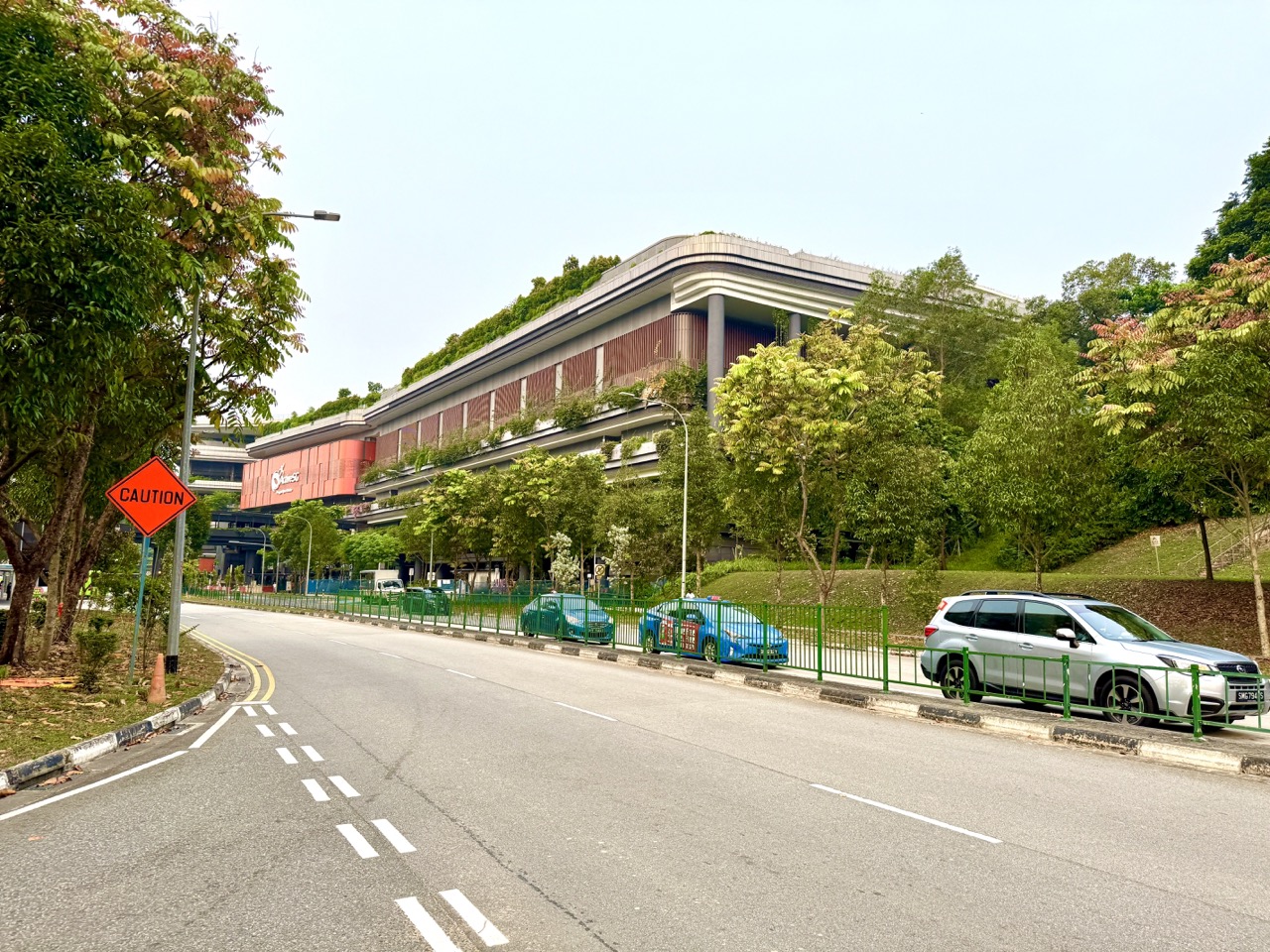
Quick answer, updated 23 October 2026: Punggol Regional Sport Centre at 11 Sentul Crescent remains an upcoming public sports facility, with 2026 the target opening year in government announcements. Sport Singapore’s current 2026 programme still lists it among forthcoming venues, and an official public opening day and full bookable court-and-pool inventory are not established by the notices reviewed here. Once operating, the centre is planned to bring a 5,000-seat stadium, swimming complex, indoor sports halls, 20 badminton courts, gym, fitness studios, sheltered tennis and futsal courts, water sports facilities and archery provision to the town.
The future change is not only about one large building. For families who currently travel outside Punggol to swim, play badminton or train as a team, a substantial local venue could affect the time and money needed to make sport a regular habit. For a student, that may mean trying a new activity more easily. For a parent, it may mean exercising while a child attends an organised session nearby. For a senior, it could mean a more convenient place for suitable physical activity. Those possibilities depend on the programmes, fees, accessibility, and booking schedules actually offered after opening.
The project, without mixing plans and present-day availability
| Question | Answer as at 23 October 2026 |
| Where? | 11 Sentul Crescent, Punggol, near One Punggol and the Waterway |
| Opening? | Government-announced 2026 target; no precise public opening day confirmed by sources reviewed |
| Major venues? | 5,000-seat stadium, swimming complex, indoor halls, courts, gym and other planned amenities |
| Indoor badminton? | 20 courts described in government project information; final public booking inventory remains unconfirmed |
| Other sports? | Tennis, futsal, water sports, archery, team sports and fitness are part of the published facility plan |
| Operator to watch | Sport Singapore / ActiveSG and the MyActiveSG+ system |
| Can you book the new courts today? | Do not assume so. A visible building or tender does not equal an open booking listing |
| What can residents do now? | Use currently available Dual-Use Scheme school sports facilities and nearby public venues |
The Ministry of Culture, Community and Youth’s parliamentary reply of 11 November 2024 explains why the date moved to 2026. Construction began in 2020 and the original 2023 target slipped amid pandemic-related labour and material shortages. A later Sport Singapore 2026 policy update continues to class the centre as upcoming. That combination is the correct way to read its status: a real project with an official revised target, not a facility whose courts can already be reserved merely because its façade looks finished.

Why a full regional centre is different from an HDB court
Punggol already has opportunities for recreation. Residents can walk and cycle along the Waterway, use outdoor fitness equipment, join community activities and visit school facilities released for public use. These options are valuable, often local, and sometimes free. But a regional centre can provide infrastructure that a neighbourhood exercise corner cannot: regulation-sized pools, dedicated indoor spaces, event capacity, changing facilities, equipment storage and specialist safety supervision where programmes require it.
The difference matters for progression. A child begins with play, then learns a simple technique, then may enjoy recreational games or formal training. A public sports complex can support several of those stages in one general location, although access rules may differ. An individual court might be assigned to community bookings on some days and organised competitions or maintenance at others. A new facility does not mean unrestricted, continuous access to every court.
The 5,000-seat stadium is a good example. It creates capacity for larger events and structured sport, but a stadium does not automatically become a free-to-use running track for all visitors at all hours. Separate public access, training and event arrangements will determine what a resident can do. Read actual venue notices before assuming a particular seating, track or football pitch is open.
What changes for swimming families?
The planned swimming complex is especially important for families who have made repeated trips to Sengkang or other nearby centres. Publicly announced plans include five pools. That may support different kinds of use, from supervised beginner programmes and recreational swims to more advanced training. However, the number of pools does not tell a parent which pool will accept a preschooler, what the admission age or price will be, which lanes will be available for leisure swimming or what swim-school programmes will operate on an opening day.
The practical future benefit could be consistency. If the trip to a pool becomes easier, a family may find it simpler to attend a weekly session. Skill acquisition in swimming requires appropriate instruction, regular supervised practice and water-safety habits. A shorter journey helps with attendance but does not by itself make a child water-safe. Children must be actively supervised by a responsible adult around water even when trained lifeguards are present.
A beginner swimmer’s likely first questions
- Is the pool officially open for public admission, and what are the published hours?
- Which pool or programme is suitable for the swimmer’s age and current ability?
- Does a lesson require pre-enrolment or a confirmed instructor allocation?
- Are changing rooms, toilets and entry routes accessible for our family’s needs?
- What does the venue require of an accompanying adult, especially for younger children?
- What are the actual admission prices, passes, refunds and closure arrangements?
Parents should avoid treating an advertisement for a future swimming lesson as evidence the pool has already opened. Any enrolment offer should identify the current teaching venue, the operator, the actual lesson schedule and the terms if the new complex is delayed. For general pool availability and booking practices, consult ActiveSG Circle or MyActiveSG+. Our existing Punggol swimming-pool guide distinguishes current venues from future facilities.
What changes for badminton and indoor ball games?
MCCY has said the future centre will include an indoor hall with 20 badminton courts. That is considerable infrastructure for one neighbourhood, but the presence of 20 courts is not equivalent to 20 simultaneous public reservations each evening. Sport Singapore may allocate parts of a hall for lessons, tournaments, other sports and maintenance. The booking inventory that matters to an individual user is the actual list available in the booking system, by date and time.
A family that plays badminton once a week should begin by deciding which slot is sustainable. A theoretically cheaper booking at 11pm might not fit a school-age child. A peak evening booking may have higher demand, so an alternative weekday or weekend slot can be useful. Players should agree on who books, how cancellations will be handled and how they will travel home safely after the activity.
The facilities will also support a broader ecosystem of team sports. Published plans mention indoor halls, convertible courts and sheltered tennis and futsal provision. These spaces may help families explore volleyball, basketball, netball or racket sports, but the programme calendar after opening will determine which activities are actually offered. A sport named in a development brochure is not necessarily an ActiveSG class available to all ages.
Pickleball is an example of why booking details matter
Interest in pickleball has risen across Singapore, and SportSG’s 2026 planning calls for additional multipurpose courts. Media reporting on the Punggol facility has described dedicated pickleball provision and convertible badminton courts. That makes Punggol a potentially significant venue after opening. Nevertheless, the exact operating configuration, balloting arrangements and casual-play hours need to be checked with the operator rather than inferred from the floor plan.
Parents new to the sport should also consider suitable beginner equipment, basic safety and the amount of activity children can comfortably handle. There is little value in reserving an expensive court if the entire family is unfamiliar with the rules and has no plan for an enjoyable first session. A public beginner programme or informal orientation with experienced players may be more useful than rushing into competition.
Why water sports and archery broaden the story
Punggol has a distinctive setting: the Waterway is a major part of its everyday landscape. Plans for a water activity centre connect the new sports hub to that environment. Water sports are not simply casual walking-path activities. They require suitable equipment, venue permissions, weather awareness and operator safety rules. Any kayaking or other water-based programme should be booked only through an authorised provider and within the permitted operating area.
Archery introduces a different family activity—one that rewards attention, controlled movements and consistent safety procedures rather than raw speed. The published project includes an archery training centre or field, but this should not be confused with open public access to bows and targets. Beginners must follow qualified supervision, designated shooting lines and equipment rules. Parents should seek a legitimate introductory programme before deciding whether a child is ready for further training.
The broader lesson is that people who do not enjoy swimming or fast team games may still find a sport they like. Better choice can support long-term participation when people are given a chance to try activities without feeling that every outing must become a competitive ambition. A large sports venue is useful when it helps more people discover a sustainable routine, not only when it hosts high-profile competitions.
Inclusive sport: the difference between a building and genuine access
Singapore’s sports policy has increasingly emphasised opportunities for people of different ages and abilities. SportSG’s 2026 programme discusses upgrades to inclusive gyms and public swimming pools, disability sports initiatives and support for participation at community level. That policy is relevant context for the coming Punggol facility, but it should not be mistaken for an unverified statement that every specific Punggol programme is already inclusive, free or available on the first day.
A wheelchair user may need an accessible drop-off point, step-free entrance, usable changing facilities and adapted exercise equipment. A person with sensory sensitivities may value quieter sessions, predictable instructions and less crowded times. A family supporting someone with an intellectual disability may want clear instructor communication and appropriate staff-to-participant ratios. All of these needs are legitimate questions to ask the operator rather than details to infer from an artist’s rendering.
One practical approach is to contact the relevant facility programme team with a small number of clear questions: what support is available, what assistance must the family provide, whether an introductory visit is possible and whether the programme has experience with the participant’s needs. The goal is not to insist that one activity fits everyone, but to make participation safer and more dignified.
Sport across a child’s school years
| Age or stage | Possible benefit of having a regional centre nearby | What parents should check |
| Preschool / Primary 1–2 | Safe movement, beginner swimming, basic ball skills and enjoyable activity | Age suitability, supervision, programme duration and time for rest |
| Primary 3–6 | More structured skill practice and opportunities to sample several sports | School timetable, fatigue, coach quality and actual class availability |
| Secondary 1–2 | An active outlet while adapting to new academic and social demands | Balanced weekly load, transit home and whether the child enjoys the activity |
| Secondary 3–4 | Training alongside coursework, exams and other commitments | Avoiding overtraining, realistic attendance and adequate sleep |
| Post-secondary / working adult | Recreation, recreational teams and sustainable fitness routines | Bookable times, cost, commuting needs and programme conditions |
| Older adult | Social exercise, appropriate strength work and supported movement | Health suitability, access arrangements and the level of instruction |
The table describes possible choices, not a list of confirmed Punggol Regional Sport Centre programmes. Parents often overinterpret a new venue as a reason to enrol a child in more activities. The useful question is not how many classes can fit into a timetable, but whether the child can recover, eat, sleep, study and still look forward to participating. A sport that remains enjoyable over several years can be more valuable than an intense activity that becomes a burden after a term.
A simple future family week
Consider a household with two working adults, a ten-year-old and a fifteen-year-old. When the venue opens, they might choose one shared weekend activity and one individual session for each child. The family should not immediately commit to four different sports. Start with the available booking calendar and choose a realistic week around school, work and rest. If one child wants swimming and the other enjoys badminton, the adults can coordinate drop-off and collection without creating a rushed schedule.
The budget deserves equal attention. Facility fees, coaching, transport, equipment, shoes, food and cancellation charges can accumulate. A low-cost trial or casual session may reveal whether an activity is a good fit before the family commits to a term package. A teenager who is unsure about racket sports may enjoy one relaxed session with friends more than an advanced programme chosen by a parent.
An important habit is to review every few weeks. Is the child excited about going? Are injuries, late homework or fatigue increasing? Do they understand the sport better? If the answer is largely negative, adjust the plan. A nearby sports complex can make changes easier, but families should still remain free to pause or switch activities without guilt.
A future weekly routine for working adults
Adults often hope a new gym or court will instantly solve inactivity. Access is important, but behaviour also depends on habit design. A more reliable plan is to link an activity to something already in the week. For example, a parent could plan a short gym session before a regular grocery run, or two colleagues might set a predictable badminton game after work. Whether this is feasible depends on the future venue’s actual opening hours and availability.
For beginners, consistency should matter more than intensity. Adults who have been inactive can start with walking and gentle movement rather than intense workouts, adjusting activity to their health and fitness and seeking medical advice when appropriate. A new sports hub may later add variety. The first step does not need to wait for it to open: Punggol’s park connectors and community spaces already provide ways to move.
The opportunity for senior residents
For older adults, exercise can provide social contact as well as physical activity. A nearby venue may reduce the travel barrier to suitable classes and community sessions. But a giant facility can also feel overwhelming if the entrance is far from public transport, signage is unclear or enrolment is complicated. Good senior participation depends on practical considerations such as seating, accessible toilets, convenient class times, straightforward information and an instructor who can adapt exercises.
Families should avoid assuming a senior must join a high-intensity gym to gain value. Gentle strength exercises, supported balance activities, appropriate aquatic movement and regular walks may all be considered depending on individual capability. The most useful class is one the participant can attend safely, understand and enjoy. Always verify whether the relevant activity is actually offered after the centre opens.
Can schools and CCAs use the new facility?
The sports complex may create options for school competitions, training and learning visits, subject to operator partnerships and venue availability. A large stadium and indoor halls can provide an environment different from a school’s everyday courts. However, a nearby school cannot assume free access or automatic priority. MOE school programmes, ActiveSG bookings, formal events and venue hire are separate administrative arrangements.
For PE teachers, a new venue can serve as a place to learn about sporting infrastructure, teamwork and spectator conduct if an authorised educational visit is available. Students might explore how a competition pool differs from a learner pool, how courts are marked for different sports, or how stadium design manages audiences and safety. But the educational value comes from a planned lesson, not merely taking the class into a new building.
A student interested in sport science could keep a simple training diary, recording activity type, perceived effort and rest days. They can learn to observe patterns without making claims about a medical condition or overinterpreting a single performance. A Mathematics project might compare court occupancy or organise a tournament bracket using fictional participants. This lets the new centre become a learning setting without imposing an unrealistic elite-athlete pathway on every child.
Punggol’s wider activity network still matters
One Punggol Community Hub, SAFRA Punggol, school sports halls, parks and the Waterway already serve different recreation needs. The new Regional Sport Centre should be understood as an additional node, not as the sole place for healthy living. Free outdoor movement, social gatherings and structured paid sports all have legitimate roles. Someone who prefers walking by the Waterway has no obligation to replace that with indoor gym sessions.
Public access also varies by operator. One Punggol is managed through community-facility arrangements, while ActiveSG facilities follow their own booking systems. SAFRA has separate membership, programme and entry conditions. Booking a badminton court at one venue does not reserve a court at another. The most practical rule is to identify the operator, then inspect the current availability and payment terms for that specific activity.

Where can families exercise before the centre opens?
MCCY has identified Dual-Use Scheme indoor sports halls at Edgefield Secondary, Greendale Primary, Oasis Primary and Punggol View Primary, and the school field at Punggol Secondary, as existing options during designated public-use periods. Available times and bookable inventory must be checked through the relevant operator. The names show genuine local opportunities, but not every facility can be assumed open for a walk-in session on a given day.
For a public swimming complex and a broader range of established ActiveSG programmes, nearby Sengkang Sport Centre remains one option. For walking, running and casual cycling, Punggol Waterway and the park connectors offer everyday routes, subject to weather and shared-path rules. These existing places matter because the best response to an upcoming sports facility is not to suspend physical activity until its opening.
Readers looking specifically for opening-day venue details should use our Punggol Regional Sports Centre opening-status guide. Our ActiveSG and sports booking explainer covers current arrangements. This article is designed to answer a different question: how the future facility may support family routines, accessible activity and a healthier everyday lifestyle once it is actually open.
How to verify the first public booking day
- Look for an official Sport Singapore or ActiveSG notice confirming public opening and the exact operational facilities.
- Check the specific venue in MyActiveSG+ rather than relying on a photograph or a social-media timetable.
- Confirm the sport and space type: admission swimming, a court booking, a lesson and a private event may use different procedures.
- Read the latest rates, concessions, balloting or advance-booking rules, age limits and refund terms.
- Check whether school holidays, tournaments, maintenance or private programmes affect the desired time.
- Use the confirmed entrance, transport directions and any accessibility guidance before the first visit.
What would a successful opening mean?
A successful opening would not be measured by how many people photograph the building on its first weekend. It would be reflected in whether a child can find an appropriate beginner session, a working adult can book a reasonable time, a senior can use the venue confidently, and a resident with a disability can access relevant facilities. It would also mean transparent information when programmes are full or parts of the venue are temporarily unavailable.
Longer term, a regional centre can strengthen local sport culture through friendships, community teams and the chance to watch competitive events close to home. The stadium can provide a stage for sport, but community life happens between events—in regular practise sessions, families supporting beginners, schoolmates learning to play fairly and volunteers helping others participate. Those results are developed over years, not delivered automatically by concrete and steel.
What not to assume about the future centre
- A planned 2026 opening does not establish a specific opening day.
- Five pools do not mean every pool will be open for all ages or all kinds of swimming at all times.
- Twenty badminton courts do not equal twenty permanently available public booking slots.
- Planned archery and water sport facilities do not mean unsupervised public use is permitted.
- A large stadium does not guarantee every school, club or resident can use the field free of charge.
- A new ActiveSG gym does not establish its final equipment list, individual admission fee or programme timetable.
- A completed-looking exterior and a commercial leasing notice are not operational notices.
- The centre’s proximity to One Punggol does not mean the two destinations share one booking system.
Frequently asked questions
Is Punggol Regional Sport Centre open on 23 October 2026?
The official materials checked still list it as upcoming and retain 2026 as the target year, without a confirmed public opening date. Check SportSG / ActiveSG directly before planning a visit to use the courts or pools.
How many swimming pools are planned?
Government project information describes five swimming pools within the future swimming complex. Public access, class schedules and exact configurations require the operator’s confirmed opening guidance.
How many badminton courts will there be?
MCCY project information describes 20 badminton courts. The number of slots available for public reservation on a particular day will depend on the live ActiveSG booking inventory.
Will there be football matches in the stadium?
The plan includes a 5,000-seat stadium, giving the site the physical capacity for organised events. Specific competitions, event admission and field-use arrangements should be verified in official calendars after opening.
Will there be facilities for seniors?
The planned gym, fitness spaces, pools and community activities could support older adults, but the suitability and availability of each specific senior programme is not established simply by the building plan.
Will there be disability-inclusive activities?
National sports policy promotes inclusive facilities and programmes, but each Punggol offering, access arrangement and support provision must be confirmed with its operator before enrolment.
Can families still book school halls?
Existing Dual-Use Scheme venues identified by MCCY remain important while the new centre is not operational. Availability is subject to current schedules and booking conditions, which can change.
Where can I find opening announcements and rates?
Use Sport Singapore, ActiveSG Circle and MyActiveSG+ for official notices, rates, programmes and booking details.
Official sources and local reading
- MCCY: Rescheduling Punggol Regional Sport Centre to 2026, 11 November 2024 — revised timeline and current Dual-Use Scheme alternatives.
- MCCY: Future sports centres in Punggol and Bishan/Toa Payoh — five pools, stadium, courts, gym and additional amenities.
- MCCY: Sports Facilities Master Plan update — venue specifications and the wider public sports strategy.
- Sport Singapore COS 2026 — upcoming facility status and inclusive sport strategy.
- Sport Singapore: Sports Facilities Master Plan — role of the Punggol facility in long-term planning.
- Sport Singapore: New and refurbished ActiveSG facilities — published 2026 target for Punggol.
- eduKatePunggol: Punggol Regional Sports Centre status and address — detailed local venue background.
- eduKatePunggol: Current badminton, tennis and pickleball bookings — practical existing options.
Editorial boundary, 23 October 2026: This article separates published facility plans from booking availability and possible future community benefits. Exercise suitability differs by individual, and children require appropriate supervision. Images are from eduKatePunggol’s own October 2026 media library and do not imply that indoor facilities were open when photographed.


