
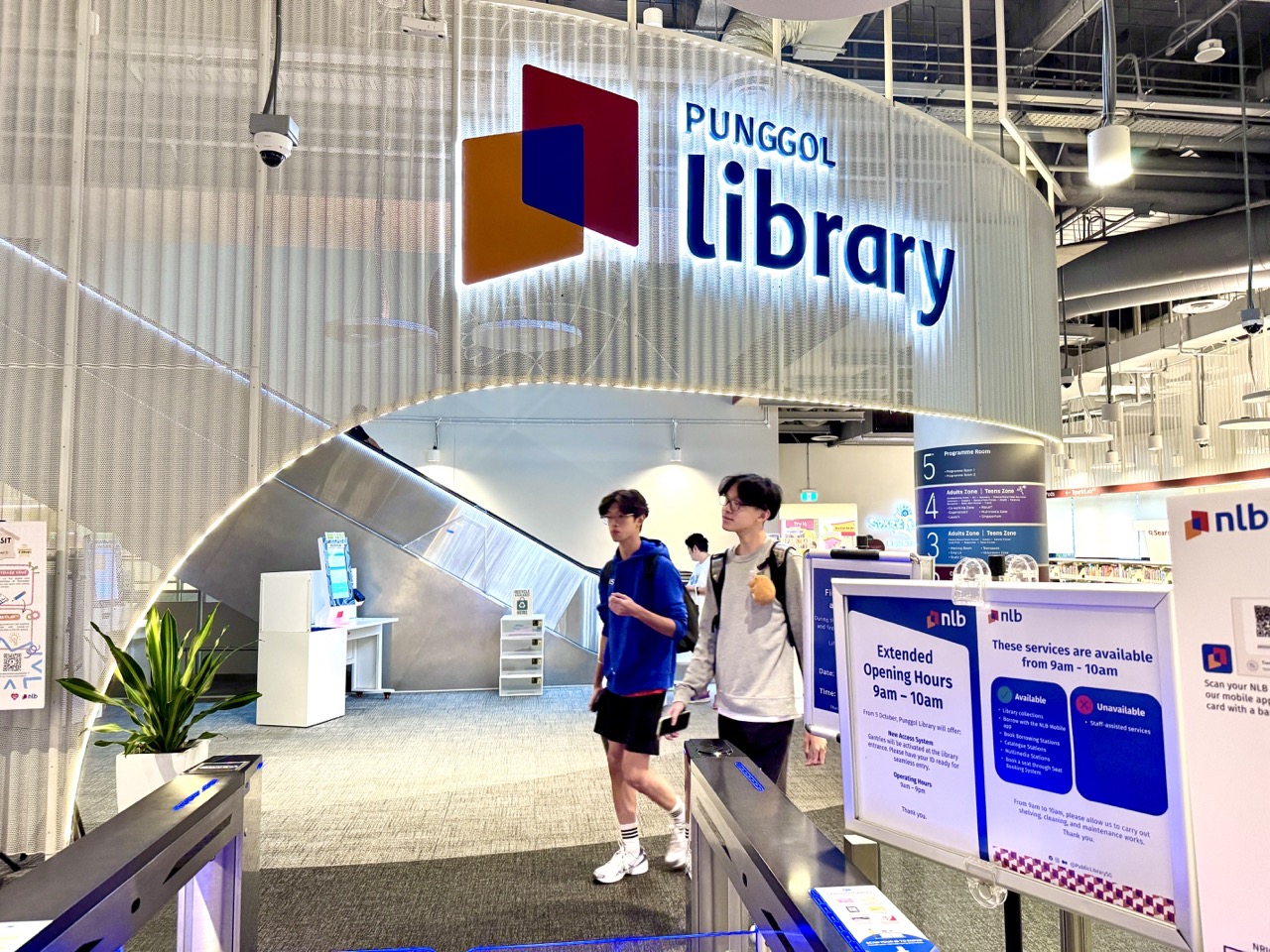
The top 10 things to do in Punggol for Early Childhood Education students are to distinguish EYDF 2023 from NEL 2022, learn from Punggol Regional Library’s on-site Toy Library, plan responsive shared reading, create tiny outdoor numeracy experiences at Waterway Park, practise safe discovery of nature, build a flexible motor-skills activity at home, use pretend community-hub roles for social-emotional learning, design inclusive communication choices, compare real preschools through LifeSG and help plan the K2-to-Primary 1 transition.
Start with the right age framework. ECDA’s EYDF 2023 guides children from birth to three and highlights four development areas. MOE’s NEL 2022 guides ages four to six through five named learning areas, with values, dispositions and social-emotional competencies integrated across the curriculum. For a practical local activity, Punggol Regional Library’s Toy Library supports supervised on-site play for children aged six and below; the Government clarified in 2025 that it does not lend toys for home use.
This October 2026 guide is for educator-trainees, preschool teachers, parents and people exploring early-childhood careers. The focus is purposeful play, responsive adult-child interaction, inclusion, observation and reflection. It does not advertise unverified childcare places, invite walk-in classroom observation or prescribe a single developmental timetable for every child. Children, families and childcare centres have privacy and safeguarding needs that take precedence over an assignment.
The two frameworks to keep separate
- Birth to age 3: ECDA EYDF 2023, including physical, cognitive, communication and language, and social-emotional development.
- EYDF guiding approach: C.H.I.L.D., including responsive care, holistic development, intentional experiences, safe play and secure relationships.
- Ages 4 to 6: MOE NEL 2022, whose five learning areas include aesthetics, discovery, health/safety/motor skills, language/literacy in English and Mother Tongue, and numeracy.
- Across the preschool programme: values, social-emotional competencies and learning dispositions remain important, but should not be mislabelled as a sixth learning area in the 2022 edition.
- Learning context: adapt play to the individual child’s interests, abilities and supervision requirements.
- Parent–educator collaboration: protect personal information and discuss actual goals with those responsible for the child.
What purposeful play really means
Play may be child-directed, shared between child and adult, or intentionally organised by an educator, depending on the objective and the child’s interests. ECDA’s outdoor-learning guidance describes that continuum. A child learning to compare sizes might gain more from choosing two safe objects than from answering ten forced questions. An adult still plays a vital role in preparing a safe environment, noticing what the child does and deciding whether one short prompt will enrich exploration.
A useful observation note separates what the child actually did from the adult’s interpretation. ‘The child pointed to the same bench twice while counting’ describes an observable action. ‘The child cannot learn mathematics’ is an unsupported global conclusion. The next step might be a simpler one-to-one matching exercise, not a label attached to the child’s identity. This evidence-led habit helps educators adjust teaching without shaming or guessing.
Early-years activities should also be genuinely inclusive. Children may speak different languages, prefer different sensory experiences, have different mobility needs or take longer to answer. The educator should adjust the environment, timing and available responses, working with caregivers and relevant professionals where needed. The objective is healthy participation, communication and curiosity, not a competition for the fastest reader or earliest formal worksheet.
Ten Punggol early-childhood learning activities
1. Separate ECDA’s early-years framework from MOE’s preschool curriculum
Where: An early-childhood education study desk using ECDA EYDF 2023 and MOE NEL 2022.
Early-learning purpose
Two Singapore frameworks cover related but different stages. ECDA’s Early Years Development Framework (EYDF) 2023 guides centre-based work with children from birth to three years, emphasising cognitive, communication and language, physical, and social-emotional development. MOE’s Nurturing Early Learners (NEL) 2022 guides preschool education for ages four to six. Its five named learning areas are Aesthetics and Creative Expression, Discovery of the World, Health, Safety and Motor Skills Development, Language and Literacy in English and Mother Tongue, and Numeracy. Values, dispositions and social-emotional competencies cut across the programme rather than appearing as a sixth 2022 learning area.
How to facilitate it
Create two columns headed ‘Birth to 3: EYDF 2023’ and ‘Ages 4 to 6: NEL 2022’. Place four EYDF areas and five NEL learning areas under their correct headings. For the younger group, describe warm responsive routines and supervised exploration. For older preschoolers, plan a purposeful-play activity integrating language, numeracy and discovery. Avoid treating a four-year-old’s readiness as a test of infant developmental milestones or imposing Primary School worksheets on toddlers.
Original worked educator example
An educator-in-training copies an old 2012 list showing six NEL areas and labels it the 2022 framework. MOE’s 2022 update instead lists five learning areas and treats values, social-emotional competencies and dispositions through the programme’s wider outcomes. The trainee corrects the table and checks the source edition rather than insisting that an older guide must remain unchanged. This is a curriculum-research skill with a direct classroom consequence.
A responsive extension
Draft two versions of a ‘containers’ activity: a birth-to-three responsive sensory encounter with safe suitable objects, and a four-to-six classification task with language prompts and early comparison. Explain why group sizes, safety arrangements, adult support and expected explanations differ. Educators should choose by individual development and interests, not rigid age stereotypes.
Child safety, consent and accuracy
These are educator frameworks, not a checklist for diagnosing a particular child’s delay. Parents and students should avoid using them to set one uniform performance deadline. Use current ECDA and MOE material and professional judgement in formal preschool settings.
Official guidance: Separate ECDA’s early-years framework from MOE’s preschool curriculum. Check real venue arrangements or family eligibility before planning access.
2. Explore the Toy Library as supervised on-site play
Where: Punggol Regional Library, Level 1 Toy Library at One Punggol.
Early-learning purpose
NLB’s first dedicated Toy Library at Punggol was designed for children aged six and below, encouraging imaginative, dramatic and sensory play through on-site educational toys. The Ministry of Digital Development and Information clarified in October 2025 that the Toy Library does not lend toys to take home. That distinction matters when educators plan home-school partnerships or compare a toy play environment with a lending service. The space supports exploration but still has entry, hygiene, adult-supervision and shared-use conditions.
How to facilitate it
Read the official MDDI description and check NLB’s current Toy Library operating and access rules. A caregiver accompanying an eligible child can let the child choose a safe suitable toy or play material, observe which actions the child initiates and offer one responsive comment or question. An early-childhood trainee should not conduct an unapproved observation of unrelated families; use an invented case or an activity with a consenting child under proper supervision. End by following the library’s instructions for returning toys within the space.
Original worked educator example
A student plans a programme in which ten families borrow Punggol Toy Library toys for the weekend. MDDI has specifically said that the library provides on-site play but no toy-lending service. The corrected design becomes a short supervised play visit, followed by a home activity using family-owned or otherwise properly obtained materials. The trainee has changed the implementation, not merely the brochure wording.
A responsive extension
Make a play observation card recording a child’s chosen action, the adult’s responsive prompt and the child’s next action, without attaching the child’s full identity to public notes. Consider the difference between adult-directed instruction and child-initiated exploration. A reflective educator asks whether their intervention enriched play or interrupted it prematurely.
Child safety, consent and accuracy
No toys should be removed contrary to NLB rules. Do not film or assess other people’s children in the library. Particular age, access and hygiene conditions must be confirmed before an organised visit.
Official guidance: Explore the Toy Library as supervised on-site play. Check real venue arrangements or family eligibility before planning access.
3. Build a language-rich shared-reading ritual at Punggol Regional Library
Where: Public children’s reading collections at Punggol Regional Library, One Punggol.
Early-learning purpose
A shared book can support vocabulary, story sequencing, listening and warm adult-child interaction without forcing a child to decode printed words before developmentally ready. Punggol Regional Library is an inclusive regional library, and its collections provide a genuine local resource for a preschool-reading routine. ECDA’s early-years approach emphasises responsive communication, while MOE’s NEL 2022 includes language and literacy in English and Mother Tongue. This activity is about conversations prompted by books, not the number of pages a child can finish.
How to facilitate it
Choose an age-appropriate picture book that the caregiver is permitted to browse. Before reading, ask one low-pressure observation question about the cover. During reading, pause naturally so the child can point, predict or relate an image to their own experience. Follow the child’s interest rather than testing every noun. For a younger child, naming and responding may be enough; for an older preschooler, invite a simple retelling. Return or borrow the book under the library’s actual rules. Record the child’s volunteered responses in a private teaching reflection without grading their speech.
Original worked educator example
A trainee asks a child twenty vocabulary questions while reading a short story, and the child loses interest. The trainee revises the session to one prediction, one responsive follow-up and an opportunity for the child to choose the next page. The child volunteers a comment about a pictured bridge. The teaching insight is to connect communication with curiosity instead of converting shared reading into an oral exam.
A responsive extension
Compare a repeated-read session with a first reading. Which words or story links does the child volunteer the second time? Do not assume a single interaction measures total language proficiency. Discuss how caregivers can use a comfortable home language alongside English without treating bilingualism as a forced word-count competition.
Child safety, consent and accuracy
Follow NLB borrowing, copyright and library-conduct rules. Do not use specialist equipment or rooms without proper access. Developmental or hearing concerns belong with relevant professionals rather than a student’s reading checklist.
Official guidance: Build a language-rich shared-reading ritual at Punggol Regional Library. Check real venue arrangements or family eligibility before planning access.
4. Use a short Waterway Park walk for early numeracy without worksheet pressure
Where: A safe, currently open public stretch of Punggol Waterway Park.
Early-learning purpose
MOE’s NEL 2022 lists Numeracy as one of five learning areas, while ECDA’s outdoor guidance encourages purposeful play and age-appropriate exploration. The park has paths, planted edges, bridges and repeated environmental features, making it a suitable source of small counting and comparison questions. Young children do not need the full 4.2km nature walk or a paced challenge. A two-minute observation of safe, static features can be enough to practise one-to-one correspondence, sorting or shape language.
How to facilitate it
Choose a familiar public entrance, check NEA weather and select a short return route with rest options. In a safe spot away from cyclists, ask the child to count three visible public objects, such as benches in the immediate view, or compare two leaf shapes without taking specimens. For younger children, use ‘one more’ and ‘same/different’ with tiny sets; for older preschoolers, draw a simple tally of self-selected objects. Make the count about clearly visible things, not moving strangers or unknown animals.
Original worked educator example
A child points to the same bench twice while counting four benches in a three-bench group. The educator does not say ‘you are bad at maths’. They slow the activity, guide one-to-one pointing from left to right and invite the child to count again. The correction targets the specific mismatch between spoken number words and objects counted. It illustrates how a tiny outdoor moment can strengthen number sense without drilling worksheets.
A responsive extension
Change the task from counting to classification: group nearby safely observable shapes as round-like or straight-edged. Ask why one irregular natural object is hard to classify. A teacher can document the child’s reasoning instead of inventing perfect geometric precision. Discuss when a simple pretend drawing is more appropriate than a formal tally.
Child safety, consent and accuracy
Never lead children into water, across an unsafe cycling lane or onto restricted banks for a better example. Outdoor plans must account for heat, lightning, prams, mobility and individual child needs. Do not collect wildlife or damage planted areas.
Official guidance: Use a short Waterway Park walk for early numeracy without worksheet pressure. Check real venue arrangements or family eligibility before planning access.
5. Create a ‘Discovery of the World’ noticing walk without sampling nature
Where: Punggol Waterway Park or an indoor nature-book alternative at the library.
Early-learning purpose
MOE’s NEL 2022 includes Discovery of the World, which invites young learners to investigate familiar physical and social surroundings. NParks describes Punggol Waterway Park’s landscaped setting, bridges and wildlife opportunities, but sightings are never guaranteed. Early-childhood educators can teach careful noticing through a child’s questions about sound, shade or movement, while being explicit that a brief observation does not establish a scientific species identification.
How to facilitate it
Choose just one theme such as ‘things that move’ or ‘things that make a sound’. At a safe public viewpoint ask what the child notices: a moving leaf, a passing train in the distance or a bird call. Invite a sketch, gesture or one descriptive sentence in any comfortable language. If wildlife is present, watch from a safe distance and do not lure it. Return home and compare the observation with a reputable picture book or official NParks description. Let unknown identifications remain unknown.
Original worked educator example
A preschooler notices a small bird near the water and says it might be a crow. The adult responds, ‘You saw a bird. What colour and shape did you notice?’ instead of immediately presenting a species answer. Later they compare pictures but keep the identification tentative. The child has practised observation and language even without learning an exact bird name.
A responsive extension
Use three inquiry prompts: ‘What do you notice?’, ‘What do you think might happen?’ and ‘How could we check safely?’ For example, a shadow’s location may change later, but no child needs to stand in high heat to establish this. Educators can connect a home lamp model with a short recorded observation, clearly labelling the model as an illustration.
Child safety, consent and accuracy
Do not pick plants, collect insects or visit closed habitats. A live outdoor walk should be cancelled or shortened during unsafe weather. Respect wildlife and park paths; children’s curiosity does not confer sampling permission.
Official guidance: Create a ‘Discovery of the World’ noticing walk without sampling nature. Check real venue arrangements or family eligibility before planning access.
6. Practise motor skills with an adjustable home movement course
Where: A clear, level private room in a Punggol household or authorised preschool.
Early-learning purpose
Health, Safety and Motor Skills Development is a named learning area in MOE’s NEL 2022 for children aged four to six, while physical development is central to ECDA’s EYDF 2023 for younger children. Early motor learning should respond to a child’s actual comfort, interests and capabilities. A home obstacle course need not involve high jumps or competition. It can be a simple sequence of stepping around a marker, moving an object safely and pausing for balance. The educator’s job is to observe meaningful movement rather than demand the same performance from every child.
How to facilitate it
Remove trip hazards and use non-slippery, age-appropriate safe floor markers. Offer two or three actions such as reaching for a large soft object, walking around a clearly marked cushion and stopping at a line. Demonstrate calmly, allow the child to choose an easier variation and avoid physical forcing. For a younger toddler use short assisted exploration appropriate to their development. Observe whether the child understands the instruction, not just whether they move quickly. End before fatigue or frustration makes it unpleasant.
Original worked educator example
An educator places markers too close together and a child repeatedly bumps one while turning. Rather than telling the child to move faster, the educator widens the space and simplifies the route. The child moves more comfortably and can explain where to stop. The repair identifies a design problem in the environment, not automatically an individual motor deficit.
A responsive extension
Create a second version focusing on fine motor coordination: moving large safe objects between two containers, with no small choking hazards. Discuss how different children may need different spacing, sizes and support. Record one observation and a responsive modification rather than a rank of children’s performance.
Child safety, consent and accuracy
Do not use balance beams, unanchored furniture, hazardous climbs or small objects unsuitable for the child’s age. Physical concerns and individual adaptations should be addressed with qualified educators or relevant professionals; the exercise is not a developmental diagnosis.
Official guidance: Practise motor skills with an adjustable home movement course. Check real venue arrangements or family eligibility before planning access.
7. Use pretend community-hub roles to practise social-emotional learning
Where: A private play area inspired by One Punggol’s genuine community facilities.
Early-learning purpose
ECDA EYDF 2023 emphasises responsive relationships and social-emotional development, while MOE NEL 2022 foregrounds values, dispositions and social-emotional competencies across preschool learning. One Punggol’s real library, hawker centre and community club provide familiar scenarios for gentle imaginative play. An educator can invite children to practise waiting, asking for help and offering choices without using identifiable workers as caricatures or forcing children to perform politeness on command.
How to facilitate it
Prepare three simple pretend-play cards: a librarian helping someone find a book, a family member choosing where to sit, and a visitor asking for directions. Children choose or invent roles and use harmless paper props. Start with a fictional problem, such as two people wanting the same book. Invite possible solutions, allowing children to propose taking turns or choosing another activity. Reflect on how they felt and whether each person was heard. Do not turn the session into a lecture about the ‘correct personality’.
Original worked educator example
Two children both want to play librarian. The adult initially assigns one child the role without listening. In the revised interaction, the children propose switching roles after a short scene or sharing two related tasks. The learning outcome is not a claim that conflict will never occur; it is that the educator supported a specific cooperative choice through responsive conversation.
A responsive extension
Use small open-ended questions: ‘What could your character ask?’ and ‘How might the other person feel?’ Compare a child-led version with a teacher-directed version and reflect on when adult guidance supported play. This illustrates the purposeful-play continuum without rigidly directing every turn.
Child safety, consent and accuracy
Do not role-play sensitive healthcare cases or imitate real staff identities without context. Respect children’s participation preferences and never demand disclosure of personal family experiences. Public hub areas are not reserved playrooms unless specifically authorised.
Official guidance: Use pretend community-hub roles to practise social-emotional learning. Check real venue arrangements or family eligibility before planning access.
8. Build an inclusive quiet-play and communication choice board
Where: A home or approved preschool environment using ECDA’s responsive approach and NLB inclusion context.
Early-learning purpose
Children experience shared environments differently. Punggol Regional Library is described by PA and NLB as inclusive, with accessible features and services for patrons with differing needs. A preschool learner may prefer quieter play, visual instructions, a large-print book or additional time to respond. An educator who offers meaningful choices is not lowering expectations; they are making participation possible. Inclusion should follow real individuals’ preferences rather than asking students to simulate autism, sensory sensitivity or disability as an activity.
How to facilitate it
Create a small board with three labelled choices using clear original drawings: ‘read together’, ‘draw quietly’ and ‘build with large safe pieces’. Give a participating child an opportunity to choose, point or express a different idea. Keep the activity short and allow a change of mind. Ask which instructions were ambiguous and adjust the board. For preschool educators, note whether the environment was too noisy, the choices insufficiently clear or the adult’s instructions too fast, without recording a diagnostic label.
Original worked educator example
A child moves away from a group building activity and the adult interprets it as refusal to learn. With a visual choice board, the child selects a quiet drawing task and later rejoins the group voluntarily. The teacher’s note describes the change of environment and observed participation, not an invented clinical explanation. This is an example of responsive facilitation and respect.
A responsive extension
Test the same choices presented through speech, image and gesture. Discuss how differences in communication can affect a child’s ability to express preferences, and why a single response should not be generalised into a developmental diagnosis. When formal adjustments are needed, work through responsible professionals and caregivers.
Child safety, consent and accuracy
No one should record, photograph or label another child without the proper consent and safeguarding. A public library’s inclusive design does not authorise exclusive use of specialist rooms or equipment. Avoid creating choking or trip hazards with play materials.
Official guidance: Build an inclusive quiet-play and communication choice board. Check real venue arrangements or family eligibility before planning access.
9. Learn how to compare genuine Punggol preschools using LifeSG
Where: ECDA’s official preschool search available through LifeSG, researched privately.
Early-learning purpose
ECDA’s current guidance directs parents to LifeSG’s Search for a preschool feature. It allows comparison by location, type and other filters, with parents contacting shortlisted centres directly about actual enrolment. The older Preschool Search Portal was replaced and the old central indication-of-interest procedure is not the current general route. This makes a useful early-childhood administration exercise: accurate information about vacancies, fees, transport and programme values supports families better than an unverified ‘top school’ ranking.
How to facilitate it
Open the official ECDA guide and LifeSG preschool search. For a fictional family residing in a broad Punggol area, define needs such as infant care versus kindergarten, drop-off journey, opening hours, child’s age and programme approach. Use the available filters and construct a blank comparison template, without copying other families’ accounts. Explain that any displayed vacancy is not confirmed enrolment; actual centres manage their own procedures and waiting lists. Ask what parents should check in a permitted centre visit with staff.
Original worked educator example
An educator trainee finds an old article claiming that clicking ‘indicate interest’ on the legacy portal guarantees a place. ECDA’s current guide says parents should use LifeSG search and contact centres directly, because enrolment is managed by the centre. The corrected family information sheet replaces the outdated step with the current route and highlights the need for individual confirmation.
A responsive extension
Compare three hypothetical preschool options without naming or ranking actual centres. Give each a different combination of travel convenience, curriculum focus and cost, and ask which fits the invented family’s needs. A responsible comparison considers care requirements and family circumstances rather than automatically preferring the highest fee or a single philosophy.
Child safety, consent and accuracy
Do not falsely claim places at Skool4Kidz, MOE Kindergarten or other named preschools. Centre tours and child observation need permission, and actual licence or quality status should be checked from ECDA’s current sources. Never enter classroom areas to inspect children as a walk-in visitor.
Official guidance: Learn how to compare genuine Punggol preschools using LifeSG. Check real venue arrangements or family eligibility before planning access.
10. Plan a calm K2-to-Primary 1 transition using MOE’s parent guidance
Where: A Punggol home or educator planning session, using MOE’s preschool-to-primary transition resource.
Early-learning purpose
MOE’s preschool-to-primary transition guidance emphasises helping children approach the change through routines, independence, social confidence and a balance of learning, rest and play. Beginning Primary 1 is not simply mastering examination papers early. Early-childhood educators should distinguish readiness to participate, ask for help, handle school routines and remain curious from a requirement that every child read or calculate at identical speed before school starts.
How to facilitate it
Use MOE’s parent guidance to create a fictional final-term-of-K2 transition plan. Include a child-friendly morning routine, a small independence task such as organising an ordinary bag, reading together and opportunities for rest. Practise asking an adult for assistance with a calm pretend-school scenario. Invite the child’s questions rather than giving a lecture on marks. For children needing additional support, consult their educators and appropriate professionals about individual adjustments and school communication.
Original worked educator example
A parent makes a five-page daily homework drill mandatory because they assume readiness means perfect reading speed. The trainee revises the plan to include time for shared reading, independence with personal belongings, understanding a class routine and expressing needs. The child may still benefit from targeted support, but the goal is a practical positive transition, not a blanket performance guarantee.
A responsive extension
Make a family–educator handover sheet limited to necessary and appropriately shared information: helpful routines, interests, established supports and questions for the receiving school. Discuss data privacy and the child’s dignity. Evaluate whether the plan leaves time for play and sleep rather than treating preparation as continuous assessment.
Child safety, consent and accuracy
A school transition plan is not a diagnosis or a guarantee of examination outcomes. Do not collect or publish children’s school records without permission. Actual Primary 1 placement, dates and school rules depend on MOE and the individual school.
Official guidance: Plan a calm K2-to-Primary 1 transition using MOE’s parent guidance. Check real venue arrangements or family eligibility before planning access.
A four-week training plan for aspiring early-childhood educators
Week one: observe and respond
Study ECDA EYDF’s four development areas and the C.H.I.L.D. approach. Write three hypothetical observations of ordinary toddler or preschool play, keeping observed action separate from interpretation. Practise rewriting a judgemental comment such as ‘not interested in learning’ into a note identifying what material was offered and how the child responded. The outcome is a better observational method, not a diagnosis.
Week two: connect play to the NEL learning areas
Read MOE’s 2022 NEL structure and choose one purposeful activity relevant to children aged four to six. A picture-book retelling can address language and literacy; a safe pattern game can address numeracy; a quiet nature observation can address discovery. Explain how values and social-emotional learning are supported through interaction. Keep the activity short and adaptable instead of cramming every learning goal into one five-minute task.
Week three: plan for real environments
Compare the Punggol Library Toy Library, a short Waterway Park route and a simple home movement setup. For each, list age suitability, access rules, supervision, sensory demands, weather and materials. Build an indoor alternative when a public venue is not suitable. A well-designed activity respects other library readers, ordinary path users and the child’s own need for breaks.
Week four: reflect and improve
Choose one fictional or properly consented private interaction and produce an educator note with objective, initial response, one changed prompt and observed outcome. If the child’s reaction differs from expectation, record the difference honestly and propose a smaller next step. Avoid overclaiming progress in a single session. Educator reflection should improve the adult’s practice, not produce a public score for the child.
How to recognise a responsible preschool learning activity
- The child’s developmental stage and actual interests are considered.
- The purpose is clear but the child has meaningful choices.
- Materials are age-appropriate, hygienic and free from obvious hazards.
- Adult supervision fits the setting and the child’s needs.
- Outdoor visits use current official access, lightning, heat and path guidance.
- Prompts support conversation rather than demand constant correct answers.
- Learning is recorded through specific actions rather than labels.
- Family languages and routines are respected without stereotyping.
- Sensitive child or household information remains private.
- The educator makes one evidence-based improvement after the session.
Frequently asked questions
What early-childhood frameworks apply in Singapore in 2026?
ECDA EYDF 2023 guides centre-based care and development from birth to three; MOE NEL 2022 guides preschool education for ages four to six.
How many learning areas does NEL 2022 have?
Five. Values, learning dispositions and social-emotional competencies are emphasised across the framework rather than listed as a sixth area.
What are the five NEL 2022 areas?
Aesthetics and Creative Expression, Discovery of the World, Health Safety and Motor Skills Development, Language and Literacy for English and Mother Tongue, and Numeracy.
What are EYDF 2023’s four development areas?
Cognitive, communication and language, physical, and social and emotional development.
What does C.H.I.L.D. mean?
ECDA’s EYDF acronym describes five principles covering responsive care, holistic development, meaningful planning, safe exploration and secure relationships.
Can children borrow toys from Punggol Toy Library?
No. The Government clarified in 2025 that the Toy Library offers on-site play but does not lend toys for home use.
What age is Punggol Toy Library intended for?
It is designed for young children aged six years and below, subject to the library’s operating and supervision rules.
Where is Punggol Regional Library?
It is at One Punggol, 1 Punggol Drive, with public collections and specialist spaces across multiple levels.
Does a shared reading session need a vocabulary test?
No. Responsive questions, naming, prediction and comfortable conversation can support language development without pressure.
Can early numeracy be practised at Waterway Park?
Yes, through small safe counting, matching or pattern activities; a child does not need to complete a long nature walk.
Can toddlers collect flowers and insects at a public park?
Do not remove public plants or collect wildlife. Safe observation, drawings and discussion are appropriate alternatives.
What is purposeful play?
Developmentally appropriate play facilitated through child-led choices and responsive or intentionally guided adult support.
How do teachers record learning without labelling a child?
Write observable action, relevant context, the educator’s prompt and a reasonable next step, avoiding broad diagnostic conclusions.
Are all preschool children expected to develop at exactly the same pace?
No. Educators should use developmental guidance alongside individual circumstances, interests and qualified support where relevant.
Can a student visit a childcare centre to observe the children?
Not without appropriate centre permission, child protection safeguards and legitimate participant consent.
How can families compare Punggol preschools?
Use ECDA’s LifeSG preschool search for current centre information and contact shortlisted centres directly about enrolment, fees and conditions.
Does a LifeSG vacancy listing guarantee admission?
No. Preschools handle their own enrolment, availability and waiting-list procedures.
Has the old Preschool Search Portal been replaced?
Yes. ECDA directs families to LifeSG and direct contact with centres rather than the former central indication-of-interest process.
How can educators support the K2-to-Primary 1 transition?
MOE recommends balanced routines, independence, positive school preparation, reading, rest and play, with adaptations for individual needs.
Does this guide diagnose developmental or learning conditions?
No. Developmental, hearing, language or behavioural concerns should be discussed with qualified early-childhood or healthcare professionals.
ECDA, MOE, NLB and related Punggol guides
- Separate ECDA’s early-years framework from MOE’s preschool curriculum
- Explore the Toy Library as supervised on-site play
- Build a language-rich shared-reading ritual at Punggol Regional Library
- Use a short Waterway Park walk for early numeracy without worksheet pressure
- Create a ‘Discovery of the World’ noticing walk without sampling nature
- Practise motor skills with an adjustable home movement course
- Use pretend community-hub roles to practise social-emotional learning
- Build an inclusive quiet-play and communication choice board
- Learn how to compare genuine Punggol preschools using LifeSG
- Plan a calm K2-to-Primary 1 transition using MOE’s parent guidance
- MOE NEL 2022 framework mirrored by ECDA
- ECDA guide to purposeful outdoor play
- ECDA LifeSG preschool search and vacancy guide
- Official LifeSG preschool search
- MDDI clarification that Toy Library is on-site only
- Pram-friendly Punggol learning outings
- Punggol school holiday play and learning
- Punggol community learning and source use
- eduKateSG graduated teaching and worked-correction reference
One meaningful moment of play is enough to begin
Punggol’s inclusive library, public waterway and community facilities can support thoughtful early-childhood learning when adults use them respectfully. The most important contribution is the educator’s ability to notice a child’s genuine response, offer an appropriate prompt and adjust the environment without judgement. Begin with the correct age framework, protect the child, follow actual venue conditions and preserve the joy of exploration. That is stronger than promising every preschooler perfect performance before Primary 1.


