
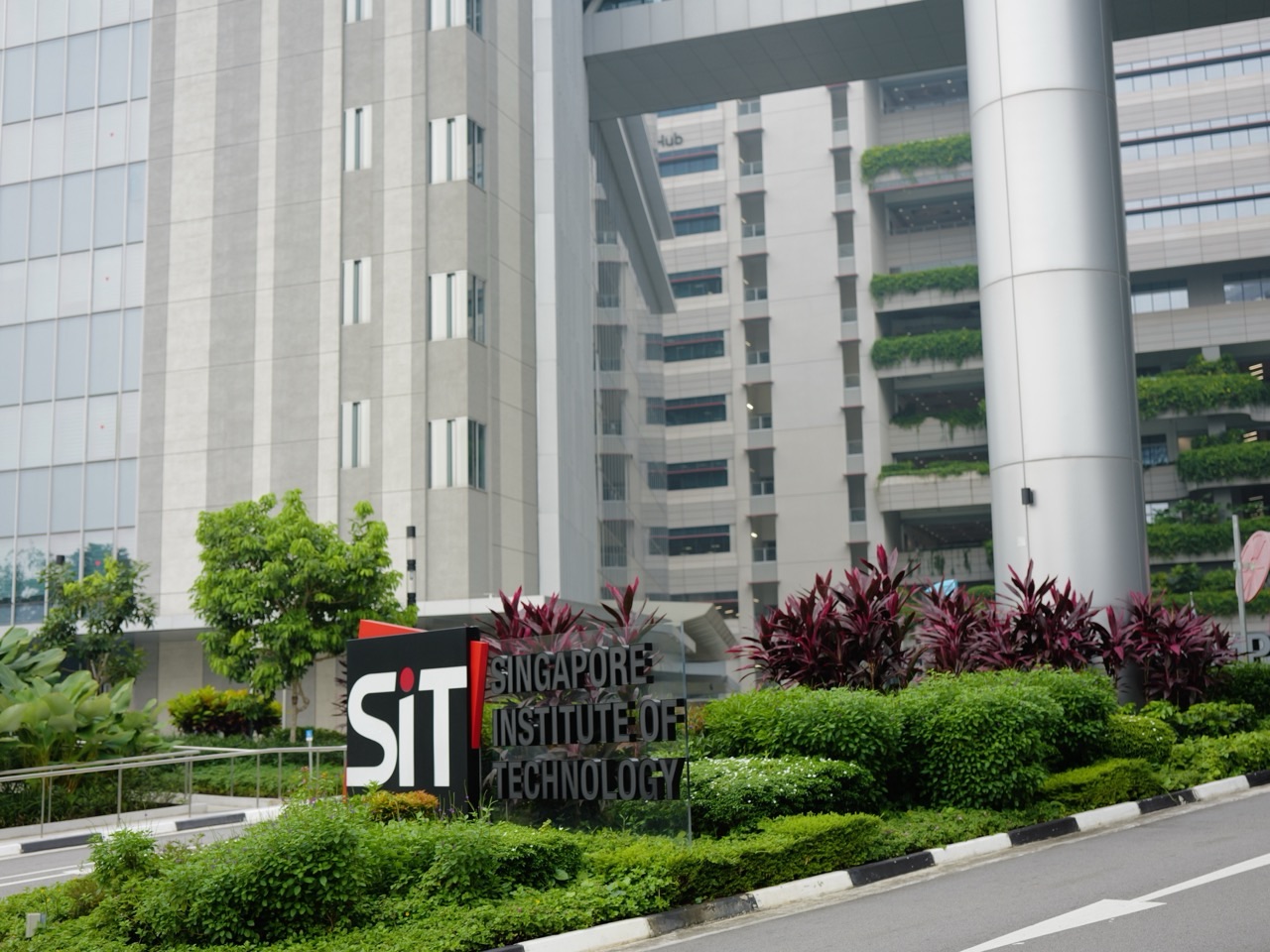
Quick answer: Students in Punggol can learn real design thinking from an established university-community initiative: the Singapore Institute of Technology’s (SIT) Community Challenge. This is an education opportunity in which secondary-school teams investigate everyday social problems, combine STEM skills with empathy, build prototypes and explain whether their proposed solutions could actually help people. SIT’s 2025 edition, held at its Punggol Campus from 27–31 October 2025, involved 136 students in 34 teams from eight secondary schools. The theme was safer escalator use.
The important distinction for families in October 2026 is that these are verified past editions, not an advertised open registration for another date. The 2025 programme was school-based and involved specific participating institutions. Punggol residence does not itself confer a place, and this guide does not invent a new 2026 or 2027 deadline. Nevertheless, the programme’s published methods offer a detailed blueprint that parents, teachers and students can use now to build meaningful local projects.
SIT’s own reports provide the evidence: SIT Community Challenge 2025: Safer Escalators, SIT Community Challenge 2024: Accessible Public Transport, and SIT Annual Report 2025 community pages. We will separate what happened from the projects any school or family can undertake independently.
What the SIT Community Challenge has actually achieved
| Edition | Confirmed theme and participants | What students experienced |
|---|---|---|
| 2023 | Sustainability projects with Punggol schools, supported by James Dyson Foundation | Students investigated local problems and built or refined prototypes with mentors |
| 2024 | Accessible public transport; Edgefield, Greendale, Punggol and Yusof Ishak secondary schools | SIT reported 128 finalists in 28 teams and a final presentation on 9 November 2024 |
| 2025 | Safer escalators; eight participating secondary schools | 136 students, 34 teams, week-long workshops, industry mentoring, AI and coding exercises |
| Next edition | Check for a fresh official SIT and school announcement | Dates, schools, eligibility and enrolment process should not be assumed |
The progression is revealing. The organisers did not ask students to invent a technology just because it was fashionable. They started with difficult lived experiences: sustainability in daily life, independent travel for people with mobility challenges and escalator-related risk. Only then did teams choose possible tools and prototypes.
The 2025 partners included SBS Transit and STMicroelectronics. SIT’s official account says learners worked with university faculty, student mentors and industry experts, including using AI kits supplied by STMicroelectronics. Mentoring and the right to use an organised kit in a supervised event are programme-specific, not a standing invitation to access private university equipment.
Which Punggol and nearby secondary schools were involved?
SIT’s 2025 article identifies eight secondary schools: Edgefield Secondary, Greendale Secondary, Loyang View Secondary, Pasir Ris Crest Secondary, Punggol Secondary, St Hilda Secondary, Yu Ying Secondary and Yusof Ishak Secondary. That makes the programme geographically broader than Punggol alone. The 2024 edition reported four Punggol schools: Edgefield, Greendale, Punggol and Yusof Ishak.
A parent whose child attends a school on these lists should not treat a historic participation report as a current invitation. School teams, nomination rules, student levels, teacher capacity and annual programme agreements can change. The correct first question is whether the school has received an official invitation for an upcoming edition. The next question is what selection or preparation its teachers recommend.
A Punggol student at a school that did not previously participate can still learn the design process. A school STEM or applied-learning club may run an independent challenge without implying SIT endorsement or an official partnership. The educational method—problem, evidence, prototype and revision—does not require a competition logo.
How 2025’s escalator challenge became a real lesson
Escalators are familiar, which makes them deceptively rich. Many young people treat them as background infrastructure: step on, hold the rail, get off. But a child can learn to ask what changes for someone carrying luggage, an older commuter struggling with balance, a person who cannot hear an announcement or a family with a stroller.
SIT’s 2025 challenge asked teams to consider ways technology could reduce escalator hazards. The participants learned design thinking, AI and coding, and created supervised prototypes. Eight shortlisted teams presented to final judges. The winning ideas were described publicly as proposals, not deployed modifications to operating escalators.
One winning concept included assistive handles, hazard warnings and a proposed automated response to an elderly commuter’s presence. Other recognised teams proposed alternative controls, warnings and access arrangements. These are student design concepts. Actual changes to transport escalators would require engineering, operational, safety, accessibility and regulatory assessment that students cannot satisfy simply by receiving a prize.
Read the descriptions in SIT’s official 25 November 2025 account rather than copying a finalist idea as if it were an installed station feature. This distinction is one of the most valuable lessons a parent can teach: a promising prototype is evidence of exploration, not proof of real-world approval.
What did Punggol students learn in the 2024 challenge?
The previous edition addressed independent travel for seniors and people with disabilities. SIT’s Annual Report 2025 describes a six-day immersive learning experience for students from four Punggol secondary schools, including empathy work, technical skills, mentoring and product sharing. The 2024 news report gives a fuller picture of finalist teams and designs.
Examples included ideas for improved priority seating, assistive mobility products and accessible bus information. Some teams explored tactile interfaces or audio announcements. Those projects bring together computing, product design, public transport operations and the experience of actual service users. A well-designed information display is a language and accessibility problem as much as a hardware problem.
The university’s report also records broader school outreach in FY2024: talks reached more than 1,190 students at four Punggol secondary schools; four workshops on 3D printing and AI involved 129 students; and more than 120 learners from primary to junior college levels joined STEM camps and hackathons run by SIT and partners. These are historical activity counts, not the number of currently available places.
The strongest takeaway is that Punggol’s education opportunities extend beyond undergraduate degree enrolment. Secondary-school children can encounter university methods, mentors and genuine community questions earlier, while still following the normal MOE school curriculum.
Community Challenge versus Social Innovation Challenge: avoid confusing the programmes
SIT also advertised a separate Social Innovation Challenge 2026 at its Punggol Campus on 11–14 August 2026. That event targeted regional undergraduate students and focused on intercultural collaboration, sustainability and social innovation. The announced dates have passed, and its eligibility was different from the school-level Community Challenge.
| Name | Typical audience described in its official notice | Do not assume |
|---|---|---|
| SIT Community Challenge | Selected secondary-school teams from participating schools in a particular year | That every Punggol child can apply individually or that last year’s schools are fixed forever |
| SIT Social Innovation Challenge 2026 | Undergraduates from listed countries in a regional August 2026 programme | That it was a Secondary 2/3 school contest or remains open in October 2026 |
| SIT Social Innovation Project module | SIT undergraduates pursuing their university curriculum | That a member of the public can enrol directly in an internal module |
| Independent school/community challenge | A project a school, CCA or family runs under its own responsibility | That independent work has SIT recognition or its partners’ endorsement |
When searching online, use the exact programme name and year. A search result showing ‘Register Now’ on an old event page is not proof that the form accepts valid applications today. Formal participation routes must come from the current organiser.
The learning method: seven steps from a vague idea to evidence
Step 1 — Notice a friction point that matters to someone
A student might say, ‘Punggol is busy at the evening peak,’ but that is too broad. Another might say, ‘Some people are unsure which direction to walk when several queues share a sheltered area.’ This is closer to an observable design problem. The student should identify a user, a task and a difficulty without assuming that one family’s experience speaks for everyone.
Good problem statements specify the setting and need: ‘How might a first-time visitor understand where to wait at a hypothetical interchange without blocking other people?’ The wording invites inquiry. Weak problem statements jump straight to technology: ‘We must build an AI robot at the station.’ That ignores whether a robot would actually help.
Step 2 — Listen with consent and without stereotypes
Human-centred design begins with the people who might use the result. If a class hopes to help older residents, teachers should first secure the appropriate permissions and ask whether people actually want to participate. Interviews can be optional and conducted in a safe, respectful, school-approved setting. Children should never pressure members of the public to disclose disabilities, finances, travel routines or health conditions.
For an early project, use fictional personas explicitly labelled as hypothetical. Students can then practise questions and uncover gaps before engaging real participants. If a later project includes actual users, participants should have meaningful consent and the right not to answer.
Step 3 — Observe the task, not the identity
At a public location, a student can study signs, path layouts, seating arrangement and the logical sequence of steps required to find information. That does not require identifying individual strangers. A paper plan, public information and photographs of empty fixtures can support useful research if venue rules allow them.
Do not record identifiable faces, conversations, disability status or commuting patterns just because they may help a presentation. Data minimisation is a design competence. Collect only evidence needed to answer a well-defined question.
Step 4 — Translate the problem into a measurable success criterion
Without a testable outcome, student teams may spend weeks decorating a model that cannot be evaluated. For an information sign, the measure might be the number of people in a controlled classroom test who select the intended direction without being coached. For a paper route map, it might be correct destination identification within a timed, supervised exercise.
Define success and failure before testing. Ask whether the criteria are fair to different readers and whether a single result could be misleading. For any project involving safety, a classroom success result should not be treated as approval for real transport use.
Step 5 — Generate more than one solution
Challenge teams to propose a low-tech, middle-tech and high-tech version. For example, the same directional confusion could be addressed with a clearer printed sign, a tactile/audio information point or a digital display with personalised guidance. These options carry different costs, maintenance needs, accessibility strengths and privacy concerns.
Students should not assume the expensive version is inherently superior. A large, readable sign might serve everyone better than a smartphone-only solution that requires data access and unfamiliar apps. Comparison is where design thinking becomes genuine judgment.
Step 6 — Make and test the simplest responsible prototype
Use paper cards, a slide deck, cardboard, LEGO-like components or a basic code mock-up. Protect participants from real hazards. For a project inspired by escalators, never interfere with a real escalator or make unsupervised alterations. The class can simulate the information and decisions safely on a table.
Have a different group attempt the task without help from the designers. Record unclear instructions and unintended interpretations. Successful designers do not defend every flaw; they listen and change the design.
Step 7 — Explain limits and decide what should happen next
A final presentation should state the problem, evidence, the alternatives considered, how the prototype was tested, the result, what failed and what would need professional review. The best pitch may end with ‘Do not deploy this yet’ when the evidence is insufficient. Integrity is an engineering virtue, not a lack of confidence.
Worked project: clearer wayfinding for a fictional community hub
Project brief: A school club has noticed that new visitors may find different floors and service counters confusing. Instead of inventing claims about the actual One Punggol building, students design a completely fictional public hub with four floors, a library, help desk, toilets and activity hall. Their task is to help a visitor locate the correct service using accessible directions.
The initial investigation
Draw a simple building map with two lifts, one staircase and the four public services. Create three made-up user needs: a parent with a stroller looking for a child-friendly reading space; an older person looking for the help desk; and a visitor who prefers audio instructions. Because these are fictional characters, the group does not need to collect personal information from strangers.
Give twenty classmates two alternative sets of wayfinding cards in a randomised or balanced design. Record whether each classmate can select the appropriate direction. A teacher should check that participants understand this is a class exercise and can stop at any time.
Example results and the difference between accuracy and reality
| Fictional classroom test | Correct direction chosen | Observed percentage | Caution |
|---|---|---|---|
| Set A: text-heavy sign | 12 of 20 | 60% | Only a small simulated student sample |
| Set B: simpler sign with icons | 17 of 20 | 85% | Does not prove success for real seniors or visitors |
| Real One Punggol visitors | Not tested | Unknown | No claim supported about actual building users |
The difference is five additional correct answers among twenty classroom participants, or 25 percentage points. It is not evidence that the new sign would improve real building outcomes by the same amount. The group might need larger and more representative tests, language review, accessibility review, professional approval and observation of genuine usage before any real implementation.
Ask students to explain why results might be biased: the classmates know the fictional layout, the sample may be small, the font may display differently on printed material and no participant faced actual stress or crowding. This develops scientific caution while still celebrating useful progress.
Revision based on feedback
Suppose two classmates confuse the lift symbol with a staircase symbol, and another overlooks small text. The team should revise its icon choices, enlarge the key phrase, simplify the instructions and repeat a comparable test. Record both versions and the reason for change. That is better evidence than merely presenting the final poster.
The prototype can be completed using standard school materials. Students learn about interface design, mathematics, visual hierarchy, accessibility, teamwork and clear English without claiming that the official SIT Community Challenge commissioned it.
Worked project: a safer fictional escalator decision
This scenario is inspired by SIT’s 2025 theme, not an invitation to test a real escalator. A team must decide how to help fictional passengers understand that a lift may be more suitable for certain loads or mobility needs. The immediate task is to design an advisory interface rather than change machine controls.
The group can produce two cardboard displays: one text-only and one using clear iconography and concise wording. They should test in a safe classroom role-play using scenario cards. No participant should be asked to impersonate a disabled person in a mocking or reductive way. The teacher can instead provide carefully worded scenarios and trustworthy accessibility guidance.
Possible evaluation points include clarity of the advisory, whether the accessible alternative is shown, whether the message works without colour alone, and whether it treats people respectfully. Students should also identify which recommendations would require consultation with LTA, operators, safety specialists and affected users.
A prototype that recommends a lift is not proof that the closest real lift is available or suitable in every setting. In a real journey, station-specific signage, accessibility routes and operator instructions control. A student must avoid presenting a classroom design as official travel advice.
Three more Punggol-inspired themes for a school team
Theme A — Better access to learning information
Families arriving in Punggol may need to understand school communications, library programmes, registration dates and support services. A student team can design an easy-to-read sample guide for an imaginary family that prefers short instructions. Test whether readers can identify what to do next without unnecessary personal data. Compare an English-only poster with a version that uses clearer diagrams and culturally considerate language.
The real challenge is not adding a flashy chatbot. It is structuring accurate instructions so the most important facts appear first, distinguishing an application deadline from a result date, and directing people to the responsible organisation.
Theme B — Heat-aware routes for families
A school club can compare hypothetical route choices where one is shorter but exposed and another is longer with sheltered rest stops. The goal is not to tell vulnerable residents which path is medically safest. It is to explore trade-offs using a fictional map and assumed distances, while recognising that shade, terrain, crossing safety and personal preference all matter.
Students might calculate a total hypothetical journey distance, explain their assumptions and design a map that visibly shows rest points. A group could also identify limitations of measuring comfort without asking actual users. This is social design backed by mathematics and geography.
Theme C — Inclusive neighbourhood play
Children with different ages and abilities may encounter playground equipment and sports spaces differently. Instead of interviewing or filming real children without permission, design a cardboard model of a fictional playground with alternative play routes and seating. Use recognised principles of inclusive design and invite authorised adult feedback on the model.
A strong proposal explains the distinction between having a feature and being able to reach it, and between access and meaningful participation. Students should learn that no single observation or one fictional character represents all disabilities.
How Punggol teachers can organise a six-session classroom version
| Session | Teacher objective | Student deliverable |
|---|---|---|
| 1 — Discover | Introduce one community problem and credible references | Evidence notes distinguishing confirmed facts and opinions |
| 2 — Define | Guide respectful user scenarios and a clear problem statement | One-sentence need, assumptions and success criteria |
| 3 — Ideate | Compare multiple concepts, including low-tech alternatives | Decision table with trade-offs |
| 4 — Prototype | Build a small, safe testable model | Version 1 prototype and user instructions |
| 5 — Test and revise | Run a fair classroom evaluation and inspect failures | Test log, revised prototype and limitations |
| 6 — Share | Assess communication, evidence and responsibility | Short pitch, reflection and proposed next step |
This is an independent teaching sequence, not SIT’s official curriculum or a claim of partnership. A school can adapt the duration, age level and materials. It can also link parts of the exercise to existing CCA or applied-learning objectives where appropriate, while following the school’s approval and supervision policies.
A sensible student team: four roles, one shared responsibility
- Evidence lead: maintains the sources, definitions, research log and distinction between facts and assumptions.
- User-experience lead: drafts permission-safe questions, explains fictional personas, and checks whether the design is understandable.
- Prototype lead: builds the agreed model, tracks versions and documents failures without manipulating results.
- Presentation lead: makes the written and visual explanation accessible, balanced and precise.
The roles can rotate. Everyone should understand the whole project and contribute to decisions. Design competitions can tempt a team to assign the ‘bright coder’ all technical work or the ‘quiet student’ only decoration; that wastes learning. A good mentor asks each learner to explain the methods, not only the slide they present.
How to prepare for a future official SIT Community Challenge
The available school-partnership evidence suggests that earlier editions involved invitations and coordination with participating secondary schools. Therefore a student who wants to join a future edition should ask their form teacher, science teacher, STEM coordinator or CCA teacher whether the school has an official opportunity and what its selection process is. Do not submit personal details to an unverified form claiming to represent SIT.
- Check SIT’s own news and community-engagement announcements for the exact programme name and year.
- Ask the school whether it is participating and whether individual or team nomination is possible.
- Clarify school-level eligibility, age group, schedules, mentor rules and parent consent.
- Prepare a small problem statement and evidence-based project, without copying award-winning entries.
- Strengthen school foundations: scientific reasoning, mathematics, computing and clear writing.
- Practise a two-minute problem explanation before learning an elaborate pitch style.
- Keep a record of each group member’s contribution and acknowledge any outside support.
- Confirm costs, devices and transport, if any, through the actual school or organiser.
- Respect confidentiality and intellectual-property requirements if working with partners.
- Treat the final outcome as learning feedback, not a guarantee of secondary or university admission.
A parent can be helpful by asking for clarity and supporting steady practice. Building a large expensive kit before a programme’s rules are published is often unnecessary. Most teams benefit more from a strong problem definition and willingness to test assumptions.
What about a child whose school is not listed?
Historical lists of participants are not a permanent geographical boundary. They simply establish which schools took part in those editions. It would be misleading to promise an independent enrolment route when SIT has not published one for the next edition. A student can still join their own school’s STEM, robotics, service-learning or applied-learning activities, or undertake a supervised family project.
Teachers can also consult SIT’s public community-engagement and campus pages for authorised outreach routes. A polite enquiry should include the school’s name, learners’ ages, the intended educational outcome, preferred time window and any supervision needs. Do not imply that a general contact enquiry creates a reservation for laboratory resources or an official partnership.
How the Challenge builds genuine career and education awareness
A design challenge quietly teaches that solving problems requires several disciplines. Engineering provides tests of what is physically possible. Computing can help build prototypes and analyse data. English is essential for understanding people, documenting uncertainty and explaining a proposal. Mathematics supports measurement and comparison. Social studies raises responsibility, fairness and institutional constraints.
These are not merely generic twenty-first-century skills. They can be observed through concrete student behaviour: Was the question specific? Were references attributed? Was the numerical claim calculated correctly? Did the team test a simpler alternative? Was user consent considered? Could someone outside the team understand the outcome?
An interested Secondary 2 learner might later choose relevant subjects, explore ITE or polytechnic pathways, consider JC, or investigate applied university degrees. The appropriate pathway depends on interests, academic readiness and the formal qualifications. SIT’s community projects can increase aspiration, but participation is not a direct admission mechanism unless an official programme rule expressly says so.
For degree-level planning rather than a secondary-school challenge, read Understanding the Education System of Punggol: SIT Applied Degrees and IWSP. For the long view of neighbourhood learning, read Growing Up Beside SIT and Punggol Digital District.
Three mistakes that make community projects weak
Mistake 1 — Choosing the technology before understanding the user
Students may decide they must use AI before they know what the problem is. This encourages technical displays that solve little. Have teams propose one solution that uses no electronic device. If that solution works better, they should be allowed to choose it. Good design solves a need, not a marketing brief.
Mistake 2 — Treating a story or anecdote as representative data
A student says one family member had difficulty at a station and concludes all older adults have the same need. The anecdote may be a legitimate starting clue, but not a general conclusion. Students must state what they observed, what they have not measured and whose perspective is missing.
Mistake 3 — Confusing awards with deployment
A competition prize recognises a team’s performance under competition criteria. It does not certify a life-safety system, transport device or medical accessory. Independent technical validation, approvals, maintenance plans and user trials might be needed before a design could be offered as a real service.
A fair scoring rubric for schools and parents
| Dimension | What strong work shows | What weak work looks like |
|---|---|---|
| Problem definition | Clearly named user, task and difficulty | A broad slogan with no testable need |
| Evidence | Credible sources, dated facts and declared uncertainty | Unverified screenshots and recycled assumptions |
| Human factors | Respectful scenarios, accessibility, consent and consideration of trade-offs | Stereotypes and unapproved collection of personal data |
| STEM reasoning | Correct units, defensible tests and logically explained choices | Technical buzzwords without measurement |
| Prototype | Safe, simple, testable and documented across versions | A polished model that cannot demonstrate a useful function |
| Iteration | Actual feedback and changes based on test results | No record of failure or revision |
| Communication | Accurate, readable, appropriately qualified conclusions | Claims of guaranteed impact, publicity or approval |
Avoid scoring only the teams that can afford premium software, printing or specialist equipment. A low-cost prototype may display more original reasoning and better empathy than an expensive build completed largely by adults.
Safety, privacy and respect are non-negotiable
Punggol residents live near schools, transport facilities and large mixed-use public spaces. These are not research laboratories for unsupervised student testing. A team may simulate queueing, signage or route design at school, but should never deliberately obstruct station movements, modify equipment, set up unauthorised signs or place hazards in public areas.
Any project involving images, recordings, interviews or personal information should follow applicable school requirements and responsible data handling. For children and vulnerable participants, consult appropriate safeguarding and consent processes. Do not invent a social problem by intruding on people and then call the intrusion empathy research.
Accessibility should be approached with respect and humility. Students should avoid assuming that every person with a disability has the same priorities. Where a real project proceeds beyond simulation, consult people with relevant lived experience through a properly approved process and involve qualified operators or practitioners as appropriate.
Frequently asked questions
Can my child register for SIT Community Challenge 2026 now?
This guide has not established a currently open school-level 2026 registration or universal public application route. SIT’s 2025 edition took place in October 2025. Ask the student’s school and check SIT’s current official announcements for a new edition.
Which schools participated in 2025?
SIT names Edgefield, Greendale, Loyang View, Pasir Ris Crest, Punggol, St Hilda, Yu Ying and Yusof Ishak secondary schools. This list describes that edition, not a permanent admissions rule.
What did students do at the 2025 event?
SIT reports that 136 students in 34 teams received instruction in design thinking, AI and coding, worked with mentors and developed prototypes for safer escalator use. The event involved industry partners SBS Transit and STMicroelectronics.
Was the theme in 2024 the same as in 2025?
No. The 2024 theme focused on independent public-transport travel for seniors and people with disabilities, while 2025 focused on escalator safety. Both involved community needs and STEM-based design.
Is the Community Challenge a degree programme?
No. It is a community-oriented school challenge. SIT’s undergraduate degrees, work-study arrangements and admissions routes are separate and governed by the specific programme’s requirements.
Is the 2026 Social Innovation Challenge the same event?
No. SIT separately listed a regional undergraduate Social Innovation Challenge for 11–14 August 2026. Those dates have passed and the intended audience was different.
Can a Primary 5 learner use the same design method?
Yes, with a smaller and age-appropriate brief. A Primary student can observe the clarity of a fictional map, compare safe paper prototypes and explain simple results without joining the official secondary-school programme.
Does a competition award mean the idea will appear on real escalators?
No. Student concepts require specialised design, safety validation, operational approvals and stakeholder agreement before real implementation could be considered. Competition recognition is not approval to change transport infrastructure.
Will participating improve DSA or university admission chances?
The learning and evidence may contribute to a student’s broader development, but no admission outcome is guaranteed. Current DSA or higher-education selection criteria are set by the relevant institution and route.
What is the best family project if we have no special equipment?
Design and test two versions of an easy-to-read fictional wayfinding sign with consenting family or classroom participants. Record results and limitations. The research process matters more than expensive hardware.
How can teachers request an official partnership?
Consult SIT’s community-engagement page and its current contact channels. Describe the school, cohort, intended outcome and scheduling constraints, and seek an official response. Do not treat an enquiry as confirmation of an allocated place.
What success looks like for a Punggol family
The point of the SIT Community Challenge is not to turn every teenager into an engineer or require every family to buy a robot. The stronger promise is that a student learns to see an everyday neighbourhood problem carefully, listen respectfully, apply the right school knowledge and defend a modest proposal using honest evidence.
That ability follows the student into examinations, team assignments, internships and adult decisions. It is a more durable education opportunity than a one-off certificate, and it explains why the growth of SIT’s Punggol campus is relevant even to residents who do not study there.
How a school can prepare for a future community challenge without assuming registration is open
The SIT Community Challenge has demonstrated that a nearby university can bring secondary students, mentors and industry partners together around a real social problem. But a previously held edition does not prove that an individual child can register for the next one. Schools should monitor SIT’s official announcements, determine whether a new edition has been confirmed and use the participation route specified by the organiser. A parent should not present an older finalist list as an application timetable.
Preparation can begin before any event is announced. Teachers may invite students to notice where everyday services are confusing, identify a group who might benefit and describe a problem in plain language. That process gives learners time to build empathy and foundational skills without pressure to produce an impressive gadget immediately. Later, if a legitimate invitation is issued, a prepared school team can respond with a stronger understanding of the work.
A worked example of a student challenge brief
Imagine a Punggol class is asked to help first-time visitors understand the difference between a lift, staircase and escalator route at a fictional public transport interchange. The challenge is to make route information easier to understand for a person who cannot use the stairs. This is a proposed classroom topic, not a published SIT Community Challenge theme, an official transport plan or a request to change real station signage.
The team could begin by writing a problem statement: ‘Some visitors may need a clear route to an accessible lift without making an unnecessary detour.’ Next, they can produce a paper map with fictional entrances and test whether classmates can locate the lift. If one label causes confusion, the team revises the design. They document the test condition, who agreed to take part, and what remains unknown.
The class must then question its own assumptions. Do they know how a wheelchair user experiences the route? Does the drawing reflect the actual needs of users with mobility challenges, or only what the designers imagine? A responsible group uses recognised accessibility guidance and approved community engagement rather than approaching strangers with intrusive questions. Where the team lacks adequate evidence, it should state so openly.
The resulting poster or prototype should not imply that a real transport operator has agreed to install it. A prototype can be excellent as a learning artefact without being certified, publicly deployed or operationally safe. The authentic achievement is learning to investigate a defined social need, evaluate feedback and communicate design limitations.
What an effective mentor conversation sounds like
A student team should arrive with a one-minute description of the user problem and a short record of what has already been attempted. Rather than asking a mentor to invent the solution, students can seek feedback on the weakest part of the evidence. They might ask, ‘What important user group have we overlooked?’ or ‘Which assumption would be most useful to test next?’ This makes mentorship an educational exchange, not outsourced homework.
After the session, each member should record one insight and one concrete change. The team should also note disagreements. If a mentor suggests a more technically complex solution but the group cannot maintain it, the students can explain why a simpler proposal is better suited to the project. Respectful disagreement based on scope and evidence is a valid learning outcome.
An accessible family challenge you can run at home
Choose a familiar routine such as storing school materials, finding a labelled household item or giving relatives a clear set of written directions. Define one problem, ask a consenting family member about their needs and sketch two alternative solutions. Let the person test the clearer version, then revise it using the observed feedback. Avoid recording unnecessary personal information. The activity can be completed with paper, markers and a timer.
What matters is that the family member has a genuine choice and the student does not assume that a clever-looking design automatically solves the problem. Families can also encourage students to communicate why they rejected certain ideas. A simple label that consistently helps someone find an item may be a better result than a complicated digital application that creates additional steps.
This is the educational bridge to community innovation: begin with a user, make assumptions explicit, test one change, protect privacy and learn from the outcome. If a student later participates in an official SIT challenge, these habits are far more valuable than an expensive collection of equipment.
Official sources and related guides
- SIT — Community Challenge 2025, escalator safety and school participation
- SIT — Community Challenge 2024, accessible public transport
- SIT — Community Challenge 2023, Punggol sustainability
- SIT — Annual Report 2025, community engagement pages
- SIT — separate Social Innovation Challenge 2026
- SIT — community engagement
- eduKatePunggol — Punggol secondary schools and Full SBB
- eduKatePunggol — SIT and PDD learning opportunities


