
Quick answer. Secondary schools in Punggol follow Singapore’s national Ministry of Education (MOE) framework. Since the Secondary 1 cohort of 2024, Full Subject-Based Banding (Full SBB) has replaced the former fixed Express, Normal (Academic) and Normal (Technical) streams for new entrants. Students are admitted through Posting Groups but can study different subjects at G1, G2 or G3 levels according to applicable school and MOE arrangements. The first Singapore-Cambridge Secondary Education Certificate (SEC) examination replaces the former N- and O-Level examinations in 2027.
For a Punggol family, the first practical decision is not whether a child has been assigned a lifelong academic label. It is which secondary school can provide a suitable mix of subject challenge, pastoral support, learning opportunities and a feasible commute. The next decision is how to support individual subjects over four or more years without turning every struggle into a verdict about the child’s abilities. A stronger Mathematics profile, for example, can coexist with an English language gap that needs specific support.
This guide provides a clear, dated explanation of the education system in October 2026. It distinguishes current national rules from local school choices, explains the 2027 SEC and the 2028 post-secondary transition, and gives original learning examples, a practical decision framework, a four-week recovery plan and parent FAQs. Use the exact official MOE, SEAB and school publications for your cohort before making enrolment or subject-level decisions.
Secondary school in Punggol: quick reference
| Question | National answer | What the parent should verify |
|---|---|---|
| How are students admitted? | PSLE results and applicable Secondary 1 posting criteria, including Posting Groups | SchoolFinder, current options and school choices |
| Does one stream fix every subject? | No. Full SBB allows a mix of G1, G2 and G3 subject levels under applicable rules | Individual subject offering and progression |
| What is the end-of-secondary exam? | SEC begins in 2027 for its first eligible graduating cohort | MOE and SEAB subject syllabuses and current examination timetable |
| Can students attend schools outside Punggol? | Yes, secondary choices are made in the national framework | Actual transport and CCA hours |
| What happens after SEC? | New post-secondary application arrangements begin in 2028 | MOE’s 2028 PSE guidance and individual course entry requirements |
1. Punggol is a neighbourhood; the secondary system is national
Punggol is a residential district in Singapore, not a separate jurisdiction that can award its own school-leaving qualification. Its students study within the same national structures used elsewhere. MOE governs the basic curriculum and schooling framework; the Singapore Examinations and Assessment Board (SEAB) carries out examination responsibilities alongside the other awarding partners of national qualifications. Individual schools implement subject offerings and programmes within those rules.
This distinction helps parents recognise three different types of information. An MOE statement that the SEC replaces earlier qualifications is a national policy fact. A school’s announcement that it offers a particular subject combination is a local programme fact. A neighbour’s assertion that one school is more motivating than another is a personal judgement that may or may not apply to your child.
Good family planning connects all three without confusing them. Verify policy from MOE, programmes from the school, and fit from your child’s needs. Revisit the facts for each intake year, especially when the education system is undergoing an announced transition. A Punggol parent reading an article written before 2024 may encounter advice that describes an earlier structure accurately but does not fit a newly admitted student.
The purpose of this guide is therefore to show the mechanism first: how PSLE feeds into secondary posting, how Posting Groups relate to subject levels, how education progresses, and how the new SEC opens post-secondary choices. The school’s physical location matters to daily life, but it does not rewrite any of those national rules.
2. Which secondary schools should families look at in and near Punggol?
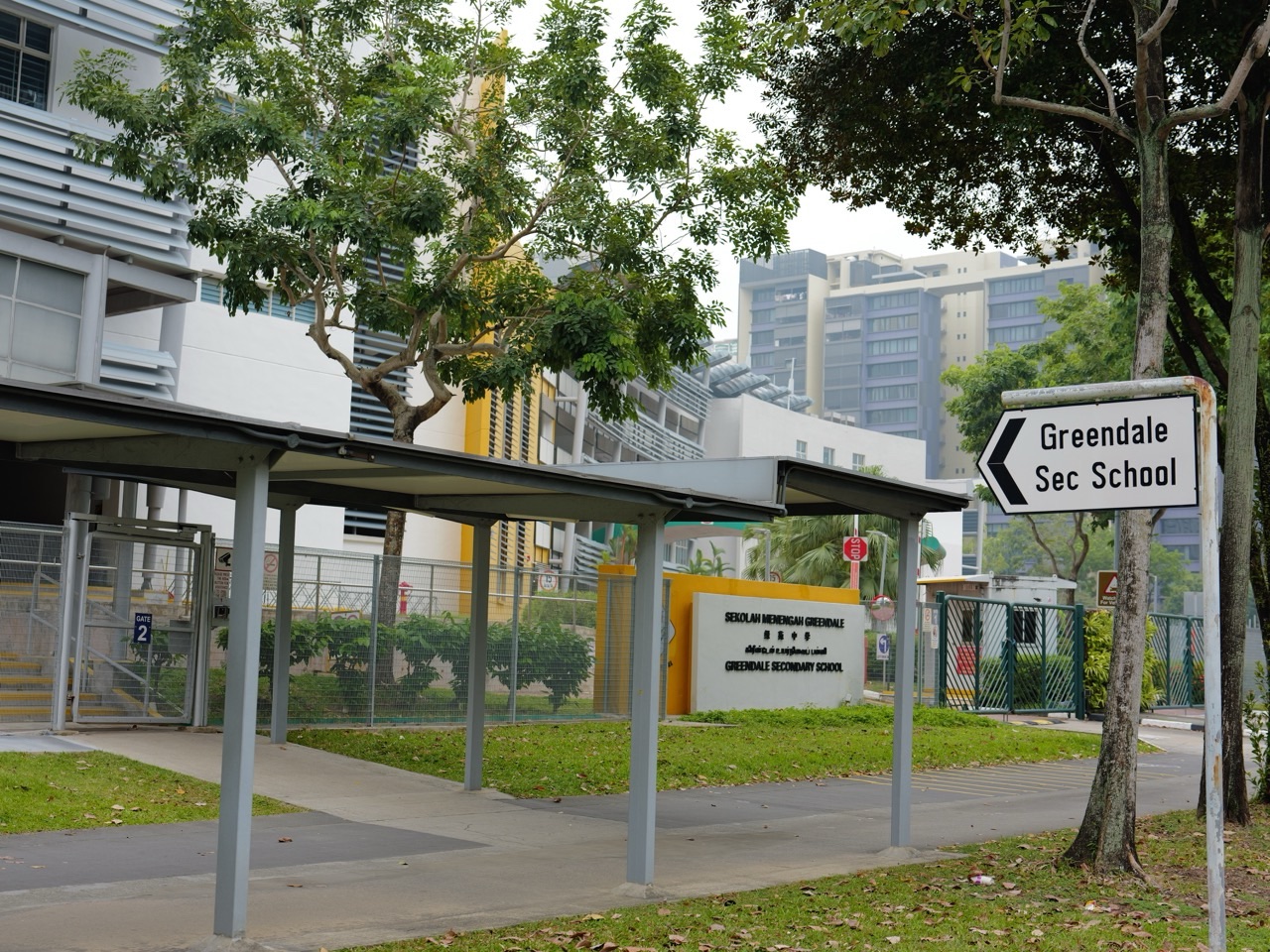
Punggol families can investigate local schools such as Greendale Secondary School, Edgefield Secondary School and Yusof Ishak Secondary School, while also examining other accessible secondary schools across Singapore. Punggol Secondary School is another familiar institution in the broader neighbourhood. These names help a family orient itself geographically; they are not a complete or permanent school list and do not imply identical admissions requirements, subject offerings or current capacities.
Begin with MOE SchoolFinder. Search each current school profile for location, admission context, subjects, programmes, learning support, co-curricular activities and contact information. Then consult the individual school’s website for programme descriptions and current school events. If a named institution has moved or its programmes have changed, the live records are more reliable than an old blog or copied spreadsheet.
For families near the Punggol MRT interchange, a different route may be practical from one that suits a Northshore household. The LRT network, walking distances, sheltered links and bus routes can make the apparent nearest school more complex to reach. An older child may travel farther independently, but late CCAs and heavy bags change the return trip.
A useful shortlist contains schools with genuine educational appeal and sustainable weekday access. Ranking all Singapore schools without regard to programme fit or commute is not a substitute for a child-centred decision. A pupil who can reach school consistently, take part in CCAs and receive timely help may make excellent use of a school that is not the family’s first name on a prestige list.
3. The change since 2024: Full Subject-Based Banding
Under the older system, many families understood secondary education through three fixed course labels: Express, Normal (Academic) and Normal (Technical). With Full Subject-Based Banding fully implemented for the 2024 Secondary 1 cohort onward, students entering the new system are no longer grouped into those fixed streams. The change aims to recognise students’ different strengths, interests and readiness rather than forcing every subject to follow one overall label.
Full SBB does not mean that every student takes every subject at the same difficulty or that admission requirements vanish. Students are still posted to schools on the basis of the applicable Secondary 1 posting framework, and academic demands remain different at G1, G2 and G3. The crucial difference is that a student’s mix of subject levels can better reflect an individual profile.
A parent whose child is confident in Mathematics but less confident in English should therefore ask a more precise question: Which subject level, support and progression arrangements are available for each subject, subject to MOE and school criteria? The wrong question is: Which historical stream permanently defines my child? A child continues to develop across the four secondary years.
The reform should not be oversold. Flexibility operates through actual policies and the school’s offered subjects and resources. Do not assume a G1 learner can automatically enter any G3 class by asking, or that every school has identical offerings. Read the current MOE pathway guidance, ask the school about requirements and agree on a realistic learning plan.
4. Posting Groups and subject levels are related but different
Posting Groups 1, 2 and 3 support the Secondary 1 allocation process and initial educational planning after PSLE. G1, G2 and G3 are subject-level descriptors indicating different levels of learning demand. The numbers are not identical concepts: an admission Posting Group is not an academic prison that prevents strengths in another subject from being recognised under the system’s applicable criteria.
Imagine two fictional students, Kai and Amira, whose PSLE overall scores place them in comparable posting circumstances. Kai may be confident in Mathematics and Science but require additional English-language support. Amira may read sophisticated literature and communicate fluently but benefit from carefully paced foundational Mathematics. Their subject-level mix and subsequent support needs may differ. A single overall result is an incomplete description of both pupils.
MOE’s official Full SBB infographics illustrate that students can enter secondary school, participate in mixed form classes and take combinations of subjects across levels. They also show posting arrangements and pathways that depend on the relevant policy rules. Use those official diagrams for examples rather than treating a social-media screenshot as a promise of an individual placement.
Ask each school which subjects are available at which levels, how a student’s performance is reviewed and which requirements apply before changing demand. Keep an accurate record of the current subject-level arrangement for your child, not merely the historical terminology older adults may remember from their own schooling.
5. What mixed form classes mean for a student’s daily life
A mixed form class means students are not necessarily separated for every part of the school day according to an old fixed-stream label. They can share school experiences and form relationships across different academic profiles, while subject teaching may be arranged at the appropriate level. The exact timetable and grouping structure are decided at school level within MOE’s framework.
This can be reassuring for pupils who are strong in one subject and developing in another. Friendship, leadership and character education should not be reduced to a judgement based on a single examination score. Students have opportunities to interact through form activities, CCAs, projects and community experiences that are not simply academic level comparisons.
But a mixed class does not eliminate the practical demands of moving between subject classes, tracking homework or adapting to different teaching requirements. Students may need help understanding which teacher to approach and how to organise material for each subject. A child who repeatedly forgets a lesson because of an unfamiliar timetable may need a visual schedule, not a scolding about intelligence.
Parents can help by asking the child to explain an ordinary day: when they remain with the form class, when they change learning groups, where subject resources are kept and whom to ask for help. Make independence the goal. A predictable organisational routine improves the student’s capacity to benefit from flexible subject learning.
6. Subject choices: do not mistake a subject name for its syllabus
A subject such as Mathematics, English Language or Science may exist at more than one level under the Full SBB framework. The syllabus content, cognitive demand, assessment design and progression implications are not necessarily identical. A student taking G2 Mathematics should not blindly use a G3 examination revision list and assume that the extra material is a national requirement.
The same care applies to Science. A lower-secondary general Science foundation, upper-secondary discipline-specific offerings and Combined Science combinations are not interchangeable. School-based subject combinations and national examination syllabuses vary. Rather than inventing a universal subject package for every Punggol school, ask the school which pathways it offers in the student’s actual cohort.
When families compare syllabuses, begin with what knowledge and skill the student must demonstrate. In Mathematics, is the next goal proportional reasoning, linear equations, quadratic relationships or trigonometry? In English, is the difficulty vocabulary, reading inference, oral communication or task-specific writing? In Science, is the child using evidence to explain an energy transfer, chemical change or biological process?
This practical approach protects against two common errors: forcing every child through the most demanding material irrespective of readiness, and leaving a capable student insufficiently challenged because of an older broad label. Appropriate difficulty should make progress possible without confusing struggle with personal failure.
7. Secondary English and communication skills
Secondary English builds a student’s capacity to comprehend increasingly complex texts, interpret implied meaning, evaluate evidence, adapt tone and purpose, and communicate effectively in speech and writing. The national syllabus requirements differ by subject level and examination cohort. Read the actual level documents before selecting targeted support.
Consider a student asked to respond to a public notice about a library event. If the student understands the words but writes an unstructured message to an inappropriate audience, the main difficulty may be situational writing: audience, purpose and format. If the student can produce grammatically accurate sentences but cannot identify a writer’s stance, the immediate focus should be inference and evidence.
A helpful tutoring lesson makes the thinking steps visible. First identify the communication situation. Next select the appropriate facts or details. Then organise the response, check the tone and revise. A teacher should explain why a revision improves meaning, not simply replace the student’s paragraph with a polished model answer.
At home, families can talk about newspaper headlines, public signs, letters and speeches. Ask the child which words shape the reader’s impression and what evidence supports an interpretation. Secondary English develops a transferable civic skill: the ability to read claims critically and communicate responsibly.
8. Secondary Mathematics: from arithmetic to algebraic reasoning
The transition from primary to secondary Mathematics introduces greater abstraction. Students need to use symbols to represent general relationships, operate with signed numbers, interpret expressions and equations, understand graphical patterns and solve unfamiliar problems. At different levels and stages, the detailed syllabus changes, so a student’s learning plan should be based on the correct G1, G2 or G3 requirements.
A common misconception appears in solving equations. Suppose a student is told to solve 3(x + 4) = 27. They write 3x + 4 = 27, omitting multiplication of the second term. The answer is not more timed drills on random equations. It is a lesson in the distributive law: 3(x + 4) = 3x + 12. Then 3x = 15 and x = 5. Check: 3(5 + 4) = 27.
A good follow-up uses different surface features, such as 2(3y − 1) = 22. Expand to 6y − 2 = 22, hence y = 4. Ask why every term inside the bracket must be multiplied. If the child can explain and apply the idea to a new equation independently, the concept is transferring.
One accurate original worked example reveals more than a page of copied workings. Mathematics tuition should diagnose the first invalid step, rebuild meaning and then remove scaffolding. The student needs confidence to check their own reasoning, a skill useful far beyond school examinations.
9. Secondary Science: evidence, mechanisms and practical work
Secondary Science progresses from observation towards increasingly sophisticated models of matter, energy, organisms, forces and experimental investigation. The content and exact choices depend on G level, year of study, subject combination and the relevant national syllabus. Families should not assume that all secondary students take identical Physics, Chemistry and Biology papers.
Consider a simple electric circuit with a cell, a lamp and a switch. A student sees an open switch and says that electric current has been ‘used up’ before reaching the bulb. The first correction is conceptual: an open switch breaks the conducting path, so sustained current does not flow through the incomplete series circuit. In a closed circuit, the lamp transforms electrical energy to light and thermal energy; current is not a fuel that disappears in the lamp.
A teacher can test understanding by moving the switch to another position in the series path or asking the student to predict what happens when the circuit is opened. The aim is not memorising one diagram but recognising the relationship between a complete conducting path, electrical current and components.
The same principle applies to experimental questions. Identify the independent variable, what is measured, what should be controlled and whether the evidence supports the conclusion. A Punggol student can notice engineering and environmental examples in everyday life without pretending a waterfront walk is a laboratory-controlled experiment.
10. Mother Tongue, Humanities and creative subjects are not peripheral
Secondary education is broader than English, Mathematics and Science. Mother Tongue languages, Humanities, the arts, design and technology, physical education, character and citizenship education, and co-curricular experiences all contribute to development. The offered options and applicable national requirements depend on the school and the student’s educational circumstances.
Mother Tongue learning can involve a gap between classroom knowledge and everyday language use. A student may understand familiar conversations but find argumentative writing difficult, or read accurately yet struggle to respond spontaneously. These are distinct components. Parents can support authentic conversations, media discussion and reading while asking teachers about the precise skills expected at the student’s subject level.
Humanities education brings opportunities to interpret sources, question assumptions and connect evidence with claims. In Geography, a student might compare environmental factors and human decisions. In History, a student may distinguish what a source directly says from what can reasonably be inferred. These habits strengthen civic understanding and help learners resist simplistic conclusions.
Arts, design, sports and co-curricular activities develop capacities that are harder to express as a single mark: collaboration, creative problem solving, leadership, persistence and movement. A serious education plan makes space for them instead of treating them as decorative extras to be sacrificed whenever exam stress rises.
11. What is the Singapore-Cambridge SEC examination in 2027?
The Singapore-Cambridge Secondary Education Certificate examination is scheduled to begin in 2027, replacing the former N-Level and O-Level examinations for the new Full SBB cohort. Graduating students take the relevant SEC examinations at their respective subject levels, G1, G2 or G3, in accordance with the qualification and syllabus arrangements applicable to them.
The certificate recognises a student’s individual subject profile rather than presenting all results under one former stream label. MOE’s published description says the examinations continue to be jointly examined and awarded by SEAB, MOE and Cambridge International Education. The policy aims to provide a common national certificate while maintaining appropriate differentiated subject demands.
One important distinction: 2027 is the first SEC examination year; it is not the publication date of every subject syllabus or the year all secondary teaching suddenly changes. Full SBB began with Secondary 1 students in 2024, and the first cohort’s progression culminates in the 2027 exam. Students in earlier graduating cohorts may have been assessed under previous examination arrangements.
Use the current SEAB syllabus documents for the student’s exact subject code, level and examination year. Avoid assuming a generic title such as ‘G3 Science’ always identifies the precise examinable combination. Examination guidance is best checked against official documents rather than a poster shared without a publication date.
12. Why the 2027 SEC matters even to younger children
The SEC reform changes how families think about progression from Secondary 1 to post-secondary education. A child who starts secondary school under Full SBB is not simply preparing to be classified by the old N-Level or O-Level separation. The student is working towards a common certificate that records differentiated subject achievement according to the current framework.
For Secondary 1 parents, this encourages early clarity about strengths by subject and flexible expectations. A student may initially need a gentler pace in one area and develop enough skill to attempt a more demanding level later, subject to the applicable policies and school decision. The family should ask how evidence will be used in those decisions, not presume that all pathways are automatic.
For Secondary 3 parents, the reform makes subject combinations, prerequisites and examination documents particularly important. The student should know which subject levels they will be examined at and how these relate to potential next steps. A tutoring provider should be able to show the correct, current SEAB code and teach that syllabus, not an outdated course copied from the previous system.
For those applying for post-secondary education, the next major reform is the new 2028 Post-Secondary Admissions Exercise. A long-term family plan must therefore connect the student’s secondary programme to entry requirements that are valid in the year they leave school, not just the admission rules older siblings experienced.
13. The 2028 Post-Secondary Admissions Exercise explained
MOE announced a new Post-Secondary Admissions Exercise (PSE) from 2028, following the first SEC results expected in January 2028. The new PSE is intended to replace existing central admission exercises across post-secondary routes such as junior colleges, Millennia Institute, polytechnics and ITE Higher Nitec pathways. Students can use their SEC results to consider different eligible routes together in the updated system.
A key point for parents is that a change of application platform is not a guarantee of admission. Students must satisfy the relevant course criteria and any other requirements. MOE has stated that a PSE tie-breaker sequence will incorporate citizenship, choice order, gross aggregate score and computerised balloting in the prescribed order. That makes the order of a student’s preferences an important planning choice when tie-breaking applies.
The new PSE does not mean all alternative entry routes disappear. MOE says Direct School Admission-JC, Polytechnic Early Admissions Exercise and ITE Early Admissions Exercise continue, subject to their own rules. A student who has an appropriate portfolio or aptitude may investigate these options, but should not assume a conditional offer overrides necessary academic requirements.
For a child graduating before 2027 or applying under an earlier exercise, use that cohort’s actual instructions. Mixing 2026 and 2028 application handbooks is a common way to create unnecessary anxiety and incorrect plans. Always stamp your family’s pathway notes with the examination and entry years.
14. Junior college entry changes from 2028 also deserve attention
MOE announced revised junior college admission criteria from the 2028 exercise, shifting the gross aggregate calculation from the previous L1R5 arrangement, involving six subjects, to L1R4, involving five subjects. The reform is intended to allow students more room for wider development. The details, including subject-group requirements and points rules, are set out in MOE’s announcements.
This is one reason a family should be cautious when comparing tuition packages promising preparation for a particular old admission cut-off. An academic calculation that applies in an earlier entry year may not be the correct one for a student receiving the 2027 SEC and applying in 2028. Likewise, the new arrangements for polytechnic and ITE pathways should be evaluated from their own updated official criteria.
A parent does not need to solve all post-secondary decisions in Secondary 1. It is enough to understand that the rules can evolve and that subject choices later have consequences. Before selecting an upper-secondary combination, check both the child’s strengths and the range of routes the combination supports.
More fundamentally, students should learn to make informed choices based on their interests and evidence of performance rather than treating one pathway as the only acceptable kind of success. JC, polytechnic and ITE experiences differ in learning style, assessment and progression, and all deserve accurate explanations.
15. Direct School Admission and secondary-school selection
Some students explore Direct School Admission for secondary schools on the basis of eligible talents and achievements in particular areas. DSA is not a blanket exception to educational requirements. Schools specify relevant areas, assessment arrangements and conditions. The process is distinct from the ordinary Secondary 1 posting framework, and families must read the rules for their entry year.
A portfolio should demonstrate genuine engagement rather than merely contain a stack of participation certificates. For a student interested in robotics, explain what was built, the difficulties encountered and what was learned. For a musician or sportsperson, show development, reflective practice and appropriate evidence of achievement. Avoid making unsupported promises about an outcome from one coaching course.
Families living in Punggol might consider schools beyond the immediate district if the programme and journey are workable. However, talent opportunities cannot be separated from travel time, academic learning, social adjustment and the student’s own willingness to participate. A distant school with an attractive specialisation can be an excellent choice for one pupil and an exhausting one for another.
Discuss applications with the child, clarify obligations and preserve a realistic mainstream posting plan. Admissions decisions are made by the relevant institution under the published framework. The parent’s role is to guide preparation responsibly, not manufacture an achievement identity at the expense of well-being.
16. A Punggol case study: two learners with different profiles
Consider two fictional students entering Secondary 1. Mei is confident in speaking and writing English, loves drama and finds ratio and negative numbers difficult. Aarav enjoys calculations, circuits and computer programming but is hesitant in longer English writing tasks. Their overall PSLE situations might appear similar on a summary sheet, but the learning support they require is not identical.
Mei benefits from modelling numerical relationships with number lines, bar diagrams and slowly increasing algebraic challenge. If she has access to an appropriately demanding English programme, her verbal strengths should be recognised. Aarav might need lessons on constructing an argument, selecting evidence and revising sentences. Neither child needs to be reduced to an all-subject label based on the first area of difficulty.
When comparing Punggol schools, their families use SchoolFinder and school contact points to ask about actual subject offerings, student support and how subject-level progression is reviewed. They do not assume that the school’s name establishes every child’s timetable. They check activities—drama for Mei, technology or science opportunities for Aarav—without allowing one interest to override the whole school experience.
By the end of the first term, the families review work samples and teacher feedback, then adapt support. A successful result is not necessarily both students moving into an identical subject combination. It is each learner building knowledge, belonging and the capacity to make informed next steps.
17. A realistic secondary-school timetable is an academic resource
A Punggol secondary student may travel on the North East Line or LRT, walk through the neighbourhood, attend full school days, participate in a CCA and still have homework or family commitments in the evening. A route that looks acceptable at midday may become much harder after a long CCA session or in heavy rain. The first week should be used to test the real journey rather than relying on a theoretical map calculation.
One useful approach is to draw the student’s week hour by hour. Mark school, independent travel, CCA, meals, rest, study, screen use and sleep. Then identify where concentrated learning is realistically possible. Homework attempted while hungry or exhausted can produce frustration without showing what the student truly knows.
Students gradually need to manage timetables, classroom changes and subject-specific resources independently. Ask them to identify the next day’s required books and deadlines, then reduce parent reminders over time. A pupil who forgets material because of a complicated timetable needs systems, not humiliation.
Tuition must fit around these realities. A well-designed focused lesson can help; adding sessions to every open evening may reduce sleep and the quality of independent study. Sustainable routines make academic learning more likely to transfer into schoolwork and assessments.
18. When tuition helps and when it misses the problem
Tuition is most useful when it addresses a defined gap, teaches a mechanism and checks independent transfer. It is less useful when it is an automatic reaction to a label or a vague statement that the student ‘needs to catch up’. Under Full SBB, selecting the correct subject level and actual syllabus is especially important.
Ask the student to bring one piece of work that was difficult, then locate the first point of uncertainty. For Mathematics, the problem might be signed-number operations rather than an inability to do ‘secondary maths’. For English, the issue may be inference rather than spelling. For Science, it may be explaining the mechanism rather than recognising the term. These need different instructional sequences.
A strong tutor starts with a short diagnostic example, gives explicit feedback, creates a new practice situation and checks whether the student can solve it without help. Any claim that every learner improves simply by joining a particular group size is too broad. Small groups can facilitate feedback, but effective teaching still depends on evidence and appropriate explanation.
Review outcomes after a few weeks. If accuracy increases only on repeated identical questions, transfer remains unproven. If a student can use the concept in a fresh context and explain why it works, support may be reduced. The purpose is to build independence rather than permanent reliance.
19. A four-week learning recovery plan under Full SBB
Week 1: identify the exact requirement. Confirm the student’s current subject level, topic and official or school-based learning outcomes. Collect three or four recent work samples. Mark whether errors arose from missing facts, misunderstandings, language interpretation, methods, presentation or time pressure. Choose one specific bottleneck that can be tackled realistically.
Week 2: teach the underlying idea. Use worked examples that reveal the reasoning, and ask the student to verbalise each step. For algebra, model the distributive law; for reading, connect claims to evidence; for Science, link observations to mechanisms. Reduce difficulty without replacing the syllabus with unrelated exercises.
Week 3: test transfer. Introduce problems that look different but use the same idea. Ask the student to explain the method before using the answer key. Include one short mixed task so the learner must decide independently which principle applies. Feedback should focus on the first invalid or missing step, not a general judgement of intelligence.
Week 4: review, then adapt. Compare new work with the original samples and ask the teacher whether classroom performance has changed. If the student has become independent, taper the intervention. If not, revisit the diagnosis, consider workload and seek school guidance. Increasing the number of worksheets is not a substitute for understanding why an approach failed.
20. Support for learning differences and emotional well-being
Full SBB recognises different academic strengths, but it does not mean every student finds school easy. Some children struggle with attention, reading, social transition, communication, sensory environments or anxiety. Others become discouraged because they interpret a subject-level label as a judgement of personal value. Adults should listen to these experiences and respond to the specific difficulty.
A child who avoids a certain lesson may not lack motivation. The material could be inaccessible, the instructions unclear or the social environment uncomfortable. Ask what happens just before the difficulty, what the student can do independently, which support has been tried and whether any change helps. Seek appropriate professional advice for persistent health or developmental concerns without attempting to diagnose the child from online anecdotes.
School-level learning and pastoral resources vary, and eligibility rules may apply. Parents should contact the school’s teachers or support personnel to learn what can realistically be provided, how concerns are reported and when progress will be reviewed. Document agreed actions instead of relying only on verbal reassurance.
The most productive conversation treats the young person as a participant in their own education. Ask what helps them understand, which activities they value and what reasonable support they would use. Independence grows when students learn to recognise their needs and seek help responsibly.
21. Avoid these five policy and planning mistakes
The first mistake is saying that G1, G2 and G3 are merely new names for fixed old streams. The subject-level approach and mixed form classes alter the structure; Posting Groups are also a distinct concept. The second mistake is assuming that taking one subject at a particular level automatically determines the level of every other subject.
The third mistake is preparing for the wrong examination year. The SEC begins in 2027, but a student graduating in a different year may be governed by a different timetable or set of documents. The fourth mistake is assuming that every subject is available at every level in every Punggol school. Actual offerings, prerequisites and changes in level must be confirmed with the school.
The fifth mistake is planning 2028 post-secondary choices from a handbook written for 2026. MOE has announced a new PSE and revised JC admission criteria. The logic of a new system can be understood in advance, but the application must follow the instructions for the actual cohort.
A final, broader error underlies all five: confusing an education label with an identity. Students are developing people, not fixed ability categories. Decisions improve when the family uses current rules, actual work and the student’s interests to choose the next sensible step.
22. How to choose an upper-secondary subject combination
In the upper-secondary years, subject combinations and examination preparation become more specific. A student considering Physics and Additional Mathematics may need to understand the mathematical demands and relevant prerequisites. Another considering Humanities and literature should think about reading, extended writing and genuine interest. Subjects should not be selected solely because another family calls them prestigious.
Start by asking what the student understands well, enjoys studying and is prepared to practise independently. Then inspect the school’s actual combinations and entry conditions. The family should check whether the potential selection keeps open reasonable post-secondary choices; no subject combination guarantees a particular college or career route.
If a student wants a more demanding level in one subject, ask the school what performance evidence and arrangements would be required. Do not assume moving up always occurs on request, or conversely that an initial level remains fixed regardless of later development. The current MOE rules and school’s offerings control the practical options.
Encourage the young person to articulate reasons. ‘I like solving circuit problems and want to learn how devices work’ is more useful than ‘My friends chose Physics.’ A good teacher or counsellor can help test whether the student’s impression of a subject matches the actual syllabus and workload.
23. Study habits that transfer across subject levels
The most powerful habit is to separate knowledge from guessing. When reading a question, underline the actual demand, identify what is known, decide what principle applies and attempt a solution. After receiving feedback, do not merely overwrite the answer in red ink. Write down which idea changed and why the revised reasoning is stronger.
Retrieval practice, spaced review and explanation in one’s own words can help, but they should be used appropriately for the material. Mathematics needs problem solving, not only definition recall. Literature requires evidence-backed interpretation. Science needs causal models and fair-test thinking. Mother Tongue requires meaningful communication as well as vocabulary.
Punggol students can practise these habits in everyday settings. Explain a real household budget with algebra, compare claims made in news articles, observe the environment and discuss potential variables, or plan a community activity with a written proposal. Everyday applications should be educationally honest: noticing a pattern is not the same as conducting a controlled experiment.
Finally, build a simple weekly review with one recorded strength and one specific difficulty per subject. Teachers and parents can then discuss real progress rather than being driven by the emotional impact of a single test. A learning record that recognises growth is more useful than a scoreboard without explanation.
24. The long view: education pathways remain open to growth
The move from Primary 6 to Secondary 1 can feel momentous, and the SEC in 2027 introduces additional unfamiliar terminology. But education does not stop at one posting group, subject-level placement or certificate. The national system offers multiple ways to continue study and develop applied, academic, technical and professional skills, subject to individual eligibility and future progression requirements.
Junior colleges and Millennia Institute provide pre-university study. Polytechnics offer diploma routes with applied and industry-relevant learning. ITE provides technical and vocational education, including Higher Nitec pathways. Later, universities such as Singapore Institute of Technology offer further opportunities. These routes are not identical, and their applications and criteria must be examined separately.
For a student living in Punggol, SIT’s campus in the Punggol Digital District can make an important point visible: learning continues beyond secondary school, and a neighbourhood can contain higher-education and industry activity. Proximity to a campus does not grant automatic admission; it offers a local example of lifelong development.
The family’s long-term goal should be a student who can understand requirements, ask for help, assess choices and pursue growing interests responsibly. The most meaningful next step is not always the most demanding label, but the challenge the learner can genuinely engage with and build upon.
Frequently asked questions about Punggol secondary education
Does Punggol have its own secondary education system?
No. Punggol secondary schools operate in Singapore’s national MOE framework. School programmes and the pupil’s actual commute differ locally, but admissions structures, Full SBB and the SEC examination are national. Verify current school options and support in SchoolFinder rather than relying on a general neighbourhood stereotype.
What replaced Express, Normal Academic and Normal Technical?
Full Subject-Based Banding has applied to new Secondary 1 cohorts from 2024. It moves beyond fixed academic streams and permits more individualised subject-level learning. The national posting framework still uses Posting Groups; G1, G2 and G3 describe subject demand rather than three identical old streams under new labels.
What is a Posting Group?
Posting Groups are part of the Secondary 1 admission and initial subject-learning arrangement after PSLE. They are not the same concept as the level of each individual subject a student may take. The exact rules and available choices should be read from the relevant MOE year and school guidance.
Does a student take every subject at their Posting Group number?
Not necessarily. Full SBB can allow a subject-level mix reflecting strengths and readiness, subject to MOE criteria and school offerings. Do not infer an individual child’s mix from the overall PSLE Score or promise a higher-level subject without checking eligibility.
What does G stand for in G1, G2 and G3?
MOE’s Full SBB materials use G to mean General. The levels describe different subject learning and assessment demands. When selecting tuition or revision materials, check the specific subject, year, examination code and G level so the lessons target the right requirements.
Are there mixed form classes in Punggol secondary schools?
Mixed form classes are a major component of Full SBB’s intended school experience. Students can interact across different academic profiles while subject learning is organised by applicable levels. The exact timetable, movement and grouping arrangements should be confirmed with the individual school.
Which secondary schools are in Punggol?
Families can start by investigating Greendale Secondary, Edgefield Secondary, Yusof Ishak Secondary and Punggol Secondary, then consider additional schools within workable travel distance. Use MOE SchoolFinder for current addresses, programmes and school status; the names alone are not a ranking.
When does the SEC examination begin?
The first Singapore-Cambridge Secondary Education Certificate examination is scheduled for 2027, following Full SBB’s 2024 Secondary 1 intake. It replaces the former N- and O-Level examinations for the applicable cohort. Check SEAB’s specific examination-year syllabuses and timetable.
Is the SEC just the O-Level renamed?
No. The common SEC certificate recognises examinations taken at G1, G2 and G3 subject levels under the new Full SBB structure. It replaces the former separate N- and O-Level examinations for the new cohort. Assessment requirements still differ by subject level.
Will students receive 2027 SEC results in 2028?
MOE’s 2026 announcement connects 2027 SEC examinations to results in January 2028, followed by the revised post-secondary application framework. Confirm the official results release and application timetable nearer the date rather than assuming an exact day.
What changes for post-secondary admissions in 2028?
MOE has announced a new Post-Secondary Admissions Exercise beginning in 2028 for eligible routes into junior colleges, Millennia Institute, polytechnics and ITE. Applicants must still meet course requirements. The current published rules, choice order and any applicable tie-breakers should be checked for the student’s intake.
Does the Junior College admission calculation change in 2028?
MOE announced a move from L1R5 to L1R4 for the 2028 admission exercise, reducing the number of subjects in the gross aggregate from six to five. Full eligibility, subject requirements and bonus-point rules remain important; do not simply reuse an earlier year’s calculation.
Can students change subject levels in secondary school?
The Full SBB framework allows more responsiveness to subject strengths, but changes operate under policy criteria and the school’s actual arrangements. Ask the teacher what academic evidence and conditions are relevant. Neither automatic promotion nor permanent immobility should be assumed.
What if my child’s Mathematics is stronger than English?
Treat each subject profile separately. Keep providing suitable challenge in Mathematics while diagnosing whether English needs vocabulary, comprehension, language structure or writing support. An overall examination label cannot tell you which specific teaching intervention will work.
How should parents choose between G2 and G3 revision materials?
Use the child’s confirmed subject level, current school topic and relevant SEAB/MOE syllabus. More advanced material is not always better when a foundation is missing. Good teaching targets the correct demand, addresses conceptual gaps and checks transfer to independent work.
Should we select secondary school only by cut-off score?
No. Historical cut-offs are evidence about past admissions, not a complete measure of educational quality or future placement. Consider the child’s subjects, interests, school culture, pastoral support, CCAs and the weekday route as well as current eligibility and admission information.
Can a Punggol student travel elsewhere for secondary school?
Yes. Secondary school choices are considered within the national posting framework, so families can examine institutions outside Punggol if eligible. Think about transport reliability, co-curricular days, after-school commitments and whether the young person can manage the journey independently.
Does every secondary school offer the same upper-secondary combination?
No. School offerings and prerequisites vary. Check current subject combinations directly with the specific school. Never assume a Physics, Chemistry, Biology, Additional Mathematics or Humanities package is identical across schools or available at every G level.
Does SEC lead only to university or junior college?
No. The post-secondary system includes several routes, including JC, MI, polytechnics and ITE, subject to course entry criteria and progression. Each has different learning styles and later opportunities. A good choice reflects the student’s interests, strengths and actual requirements.
What is the best way to judge whether tuition is helping?
Use a small diagnostic task before lessons and a genuinely unfamiliar task afterward. Look for accurate explanation and independent transfer, not merely better scores on repeated examples. Confirm the correct G level and adjust support after a short review period.
What if my teenager feels ashamed of a lower subject level?
Explain that subject levels identify current learning demands, not personal value or a permanent prediction. Listen to the child’s experience, coordinate with the school and set achievable skill goals. Recognise the student’s strengths beyond test results, including leadership, creativity, sport and practical ability.
Official fact-check and parent resources
- MOE PSLE and Full Subject-Based Banding microsite — posting and differentiated subject-level principles.
- MOE Committee of Supply 2024 announcements — SEC introduction and national framework.
- MOE Committee of Supply 2026 announcements — new 2028 Post-Secondary Admissions Exercise and tie-breakers.
- MOE Committee of Supply 2025 announcements — 2028 JC admission L1R4 changes.
- MOE SchoolFinder — current secondary school profiles, programmes and contact details.
- Singapore Examinations and Assessment Board — official subject syllabuses and exam-year notices.
- MOE Full SBB subject-level and pathway illustration — a visual introduction to the reform.
- Singapore Institute of Technology campus locations — Punggol’s higher-education connection.
Related eduKatePunggol reading
- Preschool and MOE Kindergarten in Punggol
- Punggol primary schools, P1 and PSLE
- School transfer rules in the Singapore education system
- A structured method for diagnosing school Mathematics learning gaps
Explore the complete four-part Punggol education system series: Part 1: Preschool and MOE Kindergarten · Part 2: Primary schools, P1 and PSLE · Part 3: Secondary schools, Full SBB and SEC · Part 4: ITE, polytechnics, JC, MI and SIT.
Editorial verification date: 18 October 2026. This independent guide explains officially announced national policy and practical Punggol context. Dates, admissions, subject-level criteria and individual school offerings should be checked against the authority’s and school’s currently published documents for the student’s exact cohort.


