
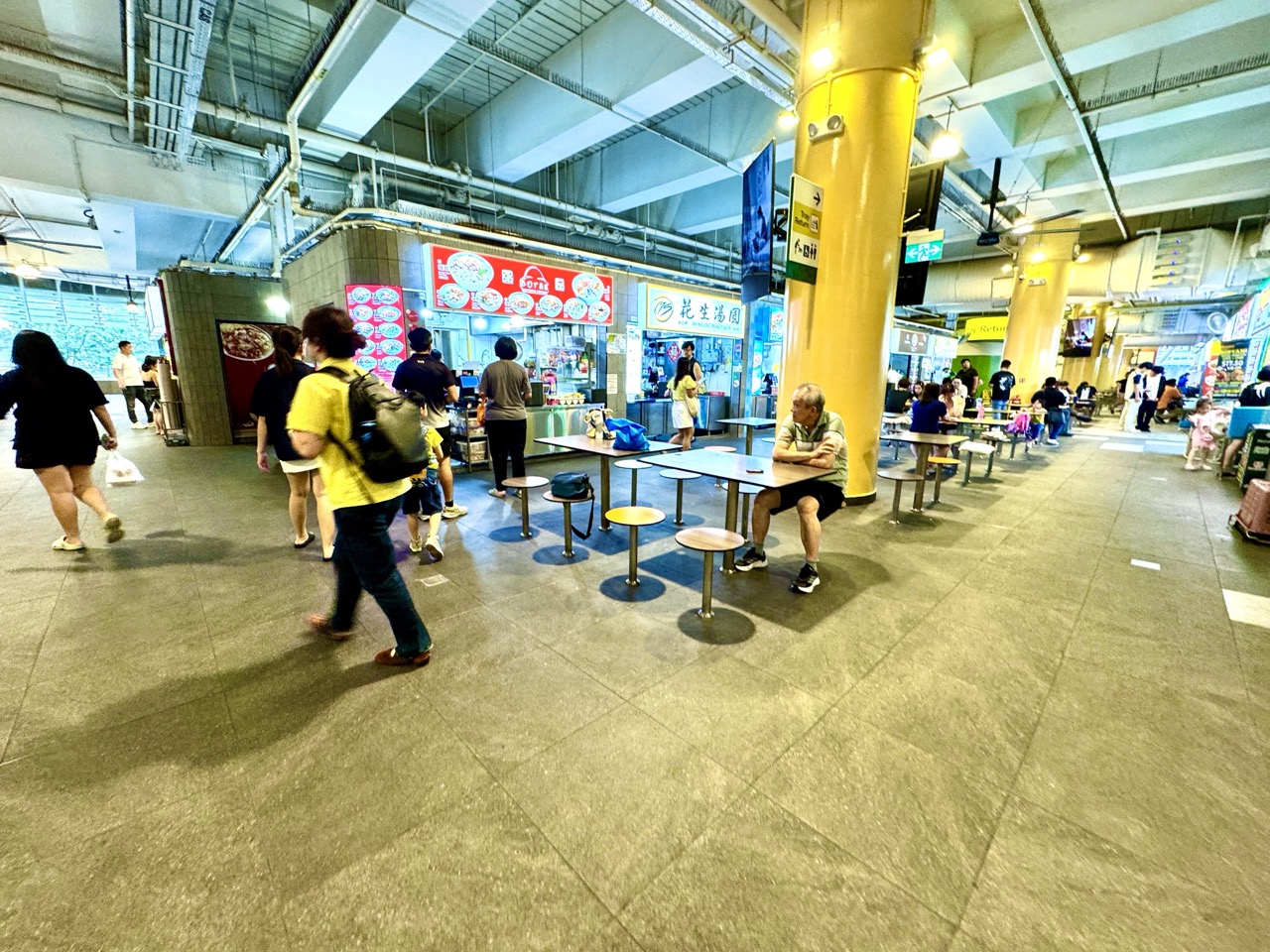
PSLE English Oral stimulus-based conversation is not a photograph-description competition. For Standard English Language in the 2026 PSLE, Paper 4 includes Reading Aloud (15 marks) and Stimulus-based Conversation (25 marks). The conversation begins from a photo stimulus, but candidates need to express ideas, explain choices, respond to questions and speak naturally. Families in Punggol can practise those skills using everyday photographs of their own neighbourhood: the hawker centre, library, bus interchange, playgrounds, night market and community spaces.
These ten local practice scenarios are original eduKatePunggol exercises, not past PSLE questions, predicted examination topics or official SEAB picture stimuli. They use selected images from the site’s newly uploaded October 2026 collection to prompt reasoning. Students should never memorise the model answers word for word; the purpose is to build confident personal responses that suit the examiner’s actual question. The official format is available through SEAB’s 2026 PSLE examination-format index.

PSLE English Oral 2026: the essentials
- Paper: Standard PSLE English Language (0001), Paper 4 Oral Communication.
- Reading Aloud: 15 marks.
- Stimulus-based Conversation: 25 marks, based on one photo stimulus.
- Overall oral component: 40 marks, 20% of Standard English’s 200-mark total.
- Published duration: approximately 10 minutes including preparation (about five minutes preparation and five minutes examination); school practice conditions may differ.
- Main learning target: listen to a question, answer directly, explain clearly, give a relevant example or experience and respond flexibly.
- Critical distinction: a local photograph is a practice aid; it does not reveal or predict the actual national examination picture.
SEAB’s 21 August 2026 statement explains that PSLE oral examinations assess effective communication rather than specialist factual knowledge or pre-prepared answers. Its August 2025 clarification similarly refers to conversational skill and familiar experiences, including queueing and orderliness. The centre’s existing 2026 PSLE Oral overview owns the paper structure; this article owns the practice dialogues based on original Punggol photos.
The photo is a starting point, not the whole answer
Children sometimes spend the entire response listing visible objects: ‘I can see a bus, some people and a building.’ That may be a useful observation, but it is not enough if the examiner asks about public transport, courtesy, responsibility or personal experience. The question determines the task. A stimulus provides context; the pupil must then use language to explore the issue posed.
Teach the child to listen for the question word. ‘Why’ invites a reason. ‘How’ asks for a method. ‘Have you ever’ invites a truthful experience. ‘Would you’ invites a decision and justification. If the question changes, the response should change. Fluency without relevance is not effective communication.
A five-minute practice routine at home
Choose one photograph and show it without giving the child an answer to memorise. Give a short period to notice two or three broad ideas. Ask one question and let the child speak without interruption for an appropriate span. Then ask a natural follow-up that develops a point the child raised. Finally, reflect on one useful improvement rather than correcting every grammatical slip at once.
A child may benefit from a few seconds to think. Constant adult interruptions can teach them to seek rescue rather than develop a thought. Keep the task supportive and manageable. Over a week, alternate photographs and questions so the pupil learns to transfer the speaking skill, not associate one picture with one fixed paragraph.
Scenario 1: waiting patiently at the Punggol pasar malam
Our October photograph shows shoppers queueing for biryani near Punggol MRT. A useful original practice question is: ‘What can people do to make waiting in a long queue more pleasant for everyone?’ The student need not identify the actual stallholder, menu price or exact waiting time. The visible scene simply introduces an everyday experience that most children can discuss.
An example response might be: ‘People can leave enough space and avoid cutting in front of others. I would talk quietly to the person with me or check the menu while waiting. If a young child was very tired, the family could decide to buy something from a shorter queue. I think being considerate is more important than insisting on my first choice.’ The response explains a view and gives realistic alternatives.
Repairing a weak answer about queueing
A weaker answer might be ‘They must queue properly because it is good.’ It is not wrong, but it leaves the reason undeveloped. Ask the child, ‘What could happen if someone cuts in?’ They may explain that other customers would feel the situation is unfair or the line could become disorderly. The answer now has a cause and consequence.
Then ask whether every person can wait for the same length of time. A pupil might mention a younger child, an older person or somebody who cannot stand comfortably. This develops empathy without stereotyping. The question is about behaviour, not a demand to memorise a model paragraph about ‘social responsibility’.
Scenario 2: a meal at One Punggol Hawker Centre
The Level 2 photographs show diners, counters and waiting areas. Ask: ‘Why is it important to look after a hawker centre that many people share?’ The child can discuss clearing litter, following tray-return signs, giving people space and speaking politely to food workers. This is more interesting than merely naming all the foods that might be sold there.
A sample answer: ‘A hawker centre is used by different families. If we leave dirty plates and tissues on the table, the next person cannot sit comfortably. I would return the tray where the signs tell me to and thank the people who keep the place clean. At the same time, adults should help younger children with heavy or hot dishes.’ It includes a reason, action and sensible limitation.
Moving beyond the phrase ‘keep the place clean’
Some pupils answer every community question with ‘We should keep the environment clean.’ That general sentence may fit, but repeated without detail it becomes weak. Invite the child to specify which part of the environment, which action and who benefits. In the photographed hawker setting, the shared table and collection route provide a more concrete example than a general moral slogan.
A follow-up could be: ‘What if someone has difficulty returning a tray?’ A thoughtful answer might suggest appropriate help or asking staff, rather than blaming the diner. SEAB assesses communication, not a performance of moral certainty. Students should practise recognising real constraints while explaining reasonable choices.
Scenario 3: a library as a place for learning
The photograph titled ‘Punggol Regional Library at One Punggol’ shows the institution’s presence inside the integrated hub. Ask: ‘Why might a public library be useful to families?’ The answer can cover reading, access to resources, quiet learning and the chance to explore new interests. Do not claim the photograph proves a particular floor is silent or every programme is available.
A sample answer: ‘A library is useful because people can discover books they might not have at home. My family could choose a book together and talk about it afterwards. I think libraries are especially helpful when children are curious about a new subject, because they can start with a simple book before searching for more information.’ This responds to purpose, audience and lived experience.
A strong library follow-up should show judgement
Ask: ‘Does every child enjoy reading the same kind of book?’ An effective response recognises preferences. One pupil may like comics while another likes science or history; both can be reading. A candidate should not force an answer that everybody must read novels to be a good student. Specific, reasonable examples make the conversation sound authentic.
If the child is asked about a personal library visit they have not made, honesty is better than inventing one. They could say, ‘I haven’t visited this library yet, but I have used the school library, and I would like to…’ That keeps the response truthful while addressing the question. We should not train children to fabricate experiences under examination pressure.
Scenario 4: playgrounds and sharing equipment
Our new photographs show a neighbourhood playground and nearby basketball activity. Ask: ‘How can older children help younger children enjoy a shared playground safely?’ The image can prompt comments about taking turns, moving at a suitable speed, keeping play equipment in good condition and recognising when a space is crowded.
A sample response: ‘Older children can wait for younger ones to finish climbing before rushing through. They can also avoid playing rough ball games near small children. If I saw a friend running too close to the swings, I would remind them to move to a suitable area. Everyone deserves a chance to play, but we must consider the safety of others.’ This develops a realistic action rather than a vague command.
Avoiding unsupported claims about photographed children
The picture records an activity, not the identities, relationships or intentions of individuals. A student should not be taught to say that a particular child is naughty, afraid or irresponsible from a still image. We can discuss possible situations without pretending to know what happened immediately before the photograph.
Use language such as ‘Someone might feel nervous if the area becomes crowded’ rather than ‘That child is scared.’ This practice improves oral precision and teaches respectful interpretation of images. It is also a valuable digital-literacy habit, especially when photographs of children can circulate widely online.
Scenario 5: scooters at One Punggol
A photograph shows children with kick scooters in an open public area of the One Punggol hub. Ask: ‘What should families check before children use scooters in a shared public space?’ The key is to distinguish a photographed activity from current permission. Singapore’s active-mobility rules and a particular property’s restrictions must both be considered where applicable.
A sample answer: ‘First, I would check the signs because a public space may have areas where scooters should not be used. I would also consider whether other people are walking nearby. If the area is crowded, I would rather push the scooter or choose a more suitable location. I enjoy outdoor play, but it should not make other people feel unsafe.’ The answer shows conditional reasoning.
A balanced response is better than an absolute claim
A candidate might initially say, ‘Children should always be allowed to use scooters because exercise is good.’ Ask what happens when a narrow path is crowded. The pupil can preserve the positive view of exercise while recognising that the location and other people matter. This is not changing the answer to please the adult; it is refining a judgement.
Conversely, a pupil who says scooters should be banned everywhere should be encouraged to think about designated routes and appropriate settings. Oral conversation rewards the ability to engage with a question thoughtfully. The examiner is not asking a child to write a law; the task is to explain a reasonable personal position.
Scenario 6: travelling through Punggol Bus Interchange
The October photos show passengers waiting and alighting at the main Punggol Bus Interchange. Ask: ‘What would you do if a younger child was unsure which bus to take?’ The answer should focus on safety, correct information and appropriate adult or staff help, not on inventing a particular route number from the picture.
A sample response: ‘I would tell the child to stay in a safe public area rather than board a bus at random. We could read the destination signs together and ask an authorised staff member for help. If the child had a parent or caregiver nearby, I would try to involve them. I think making a careful decision is more important than catching the first bus.’ This is a clear sequence with a reason.
Do not confuse a transport explanation with specialist knowledge
A child is not being tested on memorising every Punggol bus route in this practice. The photograph supplies a familiar setting. If the examiner asks about public transport, the student can explain why people use it or how to behave considerately. Detailed timetables and the 2025 relocation of services are public-transport facts but are not required to demonstrate ordinary conversational ability.
This matters because parents may overprepare background content at the expense of listening and answering. A child who knows the correct route number but gives an irrelevant response has not solved the oral task. Keep the practice anchored to communication: observe, think, speak, listen and develop.
Scenario 7: why people enjoy playing sport together
The Sam Kee LRT photographs show basketball taking place beneath elevated tracks. Ask: ‘What can children learn from playing team sports with other people?’ Students may discuss communication, perseverance, responsibility and respecting rules. The photo does not show the score, the players’ names or whether a formal tournament is underway.
A model answer: ‘When we play as a team, we must listen and make decisions together. A person who passes the ball well can help the team even without scoring. I once found it difficult to cooperate in a group game, but it became easier when we decided who would do each task. Sport can teach us how to encourage others, not just how to win.’ The personal sentence is an illustrative example that the child should replace with a truthful experience.
Distinguishing a story from a general claim
An effective oral response may include a short anecdote, but it should not swallow the entire answer. If the pupil recounts every second of a school sports day, the original question about teamwork can disappear. Encourage them to choose one relevant detail and explain what it taught them.
A useful diagnostic question is: ‘What does that example prove about your main point?’ If the child cannot answer, the anecdote may be entertaining but irrelevant. Repair the structure by moving the main idea to the beginning and using the experience as support.
Scenario 8: school journeys and punctuality
The external photographs of Punggol View Primary School show a main gate and school building. Ask: ‘Why should students prepare for the school day the night before?’ The child can discuss being punctual, reducing stress and checking required items. There is no need to mention the school’s exact reporting time unless the question asks for it and the source is current.
A sample response: ‘Preparing my bag the evening before helps me avoid forgetting my books. It also saves time in the morning when my family is getting ready for work and school. I think I would feel calmer if I knew everything was ready. However, I would still check any last-minute message from my teacher because schedules can change.’ It explains both the habit and its limits.
Respecting privacy in school photographs
Photographs of a school exterior can introduce routine and responsibility, but should not be used to identify individual pupils or reconstruct pickup patterns. A practice question about ‘Why do families need safe school journeys?’ is appropriate; a question inviting speculation about who uses a particular gate at what time is not.
This boundary is important for both adults and children. A good speaking exercise helps learners reflect on the school experience without turning other children’s personal information into classroom entertainment. It also reminds families that photograph-based practice does not override actual school rules.
Scenario 9: respecting different places of worship
Another October photograph shows the exterior of Fo Guang Shan Singapore at Punggol Place. Ask: ‘How can we show respect when visiting a place that has different traditions from our own?’ The student can talk about following rules, dressing appropriately where required, speaking quietly and asking questions politely. They should not assume the religion of a passer-by in the photograph.
A sample answer: ‘Even if I do not know much about a tradition, I can be respectful by listening to the people who explain the place. I would not interrupt a ceremony or take photographs without permission. If I was uncertain about a rule, I would ask instead of guessing. I think learning about other people’s practices helps neighbours understand one another.’ This demonstrates thoughtfulness without requiring the child to adopt the belief.
Balancing curiosity with restraint
A weaker response may say, ‘We must respect everyone,’ then stop. The sentence is kind but incomplete. Ask the child what respectful behaviour would look like in a real place. A thoughtful answer can discuss practical acts such as not blocking worshippers, using considerate language and asking before photographing.
Different families have different religious and cultural backgrounds. The conversation should not pressure students to endorse a religious doctrine. SEAB evaluates language and communication, not the child’s agreement with a specific belief. Practising respect with genuine understanding is stronger than repeating a universal slogan.
Scenario 10: Punggol Discovery Cube and local history
The new photographs show a miniature town model at Punggol Discovery Cube. Ask: ‘Why is it useful for children to learn how their neighbourhood has changed?’ The student can mention curiosity about places, appreciation of community planning and recognising that familiar streets have histories. Do not claim a model is a live or exact map of present-day services.
A sample response: ‘Learning about our town helps me understand why certain places were built and how people lived before. A model can make the layout easier to imagine, but I would also check current information because the town may have changed since the model was made. I think history is more interesting when I can connect it to places I recognise.’ It combines enthusiasm with critical thinking.
How to move beyond describing the model
If the student says only that the Cube contains tiny buildings, the answer has not yet explained the value of learning history. Prompt gently: ‘How might knowing the past change your view of the present?’ They may say it helps them appreciate older residents’ experiences or understand why a town expanded. One reason developed clearly is better than ten disconnected facts.
This scenario also teaches that speaking confidently does not require inventing details. A child can discuss the idea of historical change even without knowing every building on the model. Precise uncertainty is often more intelligent than a memorised list of dates unrelated to the question.
Scenario 11: helping a family member at a public sports facility
An exterior photograph shows Punggol Regional Sport Centre, a project described in 2026 official materials as an upcoming facility. A practice question is: ‘What makes a public sports centre useful to different age groups?’ The student can discuss access to activity, learning a sport and spending time with family, while avoiding an unsupported claim that all pools or courts are already open.
A sample answer: ‘A sports centre can give people a place to exercise or try an activity they enjoy. Children might want to learn a sport, while older people may prefer a gentler programme. I think the centre would be more useful if visitors could find clear information about suitable sessions. Before making plans, my family would check whether the facility was actually open.’ The answer is grounded without being overly technical.
An opinion should be explained, not merely stated
When asked whether more public sports facilities are valuable, some pupils say yes because ‘sport is good’. Encourage a second sentence that explains for whom and under what circumstances. A person who lives far from existing facilities may appreciate a closer option. Someone who needs accessible equipment may care more about suitability than distance.
Students should also recognise alternatives. Parks, school sports programmes and community courts can provide recreation, subject to rules. A thoughtful answer need not praise one facility unconditionally. Oral conversation is more persuasive when the speaker can qualify a claim instead of exaggerating.
What to do when the examiner asks a follow-up you did not prepare
The pupil’s task is to listen and respond to the actual follow-up, not search their memory for the next paragraph of a script. If asked ‘Would your answer change for a younger child?’, pause briefly and reconsider. It is perfectly reasonable to refine the view: supervision may matter more, or the activity may need to be shorter.
Practise this flexibility at home by asking an unpredictable but fair second question. A parent might ask about someone with limited mobility, a rainy day or another family member’s preference. The goal is not to make the pupil anxious. It is to make conversational thinking feel ordinary and manageable.
A simple approach to personal experiences
Personal examples can make an answer natural, but they must be truthful. A student who has never visited the pictured pasar malam should not pretend to have eaten there. They can connect the queue to waiting at a school canteen or another familiar place and explain that experience. SEAB’s guidance stresses communication using language within pupils’ experience, not specialist knowledge of the photographed location.
A short personal example should have a clear connection to the question. One or two sentences may be enough. The student should avoid irrelevant details and return to the point. This prevents a response from turning into a memorised story that sounds polished but does not answer the prompt.
Building vocabulary from real observations
Words such as considerate, crowded, organised, accessible, dependable, cautious and welcoming can be useful when they express the intended meaning. But a rare or impressive-looking word is not automatically better. If ‘thoughtful’ accurately describes a behaviour, use it. If the child is unsure what ‘conscientious’ means, forcing it into a sentence may reduce clarity.
A productive vocabulary routine has three steps: notice the idea in an actual scene, choose a word that fits and use it in a short explanation. The word then becomes part of active language rather than a memorised ornament. Corrections should focus first on meaning, relevance and understandable sentences.
How to repair a one-sentence answer
Suppose the child answers the question about public libraries with ‘They are good because we can read books.’ Ask, ‘What does reading help you do?’ They may say ‘Learn new ideas.’ Ask one more question: ‘Can you give an example?’ The final answer might connect reading to a favourite subject or an enjoyable visit.
The repair is not to attach a long generic speech. It is to add one meaningful reason and one relevant illustration. This practice can be done across all ten photo themes so the learner develops a transferable habit, not a separate script for each photograph.
How to repair an answer that wanders off-topic
A pupil may start by talking about queueing, then discuss an unrelated favourite restaurant, food preferences, birthday celebrations and a holiday without returning to the original question. The issue is not that those details are interesting. It is that the examiner asked for a specific response.
Teach the child to ask silently, ‘What did the question want me to explain?’ If they notice the drift, they can return with a natural sentence such as ‘The main reason I think queueing matters is fairness.’ This kind of recovery is a valuable conversation skill. It is better to get back on track than continue rehearsed but irrelevant detail.
How to repair overconfident image claims
Students may be tempted to say ‘Everybody in the picture is happy’ or ‘The people are all waiting angrily’ without visible evidence. Those statements infer private feelings and motives. A more accurate answer is ‘The queue looks long, so waiting might require patience’ or ‘I cannot tell exactly how the people feel from the photograph.’
This is not merely a media-literacy concern. Accurate language helps the pupil sound thoughtful and credible. In oral communication, an answer that distinguishes possibility from fact can be clear and persuasive. A child should not be afraid to use ‘might’ or ‘perhaps’ when uncertainty is real.
Pronunciation and pace should support meaning
A student who rushes through a memorised answer may leave the listener behind even if every sentence is grammatically correct. Encourage a comfortable speaking rate with natural pauses after complete thoughts. Use a voice that can be heard clearly without shouting. Listening to a brief recording can help the pupil notice words that became difficult to understand.
Avoid turning every home practice into a list of pronunciation errors. Choose one specific sound or pacing issue to work on, then return to the meaning of the answer. Communication is not simply a collection of polished syllables. It is the listener successfully following what the student means.
Why the five-minute preparation time matters
The published oral format includes preparation before the examination. Students should use that time to understand the immediate task, observe the given photograph and prepare broad ideas. They should not try to manufacture five full paragraphs in their head. The examiner’s questions will guide the conversation, and a flexible response is more valuable than a rigid speech.
At home, a shorter or longer preparation interval may be useful for learning. Do not mistake that practice format for an official timetable. Parents should distinguish skill-building exercises from timed simulation, using full timed practice occasionally rather than making every session feel like the examination room.
A seven-day speaking routine
Day one: use the hawker photo to explain one reason for clearing tables. Day two: use the bus interchange to discuss helping a traveller. Day three: use the library to talk about interests. Day four: use the playground to consider fairness. Day five: use the pasar malam to compare waiting and choice. Day six: choose a photograph at random and speak naturally. Day seven: return to the weakest skill, not the hardest-looking picture.
Keep sessions short enough that the child finishes with confidence. Record one useful improvement after each day, such as answering more directly or adding a relevant reason. The aim is steady transfer across topics. Ten perfectly memorised answers would be less useful than the ability to handle an eleventh unfamiliar picture.
How parents can give better feedback
Instead of saying ‘That answer is too short’ or ‘You need more advanced words’, give specific feedback: ‘You answered the question, but I still don’t know why you think that’ or ‘Your example was interesting; can you connect it to the question?’ Such comments identify a repair the child can actually perform.
Correct one main issue at a time. The same answer may contain weak development, a pronunciation difficulty and a grammar slip. Trying to fix them all simultaneously can make spontaneous speaking harder. Prioritise relevance and clarity, then revisit other aspects as the pupil grows more confident.
A practical self-check after every attempt
Ask the learner four questions. Did I answer the question directly? Did I give at least one clear reason? Was my example relevant and truthful? Did I listen and adapt to the follow-up? These are learning checks, not an invented SEAB mark scheme. A student can use them to decide what to improve in the next attempt.
Track progress by comparing recordings over time. Perhaps the pupil now gives reasons without prompting or can respond to a changed question. That improvement is more meaningful than counting fancy words. A careful parent notices whether the student is communicating with growing independence.
What not to do with other people’s photographs
Our Punggol images include members of the public, sometimes children, using shared spaces. Do not identify the people, guess their feelings or invent a story about their personal lives as though it were true. A practice answer can describe a possible situation without attaching it to a real photographed individual.
Respect the boundaries of schools and places of worship as well. A child can discuss the value of a school routine from an exterior photo without claiming the school endorses a programme. Similarly, a temple facade can prompt a conversation about respect without requiring a pupil to practise a religion or guess the identity of passers-by.
The broader skill is learning to think aloud responsibly
A good oral response can be cheerful, personal and precise at the same time. The child is not expected to know every fact about Punggol or to sound like an adult policy writer. They need enough confidence to express a reasonable idea, develop it and listen to the examiner. The local photographs help because they resemble ordinary scenes a child may already understand.
By changing the picture and the question, families can practise transfer. The same reasoning skill used for a hawker-centre queue can help with a school assembly or bus line. The same respect shown at a temple can apply in a library or sports facility. This is how speaking practice becomes more than memorising a topic.


Is this an official SEAB oral practice paper?
No. These are original eduKatePunggol practice prompts using local October 2026 photographs.
How many marks are allocated to PSLE English Oral 2026?
For Standard English Language, Reading Aloud is 15 marks and Stimulus-based Conversation is 25 marks.
Does the picture itself need to be described in full?
No. Listen to the actual examiner’s question and develop a relevant response. The photo supplies context.
Will Punggol appear in the real PSLE examination?
No such prediction is made. The purpose is transferring conversation skills to unfamiliar, ordinary contexts.
Should my child memorise the sample answers?
No. Replace the illustrative ideas with truthful personal reasoning and practise adapting to new questions.
What if my child has never visited the photographed place?
They can discuss a similar familiar experience or answer generally and honestly rather than invent a visit.
Can the child take a moment to think?
A brief thoughtful pause is generally preferable to giving a rushed and irrelevant answer.
What if the examiner asks an unexpected question?
Listen, address the new point directly and explain a reasonable perspective; don’t force the prepared paragraph.
How long should a home answer be?
Long enough to answer and develop the idea, but not artificially long. Quality and relevance matter more than word count.
Do difficult vocabulary words guarantee high marks?
No. Choose accurate and appropriate words the student understands and can use naturally.
Can a pupil disagree with a suggested opinion?
A reasonable alternative viewpoint is appropriate when explained clearly and respectfully.
How can parents give feedback?
Identify one actionable improvement, such as a missing reason, weak example or irrelevant digression.
Should practice include recordings?
Short optional recordings can help monitor clarity and pace when the child is comfortable with them.
Are the people pictured students from particular schools?
No such identification is made. Public photos are not evidence of anyone’s school or personal background.
Which practice topic is best for a nervous child?
Start with a familiar everyday situation, such as sharing a meal or library visit, and build complexity gradually.
Does the format apply to Foundation English?
This page refers specifically to Standard English Language code 0001; check the separate official Foundation syllabus.
Where can I verify the PSLE format?
Use SEAB’s official 2026 examination-formats page.
What is the biggest oral mistake?
Answering a different question from the one asked, even with polished vocabulary or a long memorised speech.
How can we track improvement?
Watch for direct answers, clearer reasons, truthful examples, effective listening and flexible follow-ups across different pictures.
How are these photos connected to wider Punggol guides?
The article links to the official PSLE-format overview and neighbourhood photo archive, which retain their own purposes.
Official reference and related Punggol reading
- SEAB — PSLE Formats Examined in 2026 (English Language 0001).
- SEAB — PSLE Oral Communication Skills, 21 August 2026.
- SEAB — Accessible Oral Topics and Queueing, 28 August 2025.
- Understanding Punggol PSLE English Oral — the complete 2026 paper format.
- Primary 5–6 English and PSLE Papers.
- Punggol in Pictures — the original October 2026 photo archive.
- Punggol Pasar Malam — context for the queue photograph
Updated 23 October 2026. Original Punggol photographs are from eduKatePunggol’s October 2026 media library. All question prompts and model responses are illustrative learning material, not official SEAB questions or a marking scheme. No photo subject is identified, and no future examination topic is predicted. For examination formats, SEAB remains authoritative.


