
Five reading routes
- University admission and campus
- IWSP work and recruitment
- Applied teaching and evidence
- Finance and Punggol logistics
- FAQs and sources
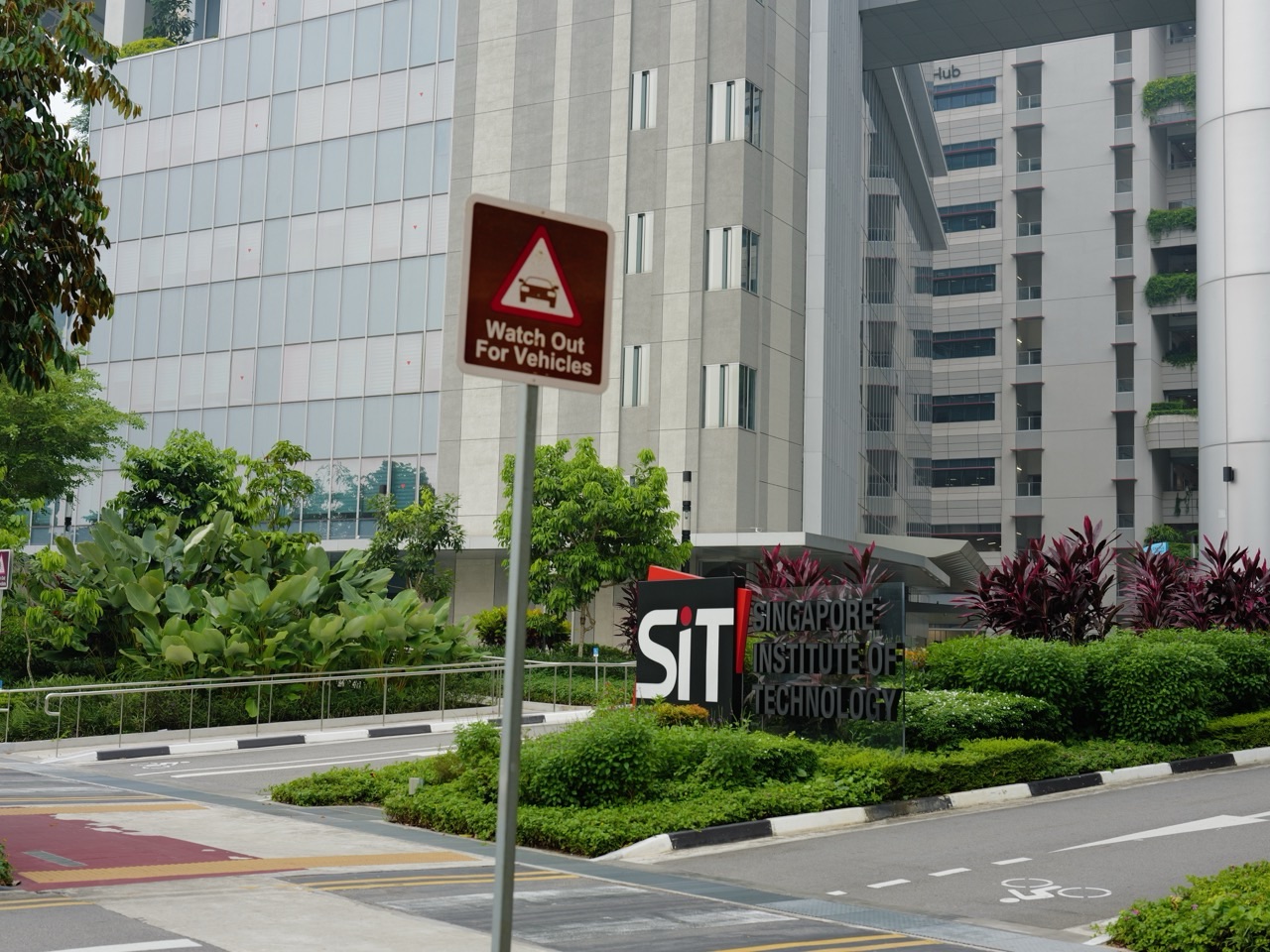
Quick answer. The Singapore Institute of Technology (SIT) is an autonomous university specialising in industry-oriented applied learning. Its campus at Punggol Coast is integrated with Punggol Digital District. The university is not an ITE campus or a polytechnic, and Punggol residence does not create automatic degree admission.
SIT’s Integrated Work Study Programme (IWSP) is central to its SIT-conferred and SIT-joint degree programmes. SIT’s official 2026 description states that relevant students undertake eight to twelve months of paid, credit-bearing work during their studies, with performance and reports assessed through workplace supervisors and SIT mentors. Work opportunities involve competitive recruitment, not automatic employer placement. The exact structure varies by degree.
A learner choosing SIT should examine admission requirements, the specific curriculum, assessment and project expectations, programme location, industry-learning structure and funding. The campus’s proximity to Punggol residents is convenient for some but says nothing about eligibility. An applied degree still requires rigorous concepts, written explanations, critical data analysis and professional ethics.
This guide explains the institutional system, admissions routes, IWSP, trimesters, workplace evaluation, professional skills, research, campus life, finance and university-to-career decisions. Original numerical examples, a family case, decision checklist, four-week plan and official links follow. Reviewed 18 October 2026.
1. Where SIT belongs in Singapore’s system
SIT is one of Singapore’s autonomous universities and has its own degree admissions, courses, academic regulations and student support. A university award is different from an ITE Higher Nitec or a polytechnic diploma even when all use the language of applied learning.
A learner with an appropriate polytechnic diploma, A-Level result or other recognised qualification may explore SIT entry, subject to programme-specific rules. No credential or numerical result guarantees every degree place. Course demand, prerequisites and selection matter.
Begin with the exact degree rather than the general institution name. An engineering, healthcare, business or computing course can require quite different knowledge and professional preparation. An informed applicant should know what the university expects before submitting a portfolio or interview.
2. What makes Punggol Digital District distinctive
SIT’s Punggol campus is located within JTC’s Punggol Digital District, where university activity, enterprises and infrastructure operate in close physical proximity. The district offers a setting for learning about industry challenges and innovation.
That location does not prove that every tenant company hires SIT students or that all facilities are public. Industry projects, research partnerships and restricted laboratories follow their own arrangements. A photo of the district should not be used as evidence of a specific internship offer.
For Punggol families, the campus illustrates how education, work and a residential town can interact. The practical question for each student remains which learning opportunities the actual programme provides and what access they have.
3. The five broad academic clusters
SIT organises education through areas such as Engineering, Infocomm Technology, Health and Social Sciences, Food/Chemical/Biotechnology and Business/Communication/Design. These cover very different professional tasks.
A student who says they like “technology” should investigate whether their interest is programming, cybersecurity, physical systems, design or another field. Strong course selection starts with module content, scientific or mathematical demands, employment contexts and personal readiness.
Applicants should compare several actual degrees rather than conclude that every programme uses the same schedule or industry partner. The university’s official course pages and academic bulletin provide the relevant details.
4. Applied learning still requires theory
A working prototype does not automatically demonstrate understanding. Engineering decisions rely on mathematics and verified units; business recommendations depend on evidence; software projects require testing and security; health-related professional learning involves safety and appropriate ethical standards.
A student should explain how their method works, which assumptions are made and what limits the evidence. Copying a demonstration may produce a good-looking result without transferable competence.
SIT’s applied model is therefore not a shortcut around academic rigour. It provides opportunities to test disciplinary knowledge against realistic conditions, with feedback that reveals where more conceptual understanding is needed.
5. What IWSP stands for
The Integrated Work Study Programme connects theoretical teaching with relevant workplace experience during a degree. For specified SIT degree categories it is compulsory and forms part of the formal curriculum, not merely an optional holiday attachment.
SIT states that IWSP is structured differently by course to match industry needs. The work and study elements should reinforce one another: academic theory informs practice, and actual workplace problems sharpen understanding of the theory.
Applicants must read their exact programme’s requirements, including the stage at which work occurs. Do not assume every degree or overseas partner arrangement has identical IWSP rules.
6. Eight to twelve months is a substantial learning period
SIT describes eight to twelve months of relevant work for students in the specified programmes. A longer work period can allow a learner to participate in genuine projects, see the consequences of decisions and refine professional habits.
Duration alone does not guarantee an excellent experience. A student should examine supervision, expected roles, learning outcomes and how difficulties will be handled. They may need to apply concepts repeatedly rather than simply observe a workplace.
Families should plan for the effect of the work period on commuting, accommodation if applicable, work hours and the academic calendar. The eventual employer location should not be guessed before recruitment.
7. Paid work does not mean guaranteed placement
SIT’s IWSP page says students undertake paid work but must go through competitive recruitment. Employers evaluate candidates as they would for real work, and the university explicitly says there is no direct placement.
An applicant therefore needs a credible résumé, relevant projects, interview skills and honest explanations of current knowledge. Parents should not promise that a particular company or salary will be available simply because the programme is compulsory.
SIT’s career-readiness resources help students prepare and seek suitable opportunities. A conditional workplace opportunity is different from a permanent job offer after graduation.
8. Professional development before the work trimester
SIT describes workshops and career information before IWSP recruitment. Students learn how to plan their employment goals, prepare documents, interview and assess potential positions.
This is part of the educational value: professional communication and sound decision-making are learnable competencies. A student who cannot explain their contribution to a university project should practise that skill rather than memorise an exaggerated sales pitch.
Families can support by listening to a truthful practice interview. They should not fabricate credentials, guarantee interviews or complete graded university work for the learner.
9. SIT mentor versus company supervisor
The workplace supervisor observes actual professional performance and can provide feedback on skills, conduct and project work. The SIT mentor helps integrate experience with academic objectives, guides reflection and evaluates relevant university work reports.
These are related but distinct roles. A learner facing a technical task problem may need the company supervisor, while an academic assessment concern should also be raised with the university contact. Safety and wellbeing questions require the proper channel.
A strong student communicates early, documents important instructions accurately and knows when to ask for clarification. Professional independence does not mean solving every issue without support.
10. IWSP credits and assessment
SIT’s current IWSP page states that work trimesters carry academic credit. Assessment incorporates workplace-supervisor evaluations and reports assessed by SIT mentors. A learner should therefore treat workplace reflection and accurate documentation as academic responsibilities.
A polished résumé cannot replace actual performance. Similarly, an enthusiastic manager’s informal praise does not necessarily settle a university grade. Each programme’s published rubric determines what must be demonstrated.
Ask what evidence students need to record, which information is confidential and how reflections should connect work to academic concepts. Assessment is meaningful when it demonstrates learning, not just hours spent in an office.
11. Original energy example: kilowatt-hours
Suppose a fictional engineering investigation considers a device using 2 kW of average power over five hours. Energy consumed is 2 × 5 = 10 kWh. If the same device operates three hours under the same assumed average power, it consumes 6 kWh. The reduction is 4 kWh, which is 40% of the original 10 kWh.
This is a classroom calculation, not real energy data from SIT buildings. It assumes stable average power and ignores other equipment or control effects. The learner should clearly state the assumptions.
For transfer, calculate energy used by a 1.5 kW device over four hours: 6 kWh. Accurate units and a new independent example demonstrate more than copying the first result.
12. Original data example: mean and range
A fictional project records process times of 18, 20, 22, 19 and 21 minutes. The sum is 100, so the mean is 20 minutes. The maximum is 22 and minimum is 18, giving a range of 4 minutes.
The mean describes this sample, not an ironclad prediction for every future operation. A single set of five records cannot establish whether a proposed intervention caused an improvement or whether another condition changed.
The student should distinguish calculation from inference and then ask what further observations would make a conclusion credible. That is the essence of responsible applied data literacy.
13. Applied projects need valid causal claims
Imagine a team reporting that a process became 30% faster after software was updated. The observation may be accurate, but the cause is not yet established if staffing, workload and equipment also changed.
Good project design compares suitable baselines, controls relevant factors where possible and records a method others could evaluate. It should not present correlation as automatic proof of causation.
A student who explains these limits has demonstrated the ability to use evidence professionally. This matters in engineering, business and health-related analysis alike, even though the specific methods differ by field.
14. Academic writing at an applied university
A degree report should define the problem, present an appropriate method, record evidence, discuss limitations and reach a justified conclusion. Writing quality is not measured solely by the number of sophisticated words.
An unclear report that says “the system works efficiently” without stating metrics does not allow a reader to evaluate the claim. A better report names response times, conditions, test results and uncertainty.
Students can practise writing a concise executive summary for a fictional project, then explain it to someone from another discipline. The aim is technical accuracy and understandable communication, not memorising impressive boilerplate.
15. Why degree programmes have different structures
SIT provides varied degree structures and has introduced competency-based undergraduate engineering options alongside other programme innovations. Such developments should be described at the level of the programmes that actually use them.
Not every degree applies an identical assessment system or employer arrangement. An applicant should read the programme’s academic bulletin, graduation requirements and specific professional components rather than assuming a university-wide slogan supplies the details.
A useful question is how students demonstrate that a required skill is mastered: through examinations, projects, practical demonstration, clinical practice, work reports or some combination. That is more informative than a vague label.
16. Selecting a degree by everyday work, not brand
A learner interested in a degree should investigate what they will study every trimester, what tools they must use, what projects they must complete and which real-world tasks their graduates may perform. General excitement about a famous industry is not enough.
For example, someone drawn to cybersecurity should recognise the importance of systems, networking, careful reasoning and ethical handling of data. A learner interested in business analytics should be comfortable with statistics, evidence and clear recommendations.
Parents should ask students to explain two specific modules and one representative project. If they cannot yet do so, the next step is more research, not a rushed enrolment commitment.
17. Degree applications begin with actual eligibility
SIT applicants should open the particular degree programme and check recognised qualifications, required subjects, selection steps and application dates. A student holding a polytechnic diploma may face a different eligibility route from someone with A-Levels or other qualifications.
A broad statement such as “SIT accepts diploma graduates” does not establish entry into every course. Engineering, computing, health and business programmes can have different prerequisites and professional considerations.
Parents can use a two-column checklist: confirmed conditions that the applicant meets, and items still needing evidence or advice. A realistic route starts with those facts, not with the attractive location of the university campus.
18. Polytechnic diploma progression is not automatic
A polytechnic diploma can be a route toward applied university study where programme eligibility is satisfied. Admission may still involve academic results, relevant prior modules, interviews or other selection elements. No single diploma grade guarantees every degree place.
If the student hopes to study a specialised engineering degree, compare actual mathematics and technical foundations with its prerequisites. Another learner considering a business or digital field may need different evidence of interest and preparedness.
The family should keep the official transcript separate from a portfolio of projects. Both may be informative, but neither should be represented as an offer that has not been issued.
19. Higher Nitec and longer pathways
An ITE Higher Nitec qualification and an autonomous university bachelor’s degree are different educational awards. A learner should not assume direct university admission merely because both institutions use applied learning language.
Longer pathways can include appropriate diplomas and further academic preparation, depending on the programme’s current rules. The student must verify each step rather than infer that one qualification automatically converts into another.
The purpose of progression guidance is to preserve legitimate opportunities while making the requirements understandable. A realistic plan is more valuable than a motivational promise that bypasses admission criteria.
20. The university campus is part of an industry district
Punggol Digital District brings together SIT and business activity in a designed urban setting. That can provide an environment for exploring real technology, infrastructure and professional challenges.
It does not mean every company in the district provides an IWSP placement, hires every graduate or allows students into its premises. Specific work and research activities are governed by partnership and access arrangements.
For a Punggol resident, campus proximity is convenient in some circumstances. But the actual teaching locations, employer sites and programme timetable should be confirmed before the family makes an education decision based entirely on geography.
21. A university trimester is not a school term
University teaching and work trimesters follow the academic programme’s own calendar. Families should not assume SIT holidays align with Singapore secondary-school breaks or that all degree courses operate on identical weekly schedules.
Some study periods involve project submissions and teamwork; others may include workplace requirements. A student should manage deadlines, transport and personal wellbeing using the confirmed programme calendar.
The correct academic question is which learning outcome each module assesses and how the workload interacts with later work-study. The word “trimester” alone is insufficient to calculate a learner’s timetable.
22. Credit-bearing workplace learning needs academic evidence
SIT states that the relevant IWSP work trimesters carry academic credits. Company-supervisor evaluations and SIT-mentor assessment of reports contribute to the formal learning process.
This means a student needs to perform responsibly and reflect accurately. A supportive employer’s praise may be encouraging, but it cannot independently replace university assessment requirements. Equally, a polished report without authentic contribution gives a weak account of learning.
Ask the course coordinator what evidence should be collected, how confidential information is treated and which rubrics apply. The student must be able to explain how theory guided a workplace decision.
23. Company recruitment is a learning event
SIT prepares learners through career skills activities before IWSP. The student may need to submit applications, attend interviews and respond to employer questions about projects and technical skills.
Competitive recruitment means selection is not a right to work for one preferred company. A student may have strong academic results but still need to demonstrate communication, project experience and fit for the role.
A family can help through realistic interview practice focused on truth. The learner should describe what they actually contributed, what they found difficult and how feedback improved their work. Invented credentials can undermine professional trust.
24. Industry mentors provide different forms of feedback
A workplace supervisor sees how a student handles actual tasks and interacts with colleagues. A university mentor can connect experience to academic concepts and help interpret assessed learning outcomes.
The student should know which channel to use for technical questions, academic reporting, workplace safety and wellbeing. Asking the right person early is part of professional responsibility, not a sign of incompetence.
Useful feedback states what happened, which skill needs improvement and how progress will be checked. A vague comment that a student “did well” may feel positive but offers less learning information than an accurate description of a successful method and its limitations.
25. Applied engineering needs accurate quantities
Practical design decisions depend on consistent units, correct constraints and a clear model. A student who multiplies power and time correctly but confuses kW with kWh may produce an apparently plausible yet misleading energy calculation.
The original energy example earlier in this guide shows why the distinction matters. A 2 kW average load over five hours uses 10 kWh under the stated assumptions; changing the duration changes the energy, not the definition of power.
A good applied task asks for an unfamiliar combination and an explanation of uncertainty, not just the ability to repeat an answer. Conceptual precision remains essential at university.
26. Original weighted decision example
A fictional project team weighs reliability at 50%, cost at 30% and usability at 20%. Option A scores 8, 6 and 9 out of ten, yielding 4.0 + 1.8 + 1.8 = 7.6. Option B scores 7, 9 and 7, yielding 3.5 + 2.7 + 1.4 = 7.6.
The two options tie under the invented rubric. It would be inaccurate to announce Option A as an objective winner without considering additional requirements, the choice of weights and rating uncertainty.
This teaching task illustrates numerical reasoning and transparent judgement. It is not an official SIT assessment or recommendation for any actual procurement decision.
27. Data analysis must distinguish pattern from cause
A project may observe that processing times fell after a software update. That does not automatically prove the update caused the change. Staffing, task mix, demand and measurement method could also have changed.
A responsible student records what was measured and when, identifies possible alternative explanations and proposes a more reliable comparison. A simple table or chart can support investigation but cannot replace sound reasoning.
The same standard applies to health, engineering and business research, with methods appropriate to the field. A meaningful outcome is a justified conclusion whose limitations are made clear.
28. Professional writing is not decoration
SIT students may need to explain complicated technical findings to supervisors and non-specialist audiences. Clear writing identifies the problem, method, evidence, limitations and recommendation without overclaiming.
The sentence “The system is efficient” is less useful than a specific description of measured response time under defined test conditions. A student should also explain what was not tested.
Practice producing a concise executive summary of an original project and then answering questions about sources. The goal is communication accurate enough for someone else to evaluate and use, not a collection of advanced-sounding phrases.
29. Competency-based learning applies to specified programmes
SIT has announced competency-based undergraduate engineering degree innovations, alongside other interdisciplinary programme changes. These announcements demonstrate an interest in assessing genuine skills against relevant industry outcomes.
It would be inaccurate to generalise those details to every degree on campus. Different programmes may use different grading, practice and assessment models. The official academic bulletin is the controlling source.
Students should ask what competence means in their particular field and what evidence is needed to demonstrate it. A label such as “competency-based” is only informative when paired with concrete assessment rules.
30. Authentic portfolios should reveal the learner’s role
A university applicant may show projects, code, designs, reports or other evidence of interest. A strong portfolio explains the problem, what the student did, why they made decisions and how they responded to mistakes.
A group project’s final photograph cannot demonstrate individual capability unless the contribution is clarified. Students should never claim to have completed work undertaken by teammates, tutors or a generative AI system without appropriate disclosure.
A modest honest project with clear reasoning may be more useful than an elaborate presentation that the applicant cannot explain. Academic integrity is part of professional readiness.
31. Workplace confidentiality and academic integrity
An IWSP student may encounter company information, customer details or internal procedures. That information should not be pasted into an unrestricted online tool or made public merely to complete a university report.
Students need to follow both employer confidentiality obligations and SIT’s academic instructions. They should ask what anonymisation, permission or alternative example is appropriate when an assignment refers to workplace activity.
Responsibility includes acknowledging assistance and being truthful about evidence. A report that reveals sensitive information or fabricates observations can fail the professional purpose even when its presentation looks polished.
32. Funding cannot be assumed from the campus’s location
Tuition and financial support depend on programme, citizenship, funding eligibility and the institution’s rules. Living in Punggol does not produce a special university-fee discount by itself.
SIT’s public bursary page describes support for eligible full-time Singapore Citizen students pursuing their first MOE-subsidised undergraduate degree, based on institutional assessment of income. MOE’s 2026 national scheme publishes separate tier amounts.
A student should compare the actual fee schedule, confirmed bursaries or loans, transport and equipment. Do not count a hoped-for IWSP employer salary in a tuition budget before recruitment and terms are known.
33. Bursaries and scholarships do different jobs
Need-based bursaries help qualifying students meet educational costs under financial criteria. Scholarships may have other selection requirements and sometimes continuing obligations. Neither category should be assumed to provide unconditional cash to everyone.
The official AY2026 government bursary table lists $6,300 annually for qualifying full-time undergraduates in the lowest stated household-income tier. This is a published amount for a specified eligibility category, not a promise that every SIT student receives it.
A parent should use SIT’s current financial-aid portal and ask about required documentation, application deadlines and disbursement. The household’s financial plan must be based on a confirmed award rather than a guess.
34. Life on campus is part of the education
University life includes peer relationships, student groups, physical facilities, independent learning and personal wellbeing. A student may be academically capable yet struggle with competing deadlines, long travel or unfamiliar group expectations.
Build a weekly plan that includes lectures, project work, meals, physical activity and sufficient rest. Avoid assuming that a highly motivated student can work indefinitely without fatigue.
SIT publishes campus life and student support information. The learner should know how to seek assistance early, rather than wait for a personal or academic problem to become severe. Real independence includes appropriate help-seeking.
35. A hypothetical Punggol diploma holder applying to SIT
Imagine a diploma graduate living near Punggol Coast who wishes to enter a computing degree. The family is excited that the campus is nearby and assumes admission will be straightforward.
The learner first checks the current course’s qualification and module prerequisites, gathers an authentic programming portfolio and prepares to explain its limitations. The family compares the degree’s curriculum and IWSP structure with realistic alternatives. They calculate finances and the normal commute after eligibility is established.
The fictional family has made a clearer decision even before receiving an offer. It separates the university’s local presence from the applicant’s actual qualifications and readiness.
36. Four-week application and career plan
Week 1: shortlist exact SIT degree programmes and verify current entry, module and admissions requirements. Record which conditions are already met and what is uncertain.
Week 2: complete an age- and level-appropriate technical or analytical exercise, then explain the reasoning and limitations independently. Gather honest portfolio evidence.
Week 3: review the programme-specific IWSP structure, competitive recruitment process, academic assessments, student support and likely logistical questions.
Week 4: check the official fee, bursary and deadline information, test the campus route and prepare realistic options. Decisions should follow evidence, not an imagined guaranteed job.
37. What to ask during an SIT open house
Ask what students actually do in the named degree, which modules are conceptually demanding and which practical or industry experiences are required. Seek specific examples of academic assessment instead of relying only on attractive laboratory photographs.
For IWSP, ask about recruitment preparation, employer expectations, academic credit, mentor support and what happens when a placement search is challenging. For funding, request the current official aid and fee information.
An open house can help establish fit, but it is not an admissions offer. A good visitor leaves knowing which documents and course details must be checked next.
38. Common misunderstandings about IWSP
One misconception is that paid work automatically means a guaranteed company. SIT specifically states that IWSP recruitment is competitive and not a direct placement.
Another is that the employer’s informal praise replaces assessed work. Work trimesters carry academic credits, with supervisor input and SIT mentor assessment. A third is that every university degree in Singapore follows the identical IWSP model; programme structures differ.
The correct understanding separates workplace learning from employment guarantees, and professional experience from formal academic evaluation. Both elements matter to the educational purpose.
39. Why a Punggol address is not an admission criterion
Proximity to SIT may make travel convenient, but university selection depends on official academic and programme criteria. A family cannot convert a short walking distance into an entitlement to a particular degree.
Other institutions may be better suited to a learner’s interests, qualifications or goals. Parents should compare real curricula rather than choose a university only because it appears nearby on a map.
The same logic applies during work-study. An employer might be elsewhere, and the student must plan that commute when the actual role is confirmed. A campus location is one useful fact, not the whole educational pathway.
40. Understanding matters more than an impressive title
A degree is valuable when it helps the learner develop reliable disciplinary knowledge, accurate reasoning, ethical professional habits and the ability to adapt to new tasks. A title alone does not prove those capabilities.
Good applied education asks students to explain why a solution works, what evidence supports the result and what must change when conditions differ. A correctly reasoned response to an unfamiliar problem is stronger evidence than copying a polished demonstration.
For Punggol learners, the next decision is therefore precise: choose a course that fits current qualifications and interests, confirm the official rules and prepare to learn independently within its actual academic and industry structure.
41. How to read a university project rubric
Before beginning a project, identify the required outcome, permitted tools, individual responsibilities, academic integrity rules and assessment criteria. A rubric may assign distinct weight to technical correctness, reasoning, implementation, communication and reflection. The final product alone may not cover all objectives.
For example, a prototype can run successfully but be poorly documented, or an elegant presentation can conceal incomplete testing. A student should examine both the stated outcome and the evidence the assessor expects, then allocate work accordingly.
Ask for feedback on the first weak criterion and test improvement in a new task. This is more useful than simply polishing the existing presentation until it looks impressive. A strong applied learner understands what they are being assessed on and why.
42. What a responsible IWSP work report includes
A useful workplace report can state the problem, the student’s assigned role, methods used, observed outcomes, feedback received and limitations. It should connect an academic concept to a real situation without disclosing confidential employer information.
If the student claims to have saved production time, the report needs a fair baseline and an actual measurement. If the student describes teamwork, it should show a concrete contribution rather than merely say “I communicated well”. The programme’s formal rubric and permissions control what may be included.
The learner should be able to discuss the report in their own words. This protects authenticity and prepares them for later professional conversations where an employer may ask what they actually did during their work-study period.
43. A practical campus decision versus a career decision
A Punggol student might prefer SIT because the campus is nearby. That is a legitimate convenience, but not the same as the decision about which degree or occupation suits them. The programme may involve extensive mathematics, practical placements and project work that deserve separate evaluation.
First compare actual curriculum and prerequisites with other courses. Then confirm admissions, financial aid and the student’s capacity to complete the work. Only after this should location become a deciding advantage, rather than a substitute for academic fit.
A course that is nearby but poorly matched to the learner may create more difficulty than a suitable programme elsewhere. Good educational planning balances genuine interest, competence, progression and daily feasibility rather than one attractive map location.
44. How to review a student’s professional development
At the end of a university trimester or workplace placement, ask which skill the learner can now demonstrate independently. A precise answer might involve explaining a unit conversion, writing a clearer incident report or evaluating evidence behind a business recommendation.
Compare a recent task with earlier work. Was the reasoning more accurate? Could the student respond to a new problem without copying a solution? Did a mentor’s feedback produce a concrete change? Those observations are more meaningful than a general declaration that the student “gained experience”.
A practical reflection record can track problem, method, evidence, limitation and next step. Keep it concise and truthful. The objective is continued learning that supports professional competence long after the immediate project has ended.
45. The final SIT checklist for a Punggol family
Confirm the actual degree title, qualification level, admission conditions, course-specific IWSP structure and current academic calendar. Ask how workplaces are recruited, what credit-bearing assessment requires, and what support exists when an academic or professional difficulty arises.
Next verify tuition fees, funding eligibility, campus arrangements and the fact that employer locations may be outside Punggol. Build a sustainable household budget without assuming an unconfirmed salary or award. Prepare authentic evidence of academic and project readiness.
Finally ask the student whether they understand and enjoy the discipline’s everyday questions. A compelling university choice is supported by clear knowledge of what they must learn, not just by the name of a nearby campus or a promised job outcome.
Frequently asked questions
Is SIT a polytechnic?
No. SIT is an autonomous university, distinct from the five polytechnics and ITE.
Where is SIT’s Punggol campus?
In Punggol Digital District near Punggol Coast MRT. Confirm programme-specific teaching locations.
Does Punggol residence guarantee admission?
No. Entry is based on programme admission requirements and selection.
What is IWSP?
The Integrated Work Study Programme, combining academic learning with structured relevant workplace experience.
How long is the SIT IWSP?
SIT states eight to twelve months for the specified SIT-conferred and SIT-joint programmes.
Is IWSP compulsory?
It is compulsory for the SIT-conferred and SIT-joint degree categories identified in the university’s official information.
Is IWSP paid?
SIT describes paid relevant work, but actual employer and terms follow recruitment and programme arrangements.
Does SIT assign students directly to companies?
No. SIT’s page says students participate in competitive recruitment with no direct placement.
Is an IWSP guaranteed to become a permanent job?
No. Later employment is a separate employer decision.
Are work trimesters academically graded?
They carry academic credits and include employer-supervisor and university-mentor assessment.
Does every degree use the same IWSP schedule?
No. SIT says its structures differ by degree to reflect industry needs.
What is the role of an SIT mentor?
To support the student’s integration of work and theory and assess relevant academic reports.
Do polytechnic diplomas guarantee entry to SIT?
No. Admission remains programme-specific and may include additional requirements.
Can an ITE Higher Nitec student enter directly?
Consult current degree entry rules and legitimate progression routes; no automatic place is implied.
Is every SIT course about computing?
No. Academic clusters also cover engineering, business, health, social sciences and biotechnology-related areas.
Does applied learning mean exams are unnecessary?
No. Courses use appropriate academic and practical assessments; requirements vary by programme.
Are all SIT programmes competency-based?
Do not assume so. Certain programmes have innovations, while the official academic bulletin describes specific requirements.
Why is report writing important?
It communicates methods, evidence, limitations and professional decisions accurately.
Can a student use employer data freely in reports?
No. Use authorised methods and follow relevant confidentiality and academic rules.
Is the lowest-tier undergraduate bursary $6,300 in AY2026?
MOE’s published table states this amount for eligible full-time undergraduates in the specified income band.
Does every SIT student receive a bursary?
No. Eligibility and application are assessed according to the relevant university and government rules.
Can a student expect a particular IWSP salary?
Not before employer recruitment and terms are confirmed. Avoid budgeting around an unconfirmed amount.
What matters in an undergraduate portfolio?
Honest evidence of relevant knowledge, the applicant’s own work and their ability to explain limitations.
How does the Punggol district benefit learning?
It locates university and industry activity close together, but individual programme partnerships and placements remain specific.
Is the campus open to all members of the public?
Public spaces may be accessible, while teaching and research areas follow institutional access rules.
How should families compare SIT with other universities?
Compare course content, eligibility, applied learning, finances, campus logistics and meaningful future options rather than slogans.
Official sources and related articles
- SIT Integrated Work Study Programme (official 2026 page)
- SIT IWSP academic bulletin
- SIT Punggol Campus
- SIT Public Bursaries
- JTC Punggol Digital District talent ecosystem
- MOE AY2026 Government Bursaries
- Punggol Polytechnic GPA and internships
- Punggol ITE Higher Nitec and Diploma Pathways
- Punggol Post-Secondary Education Overview
- Immutable Clementi Concept-First Teaching Reference
Editorial review, 18 October 2026: Numerical exercises and families are fictional; programme, work-study and admissions facts are attributed to SIT, JTC and MOE. No specific employer placement, admission result, salary or bursary is promised.


