
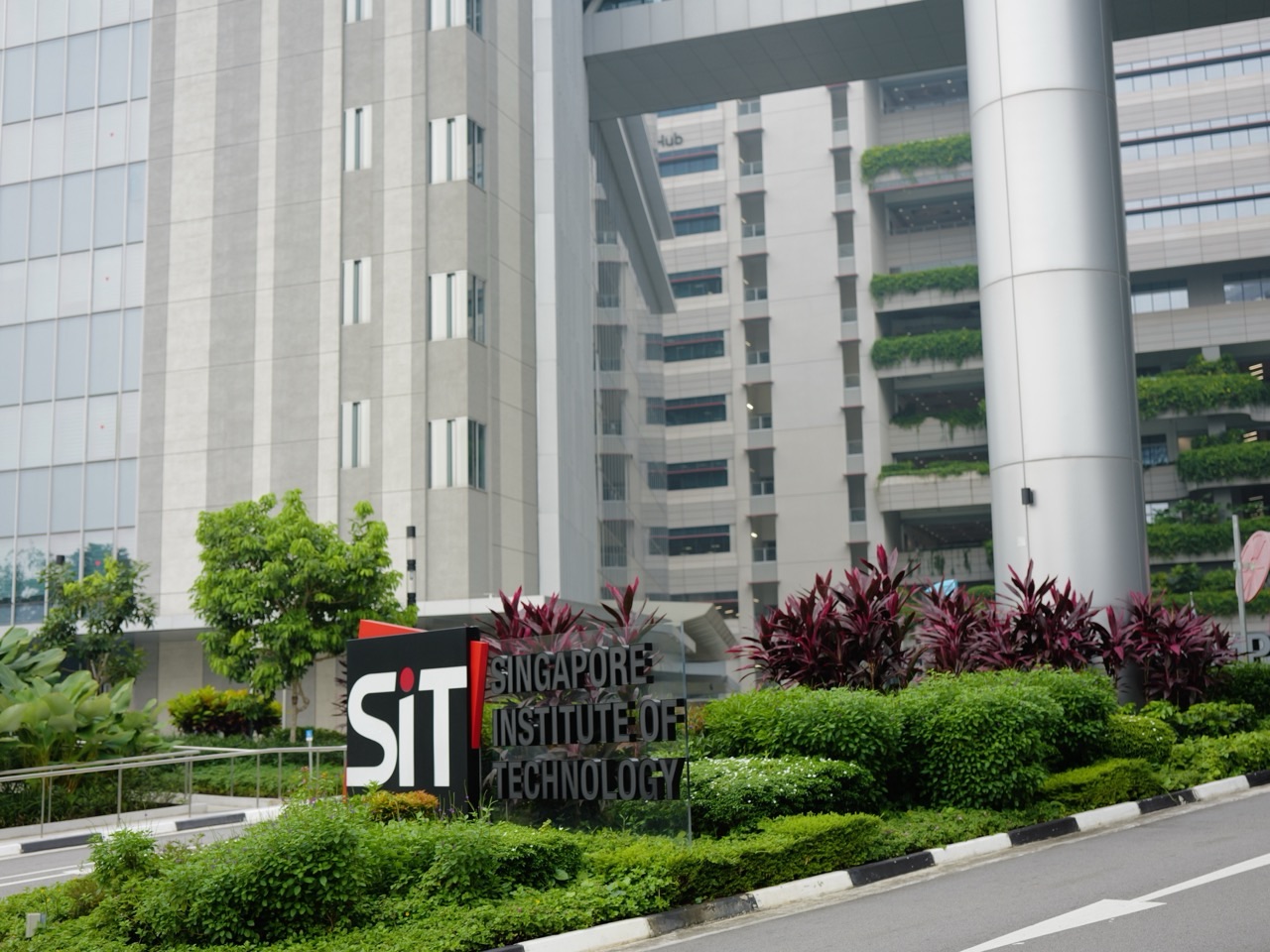
Quick answer: On 18 June 2026, the Singapore Institute of Technology (SIT) and Singapore underwater robotics company BeeX launched the Autonomous Marine Foundry (AMF) at SIT Punggol Campus. This university–industry laboratory supports work on autonomous underwater systems, infrastructure inspection, environmental monitoring and coastal resilience. SIT’s announcement also identifies practical learning through Integrated Work Study Programme (IWSP) attachments, capstone projects and mentorship, with more technical activities to be developed. It does not establish that Punggol residents can walk in, enrol in a lab course or operate marine equipment independently. See SIT’s official 18 June 2026 statement.
For a Punggol Primary or Secondary student, the immediate educational opportunity is not an underwater-robot licence. It is the chance to connect Physics, Mathematics, coding, English and environmental Science to work being developed close to home. A younger learner can investigate buoyancy with safe objects, model a vehicle’s route on paper, analyse fictional sensor readings and practise explaining uncertainty. An eligible university student may explore the institution’s actual attachment or project pathways. The important distinction is between learning from the research and participating in authorised university research.
As of 23 October 2026, SIT says its student team OtiPrime is preparing for the Maritime RobotX Challenge scheduled for 8–14 November 2026 at The Promontory at Marina Bay, with mentoring from BeeX engineers. This is an international university-level challenge. It is not a Punggol public robotics fair. The announced opportunity illustrates a credible learning-to-industry route; it should not be described as open admission to a competition team.
At a glance: what SIT and BeeX actually announced
| Item | Published fact | Parent’s interpretation |
|---|---|---|
| Foundry | Joint AMF launched at SIT Punggol Campus on 18 June 2026 | A real institutional capability, not open access |
| Research areas | Underwater inspection, environmental monitoring, coastal protection, autonomy | Research aims, not a guarantee of commercial deployment |
| Student learning | IWSP attachments, capstones, mentoring | Subject to SIT arrangements and participant selection |
| Planned activities | Technical workshops, hackathons and applied-learning opportunities to be co-developed | Do not assume announced dates or resident eligibility |
| RobotX | SIT Team OtiPrime, BeeX mentoring, 8–14 November 2026 at Marina Bay | University team involvement, not a neighbourhood open class |
| Setting | Waterfront campus in Punggol Digital District | Research context, not permission to enter protected waters or equipment rooms |
Why the Punggol waterfront creates a better science question
Punggol is associated with water, coastlines, public paths and evolving urban infrastructure. A student who sees the shoreline can begin asking questions about structures, water movement, environmental change and the tools used to inspect what lies below the surface. But a photograph of water cannot tell us whether a seawall is structurally sound, whether marine life is thriving or whether an underwater robot has mapped anything. Those require defined questions, suitable instruments, proper data and the right permissions.
This is the difference between school observation and engineering research. At school, pupils are rewarded for making the relationship between evidence and claims clear. At university, a team may be expected to design methods, evaluate hardware reliability and produce valid information for a real stakeholder. The bridge between the two is not buying an expensive kit; it is learning to describe what the instruments measure and what they cannot establish.
The location helps families imagine a range of professions that may otherwise feel remote: robotics engineering, embedded systems, ocean sensing, environmental monitoring, maritime operations, data analysis and coastal infrastructure protection. Each demands different training. No single nearby project establishes that one subject combination or degree will guarantee a future position.
What is an autonomous underwater vehicle?
An AUV is a vehicle that can perform aspects of an underwater mission through onboard control rather than relying solely on direct human commands for every movement. The extent of autonomy varies. A mission may involve sensors, propulsion, a planned route, safety conditions, onboard computing and later analysis of collected information. This is not identical to a remotely operated vehicle controlled continuously by a person, although there can be overlap in subsystems and operational roles.
The medium matters. Satellite positioning does not work underwater as it does for a phone outdoors, ordinary radio communication faces significant limitations and cameras may perform poorly in dark or turbid water. Acoustic systems, inertial navigation and other sensing methods create different trade-offs. Real engineering must account for drag, currents, pressure, corrosion, power and the possibility of losing communication. A classroom robot moving on dry ground cannot prove that a marine vehicle will behave safely.
A careful student can diagram four parts: sense, estimate, decide and act. Sensors provide observations rather than certainty; software estimates the vehicle’s state; control logic chooses an action within agreed limits; motors or other actuators carry it out. The loop repeats with new information. This basic model is helpful but deliberately simplified. Students should name what is omitted, such as hardware faults or conflicting sensor readings, before describing it as a complete system.
Five school subjects that make marine autonomy intelligible
| Subject | What it explains | Example school evidence |
|---|---|---|
| Mathematics | Vectors, ratios, timing, rates, estimation and uncertainty | A route calculation with units and assumptions |
| Physics | Buoyancy, force, energy, pressure, motion and drag | A safe model and a clear explanation of limits |
| Computing | Conditional logic, testing, algorithms and data handling | Offline simulation that stops safely when information is missing |
| English | Technical documentation, evidence and teamwork | A report that distinguishes observation from interpretation |
| Geography and Science | Coastal change, sampling and environmental consequences | A research question with a justified measurement plan |
Worked example: calculate the buoyancy of an imaginary object
Classroom numbers only—not BeeX or SIT data. Consider a sealed object that displaces 0.002 cubic metres of freshwater when fully submerged. If the water density is assumed to be 1,000 kilograms per cubic metre, it displaces 2 kilograms of water. Using gravitational acceleration of 9.81 metres per second squared, the upward buoyant force is approximately 19.62 newtons. The calculation follows the relation buoyant force = fluid density × displaced volume × gravitational acceleration.
If the object’s mass is 1.8 kilograms, its weight is approximately 17.66 newtons and the simplified net force under the stated conditions is roughly 1.96 newtons upwards. That arithmetic does not guarantee stable floating. Balance, air pockets, material shape, orientation, attachment points and whether water enters the object may change what happens. Encourage students to label all assumptions and to explain that an actual vehicle must be tested under authorised engineering procedures.
For a safe observation, use a shallow tray, a few small non-electrical objects and adult supervision. Ask why a metal coin sinks while a sealed floating object containing some metal may remain at the surface. The answer requires overall displaced volume and total mass, not a rule that every object containing metal must sink. Do not build pressure vessels, bring live electrical devices into water or attempt tests at the actual Punggol waterfront.
Worked example: why depth changes pressure
At a simplified constant density, hydrostatic gauge pressure can be approximated as fluid density × gravitational acceleration × depth. At 3 metres underwater in a hypothetical freshwater environment, the result is 1,000 × 9.81 × 3 = 29,430 pascals, or 29.43 kilopascals above surface pressure. This is a calculation for learning the relationship; it is not an equipment rating or a permit to dive.
The relationship offers a meaningful graphing exercise. Put depth on the horizontal axis and gauge pressure on the vertical axis. Explain why the model gives an approximately straight line when density is constant and identify what real conditions could complicate it. A student should also distinguish gauge pressure from total absolute pressure rather than quoting one value without saying which is meant.
It is tempting to test this by pushing a homemade object into increasingly deep water. That would be unsafe and scientifically unjustified for a child. The educational outcome is a labelled calculation, a graph and a discussion of engineering constraints. Pressure-rated equipment should be designed and tested by appropriately qualified people.
Worked example: add water current to an imaginary route
Imagine a fictional robot that moves two metres east relative to still water over one minute while a uniform current carries it one metre north in that same minute. In this deliberately simplified model, the overall displacement has components of two metres east and one metre north. Its magnitude is approximately √5 metres, or 2.24 metres. A student should show the right-angled vector diagram, not simply use a calculator and record a distance.
This exercise explains why a path planned on a screen may differ from a vehicle’s actual journey. In nature, current strength and direction can vary by place and depth; the vehicle’s orientation and control responses matter too. A real navigation system must infer its position from imperfect information. The paper example teaches vector addition and the limits of assumptions, not a method for operating a specific robot.
Underwater sensing: the difference between a reading and a conclusion
An underwater survey may use sensors to learn something about a structure or environment, but every measurement has a resolution, range and risk of error. A strong reflection from a science student might ask: What was measured? Where was it measured? What did the equipment actually report? How were the sensor and time reference checked? What alternative explanations might account for the pattern?
A good school exercise uses a teacher-generated grid of hypothetical readings. Some grid cells are labelled high, others low, and a few missing. Ask students to explain how the pattern might guide a further observation, and why ‘not measured’ must not be treated as zero. This can be done entirely on paper or in a spreadsheet. It creates no need to probe actual marine facilities, launch devices or collect personal information.
Data analysis is a form of disciplined scepticism. If an illustrated map contains bright colours and precise numbers, that visual polish does not establish reliability. Students should learn to read legends, units, sampling positions, uncertainty and dates. Someone who can challenge a misleading graph is already learning a skill valuable in marine engineering, environmental science and many other professions.
Safe project: build a paper route planner with a stop rule
Create a fictional underwater map as a square grid. Mark a start, a destination, several restricted cells and some unknown cells. Ask the student to calculate a permitted route. Then introduce a new obstacle or a missing sensor reading. Their algorithm should not automatically force progress: it should be able to stop, report uncertainty and seek the next authorised instruction.
A novice may use pencil arrows; an older student can write pseudocode or a short program. The assessment can compare multiple attempted routes, note which constraints were violated and ask why the final version is safer. The purpose is explicit reasoning. No test in the school corridor, canal or bay can be used to claim real-world navigation reliability without the appropriate permissions.
Safe project: design a simple scientific sampling plan
Give students a fictitious shoreline map with ten possible sample points but only five opportunities to measure. One team might cluster measurements near a suspected change, while another spreads them across the whole area. Which plan is appropriate depends on the research question. This demonstrates that there is no universally correct sampling layout without a defined objective.
Ask teams to provide a map, the chosen points, expected source of uncertainty and a short explanation of what their plan would miss. The most defensible team might not claim to have found ‘the truth’. It may recognise that a small sample is insufficient for a strong conclusion and propose an additional test. That conclusion demonstrates sound research thinking.
Safe project: compare a floating design and document failure
Under supervision, prepare two small non-electrical models with different shapes but similar loads. Float them in a shallow basin, observe whether they tilt and repeat a few times. Keep observations, including unsuccessful ones. Explain which variables were similar, which could not be controlled and why a school model does not recreate the behaviour of a submersible operating below the surface.
If students design a better second version, have them describe the change and the evidence that motivated it. An interesting failure should not be hidden in the portfolio. It shows the learner knows how to connect a physical observation to a design revision. This ability transfers to engineering study more reliably than a single polished photograph of a kit.
School-age learner, SIT student and professional: three different access paths
| Learner | Appropriate action | Critical boundary |
|---|---|---|
| Primary and Secondary family | Build foundations with paper models, safe shallow experiments and verified reading | No autonomous robot, lab or public-water access promised |
| JC, ITE or polytechnic student | Identify relevant engineering and computing prerequisites and develop original portfolio evidence | No transfer or admission guarantee |
| SIT student | Ask faculty about formal IWSP, capstone and supervised project opportunities | Partner availability and eligibility are programme-specific |
| Graduate researcher | Check academic research arrangements and responsible investigator | No general right to confidential data or equipment |
| Working professional | Define an industry problem and seek authorised institutional collaboration | Commercial permissions, safety and confidentiality apply |
The 2026 Maritime RobotX connection
SIT’s announcement says its multidisciplinary Team OtiPrime is preparing for the Maritime RobotX Challenge 2026 with support from BeeX engineers. The event was scheduled for 8–14 November 2026 at The Promontory at Marina Bay. A competition of this kind brings together navigation, robotics integration, sensing, project coordination, troubleshooting and documentation. The important lesson for younger Punggol students is that no single skill solves an engineering mission.
The event’s existence does not establish that Secondary students can become team members or that any particular public viewing session will be available. Check the competition organiser for actual event details. Students may still benefit by researching the tasks, comparing disciplines and discussing how teams handle setbacks. A strong learner asks what safety rules, test plans and documented evidence are needed before a system moves from simulation into a real environment.
An academic progression from Primary to university
| Stage | Conceptual focus | Suggested evidence |
|---|---|---|
| Primary 1–2 | Floating, sinking, observing and describing | A labelled drawing and one evidence-based sentence |
| Primary 3–4 | Fair comparisons and measurement | Simple table of repeated non-electrical observations |
| Primary 5–6 | Mass, volume, units and controlled change | Careful estimate with stated assumptions |
| Secondary 1–2 | Geometry, vectors, data and logic | Grid model and decision flowchart |
| Secondary 3–4 | Forces, programming, uncertainty and communication | Small tested simulation with a clear report |
| JC / ITE / Polytechnic | Technical foundations and appropriate qualification choices | Academic record and assessed original projects |
| University | IWSP, capstone, supervised research and professional constraints | Approved institutional work with proper attribution |
What parents should check before choosing a robotics enrichment provider
- Does the class explain buoyancy, pressure, measurement and coding instead of merely selling an expensive device?
- Which ages, academic levels and prior experience does the curriculum actually support?
- Will students test and correct their own work, or simply follow assembly instructions?
- Are physical tests conducted only in authorised, safe locations and using age-appropriate equipment?
- Can the student state the difference between remotely controlled and autonomous operation?
- Does the teacher discuss sensor uncertainty, fail-safe decisions and environmental responsibilities?
- Are competition opportunities described accurately rather than presented as guaranteed admissions advantages?
- If an SIT or BeeX partnership is claimed, can the actual organisers verify its current scope?
- Will students submit transparent reports showing their own contributions and documented mistakes?
- Are cost, schedule, safety supervision and intellectual-property terms clear before enrolment?
Frequently asked questions
Did the SIT–BeeX marine foundry open in Punggol?
Yes. SIT announced the AMF launch at its Punggol Campus on 18 June 2026.
Can my child visit the underwater robotics lab?
The release does not establish unrestricted visits. Obtain a confirmed programme and entry instructions from the organiser before travelling.
What is an AUV?
It is an autonomous underwater vehicle able to perform defined mission functions using onboard systems. Exact capabilities vary among vehicles.
Does a Secondary-school student qualify for BeeX IWSP?
The release refers to SIT students and institutional learning arrangements. Do not assume school pupils are eligible.
Will the AMF monitor all of Punggol’s coastline?
The partnership identifies underwater inspection, coastal protection and monitoring as research aims. The announced aims are not a guarantee of comprehensive coverage or results.
Is RobotX held at Punggol?
No. The 2026 competition is announced for 8–14 November at The Promontory at Marina Bay.
Can families launch toy robots into waterways?
Do not do so without the relevant explicit authorisation. Use classroom simulations and approved equipment in supervised settings.
Is Python required for every marine career?
No. Roles have different technical requirements. Coding can be valuable alongside engineering fundamentals, sensing, project coordination and environmental expertise.
Does the nearby laboratory guarantee internships or jobs?
No. Admission, project assignment and hiring depend on actual eligibility, arrangements and employers.
How can Primary children begin?
Start with supervised non-electrical floating investigations, clear diagrams, simple measurements and age-appropriate science reasoning.
Can students use AMF’s real data?
The launch statement does not promise public access to research data. Use authorised or transparently simulated data.
What is the difference between a capstone and work-study?
A capstone is a defined assessed project, while IWSP is a structured work-and-study arrangement within the university. Participation conditions differ.
The most useful next action for a Punggol household
For a school-aged learner, choose one problem and produce a small, complete result: perhaps a buoyancy investigation, a route-planning simulation or a chart explaining uncertainty. The child should be able to show the question, method, evidence, limitations and what was changed after feedback. That portfolio item does not need to claim access to a university laboratory. For a student preparing for tertiary education, identify programme-specific prerequisite subjects, current admission rules and a credible qualification path.
For the institutional overview and enquiries, read SIT BeeX Autonomous Marine Foundry: Punggol Research. Our Physical AI Testbed learning guide explains a different land-based robotics route, while SIT degrees and IWSP covers the academic structure. These are related but not interchangeable opportunities.
Punggol’s real educational advantage is not that an underwater research laboratory automatically belongs to everyone nearby. It is that the work can become visible and intelligible. A learner who understands why a model floats, why a sensor can be uncertain and why an engineering team must respect permits is already building the mindset that serious applied research requires.
How to think about an underwater mission before writing any code
Ask students to write a mission statement that names exactly what the system is meant to learn. ‘Go underwater’ is not a sufficient technical goal. A better classroom statement is ‘In a fictional square survey area, collect one simulated water-quality reading at each of five authorised cells and return the data with location and time labels.’ That sentence names a purpose, spatial boundary, quantity and expected output. It also makes failure observable. If the simulation records readings at only four points or omits timestamps, the team can say precisely what was not achieved.
A mission statement should include the stop conditions. What if the system receives conflicting coordinates? What if a destination is outside the permitted area? What if it cannot complete all readings with the assumed energy reserve? In a student model, the correct response may be to mark the run incomplete and stop. This is a far more credible engineering habit than inventing a heroic ability to overcome any obstacle. Real operation would require authorised procedures and personnel.
A strong school project also identifies who will use the result. A maintenance team examining structural changes needs different information from an environmental researcher examining seasonal patterns. If the intended audience is unclear, designers may collect more data than needed or report the wrong type of conclusion. This is why English communication and problem definition belong near the beginning of robotics education, rather than being attached to a finished model.
A battery planning problem that teaches arithmetic and restraint
Underwater missions consume energy for sensing, computing, propulsion and supporting systems. A beginner can explore this with purely hypothetical numbers. Suppose an imagined classroom vehicle has 240 watt-hours of usable battery energy. Its mission planner allocates 60 watt-hours to sensors and computers, 120 watt-hours to propulsion and 30 watt-hours as a protected reserve. That totals 210 watt-hours, leaving 30 watt-hours unallocated. Students should write the units and distinguish stored energy in watt-hours from instantaneous power in watts.
This invented plan is not a specification for any BeeX product, nor proof that the imagined reserve is safe for any actual mission. The point is to make energy constraints explicit. Ask the class what happens if a mission takes longer than expected. They might conclude that the operator needs a larger margin or a shorter mission, but the precise safe margin is beyond the classroom model. Children should not open battery packs, improvise waterproof connectors or modify electrical devices for submerged use.
Older students can add a conditional schedule: what if a new sensor requires another 25 watt-hours, or propulsion consumption rises by 20% in the model? They should calculate the effect on the assumed reserve and describe the decision threshold they have adopted for the exercise. This teaches budget arithmetic, sensitivity analysis and design trade-offs without promoting unsafe physical experimentation.
From mathematical graph to useful engineering explanation
A plot of position against time can reveal whether an object moves steadily, accelerates or stops. A plot of sensor readings across several simulated positions can reveal spatial variation. But graphs can mislead when axes have no units, samples are uneven, or missing values have been silently filled in. A teacher can introduce an exercise in which two charts display the same invented data with different axis scales. Students explain why the visual impression changes even though the numbers do not.
A professional report needs to specify what a graph represents. Was speed inferred from distance and time, or measured directly? Was a reading smoothed? Did the sample include every recorded trial or only successful ones? A student who can answer these questions is beginning to develop engineering integrity. The context of marine robotics makes the skill vivid, but the habit applies equally to science investigations, economics and school assessments.
An additional exercise asks students to compare their own written conclusion against the plotted evidence. If the line increases in three out of five observations, does that justify saying it ‘always increases’? If two data points are missing, is a smooth line an observation or an interpolation? The aim is not to ban models; it is to train the learner to label assumptions clearly.
Three different kinds of failure and what they teach
A mechanical failure
In a hypothetical classroom model, a small toy’s wheel becomes obstructed. The failure might be physical rather than computational. Students should practise checking what is observable before rewriting a program. A system that cannot move because of a mechanical obstruction will not be repaired by a more complicated route-planning algorithm. This illustrates why mechanical and software teams need to exchange information precisely.
A sensing failure
A fictional sensor returns an impossible depth value or repeats the same reading indefinitely. The controller should not be taught to accept every number as truth. Students can design a simple rule that identifies values outside the exercise’s permitted range and labels them invalid. They should also understand that a plausible-looking number can still be wrong. Testing needs multiple scenarios rather than one successful example.
A communication failure
An imaginary mission loses its expected message from a supervising process. A good learning scenario asks what previously agreed action should follow and what evidence could be retained for later diagnosis. It should not assume that all communication is always available underwater. Responsible engineering design plans for the possibility of incomplete information. Learners can model this in a paper flowchart without touching any actual network.
Science project: why one measurement cannot prove coastal change
Suppose a student is given a fictional data table showing a particular indicator was higher on one day than another. Could this prove a long-term environmental trend? No. The result may reflect natural variability, seasonality, instrument changes, a different sampling location or even a clerical error. A defensible research plan requires a carefully defined indicator and a justified collection process across relevant conditions. One compelling photograph or number may motivate investigation, but does not establish a broad conclusion.
A classroom can build a two-month simulated dataset with clearly invented readings. Ask students to separate random daily variation from a hypothetical gradual shift. Compare means and ranges for two periods, then discuss whether the number of observations is adequate. This is a chance to teach statistical humility: a visible difference in sample averages does not establish its cause. The report should identify the required follow-up data rather than pretending certainty.
Punggol’s shoreline can be a useful context for discussing why coastal infrastructure and ecosystems require monitoring, but schoolchildren should not remove organisms, enter restricted waterfront areas or interfere with coastal protection works. Teachers can use official publicly released material or simulations. A valid education project should achieve its objectives without posing risks to other people, wildlife or the environment.
Research ethics are part of technical excellence
Student enthusiasm sometimes creates a mistaken sense that technology needs unrestricted access to prove its usefulness. In reality, a university research project may need institutional clearance, environmental permission, safety planning, confidentiality agreements and procedures for handling images or sensor data. The existence of the AMF does not place laboratory equipment or surrounding waters in the public domain. Even a supposedly harmless field trial can create navigation or environmental risks.
Parents and teachers should ask a student to write one paragraph explaining why their project is authorised. For an offline simulation, the answer is simple: all data are fictitious, the computer belongs to the learner or school, and no external system is being tested. For a class experiment, the answer should name the supervising adult and safe materials. A student who cannot explain the permission boundary should not begin the physical activity.
Academic honesty matters too. A school report must not use a photograph from SIT’s news release and caption it as the student’s own observation. Reproducing technical claims requires accurate source attribution. If classmates contributed, name their actual roles. If an AI tool helped prepare text or code, follow school rules and avoid presenting unverified output as independently demonstrated understanding.
A teacher’s marking rubric for a marine STEM report
- Question: Does the learner identify a specific, measurable purpose rather than an undefined enthusiasm for underwater robots?
- Model: Are important simplifying assumptions named, including units, environment and boundaries?
- Method: Could a classmate reproduce the safe simulation or tabletop investigation?
- Data: Are all trials recorded, including failures, with honest labels for invented readings?
- Analysis: Does the numerical work support the written interpretation?
- Uncertainty: Does the learner explain missing information and plausible alternative causes?
- Safety and ethics: Is the experiment properly authorised, non-intrusive and age-appropriate?
- Reflection: Is there a specific revision made after feedback, with evidence that the student understands it?
Teachers can scale this rubric across age groups. A Primary child might use labelled drawings and short sentences; an upper-secondary student might include a vector model, pseudocode, repeated trials and a reasoned account of uncertainty. There is no need to reward jargon. A simpler report that accurately describes its limits should receive more educational credit than a glamorous technical presentation containing unsupported claims.
Where university research differs from a commercial service
A research programme may investigate whether an approach could improve a task, while a commercial service must deliver reliable results for a particular customer within legal, safety, contractual and operational conditions. The route from prototype to deployment often requires validation under different conditions, maintenance planning and responsibility for what happens when systems fail. A university–industry partnership can help bridge the gap, but the June 2026 AMF announcement should not be read as proof that every research idea is ready for routine use.
A young student can practise this distinction by writing a three-column project ledger: idea, tested result and operational claim. Under ‘idea’ write ‘an AUV might inspect a structure’. Under ‘tested result’ write a narrow classroom observation. Leave ‘operational claim’ blank unless trustworthy evidence establishes an actual service. This approach prevents school assignments from becoming inadvertent advertising. It also prepares learners to read future technology announcements critically.
The same caution is relevant to employment. A research partnership may create excellent experiences for selected students and professional collaborators, but it does not guarantee a local job opening for every Punggol resident. Practical career planning must include appropriate qualifications, actual role requirements, evidence of skills and willingness to continue learning when technologies change.
Twelve questions for a future university open house
- Which SIT degree or academic cluster offers the foundations relevant to marine autonomy?
- What academic qualifications and Mathematics or Science preparation are required for admission?
- Are any IWSP opportunities with underwater-robotics companies confirmed for the relevant student cohort?
- How are capstone topics allocated, supervised and assessed?
- Which tools, programming languages and engineering laboratory skills are taught within the curriculum?
- How much original testing and technical writing is expected from students?
- What are the requirements for participating in a student robotics team or an international challenge?
- What happens when a student needs academic or laboratory safety support?
- How are intellectual property, confidential industry data and project results handled?
- What course fees, aid arrangements and scholarship eligibility apply to the actual applicant?
- Are there approved outreach sessions for school groups, and what are their registration conditions?
- Who should receive an enquiry about a lab visit as distinct from an application to study?
These questions are useful because they seek concrete educational mechanisms rather than merely asking whether the campus contains exciting hardware. A family may discover that the best immediate route is to strengthen fundamentals at school before seeking a specialised university project. That is still progress. The AMF makes a possible professional application visible, but preparation must follow a realistic sequence.
A three-minute student presentation that shows understanding
Ask the learner to begin with one sentence describing the research goal, then one sentence explaining why water complicates engineering. They should explain a calculation or simulated test in their own words, name an assumption, report a failure and state the next safe experiment. The teacher can ask one question about units and one about permissions. A student who answers these calmly demonstrates more than someone who memorises a technology brand.
The final slide should separate confirmed institutional facts from the learner’s proposal. It might say: ‘SIT and BeeX launched a Punggol marine research foundry in June 2026. Our class built an offline route-planning simulation inspired by the field. We did not test a real AUV or obtain operational data from the foundry.’ That transparent statement gives a young learner the language to be ambitious without overstating evidence.
For families living near the campus, the educational promise is a long-term one: a visible local connection between school science and real engineering work. The most useful response is sustained practice, thoughtful reading and a suitable progression of qualifications—not an assumption that a waterfront laboratory can substitute for the fundamentals.
How to compare a marine robotics course with a general coding course
A general coding course may be excellent for developing conditions, functions, variables and debugging, while a marine robotics course ought to add physical-system models, sensing limits, safety and integration. The choice depends on the learner’s starting point. A student who cannot yet write and test a simple program may benefit more from programming foundations than from a specialised workshop where the machine is already built and the difficult work is hidden. Conversely, a learner who can code well may need physics, electronics or measurement training before contributing meaningfully to a vehicle project.
A useful comparison asks both providers to describe what a student can independently explain after completion. Can the learner define the problem, state an assumption, produce a test and interpret failure? Will there be an assessable original artefact? Does the syllabus allow the learner to improve after feedback? These are better questions than the number of fashionable technology names on the brochure. Courses should also identify their own safety and access arrangements rather than implying that advanced maritime research equipment is available by default.
Making a reasonable first-year engineering study budget
Families considering a post-secondary STEM pathway need to distinguish compulsory academic costs from optional gadgets. A hobby kit advertised as essential may be unnecessary if the school supplies learning resources or if simulations adequately teach the current topic. Before spending on a development board or sensors, check whether the intended course requires the particular item, whether the student knows how to use it, how it will be supervised and whether there is a less expensive route to the same outcome.
A simple budget separates the confirmed programme fee, materials actually specified by the provider, transport, meals, software and plausible equipment replacement. Any scholarship should be shown as unconfirmed until awarded. When comparing programmes, use the same period and include hidden costs such as project consumables or required safety training. Do not assume that residence near SIT gives a tuition discount or automatic laboratory entitlement. The right investment is in a learning sequence the student can sustain.
A parent–student debrief after an approved robotics activity
Ask the learner to explain one specific engineering decision rather than simply recounting how exciting the robot looked. What measurement guided the choice? What did the team believe initially? Which observation contradicted that belief, and what did they change? If the student cannot answer, encourage them to consult their own notes and teacher feedback. Repeating the experiment thoughtfully can teach more than attending another event without reflection.
The discussion should also include people and environmental consequences. Why would an infrastructure inspector need accurate records? Who must authorise field activity, and who could be affected by an error? What is the difference between a safely simulated failure and a real failure near a public waterway? These questions connect technical work to responsibility. A young person who learns to stop, explain uncertainty and seek supervision is developing a professional habit that matters in every engineering environment.
What an excellent 500-word marine STEM portfolio reflection contains
A concise portfolio reflection should begin with the student’s own problem, not a long copied paragraph about Punggol Digital District. It should define the model, list units and assumptions, explain the test procedure, show a limited set of relevant results and identify at least one unsuccessful run. It should then describe what was changed and whether the change improved the outcome under the recorded classroom conditions. The final paragraph should explain what the result does not establish about real underwater vehicles.
Clear attribution is essential. Cite SIT for the fact that the AMF launched in June 2026, and label any simulation as student-made. If a team collaborated, state the student’s particular contribution. The ability to explain limitations does not make a portfolio weak; it makes it trustworthy. This small piece of original work could also be useful when discussing later school subject choices with a teacher or counsellor, even if the student ultimately moves into another scientific or computing discipline.
The final distinction: proximity is opportunity, not permission
Living near a specialised laboratory makes an emerging profession easier to discuss at home. A child can connect a waterfront scene to water pressure, measurement, navigation and responsible engineering. A university applicant can use the partnership announcement to ask better questions about formal study and supervised projects. A working adult can investigate whether their existing qualifications fit an authentic research or industry need. None of these routes depends on pretending that a public walkway is a testing permit, or that a photograph of an underwater vehicle establishes current access to its sensors or controls. The strongest learning progression is deliberate: master foundations, complete safe investigations, explain limitations, identify a suitable qualification, and seek actual opportunities through the relevant academic or professional channels.


