
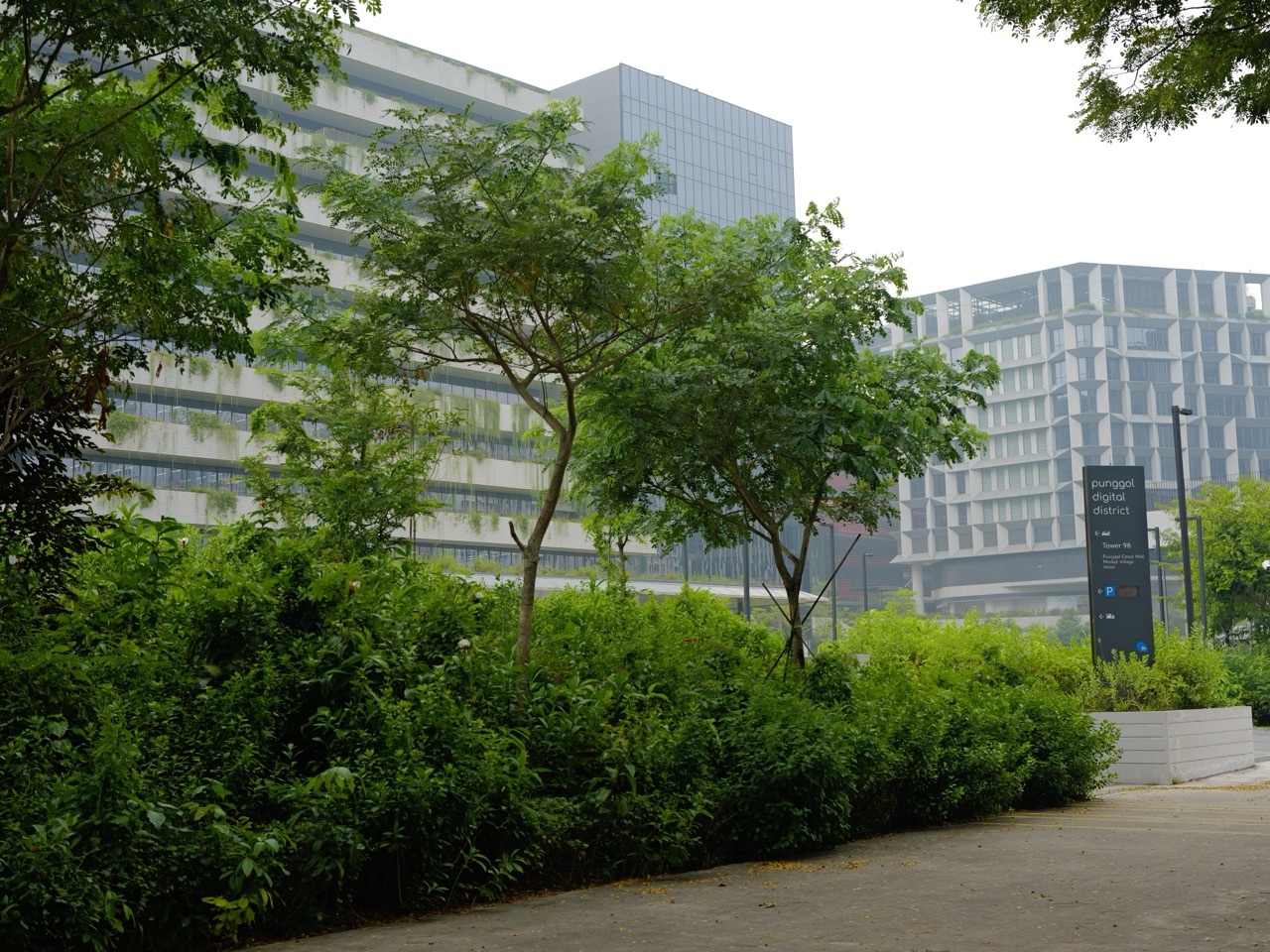
Quick answer: Punggol families have a new entrepreneurship landmark to follow. JTC announced that LaunchPad @ Punggol Digital District (PDD) will be established in phases from late 2026, adding a startup community to a district built around university learning, digital industries and real-world testing. JTC identifies smart-city solutions, fintech, robotics and cybersecurity as sectors startups could explore with the district’s infrastructure. But as of 23 October 2026, JTC still describes LaunchPad @ PDD as coming soon. It is not an open school club, guaranteed student accelerator or an unrestricted laboratory where residents may simply turn up to test an invention.
The educational opportunity for Punggol residents begins earlier than renting a startup space: students can learn to identify a genuine user problem, collect ethical evidence, make a modest prototype, compare alternatives, estimate costs and explain the limits of their idea. The official planning basis is JTC’s LaunchPad masterplan announcement and the current status is on JTC’s PDD business-space page. Those sources confirm the planned business ecosystem, not automatic individual enrolment for children.
For parents thinking about ‘future jobs in Punggol’, that distinction matters. Being near companies is helpful because it makes business problems more visible, but proximity is not funding, admission, preferential tenancy or a hiring contract. A teenager who can explain why an idea solves a particular need and how they would measure its effect is building a capability that remains valuable even if their eventual career has nothing to do with founding a company.
At a glance: what LaunchPad @ PDD offers—and what it does not
| Question | Supported by JTC’s announcements | Do not assume |
|---|---|---|
| When is it arriving? | LaunchPad @ PDD is planned to open in phases from late 2026 | Every unit, service or event is already open |
| What is the purpose? | Support startup firms using the digital district’s innovation ecosystem | A universal public makerspace or youth course |
| Which technology themes? | Smart-city services, fintech, robotics and cybersecurity | Every industry or prototype automatically qualifies |
| What is nearby? | SIT, digital-economy organisations and PDD infrastructure | Automatic university admission or access to facilities |
| Is mentorship possible? | JTC describes collaboration and mentorship programmes across the refreshed LaunchPad ecosystem | An individual resident has a reserved mentor or seat |
| Who can enquire? | Businesses can use JTC’s published LaunchPad contact route | An enquiry equals a lease approval or paid accelerator place |
| What can schools learn? | Use the plans as a real context for entrepreneurship education | Student teams may operate robots or connect to the live platform |
JTC’s broader masterplan includes community management, workshops, hackathons and links among startups, corporations and experienced mentors. Those are meaningful ecosystem intentions, but their specific PDD schedules, eligibility and fees need separate confirmation. A promotional phrase such as ‘an innovation hub’ is not an event registration page.
What is different about a startup, a school bazaar and a class invention?
A school bazaar may teach selling, teamwork and simple accounting over a short period. A class invention may demonstrate how something works. A startup tries to discover whether a sufficiently important problem can be solved in a way that customers or organisations will adopt and support over time. These activities can overlap, but they do not ask exactly the same questions.
Imagine a group of Primary 6 pupils sells hand-drawn greeting cards at a supervised school fair. The students may need to calculate materials, prices, revenue and remaining stock. That is valuable enterprise learning, but it does not prove a scalable business exists. A secondary-school team might create a hypothetical booking app for a fictional school club. That can demonstrate user-interface reasoning, but it does not show that real clubs want it, that it can handle privacy or that it operates reliably. A founder would need to establish each of those missing points before treating the app as a viable service.
This is why entrepreneurship education should not train children to call every project a company. It should teach them to ask the next evidence question at the correct stage. Learning to abandon a weak idea after a fair test can be as valuable as persuading someone to buy a product.
The four stages of a responsible Punggol student venture
Stage 1: Notice an inconvenience without deciding the answer in advance
Ask students to describe a specific everyday friction at school or in family life, without collecting strangers’ details. A safe example is a fictional parent who struggles to track reusable lunch boxes among several children. The problem statement might be: ‘In a sample of five consenting family routines, parents sometimes misidentify whose container is whose.’ That is more useful than ‘Punggol needs AI lunch boxes’. The latter names a fashionable technology without explaining the user’s problem.
A problem statement should identify the intended user, what they are trying to achieve, what currently goes wrong and how a better experience could be noticed. Avoid sweeping claims such as ‘everyone hates waiting’ or ‘nobody knows how to recycle’. A student should learn that their own annoyance is a hypothesis, not evidence about the whole town.
Stage 2: Investigate ethically and define success
Students can seek permission to interview classmates or relatives about a harmless process. They should avoid collecting full names, health information, passwords, financial details or identifiable photographs. In a school setting, follow school consent and safeguarding requirements. Ask open questions about what the person currently does and what difficulties occur, rather than pressuring them to praise a preselected product.
Define a useful success measure before testing: fewer mistakes in a fictional sorting exercise, less time to find a document in a mock folder or greater comprehension of a simple instruction card. A project with no stated measure cannot fairly distinguish improvement from excitement.
Stage 3: Build a small prototype, not a complete business empire
A prototype might be a labelled cardboard organiser, a clickable slideshow, a three-page website with simulated data, or a printed instruction card. It should be safe and honest about its limitations. Students often want to create a full mobile app before confirming what users need; the smallest informative experiment may instead take an afternoon with paper. Lower-cost experiments allow more cycles of feedback.
Document what is real and what is simulated. A screenshot should not display fictional customer reviews as if they are genuine. A proposed AI feature should not be described as a working model if the demonstration is merely a manual sequence. Ethical representation is part of the product.
Stage 4: Compare costs, constraints and consequences
After testing usefulness, ask what sustained operation would require. Someone must supply materials, answer questions, maintain records, protect personal data, handle mistakes and follow applicable rules. Does the solution save enough effort to justify these costs? Would it exclude someone without a smartphone? Is the work safe for minors? These are not obstacles designed to discourage entrepreneurship; they are how a good idea becomes responsible.
For school projects, stop at a convincing proposal when actual commercial operation is not authorised. Selling through a school event should remain within its rules; carrying on a business from an HDB home or offering regulated services raises separate requirements. Students should not be coached to evade school, HDB, business or consumer-protection rules.
Project 1 — Invent a simpler library-return reminder without using private data
Audience: secondary-school learners interested in design and basic computing. Problem: fictional borrowers forget when a book is due. Allowed prototype: a paper timetable or self-contained reminder demonstration with invented dates and users, rather than accessing any NLB system.
Start by drawing a timeline showing the borrowing date, fictional due date and reminder timing. Ask whether the reminder is early enough for a person to act, without generating unnecessary messages. Build two layouts and compare whether readers correctly identify the deadline. A teacher can offer a set of imaginary scenarios with different borrowing periods. Students should distinguish the concept from an actual official NLB service or feature.
Success could be defined as the number of participants who choose the correct return day using a supplied test card. If six of eight consenting participants interpret Version A correctly and all eight interpret Version B correctly, the observed difference is two participants within that small illustrative group. It is not proof that Version B will work for every person or outperform NLB’s existing system. The conclusion must name the limited test and sample.
The design can also accommodate different user needs: larger type, fewer steps, predictable ordering and clear explanations. Those choices create a connection between entrepreneurship, English comprehension and accessibility. They may be more beneficial than inventing a complicated new product.
Project 2 — A lunch-box label as a miniature business experiment
Suppose a supervised school team designs durable removable lunch-box labels. Each item uses S$1.20 of materials, and the school event permits a sale price of S$3.00. The contribution toward fixed costs per item is S$3.00 minus S$1.20, or S$1.80, before considering losses and other variable charges.
If the team pays an illustrative S$36 for approved printing setup and stall materials, the simplified break-even quantity is S$36 divided by S$1.80, or 20 items. This worked example is hypothetical, not a price guide or a commercial forecast for a real Punggol business. It excludes packaging, refunds, failed products and any other costs not listed.
| Component | Illustrative value | Meaning |
|---|---|---|
| Sale price per label | S$3.00 | Assumed school-event price |
| Variable material cost | S$1.20 | Assumed cost that changes with each sale |
| Contribution per label | S$1.80 | Price minus variable cost |
| Fixed project cost | S$36.00 | Assumed authorised setup cost |
| Modelled break-even volume | 20 labels | Fixed cost ÷ contribution |
| Profit at 30 sold | S$18.00 | 30 × 1.80 − 36, before omitted costs |
The important follow-up is whether anybody wants the product. A mathematically correct break-even calculation does not create demand. Students may run a small approved preference test before producing items, using anonymous tallies rather than recording identifiable details. Another question is whether the labels actually stay attached, wash clean and remain legible. Testing product reliability is as important as calculating the margin.
An excellent report will mention what happens if only ten labels sell, if the price must fall, or if two items are spoiled. This builds numeracy, responsible financial thinking and the ability to handle uncertainty without inventing sales.
Project 3 — Compare two solutions to a fictional queue problem
Students often jump to a digital queue app because the idea sounds current. A better learning exercise compares that option with a simple paper numbering system. Create a classroom role-play, using ten volunteers who consent and no actual customer records. One round uses an orderly physical queue; another uses fictional paper numbers and a mock display. Record time, confusion, fairness and accessibility using criteria chosen before the test.
If the digital option produces shorter average waiting time but confuses two participants, the students should not merely proclaim the app a success. They must discuss whether the benefit is worth a more complex service and what could improve the instructions. They should also examine whether a phone requirement would exclude someone and whether an ordinary sign solves the problem more cheaply.
This is the difference between ‘technology-first’ and ‘problem-first’. LaunchPad @ PDD may provide startups with an environment to test advanced services through authorised partners, but a school project does not need those privileges. A careful classroom comparison is a strong foundation for later product research.
Project 4 — Use fictional data to learn market sizing
Consider a fictional survey of 40 volunteers in a school community. Fifteen say they would consider trying a particular service. The observed expressed-interest share is 15/40, or 37.5%. The team should not extrapolate that proportion to all Punggol households because the sample is small, selected non-randomly and based on what people say rather than verified purchases.
Market size also differs from reachable market and realistic early customers. A product intended for students could theoretically appeal to many students nationwide, yet a young team may only be able to test it within one supervised school event. Treat each number as a separate claim. Investors and employers value people who understand uncertainty because an unsupported market estimate can drive expensive mistakes.
A more educational report would state: ‘Among 40 volunteers in our specific setting, 15 expressed interest after reading the description. We did not test willingness to pay and cannot generalise this percentage beyond the sample.’ That sentence has more analytical value than a dramatic unsupported prediction of millions in sales.
Project 5 — A neighbourhood accessibility service, designed on paper
Give a student team a hypothetical visiting grandparent who wants to find a sheltered, step-free route between two fictional points. The team can create a paper map and compare different ways of showing critical information such as lift access, rest opportunities and clear labels. It should not copy or alter live routing applications without permission or claim its map meets official accessibility standards.
Invite consenting peers to perform a simple fictional task, then record misunderstandings without collecting sensitive personal information. Ask whether a coloured arrow alone is sufficient for users who cannot distinguish the colours; whether an icon is clear; and whether too much information makes the answer harder to find. This creates a human-centred project without exploiting people as unsolicited research participants.
If the students later propose to develop an app for actual public use, the responsibility rises sharply. The information must be accurate and maintained, relevant permissions checked, liability considered and users’ needs validated properly. A classroom map is not a certified navigation service.
Project 6 — Build a sustainable product without pretending environmental claims are free
A hypothetical team proposes reusable packaging for a school event. It may assume that fewer disposable containers automatically mean less environmental impact, but a credible comparison must consider repeated use, cleaning, materials, transport and what the packaging replaces. A strong school project begins by identifying the relevant variables rather than claiming carbon neutrality.
The team might compare costs per use in an explicitly simplified model. If a reusable container costs S$5 and safely lasts for 25 uses, its purchase cost averages S$0.20 per use, excluding washing and distribution. A disposable alternative costs S$0.30 per use. The difference in that narrow purchase-cost measure is S$0.10 per use. It does not establish that the reusable option is environmentally superior without a broader impact assessment.
Students should be able to explain the limits of the calculation, and why resource efficiency and full environmental outcomes can differ. This connects product development to science, mathematics, engineering and responsible communication.
Project 7 — Designing a digital service that does not misuse the district’s data
JTC describes PDD’s Open Digital Platform (ODP) as infrastructure that supports data-informed smart-district operation and can link authorised pilot solutions with building systems. The presence of an ODP does not give students permission to access private telemetry, public-transport controls, lifts, gantries or other operational interfaces.
A school can model the idea safely with a fictional data set listing hourly use of an imaginary building space. Students may plot usage, hypothesise why a room is busy and propose an accessible booking notice. They should label the data as teacher-generated and avoid claiming it represents PDD’s actual systems. Asking how data permissions work is more important than pretending every sensor reading is publicly available.
This kind of exercise also teaches basic privacy principles. A dataset intended to show how busy a space is should not need names and movements of identifiable people. Use the least sensitive information necessary to address the question. Such restraint is part of professional product design.
What students should know about JTC’s Open Digital Platform
The ODP is discussed by JTC as a way to connect physical infrastructure and data for district operations and innovation. It may support digital-twin simulations and, where properly authorised, testing a solution before real-world deployment. For a younger learner, a ‘digital twin’ is best explained as a digital representation of relevant aspects of a real environment, not a magical perfect copy of the town.
All models leave things out. A classroom digital twin of a queue might include arrival times and service counters, but ignore people’s accessibility needs, unusual delays or broken equipment. An excellent student identifies what the model cannot establish. Engineers do the same at more sophisticated levels.
The important boundary is authorisation. A real district’s data infrastructure contains operational responsibilities. Students should never connect devices, request credentials casually, imitate a staff member or attempt to trigger a building service merely because a press release mentions open innovation. The safe alternative is to work with prepared sample data or use a formal school–industry programme if an organiser actually offers one.
How Secondary English and Mathematics become founder skills
| School capability | Entrepreneurship use | What demonstrates progress |
|---|---|---|
| English comprehension | Read a complex requirement without inventing facts | Summarise the problem in three verifiable sentences |
| English writing | Explain user needs and a responsible proposal | One-page brief with scope and limitations |
| Mathematics: percentages | Express a result with a clear denominator | Correct sample proportion and honest interpretation |
| Mathematics: rates | Model usage, queues and operating costs | A table with units and explicit time windows |
| Statistics | Compare small pilots without overclaiming | Report all trials and uncertainty |
| Science inquiry | Test one variable and record what changed | Repeatable experiment with limitations |
| Social studies | Consider different people affected by a change | Stakeholder map and trade-off discussion |
| Computing | Build and test a simple digital prototype | Functional demonstration with test cases |
A learner who manages only calculations but cannot communicate with users is missing something. A persuasive speaker who invents market size is also missing something. A good educational programme should make these gaps visible and help students improve one at a time.
Primary school: introduce enterprise without turning every hobby into a side hustle
For Primary 1 and Primary 2, ‘entrepreneurship’ can begin with understanding needs, sharing fairly and planning a useful classroom activity. Ask children what would make a book shelf easier to use, then test a new label system. The success measure might be whether classmates can find a book quickly and return it correctly. Charging money is unnecessary.
In Primary 3 and Primary 4, learners can compare costs and quantities using simple arithmetic. A school-approved paper craft project might ask how many sheets are needed and what happens when one is wasted. Introduce trade-offs: a beautiful design may take longer to make; a cheaper material may be less durable. Keep the project educational and within school rules.
By Primary 5 and 6, students may be ready for basic percentage calculations, survey limitations and simple break-even analysis with teacher-supplied assumptions. They can learn why a prototype’s popularity among close friends may not represent a wider audience. The central skill is responsible judgement, not revenue.
Secondary school: learn to use evidence and admit when the idea fails
Secondary students can apply mathematical models, basic computing and structured interviewing to more involved projects. Ask teams to create a hypothesis, declare the intended audience, define a measurable success criterion and test a small prototype. They should record unsuccessful attempts and changes after feedback. A spreadsheet of disappointing results may be stronger evidence of learning than a polished mock advertisement.
Students considering business, design or technology pathways can keep a portfolio of three completed projects: one about identifying a user need, one involving a tested prototype, and one using an explicit cost or data model. Every project should state what was original, what was simulated and which information came from external sources.
If a team decides to stop a project, ask them to write a brief post-mortem rather than erasing it. Did they misunderstand the user? Were costs too high? Did the problem occur less often than expected? Did testing expose accessibility concerns? This is a valuable introduction to scientific and commercial thinking.
ITE, polytechnic, JC and university: different routes to practical innovation
Students in post-secondary education can choose progressively more demanding projects and investigate actual workplace needs through authorised programmes. An ITE or polytechnic learner may bring practical engineering, design or service skills to a prototype. A JC learner may contribute research, mathematics or analysis. A university student may build a capstone around software, systems engineering, product design or operations.
The right route depends on the discipline and the formal curriculum. The location of PDD beside SIT does not make every nearby startup an eligible school placement or automatically connect a student to an employer. Before discussing a capstone or internship, verify the institutional programme, responsible supervisors, project ownership, confidentiality and what the student will be assessed on.
Families seeking the university context can read SIT applied degrees and IWSP. For entrepreneurship activities already suitable as local observations, see Punggol projects for young entrepreneurs. Neither guide establishes access to a particular LaunchPad tenant.
A twelve-week student startup exploration plan
Weeks 1–2: find the problem and inspect the evidence
Write down five everyday inconveniences that a family or school actually observes. Select one that can be studied without collecting private data or interfering with public infrastructure. Describe the intended user and the evidence already available. Ask someone to challenge the problem statement before any solution is proposed.
Weeks 3–4: gather modest, meaningful feedback
With proper permission, ask a small number of people about their existing habits. Avoid leading questions and record responses accurately. Do not infer population-wide demand from a handful of acquaintances. Write a clear statement of what is still unknown.
Weeks 5–6: design two contrasting prototypes
Build the simplest workable options and test them using an agreed rubric. One may be a paper service while the other is digital. Compare whether people can complete the intended task and whether any approach excludes users or creates unnecessary work.
Weeks 7–8: count resources and calculate a basic cost model
Record materials, time and predictable expenses. Separate fixed costs, variable costs and sunk past efforts. Choose simple scenarios rather than using invented precise forecasts. Ask how results change if only half the expected users participate.
Weeks 9–10: find an ethical or operational weakness
Ask what would happen if a child could not use the device, if the data were inaccurate, if a part broke or if a customer asked for a refund. Students should show how their model responds to failure rather than presenting the best-case demonstration as a universal solution.
Weeks 11–12: decide whether to improve, change direction or stop
Write a short evidence-based recommendation. The options should include proceeding to a more demanding test, revising the problem, or closing the project responsibly. Show the reasoning, not just the preferred outcome. An impressive pitch does not compensate for unsupported assumptions.
The difference between a pitch deck and a genuine finding
A startup pitch often compresses a complex business into a few slides. This can help communicate a vision but can also hide uncertainty. Teach learners to separate facts, estimates, requests and long-term hopes. A statement about something a company hopes to achieve is not the same as observed impact; a letter of interest is not a purchase; and a visitor to a booth is not necessarily a repeat customer.
A student presentation should contain at least one slide naming important weaknesses. It may say that the user test involved only eight volunteers, the cost estimate excludes staff time or the digital prototype has not been tested for data security. These limits demonstrate intellectual maturity and give a mentor useful information.
When students practise public speaking, ask whether listeners can understand the problem without already knowing the product. Then ask whether the proposed solution answers the problem. Finally, ask which claim remains unverified. This is a stronger sequence than making students memorise a dramatic opening line.
How a founder’s cash-flow problem differs from a profitable-looking spreadsheet
Even a hypothetical business with an attractive margin can run out of money if customers pay later than suppliers or if large costs must be paid before sales. Students can explore this with a simple timeline. Suppose a team has S$100 in permitted seed funds and must spend S$80 on materials before collecting any sales. The remaining cash is S$20, regardless of what the eventual profit projection claims.
If a delivery is delayed and customers do not pay until the next school event, the team may have insufficient cash to buy more materials. Profit and cash balance measure different things. Young learners do not need formal accounting, but they should learn that timing matters and commitments should not be made against money that has not actually arrived.
The exercise also introduces uncertainty: what if materials are spoiled, prices change or an event is cancelled? A reasonable plan holds a reserve and limits commitments. This kind of practical prudence is a useful life skill whether or not the learner ever opens a company.
What parents should ask about accelerator or incubator claims
- Is the programme an officially announced LaunchPad @ PDD scheme or simply a private course using the neighbourhood name?
- What exact institution or company administers the opportunity?
- Does it accept secondary-school students, post-secondary learners, incorporated startups or only eligible tenants?
- Is participation competitive, fee-paying, invite-only or open to approved visitors?
- What does ‘mentorship’ mean in terms of actual sessions and responsibilities?
- Can the organiser verify access to PDD facilities, data or partners, if such access is advertised?
- What are the intellectual-property and confidentiality conditions?
- Does any funding offer involve equity, repayment, fees or conditions?
- What safety, consent and insurance requirements apply to minors?
- What evidence supports claims about placements, business outcomes or investor access?
A family should not give away a child’s personal information or transfer money based solely on a social-media advertisement that mentions LaunchPad, JTC or PDD. Check official links and ask the responsible organiser to specify their role. A genuine institutional relationship should withstand straightforward verification.
Punggol Digital District as a real-world classroom—not a free testing playground
The district’s mixture of transport, workplaces, shared spaces and university learning makes it rich in examples of design challenges. Students can observe a public sign, consider different ways residents access services and examine the consequences of poor information. They should not photograph people intrusively, run unauthorised surveys on commercial premises, obstruct pathways or pretend to be testing a new public service.
A teacher might use a scale model of Punggol to discuss where services belong or how people flow between destinations. They can explore that through paper diagrams, simulated data and clearly marked fictional scenarios. A digital model does not need privileged operational data to teach good questions. The purpose is to develop reasoning that could later be useful in an authorised internship or applied university project.
If students are interested in robotics, they can study the difference between planned and verified systems in our related article on PDD’s Physical AI testbed. If they prefer finance or privacy, they can examine hypothetical budgets or data-use agreements. Entrepreneurship becomes more rigorous when it is connected to a distinct subject rather than reduced to one generic competition.
When is a startup space actually necessary?
A school project often needs a desk, permission, a teacher and time—not a commercial unit. A genuine startup may eventually need testing facilities, staff workspaces, access to partners, shared services or other resources. A founder should determine what problem a physical location solves, whether eligibility and tenancy costs fit the venture, and whether the site provides benefits that cannot be obtained more efficiently elsewhere.
For some ideas, building an early prototype at home or through a university project is enough. For others, the cost of specialised facilities may be justified when the technology is ready for more demanding tests. A launch venue cannot rescue a weak idea; strong evidence should come before substantial commitments.
JTC lists LaunchPad @ PDD’s current phase and enquiry information. The published enquiry contact is launchpad@jtc.gov.sg. Founders should check the current position directly with JTC; the announced late-2026 phases are not a promise about the date a particular unit can be occupied.
Frequently asked questions
Is LaunchPad @ PDD open to the public in October 2026?
JTC still describes LaunchPad @ PDD as coming soon and says it will open in phases from late 2026. Do not assume commercial units or programmes are already accepting visitors.
Can Primary school children apply for a LaunchPad desk?
No public rule establishing ordinary schoolchildren’s eligibility has been identified. The facility is planned for startups, while children can pursue age-appropriate enterprise projects through approved settings.
Does living in Punggol give a founder priority?
No blanket residential priority can be inferred from the JTC announcement. The current operator rules control enquiries, eligibility and tenancy.
Are workshops and hackathons guaranteed at PDD?
JTC discusses such programmes in its broader LaunchPad vision, but each specific event needs a real announcement, date, location and registration criteria.
Does a school app need to connect to the Open Digital Platform?
No. Student prototypes can use fictional data and offline demonstrations. Real infrastructure access requires authorisation.
Does every ‘startup idea’ need coding?
No. A service, product or process change may be tested with paper, labels, diagrams and interviews. Technology should serve a validated need.
Can a minor conduct market interviews in Punggol?
Only within appropriate school and caregiver permissions and with respect for privacy, consent and public-space rules. Avoid unsolicited collection of sensitive data.
What is the fastest way to learn whether an idea has merit?
Define one user problem, create a very small prototype, test a meaningful measure and report the evidence without exaggeration.
Is a pitch competition the same as launching a company?
No. Competition performance can teach communication, but real operation requires customers or users, appropriate legal arrangements and continuing delivery.
Will JTC provide free investor funding to Punggol students?
The planning announcements do not establish a universal student funding entitlement. Any grant or investment must be verified from its actual provider.
Can students use lifts or gantries to test inventions?
No. Public infrastructure can only be linked to approved trials with responsible operators. Classroom simulations are appropriate without authorisation.
Is an idea successful when friends say they like it?
That is feedback, not proof of sustained demand. Students must examine sample bias, actual behaviour and costs.
Should children sell items from home?
Not automatically. Families must follow applicable rules for commercial activity, consumer rights, safety and school requirements; a hypothetical school exercise often meets the learning goal.
Can a student include failed prototypes in a portfolio?
Yes. Clearly described failures, decisions and revisions can demonstrate learning more effectively than only displaying polished finished work.
How can university students enquire about a real startup project?
Use the actual university, accelerator or JTC programme announcement and its stated participation criteria, rather than assuming proximity provides a placement.
Three educational routes for the next Punggol school year
For a parent of a younger child: choose one household or school problem, discuss who it affects and complete a tiny safe experiment. A child who learns to count, compare, ask permission and correct an explanation is already building entrepreneurial thinking. There is no need to commercialise their play.
For a Secondary or post-secondary learner: complete a simple project with a proper brief, data table, limitations and reflection. Compare school subject choices and educational routes rather than chasing an advertised founder identity. Where a legitimate competition or mentorship programme appears, judge it by its learning value and eligibility.
For a founder or working adult: define the product and the specific advantage of the PDD ecosystem, then enquire through JTC’s current contact. Check phased opening, allowable activities, space, fees, data permissions, mentorship and partner availability. Do not present a proposed testing arrangement as confirmed until written authorisation exists.
All three routes are legitimate because they begin at different levels. Punggol’s new startup district adds visibility and potential partnerships, while the underlying educational achievement is the same: a learner can move from an idea to a testable question, evaluate evidence and make a responsible decision.
Official sources and eduKatePunggol connections
- JTC — refreshed LaunchPad masterplan and new PDD location
- JTC — current PDD business and LaunchPad status
- JTC — LaunchPad startup estate and PDD overview
- JTC — official Punggol Digital District site
- eduKatePunggol — LaunchPad @ PDD phased opening and enquiries
- eduKatePunggol — entrepreneurship activities around Punggol
- eduKatePunggol — Physical AI and robotics school projects


