
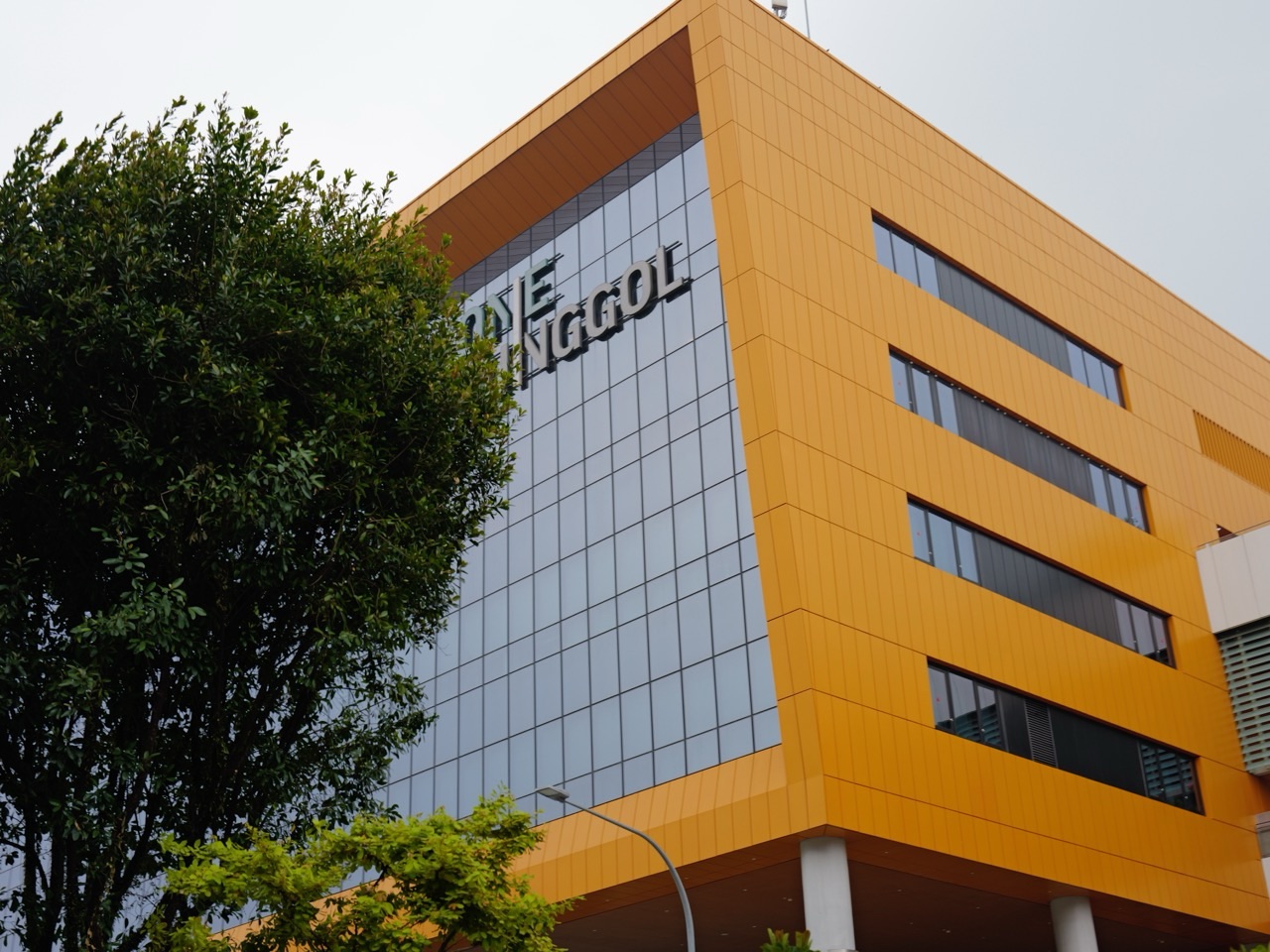
The top 10 things to do in Punggol for language learners are to read at Punggol Regional Library, compare translations through NLB’s One Story initiative, explore The Lens of Literature, experience Words That Move, retell Punggol history at Singaporium, find a real language course through PA’s onePA listings, join a confirmed NLB book-club discussion, practise polite food-related language at One Punggol Hawker Centre, build a wayfinding word journal on an LRT trip and make a bilingual nature notebook at Punggol Waterway Park.
Best first choice: visit Punggol Regional Library and read a short age-appropriate story in a language you want to strengthen. Write down three new words and use one in a sentence. If you want a literary experience, NLB’s Punggol Stories offers works in English, Chinese, Malay and Tamil. Its Words That Move installation is listed from 5pm to 7pm, not throughout all library hours. For paid language classes, use a current onePA course listing rather than an old poster.
Singapore’s four official languages are English, Malay, Mandarin Chinese and Tamil. Every learner’s starting point is different: some need confidence in speaking, others need reading comprehension, workplace communication or mother-tongue vocabulary. This October 2026 guide gives practical activities without pretending that every event is open every day, every text has a direct translation or every stranger is willing to teach.
Choose your Punggol language day in one minute
- Young children: browse an age-appropriate book and read a short scene aloud together.
- Primary students: make a five-word picture or nature notebook, then recall words without the page.
- Secondary students: compare ideas across One Story or The Lens of Literature and distinguish tone from word-by-word translation.
- Literature enthusiasts: check Words That Move’s current 5pm–7pm window and Punggol Stories gallery access.
- Adult learners: find an actual PA language course or NLB book-club session with suitable level and location.
- Everyday communication: practise public-wayfinding words and natural food-ordering language respectfully.
- Low-cost option: use ordinary library browsing and a simple public park walk, with borrowing and transport conditions checked.
How to learn more from one short outing than from fifty random words
Begin with a purpose
Choose a communicative job: understand a story, ask a simple question, give directions or describe something you saw. Without a purpose, a word list is easily forgotten. A book scene and a short rail journey are different contexts, but both work when a learner can explain what the language helps them do.
Build small, retrievable examples
Write the new word, its meaning, a short original sentence and a cue that will help you remember it. Then close the book and retrieve it. Children can point to a picture; teenagers can use a comparison sentence; adults can rehearse a realistic question. Review the same small set later rather than adding twenty unrelated words just to feel productive.
Respect translation and cultural context
Words can have multiple meanings depending on register, setting and grammar. A literal translation may fail to carry the intended tone. Use authoritative dictionaries, published translations and knowledgeable speakers when appropriate. When learning from Singaporean literary works, credit the author and avoid treating a community’s language as a performance prop.
Do not turn other people into unwilling teachers
Public-service staff, food vendors and fellow passengers have their own responsibilities. Short polite questions are appropriate when relevant to the service, but repeated recording, interruption or unconsented interviews are not. A family member or agreed study partner is often a much better place to practise uncertain speech.
Ten language-learning activities around Punggol
1. Choose age-appropriate reading at Punggol Regional Library
Where: Punggol Regional Library, One Punggol, 1 Punggol Drive.
Why it helps
A language outing can begin with a very ordinary choice: selecting a book you genuinely want to read. NLB’s Punggol Regional Library serves children, adults and families, with public reading collections and dedicated learning areas. Singapore’s National Reading Movement encourages people to read more, read widely and read together, including mother-tongue-language materials. The library lets families browse instead of assuming a commercially packaged language course is the only path to progress.
Step-by-step language practice
Use NLB’s current catalogue and public shelves to find a title at a suitable reading level. A beginning learner can choose a short picture book or a familiar subject in the target language; an older student can choose a story with enough new vocabulary to be interesting but not overwhelming. Read one paragraph aloud, mark three useful words, then explain the scene in your own words. Check borrowing rules and return materials responsibly.
A realistic Punggol example
A parent and Primary 2 child read the same picture-book scene at different levels: the child names two visible objects, while the parent uses a complete sentence to describe what happens next. They finish by recalling the words without looking at the page. Neither has to complete a worksheet for the reading to count.
Access and accuracy limits
Do not claim that a particular bilingual book or programme is in stock without checking NLB’s live catalogue. Specialist rooms and events may have age restrictions or registration. Respect quiet areas, protect children’s privacy and do not photograph or reproduce copyrighted book pages without permission.
Primary reference: Choose age-appropriate reading at Punggol Regional Library.
2. Compare languages through NLB’s One Story initiative
Where: NLB’s National Reading Movement online and available library materials, accessible from Punggol.
Why it helps
NLB’s One Story initiative brings Singapore short stories originally written in Tamil, Malay or Chinese to readers of other languages through translations. This is especially valuable for learners because the same narrative can help them compare meaning, tone and culturally specific context without treating languages as interchangeable word-for-word codes. A translated work is a bridge to reading, not a guarantee that every sentence has an exact matching expression.
Step-by-step language practice
Choose a One Story work that has versions you can access legitimately. Read a short passage in a language you understand, then the corresponding section in the language you are learning. Note one idea or emotion that appears in both, and one phrase whose structure differs. If you do not understand a word, consult a trustworthy dictionary or a knowledgeable speaker instead of inventing a translation. Write a new sentence expressing a similar idea in your own voice.
A realistic Punggol example
An older learner compares two versions of a Singapore short story and discovers that the sentence order is different even though the key event is unchanged. They write a brief note about how the translator preserved the narrative purpose, without implying that either version is a mechanical conversion.
Access and accuracy limits
One Story texts and translations are copyrighted. Use NLB’s authorised access, quote only with proper permission or limited fair use where applicable, and never upload a complete translated work to your own site. Programmes and availability can change.
Primary reference: Compare languages through NLB’s One Story initiative.
3. Explore four-language literature at The Lens of Literature
Where: The Lens of Literature, Level 3 Sing Lit area, Punggol Regional Library.
Why it helps
NLB’s Punggol Stories permanent exhibition includes The Lens of Literature, featuring poems, novels and short-story excerpts in English, Chinese, Malay and Tamil. Its four themes—Balik Kampong, Life Interrupted, Tides of Change and Our Future is Now—show how Singapore writers approach community, history and imagination through different languages. For a language learner, the setting offers a reason to read for meaning rather than study isolated word lists.
Step-by-step language practice
Check the exhibition’s current access and visit one public display. Choose a short text or interactive prompt in a language you can meaningfully engage with. Identify the topic, speaker and feeling of the passage before working through new words. Create one original sentence describing a memory or a change in Punggol. If composing a new poem at the interactive table, keep it your own rather than copying published lines.
A realistic Punggol example
A bilingual learner notices that a literary passage about moving from an older home to an HDB estate uses different images in the two languages they know. They explain the shared theme in simple English, then attempt a short original response in their mother tongue and have its wording checked later.
Access and accuracy limits
The existence of four languages in an exhibition does not imply every panel is available in a complete parallel translation. Read actual on-site content and credit authors. Current NLB notices determine access and interactive display availability.
Primary reference: Explore four-language literature at The Lens of Literature.
4. Experience poetry in four languages at Words That Move
Where: Level 1 Stories Come Alive Room, Punggol Regional Library, listed 5pm–7pm.
Why it helps
NLB’s Words That Move uses projected poetry, movement, light and sound in English, Chinese, Malay and Tamil. NLB describes four poems about movement from kampongs to HDB estates and lists the particular installation at 5pm–7pm, a narrower window than the general Punggol Stories exhibition. This provides a multisensory language experience in which rhythm, images and emotion can support understanding while the exact literary wording remains the author’s work.
Step-by-step language practice
Check the current 5pm–7pm schedule and any admission or age conditions. Experience one poem or segment without obstructing others. Afterwards, discuss what you understood from the images and sound, and separate that impression from words you could actually read. A family can create its own two-line poem about an LRT or bridge, then choose a rhythm for reading it aloud. Check translations with a qualified source before presenting them as accurate.
A realistic Punggol example
A child sees a projected scene about moving home and says that it feels excited and a little uncertain. The caregiver helps write an original sentence about a family moving to a new Punggol block. They do not reproduce the NLB poem as though they had written it.
Access and accuracy limits
A permanent installation is not necessarily running every hour the library is open. Audio, lighting and sensory intensity may be unsuitable for some visitors. Respect exhibition recording rules and all original authors’ copyrights.
Primary reference: Experience poetry in four languages at Words That Move.
5. Use Punggol Stories at Singaporium to practise oral retelling
Where: Singaporium, Level 4 Punggol Regional Library, part of Punggol Stories.
Why it helps
Singaporium presents Punggol’s changes across kampongs, seaside leisure, farming and modern waterways. NLB’s heritage writing also discusses Kampong Wak Sumang and a Malay-language work about Tok Sumang with an English translation. Language learning can benefit from recounting a documented history in one’s own words, as long as stories invented for practice are not confused with oral testimony by actual former residents.
Step-by-step language practice
Read two public exhibition panels and note which people, place and period they actually describe. Then tell a family member a one-minute summary in the language you are learning. Use date words, connectors such as first and later, and a closing sentence explaining why the history matters. If a word is uncertain, mark it and check it afterwards. Older students may compare an archival account with a literary interpretation, citing each separately.
A realistic Punggol example
A Secondary pupil summarises that parts of Punggol once supported rural settlement and later changed into a modern town. They practise sequencing the explanation and distinguish a documented exhibition fact from a made-up dialogue involving a fictional grandparent.
Access and accuracy limits
Do not invent interviews or attribute fictional quotations to real residents. Some historical sources require contextual understanding, and the display cannot verify every family memory. Preserve privacy and respect copyright and gallery rules.
Primary reference: Use Punggol Stories at Singaporium to practise oral retelling.
6. Find a genuine Community Club language course through onePA
Where: One Punggol Community Club or another currently listed PA Community Club course venue.
Why it helps
The People’s Association provides lifelong-learning courses at Community Clubs, including language and self-development options. One Punggol has rooms and programmes, but the presence of a CC building does not mean a particular language class is running there every day. The useful activity is matching a real enrolment option to the learner’s level, timing, budget and language goal.
Step-by-step language practice
Search current onePA courses by language, age, difficulty and preferred location. Open the actual course details and confirm trainer, duration, venue, vacancies, fees, refund policy and eligibility. If there is no current Punggol class, look for a suitable nearby or online option rather than assuming an unlisted class exists. Before paying, decide whether your priority is conversation, reading, writing or a formal qualification.
A realistic Punggol example
An adult wants better conversational Mandarin for everyday errands. They check the current listing rather than relying on an old poster. If the local beginner course is not active, they make a home practice plan and recheck the platform later instead of arriving at the CC on an arbitrary evening.
Access and accuracy limits
Course fees and SkillsFuture Credit eligibility vary; not every resident or student can use the same subsidy. Room availability does not grant permission to run private classes there, and marketing for a course must not imply an official PA endorsement without authorisation.
Primary reference: Find a genuine Community Club language course through onePA.
7. Join a real-language book-club discussion when a slot exists
Where: NLB book clubs through the National Reading Movement; Punggol only if the active programme lists that location.
Why it helps
NLB’s National Reading Movement describes book clubs in English, Chinese, Malay and Tamil for different ages. A book club can improve vocabulary and comprehension because learners must explain their own reading and listen respectfully to others. Importantly, a nationwide book-club listing does not prove that all four languages have an active weekly discussion at Punggol Regional Library.
Step-by-step language practice
Check the current book-club programme calendar, language, age eligibility, title and meeting location. If a suitable session exists, read the assigned material and prepare two genuine questions rather than memorising a speech. Speak at a comfortable level and listen to different interpretations. If no local session is available, organise a small private family reading conversation without calling it an official NLB club.
A realistic Punggol example
Two friends choose a short story and each explains one character decision in their strongest language before attempting a summary in their target language. One asks why a character acted that way, while the other finds a sentence that supports an interpretation. The activity makes reading social without requiring perfect pronunciation.
Access and accuracy limits
Book-club schedules and meeting places vary. Respect attendance rules, facilitator directions, copyright and confidentiality of group discussions. Do not promise a specific Punggol club until NLB confirms it.
Primary reference: Join a real-language book-club discussion when a slot exists.
8. Practise respectful everyday language around One Punggol Hawker Centre
Where: One Punggol Hawker Centre, Level 2, and other public food or community areas.
Why it helps
Everyday interaction gives learners a reason to use polite, clear language. One Punggol Hawker Centre is a real operating place where people choose meals, read displayed menus and manage shared space. The objective is not to use stallholders as unwilling language tutors, but to practise making simple decisions and recognising that Singaporeans have varied language backgrounds.
Step-by-step language practice
Before going, create a private list of useful phrases such as asking the price, identifying an ingredient and thanking someone, using a trusted dictionary or fluent speaker to verify each translation. At the venue, read the current menu and order naturally in a language the vendor is comfortable using. If the vendor responds in another language, switch politely without insisting on a lesson. Afterward, reflect on which words genuinely helped.
A realistic Punggol example
A learner prepares a polite question about whether a dish contains an ingredient they need to avoid. The real-life goal is an accurate, respectful exchange. If the answer is unclear, they use a language both parties understand rather than treating the encounter as a test of vocabulary.
Access and accuracy limits
Do not assume someone’s language or ethnicity based on appearance, or delay a busy vendor with a filming exercise. Food-allergy and dietary questions must be understood accurately; do not risk health to practise a language. Menus and prices change.
Primary reference: Practise respectful everyday language around One Punggol Hawker Centre.
9. Build a public-wayfinding vocabulary journal on a Punggol LRT journey
Where: Punggol MRT and publicly accessible Punggol LRT stations or routes.
Why it helps
A rail journey offers visible functional words: platform, exit, lift, transfer, direction and destination. These words have immediate value because they help people move through a town safely. Punggol connects the North East Line with East and West LRT loops, offering opportunities to study place names and public transport instructions. A word journal is more reliable when it records what signs actually display than when it imagines a four-language translation panel that may not exist.
Step-by-step language practice
Choose a short valid fare-paying journey, read a current operator route map and identify three public words or symbols. Record the original sign language, exact meaning in context, and the translation or explanation verified through a trusted source. Practise asking for directions with a consenting family member, not by staging repeated queries to station staff. Return without blocking passenger flow.
A realistic Punggol example
A teenager identifies a transfer symbol, an exit number and an accessible-lift symbol. They explain each in English, then verify target-language equivalents after the trip. They know that pictograms carry useful meaning even when not every station sign has a parallel translation in all four official languages.
Access and accuracy limits
Do not photograph faces intrusively, obstruct station circulation, use unauthorised tripods or invent multilingual signage. Fares, routes and opening conditions should be checked with the transport operator.
Primary reference: Build a public-wayfinding vocabulary journal on a Punggol LRT journey.
10. Make a bilingual nature-word notebook at Punggol Waterway Park
Where: Punggol Waterway Park public paths or another safe nearby green space.
Why it helps
Nature observation can provide concrete language practice because a learner has something real to describe. NParks identifies Punggol Waterway Park as a landscaped public park with bridges, plants and waterway features. You can practise nouns, adjectives and simple sequencing while learning to separate observed facts from guesses, which makes the activity useful for both language and science education.
Step-by-step language practice
Choose a short public route and identify five safe visible objects such as a bridge, tree, path, bird or bench. First describe each in a language you know, then find target-language words from a reliable dictionary or fluent speaker. Make two original sentences—one describing what you saw and one expressing a personal feeling. Record uncertainty if a plant or bird cannot be identified. Carry the notebook home rather than forcing the family to complete a full park walk.
A realistic Punggol example
A Primary 4 pupil writes ‘A bird is on the railing’ in English and later checks how to say the same thing in their mother tongue. They then use the words to tell a parent what happened during the walk. The translation is verified rather than guessed, and the bird remains unnamed if its species is unknown.
Access and accuracy limits
Never pick flowers or enter the water to acquire vocabulary examples. Outdoor conditions may be unsafe in lightning, haze or extreme heat. Current signs and legal public access take priority over an attractive park map.
Primary reference: Make a bilingual nature-word notebook at Punggol Waterway Park.
Three age-appropriate learning routes
Preschool to Primary 2: look, name and tell
Use a short book or picture chosen with the child. Name two objects, describe one action and tell the story’s ending in your own words. If the child switches between languages, focus on the intended meaning before correcting the form. A brief enjoyable session may support confidence better than insisting on a long reading period after the child has lost interest. Parents should use a language they know accurately or check unfamiliar phrases.
Primary 3 to Secondary 2: compare, explain and retrieve
Select a paragraph or theme from NLB’s literary resources that is appropriate for the learner. Identify the speaker, what changed and how a word or phrase conveys feeling. Build a five-word set, give an original example for each, and retrieve them again after a break. Link the vocabulary to Punggol: a bridge, a family outing or a change from an old road to a modern town.
Older students and adults: interpret and communicate
Read a short text, listen to a literary presentation or join a confirmed discussion. State its central message, ask one clarifying question and produce a brief spoken or written response. In professional contexts, accuracy matters more than sounding sophisticated. Check names, polite forms, dates, costs and specialist terms rather than relying on approximate translation.
A seven-day Punggol language challenge
- Day 1: choose one target language and a five-word learning goal.
- Day 2: read one short library text or an authorised online story passage.
- Day 3: use three new words in original sentences and check them.
- Day 4: take a short walk or rail trip and label five observed public objects.
- Day 5: explain a small personal experience in the language, with feedback from a consenting listener.
- Day 6: compare a cultural or literary passage with your earlier assumptions; verify unfamiliar references.
- Day 7: retrieve the words without notes, keep the useful ones and plan another small step.
What to avoid when practising four-language reading and conversation
- Do not assume every Singaporean speaks all four official languages.
- Do not assume every poem in an exhibition has a complete word-for-word parallel translation.
- Do not claim a PA class or library book club is meeting at Punggol without a current listing.
- Do not reproduce entire NLB literary works or translations on a website without permission.
- Do not film people or keep a food stall waiting solely for practice.
- Do not invent translations of menu ingredients when allergies or safety are involved.
- Do not mistake repeated exposure to a word for evidence that a learner can retrieve and use it independently.
- Do not judge a person’s intelligence or cultural belonging by their accent or current language proficiency.
Frequently asked questions
What are Singapore’s four official languages?
English, Malay, Mandarin Chinese and Tamil.
Where can I practise languages in Punggol for free?
Ordinary public library browsing and self-guided practice at lawful public places are practical starting points. Programmes, borrowing and transport can have separate conditions.
Does Punggol Regional Library support mother-tongue reading?
NLB promotes mother-tongue reading through its public-library and National Reading Movement resources; check the current catalogue for individual titles and languages.
What is One Story by NLB?
It is an NLB initiative making selected Singapore short stories originally written in Tamil, Malay or Chinese available across languages, helping more readers discover the works.
What is The Lens of Literature in Punggol?
An NLB Punggol Stories exhibit on Level 3 featuring Singapore literary texts in English, Chinese, Malay and Tamil across four themes.
What is Words That Move?
An interactive poetry installation in the Level 1 Stories Come Alive Room using animation, light and sound with works in Singapore’s four official languages.
When can I see Words That Move?
NLB lists 5pm–7pm. Check current exhibition information, because other parts of Punggol Stories have different hours.
Does Punggol Stories include Malay-language heritage materials?
Yes. NLB’s heritage resources include material about Kampong Wak Sumang and accounts associated with Malay-language writing and translation.
Can I take a language course at One Punggol Community Club?
PA offers language and lifelong-learning courses through CCs, but a specific class at One Punggol must be confirmed in a live onePA listing.
Are language courses always free?
No. Fees and any SkillsFuture Credit eligibility depend on the individual course and learner’s circumstances.
Does NLB have book clubs in all four languages?
NLB’s National Reading Movement describes book clubs in English, Chinese, Malay and Tamil. The locations, age groups, registration and current schedules vary.
Can a Primary student use this guide?
Yes. Start with short picture-based or everyday word activities, with adult help checking pronunciation and meaning.
Can adults practise workplace language this way?
Yes. Use appropriate reading, listening and practical scenarios, then seek trustworthy correction for professional terms and sensitive communication.
Should I translate every word directly?
Not necessarily. Meaning and tone depend on grammar and context; compare authorised translations and check with knowledgeable speakers.
Can I practise with hawker stallholders?
Use polite, genuine service exchanges only when the person is comfortable with the language. Do not expect busy vendors to conduct language lessons.
Will Punggol MRT signs always be in four languages?
Do not assume so. Observe the actual signs and symbols available, then check translations separately as a learning exercise.
How many words should I learn per outing?
A small group, such as three to five useful words you can retrieve and use accurately, is often more practical than a long unreviewed list.
How can a family with different language abilities read together?
Choose shared story meaning and allow each person to contribute an age-appropriate response. Verify language rather than forcing a less fluent family member to guess.
Can I copy a poem from Words That Move into a public blog?
Not as your own work, and not in full without appropriate rights. Credit authors and follow copyright rules; write an original response instead.
Does reading automatically mean good exam results?
No. Reading is valuable practice, but school performance depends on many skills and the assessment. Use comprehension, retrieval, writing and feedback rather than promising a grade from one outing.
Official references and Punggol learning guides
- Choose age-appropriate reading at Punggol Regional Library
- Compare languages through NLB’s One Story initiative
- Explore four-language literature at The Lens of Literature
- Experience poetry in four languages at Words That Move
- Use Punggol Stories at Singaporium to practise oral retelling
- Find a genuine Community Club language course through onePA
- Join a real-language book-club discussion when a slot exists
- Practise respectful everyday language around One Punggol Hawker Centre
- Build a public-wayfinding vocabulary journal on a Punggol LRT journey
- Make a bilingual nature-word notebook at Punggol Waterway Park
- NLB National Reading Movement current initiatives and book clubs
- MOE school-year calendar and education context
- MOE mother-tongue reading and learning announcements
- Punggol library reading pathway across ages
- Related language-exchange circle planning
- Punggol creative-writing activities
- Punggol school-holiday learning ideas
One story, three words, one real conversation
Punggol offers more than enough settings for language practice: a library story, a poem, a community class, a meal, a rail journey or a quiet waterway walk. Choose the activity that suits your level, use reliable language references and focus on meaning. A small conversation you understand and can repeat is more useful than a large vocabulary list that disappears the next day.


