
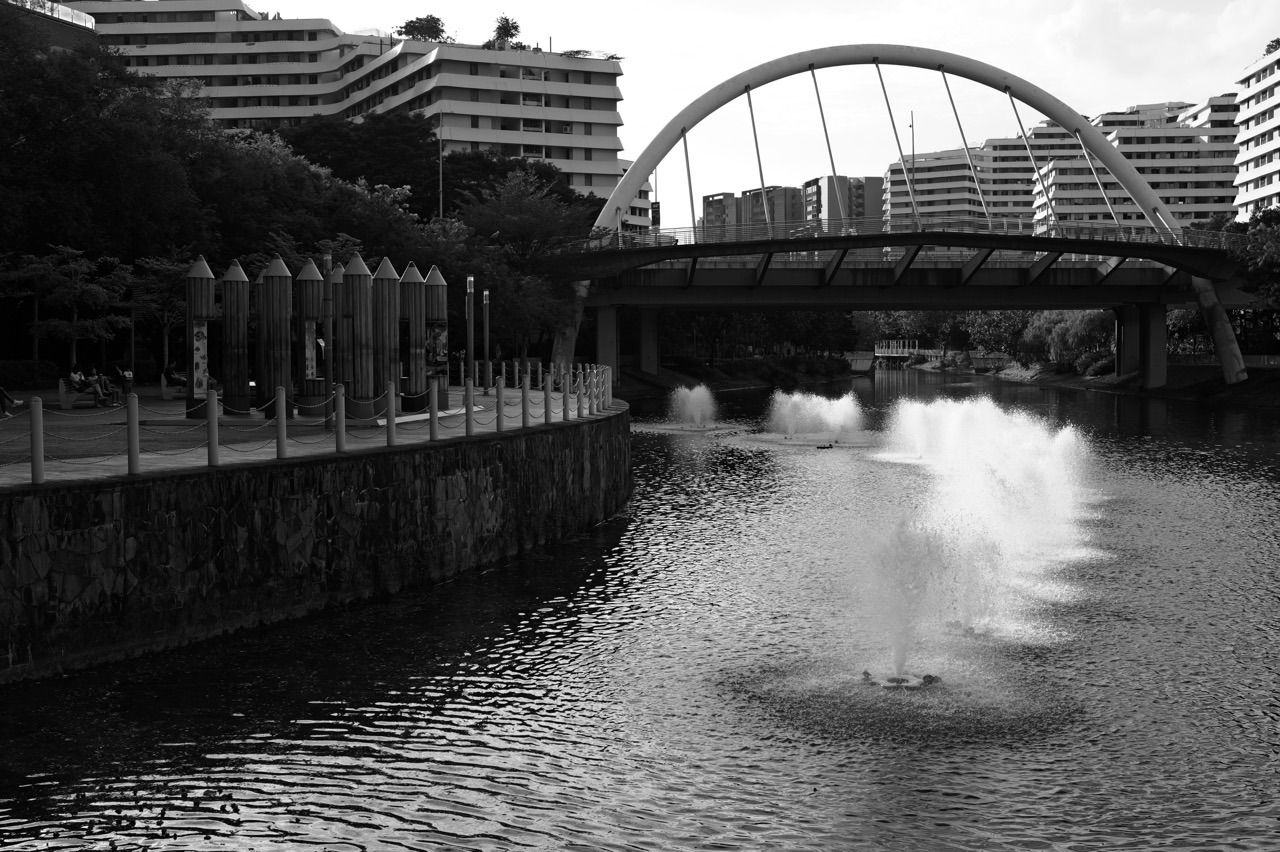
The top 10 things to do in Punggol for Chemistry students are to understand Lorong Halus Wetland’s engineered treatment, investigate NParks’ pollutant-removal planting, read real packaged-food labels, conduct a safe red-cabbage indicator activity at home, compare sugar dissolution, observe oil-water separation, study enzymatic browning in apples, learn responsible food storage, distinguish packaging materials for recycling and interpret NEA’s PM2.5 data without claiming it measures a single chemical compound.
Start with the clearest local example: PUB’s Lorong Halus Wetland page explains why an engineered wetland treats water associated with the former landfill before it reaches Serangoon Reservoir. Visit only if the public learning route and weather suit, or complete the inquiry at home from PUB’s materials. For a hands-on beginner task, use ordinary safe food-grade materials in a small supervised kitchen demonstration—never unknown waterway samples or cleaning chemicals.
This October 2026 guide is written for Primary Science curiosity, Secondary Chemistry students and families who want careful science in everyday Punggol. It distinguishes what an agency documents, what a learner directly observes and what a hypothetical worksheet assumes. Chemistry is not a collection of dramatic colour changes: it is reasoning from composition, measurable quantities and controlled conditions.
Choose a Punggol Chemistry question
- Water chemistry: investigate documented treatment at Lorong Halus or the roles NParks assigns to waterway planting.
- Food chemistry: read SFA ingredient labels, observe safe apple browning and compare carefully stored packages.
- Mixtures and solutions: try small supervised food-grade indicator, sugar-dissolution or oil-water demonstrations at home.
- Materials chemistry: classify clean packaging and compare actual NEA recycling instructions.
- Air chemistry: learn why regional PM2.5 concentrations are not the same thing as PSI or detailed chemical composition.
- School preparation: practise independent and dependent variables, control conditions, units, uncertainties and the difference between observation and explanation.
The Chemistry evidence ladder: a substance, a process and a measurement
First ask what material or system the question concerns. Water in a reservoir can contain many dissolved and suspended constituents, not one convenient chemical. A prepacked drink is a mixture whose ingredients have functions and concentrations that may not all be printed numerically. A package can contain multiple materials despite a single familiar appearance. Precise naming is the start of a defensible answer.
Second ask what process is under discussion: dissolving, mixing, oxidation, food storage, ecological treatment or atmospheric transport. These processes are not interchangeable. Oil briefly dispersing after a shake is not evidence of a stable chemical compound; sugar crystals disappearing from sight is not destruction of sugar molecules; clear-looking wetland water is not a validated water-quality result. State the proposed mechanism separately from the observed outcome.
Third ask what measurements actually exist. A quantitative claim requires a defined substance, unit, time and suitable method. If a learner uses invented numbers to practise dilution or concentration calculations, those figures must be called an illustrative worksheet. This distinction protects the credibility of an education page and teaches students what it means to test a claim.
Ten Punggol Chemistry activities and worked explanations
1. Read Lorong Halus Wetland as a treatment system—not a DIY chemistry laboratory
Location: Lorong Halus Wetland beside Serangoon Reservoir, from signed public learning routes.
The Chemistry behind the activity
PUB states that Lorong Halus Wetland treats water passing through a former landfill before it enters Serangoon Reservoir. Its ABC Waters learning trail covers the water cycle, the Four National Taps and bioengineering applied to leachate treatment. Chemistry students can connect this real purpose to concepts such as dissolved substances, changes in concentration and evidence from analytical testing. The authority’s description of a system is not a measurement made by a family visitor.
A safe and practical learning method
Read PUB’s site page and the official learning materials. Sketch three boxes: water associated with the former landfill, engineered treatment system and receiving reservoir. Beneath each box, write the scientific question it raises. Ask which dissolved components a laboratory might measure and how comparing influent and effluent results would depend on proper sampling, analytical methods and units. If visiting, remain in open areas and read interpretive signs. Do not improvise tests at the water’s edge.
Original worked example
An illustrative worksheet gives a starting dissolved-substance concentration of 12mg/L and a final value of 3mg/L for a completely fictional controlled sample. The hypothetical decrease is 9mg/L, or 75% of the initial concentration. It is not a PUB performance result, and the percentage is meaningless without identifying the substance, sampling conditions and measurement uncertainty. Write that limitation next to the arithmetic.
A deeper question to investigate
Distinguish a visually clear liquid from chemically and microbiologically safe water. A transparent appearance cannot establish the absence of soluble contaminants, pathogens or substances without colour. Discuss why an accurate treatment report needs a sampling location, analyte, laboratory method, uncertainty and a defined time period. That reasoning transfers to other environmental chemistry contexts.
Important safety and evidence limits
Do not enter treatment ponds, collect water or soil, smell unknown substances or handle landfill material. The site’s hands-on educational packages have their own permissions and supervision; a self-guided visit does not confer laboratory access.
Authority reference: Read Lorong Halus Wetland as a treatment system—not a DIY chemistry laboratory. Check the official page and site notices for current rules.
2. Identify what aquatic plants can and cannot prove at Waterway Park
Location: Punggol Waterway Park public paths overlooking planted banks.
The Chemistry behind the activity
NParks lists Red Thalia, Bulrush and Swamp Cabbage among aquatic plants associated with removing pollutants from Punggol Waterway Park’s environment. This is useful context for discussing how living systems interact with substances in water, sediment and soil. The statement documents design intentions and biological functions; it does not provide a live concentration measurement or show that any single visible plant cleaned a specified volume on the day.
A safe and practical learning method
Take a short safe walk or use NParks’ published plant notes. List the plant names as species noted by the authority, then make a second list of features actually visible from the path. Keep those lists distinct, because park maintenance and plant appearance can change. On paper draw arrows representing potential substances moving among water, sediment and plants, labelling this as a conceptual system diagram rather than a direct trace of actual molecules.
Original worked example
A student sees a group of broad leaves by the water and writes that the plants removed 50mg of nitrate from the canal today. Nothing observed supports the quantity, substance or causal statement. A defensible version is: ‘NParks describes the use of aquatic planting for pollutant removal. I observed planted waterway vegetation, but no chemical concentration was measured.’ This is an evidence-based interpretation rather than an invented chemistry result.
A deeper question to investigate
Ask how a before-and-after comparison could be misleading if upstream concentrations, flow rates and rainfall change. The lesson connects chemical analysis with control conditions and sample representativeness. Older students can explain why removal in milligrams depends on both concentration and water volume, not simply the colour of a bank’s vegetation.
Important safety and evidence limits
Stay on permitted paths. Do not harvest Swamp Cabbage or any other waterway plant to cook, eat or investigate. Never infer an edible plant is safe because its common name resembles a vegetable.
Authority reference: Identify what aquatic plants can and cannot prove at Waterway Park. Check the official page and site notices for current rules.
3. Decode a packaged-food ingredient label in a Punggol grocery shop
Location: A currently operating public supermarket or provision shop selected from a real Punggol directory.
The Chemistry behind the activity
SFA’s February 2026 food-label guide explains that prepacked food labels name the product, list ingredients in descending order by weight and include legally required information. It also distinguishes the net quantity from nutrition claims and explains allergen declarations. That makes a supermarket label a readable chemistry and consumer-science document: food products contain mixtures with functions, proportions and potential allergens.
A safe and practical learning method
Select two legitimately displayed products of the same broad category without opening packages. Look at the food name, ingredients, net quantity, storage instructions and any nutrition information panel. Identify water, sugars, oils, acids or stabilisers when present, but do not assume a label gives exact mass percentages for every ingredient. Record the label’s wording from your own observation or use SFA’s illustrative examples. Ask which claims are regulated and which are merely advertising language.
Original worked example
Suppose a fictional beverage label lists water, sugar, fruit juice and citric acid in that order. The student can correctly say the ingredients are listed by descending proportion by weight under the relevant labelling rules. They cannot calculate the exact grams of sugar from the order alone. A separate nutrition panel, if provided, might support a per-100ml calculation; without it, a numerical assertion would be guesswork.
A deeper question to investigate
Create two columns: ‘what the ingredients list proves’ and ‘what it does not prove’. A list can flag the presence of an ingredient, but it cannot show the food’s reaction rate, microbiological safety after improper storage or the precise proportion of each unlabeled component. Discuss why allergy risks deserve particular care and why the product manufacturer is the appropriate source of unanswered composition questions.
Important safety and evidence limits
Do not open, taste, photograph shoppers or interfere with merchandise for a classroom project. For serious food allergy decisions, labels and professional medical guidance take priority over a student’s experiment.
Authority reference: Decode a packaged-food ingredient label in a Punggol grocery shop. Check the official page and site notices for current rules.
4. Use a red-cabbage indicator as a small kitchen colour experiment
Location: A supervised household table in Punggol, using food-grade ingredients and washable utensils.
The Chemistry behind the activity
Anthocyanin pigments in purple cabbage change colour with surrounding acidity. A small kitchen indicator exercise can introduce acid–base ideas before formal titration, provided the limits are clear. A colour change is qualitative: it does not produce a precise pH value or establish that a household substance is safe. Students should understand the difference between a visible indicator response and a calibrated laboratory measurement.
A safe and practical learning method
An adult prepares a small amount of purple-cabbage-coloured water from clean cabbage using an ordinary food-safe method, and allows it to cool completely. Put a little indicator in separate clear cups. Compare a small amount of plain drinking water, diluted food-grade lemon juice and a separate mild baking-soda solution, with the adult overseeing quantities. Do not combine all cups. Record colours against a white sheet and label the conditions. Dispose of the small demonstration mixtures appropriately rather than drinking them.
Original worked example
A student’s observation table might record the lemon cup as pinker than the plain-water cup and the baking-soda cup as more blue-green. The conclusion is that the pigment responds differently under the tested conditions. The student should not write ‘lemon juice had pH 3.00’, because the colour alone lacks the calibration and precision for that number. Differences in dilution and cabbage extraction also affect the observation.
A deeper question to investigate
Repeat with equal indicator volume and the same viewing background, changing only one diluted food-grade sample. Discuss why lighting, cup colour and concentration can confound the apparent shade. Older learners can propose using recognised pH standards and suitable laboratory instruments in a supervised school setting, without attempting hazardous calibration at home.
Important safety and evidence limits
Use only identified ordinary food-grade household ingredients for this activity, not drain cleaners, bleach, disinfectants or unknown liquids. Do not mix household cleaning chemicals, heat solutions unsupervised or taste demonstration cups. Anyone with sensitivities should use a non-contact classroom alternative.
Authority reference: Use a red-cabbage indicator as a small kitchen colour experiment. Check the official page and site notices for current rules.
5. Investigate sugar dissolving at two safe temperatures
Location: At home using drinking water, identical transparent cups and measured small quantities of sugar.
The Chemistry behind the activity
Dissolving is not the same as disappearing. When a suitable amount of sugar dissolves in water, the sugar remains part of a solution, although crystals are no longer visible. Temperature, stirring and particle size can affect the observed time to dissolve, which makes experimental controls important. This low-risk household exercise gives children practice in recording a change rather than inventing a result before the test.
A safe and practical learning method
Prepare two equal volumes of water, one cool and one room temperature, with no boiling water required. Keep the cups identical and use equal quantities and grain sizes of table sugar. Add sugar at a comparable moment and stir each cup using the same number and pattern of gentle stirs. Record what happens and how long visible grains remain if they are safely observable. Change only one variable where possible; label practical uncertainties. Ensure a supervising adult handles any equipment appropriate to the child’s age.
Original worked example
Illustrative result: a student observes that a small spoon of sugar becomes difficult to see after twelve stirs in the room-temperature cup and seventeen in the cooler cup. Those are hypothetical observations, not guaranteed numbers; different conditions could give different results. The conclusion should mention the controlled amounts and the possibility that stirring was not perfectly uniform. It should not assert that all sugar molecules have vanished.
A deeper question to investigate
Distinguish rate of dissolution from solubility at equilibrium. The time until visible grains disappear is not a direct measurement of the maximum concentration a liquid can hold. Students can design a separate supervised school experiment to study solubility, but a kitchen activity should not require excessive sugar or heating water to dangerous temperatures.
Important safety and evidence limits
Do not use hot water or chemistry reagents. Keep floors dry, use clean utensils, and discard any experimental solution if it is not prepared and handled as normal food. Do not claim the activity makes unsafe water potable.
Authority reference: Investigate sugar dissolving at two safe temperatures. Check the official page and site notices for current rules.
6. Test a simple oil-and-water mixture to learn about immiscible liquids
Location: A kitchen table in Punggol using a small transparent lidded food container.
The Chemistry behind the activity
Ordinary edible oil and water do not form a lasting uniform mixture when combined without suitable conditions. Droplets may briefly disperse with gentle shaking and then separate. This is an approachable way to introduce polarity and phase behaviour without using strong solvents, heat or unknown chemicals. The demonstration should separate observation from interpretation: a brief cloudy appearance does not prove a stable chemical compound was formed.
A safe and practical learning method
With adult permission, put a little drinking water and a smaller quantity of ordinary food-grade cooking oil in a transparent lidded container. Close it and tilt or gently shake it briefly over a tray. Observe the appearance immediately and after it stands undisturbed. Write down where the visible phases settle and whether droplets persist. Use modest quantities and clean the container normally afterward. Do not introduce cleaning liquids or add unrelated chemicals simply to make the experiment more dramatic.
Original worked example
Suppose two students see a cloudy dispersion just after shaking but clearer upper and lower regions after five minutes. They conclude that the phases tend to separate under the tested conditions. This does not demonstrate that oil evaporated or that the water was chemically purified. To make the claim stronger, they would need repeated observations under consistent conditions.
A deeper question to investigate
Ask whether the visible oil layer’s thickness can be used to infer exact volumes from a curved container. It cannot without calibration. A related classroom discussion may cover how a food emulsion remains dispersed with stabilisers, but the basic test should not be expanded into a cleaning-chemical mixing demonstration.
Important safety and evidence limits
Use only small amounts of safe ordinary food ingredients. Do not drink the mixture, heat it, pour it down a drain in large quantities or leave slick spills. Never mix bleach, ammonia, solvents or detergents during this experiment.
Authority reference: Test a simple oil-and-water mixture to learn about immiscible liquids. Check the official page and site notices for current rules.
7. Observe browning in a cut apple as a food-chemistry problem
Location: Home or a supervised school food-preparation area, not a public park bench.
The Chemistry behind the activity
Freshly cut apple flesh can darken after exposure to air as compounds in the damaged cells undergo enzyme-catalysed oxidation. Browning provides a visible reminder that chemical and biochemical processes occur in familiar foods. A comparison should not be confused with a laboratory identification of the products formed, and visual browning alone is not a complete food-safety test.
A safe and practical learning method
A supervising adult prepares comparable small apple pieces with a clean utensil. Leave one exposed under ordinary food-safe conditions for a short observation period and put a little food-grade lemon juice on another if suitable for all participants. Record the time and visible difference using the same light and plate background. Do not leave food at room temperature for prolonged periods. Dispose of observation portions appropriately, and prepare separate fresh food for eating if desired.
Original worked example
An illustrative observation notes that the untreated apple surface becomes more brown over fifteen minutes while the lemon-treated surface changes less. The student can propose an effect of acidity on the browning pathway, but must acknowledge that different slice sizes, coverage and apple varieties could affect the result. The exercise does not establish a precise enzyme rate or shelf life.
A deeper question to investigate
Construct a table for time since slicing, treatment and a qualitative colour category. The data could be subjective, so ask how to standardise photographs, lighting and timing. An older student could discuss why a chemical process can be influenced by enzymes and oxygen without attempting to isolate reagents or claim that acidic food prevents every type of spoilage.
Important safety and evidence limits
Take allergies, cross-contamination and food handling seriously. Do not eat old or poorly stored observation pieces, and do not treat changes in colour as the only indicator of safety. SFA storage guidance governs any retained prepared food.
Authority reference: Observe browning in a cut apple as a food-chemistry problem. Check the official page and site notices for current rules.
8. Distinguish safe food storage from a chemistry experiment
Location: A Punggol household kitchen using SFA’s safe-food guidance.
The Chemistry behind the activity
SFA’s guidance covers storage, refrigeration, safe thawing and avoiding cross-contamination. Food chemistry and microbiology intersect here, but a home experiment should not deliberately create conditions that encourage foodborne illness. Students can learn from labels, temperatures and food-handling diagrams without cultivating mould, comparing spoiled meat or trying to recover food that smells wrong.
A safe and practical learning method
Read the SFA storage instructions and inspect packaged food labels already present in your home. Classify them into pantry, chilled and frozen requirements according to their actual labels. Draw the refrigerator zones schematically, separating raw foods from ready-to-eat items and noting that precise storage recommendations depend on the product. Ask an adult to identify which foods are nearing their labelled dates; use a safe first-in-first-out plan rather than tasting suspicious items.
Original worked example
A child places an unopened shelf-stable item into a model ‘refrigerate immediately’ box simply because it contains food. The label actually says to store in a cool dry place until opened and to refrigerate after opening. They correct the classification by reading the conditional instruction. The achievement is interpreting the label, not proving the food is safe by touch or appearance.
A deeper question to investigate
Compare the words ‘best before’, ‘use by’ or the local product’s actual expiry declaration only as they appear and within the applicable official explanation. Ask why incorrect storage can change food quality and risk even when a package has an apparently distant date. Do not substitute visual inspection for an official recall or safety notice.
Important safety and evidence limits
Never deliberately spoil or culture food at home as a teaching exercise. Follow SFA guidance, throw away mouldy food and use professional advice when handling food with specific health or allergy concerns.
Authority reference: Distinguish safe food storage from a chemistry experiment. Check the official page and site notices for current rules.
9. Compare plastic packaging as materials instead of assuming all polymers recycle alike
Location: Clean household packaging in Punggol and the NEA household recycling guide.
The Chemistry behind the activity
Food packages use different polymers, combinations, coatings and barrier structures to meet practical needs. NEA explains household recycling with material acceptance and cleanliness requirements; merely spotting a recycling-looking symbol does not guarantee a local recycler accepts every object. This provides a materials-chemistry lesson about how composition, contamination and manufacturing choices affect what can be reused or recycled.
A safe and practical learning method
Collect a few clean empty packages that are safe to handle. Record any printed material label, whether the item is a film, rigid bottle or composite material, and any food residue. Compare with NEA’s current accepted-items guide. Sort the items by the appropriate actual disposal stream, not by a guess based solely on visual appearance. Consider why two packages that both contain plastic might behave differently when bent or exposed to heat, but do not melt or burn them.
Original worked example
Two learners find a rigid water bottle and a multi-layer snack wrapper. Both are described casually as plastic, but their handling and recyclability may differ. The learner’s evidence table cites NEA rather than claiming every resin-code item can go into the same bin. A correct answer includes uncertainty where a package’s construction or acceptance is unclear.
A deeper question to investigate
Ask whether a more complicated barrier film might preserve food but make material separation harder. Discuss design trade-offs without inventing a recycling yield or claiming one package is universally environmentally best. Link the choice to reducing unnecessary packaging and reusing existing safe containers.
Important safety and evidence limits
Never burn, melt, dissolve or cut unknown plastic materials as a home chemistry exercise. Do not put batteries, electronics or contaminated items into the household recycling bin; follow NEA’s designated systems.
Authority reference: Compare plastic packaging as materials instead of assuming all polymers recycle alike. Check the official page and site notices for current rules.
10. Explain haze particles without confusing PM2.5 with a chemical formula
Location: At home using NEA environmental information, with Waterway Park as an optional later context.
The Chemistry behind the activity
PM2.5 refers to particulate matter with aerodynamic diameter up to 2.5 micrometres, not to a single compound called ‘PM2.5’. NEA provides regional one-hour PM2.5 and 24-hour PSI information for different decision purposes. Chemistry students can ask what suspended particles may contain and how size differs from composition. Neither an app reading nor a hazy photograph independently identifies the chemical constituents of airborne particles at a specific location.
A safe and practical learning method
Open NEA’s myENV guidance and identify the metric, unit, time window and reporting region. Compare the meaning of an hourly PM2.5 concentration with the dimensionless PSI index. Make a card showing ‘particle size category’, ‘possible chemical components’ and ‘observed concentration’. A student may create a hypothetical arithmetic question involving micrograms per cubic metre, but it must be labelled as fictional rather than today’s measurement in Punggol.
Original worked example
Hypothetical data: one regional one-hour reading is 20µg/m³ and another is 30µg/m³. The absolute difference is 10µg/m³, and the second is 50% higher relative to the first. This does not prove Punggol’s own roadside concentration was exactly either value, and it does not mean PSI rose by 50%. Each metric must be analysed separately.
A deeper question to investigate
Discuss why collecting roadside dust on a tissue and declaring its chemical composition is scientifically invalid. Proper analysis requires an appropriate sampling method and laboratory instruments. Make a list of information missing from a raw haze number: source attribution, particle composition, exposure at the individual person’s location and uncertainty.
Important safety and evidence limits
Do not expose people to haze as an experiment or encourage outdoor exertion in poor air conditions. Follow current NEA health advisories and adjust park plans when warnings apply.
Authority reference: Explain haze particles without confusing PM2.5 with a chemical formula. Check the official page and site notices for current rules.
A three-day Chemistry learning plan that doesn’t require a laboratory
First session: evidence about water
Read PUB’s Lorong Halus explanation and NParks’ waterway planting information. Write two columns, one for documented system functions and one for chemical measurements you do not possess. If a safe public trail visit fits the weather and participants, examine a sign or viewpoint from the permitted path. Finish with a short paragraph explaining why visual observation and chemical analysis answer different questions. No sample is collected.
Second session: safe mixtures in the kitchen
At home, select one low-risk activity: food-grade cabbage indicator, sugar dissolving or oil-water separation. Use small quantities and suitable adult supervision. Decide in advance which variable changes, keep other variables as stable as practical, and record visible results. Keep all cleaning chemicals, heat sources and unknown liquids out of the activity. Dispose of demonstration contents appropriately and leave the work area clean.
Third session: label and data literacy
Use SFA’s food-label page to practise reading an ingredient list, then compare it with your household’s actual package. Use NEA’s published recycling information to sort safe clean packaging. Finally, take a hypothetical PM2.5 number and label its unit and regional nature. The goal is a short evidence-based notebook, not tasting a substance or producing an impressive but uncontrolled colour display.
How to write the first accurate conclusion
An appropriate Chemistry conclusion includes the question, controlled conditions, what was observed, an explanation supported by known chemistry and at least one uncertainty. For example, ‘Our small oil-and-water demonstration formed visible droplets immediately after gentle shaking and separated after standing. It supports the idea that these liquids do not form a stable single phase under our conditions. We did not measure exact droplet sizes or test other additives.’ This is stronger than ‘Oil hates water’ because it is specific and limited.
Another example is the red-cabbage activity. A student may correctly see different colours after adding lemon or a mild baking-soda solution. They should not infer a precise pH without calibration. Their conclusion can mention a qualitative indicator response and the need for standards to quantify pH. A small scientifically sound explanation can be more useful than an elaborate kitchen demonstration.
For environmental chemistry the evidentiary limit is even more important. PUB’s descriptions support claims about designed treatment; they do not establish that a visitor measured a percentage reduction. If a field question truly requires sampling, consult authorised, supervised educational activities rather than circumventing water-access rules. Science and safety reinforce each other.
Ten mistakes Chemistry learners should avoid
- Calling PM2.5 a chemical formula rather than a particle-size category.
- Using an attractive photograph as proof of a water-quality concentration.
- Assuming an ingredient’s place in a label gives its exact mass percentage.
- Mixing cleaning chemicals with food-grade indicator demonstrations.
- Confusing rate of dissolving with maximum solubility.
- Treating a temporary oil dispersion as a new chemically bonded substance.
- Declaring food safe solely because it has not visibly browned or moulded.
- Assuming every plastic package with a symbol goes into the same local recycling process.
- Reporting hypothetical calculation values as actual Punggol monitoring data.
- Entering park water, wetland infrastructure or restricted planted areas to gather samples.
Frequently asked questions
Can Chemistry be learned outdoors in Punggol?
Yes, through observation and official documentation about water treatment and planting, not by unauthorised sampling or chemical experiments in public water.
What does PUB say Lorong Halus Wetland does?
It treats water associated with a former landfill before that water reaches Serangoon Reservoir.
Can families collect water at Lorong Halus for tests?
Not without the specific appropriate permission and safeguards. Public learning descriptions do not authorise independent sampling.
Which aquatic plants does NParks mention at Waterway Park?
Red Thalia, Bulrush and Swamp Cabbage appear in NParks’ description of pollutant-removal planting.
Does the presence of those plants prove the water is drinkable?
No. Water quality and drinking safety require appropriate measurements and official treatment and monitoring.
Where can I learn about food chemistry in Punggol?
Use a legitimate grocery label, a safe supervised kitchen observation or SFA’s food-label and food-handling information.
Do ingredient lists provide exact percentages?
Not generally. SFA explains that ingredients are listed in descending order by weight; precise amounts need separate supporting information.
Can I use vinegar or lemon in a cabbage indicator demonstration?
A small supervised food-grade demonstration can be appropriate, but do not involve household cleaning chemicals or ingestion of experimental solutions.
Does cabbage indicator reveal an exact pH?
Not by casual visual comparison. A precise result requires a calibrated method and suitable standards.
What is the difference between dissolving and melting?
Dissolving disperses a solute into a solvent to form a solution; melting is a change from solid to liquid phase. They are different processes.
Why does oil separate from water?
Their molecular interactions favour separate phases under ordinary conditions; shaking may temporarily disperse droplets.
Why does a cut apple brown?
Enzymatic oxidation can change pigments and compounds after cutting, although browning alone does not determine complete food safety.
Can we deliberately grow mould for a home Chemistry project?
That is not recommended as a casual family experiment. Use safe food-handling observations without deliberately creating contamination.
Are all plastics recyclable through blue bins?
No. Follow NEA’s actual accepted material and cleanliness guidance; material composition and contamination affect processing.
What is PM2.5?
Fine particulate matter defined by aerodynamic particle size up to about 2.5 micrometres, not one specific chemical substance.
Are PSI and PM2.5 interchangeable?
No. NEA publishes them as different metrics with distinct time windows and guidance.
Can an HDB kitchen substitute for a school chemistry lab?
Only for suitable low-risk household activities under supervision; it is not a venue for hazardous reagents, heating or precise analytical tests.
How do I write better Chemistry conclusions?
Name the question, observation, conditions, supported explanation and uncertainty; do not invent exact values.
What if the experiment does not behave as expected?
Record the actual result, check the first uncontrolled variable and design a safe repeat instead of forcing an expected conclusion.
Do I need specialist equipment for every activity?
No. Reading credible sources, labels and data critically is real chemistry learning and can be completed without purchasing equipment.
Official sources and related eduKate Punggol guides
- Read Lorong Halus Wetland as a treatment system—not a DIY chemistry laboratory
- Identify what aquatic plants can and cannot prove at Waterway Park
- Decode a packaged-food ingredient label in a Punggol grocery shop
- Use a red-cabbage indicator as a small kitchen colour experiment
- Investigate sugar dissolving at two safe temperatures
- Test a simple oil-and-water mixture to learn about immiscible liquids
- Observe browning in a cut apple as a food-chemistry problem
- Distinguish safe food storage from a chemistry experiment
- Compare plastic packaging as materials instead of assuming all polymers recycle alike
- Explain haze particles without confusing PM2.5 with a chemical formula
- SFA allergen and food label requirements
- HPB My Healthy Plate and food education
- Related Punggol citizen science
- Geography fieldwork around the wetland and waterway
- Safe practical design and testing in Punggol
- eduKateSG source learning format and disciplined worked explanations
Good Chemistry starts with a better question
Chemistry helps us interpret what ordinary appearances conceal. A transparent liquid can contain dissolved substances, a label can reveal a complex mixture, and an attractive waterway can rely on engineered environmental management. Choose one safe Punggol context, read its reliable source, explain what is observed and be precise about what remains unmeasured. That is how careful scientific understanding grows.


