
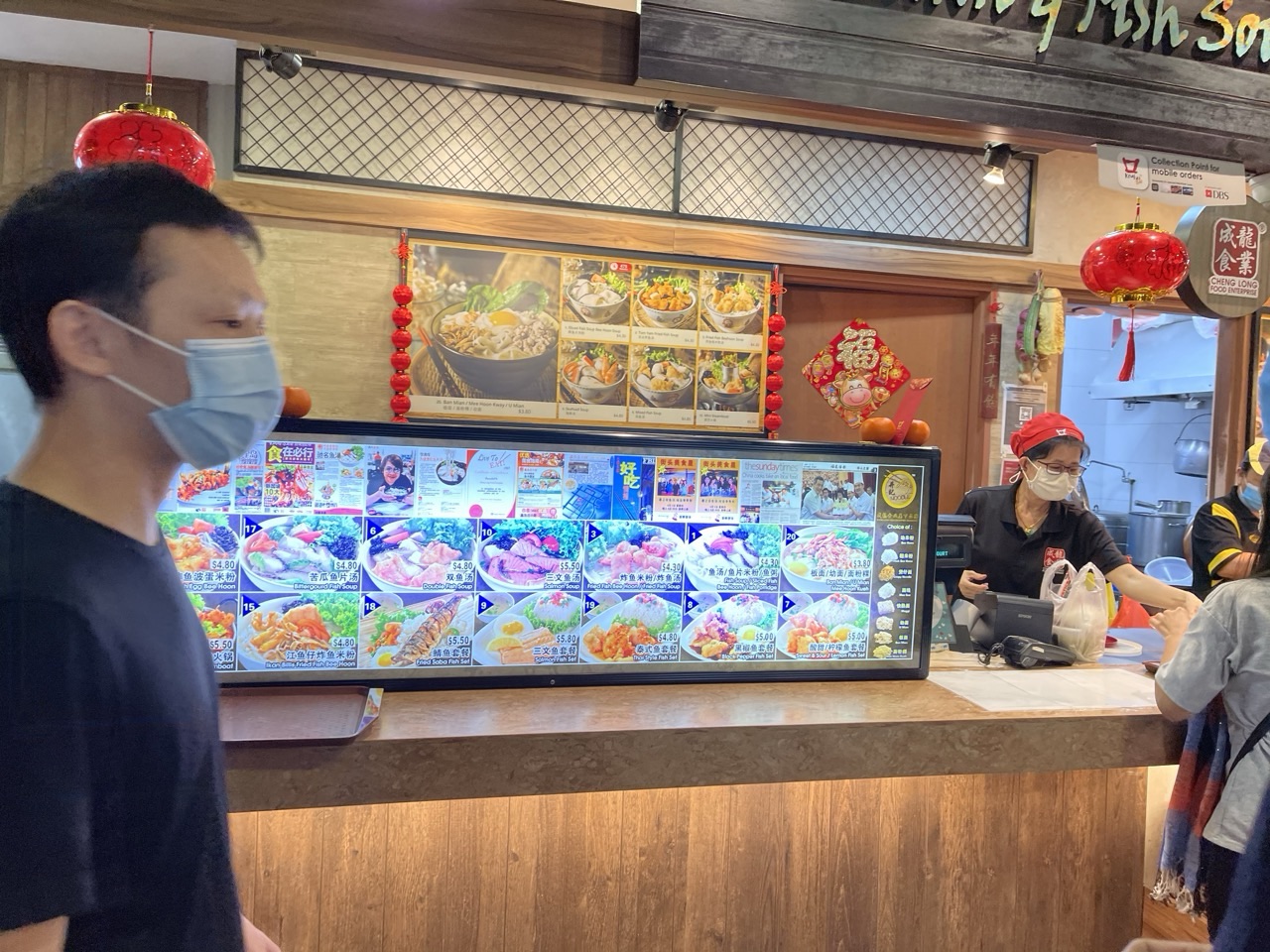
How can a child living in Punggol study Food Science all the way to university? Start with food as matter, plant and animal systems, safe observation and correct measurement. Secondary Science adds molecules, microbes, heat, rates and experimental control. JC and polytechnic routes develop Chemistry, Biology, Mathematics and laboratory reasoning. At university, Food Science examines food composition, quality, safety, processing, nutrition, product design and regulatory evidence. This is not simply learning recipes, and it does not automatically qualify a graduate to diagnose nutritional disorders or practise a regulated health profession.
Three current university routes show the educational differences. NUS College of Humanities and Sciences offers a four-year BSc (Honours) in Food Science and Technology, with Industrial Applications and Research and Innovation specialisations; the university describes food quality/safety, innovation, processing and nutrition as its four themes. NTU offers a Second Major in Future Foods for cohorts from 2025 onward combining eligible home degrees with food chemistry, nutrition, advanced meat alternatives, processing, food safety and analytics. SIT Food Technology at Punggol Campus is a four-year, 240-credit degree combining food science, engineering, design and business, with 8–12 months of Integrated Work Study Programme experience. These are not one interchangeable course.
Important 2026 regulatory distinction: Singapore Food Agency (SFA) describes pre-market approval requirements for defined novel foods under the Food Safety and Security Act, with relevant provisions taking effect on 28 November 2025. New production methods or alternative proteins may require risk assessments, not just a taste test or popularity survey. Nutrition and health claims on foods are separately subject to regulatory requirements; the SFA labelling guidance notes that since May 2024 the Ministry of Health and Health Promotion Board oversee nutrition labelling and nutrition and health claims. This guide gives educational examples, not advice to manufacture or sell food outside the applicable rules.
Quick answer: how NUS, NTU and SIT Food Science differ
| Programme | Current published structure | First question to ask |
|---|---|---|
| NUS FST BSc (Honours) | Food Science and Technology major with Industrial Applications and Research and Innovation specialisation routes | Do major prerequisites and chosen placement/research requirements fit? |
| NTU Future Foods second major | 2025-onwards second major: five compulsory courses and five elective courses, totalling 30 AUs | Which eligible home degree and Future Foods track is available? |
| SIT Food Technology | Four-year B Food Technology (Hons), 240 credits at Punggol, including an 8–12-month IWSP | Which approved labs, engineering modules and workplace requirements apply? |
| Polytechnic Applied Science | Named diplomas with provider-specific practicals and admission requirements | Which diploma modules prepare for which future degree? |
| ITE Applied Food Science | Course-specific Higher Nitec technical learning and progression options | Which duration, campus and next qualification are applicable? |
From school Science to Food Science research
| Learning stage | Science concept | Meaningful application |
|---|---|---|
| Primary | Living things, plants, digestion, measurement | Explain what was observed in a food-related example |
| Secondary | Particles, nutrients, energy, chemical change and microorganisms | Distinguish safe handling from unsupported food claims |
| JC / applied diploma | Rates, molecular structures, microbiology, statistical data | Measure and interpret results with units and controls |
| Undergraduate Food Science | Processing, analysis, sensory evaluation, packaging and regulation | Link a product claim to the test that supports it |
| Approved research or industry work | Traceability, product design, quality and scientific communication | Record genuine outcomes and limitations without exaggeration |
Thirty-eight explanations: what Food Science actually measures
1. Food Science is not the same as cooking
Food preparation is a familiar application, while Food Science asks systematic questions about chemical composition, biological safety, physical properties, processing and evidence. One attractive dish is not proof that a manufacturing method is stable or safe.
Concrete teaching check. Ask which property was measured and which conditions were controlled. A successful recipe at home is not automatically an industrial food-safety qualification.
2. Ingredients and nutrients are not interchangeable
An ingredient list identifies components used to make a food; a nutrition panel reports quantities such as energy, protein, fat or carbohydrate under defined units. Neither alone proves a product treats a disease.
Concrete teaching check. A student sees wheat flour in an ingredient list and predicts exact protein grams without quantitative information. The inference is unsupported.
3. Serving size changes the meaning of a label
Per-serving values depend on the stated serving size, while per-100g or per-100ml values help compare products on a common basis. A large package need not contain one serving.
Concrete teaching check. Two drinks use different serving sizes. Compare the same unit of volume before declaring one lower in sugar.
4. Energy values differ from electrical power
Food energy commonly appears as kcal or kJ, while electrical devices use watts and energy units such as kWh. The quantities can be related physically but are reported differently for their use.
Concrete teaching check. A pupil copies 100 kcal as 100 W and has confused energy with a rate. Ask for the stated quantity and correct unit.
5. Macronutrients have different molecular structures
Carbohydrates, proteins and fats have characteristic chemical relationships and roles, but food products contain mixtures and their actual properties depend on preparation and composition.
Concrete teaching check. A student labels every carbon-containing food compound as sugar. Ask which molecular feature supports its classification.
6. Starch and sugar are not identical
Starches are carbohydrate polymers with properties different from simple sugars. Food processing can change their physical behaviour without every step being a complete chemical conversion.
Concrete teaching check. A thickened sauce may contain starch; its appearance does not determine exactly how much sugar or starch is present.
7. Proteins have structures that affect function
Protein molecules can fold or aggregate, and heating or changes in environment can influence texture and behaviour. A food texture outcome cannot be understood fully from a single ingredient name.
Concrete teaching check. An egg white becomes opaque with heating, but the observation alone does not quantify every molecular change. Link structure to the process.
8. Lipids influence more than calories
Food lipids contribute to texture, flavour and physical properties, and different lipid compositions can behave differently with temperature and processing.
Concrete teaching check. One oil may remain liquid under a stated condition while another mixture contains more solid fat. Appearance alone does not measure the full fatty acid profile.
9. Water activity is not simply water percentage
The availability of water to microorganisms and chemical processes differs from total water content. Two foods with similar moisture may have different water-activity conditions because of other ingredients and structure.
Concrete teaching check. A high-sugar preserved product may behave differently from a similarly moist unpreserved product. Safe shelf life still needs validated evidence.
10. pH is one part of food quality and safety
Acidity can influence flavour, processing and some microbial behaviour, but one pH value cannot certify that a food contains no pathogens or toxins.
Concrete teaching check. A fictional product pH is measured as 4.5. Without method, packaging and microbiological assessment, its safety cannot be declared from that number alone.
11. Temperature and time both matter in processing
Heat transfer depends on temperature difference, duration, product geometry and physical properties. A food’s surface temperature may differ from its interior under relevant conditions.
Concrete teaching check. A container feels hot outside but the centre has not been measured. Do not assume uniform internal conditions or recommend unsafe heating procedures.
12. Heat and temperature are different quantities
Temperature describes a thermal state under a measure; transferred heat is energy. Food process design needs both, together with mass and thermal properties.
Concrete teaching check. Two equal-temperature food samples with different masses can require different energy transfers for a given temperature change.
13. Food microbiology requires approved laboratory work
Microbes can be beneficial, harmless or harmful depending on organism and context. Testing food safety through unknown home cultures is not an appropriate school experiment.
Concrete teaching check. Use supplied microbial data or supervised school methods; do not culture spoiled food or unknown organisms on a kitchen counter.
14. Fermentation is a controlled biological process
Fermentation can change flavour and texture through microbial activity in suitable conditions. Not every bubbling mixture is a safe fermentation or the same microbial process.
Concrete teaching check. A student’s homemade mixture bubbles, but without a defined organism and process it cannot be certified safe or chemically identified.
15. Food spoilage and foodborne illness are different outcomes
A product may show visible deterioration, while a hazard may be present without obvious spoilage. Appearance, smell or taste cannot replace appropriate safety evidence.
Concrete teaching check. Do not encourage tasting an unknown sample to determine whether it is safe. Scientific testing and applicable guidance are required.
16. Shelf life is defined by several criteria
Shelf life may depend on microbial, chemical, physical, sensory and legal criteria under specified storage conditions. A favourable weight-change result is only one measurement.
Concrete teaching check. A package loses less moisture in an experiment, but this does not demonstrate a longer safe shelf life without relevant other tests.
17. Packaging is a materials-science question
Packaging can protect food from moisture, oxygen, light or handling while meeting practical and regulatory requirements. Transparency or attractive design does not prove barrier performance.
Concrete teaching check. A fictional film performs well against water vapour but poorly against oxygen. Ask which application actually needs which barrier.
18. Food colour does not determine composition
Colour changes can arise from physical or chemical processes, but the appearance alone rarely identifies every substance or contaminant.
Concrete teaching check. A sample darkens with heating. Ask what additional analytical evidence would support a proposed mechanism.
19. Food analysis requires traceability
A quantitative laboratory result is meaningful only when its sample identity, method, calibration and units are known. A precise number for the wrong sample can mislead a whole product decision.
Concrete teaching check. Two coded samples are swapped before analysis. The instrument still produces numbers, but their assigned identities are unreliable.
20. Calibration supports accurate measurement
An analytical method needs appropriate standards and checks over its intended range. A display showing several decimals is not proof of that precision or lack of bias.
Concrete teaching check. A fictional instrument reads 10.2 for a reference 10.0. Ask if the offset remains identical at all concentrations. One point cannot establish that.
21. Sensory testing is not a safety test
Taste, texture and consumer preferences can be assessed under suitable methods and ethical practice. Positive sensory feedback does not establish absence of allergens or pathogens.
Concrete teaching check. A product wins an imaginary flavour survey but lacks required safety data. These outcomes answer different questions.
22. Product development has more than one success criterion
A new food may need acceptable flavour, stability, cost, packaging, ingredients, regulatory compliance and production feasibility. Improving one property may adversely affect another.
Concrete teaching check. A recipe reformulation reduces added sugar but changes texture. Ask what paired tests are needed rather than declaring automatic overall improvement.
23. Food quality and food safety are distinct concepts
A product can meet a target mass or texture specification while failing a required safety criterion. A single favourable observation cannot establish total compliance.
Concrete teaching check. A batch passes weight tolerance but has untested microbiological conditions. The correct report identifies the tests completed and those missing.
24. Process yield is not product acceptability
Yield measures an output ratio under a defined process. A high mass yield does not prove every resulting unit is acceptable or that waste impacts are minimal.
Concrete teaching check. A 100 kg input produces 80 kg of product. That illustrative 80% yield says nothing about actual contaminants or lawful sale.
25. Alternative proteins are subject to scientific scrutiny
Novel proteins can originate from different plant, microbial or cell-culture approaches. Their process and composition determine which safety evidence is relevant. New does not imply safe or unsafe automatically.
Concrete teaching check. SFA’s novel food guidance requires applicable pre-market review of safety evidence before commercial supply. A school demonstration cannot substitute.
26. Cultivated foods have specific oversight needs
Cell-culture-based food production can involve controlled biological materials and manufacturing conditions. Home replication is not a safe educational activity.
Concrete teaching check. A learner may analyse the published approval framework or fictional process diagram without attempting cell cultivation.
27. Food standards change by date and category
Singapore’s FSSA provisions entered into force in tranches, with a first tranche commencing in November 2025. A claim based on older rules may not describe the current regulatory framework.
Concrete teaching check. Check the actual product category, current SFA guidance and commencement date rather than asserting the entire law has one effective date.
28. Nutrition and health claims need evidence
A product’s nutrition label and advertising claims must meet applicable rules and verifiable scientific evidence. No single food can be assumed to cure a condition from a marketing slogan.
Concrete teaching check. A snack labelled energy-boosting needs clear meaning and appropriate evidence; a catchy phrase is not clinical proof.
29. Regulatory authority depends on the question
Food safety, pre-market approvals, general labelling and nutrition or health claims have different responsibilities. SFA notes MOH/HPB oversight for nutrition-related claims since May 2024.
Concrete teaching check. Ask whether the issue concerns composition, novel ingredient safety, label content or a health claim before choosing the official source.
30. Allergy statements are not decorative text
Food allergens can pose serious risks, and consumer labelling must accurately reflect the product under applicable requirements. A recipe card cannot replace validated labelling and production controls.
Concrete teaching check. A student should compare ingredient and allergen information without diagnosing an individual’s reaction or testing exposure to allergens.
31. Food waste is a systems question
Waste reduction involves production, packaging, transport, handling and consumer behaviour. One apparent improvement can move a cost or environmental impact elsewhere.
Concrete teaching check. Reducing packaging mass may increase product loss under some conditions; a fair life-cycle comparison needs defined boundaries.
32. Local food examples are contexts, not laboratory evidence
Punggol shops and food courts show real food availability, but a photograph of a meal does not establish its detailed nutritional composition or food safety.
Concrete teaching check. A student can read lawful published labels and practise unit comparisons, not invent test results for a named local stall.
33. University Food Science requires Mathematics and labs
Quantitative analysis, engineering concepts and experiment design matter alongside Chemistry and Biology. A student strong at cooking may need support with formulas and uncertainty.
Concrete teaching check. A learner can describe fermentation accurately but must also calculate a concentration correctly and justify a fair comparison.
34. NUS FST has gateway and bridging rules
NUS lists FST1101B Science and Technology of Foods and relevant H2 backgrounds; bridging Chemistry or Biology can apply under programme rules. These are not guaranteed admission provisions.
Concrete teaching check. Read the qualification-specific NUS application rules and actual matriculation-year curriculum before choosing electives.
35. NTU Future Foods is a second major, not a standalone universal award
NTU’s cohort-2025-onward offering has compulsory and elective modules, with track options and an eligible home degree. Its description of Future Foods does not mean all NTU students can add it at will.
Concrete teaching check. Compare the published 30-AU requirements and eligibility with the student’s actual programme.
36. SIT Food Technology connects study with industry
SIT’s four-year 240-credit Food Technology degree at Punggol includes laboratory and engineering work and an 8–12-month IWSP in the programme description. Placements and projects are subject to actual arrangements.
Concrete teaching check. An approved industry project builds workplace learning but does not promise permanent employment or unrestricted commercial data use.
37. A Science major is not a dietitian’s licence
Nutrition study can deepen scientific understanding, but regulated professional healthcare qualifications and practice requirements are separate from a food-science degree.
Concrete teaching check. Do not claim that a minor in Nutrition automatically authorises someone to provide clinical treatment for a condition.
38. Independent explanation is stronger than repeated worksheets
A pupil might mix up water percentage and water activity, or compare serving sizes incorrectly. The teaching response should repair that exact misunderstanding and then test a different example.
Concrete teaching check. After guided correction, give a new label, experiment or process and ask what the evidence actually supports.
Six original Food Science worked examples
Labelled servings
An illustrative snack packet contains three servings, each labelled as 120 kcal. If all three are consumed, the declared total under that label is 360 kcal. This is a fictional arithmetic example, not advice on what an individual should eat. Comparing two products should use a common portion basis.
Mass yield and its limits
A hypothetical process receives 250 kg of ingredients and records 200 kg of finished product. A simple mass yield is 200/250 ×100%=80%. The figure does not identify the other mass streams, prove product safety or measure environmental performance.
A concentration calculation
A fictional analysis has 0.040 mol of solute in 0.800 L of solution. Molar concentration is 0.050 mol/L. The result does not itself identify the solute or establish whether the mixture is safe.
Same mass loss but different relative changes
An invented product A falls from 100 g to 95 g, while product B falls from 200 g to 195 g. Both lose 5 g, but their relative losses are 5% and 2.5%. Neither measurement alone establishes the safe shelf life.
Time and a processing rate
A fictional equipment line processes 120 kg of material over four hours. Its simple average processing rate is 30 kg/hour. The average does not prove that throughput was constant or that the resulting food met quality requirements.
Interpreting a consumer trial
In a hypothetical evaluation, 30 of 50 respondents prefer Product A. The observed sample preference rate is 60%. That number does not establish that every consumer will agree or that the product is nutritionally superior or safer.
Five-week Food Science education pathway
| Week | Focus | Independent evidence |
|---|---|---|
| 1 | Read current NUS, NTU and SIT course and intake documents | Distinguishes primary major, second major and SIT degree |
| 2 | Repair food chemistry, units and product-comparison reasoning | Correct quantities, mechanisms and label interpretation |
| 3 | Study microbial safety, preservation and packaging evidence | Separates one test result from safety conclusions |
| 4 | Review SFA novel-food and labelling boundaries | Regulatory claims matched to correct authority |
| 5 | Compare experiments, internships, research and workloads | Sourced next academic step without a career guarantee |
Frequently asked questions
Does NUS offer a Food Science and Technology major?
Yes. NUS CHS offers a BSc (Honours) in Food Science and Technology with listed specialisations.
Does NTU offer Future Foods?
Yes. NTU offers a Second Major in Future Foods for applicable cohorts from 2025 onward, under its programme rules.
Is SIT Food Technology at Punggol?
Yes. SIT lists a four-year, 240-credit degree at Punggol Campus with an 8–12-month IWSP.
Are those three university programmes equivalent?
No. A primary Science major, second major and applied Food Technology degree differ in structure and requirements.
Does learning Nutrition automatically qualify someone as a dietitian?
No. Professional health training and eligibility are separate.
Is food that looks fresh necessarily safe?
No. Appearance cannot establish all microbiological or chemical safety conditions.
What changed under the Food Safety and Security Act?
SFA states relevant novel-food pre-market approval provisions entered into force on 28 November 2025; the law is implemented in tranches.
Does SFA approve every new product automatically?
No. Novel-food approval, where required, follows safety evidence and the current formal process.
Can students culture unknown microbes at home?
Do not undertake unsupervised cultures of unknown organisms; use school-approved laboratories or supplied datasets.
Does an internship guarantee employment?
No. Work-study and hiring are separate outcomes.
What is the strongest Food Science school answer?
State what was measured, the relevant scientific mechanism, correct units, and what additional evidence is required.
How Food Science differs from a nutrition consultation
Food Science asks how a food is composed, manufactured, preserved, packaged, analysed and controlled so that an evidence-based product claim can be made. Nutrition investigates how nutrients relate to biological function and dietary patterns under appropriate scientific methods. The subjects overlap but should not be treated as identical, and studying either does not by itself authorise an individual to diagnose, prescribe a medical diet or practise a regulated profession. The actual degree programme, professional qualification and legal scope determine which work can be undertaken.
A student can use a public food label to calculate nutrients per package or compare food products per 100 grams. That is a useful quantitative exercise, not advice to a particular person about a disease or medical treatment. If a label claims a health benefit, the student should ask who regulates the claim and what verifiable evidence supports it. SFA’s consumer guidance distinguishes general food information from exaggerated therapeutic promises, while current regulatory responsibility for nutrition and health claims involves MOH and HPB. A sound course decision begins with the real discipline rather than a familiar-sounding job title.
An ingredient list, a nutrition panel and a safety approval are different records
A prepacked food’s ingredient list describes its declared composition and may identify substances relevant to allergy decisions. A Nutrition Information Panel gives quantitative nutrient declarations according to its stated basis. A formal safety or novel-food approval relates to other requirements and evidence. A product can provide a detailed nutrition panel without thereby proving every ingredient is safe for everyone under all conditions. Conversely, a safety review does not imply the product has an ideal nutrient composition or treats an illness.
Teach this with three fictional cards: an ingredient list, a per-serving nutrient table and a laboratory quality-check report. Ask what each tells the reader directly and which conclusions require another source. If one product’s serving is 30 grams and another’s is 50 grams, comparing the printed per-serving numbers may mislead; converting to a common 100-gram basis can make the quantity comparison more meaningful. The arithmetic is part of the scientific interpretation, not simply a consumer shopping trick.
What changes when a recipe becomes a factory product
A home recipe may appear successful after one meal, but a commercial production process needs consistent ingredients, validated procedures, equipment, hygiene, quality controls, packaging and traceable batches. Changing scale can alter mixing, heating, cooling and flow. The fact that a process works in a small container does not prove it behaves identically in a large industrial vessel. That is one reason Food Technology degrees include Engineering Mathematics, process operations and quality alongside Chemistry and Biology.
An invented production scenario receives 100 kilograms of ingredients and produces 80 kilograms of final packed food. The simple output yield is 80%, but the remaining twenty kilograms have not been explained. Students should ask whether material was lost as moisture, rejected as unsuitable or transferred into other streams, and what actually was measured. Without those records, it would be wrong to declare all remaining mass waste. A good Food Engineering answer treats mass balance and product acceptability as separate tests.
Food preservation needs a defined outcome and approved method
Preservation methods can affect water availability, temperature, acidity, oxygen exposure and microbial activity. The relevant scientific mechanism depends on the food and process. An attractive appearance or pleasant smell cannot establish that a product remains safe, and a short period without visible spoilage is not a validated shelf-life study. Food safety work needs trained personnel, appropriate facilities and compliance with actual regulations.
For learning, use a hypothetical dataset of product mass or colour under two storage conditions. Ask what variable was measured, which conditions changed and what the results can say. A lower mass-loss percentage may support a barrier-performance comparison under the stated test but not a conclusion about pathogenic microorganisms or safe consumption. A teacher should not ask children to taste uncertain samples or culture spoiled foods at home. Paper-based controlled scenarios can build the same logic without introducing hazards.
How fermentation connects living organisms and chemical change
Fermentation is a set of biologically mediated processes that can transform ingredients and produce changes in flavour, texture and composition. Different organisms and conditions produce different outcomes. The word fermentation does not mean that any bubbling jar is safe or that a learner can infer which microbe is present from smell alone. Research and industry production therefore examine microbial identity, process control, product quality and food safety separately.
A safe educational case could compare two fictional fermentation data tables supplied by a trained laboratory. The student may calculate changes in measured acidity or gas volume and ask whether a rate changed. However, without independent microbial identification, those numbers do not establish which species caused the process or whether the resulting food meets legal standards. Such reasoning connects Secondary biology and reaction rates to university Food Microbiology while keeping practical work inside appropriately supervised facilities.
Understanding food allergies without experimenting on individuals
Food allergens have important implications for labelling, ingredient control and consumer safety. A familiar food product can contain an ingredient that presents a serious risk to susceptible individuals, even when most consumers can eat it without incident. An educational article should not suggest that children expose themselves or friends to a suspected allergen to test a reaction. Individual medical assessment belongs to qualified professionals.
A student can instead examine two properly published sample labels and identify where potential allergens are declared, without attempting to diagnose anyone. Ask why the food name alone might not give complete ingredient information and how a manufacturer should verify its declarations under the applicable rules. This is a meaningful connection among Chemistry, Biology, regulation and precise English communication. It also shows why a product’s ingredient list, factory controls and nutrient quantities answer separate questions.
What the 2025 Food Safety and Security Act means for novel foods
SFA’s current legislative information states that the Food Safety and Security Act comes into force in stages. Relevant defined-food provisions were brought into effect on 28 November 2025. The associated novel-food framework requires applicable pre-market approval before a defined novel food may be lawfully supplied in Singapore. The definition and approval process depend on the food and its production history, not simply whether an ingredient seems innovative or has attractive nutritional claims.
For a fictional new protein product, the correct first question is whether it falls within the relevant regulatory category. The producer would need to consider the evidence required by SFA, including potential toxicity, allergenicity, manufacturing safety and dietary exposure where applicable. A school or university student must not assume a successful taste test or positive online survey satisfies these requirements. The official SFA guidance and the actual product details determine the process, and changes to a manufacturing method can require further review.
Cultivated food and plant-based alternatives are not one process
Plant-based products may use ingredients and transformations familiar from existing food processing, while some cultivated products involve animal cells and controlled growth systems. Microbial fermentation can provide yet another technological route. Their ingredients, methods and safety assessments can differ substantially; classifying them all as artificial meat conceals important Science. The actual composition and applicable regulatory framework determine what claims may be made.
An educational comparison can provide three fictional process diagrams and ask which one primarily mixes plant ingredients, which relies on a microbial process and which describes a cell-culture method. The pupil should trace inputs and outputs conceptually, without attempting any hazardous cultivation. Then ask which data would be necessary to evaluate nutritional composition, microbial safety and environmental effects separately. A student who can distinguish those three evidence requirements is thinking like a Food Science learner rather than repeating a marketing slogan.
Novel does not automatically mean sustainable or healthier
A product made by an unusual process may reduce some environmental burdens and increase others. Energy demand, water use, packaging, raw materials and production losses can all matter. The adjective sustainable requires a defined comparison and system boundary. Likewise, a novel protein’s nutritional value must be assessed from its actual composition and the intended dietary context; innovation alone does not prove a health benefit.
Give the learner a fictional comparison where Product A uses less agricultural land but requires more processing electricity than Product B. A single land-use number cannot settle the full environmental question. Ask what the functional unit is, which process stages are included and what additional data would help. This develops scientifically cautious reasoning without denying the potential of food innovation or pretending an invented case describes a current Singapore company.
The science of food texture needs more than a photograph
Texture can depend on material structure, water, fat, proteins, processing and mechanical response. Products that look similar may behave differently when bitten, stretched, heated or stored. A Food Science student learns to measure relevant characteristics using appropriate laboratory or sensory methods rather than declaring an exact property from colour or surface appearance alone.
A fictional texture test reports a peak force of 12 newtons for one product and 9 newtons for another under identical instrument settings. The first requires a higher measured peak force in that test, but this does not by itself prove consumers prefer it or that it lasts longer. A sensory study and a shelf-life study answer different questions. Ask the child to name the measurement and propose one independent test relevant to the broader claim. That separation is essential in product development.
Why food packaging is a genuine engineering subject
Packaging can protect a product from moisture, oxygen, light, mechanical damage and contamination while providing accurate consumer information. Different materials and designs have different barrier and recycling characteristics. A package may perform well against one challenge but poorly against another. Its thickness or attractive appearance is not a complete measure of performance.
A hypothetical film has lower water-vapour transmission than another in a supplied laboratory comparison. The result may support a claim about that property under the specified conditions. It does not automatically prove superior microbial safety or a smaller environmental footprint. The student should distinguish measured material performance from product safety and system-level environmental claims. NUS Food Science course descriptions include sustainable packaging and food-analysis modules, illustrating how this topic fits formal university learning.
Sensory evaluation needs a fair research design
A consumer preference test depends on how participants are selected, what they taste, how options are presented and whether order effects are controlled. A large vote for one product within a small convenience sample is not automatically a representative forecast of the whole market. Sensory findings also cannot replace quantitative safety or nutrient testing.
In a fictional trial, thirty of fifty respondents prefer Product A, giving an observed 60% rate. The student should ask who those fifty people were, whether the two products were presented in the same way and how much uncertainty the comparison contains. If children are involved in actual data collection, appropriate school and ethical requirements apply. A paper-based analysis can teach the statistical principle without asking anyone to consume unknown products or reveal personal dietary information.
Why NUS’s primary major differs from NTU’s second major
NUS Food Science and Technology is a major within the College of Humanities and Sciences, with published core courses and routes in Industrial Applications or Research and Innovation. NTU’s Future Foods is a second major added to eligible home programmes from specified cohorts, with fifteen academic units of compulsory courses and fifteen units of approved electives. A student cannot assume that those awards are academically identical just because both include food chemistry and nutrition.
NUS’s current Food Science admissions page explains the relevant H2 subject preparation and bridging arrangements in Chemistry or Biology when applicable. NTU publishes its eligible programmes and cohort-specific requirements. Families should check which home degree, module load and expected graduation framework apply before comparing the two. The exercise teaches a wider lesson about university pathways: a module title, a specialisation, a second major and a full primary degree represent different commitments.
SIT Punggol’s Food Technology route is deliberately applied
SIT Food Technology lists a four-year direct-honours programme integrating Chemistry, Biology, Food Engineering, consumer science, product development and business principles. The published programme has 240 credits and an eight-to-twelve-month Integrated Work Study Programme. The work-based component is a learning opportunity under programme and employer arrangements, not a guaranteed permanent job or a promise that every student receives the same industry project.
A Punggol student may be attracted by studying near home, but location is only one part of programme fit. Compare the course’s Engineering Mathematics, laboratory work, process equipment, project demands, published admissions requirements and the student’s actual prior qualification. Someone who enjoys product design may also need to become confident with rates, energy balances and statistical evidence. A suitable preparation plan identifies those specific foundations rather than claiming all school Science becomes easy once food is involved.
A food-science portfolio must describe genuine work
An authentic student project explains the question, source of materials or data, method, calculations, outcome and limitations. The student should say whether a dataset was hypothetical, supplied by a tutor or generated through an authorised school experiment. An attractive product photograph does not prove that the learner personally conducted microbiological tests or devised a novel manufacturing process. Claiming a safe shelf life without validated evidence would be a particularly serious overstatement.
A school learner can build a strong portfolio from a label-comparison problem, a legitimate literature review or a fully documented supervised assignment. Ask what their own contribution was, which mistake they corrected and what evidence supports the final explanation. Industry or university data may have confidentiality and intellectual-property conditions. Scientific maturity is visible when the learner preserves those boundaries and accurately attributes other people’s work, not merely when the final presentation looks commercial.
Food education should move from observation to an independent conclusion
A young child can describe how a food changes when heated; a Secondary learner can explain relevant particle or biological mechanisms; a JC student can calculate rates and interpret an experiment; and a university student can design suitable controlled tests and evaluate the regulatory implications. Each stage increases the demand, but the central question remains the same: what do we know, how do we know it and which claim is still unsupported?
Give the learner a new fictional packaging example after they have studied one label or process. Ask for the measured quantity, correct units, relevant model and one limitation. If they confuse the weight of a package with its nutrient content, repair that quantity error; if they conclude that less moisture loss proves microbial safety, repair the inference. An effective tutor diagnoses the first wrong mental move and checks a fresh example independently. The aim is durable scientific judgement, not merely another completed page.
Official Food Science, safety and university sources
- NUS CHS — Food Science and Technology programmes
- NUS — Food Science primary-major course structure
- NUS — Food Science admission and bridging rules
- NTU — 2025-onwards Future Foods second major
- NTU — Future Foods compulsory and elective structure
- NTU — AY2026 degree curricula
- SIT — Food Technology four-year degree at Punggol
- SFA — Food and nutrition label interpretation
- SFA — current novel-food approval framework
- SFA — safety of alternative proteins
- SFA — food labelling requirements and responsibilities
- SFA — Food Safety and Security Act commencement
- Singapore Polytechnic — Chemical and Life Sciences
- eduKatePunggol — university Science routes
- eduKatePunggol — ITE Higher Nitec Applied Food Science
- eduKatePunggol — Polytechnic Applied Science
- eduKatePunggol — SIT applied degrees and work-study
- eduKatePunggol — JC H2 Chemistry
- eduKatePunggol — University Biology
Verified 21 October 2026. Actual degree details, the AY2025-onwards NTU second major and Singapore food regulation are referenced to official university and SFA pages. Food quantities, examples and study outcomes are fictional educational calculations, not actual product-test results, dietary advice, a food safety certificate or permission to undertake hazardous microbiology.


