
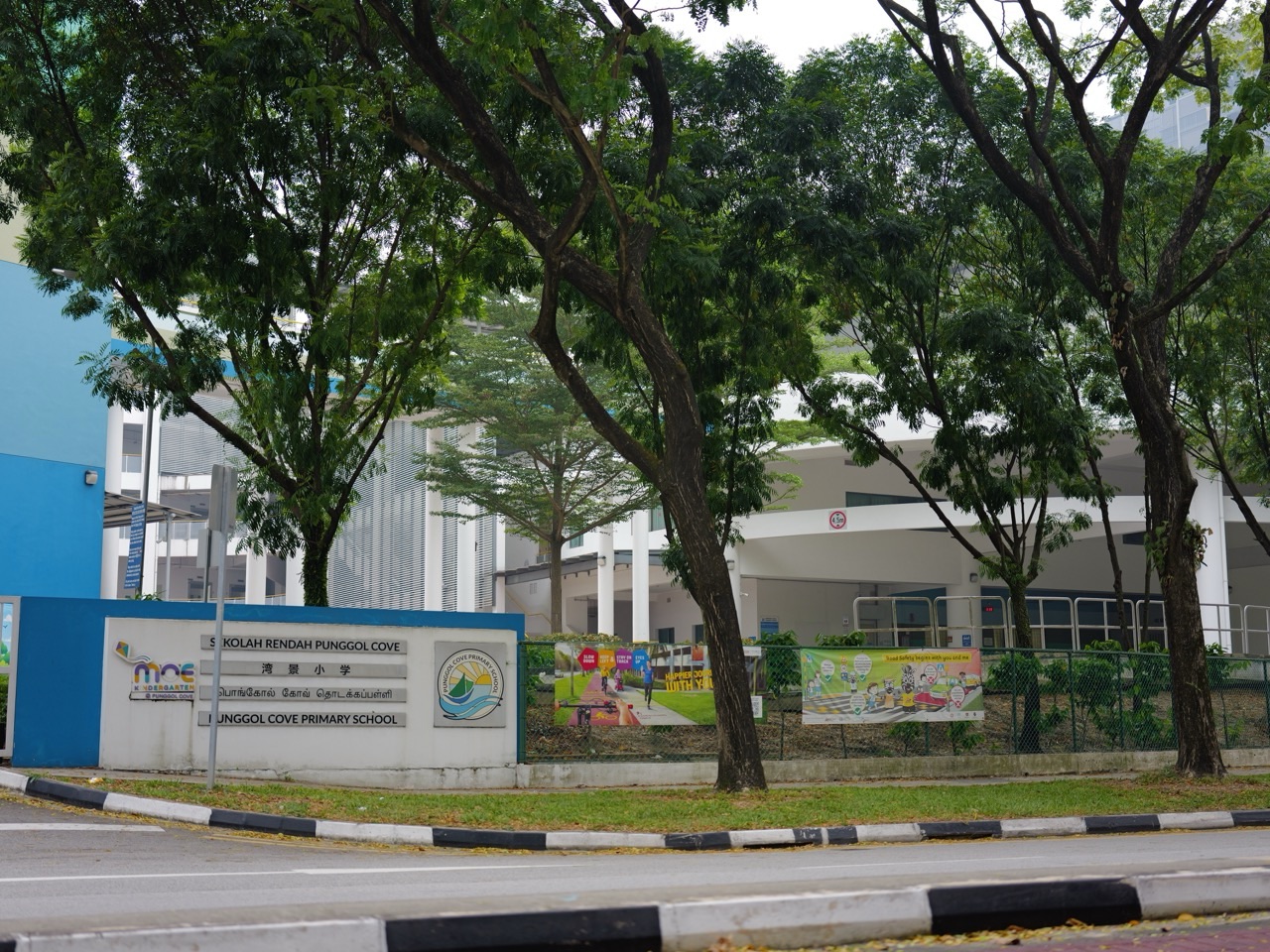
Quick answer. Families returning to Singapore after their children have studied overseas have several ways to enter the national school system. Primary 1 registration, Assured School Placement (ASP), the School Placement Exercise for Returning Singaporeans–Secondary (SPERS-Sec), Supplementary Placement Exercise (SPE), school-direct admissions and post-secondary routes serve different ages, circumstances and timing. They are not interchangeable applications.
ASP helps eligible returning Singapore Citizen and Permanent Resident children obtain a place in a primary or secondary school with vacancies as near their residential address as possible, without needing a centralised placement test. It does not guarantee the family’s first-choice school. By contrast, SPERS-Sec is an optional centralised, merit-based test and school-choice exercise for returning learners seeking Secondary 1, 2 or 3 admission at the start of the next academic year. The SPE provides a later test route for those unable to return for the earlier SPERS tests. For a given application, MOE states that a returning child may choose ASP or SPERS-Sec, but not simultaneously submit both.
The dates matter. For entry arrangements associated with 2026, SPERS-Sec tests took place in September 2026; that date is now past. The 2026 SPE test is scheduled for 2 December 2026, for applicable applicants unable to sit the earlier exercise. Dates, levels, deadlines and offer stages need to be checked on MOE and SEAB’s live pages for the child’s actual cohort. A Punggol family should not use a 2025 screenshot as if it were a current admission notice.
This guide explains every route, how the English and Mathematics placement tests work, how an overseas learner can prepare without blind drilling, what documents and subjects to check, and how to plan a Punggol commute and school return. It uses real MOE/SEAB 2026 source references, hypothetical family examples and a detailed parent checklist. Official-information review: 20 October 2026.
Which route is right for a returning child?
| Situation | Starting route | Critical limitation |
|---|---|---|
| Child entering Primary 1 | P1 Registration Exercise | Birth-date and phase rules apply |
| Returning to Primary 2–6 | ASP / appropriate school advice | Not a guarantee of a named school |
| Returning to Sec 1–3, near-home priority | ASP | No central test; placement still depends on vacancies |
| Returning to Sec 1–3, merit-based route | SPERS-Sec | Test, application and selection timetable |
| Missed September SPERS timing | SPE if eligible | December cycle has its own rules |
| Returning to JC/MI | Post-secondary / SPERS-JC/MI | Not the same as Sec SPERS |
Jump to the step your family needs
- Primary school and Assured School Placement
- SPERS versus SPE dates and eligibility
- English and Maths bridging
- Punggol school return and transport
- Checklist, FAQs and official sources
1. Who counts as a returning Singaporean for this system
MOE’s Returning Singaporeans admission guidance concerns children who are Singapore Citizens or Permanent Residents returning after living and studying overseas. A family’s current residence, nationality and prior schooling therefore matter before any admissions exercise is selected.
A foreign child who has never held the relevant SC or PR status does not automatically qualify for ASP or SPERS merely because the family is relocating to Punggol. International students have a different national admission route. Likewise, an SC child already enrolled locally may be dealing with an ordinary school transfer rather than an overseas-return placement.
Start by confirming the child’s identity, status, age, most recent year of education and intended entry year. Those facts determine which government page is relevant.
2. Why admission planning should begin before the flight
Families often focus first on housing and the return date. School entry may require a different calendar. Primary 1 registration, the secondary placement tests and direct school contact follow their own timelines, and a student may need documents or evidence prepared while abroad.
Create a family record with the intended arrival date, child’s Singapore status, current foreign grade level, curriculum, English and Mathematics learning, Mother Tongue experience and contact details. This makes later enquiries more precise.
A parent who waits until the child has arrived and needs to begin lessons immediately may face fewer practical options. Start checking MOE’s route descriptions as soon as the family has a credible return plan.
3. Primary 1 registration while living overseas
MOE specifically encourages parents whose child is due to enter Primary 1 to register during the official P1 Registration Exercise even if the family is still abroad. P1 is governed by its own eligibility and phased registration arrangements for SCs and PRs.
The child does not enter P1 through SPERS-Sec, which is a secondary school exercise. Similarly, obtaining a P1 place does not depend on a child passing a national preschool academic entrance examination.
Use the official P1 Registration Portal for birth-date eligibility, phases and the exact year’s timetable. Overseas residential or address circumstances need careful checking against the applicable rules rather than a property advertisement’s claim of priority.
4. What if the returning child needs Primary 2 to Primary 6
A child returning after spending several primary years overseas may be seeking a P2–P6 school place rather than entry at P1. The family can explore MOE’s Assured School Placement and the appropriate school-direct routes, subject to eligibility and available vacancies.
The foreign school grade should not be assumed equivalent merely because its number matches “Primary 4”. Different educational systems start school at different ages and organise subjects differently. The receiving school may need to evaluate curriculum readiness.
Ask the school or MOE which records are required and how the student’s year level is determined. The goal is suitable learning placement, not a superficial conversion of grade labels.
5. What Assured School Placement actually guarantees
ASP offers an eligible returning student a school place with vacancies as close to the family’s residence as possible, without requiring the child to sit a centralised admission test. The word “assured” refers to the provision of a suitable school place within the service’s rules, not a guarantee of the family’s desired campus.
A household near Punggol Waterway should not infer that it may name any popular Punggol primary school and demand admission despite vacancies elsewhere. The Ministry uses actual availability and distance factors under its placement arrangements.
ASP is useful where family certainty, accessible schooling and a timely return are priorities. A parent should confirm the current application process and applicable study level directly with MOE.
6. No central test does not mean no school-based assessment
The official ASP information explains that the receiving school may conduct school-based tests or interviews to determine the appropriate class, level or course. This is different from requiring a central SPERS test simply to obtain a school place.
A student returning from a different curriculum may need diagnostic tasks in Mathematics, English and other relevant areas. These are valuable when they identify missing prerequisites or a suitable subject level rather than just measure unfamiliarity with local question formats.
Parents should prepare ordinary academic records and help the child become comfortable explaining how they solve problems. A school-based test is not automatically an indicator of an irreversible intellectual label.
7. SPERS-Sec is an optional merit-based placement exercise
SEAB describes SPERS-Sec as a centralised exercise for Returning Singaporeans seeking Secondary 1, 2 or 3 at the beginning of a new academic year. It is optional and provides a merit-based placement route. MOE commissions SEAB to conduct its test administration.
The exercise has a process for application, testing, selecting from eligible school options and receiving the final school placement. Performance and vacancies influence the options available, so it differs from simply requesting a place near home through ASP.
A student choosing SPERS should be prepared for the English and Mathematics standards and the practical test administration. The family should read the full official test details before committing to that route.
8. ASP and SPERS-Sec should not be filed simultaneously
MOE’s 2026 SPERS-Sec application instructions state that a returning applicant may apply through either SPERS-Sec or the Assured School Placement service, but not both. This is an important administrative constraint often obscured in informal relocation conversations.
A family should decide what matters most: the certainty and proximity considerations of ASP or the merit-based school choice possibilities of SPERS-Sec. Neither route promises the same outcomes.
Ask MOE about the correct procedure if the family has already begun an application and changes plans. Avoid submitting duplicate applications in the hope that one will be accepted automatically.
9. SPERS-Sec Secondary 1 tests align with prior curriculum
SEAB’s test guidance says applicants to Secondary 1 should be familiar with English and Mathematics content taught in Singapore’s Primary 6 curriculum. This can differ from what a returning pupil studied in a foreign system, even where they are capable and well taught.
An applicant should check number concepts, fractions, percentages, ratio, reading comprehension and writing appropriate to the level. The aim is not memorising an answer key but being able to understand a new task.
Parents can use MOE’s published syllabuses to map genuine gaps rather than buying a generic book labelled “Singapore placement guarantee”. A targeted diagnostic is more useful than indiscriminate test volume.
10. Secondary 2 and Secondary 3 require different prerequisites
SEAB’s SPE guidance illustrates the curricular alignment: admission to Secondary 2 draws on Singapore Secondary 1 material, while Secondary 3 draws on Secondary 2 material. This principle helps returning learners plan for the right level instead of practising the same questions for every year.
A student who has not studied symbolic algebra or particular geometry topics may need bridging even when their foreign-school grades were strong. Another may have advanced in one subject and require support only in the other.
Build a concept-by-concept bridge rather than assuming an entire foreign curriculum is either identical or inferior. The exact test syllabus and current route belong to SEAB.
11. The September 2026 SPERS-Sec dates are already past
MOE’s July 2026 press release scheduled SPERS-Sec testing from 1–3 September 2026, with published level-specific dates including 1 September for Secondary 1 and 2 September for Secondary 2 and Secondary 3. A family reading this article in October 2026 must not be advised to register for an already completed test.
Instead, check whether the returning child is eligible for the later SPE, ASP or another lawful placement route. Deadlines and remaining stages need to be checked directly with MOE.
Date accuracy matters in education advice. “Tests take place in September” is a general description, not a usable live application period for a family whose flight is in November.
12. The December 2026 Supplementary Placement Exercise
The 2026 Supplementary Placement Exercise test is scheduled for 2 December 2026 for applicable returning students who could not return in time for SPERS-Sec. SEAB describes SPE as an optional merit-based centralised route to Secondary 1, 2 or 3.
The test and school-selection process are not identical to simply joining a campus as soon as the family arrives. An applicant must follow the official registration, entry-proof and posting instructions for their cohort.
Do not assume the December option covers every secondary level or can be used after its final deadline. Check the 2026 SPE eligibility page and application status immediately if this is the family’s relevant route.
13. SPERS versus SPE: a useful family comparison
Both tests are designed for Returning Singaporeans seeking placement into a mainstream secondary school at the start of the next year, but the later SPE is specifically for eligible learners unable to return for the earlier exercise. The dates and applicant circumstances therefore differ.
A family should not treat SPE as a free additional attempt after completing SPERS-Sec. Its published eligibility conditions are not simply “anyone who wants another test”. The official route needs to be checked.
Make a calendar with the child’s intended secondary level, appropriate exercise, test date, school-selection phase and reporting date. This gives a more reliable plan than an informal claim that all placement exercises work identically.
14. The English test assesses several language skills
SEAB’s 2026 SPE details describe an English test involving composition writing, comprehension, cloze passages, vocabulary and grammar. The writing topics and expected length vary by secondary entry level, with 200–300 words for Secondary 1, 250–350 for Secondary 2 and 300–400 for Secondary 3 in the published guidance.
A strong English learner must therefore communicate a coherent idea under the stated constraints, not simply recognise a long vocabulary list. Reading accurately is also important because comprehension answers should be grounded in the passage.
Parents should consult the exercise’s official test guide for its exact current format rather than extrapolate from an old tuition company’s mock paper.
15. How to diagnose a returning student’s English needs
An overseas-educated student may speak English fluently but be unfamiliar with the structure of Singapore composition questions. Another may write well but struggle with the precise comprehension-cloze format. These profiles require different preparation.
Ask the student to read a short unfamiliar passage and explain what it states, then write a response to a prompt appropriate to the target level. Examine idea development, structure, grammar and relevance separately.
A useful teaching sequence is an accurate diagnosis, an explained example, guided practice and a fresh independent task. Extra essays may not help if the actual problem is misunderstanding what the question requires.
16. Original English example: evidence and inference
Consider the invented line: “Ravi said he knew the route, yet he checked the street signs at every junction.” A factual response says Ravi checked the signs. A reasonable inference is that he wanted reassurance or was uncertain, but the sentence does not prove he was lost.
A student who writes “He definitely took the wrong bus” adds an event not supported by the text. The correction begins with identifying what is stated and what is inferred.
For transfer, use a new line: “She rehearsed the speech again despite telling her friends she felt ready.” The learner should support any inference with specific evidence rather than a memorised emotional label.
17. The Mathematics test includes written reasoning
SEAB’s 2026 SPE description lists a non-calculator Mathematics test with two parts: an objective component and short or longer written responses requiring working. Students cannot rely only on mental arithmetic or calculator familiarity.
The published structure includes 34 multiple-choice items in one part, followed by short-answer and open-ended work. The actual test format and time must be verified against the appropriate SPERS or SPE page, as different exercises can have detailed variations.
Pupils should practise setting out operations, units and checks clearly. A correct numerical result without the required method may not demonstrate the intended reasoning.
18. Worked Mathematics example: a fractions misconception
An overseas pupil solving a Singapore Primary 6-style fraction task writes 3/4 + 1/2 = 4/6. This adds both numerators and denominators, revealing a confusion about equal parts. More timed questions using the same misconception will not repair it.
Represent one half as two quarters. Then 3/4 + 1/2 = 3/4 + 2/4 = 5/4 = 1¼. The child should explain why the denominator stays four when adding equal quarter units.
Test a changed task: 2/3 + 1/6 = 4/6 + 1/6 = 5/6. A student who can justify the common denominator has demonstrated transfer rather than recall of the original worked answer.
19. Worked Secondary 1 algebra bridge
A returning Secondary 2 candidate may have learned arithmetic well but be unfamiliar with Singapore’s algebra notation. Suppose the task is 3(x − 2) = 15. Dividing both sides by three yields x − 2 = 5, so x = 7. Substitution checks that 3(7 − 2) = 15.
A student who responds x = 3 may be dividing fifteen by three and stopping without respecting the bracket. That is a specific error in interpreting the expression, not evidence of general mathematical incapacity.
Ask a new equation, 4(y + 1) = 24. The child should reason to y = 5 independently. This approach follows the Clementi first-principles teaching benchmark.
20. School options depend on test results and vacancies
A centralised placement exercise can provide the student with a list of secondary school options based on their performance and the available system. The parent then participates in selection according to the published exercise rules.
Do not assume a particular school will appear on the list simply because it is near the family’s future HDB block. Merit-based eligibility and vacancies differ from ASP’s near-home placement purpose.
Review the options with the learner and consider curriculum, reasonable transport, student support and family logistics. Historical school popularity is not a guarantee of a place.
21. Full Subject-Based Banding affects the return transition
Secondary schools now operate under Full Subject-Based Banding. Returning students may need an appropriate assessment of subject readiness, academic levels and class arrangements. The school should clarify how the learner’s prior curriculum aligns with G1, G2 and G3 subject offerings where applicable.
The family should not equate a foreign-school grade label with an entire Singapore Posting Group. A child may demonstrate stronger readiness in one subject than another, and support should respond to those observed differences.
Ask the receiving school about its actual programmes and transition support before designing private tuition around assumptions about stream labels.
22. Mother Tongue is an important separate planning issue
Singapore’s national curriculum includes Mother Tongue Language requirements, with exemptions or alternatives available under specified rules. A child who has lived overseas for years may have had limited exposure to Chinese, Malay or Tamil.
That background should be disclosed accurately to the receiving school and discussed early. It does not automatically create an exemption or permanent waiver of future language obligations.
MOE publishes guidance about learning MTL while overseas and applying for relief where justified. The family should follow the school’s formal procedures rather than assume a private language course alone settles a national curriculum decision.
23. Keeping SLS access while overseas
MOE’s Returning Singaporean information sheet describes the Student Learning Space as a way for eligible children overseas to access Singapore curriculum resources, including Mother Tongue materials, subject to the application arrangements.
This can help a learner maintain familiarity with Singapore methods before returning. It does not guarantee central placement-test success or substitute for the official exercise.
A parent can use authorised resources to identify where the overseas curriculum differs, then practise a small number of meaningful tasks. The child should be able to explain the idea independently rather than merely click through a familiar digital module.
24. The immersion scheme is different from admission
MOE also describes an immersion scheme for overseas Singaporean children to experience Singapore school life before a full return. It can help families understand classroom routines, subject style and social expectations.
An immersion experience should not be mistaken for a permanent school place or a decision about the student’s eventual admission route. Its eligibility and arrangements must be checked separately.
Parents can ask the learner what felt unfamiliar during a short school experience. The response may reveal a practical issue such as recess routine, language, timetable or algebra notation that the family can address before enrolling.
25. Leave of Absence can preserve earlier school links
Where a Singapore Citizen or PR child was previously enrolled in an MOE school and left under an approved Leave of Absence arrangement, the returning process may allow rejoining the registered school. The exact scope and conditions must be verified through the school and MOE.
This differs from a child who has never attended a Singapore school and is seeking a fresh placement. Treating both families identically could result in unnecessary applications or incorrect promises.
Before leaving Singapore for study overseas, ask the existing school whether LOA can apply and how long the arrangement remains valid. Retain written approval and relevant contact details securely.
26. School-direct admission has its own limits
Returning Singaporeans may be able to approach schools directly at relevant times, subject to vacancies and the school’s admission assessment. This route is different from both ASP and a central placement exercise.
The school’s reply is not a guarantee until a formal place is offered under applicable rules. A family should not use a casual email saying that an enquiry was received as proof of enrolment.
Ask about actual level, curriculum readiness, documents and intended start date. Where the return is time-sensitive, MOE can clarify which central route is most appropriate.
27. Secondary admission and JC/MI entry are not the same
Returning learners seeking a JC or Millennia Institute place use a separate post-secondary framework, including SPERS-JC/MI or applicable DSA-JC and school-direct options. A Secondary 2 SPERS application cannot be used as a substitute.
The learner’s age, prior qualification and academic readiness matter greatly at pre-university level. A foreign Year 12 qualification may not be treated identically to a Singapore GCE A-Level or a diploma route.
Parents should avoid giving generic “returning student” advice without specifying the stage. The official post-secondary page should be consulted for its current qualification and application process.
28. Punggol school geography should be grounded
Punggol has a number of primary and secondary campuses in different precincts. A family living near Punggol Central, Northshore or the Waterway may experience different school journeys, even when each address is broadly described as Punggol.
Use MOE SchoolFinder for current school locations and programmes. Separately test a weekday route, including safe crossings, public transport, weather and expected reporting times.
ASP aims to offer a school with vacancies as near home as possible, but the family’s preferred school’s physical proximity is not enough to guarantee placement. Real vacancies and government decisions control.
29. The first weeks back may be academically uneven
A returning child can be well educated yet unfamiliar with Singapore school conventions: presentation of Mathematics working, specific Science terms, school-based Mother Tongue or subject-level arrangements. Adults should identify these differences rather than interpret them as laziness.
Teachers can offer diagnostic tasks and explain local expectations. The student may need bridging in one topic while performing confidently in another, so a blanket “catch up everything” programme may be ineffective.
The goal is to build familiarity and independence, not demand that a child forget the strengths developed overseas.
30. Home routines can reduce transition anxiety
A new school brings unfamiliar transport, uniforms, peers, subject teachers and administrative systems. For a learner who also moved country, these changes may be significant. Parents should allow space for adjustment alongside academic preparation.
Practice the commute, school supplies, contact methods and daily schedule. Encourage the child to identify a trusted adult at the receiving school and explain when they need help.
If the learner experiences persistent distress or significant learning barriers, discuss them with the school’s support staff or appropriate professionals. A good placement process considers the child’s whole participation, not only test marks.
31. Worked family case: return in November
Imagine a fictional Punggol family whose Secondary 1-aged child returns in November 2026. The September SPERS-Sec test has already passed. The family hears of the December SPE and wants to know whether it is available.
They first check the exact SPE eligibility and application status, then compare that route with ASP according to MOE’s rules. They do not submit multiple conflicting applications in the hope of an easier result.
They also assemble current school records and assess English, Mathematics and Mother Tongue readiness. The case illustrates administrative choices and bridging, not a prediction that the child will qualify for or be admitted through SPE.
32. Worked family case: returning to Primary 4
A fictional Primary 4-aged child studied abroad and returns to a flat near Punggol Waterway. The parents worry that a local school will demand an AEIS test. But AEIS is the international-student route; this returning SC/PR child should investigate the Returning Singaporean processes instead.
The family checks ASP and any appropriate school-direct arrangements, with accurate identity, age and previous curriculum records. A receiving school may assess suitable level and learning support after placement.
The child’s overseas experience can be acknowledged as a strength while adults address specific local syllabus differences. The goal is an appropriate place, not a contest to translate every foreign grade into a Singapore mark.
33. A four-week return-preparation plan
Week 1: establish the child’s SC/PR status, current qualification and intended start. Read the official MOE returning student guidance and identify whether the relevant route is P1 registration, ASP, SPERS-Sec, SPE or later post-secondary admission.
Week 2: collect authentic school reports, curriculum records and identification documents. Check live deadlines and whether the child may submit an exercise application in that cycle.
Week 3: test one appropriate English comprehension/writing and one Mathematics prerequisite task using MOE syllabuses. Target the exact mismatch rather than doing hundreds of random mock papers.
Week 4: confirm school, reporting and transport instructions when officially offered. Plan the child’s first weeks of social and academic adjustment while preserving sleep and family stability.
34. Documents should be secure and current
Returning families may need identification, residence and previous education records. The exact set depends on route and student status, so use MOE’s official checklist rather than forwarding a speculative collection of passports and report cards to an unverified agent.
Keep documents readable and dates consistent. If the current passport details differ from earlier paperwork, raise the discrepancy through the proper channel before the deadline.
Protect private student information. A parent should not upload medical reports, identification documents or children’s photographs to a public study forum simply to ask whether the student is eligible.
35. Why tutor-led guessing is not enough
A tuition provider may help a returning learner bridge knowledge gaps, but it cannot decide government placement eligibility or guarantee the list of schools presented after an exercise. Official test dates and rules belong to MOE and SEAB.
A good tutor asks which level the pupil seeks, checks the relevant curriculum and observes an unfamiliar task. It should be clear whether the main problem is language, prerequisite knowledge, notation or test interpretation.
This matches the immutable Clementi benchmark: diagnose the first unstable reasoning step, explain why the correct method works and verify it in a changed problem. Bigger worksheet volume alone cannot replace a sound bridge.
36. When the child’s first choice is not available
A family may hope for a specific local primary or secondary school, but vacancies and placement rules can make another campus the offered route. An alternative school is not necessarily an inferior education.
Evaluate the actual programme, student support, age suitability and daily commute. MOE SchoolFinder provides profiles and contact details, while the official posting decision controls where the child is placed.
Do not pay an unverified broker who promises to override vacancies. If the family has concerns about the placement, use MOE’s formal enquiry process and maintain a valid school-entry plan.
37. Common mistakes about returning school entry
One mistake is using AEIS for a Returning Singaporean who belongs in the SC/PR process. Another is assuming ASP guarantees a chosen school. A third is submitting ASP and SPERS simultaneously despite the current rule against doing so.
Parents may also miss a deadline by copying an old year, interpret a school-based placement check as a central entrance examination, or assume a foreign Year 7 is automatically Singapore Secondary 1.
The effective alternative is straightforward: choose the correct legal route, verify the actual cohort and dates, preserve records and diagnose curriculum gaps with real examples.
38. A calm transition is a successful education outcome
An international move can reshape language use, friendships, academic confidence and family routines. A good return process should get the student safely into appropriate schooling while allowing real strengths to continue developing.
Adults can be ambitious without making the child responsible for every uncertainty about a preferred campus. A coherent school placement and practical support plan will usually be more beneficial than months of anxiety over a name.
The system is navigable when eligibility, placement method, academic bridging and daily life are handled as separate but connected decisions.
39. What to do after the official school placement
Once the family receives a formal offer or posting, confirm the reporting date, uniform, books, school day, support arrangements, relevant subjects and any required orientation. Ask about procedures for absent days, student care or safe collection where applicable.
A secondary learner should also learn the Full SBB subject-level timetable and available CCAs. The family can discuss Mother Tongue readiness and any further assessment instructions with the school.
A placement letter is the beginning of a transition, not the end. Preparing for actual class participation is what turns the administrative outcome into a sound education pathway.
40. The governing principle: access without invented guarantees
MOE’s returning-student routes exist so SC and PR children can reconnect with Singapore schooling after time abroad. Different options serve different needs: assured access near home, merit-based exercise, direct school enquiries or later post-secondary choices.
The family should not confuse the existence of an option with a right to a particular campus or subject level. Rules, tests, vacancies and individual learning needs remain relevant.
Accurate source checking, age-appropriate diagnostic teaching and a realistic Punggol daily routine are the strongest foundations for the return. They provide practical certainty without false promises.
Frequently asked questions
Who qualifies as a Returning Singaporean in school admission?
MOE’s Returning Singaporean resources concern eligible Singapore Citizens and Permanent Residents returning after living and studying overseas.
Can a foreign national child use ASP automatically?
No. International-student entry generally follows a different route; the child’s legal status must be checked.
Should a Singaporean abroad register for P1?
MOE strongly encourages eligible families to complete the P1 Registration Exercise while overseas.
Does ASP guarantee our favourite Punggol school?
No. It offers a school with vacancies as near the residential address as possible, not a chosen school’s guaranteed place.
Does ASP require the central SPERS test?
No. ASP can assure eligible placement without that central test, although the receiving school may conduct class or level assessments.
Can we apply to ASP and SPERS-Sec simultaneously?
MOE’s 2026 application guidance says a returning applicant may choose one but not submit both applications concurrently.
What is SPERS-Sec?
An optional merit-based centralised exercise for eligible returnees seeking Secondary 1, 2 or 3 at the beginning of the next academic year.
What is SPE?
A later supplementary centralised exercise for eligible returnees unable to return in time for the earlier SPERS-Sec tests.
Were the September 2026 SPERS tests still available in October?
No. The September 2026 tests had already occurred. Check a current alternative such as SPE or ASP, depending on eligibility.
When is the 2026 SPE test scheduled?
MOE’s 2026 release scheduled it for 2 December 2026. The application rules and status must be checked directly.
Does SPERS-Sec test English and Mathematics?
SEAB publishes relevant English and Mathematics placement-test guidance aligned with the Singapore syllabus and target admission level.
Can a calculator be used in SPE Mathematics?
SEAB’s published 2026 SPE Mathematics test details say calculators are not allowed.
Are foreign grade numbers automatically equivalent?
No. The school or MOE determines appropriate level and subjects using relevant evidence and procedures.
Can our child approach a school directly?
There are school-direct options for Returning Singaporeans, subject to vacancies, timing and the school’s criteria.
Can a returning child rejoin a school after LOA?
Under qualifying Leave of Absence arrangements this may be possible; check the original approval and the school’s current instructions.
Can an overseas child use SLS before returning?
MOE describes possible SLS access and related curriculum resources through its Returning Singaporean guidance.
Is there an immersion option before permanent return?
MOE describes a separate short-term immersion scheme, subject to eligibility and arrangements. It is not permanent admission.
Will our child automatically enter a preferred Posting Group?
No. The receiving school determines suitable class and subjects under current Full SBB and placement rules.
What if our child has weak Mother Tongue after living abroad?
Discuss learning and any qualifying formal exemption or alternative with the receiving school; overseas residence alone is not automatic approval.
Is returning secondary admission the same as JC admission?
No. SPERS-JC/MI and other pre-university routes have distinct eligibility and application procedures.
Can we use AEIS instead because it sounds easier?
AEIS is the international-student route, not a substitute for applicable Returning Singaporean SC/PR admission procedures.
Does an ASP offer depend only on distance?
The scheme uses school vacancies and seeks proximity; the family cannot override actual availability by measuring a walking route.
What should we prepare for a test?
Use the target MOE syllabus and diagnose English and Mathematics prerequisites rather than relying on unrelated practice or promised leaks.
How can we protect the child’s wellbeing during return?
Create predictable travel, meals, orientation and trusted-adult routines and seek school support for persistent needs.
Can a tutor guarantee placement after SPERS?
No. MOE/SEAB control the tests and placement; tuition can only support actual learning.
What is the first thing a Punggol family should check?
The child’s citizenship/PR status, age, current schooling, intended entry year and exact live MOE route.
Official sources and related Punggol education
- MOE Returning Singaporeans — primary admissions
- MOE Returning Singaporeans — secondary admissions
- MOE Assured School Placement (ASP)
- MOE SPERS-Sec process
- MOE SPERS-Sec application restrictions
- MOE SPE and late-year returnees
- MOE press release — 2026 return placement exercise
- SEAB SPERS-Sec exercise overview
- SEAB SPE Mathematics/English test details
- MOE returning primary P1 registration portal
- MOE SchoolFinder
- MOE returning post-secondary admissions
- Punggol shorter SPERS-Sec guide
- Punggol moving house with school-age children
- Punggol Secondary Full SBB and SEC guide
- Immutable Clementi first-principles teaching benchmark
Editorial check — 20 October 2026: Dates refer to the specific 2026 exercise and may be past or pending. Route and eligibility decisions belong to MOE/SEAB; all family and numerical examples are hypothetical. This independent guide does not promise a particular school place, examination outcome or subject level.


