
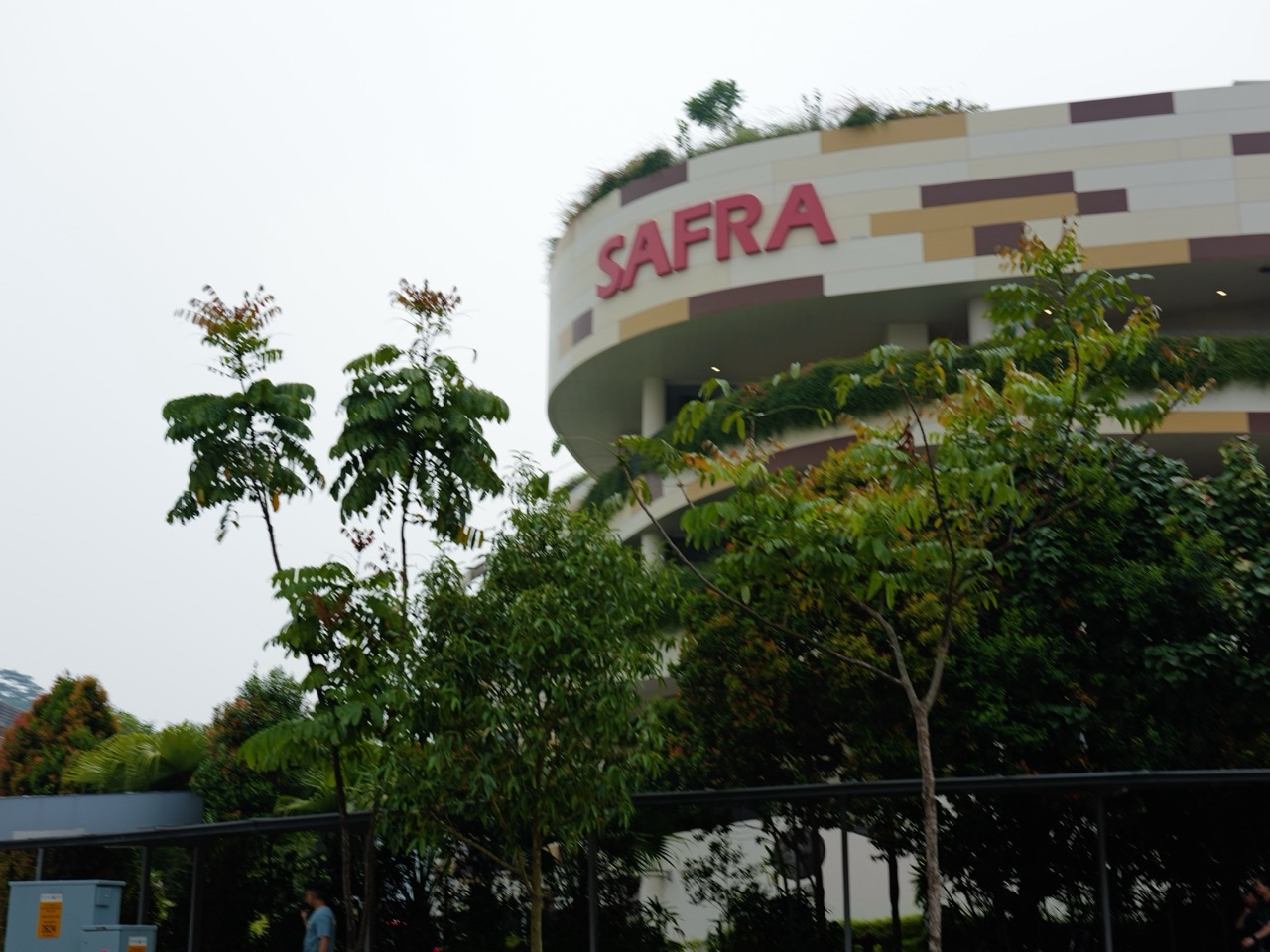
Want to try Jumping Fitness in Punggol without buying a trampoline? SAFRA Punggol, 9 Sentul Crescent, Level 3 GetFit Studio, advertises organised Jumping® Fitness sessions on specialised mini trampolines. Its published timetable includes Saturday 10.45–11.45am and Sunday 10.45–11.45am and 1.30–2.30pm beginner-labelled sessions. SAFRA’s programme page advertises a four-session trial package at S$48, alongside separately priced single and multi-class packages. The actual provider, Jumping Singapore, controls bookings and the live class timetable, so confirm the place before travelling.
This Jumping Fitness at SAFRA Punggol 2026 guide is for adults comparing trampoline aerobics with Zumba, running and lower-impact exercise. It explains how the real local class works, what low-impact does and does not mean, the difference between an instructor-led mini-trampoline workout and jumping on a home rebounder, prices, class selection, health conditions, safe progression, HDB neighbour considerations and the practical first-session checklist. This is not the general SAFRA Punggol Dance and Fitness Classes directory; the aim here is to help you decide whether Jumping Fitness is the right activity for you.
Jumping Fitness in Punggol: quick facts
| Question | Direct answer | Check before committing |
|---|---|---|
| Where is the class? | SAFRA Punggol, Level 3 GetFit Studio, 9 Sentul Crescent. | Actual provider confirmation and studio entry. |
| What equipment? | Specialised instructor-led Jumping® PROFI mini trampolines. | No need to bring or buy a home trampoline. |
| When are beginner classes advertised? | Saturday 10.45–11.45am; Sunday 10.45–11.45am and 1.30–2.30pm. | Timetable may be changed by the organiser. |
| What about weekdays? | SAFRA also lists Monday, Tuesday, Wednesday and Friday sessions, with varied formats. | Not every slot is explicitly beginner-level. |
| Trial rate | S$48 for four sessions, as published. | Eligibility, expiry, package rules and checkout. |
| Single session | S$38 published. | Check actual booking rate. |
| Eight-session package | S$188 published. | S$23.50 per class before any eligible discount. |
| Sixteen-session package | S$348 published. | S$21.75 per class if all sixteen used. |
| Fifty-session package | S$888 published. | S$17.76 per class only if all sessions used. |
| Membership benefit | SAFRA advertises 5% off Jump-8 packages and above. | Contact the provider for a code; do not presume all promotions stack. |
| Is it medically safe for everyone? | No. Group sessions may be intense despite a low-impact design. | Ask a clinician and coach where your condition warrants it. |
1. What is Jumping® Fitness, exactly?
Jumping® Fitness is a branded rebounding aerobics system using compact trampolines designed for instructor-led fitness sessions. Rather than performing a sequence on a normal dance-studio floor, participants follow a mix of aerobic rhythms, jogging-style patterns and controlled bounce movements on a specially designed surface. SAFRA describes the programme as high-intensity and low-impact, with routines combining traditional steps, sprints and power-sport-inspired elements. That combination makes it different from both an ordinary children’s trampoline attraction and a quiet stretching class.
The venue’s official programme listing credits Czech founders Tomáš Buriánek and Jana Svobodová and specifies Jumping PROFI trampolines. It also says registrations take place through Jumping Singapore, an independent provider rather than SAFRA’s ordinary dance-studio facility rental. The brand and equipment matter because people who look up “trampoline class” may otherwise confuse three distinct products: supervised adult fitness, children’s gymnastic trampolines and unsupervised leisure bouncing.
A first-time adult need not know every exercise pattern in advance. A suitable instructor should explain where to stand, how to enter and leave the apparatus under the class rules, what effort level is expected and how participants communicate if they need to pause. The goal is not to bounce higher than the person beside you. It is to understand whether you can perform the prescribed movements with appropriate control and comfort.
People who enjoy music-led movement may find the group energising; others may prefer a more conventional workout because they dislike bouncing or feel uncertain about balance. Neither preference is a fitness deficiency. The best routine is one that fits your goals and personal health. If a session description calls itself high intensity, take that seriously even when promotional copy calls the trampoline surface “low impact”.
2. The exact SAFRA Punggol studio and published timetable
The official venue is GetFit Studio, Level 3, SAFRA Punggol, 9 Sentul Crescent. This is within the SAFRA club, not a free public fitness corner or a class held along the Waterway. A visitor should locate the studio before the lesson and confirm whether there is a reception or check-in requirement. The operator’s booking confirmation, not a search result, controls participation.
| Day | Published Jumping Fitness sessions | Beginner decision |
|---|---|---|
| Monday | 6.25–7.25pm; Fusion 7.35–8.50pm. | Ask whether the first session is currently beginner-labelled. |
| Tuesday | 10.30–11.30am. | Confirm level and live class availability. |
| Wednesday | 7.35–8.35pm. | Confirm format and instructor. |
| Friday | 10.30–11.30am; 6.25–7.25pm; 7.35–8.35pm. | Compare effort and household return time. |
| Saturday | 9.30–10.30am; beginner 10.45–11.45am; 12–1pm. | The 10.45am published option may suit a newcomer. |
| Sunday | 9.30–10.30am; beginner 10.45–11.45am; 12.15–1.15pm; beginner 1.30–2.30pm. | Two explicitly beginner-labelled options published. |
The SAFRA Dance Studio timetable and Jumping Fitness listing show overlapping schedules. Their descriptions may differ in how some Monday sessions are labelled, so do not assume every available slot is suitable for a first-timer. Ask Jumping Singapore specifically for the current introductory or beginner class and whether there is capacity for a first visit. The listing does not confirm live bookability.
Weekend mornings can suit working parents, but they also compete with family meals, children’s enrichment and errands. An evening slot might be easier for a working adult but inconvenient for someone who rises early. A beginner should choose a time when they can arrive calm, eat appropriately and still get home comfortably. The ideal workout class on paper is not useful if the travel and recovery make it difficult to attend every week.
3. Trial packages, single sessions and real unit costs
SAFRA’s programme page publishes S$48 for four trial sessions, S$38 for a single, S$188 for Jump-8, S$348 for Jump-16 and S$888 for Jump-50. The rate list is a useful guide to the different financial commitments. However, package eligibility, class expiry, whether an introductory offer is available to you, what happens after missed sessions and the final amount payable must be checked in the actual booking system.
| Published package | Published total | Simple per-session division | Decision |
|---|---|---|---|
| 4-session trial | S$48 | S$12.00 | Check trial eligibility, duration and restrictions. |
| Single class | S$38 | S$38.00 | Highest nominal unit price, lowest purchase commitment. |
| Jump-8 | S$188 | S$23.50 | Only good value if sessions fit your routine. |
| Jump-16 | S$348 | S$21.75 | Requires more consistent attendance. |
| Jump-50 | S$888 | S$17.76 | Large upfront commitment, despite lower unit cost. |
SAFRA also advertises a 5% member discount from Jump-8 onward with a promotional code obtained from the operator. This is not automatically equivalent to another 5% off a trial package or to stacking several promotions. Ask what the current terms actually permit. A price comparison should use the final bill for the correct package, not multiply discounts that cannot be combined.
Suppose someone purchases a fifty-class pass simply because S$17.76 seems much cheaper per class than S$38. They attend twice, discover that the high-intensity bouncing does not suit their knees and stop. Their practical cost per actual visit would be vastly higher than the advertised S$17.76, subject to the contract. A smaller commitment is often a sensible way to discover fit before paying for months of use.
Equally, a person who already enjoys the sessions and can reliably attend every weekend may find a larger package worthwhile. The relevant measure is cost per actual attended suitable session, taking expiry, commute and personal satisfaction into account. The general Low-Cost Fitness in Punggol guide explains why headline fees alone cannot measure value.
4. The third-party booking distinction: SAFRA versus Jumping Singapore
SAFRA supplies the venue and advertises the activity, but the official page directs registration to the separate Jumping Singapore website. That means the actual customer’s booking, payment, data submission, cancellation and class allocation may be governed by the independent provider. Do not assume paying for an ordinary SAFRA fitness-room rental or having SAFRA membership alone books a Jumping class.
The programme listing also alerts visitors that information submitted to Jumping Singapore is handled under the independent company’s privacy terms. Read only the necessary information into the provider’s official registration channel and confirm the correct URL. An unsolicited social-media message that offers a surprising cheap class is not proof of a legitimate operator promotion.
The Jumping Singapore website is the published registration route. The SAFRA page remains useful for the club address, price reference and member benefit. If one site shows a different timetable or price from the other, the responsible action is to obtain current written confirmation from the actual provider before paying or travelling.
For a family member who is unsure which class to choose, ask the operator to name the beginner slot and its instructor. A paid trial is not the same as an automatic medical assessment or a guarantee of class suitability. The first question is whether the activity is appropriate for the person; only then is it sensible to compare package prices.
5. What ‘low-impact but high-intensity’ actually means
Exercise impact and exercise intensity are not the same variable. A cushioned or responsive surface may change the forces experienced in a movement, but the participant can still work at a demanding aerobic intensity. Fast music, repeated bounce patterns and changes of direction may challenge breathing, balance and muscular control. “Low-impact” in a programme description should not be interpreted as permission for anyone with joint pain to undertake a vigorous class without advice.
The Health Promotion Board’s general physical-activity guidance helps adults distinguish moderate from vigorous activity by effort and ability to talk. A newcomer who finds simple movements breathless or difficult should ask about a more suitable introductory pace, alternatives or rest. A high-intensity group workout can be enjoyable, but it is not necessary to complete every fast section to have a successful first experience.
Exercise on a mini trampoline is also different from children’s recreational bouncing. Adults should not attempt flips, stunts or unusually high jumps in a fitness class. The instructor controls which movements are allowed. A person considering buying a home trampoline for an HDB flat should not assume that a branded studio session demonstrates how to install or safely use private rebounder equipment at home.
The useful beginner principle is control before pace. Someone who can remain comfortable with simple coached movements may be ready to explore the class. Someone who feels dizzy, unstable or in pain should pause and seek appropriate advice rather than perform a harder bounce to keep time with the music. Physical activity should build capability rather than turn the first lesson into a test of endurance.
6. Who should seek personal advice before joining?
Some health circumstances warrant individual assessment before rebounding or high-intensity group exercise. Examples may include significant balance or vestibular problems, recent surgery or injury, recurrent falls, concerning chest or respiratory symptoms, pregnancy or postpartum recovery, and conditions affecting joints or bone health. This is not a universal list of absolute prohibitions: individual advice determines whether, when and how participation might be appropriate.
An older adult should not be told that trampoline activity is automatically unsafe because of age, nor should an adult with ongoing knee pain be told that a springy surface guarantees comfort. Ask a qualified healthcare professional when a relevant condition exists and tell the instructor about practical movement restrictions as appropriate. Personal information should be shared privately and only as needed for safe participation.
For someone who is primarily interested in low-impact movement because walking causes discomfort, there may be more suitable adapted activities. Our Chair Exercises for Older Adults and Accessible Exercise in Punggol guides describe alternatives and how to ask for support. A class’s cheerful music does not change the participant’s health needs.
If you experience serious dizziness, chest pain, faintness, a fall or sharp/worsening pain during any workout, stop and obtain appropriate care. A coach can lead a group and modify some exercises, but cannot diagnose a new illness remotely or override clinical advice. Being willing to stop is a useful safety skill, not evidence of weak motivation.
7. A first-class checklist that respects SAFRA’s actual environment
- Choose the correct Level 3 GetFit Studio at SAFRA Punggol, not another SAFRA gym or dance school.
- Confirm the independent Jumping Singapore registration and beginner-level session.
- Read the exact package and trial eligibility rather than assuming a free walk-in.
- Tell the instructor you are new and ask how to request slower movements or breaks.
- Review relevant health conditions with an appropriate professional before a demanding workout.
- Arrive in comfortable suitable clothing and ask about required footwear, towels and water.
- Follow equipment entry, spacing and weight/usage limits set by the operator.
- Do not attempt acrobatics or non-programme jumps for photographs.
- Stay alert to the surrounding trampolines, mirrors, walls and other participants.
- Begin with controlled movements and stop when technique or balance deteriorates.
- Ask how late cancellation, expiry, missed classes and member discounts work.
- Check the safe route home from Sentul Crescent, especially for evening sessions.
- Allow time for ordinary post-exercise meals, recovery and sleep.
8. Why an HDB home trampoline is not the same as a studio session
Some residents enjoy an instructor-led Jumping class and wonder whether they should buy a mini trampoline for home. The equipment may appear compact, but a small HDB space, household furniture, children, ceiling clearance and neighbours create different risks from a purpose-built exercise studio. A branded class is not evidence that a particular consumer rebounder is safe for every home or that a first-timer can copy all movements unsupervised.
Noise is another consideration. Repeated landing or vibration can transmit through floors and disturb nearby households, especially late at night. A gym may have specialist surfaces or layout, while a residential flat is a shared living environment. If home exercise is the priority, a suitable quiet low-impact movement routine may work better than purchasing bouncing equipment. The Skipping Rope and HDB Noise article examines a parallel issue with repeated jumping.
A home purchase also imposes maintenance and storage costs. A product that is too awkward to use regularly can become clutter, and an unused trampoline may create additional household trip hazards. Try the official class, review personal enjoyment and constraints, then think carefully about what kind of movement can be practised safely without a studio.
9. Comparing Jumping Fitness, Zumba, yoga and walking
| Activity | What it emphasises | Potential reason to choose |
|---|---|---|
| Jumping Fitness | Music-led rebounding and sustained aerobic movement. | Enjoy group energy and a distinctive supervised class. |
| Zumba | Music-led dance movement on a conventional floor. | Prefer dancing without bouncing equipment. |
| Yoga or Pilates | Postures, controlled strength, breathing or trunk control depending on style. | Prefer different pacing and movement goals. |
| Waterway walking | Accessible local movement when outdoor conditions are appropriate. | Prefer low-cost, flexible timing and a simple return. |
| Strength training | Controlled resistance exercise for relevant muscle groups. | Want a different progression from aerobic dance fitness. |
| Chair or adapted movement | Individually suitable lower-movement alternatives where offered. | Need modifications, support or a different effort level. |
The differences matter because a group exercise label cannot answer every health goal. Someone who likes a challenging music-led workout may enjoy Jumping, while a parent with little free time may prefer a short neighbourhood walk. Someone returning after illness may need an adapted programme, not a high-intensity class. None of these preferences makes one form of activity morally superior.
The Dance Fitness in Punggol and Yoga versus Pilates in Punggol guides compare other class experiences. Readers can choose based on effort, coaching, safe technique, schedule and actual cost. Only a current provider confirmation establishes whether a particular class has room.
10. The four-stage beginner decision framework
| Stage | Question | A sensible action | Useful outcome |
|---|---|---|---|
| 1 — Verify | Is this really the class and level I want? | Check SAFRA timetable and live Jumping Singapore registration. | Correct venue, instructor and confirmed price. |
| 2 — Assess | Is high-intensity rebounding suitable for me? | Raise relevant concerns and seek professional advice when appropriate. | An informed safety decision. |
| 3 — Experience | Can I follow introductory movement without discomfort? | Use the coach’s controlled beginner guidance and rest as needed. | Enjoyment and confidence, not maximum height. |
| 4 — Decide | Will I truly use a longer package? | Review trial attendance, cost, commute and recovery. | A sustainable commitment, or a different activity. |
These are decision stages, not a four-week training prescription. Someone may complete the first class and decide the sport feels wonderful. Another may prefer a different activity. The point is not to guarantee weight loss, improvements in bone density or an exact number of burned calories within a month. Marketing claims that a particular activity will reshape everyone’s body should be treated cautiously.
A class can be a good social anchor when it fits a predictable day. Yet someone with a rotating roster or heavy family-care responsibilities may struggle to use a prepaid package. Consider how actual attendance works before committing to a large number of sessions. A flexible healthy-life routine is more important than maximising a theoretical member discount.
11. Original case study: a working adult compares S$48 and S$188
A Punggol resident enjoys music and wants to become more active but has never tried rebounding. They see the four-session S$48 trial and Jump-8 at S$188. The simple unit rates are S$12 per trial session and S$23.50 for an eight-pack. The trial appears attractive, but the resident still needs to check that it is available to them, whether it expires and what cancellation terms apply.
The resident first chooses a clearly designated beginner time, for example a published Saturday 10.45am class, then obtains confirmation through Jumping Singapore. After a suitable initial experience, they compare how they felt and whether the commute from their Punggol block works. If they attend the trial sessions and enjoy the format, a future eight-pack might be reasonable. If they find bouncing unsuitable, a large advance purchase would have been wasteful.
The lesson is not that smaller packages are always cheaper in the long term. It is that an introductory experience reduces uncertainty before a large commitment. A family with a tight budget can use free Waterway walking and appropriate home movement in parallel without feeling obliged to buy a branded class to be healthy.
12. Original case study: a parent tries to fit evening Jumping around school
A parent works near Punggol MRT and considers the Monday 7.35–8.50pm Fusion class because it sounds energetic. But the household has schoolchildren waking early, dinner to prepare and limited adult coverage. The late finishing time could create more stress than benefit. They compare a Saturday or Sunday beginner session and discuss care arrangements before enrolling. The best class is the one that genuinely fits their responsibilities.
The decision is also about recovery. A parent who has completed a demanding workweek may want high-intensity movement, or may feel better with a gentler walk or sleep. There is no rule that every free hour should be filled with strenuous exercise. The After-Work Wellbeing in Punggol article places movement in the wider context of sleep, screens, food and family time.
13. Original case study: a beginner with knee discomfort
A person has read the word ‘low impact’ and assumes the trampoline will be a safe cure for knee discomfort. The coach cannot promise that. The resident discusses the symptoms with an appropriate healthcare professional, then asks whether the provider has a suitable introduction or alternatives. They may choose a more controlled walking or strength exercise pathway, depending on advice. If they attend a class, they stop when discomfort appears or technique cannot be maintained.
This scenario illustrates the boundary between class marketing and individual health. ‘Low impact’ compares certain movement characteristics; it does not determine the cause of knee pain, balance problems or bone-related conditions. A good local guide helps people ask informed questions rather than prescribing an exercise based on a slogan.
14. A neighbourhood exercise choice during rain, haze or heat
An indoor fitness class can be more convenient than an outdoor run during heavy rain or tropical heat, but it does not remove all environmental considerations. If air quality is poor, the studio’s ventilation and the participant’s health may still matter. During a haze episode, follow official Singapore haze guidance and the provider’s instructions. An indoor address alone does not guarantee clean air for intense exercise.
For a person travelling to SAFRA Punggol, lightning or a heavy storm may also affect the journey even if the class itself is inside. Check MSS lightning information as appropriate. Do not rush through unsafe conditions to protect the value of a prepaid class. Use a valid rescheduling policy when available or choose a different suitable day.
The Rainy-Day Exercise in Punggol guide explores simple indoor alternatives in greater detail. A session postponed for health or weather does not need to be “made up” with an excessive double workout afterwards.
15. What counts as progress without obsession over calories
After an appropriately chosen class, ask whether you understood the movements, followed the instructor’s safety cues, managed a suitable effort and recovered reasonably afterwards. These are useful indicators that the habit might be sustainable. A smartwatch’s calorie number is an estimate with limitations, not a score of personal worth. A high number is not evidence that the class was appropriate for someone’s health.
Some participants enjoy the social energy of a regular group. Others prefer the class because it adds variety to a week of desk work and walking. These are valid reasons to return. But if class attendance repeatedly disrupts sleep, creates significant fatigue or leads to recurring pain, re-evaluate it. Positive exercise habits should increase long-term capability and enjoyment rather than require daily sacrifice.
A good first-month result may be deciding that Jumping Fitness suits one weekday and a quiet walk suits another. It could also be learning that you prefer Zumba, swimming or resistance training. The choice should emerge from actual experience and personal suitability rather than the lowest advertised price per class.
16. Beginner FAQs
Where is Jumping Fitness in Punggol?
SAFRA Punggol, Level 3 GetFit Studio, 9 Sentul Crescent.
Is it the same as Jumping Fitness on an ordinary HDB trampoline?
No. SAFRA advertises specialised Jumping PROFI equipment with instructor-led programming.
Which times are advertised for beginners?
Saturday 10.45–11.45am and Sunday 10.45–11.45am and 1.30–2.30pm, subject to current provider confirmation.
Does SAFRA Punggol have a weekday session?
Yes, published Monday, Tuesday, Wednesday and Friday sessions, but ask which current one suits a beginner.
What is the trial price?
SAFRA advertises a four-session trial package at S$48, subject to eligibility and current terms.
How much is one class?
A single is advertised at S$38; check actual checkout.
What is Jump-8?
Eight sessions advertised at S$188, equivalent to S$23.50 per session before eligible discounts.
Is the S$888 package good value?
Only if you attend enough appropriate sessions before expiry; its nominal cost per class is S$17.76.
Can SAFRA members get a discount?
SAFRA lists 5% from Jump-8 onward; contact Jumping Singapore for the applicable code.
Do I register with SAFRA or Jumping Singapore?
The official page directs registrations to Jumping Singapore, an independent operator.
Is Jumping Fitness low intensity?
No. SAFRA explicitly describes it as high-intensity and low-impact.
Does low impact make the class safe with knee pain?
Not automatically. Relevant pain or injury needs individual professional advice and movement adjustments.
Is a home rebounder needed?
No. The studio provides the programme equipment; home trampolines introduce different space and safety issues.
Can older adults join?
Age alone does not settle suitability; ask about programme rules and individual health, balance and mobility.
Is Jumping Fitness safe after pregnancy or surgery?
Do not infer that; obtain individual medical guidance before high-intensity activity in relevant circumstances.
Can I attend without knowing routines?
Ask for a genuine beginner-level class with appropriate instructor guidance.
Does the class include Zumba?
Jumping Fitness and Zumba are distinct programmes at the studio.
What if I become dizzy?
Stop, inform the instructor and seek appropriate care where symptoms are concerning.
Can it replace every exercise in my week?
Not automatically. Suitable aerobic, strengthening activity and recovery all matter.
Does booking guarantee a specific instructor?
Only the live provider confirmation can establish the actual class and staff.
Continue through eduKate Punggol’s healthy-living library
- Life in Punggol 2026 — Master Lifestyle Hub
- SAFRA Punggol — Fitness Class and Registration Directory
- Dance Fitness in Punggol: Zumba and Line Dancing
- Yoga versus Pilates in Punggol
- Skipping Rope for Punggol HDB Beginners
- Low-Cost Fitness in Punggol
- After-Work Wellbeing in Punggol
- StepUp Dance Lessons for Children at SAFRA Punggol
- December Multi-Sport Holiday Programme near Punggol
- ActiveSG Youth Basketball at Sengkang Sport Hall
- eduKateSG — School CCA Participation and Physical Activity
Official sources and editorial note
- SAFRA — Jumping Fitness Programme and Published Rates
- SAFRA — GetFit/Dance Studio Published Timetable
- Jumping Singapore — Actual Provider and Booking
- SAFRA Punggol — Club and Facilities
- HealthHub — Adult Physical Activity
- SportSG — Indoor Exercise Options
- Singapore Haze Information
- MSS — Lightning Information
Reviewed 20 October 2026. This is educational local fitness and programme-selection information, not a confirmed registration, individual medical clearance or a promise that every timetable slot is open. Prices and instructor assignments are attributed to published SAFRA information. The independent provider controls current booking and contractual details; participants must assess their personal health needs.


