
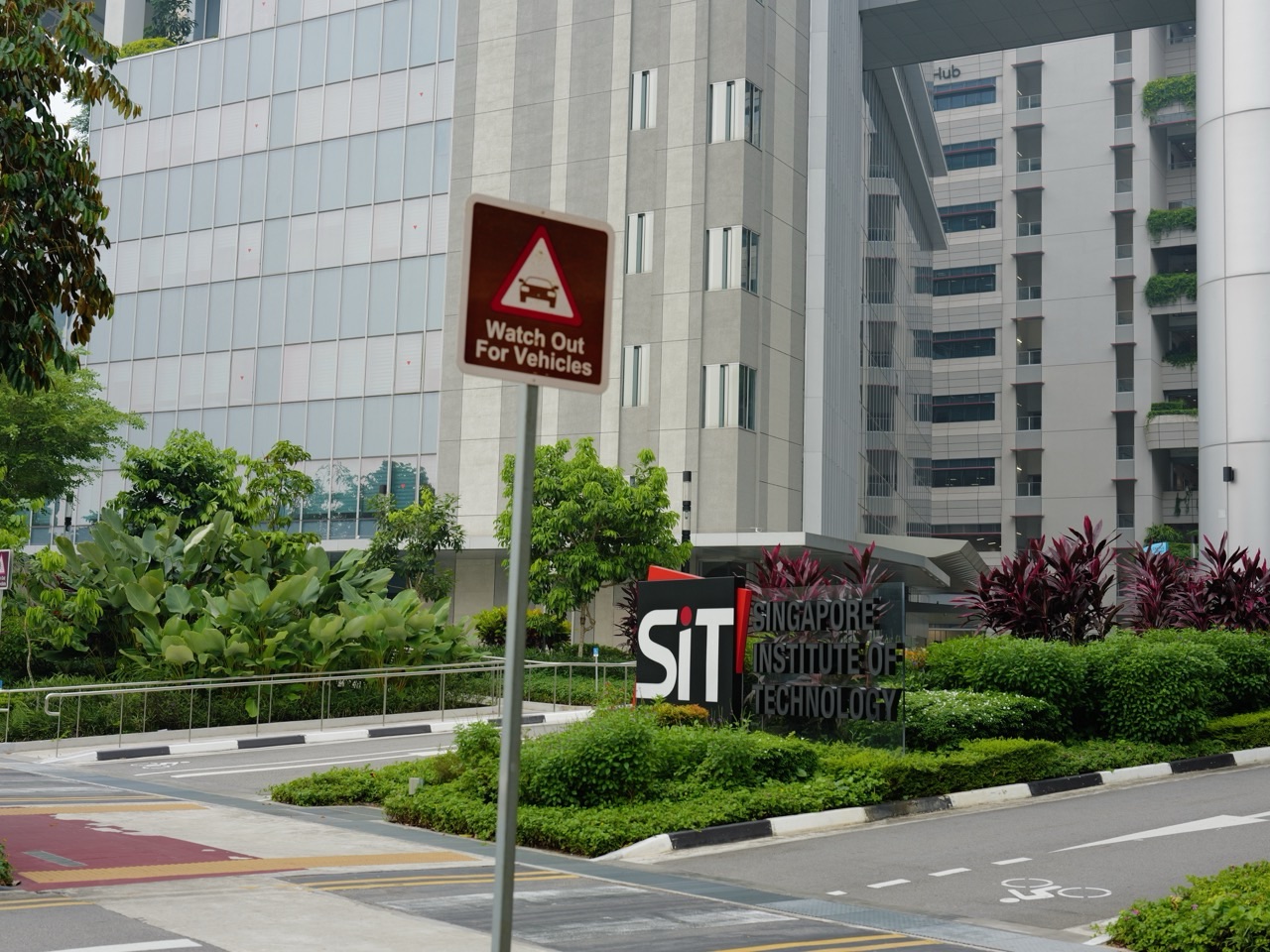
Can a complete beginner try the bouldering wall at SIT Punggol Campus? SIT confirms that a bouldering wall exists at its Punggol Campus Court, but the university does not publish unrestricted public walk-in access. Students and staff have priority, and external use requests are considered case by case. Before leaving for Punggol Coast, confirm eligibility, the actual session, safety supervision, any booking and what equipment is required. If access is not approved, choose a properly managed climbing gym elsewhere rather than arriving at a university wall and attempting to climb.
This SIT Punggol bouldering beginners guide for 2026 explains what bouldering is, how it differs from rope climbing, why falling and crash-mat safety matter, how SIT’s facilities and Rock Climbing club fit together, and what a resident or first-year student should ask before a first session. The existing SIT Punggol Bouldering Wall: Location, Access and Booking Enquiries is a concise facility directory; this longer guide helps a first-time climber understand the activity and make an informed decision.
Bouldering at SIT Punggol: quick facts before you travel
| Question | Grounded answer | What to verify |
|---|---|---|
| Is there a bouldering wall? | Yes. SIT lists one among Campus Court’s sports amenities. | Its specific entrance, current operating status and session organiser. |
| Can non-students walk in? | No general public climbing entitlement is published. | Obtain SIT’s approval for the actual proposed visit. |
| Do students always have access? | Students and staff have priority under SIT’s campus policy. | Bookings, club sessions, induction, opening times and facility restrictions. |
| Is the university’s public boulevard the same as wall access? | No. Selected public campus spaces are separate from sports facility permissions. | Do not infer climb access from being allowed to pass through campus. |
| What is bouldering? | Climbing shorter routes without a rope in a properly equipped bouldering setting. | Appropriate impact-absorbing mats and a safety briefing are essential. |
| Does bouldering need a rope or harness? | Not ordinarily at a designed low bouldering wall, unlike top-rope climbing. | Venue design and rules control; never improvise. |
| Can beginners practise alone? | Choose supervised instruction and a managed climbing area; avoid unsupervised attempts. | Understand landing, crowding and age restrictions. |
| What if public access is not available? | Use a verified commercial climbing gym or an authorised programme. | Book the correct session and complete its mandatory safety briefing. |
1. Bouldering is a particular form of climbing, not a synonym for every climbing wall
People often use ‘rock climbing’ as a general description. In a managed indoor climbing facility, however, there are important differences. Bouldering usually involves shorter ropeless routes above purpose-designed padded landing zones. Top-rope climbing uses a rope and belay system. Lead climbing uses additional specialist procedures and equipment. These activities have different training, supervision and safety requirements.
A first-time boulderer should not assume that a harness is needed for every wall, nor that a crash mat makes an unsupervised fall harmless. SportSG’s How to Fall in Climbing explains that bouldering and rope-climbing falls are treated differently. The general lesson is that landing risk is part of the sport, and safe practice requires learning appropriate facility procedures rather than copying dramatic falls seen online.
Bouldering problems are often short sequences of holds, sometimes identified by colours or route labels in a gym. Beginners can learn body positioning, controlled foot placement and route reading on suitable introductory challenges. Strength matters, but a new climber’s judgement and controlled movement are equally important. There is no value in immediately attempting the most difficult route simply because someone else completed it.
2. What SIT Punggol officially confirms
SIT’s Punggol Campus FAQ names a bouldering wall, tennis courts, indoor halls, a fitness gym, dance studios and a martial-arts hall at Campus Court. Its campus map and wayfinding information include a Bouldering Enclave. This confirms that the facility is part of the university’s built sports environment.
The same FAQ also states that public accessibility is limited to designated community-facing spaces, primarily at Campus Boulevard Level 2 and below, while students and staff receive priority for other amenities. External parties may request access on a case-by-case basis. The bouldering wall is not one of the ordinary event spaces explicitly advertised for general short-term public hire on the published facilities-booking page.
The distinction is straightforward: the wall exists, but the public-use arrangements are not established by its presence. A resident who wants a session should ask SIT about approval, group eligibility, supervision and cost. Do not present a campus walkthrough, food-court visit or visitor-gallery admission as permission to climb.
3. The journey: Campus Court is in Punggol Digital District
SIT’s main campus address is 1 Punggol Coast Road, Singapore 828608, with Punggol Coast MRT station at its doorstep. The official campus travel information identifies Punggol Coast MRT Exit 1 and bus options, and says Teck Lee LRT is also connected by a walking route. Visitors should use the host’s actual block, floor and meeting-point instructions rather than assuming every sport room is accessible through the nearest campus entrance.
Campus Court and Campus Heart are different plots within the larger university environment. SIT Campus Court faces Coney Island and contains sporting facilities among its university buildings. A general route to Campus Boulevard may not be the correct access route for an approved sports session. Our SIT Punggol Virtual Campus Tour guide helps with orientation, but an organised session’s instructions should take precedence.
SIT is in a car-lite district, so public transport may be simpler than driving for many residents. However, a person’s mobility, personal equipment and the session time can change that choice. Check the real trip from Northshore, Oasis, Matilda or Punggol MRT, including return transport. A first-time climbing visit should allow enough time for reception and a safety briefing rather than arriving late and rushing onto the wall.
4. Ask SIT about the wall, not just campus entry
| Question to ask | Why it matters | What constitutes confirmation |
|---|---|---|
| Am I eligible for this bouldering session? | Student, staff and external access may differ. | An explicit response for your group or individual. |
| Where is the entry point? | Campus Court contains several buildings and amenities. | A block, floor and meeting point. |
| Who supervises first-time participants? | Bouldering involves falls and movement hazards. | A designated organiser and appropriate safety process. |
| Do I need to register beforehand? | No automatic public walk-in right has been published. | Approved enrolment or booking instructions. |
| Is a beginner safety briefing mandatory? | Newcomers may not understand landing, mats or spacing. | The venue’s actual induction requirements. |
| What shoes and gear are provided? | Climbing equipment and fit vary. | Clear instructions about rentals or supplies. |
| Are there age or medical restrictions? | A session may have safeguards or eligibility rules. | Written participant requirements. |
| What are the fees and cancellation terms? | Campus or club arrangements can differ. | Actual charges, dates and confirmation. |
| What happens if access is not available? | A wall may be reserved for university members. | A verified alternative or a decision not to travel. |
If you are not a student or staff member, SIT’s existing official external enquiry route is published through its campus information. It is reasonable to ask about the proposed activity; it is not reasonable to assume a booking will be approved. The university may limit sessions to authorised teaching, clubs or student activity. That boundary should be respected.
5. A first bouldering visit is mainly about learning safety
The most useful first session includes understanding the facility’s rules, where to stand while others climb, and how to leave a route without putting yourself or someone else at risk. A newcomer should be instructed about the designated landing surface and how to manage the risk of falling. Do not climb above other people or enter a landing zone beneath an active climber. Do not move safety mats or attempt to create your own landing area.
A commercial gym such as Climb Central requires first-time participants to attend a safety briefing, complete registration and follow supervision rules. Its facility rules also distinguish bouldering from roped climbing, prohibit entering some areas without appropriate verification and place specific requirements on children’s supervision. This illustrates the seriousness of a managed climbing environment; it is not a claim that Climb Central operates the SIT wall.
For a person with an injury, condition affecting balance, recent surgery, pregnancy or other relevant concern, professional medical advice may be needed before climbing. A controlled facility can still involve falls or sudden movements. The first step is not a list of handholds or a risky self-teaching drill; it is finding appropriately supervised instruction and deciding whether climbing suits your circumstances.
6. What a beginner can learn without risky jumps or advanced moves
| Learning area | Concept | What a suitable session could emphasise |
|---|---|---|
| Route awareness | Recognising the intended sequence of holds. | Reading a simple beginner route before starting. |
| Foot placement | Using the feet instead of pulling only with the arms. | Controlled weight transfer under instruction. |
| Body positioning | Keeping movement balanced and deliberate. | Avoiding unnecessary swings and fatigue. |
| Grip and rest | Not squeezing every hold at maximum effort. | Comfort and pacing appropriate to the participant. |
| Communication | Knowing when it is safe to climb and when to stop. | Respect for other climbers and instructor signals. |
| Landing awareness | Understanding the padded zone and fall precautions. | Formal briefing and supervised practice, not self-experimentation. |
| Exit strategy | Recognising when to stop a climb. | Following the facility’s approved procedures. |
| Recovery | Allowing hands, forearms and other tissues time to recover. | Short sessions without forced exhaustion. |
This table explains the skills that commonly make climbing approachable. It is not a technical manual for climbing or falling. A beginner who tries to imitate high bouldering moves without appropriate supervision can be injured even when a mat is present. Make safe judgement, controlled movement and respect for the climbing area part of the first lesson.
7. Bouldering versus top-rope: a useful choice for first-timers
Bouldering can appear simpler because it does not use a rope, but that does not make the activity automatically safer or easier. It presents its own falling and impact risks. Top-rope climbing requires a correct rope, harness and belaying system, usually subject to induction and verified competence. A person may prefer the lower height and problem-solving nature of bouldering, while another wants the structure of a supervised roped session.
SportSG’s climbing resources and Singapore’s national climbing standards demonstrate that rope systems require specialist instruction. The Singapore National Climbing Standards programme at Climb Central describes a separate course for top-rope skills. A certificate or ability to use a climbing gym elsewhere also does not automatically grant entry to SIT’s facility. Each operator controls its own rules.
If you have never climbed, it can be sensible to start at a commercial facility that explicitly advertises first-timer orientation and has confirmed available staff, rather than waiting outside an inaccessible university wall. Compare age rules, safety systems, transport and how the teaching format makes you feel. Never enter a roped or bouldering area that requires verification without completing it.
8. Does the SIT Rock Climbing club mean visitors can join?
SIT’s student activity listings include Rock Climbing among its sports interests. That is evidence of a university climbing community, but it does not establish that the public can join the club, that the campus bouldering wall is available for the next session, or that every student automatically has unrestricted access. Students should check official club recruitment and facility booking instructions.
An incoming SIT student may ask the club about introduction days, skill levels, first-aid procedures, membership and whether activity takes place at campus or a partner venue. A family or community visitor should contact the university through the appropriate published external enquiry route. Treat club participation and public venue hire as two separate questions.
Our short SIT Bouldering Wall access guide lists the official wayfinding and enquiry context. This article provides the educational layer: what a beginner should understand about bouldering and why the presence of a university wall is not an offer of unrestricted public recreation.
9. Shoes, chalk, mats and the real cost of getting started
Climbing shoes can provide grip and precision on designed holds. A venue may offer rental shoes or require participants to bring their own. Chalk, water and a comfortable outfit may be allowed or restricted depending on facility rules. Bouldering mats are usually part of the managed facility and must not be treated as ordinary portable furniture; their location and integrity are safety-critical.
Do not buy specialised climbing shoes, chalk bags or training boards before confirming you can attend an appropriate session. A beginner’s first objective is to understand the sport and safety. If a commercial gym offers a first-timer package that includes equipment and briefing, that may be better value than purchasing gear for one visit. Confirm the actual fee rather than assuming a university wall is free because it appears on campus.
Transport, registration and age restrictions also create costs. A well-organised session that you can realistically reach and repeat may be a better starting point than an unverified facility very close to home. The Low-Cost Fitness in Punggol guide provides a general decision framework.
10. Four stages of trying climbing responsibly
| Stage | The key question | Possible safe activity | Success means |
|---|---|---|---|
| 1: Choose | Where can I legally and safely participate? | Confirm SIT eligibility or book a supervised gym visit. | You have genuine access and instructions. |
| 2: Orient | What are the rules and hazards? | Attend an appropriate safety briefing. | You know where to stand, stop and ask for help. |
| 3: Learn | What introductory movement suits me? | Use a supervised beginner route or class. | Controlled movement and comfort. |
| 4: Decide | Do I enjoy this enough to continue? | Repeat an appropriate session or choose another activity. | A sustainable personal choice, not a forced grade. |
These stages deliberately do not promise that beginners can climb a certain grade by a particular date. Physical capabilities and confidence develop differently. Some people love movement problem-solving; others prefer swimming, strength work or sports with lower falling risk. The positive result is learning what suits you while keeping risk under control.
11. Heat, haze and indoor climbing
Indoor activity can be convenient when Punggol’s waterfront paths are hot, hazy or affected by thunderstorms. But an indoor facility is not automatically unaffected by air quality, ventilation or its own closure rules. Climbing in a crowded room can be physically demanding, and ventilation or comfort varies by venue. Follow the operator’s current instructions and relevant public-health advice.
During worsening haze, use official NEA haze guidance. If the journey involves outdoor pathways during lightning risk, check MSS lightning information and postpone nonessential travel where conditions are unsafe. The venue may cancel a session, and the participant should understand what happens to the booking.
Climbing is not a substitute for individual medical care. A person feeling dizzy, unwell or unusually weak should not attempt a route simply because an instructor is present. Stop and seek appropriate advice. Recovery and hand or arm comfort are important even for apparently short sessions.
12. Three Punggol first-timer examples
A SIT student who wants to try the campus bouldering wall
The student sees the bouldering wall listed at Campus Court and asks their student recreation office or climbing club how to participate. They confirm whether an induction is required and whether there is an organised beginner session. They do not enter the facility outside its approved hours or improvise on a wall while nobody is supervising. The first success is understanding the facility and attending a proper introduction.
A Punggol resident who is not a student
The resident visits Punggol Digital District frequently and assumes they can climb on campus because the public can use some nearby amenities. They read SIT’s FAQ and learn that outside sports access is case by case. They send a specific enquiry or select a commercial climbing gym that welcomes first-time guests. They avoid a wasted trip and choose an actual available service.
A parent who wants a family climbing activity
The parent sees a university bouldering wall and plans to bring children. Before organising anything, they ask about the age rules, supervision and whether public participation is allowed. A commercial gym may have specific child-age and adult-supervision requirements; these must be checked with its operator. The family chooses a safe authorised setting rather than treating a campus amenity as a playground.
13. Mistakes first-time climbers should avoid
- Confusing public campus access with public sports access. SIT’s priority and permission rules apply.
- Assuming a bouldering wall must be open because it is built. Confirm actual sessions.
- Climbing without appropriate mats and briefing. Falling is a real hazard.
- Standing under another climber. Respect designated landing zones.
- Trying unsupported falls or spotter techniques. Follow trained staff.
- Imitating advanced moves on the first day. Start within supervised capability.
- Confusing top-rope and bouldering safety systems. They require different arrangements.
- Buying costly shoes before confirming access. Ask about rentals.
- Bringing children without verifying age and supervision rules. The operator decides.
- Ignoring pain or symptoms. Stop and obtain appropriate professional advice.
14. Frequently asked questions
Does SIT Punggol really have a bouldering wall?
Yes. The official university Punggol Campus FAQ names a bouldering wall at Campus Court.
Can the public climb there without a booking?
No unrestricted public walk-in right is published. SIT prioritises students and staff and assesses external requests individually.
Where is SIT Punggol Campus?
1 Punggol Coast Road, Singapore 828608, adjacent to Punggol Coast MRT.
Is the university’s public walkway a climbing ticket?
No. Public access to selected campus spaces is separate from sports facility permission.
Can SIT students use the wall anytime?
Not automatically. Check university safety, booking, club and access requirements.
Is bouldering the same as roped climbing?
No. Bouldering generally uses shorter ropeless routes over purpose-built mats; rope climbing requires different safety systems.
Do I need a harness for bouldering?
Not ordinarily at a correctly designed bouldering wall; follow the operator’s specific equipment rules.
Is bouldering risk-free if mats are present?
No. Falls and impact can still cause injury; managed facilities require appropriate safety practice.
Can children try bouldering?
Some gyms offer child sessions under specific age and supervision rules. SIT’s public child access is not established by its facilities page.
Do I need climbing shoes?
The venue may require suitable shoes or provide rentals; check before buying.
Does a university climbing club guarantee public participation?
No. Student club membership and external facility access are distinct.
What if SIT denies external access?
Choose another approved beginner climbing venue or activity with genuine availability and suitable safety instruction.
Can I learn bouldering through online videos alone?
Videos cannot supervise falls, mats or venue risks. Attend authorised instruction and safety induction.
What if I have a recent wrist injury?
Seek individual healthcare guidance before climbing and do not attempt movements that worsen symptoms.
Continue through the eduKate Punggol lifestyle and campus ecosystem
- Life in Punggol — Master Lifestyle Guide
- SIT Punggol Bouldering Wall — Booking Enquiries
- Can the Public Visit SIT Punggol Campus?
- SIT Punggol Sports Clubs
- Accessible Exercise in Punggol
- Strength Training in Punggol
- Tennis for Beginners in Punggol
- Martial Arts for Beginners in Punggol
- Skateboarding for Beginners Near Punggol
- eduKateSG — Punggol Accessibility and Geography
Official sources and editorial note
- SIT — Punggol Campus FAQ and Sports Facilities
- SIT — External Premises Enquiry
- SIT — Campus Address and Directions
- SportSG — Understanding Falling Risks in Climbing
- Climb Central — Managed Facility Rules
- Climb Central — First Visit and Safety Briefing
- Singapore National Climbing Standards — Beginner Courses
- HealthHub — General Physical Activity Guidance
- Singapore Haze Guidance
Reviewed 18 October 2026. This article explains bouldering concepts and SIT’s official access boundaries; it does not grant permission to climb, promise any facility opening, provide technical falling instruction or replace qualified supervision. Climbing carries injury risk even with safety mats. Confirm entry, eligibility, staff, gear, class and medical suitability before taking part.


