
After Additional Mathematics in Punggol, the next step is not automatically junior college, engineering or the Singapore Institute of Technology. A student’s 2027 Singapore-Cambridge Secondary Education Certificate (SEC) results support applications to different post-secondary routes, and from January 2028 MOE will operate a new Post-Secondary Admissions Exercise (PSE) for pathways including JC, Millennia Institute, polytechnics and ITE. The child’s actual subject levels, results and course-specific conditions matter.
The two 2027 Additional Mathematics syllabuses are G2 K232 and G3 K341. Both develop algebra and calculus, but neither one alone guarantees a place in H2 Mathematics, a polytechnic engineering diploma or an SIT degree. The useful family question is which route suits the student’s interests and present strengths, which admissions criteria apply in that year, and what mathematics preparation comes next.
This guide explains the 2028 change, the JC and MI pre-university routes, polytechnic diplomas, ITE progression and the longer journey into university. It separates official announcements from questions that still require a course-specific answer. It is for Punggol families who want practical options, not promises based on a postcode.
POST-SEC QUICK ANSWERS — 2027 SEC results in January 2028; new PSE from 2028; 2028 JC admissions use revised L1R4; eligible polytechnic Year 1 aggregates can include one G2 subject in a permitted ELR2B2 position; DSA-JC, Poly-EAE and ITE-EAE continue; SIT degree admission is a later, separate process.
Punggol Additional Mathematics | Series Article Index
Jump directly to the right stage, 2027 SEC requirement or mathematical topic. All eight entries below are published guides; the Primary-to-University overview is the series hub.
- Primary to University overview
- Secondary 2 G2/G3 subject selection
- 2027 SEC G2/G3 syllabus and papers
- After SEC 2027: JC, MI, ITE, polytechnic and SIT (current guide)
- Algebra and polynomials
- Quadratics, graphs and coordinate geometry
- Trigonometry and radians
- Calculus and connected rates
Read by the decision you face
- The 2027-to-2028 timeline in one page
- Why the subject code must travel with the student’s grades
- The new PSE is about choices as well as scores
- Junior college: the A-Level route
- What L1R4 means and what it does not mean
- Millennia Institute: a three-year pre-university option
- Polytechnic diplomas: applied learning and admissions details
- A concrete example: two students with different strengths
- ITE is a progression route, not an educational dead end
- From a diploma or A-Levels to university
- The SIT Punggol campus: visible opportunity with real admissions rules
- Engineering, computing and data science do not ask identical things
- How to read a course prerequisite without being misled
- A family decision matrix for post-secondary options
- What to do if Additional Mathematics did not go well
- Punggol life makes logistics part of the educational equation
- A six-stage admissions preparation plan
- The parent conversation that keeps options open
- 24 realistic family pathway scenarios
- Frequently asked questions
- Official sources and the series
The 2027-to-2028 timeline in one page
Singapore introduces the common Secondary Education Certificate examinations from 2027, reflecting subjects taken at their respective levels. According to MOE’s March 2026 announcement, students use their SEC results to apply for several post-secondary pathways in January 2028.
The new Post-Secondary Admissions Exercise is intended to replace the existing set of admission exercises for entry to junior colleges, Millennia Institute, polytechnics and ITE’s two- and three-year Higher Nitec programmes. This changes how parents should interpret old application diagrams. Material describing the former Joint Admissions Exercise may still be historically correct yet not be the right guide to 2028.
MOE stated that Direct School Admission to JC, Polytechnic Early Admissions Exercise and ITE Early Admissions Exercise continue. That means the main common exercise does not erase every earlier selection route. Families must check the current dates, eligibility and conditions for the application route actually available to their child.
A sensible family calendar records the examination year, expected results period, official admissions portal, preference submission period, appeal window and the first day of the chosen institution. Confirm dates when that year’s official admissions information is released; do not invent a timeline down to the hour years in advance.
Why the subject code must travel with the student’s grades
G2 Additional Mathematics is K232 in the 2027 SEC framework, and G3 Additional Mathematics is K341. The certificate’s subject and level information is important because later admission rules may distinguish subject levels or allow them in specific aggregate positions.
For an adolescent, an Additional Mathematics grade can represent excellent progress in functions, trigonometry and calculus. But admissions formulas are administrative rules, not general praise for mathematical talent. The precise result and level must meet a specific institution’s policy.
Keep a clear record of all SEC subjects and levels rather than talking only about A-Math. Some pathways use several relevant subjects; others look for qualifying English, Mathematics, humanities or science results in particular combinations. A single subject cannot substitute for the rest of the application.
When asking whether ‘G2 is accepted’, include the exact qualification, intake year, course and use case. G2 might be eligible for a particular aggregate position yet not satisfy a separate prerequisite. Those can be true simultaneously. Clarifying the question prevents much confusion.
The new PSE is about choices as well as scores
The 2026 MOE announcement describes a choice-order tie-breaker for PSE applicants with equal net aggregate scores. The order is citizenship, choice order, gross aggregate score, then computerised balloting.
This creates an important planning lesson. A student’s preferences should express where they genuinely want to go rather than being entered casually as a list of fashionable courses. The ordering can matter when scores are tied under the published rules.
However, preference strategy does not override eligibility. A highly ranked option that a candidate does not qualify for will not magically become available because it appears at the top. First understand the course’s minimum entry conditions; then order genuine preferences based on informed interest.
Families should check the final application guide for how eligibility, posting rules and course choices are handled in the relevant intake. The published policy can guide planning now, while operational details belong to the official admissions materials for that year.
Junior college: the A-Level route
A junior college usually offers a two-year pre-university course leading toward the Singapore-Cambridge GCE A-Level examinations. Students who enjoy sustained academic study, abstract reasoning, humanities or sciences may find this route suitable. That does not mean every strong Additional Mathematics learner must choose JC.
From the 2028 intake, MOE announced revised JC admission criteria using a five-subject L1R4 aggregate instead of six-subject L1R5. The published qualifying gross threshold changes from 20 to 16, and the subject-group requirements remain structured rather than simply counting any five subjects.
Additional Mathematics may contribute to the mathematical preparation for more demanding JC subjects. Yet a JC’s H2 Mathematics allocation can depend on its own prerequisites and procedures. An applicant should not infer that choosing G3 Additional Mathematics guarantees H2 Mathematics everywhere.
The practical JC checklist includes the admissions aggregate, actual courses offered, H1 versus H2 subject requirements, school location, CCA time, guidance support and the student’s readiness for pre-university work. The most prestigious-sounding label is not necessarily the best academic environment.
What L1R4 means and what it does not mean
The revised L1R4 groups one language subject and four relevant subject slots under rules described in MOE’s 2025 JC policy materials. Among the relevant slots are requirements involving humanities and mathematics or science; it is not simply a count of any five high grades.
The important distinction is between an eligible gross aggregate, a net aggregate after applicable provisions, a posting outcome and a JC’s own subject eligibility. These are different concepts. Getting under a published threshold does not guarantee a place at the most competitive chosen institution.
Families should work through the current MOE example instead of treating online calculators as authoritative. A calculator may not reflect the newest subject-level conversions, tie-breakers or special conditions. It can support estimation, but it cannot override the published admissions system.
In Punggol, the local temptation can be to choose the easiest commute first. It is perfectly reasonable to include journey time in the decision; just do so after verifying the academic and administrative conditions. The best routine is one that the learner can sustain for the whole pre-university programme.
Millennia Institute: a three-year pre-university option
Millennia Institute offers a distinct three-year pre-university A-Level route. Its longer structure may fit students who want a different learning pace or subjects available through that institution. Choosing MI is not synonymous with abandoning higher education.
Like JC, MI has admission requirements that must be checked for the correct year and certificate. The 2025 MOE material on revised L1R4 criteria also discusses MI requirements, but the family’s operational reference for 2028 should be the new PSE and current published admissions guide.
A student who has enjoyed Additional Mathematics might continue into further mathematical study at MI if the desired subject is available and eligibility conditions are satisfied. The school, not a generic tutor guide, determines the actual subject offer and allocation.
A useful parent question is not ‘Why three years instead of two?’ but ‘Which environment gives this child a sustainable chance to build understanding, achieve the later qualification and develop outside class?’ Time spent learning is worthwhile when it opens a genuinely suitable path.
Polytechnic diplomas: applied learning and admissions details
Singapore’s polytechnics award diplomas in varied disciplines, including engineering, information technology, design, business, applied sciences and health-related fields. Many diploma courses use mathematics in different ways, but their minimum entry requirements are not identical.
MOE announced that from the 2028 Polytechnic Year 1 intake, candidates can use one G2 subject in the ELR2B2 aggregate where the revised criteria permit it. The associated cut-off threshold shifts from 26 to 22 points. That does not establish a blanket rule that any G2 Additional Mathematics grade is sufficient for any polytechnic course.
A student interested in a specific diploma should open that diploma’s current requirements, note any mandatory Mathematics or science grades, and read the course’s subject-group or relevant-subject definitions. A general statement such as ‘engineering needs A-Math’ is inadequate for a real admissions decision.
Look beyond minimum conditions, too. Diploma curriculum, laboratory access, internships, industry exposure, assessment style, travel and later transfer opportunities are all relevant. Additional Mathematics helps develop algebraic reasoning; success in applied education also calls for projects, communication and persistent technical practice.
A concrete example: two students with different strengths
Student A enjoys mathematical proof and wants to investigate physics in depth. A JC route with the appropriate A-Level subject combination might suit that motivation, provided admission and subject eligibility are met. Student A should research the actual JC’s H2 Mathematics requirements instead of treating a good SEC grade as automatic permission.
Student B enjoys building prototypes, coding and learning through projects. An applied polytechnic diploma might allow those interests to develop. Student B should compare course modules, actual entry requirements and the balance between mathematical theory and design practice.
Neither student has been promised admission in this example. The point is that a single school subject is evidence of preparation, while a post-secondary route is an educational programme with its own purpose and rules.
A parent can ask both students to complete the same planning exercise: explain what they hope to make or understand after two or three years, name two current subjects that support that ambition, and identify one skill they still need to build. This produces more meaningful choices than ranking routes by hearsay.
ITE is a progression route, not an educational dead end
The Institute of Technical Education offers vocational and technical courses leading to qualifications such as Higher Nitec. MOE’s 2026 PSE announcement explicitly includes two- and three-year Higher Nitec entries within the new common admissions system.
Mathematics matters in technical fields too: measurement, basic electronics, technical drawings, data, coding, costing and problem-solving all involve numerical thinking. A student need not have excelled at Additional Mathematics to be able to develop strong applied mathematical competence in a suitable programme.
Further progression may include employment, specialised training or applications to polytechnic and other educational options when the student meets the later entry requirements. Each step has separate criteria. It is misleading to promise that every qualification automatically converts to the next one.
Families should review the actual course names and what students learn, not only an aggregate label. Practical strength is worth recognising. An adolescent who becomes motivated through machinery, hospitality, logistics or computing deserves serious career guidance.
From a diploma or A-Levels to university
A university application is another admissions event after an appropriate post-secondary qualification. It is not the automatic final stage of a Primary-to-SEC sequence. Universities use their own qualification categories, academic thresholds, course-specific prerequisites and other selection measures.
For A-Level applicants, later performance in subjects relevant to the chosen programme will matter. For polytechnic graduates, diploma results and programme relevance may matter. Specific institutions may also require interviews, portfolios, tests or evidence of language proficiency, depending on course and applicant route.
A teenager in Secondary 3 does not need to guess an admissions cutoff that will exist years later. It is more helpful to choose a suitable next qualification, develop solid mathematical habits, investigate interests and update the decision as reliable information becomes available.
The long-term journey may also involve work experience, part-time study or professional development. University is a valuable option but not the sole definition of a successful education. Singapore’s pathways permit purposeful development beyond one examination or one institution.
The SIT Punggol campus: visible opportunity with real admissions rules
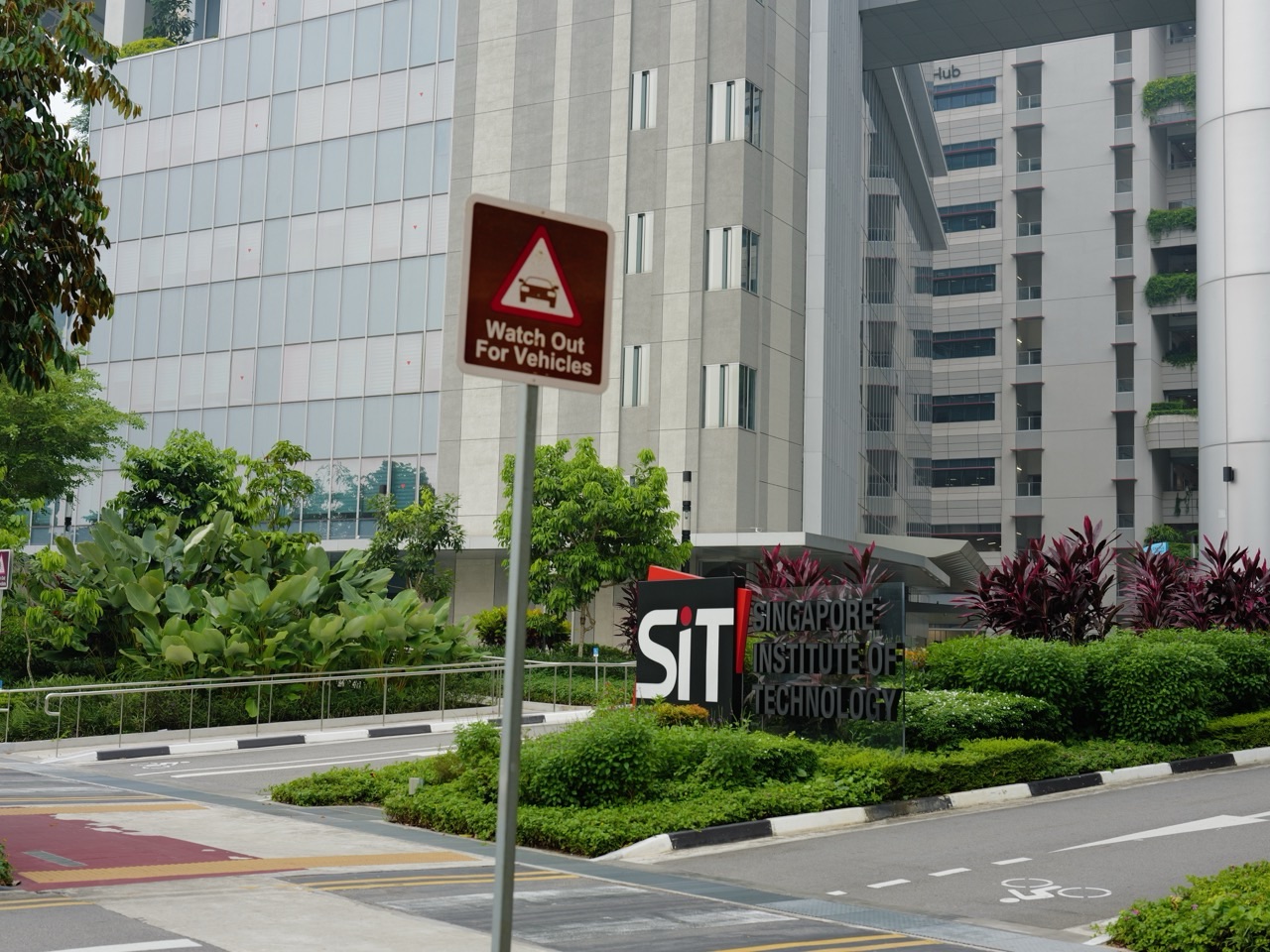
The Singapore Institute of Technology’s Punggol campus places a university and industry-linked learning environment in the neighbourhood. For local families it makes the idea of applied degrees more concrete. It does not turn residence in Punggol into an admissions preference, nor does proximity create direct entry from Secondary 4.
SIT’s official undergraduate admissions site provides qualification-specific entry information and programme-specific requirements. A student interested in an SIT degree should identify the particular programme and the accepted prior qualifications. Some programmes have distinctive subject, competency or language conditions.
For example, a student might begin with an appropriate polytechnic diploma and later consider an SIT undergraduate application; another might apply after A-Levels. In both cases admission is a separate process that evaluates the relevant qualification and course rules.
The practical value of living near a university is motivation and access to a local education ecosystem, not entitlement. Parents can encourage teenagers to examine publicly available programme descriptions, industry roles and open-house information while keeping academic eligibility as a distinct question.
Engineering, computing and data science do not ask identical things
These subjects overlap in mathematics but differ in emphasis. An engineering programme may use algebra, calculus, physics and design constraints. Computing may draw on logic, discrete mathematics and algorithms, depending on level and course. Data-related disciplines may rely on statistics, programming and modelling.
Additional Mathematics can build flexibility with symbolic representations and rates of change. That foundation is beneficial but not an all-purpose replacement for science, English, project work or computing practice. Preparation should reflect what the learner actually hopes to study.
Before saying ‘A-Math is compulsory’, find a named programme’s current official entry conditions. Some require particular school Mathematics grades or a specified later qualification; some offer bridging; others make an Additional Mathematics result relevant without naming it as an independent mandatory subject.
A teenager can experiment with small, safe projects: plot local weather trends, write code that draws a graph, build a simple spreadsheet or explain a physics relationship. These activities help test interest without claiming to be formal admission evidence unless the institution explicitly asks for it.
How to read a course prerequisite without being misled
Start with the award and intake: diploma, Higher Nitec, A-Level subject, undergraduate degree, and the year of entry. A university prerequisite intended for polytechnic graduates is not automatically the criterion for a Secondary 4 applicant.
Next identify the accepted applicant categories. An SIT page may distinguish A-Level, polytechnic diploma, IB or other qualifications. A school-based elective result does not replace completion of the applicable qualification.
Then separate minimum entry requirements, recommended preparation and actual selection. Meeting a minimum can permit an application without promising an offer. Competitive courses may select among eligible candidates and may request additional evidence as the official page explains.
Finally, record the date and link of the requirement you read. Requirements can change over a multi-year journey. A saved screenshot or document title without a year is easy to misuse. Good administrative literacy is part of good education planning.
A family decision matrix for post-secondary options
Create a table in a notebook or spreadsheet with four columns: confirmed eligibility, learning style, travel-and-life fit, and longer-term route. Add rows for the JC or MI programme, each named diploma, and any suitable ITE programme rather than listing institution types without details.
Score each option using evidence, not status. For eligibility, mark ‘met’, ‘not met’ or ‘requires confirmation’. For learning style, record whether the student enjoys theoretical work, laboratory tasks, hands-on projects, writing or an integrated mix. For life fit, calculate real travel and workload instead of inventing generic commute times.
For longer-term routes, write the qualification received at the end and which further applications it can support under currently published rules. A qualification is a stepping stone, not an automatic offer of the next award.
Ask the adolescent to explain their top two options and one contingency. The family’s role is to help investigate consequences without pretending to control all future admissions decisions. A plan with a verified backup is more resilient than one idealised choice.
What to do if Additional Mathematics did not go well
A disappointing SEC Additional Mathematics result can be significant for some course conditions, but it does not erase all post-secondary possibilities. Work from the full results statement, not a single grade. Then read the official requirements for the child’s desired routes.
If a particular path requires a subject result the student does not have, avoid claiming that enthusiasm alone waives the rule. Instead ask whether a different eligible route or later qualification can prepare the student for the same broad interest. Those alternatives should be checked officially too.
The same mindset applies to G2/G3 worries. Understand where subject levels are used in the admissions formula and where a separately defined course prerequisite applies. Do not tell a teenager that an entire career is forbidden based only on a general impression of one SEC paper.
A productive conversation ends with an immediate action: identify two eligible programmes, seek school guidance, check course deadlines and reflect on the learner’s strengths. It is better to leave with a genuine map than an optimistic but false guarantee.
Punggol life makes logistics part of the educational equation
Punggol’s housing estates, schools, public transport and university precinct bring several stages of education into view. Yet post-secondary study may require travelling elsewhere in Singapore. The closest institution is not necessarily the right course.
For a JC or diploma, compare real travel times at the time classes take place, transfer reliability, the need for laboratories or evening activities, and opportunities for study after school. A small daily friction repeated over a semester can influence motivation and rest.
Families might involve older children in planning the route, budgeting transport or checking official campus timetables. That is a chance to practise practical mathematics, independence and time management without claiming every decision needs complicated optimisation.
Location is a tie-breaker after the essential questions of programme suitability and eligibility. If a local campus offers the right qualification, its convenience is an advantage. If not, a longer journey may still be worthwhile if the overall fit is stronger.
A six-stage admissions preparation plan
First, in Secondary 2, clarify the child’s actual subject combination and current interests. Second, during Secondary 3, review mathematical readiness and begin comparing broad educational routes without promising a future cutoff.
Third, during Secondary 4, use current MOE and institution information for the coming examination and admissions year. Fourth, before results, read the application categories, prepare documents where required and distinguish early-admissions routes from the main exercise.
Fifth, after SEC results, calculate eligibility according to the official PSE rules and each programme’s published entry conditions; then arrange preferences deliberately. Sixth, after an offer, check acceptance deadlines, course orientation, bridging needs and a sustainable travel routine.
This plan is intentionally operational. It does not replace a school counsellor or an admissions officer. When a rule is unclear, the named institution should give the authoritative answer rather than a tutoring advertisement or a social-media debate.
The parent conversation that keeps options open
Ask the child what mathematical ideas they enjoyed, not only which marks were easiest to earn. Some students appreciate algebraic proof; others like applying formulas to machines, computing or environmental problems. Those differences can inform future courses.
Ask what kind of learning day they can sustain: lectures, tutorials, laboratory sessions, portfolios, workplace projects or a mixture. Post-secondary fit is not just about subject content; assessment and daily life can differ substantially.
Next ask for one official document supporting each proposed option. A parent should be able to distinguish verified eligibility from an unresolved question. If the child cannot explain why a route belongs on the list, research together before submitting choices.
Optimism is strongest when tied to evidence. A-Math can build reasoning power, but a rewarding future comes from combining appropriate qualifications, practice, interest and informed decisions. The next step is a choice to investigate, not a destiny predetermined in a Punggol classroom.
24 realistic family pathway scenarios
These scenarios are planning examples, not admissions promises. Each illustrates the difference between a student’s interests, the necessary qualification and a specific official entry condition. The right answer is often a short official inquiry or a documented requirement, not an imaginary guarantee.
1. 2027 SEC student wants H2 Mathematics
Investigate: Check the chosen JC’s H2 Mathematics prerequisites in addition to general PSE eligibility.
Why: G3 A-Math can provide useful preparation, but neither a subject choice nor a grade creates automatic H2 placement.
Next verified action: Record the institution, the current year and whether a bridging option exists.
2. G2 A-Math learner wants a polytechnic diploma
Investigate: Read the 2028 aggregate rules and the named course’s entry requirements.
Why: One eligible G2 subject may be used in the revised ELR2B2 structure, but not every G2 subject can fill any requirement.
Next verified action: Check the exact aggregate slot and subject eligibility.
3. Student thinks PSE is the old JAE
Investigate: Read MOE’s 2026 new PSE announcement.
Why: The 2028 intake is governed by a new common admissions exercise, while separate early-admissions pathways continue.
Next verified action: Use the final official 2028 guide for submission details.
4. Family lists a desired course last without discussion
Investigate: Review published PSE tie-break order.
Why: MOE states choice order follows citizenship as a tie-breaker for equal net aggregates.
Next verified action: Rank genuinely preferred eligible options thoughtfully.
5. Secondary student expects direct SIT entry
Investigate: Look at the accepted prior qualifications for a named SIT degree.
Why: SIT is a university; living in Punggol or sitting SEC A-Math does not by itself provide university entry.
Next verified action: Plan the intermediate post-secondary qualification.
6. Student enjoys physics and calculus
Investigate: Compare appropriate A-Level, diploma and later degree programmes.
Why: Multiple routes can develop quantitative science; requirements and study styles differ.
Next verified action: Read actual subject combinations and module descriptions.
7. Learner enjoys coding more than abstract proofs
Investigate: Explore computing diploma and pre-university subject alternatives.
Why: Interest can be tested through projects, but admission criteria still have to be met.
Next verified action: Build a small project and compare two actual programmes.
8. Family assumes every engineer needs A-Math
Investigate: Search official entry requirements for a named engineering programme.
Why: General preparation and mandatory admission qualifications are different.
Next verified action: Highlight precise wording in a published course requirement.
9. Polytechnic student later considers SIT
Investigate: Read SIT’s diploma-qualification and programme pages.
Why: An eligible diploma can be a route to applying, not a guaranteed degree offer.
Next verified action: Compare qualification category, grade expectations and any additional selection.
10. Parents worry MI takes one extra year
Investigate: Examine the curriculum, pace and support instead of treating duration as failure.
Why: A three-year pre-university structure can be appropriate for some learners.
Next verified action: Discuss motivation and realistic workloads with the child.
11. Student wants hands-on electrical technology
Investigate: Compare relevant ITE Higher Nitec, polytechnic and later routes.
Why: Technical learning uses mathematics; the appropriate programme must match the learner’s readiness and goals.
Next verified action: Read course outcomes and current admissions rules.
12. Student lacks one subject prerequisite
Investigate: Ask the named institution about permissible pathways or bridging.
Why: Willingness cannot replace an actual rule; alternatives require independent verification.
Next verified action: List possible routes with official links and prerequisites.
13. Family quotes a 2025 aggregate threshold
Investigate: Compare with the 2028 intake policy and application guide.
Why: JC L1R4 and revised polytechnic rules make older summaries insufficient.
Next verified action: Use the year-specific source before calculating options.
14. Child treats G2 as a failed identity
Investigate: Explain subject levels as curricular levels, not a description of a person.
Why: The certificate records specific examined subjects and performance, not human worth.
Next verified action: Focus on growth and the next available valid route.
15. G3 learner thinks JC is compulsory
Investigate: Compare academic interests with applied diploma opportunities.
Why: One subject level does not dictate the only educational destination.
Next verified action: Visit current programme descriptions and speak with school guidance staff.
16. Two routes have similar academic suitability
Investigate: Calculate real commute and workload implications.
Why: Location can affect rest and consistency after admissions suitability is confirmed.
Next verified action: Test travel schedules before the final choice.
17. Parent wants certainty about an unknown future intake
Investigate: Mark the rule as provisional and schedule an updated check.
Why: Admissions requirements can change; predictions are not official criteria.
Next verified action: Keep a dated source register for the future review.
18. The early-admissions deadline is approaching
Investigate: Confirm whether DSA-JC, Poly-EAE or ITE-EAE applies.
Why: MOE has said these routes continue alongside PSE; their criteria differ.
Next verified action: Use official application instructions and prepare evidence on time.
19. Student is good at mathematics but hates lectures
Investigate: Explore programmes with projects, practical learning and internships.
Why: Learning style and motivation matter in addition to aggregate eligibility.
Next verified action: Compare actual assessment types in named courses.
20. Student had a poor SEC A-Math paper
Investigate: Examine complete results and list routes that remain eligible.
Why: One grade may close some particular requirements without cancelling all options.
Next verified action: Build an accurate shortlist and seek school counselling.
21. Parent assumes any diploma permits any degree
Investigate: Check university’s accepted diploma categories and programme rules.
Why: University acceptance is qualification-specific and selective.
Next verified action: Consult the named SIT or other university degree page.
22. A child wants a career in data science
Investigate: Compare maths, computing and statistics development opportunities.
Why: A-Math is a useful foundation, not sufficient training in programming or statistical inference.
Next verified action: Try a small data visualisation and locate courses with relevant modules.
23. Family is choosing courses by reputation only
Investigate: Ask the adolescent to explain curriculum and career outcomes.
Why: Status cannot replace suitability, verified eligibility and genuine engagement.
Next verified action: Create a decision matrix with evidence and two backup options.
24. Student receives a valid PSE offer
Investigate: Read acceptance, orientation and enrolment instructions promptly.
Why: A posting or offer is not the final administrative step.
Next verified action: Confirm required actions and organise a manageable first-term plan.
Frequently asked questions
Does Additional Mathematics guarantee a place in JC?
No. Applicants must meet the year-specific JC admissions conditions and posting outcome; one subject is not sufficient.
Does G3 A-Math automatically allow H2 Mathematics?
No. Check the chosen JC’s subject requirements and allocation or bridging arrangements.
What changes in January 2028?
MOE announced a new Post-Secondary Admissions Exercise after the first SEC results, replacing existing admissions exercises for specified JC, MI, polytechnic and ITE entries.
Do DSA-JC, Poly-EAE and ITE-EAE disappear?
No. MOE’s 2026 announcement says these early-admissions routes continue.
Can a G2 grade count for polytechnic?
From 2028 one G2 subject may count in a permitted ELR2B2 position under revised criteria, but course and slot conditions still apply.
Is the JC aggregate still L1R5 in 2028?
MOE announced revision to L1R4 for the 2028 JC intake. Refer to the current PSE guide.
Is the gross qualifying JC threshold 20 or 16?
MOE’s revised 2028 L1R4 criteria state 16. Admission to a specific JC still depends on posting and all applicable conditions.
Can my child go straight from SEC to SIT?
An SEC subject alone does not establish eligibility for a university degree; SIT specifies accepted later qualifications by applicant category.
Is ITE relevant to students who like mathematics?
Yes. Technical training involves applied mathematics; eligibility and course fit should be examined directly.
Does studying in Punggol give local SIT admission priority?
Do not assume a residential preference. Check SIT’s published admissions rules; proximity alone is not proof of eligibility.
Should every A-Math learner choose engineering?
No. Additional Mathematics supports a range of further studies, and academic interest and course eligibility should guide decisions.
Where can we check changes after 2026?
Use MOE’s current admissions announcements, the specific post-secondary institution’s website, and its official intake guide.
Official sources and related Punggol articles
Policy check: 18 October 2026. The PSE announcement is from MOE’s March 2026 Committee of Supply release. The 2028 JC L1R4 changes were announced in 2025; 2028 polytechnic use of one G2 subject was announced in 2024. Actual application deadlines and programme-specific minimum entry requirements must be checked for the relevant intake.
- MOE March 2026: new Post-Secondary Admissions Exercise from 2028
- MOE 2025: revised JC L1R4 criteria
- MOE 2025 L1R4 qualifying subject requirements (PDF)
- MOE 2024: Full SBB and polytechnic G2 ELR2B2 admissions changes
- MOE post-secondary institutions overview
- MOE CourseFinder
- Singapore Institute of Technology: undergraduate A-Level entry criteria
- SIT: programme-specific undergraduate requirements
- SEAB 2027 SEC qualification overview
- Punggol Additional Mathematics Primary-to-University Roadmap
- Punggol Secondary 2 G2/G3 A-Math choice guide
- Punggol 2027 G2/G3 Additional Mathematics papers and worked guide
Part of Understanding the Additional Mathematics Education System of Punggol, a planned 100-article educational reference. This guide is specifically about onward pathways; separate published articles explain the primary-to-university map, the Secondary 2 subject decision and the SEC subject syllabuses.


