
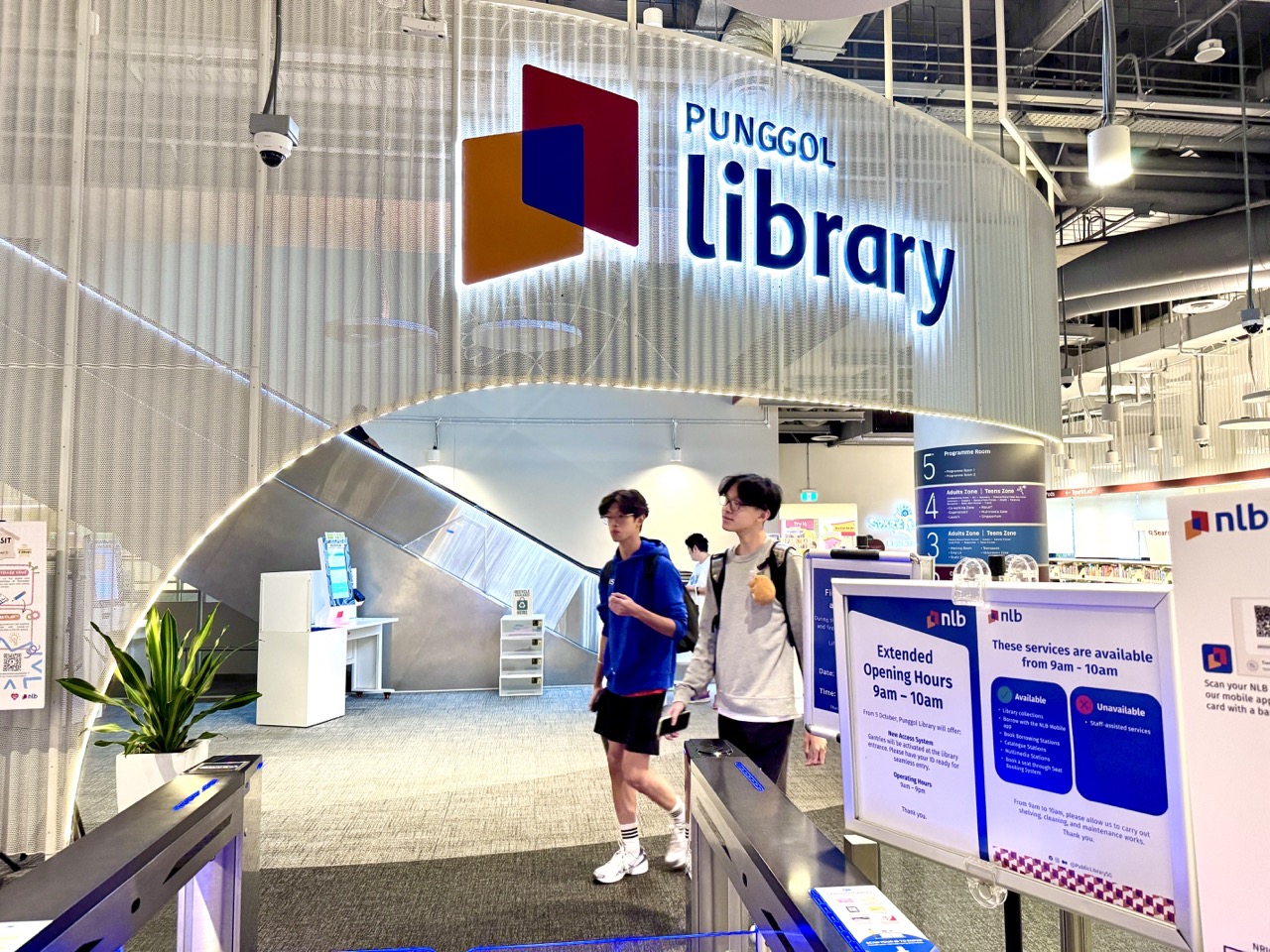
How do you start a book club in Punggol? Begin with three or four interested readers, choose whether everyone will read the same book or share recommendations from different books, and agree on one short meeting each month. Punggol Regional Library at One Punggol is a useful place to discover books, but a normal public reading area is not automatically a reservable discussion room. Host the first conversation at home, online, or in a genuinely suitable venue where group discussion is permitted. Use the National Library Board’s official Book Club Guide to decide how the group will operate, then keep the format simple enough for members to enjoy.
Book club ideas in Punggol for adults, teenagers, couples and neighbours can use fiction, Singapore writing, graphic novels, short stories or practical nonfiction. NLB’s National Reading Movement describes public-library book clubs across English, Chinese, Malay and Tamil and offers a guide for people forming their own. However, its national listing does not automatically confirm that a specific book club is meeting at Punggol Regional Library on the date you want. Check the actual NLB event listing if you want to join an existing club rather than create a small informal one.
Updated 17 October 2026. Due to current haze conditions, a first indoor reading session may be more suitable than a Waterway-based meetup. NEA’s forecast for 18 October is 150–220 PSI (unhealthy to very unhealthy), so unnecessary outdoor activity should be planned according to the latest NEA/MOH advice. A small reading conversation can take place without outdoor exposure or a paid programme, but group size, venue rules, age suitability and safeguarding still matter.
Punggol book club starter in one glance
| Decision | Simple starting choice | Why it helps |
|---|---|---|
| First group size | 3–5 consenting readers | Everyone gets a chance to talk |
| Meeting cadence | Once every 4 weeks or another agreed interval | Fits ordinary work and study life |
| First session | 30–60 minutes | Leaves room for people to decide if they enjoy it |
| Club format | One shared book OR different books to recommend | Avoids unnecessary disagreement |
| Venue | Home, appropriate online meeting or venue that permits discussion | No assumed private library booking |
| Book selection | Accessible library loan or existing copy where possible | Keeps spending optional |
| Teens involved | Age-appropriate peer group and family arrangements | Different supervision and safeguarding needs |
| Haze fallback | Indoor or online conversation | Reduces unnecessary outdoor travel |
| If nobody finishes | Talk about the parts read or switch to a shorter text | No shaming or compulsory grades |
The first important choice: one shared book or a pool of different books?
NLB’s official Book Club Guide explains two broad models. In a one-book-at-a-time club, every member reads the same selected work and the group can discuss characters, arguments and surprises in depth. In a shared-pool club, members read different titles and briefly recommend or exchange them. The second model can be friendlier to people with varied tastes and busy schedules, while the first supports a more sustained conversation about the same text.
Neither model is inherently better for every Punggol household. Four friends who all enjoy detective fiction might prefer one short novel each month. A mixed-age family can share books of different difficulty and focus on recommendations. Working adults can choose an essay or a short story rather than adding an ambitious new reading obligation. A club that fits real lives is easier to keep going than one built to look impressive.
A third option is to alternate: the first meeting is a shared pool, the second discusses a specific short story that everyone can legally access, and later months respond to members’ preferences. The format is a means to enjoyable reading and conversation, not a policy that must be followed forever.
Nine principles that keep a Punggol book club enjoyable
Invite people who want the experience, not a target number
A group of three people can be a real book club. Large attendance can make scheduling and discussion harder. Begin with a few friends, neighbours or relatives who enjoy reading or are genuinely curious. Do not add people to a group chat without consent or make library users feel pressured to join an activity they did not request.
A welcoming invitation says how often the club meets, what sort of material it reads and whether attendance is optional. The club can grow later if members want it. Social life does not require turning a hobby into an organisation with dues and a committee.
Define the kind of conversation you want
Some readers enjoy analysing plot and character; others prefer sharing how a book relates to daily life; another group may want a quick recommendation exchange. A clear purpose makes it easier to choose the first title and the length of the meeting. It also prevents the most confident participant from accidentally dominating.
Ask each member what they hope to get out of the club and select one common expectation. A fun reading club can be serious about books without making every disagreement feel like an examination debate.
Choose books by access, not only prestige
Selecting a long expensive novel because it is fashionable can leave members struggling to find copies or finish on time. NLB’s catalogues and legal eBook services can help readers find titles, but availability and loan limits change. A short book, graphic novel or novella may suit a small first club better.
Check that participants can borrow, buy or otherwise access the selected work legally. Do not circulate pirated scans or require everyone to purchase a hardback. Book length and language matter as much as the headline genre.
Different reading speeds are normal
A club is not a place to shame somebody for reaching page 60 while others finish the book. Reading time depends on household commitments, fluency, interest and what else is happening in life. Some members may listen to an authorised audiobook while others read print or eBooks. They can still contribute to the conversation.
Agree how spoilers will be handled and whether the first discussion covers the whole work or only a part. Members should be free to say they did not finish, without making attendance conditional on perfect preparation.
A library is shared civic space, not your private meeting room
Punggol Regional Library provides ordinary reading, borrowing and programmes within One Punggol. Those services do not automatically include a private room for a noisy recurring book club. A planned group discussion may need an eligible bookable community room, a commercial venue with appropriate permission or a home/online setting.
Follow the actual venue rules and ask about any private room or event requirements before advertising ‘Punggol Library Book Club meets here every Saturday.’ An informal group should not occupy a quiet study zone or disrupt other readers.
Teen book groups need age-appropriate arrangements
For Secondary students, a short book club can be a social activity that supports friendship and interpretation. It is not automatically a school programme. Families should agree on any independent travel, venue, contact and finish time. A group involving minors should have appropriate adult oversight or boundaries for the ages and activity.
Do not create a public group that shares teen phone numbers, locations or images without proper consent. Parents and organisers should handle safeguarding; teens can still choose books and lead parts of discussions.
Disagreement can be enjoyable when it stays grounded
Readers may have different responses to the same character, theme or argument. A thoughtful club asks what part of the text supports an interpretation, while accepting that people may have personal reactions too. Members do not have to be professional critics or use academic jargon to enjoy a discussion.
Separate criticism of a book from criticism of a member. Avoid personal attacks, stereotyping or demanding disclosure of private experiences just because a story mentions family, health or work.
Keep the meeting short enough to finish happily
A reading group can be exhausting when it becomes three hours of speeches, a quiz and extensive homework. For a first session, 30–60 minutes is a reasonable experiment. Allow time for greetings, one or two main discussion questions and a simple choice for the next meeting. A longer meal can be optional.
Set a finish time, especially for parents, teens and shift workers. If the group wants a regular venue, choose a practical public transport connection and consider the members’ walking and access needs.
Review what members actually enjoyed
After the second or third session, ask what would make the next meeting easier: shorter books, different genres, online discussion, more time between sessions or a change of venue. This helps the group keep reading rather than becoming burdened by its own expectations.
A good club need not run indefinitely. Members can pause during exams, school holidays, family commitments or poor weather. If a monthly meeting stops being enjoyable, changing the format is a sensible option.
Where can a small Punggol reading group meet?
A home gathering with clear consent and boundaries
For friends or family members who know each other, a short home-based meeting can be practical. Members can bring their own copies or share recommendations, have a simple drink and discuss at a comfortable volume. Home is not suitable for everyone, and an invitation should never pressure someone into disclosing a private address.
Choose the group’s size according to available space, household comfort and estate rules. If minors attend, ensure appropriate caregiver arrangements. Avoid broadcasting a participant’s residential address in a public invitation.
An online call, especially during haze
An online or voice-only meeting eliminates travel needs and can work for friends who live in different Punggol neighbourhoods. Choose a platform members know how to access. One person can lead the discussion while others participate at their chosen comfort level, with cameras optional.
Do not record or publish the discussion without clear consent. If people are sharing private stories, explain whether notes are retained and who can access them. A small reading chat should be private by default.
One Punggol Community Club or an eligible private room
PA describes One Punggol CC as having activity and interest-group spaces within the broader civic hub. That makes it a possible enquiry point when a group requires an appropriate venue, but the existence of a room is not confirmation of public private-hire eligibility, fees or availability. Apply through the actual CC process if a formal meeting is needed.
Do not put the venue into an invitation until the booking is confirmed. Check accessible transport, capacity, permissible use, seating and operating times. Some programmes are hosted by the CC; attending them is different from organising your own event.
A suitable commercial food venue, by agreement
A cafe or restaurant may suit a small conversation when the operator permits it and the group is buying appropriate food or drinks. A public table is not a meeting room, and busy meal hours may make it difficult to discuss books without disrupting others.
Contact the venue if seating together or an extended discussion is essential. Set a spending limit before inviting readers. If the venue is busy or the group is not purchasing, choose another permitted meeting arrangement.
Ordinary library browsing before or after the conversation
Some members may enjoy visiting Punggol Regional Library or the Comics & Games pop-up separately to select titles. A library browse can be a companion activity, while the proper group discussion occurs somewhere suitable. This avoids presenting normal library seating as a private book-club venue.
NLB’s special event and reading-club programmes have current registration rules. If you want to join an existing NLB club, use its national events and Book Clubs listings; do not assume a Punggol-specific event is scheduled without evidence.
A four-week Punggol book-club trial
Week 1: meet briefly and choose a format
Invite three to five interested readers to an appropriate home or online discussion, or a properly permitted space. Everyone shares a short recommendation, and the group chooses between one shared book and a pool of different books. Agree on next meeting date and how much reading is realistic.
No one needs to show up with a finished novel. The first goal is seeing whether the group enjoys talking about stories together. Avoid expensive room commitments before a successful trial.
Week 2: read at your own pace
Members borrow or legally access the chosen book or explore the shared pool. Anyone who struggles with time can still read a chapter or a short related piece. The group may exchange one optional question through a private chat, but should not demand daily reading proof.
Do not distribute copyrighted scans or insist everybody reveal their personal reading history. People have work, school and family commitments; a hobby should fit rather than overwhelm them.
Week 3: prepare two or three questions
The facilitator selects simple open questions such as what surprised a reader, which decision by a character felt important or what evidence supported the author’s argument. There is no need to prepare a formal lecture. If the club reads different books, each member can prepare a concise recommendation.
Avoid spoilers beyond the agreed section. Keep questions broad enough that readers with different tastes and levels can contribute. The club is not a grading exercise.
Week 4: hold the first proper discussion
Meet at the permitted agreed venue or online, keep the session to about an hour, and let people speak without interruption. Spend a little time deciding what should change: format, reading length, theme or cadence. Set the next meeting only if members genuinely want it.
The trial counts as a success if the participants enjoy the exchange and understand the process. No one needs to commit to twelve months or publish private photos.
A sample 60-minute book-club agenda that is not an exam
| Minutes | Purpose | Easy facilitation idea |
|---|---|---|
| 0–10 | Warm welcome | Everyone says one thing they liked or found confusing |
| 10–20 | First reactions | One memorable moment or idea per person |
| 20–35 | Main discussion | Explore two questions; ask for text-based reasons |
| 35–45 | Different perspectives | Let readers disagree without personal criticism |
| 45–55 | Recommendations | One related book, short story or author |
| 55–60 | Wrap up | Agree on optional next read, venue and time |
This is a sample structure, not a legal requirement or a script readers must follow. A group of three can discuss one good question and finish after 30 minutes. A teen group may prefer graphic novels and a shorter timetable; an adult group may wish to examine one chapter of nonfiction. What matters is that the conversation is useful and voluntary.
Eighteen book-club discussion prompts that create conversation
1. The first hook
Ask: What made you want to keep reading—or stop? Keep it constructive: Describe a moment rather than judging someone else’s taste. One or two questions can support a full enjoyable meeting; the club need not work through all eighteen.
2. A surprising decision
Ask: Which choice by a character or author stood out? Keep it constructive: Explain what led to it in the text. One or two questions can support a full enjoyable meeting; the club need not work through all eighteen.
3. Place and setting
Ask: What did the setting make possible or difficult? Keep it constructive: Separate the fictional setting from real Punggol. One or two questions can support a full enjoyable meeting; the club need not work through all eighteen.
4. An unfamiliar word
Ask: Which expression did you want to understand better? Keep it constructive: Check its meaning in context. One or two questions can support a full enjoyable meeting; the club need not work through all eighteen.
5. The narrator
Ask: Whose viewpoint shapes what the reader learns? Keep it constructive: Avoid assuming one viewpoint tells the entire truth. One or two questions can support a full enjoyable meeting; the club need not work through all eighteen.
6. A missing perspective
Ask: Who has little voice in the work? Keep it constructive: Make an interpretation rather than claiming author intent without evidence. One or two questions can support a full enjoyable meeting; the club need not work through all eighteen.
7. A favourite sentence idea
Ask: What thought or image stayed with you? Keep it constructive: Paraphrase in your own words rather than reproducing long copyrighted passages. One or two questions can support a full enjoyable meeting; the club need not work through all eighteen.
8. The cover
Ask: Did it prepare you accurately for the content? Keep it constructive: A cover is a design choice, not a complete summary. One or two questions can support a full enjoyable meeting; the club need not work through all eighteen.
9. An open question
Ask: What remains unresolved? Keep it constructive: It is fine not to have an answer. One or two questions can support a full enjoyable meeting; the club need not work through all eighteen.
10. A local connection
Ask: Does this story evoke an everyday Singapore experience? Keep it constructive: Do not force a false link to Punggol. One or two questions can support a full enjoyable meeting; the club need not work through all eighteen.
11. A different ending
Ask: What might change if one decision were different? Keep it constructive: Treat this as creative speculation, not the actual text. One or two questions can support a full enjoyable meeting; the club need not work through all eighteen.
12. Pace
Ask: Where did the story feel fast or slow? Keep it constructive: Different readers experience pacing differently. One or two questions can support a full enjoyable meeting; the club need not work through all eighteen.
13. A factual claim
Ask: What evidence supports a nonfiction author’s statement? Keep it constructive: Verify time-sensitive assertions independently. One or two questions can support a full enjoyable meeting; the club need not work through all eighteen.
14. A character’s goal
Ask: What did someone want, and what blocked it? Keep it constructive: Support the observation with events in the work. One or two questions can support a full enjoyable meeting; the club need not work through all eighteen.
15. Translation
Ask: What may change when a story is read in another language? Keep it constructive: Avoid asserting how a translation works without reading it. One or two questions can support a full enjoyable meeting; the club need not work through all eighteen.
16. A graphic-novel panel
Ask: How did an illustration add meaning to the words? Keep it constructive: Respect copyright if discussing images. One or two questions can support a full enjoyable meeting; the club need not work through all eighteen.
17. Would you recommend it?
Ask: Which kind of reader might enjoy this book? Keep it constructive: A recommendation is subjective, not a universal ranking. One or two questions can support a full enjoyable meeting; the club need not work through all eighteen.
18. Next month’s direction
Ask: What kind of work would you like to try next? Keep it constructive: Let the group choose a realistic length and accessible format. One or two questions can support a full enjoyable meeting; the club need not work through all eighteen.
Choosing reading material for different Punggol book groups
Adult fiction friends
Begin with a short novel or story everyone can legally access and that members genuinely want to read. Vary genre only when the group is interested. A thriller, quiet literary work or humorous short story can each prompt good conversation. Avoid announcing one genre is inherently more sophisticated.
Adults interested in Singapore stories
Consider local fiction, essays, oral histories or nonfiction about neighbourhood change. Punggol has a documented history of farms, waterfront leisure and redevelopment, which can inspire discussion, but the book does not have to be set in the town. Use original sources when discussing historical claims.
Teen reader group
Graphic novels, comics, short stories or accessible nonfiction can help teens choose a format they enjoy. Keep book suitability, family boundaries and transport in mind. A peer-led conversation can work well where adults provide appropriate safeguarding and permission.
Multilingual reading group
Singapore has literary communities across English, Chinese, Malay and Tamil. NLB’s national Book Clubs page highlights programmes in different languages. Members can choose one language, translated works or a mixed-recommendation format without pretending everybody has equal fluency.
Readers with little time
A shared pool of short books, a brief essay or single story allows participation without committing to a very long novel. An audiobook or legal eBook may suit some people better. Let the chosen medium follow access and interest.
Intergenerational family group
Children, parents and grandparents can each recommend a book suited to themselves, then share why it matters. Do not force everyone to read an adult title or make a younger child’s book seem less worthy. The conversation is about connecting, not competing.
Common book-club problems and useful repairs
Nobody finishes the book
Useful adjustment: Use short excerpts discussed within appropriate copyright limits, change next month’s selection to a shorter work, or shift to the shared-pool model. Do not embarrass members.
One person talks for too long
Useful adjustment: Agree on gentle turn-taking and let everyone contribute before returning to the most confident speaker. A facilitator can ask a specific open question rather than cutting people off harshly.
The selected book is unavailable
Useful adjustment: Check NLB holdings, legal digital formats or choose another title. Do not circulate unauthorised copies or insist people spend beyond their budgets.
The library venue does not permit conversation
Useful adjustment: Move the discussion to a lawful suitable venue or online. A public quiet area is not a reserved meeting room.
Members disagree strongly
Useful adjustment: Refocus on the book and the evidence, and agree that tastes differ. Avoid personal attacks or pressure to discuss private experiences.
Teen transport becomes complicated
Useful adjustment: Shorten the trip, change to an approved closer venue or hold an online session. Each family handles the appropriate safeguarding and return plan.
Haze makes an outdoor meeting unsuitable
Useful adjustment: Move online or to a safe accessible indoor arrangement according to official NEA/MOH guidance. The reading can continue without outdoor exposure.
The group loses momentum
Useful adjustment: Ask whether a less frequent meeting or shared-recommendations model would be more enjoyable. No one is obliged to maintain a club indefinitely.
Frequently asked questions about Punggol book clubs
Does Punggol Regional Library have an official book club?
NLB operates a national range of library book clubs, but a Punggol-specific meeting must be verified in current NLB event listings. This article does not claim that a particular club meets there every week.
Where do I find current NLB book clubs?
Use the National Reading Movement’s Book Clubs page and current NLB event registration listings.
Can I start my own Punggol book club?
Yes as an informal voluntary group of interested readers, subject to the venue, safety, privacy and any applicable registration rules.
How many people should join first?
Three to five is a manageable starting suggestion, not a formal minimum or maximum. A two-person discussion can also be enjoyable.
How often should a book club meet?
Once every four weeks is a useful trial. Busy groups may prefer six weeks or occasional meetings.
How long should the first session last?
Roughly 30–60 minutes, with an agreed finish time, is enough for a first trial. Adjust to members’ needs.
Must everyone read the same book?
No. NLB describes both one-book-at-a-time and shared-pool book-club formats, with different advantages.
Can we meet in any area of Punggol Regional Library?
No. Ordinary library areas have different use rules, and a noisy private discussion or formal group may require an eligible permitted space.
Can we book a room at One Punggol CC?
It may be possible to enquire about suitable rooms, but booking eligibility, fees and availability are not guaranteed merely by the existence of facilities. Contact the community club.
Can we hold a small book chat at a cafe?
Only where the operator permits it, with appropriate purchases and consideration for other customers. A table is not automatically a reserved meeting room.
Can a teenager join an adult group?
The suitability depends on the group, title content and safeguarding. A teen-specific peer group may be more appropriate; families should approve travel and arrangements.
What books are good for first-timers?
Accessible short stories, novellas, graphic novels or nonfiction topics the members genuinely enjoy. Check that everyone can legally obtain the selection.
Is reading a graphic novel acceptable?
Yes. Graphic novels combine sequential images and text and can support substantial discussion. Reading preferences are personal.
Can we choose books in Malay, Mandarin or Tamil?
Yes if the group wants and can access them. NLB’s national book-club programmes include clubs using Singapore’s official languages.
What if someone reads slowly?
Choose a realistic timeline, discuss part of a book or share recommendations. There is no requirement to finish at the same pace.
Can a person attend without finishing?
The group can decide this kindly beforehand. A relaxed format often allows someone to discuss what they read and listen to others.
Can we share PDFs of a book in our group chat?
Only if the rights and distribution terms allow it. Do not circulate pirated scans; use library loans, authorised eBooks or legitimate purchases.
Do we need a teacher or tutor to lead?
No. Informal readers can facilitate discussion by taking turns. A professional facilitator is optional if the group wants one and has suitable arrangements.
Do book clubs improve exam results automatically?
No. They can provide opportunities for language, discussion and reading confidence, but no particular academic outcome is guaranteed.
Can the club focus on Punggol history?
Yes. Choose a sourced local history work and distinguish oral memories, official records and personal responses. This can create an interesting community reading theme.
Can we invite strangers from social media?
Use caution, particularly where minors or private homes are involved. Agree on safety, privacy and appropriate publicly known meeting arrangements rather than sharing addresses broadly.
What if the October 2026 haze continues?
Choose online, home-based or an appropriate indoor meeting that can be reached safely. Follow latest official NEA/MOH guidance.
What if members stop attending?
Ask whether the frequency or format fits. A smaller group can still be worthwhile; avoid guilt or public criticism.
Where can I find more Punggol reading activities?
See the Book and Games Day guide for one-off library outings. This page focuses on setting up a recurring group.
Related articles across the eduKate Punggol ecosystem
- A Book and Games Day in Punggol — one-off NLB activities.
- Punggol Regional Library Guide — current building and collection rules.
- One Punggol Community Hub — community club and ordinary services.
- Punggol Coast Comics & Games Library — graphic novel and tabletop location.
- Punggol Third Places — ordinary places to spend time.
- Punggol Community Lifestyle — other social hobbies and groups.
- Punggol Teen’s First Independent Outing — transport and safeguarding.
- Punggol Multilingual Neighbourhood Walk — words and place names.
- eduKateSG What Is Vocabulary? — how word knowledge develops.
- Punggol Lifestyle Planner — duration, access and weather.
Official sources and publication update
Official references: NLB National Reading Movement Book Clubs, NLB Book Club Guide, NLB Punggol Regional Library, People’s Association One Punggol hub, NEA 17 October 2026 haze advisory and MOH haze health advice. Updated 17 October 2026. This article does not represent an existing NLB-registered Punggol book club, a confirmed venue reservation or a scheduled current meetup.


