
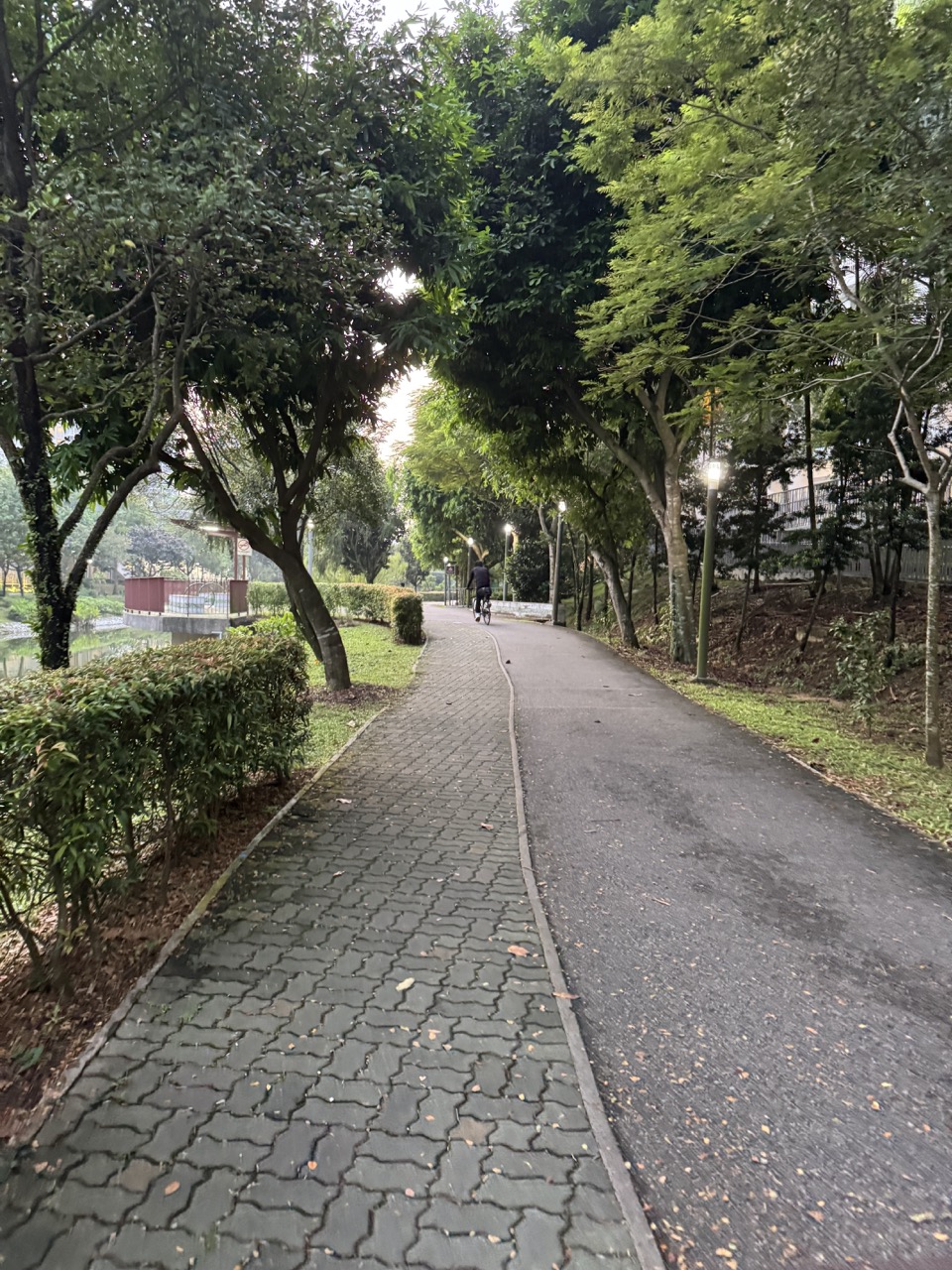
Fishing in Punggol is a wonderful idea only at a legally designated place, in suitable air and weather. Start with the permission to fish: Punggol Waterway Park prohibits fishing, while PUB identifies authorised zones elsewhere. Check today’s one-hour PM2.5 before planning hours outdoors.

Quick answer: check the fishing rule before the haze number
Fishing is not allowed within Punggol Waterway Park. NParks says so in the park’s official visitor rules. A convenient bridge or attractive stretch of canal does not make an authorised fishing location. Look for a designated fishing zone on PUB’s official fishing map and the corresponding on-site signs. Fishing rules are a separate decision from whether the haze makes a trip comfortable or appropriate.
For an outing happening today, check the latest one-hour PM2.5 on NEA’s haze website and apply MOH’s health advice to the person’s health, intensity and duration of exposure. A family with a child, an older person or somebody with asthma may need a much shorter outing or a postponement. When the destination itself prohibits fishing, do not travel there with rods even if the sky appears perfectly blue.
Where is fishing actually permitted near Punggol?
PUB maintains designated fishing zones for reservoirs and selected waterways, including Serangoon Reservoir. It publishes an official map rather than a blanket permission to fish along any waterside railing. Punggol Promenade Fishing Deck is referred to in PUB’s own fishing-zone signage, but anglers must identify the correct marked location rather than assume that any portion of the promenade is authorised. Look for blue railings and fishing-zone signs, which PUB uses to mark its designated reservoir fishing areas.
Other places with water near Punggol—Coney Island Park, park connectors, Punggol Waterway Park and sites affected by upgrading works—can have different rules. A blog post naming a spot from a past year does not guarantee access today. Check PUB, NParks and the sign in front of you. That little bit of preparation avoids both a wasted trip and the risks that led authorities to restrict fishing in unsuitable places.
Punggol Waterway Park is a lovely park, not a fishing licence
The park has canals, themed zones, landscaping and bridges for walking and enjoying scenery, but NParks’ published rule explicitly states: ‘Do not fish.’ The fact that someone might spot fish from a bridge changes nothing. A photograph or social-media account showing a person with a rod is also not an official permission. If you want to walk with children during suitable air conditions, use the park as a park; if you want to fish, identify a legal fishing zone.
Punggol families can make this an easy distinction for children. Different water bodies have different primary purposes, including water security, drainage and wildlife habitat. PUB explains that designated fishing areas are selected partly to protect anglers and other users from steep banks, fluctuating levels and crossing lines. Following the actual location rule protects the public and keeps the waterway welcoming.
What the Punggol Promenade Fishing Deck signage means
PUB’s published Punggol Promenade Fishing Deck signage calls for artificial bait, carbon-steel micro-barb or barbless hooks, careful casting, appropriate disposal of fishing line and hooks, and adult supervision of children. These are practical measures for protecting reservoir water quality, wildlife and visitors. A fishing platform is shared public infrastructure, not a private angling competition. Do not occupy a walking path or cast across cyclists and pedestrians.
Carry a small container for used line and damaged tackle. Do not leave barbed hooks on a wall for somebody else to discover. If the actual deck is closed for works or contains new restrictions, respect the current notice. PUB’s published guidance should be checked close to the outing because a static article cannot certify the status of every waterfront platform on 17 October 2026 or a future weekend.
One-hour PM2.5: decide about the outing you are taking now
For immediate outdoor decisions, MOH uses the current one-hour PM2.5, with Normal, Elevated, High and Very High concentration bands. The published ranges are 0–55, 56–150, 151–250 and 251 micrograms per cubic metre or greater. The categories are not PSI numbers. At higher bands healthy people should reduce or avoid strenuous activity as directed, while vulnerable people face more cautious outdoor-activity guidance. Read the current MOH table, including the distinction between avoiding strenuous activity and avoiding all outdoor activity.
An angler may stand still much of the time, but a fishing session can still mean several hours of continuous outdoor exposure. Carrying a heavy tackle box down a path can also be exertion. Do not describe a three-hour fishing afternoon as exposure-free just because it does not involve running. For tomorrow, use the forecast 24-hour PSI as a planning tool and recheck the one-hour PM2.5 before leaving.
Does a breeze over the reservoir make the air cleaner?
A breeze may be pleasant, but cooling is not the same as filtered air. Regional smoke can be carried by the very winds that make a water’s edge feel more comfortable. Visibility can also change with humidity and lighting, meaning the distant HDB skyline cannot serve as a calibrated air-quality meter. A parent should not infer that standing beside Punggol Promenade automatically exposes a child to less smoke than a nearby inland path.
NEA’s reporting regions are intended to describe regional ambient conditions. They do not identify a private clean-air pocket at the end of a jetty. If you are unsure whether a family member should remain outside, shorten optional outdoor time and follow their specific medical advice. The Punggol haze reading guide explains what those measurements can and cannot tell you.
Children, older adults and people with asthma
Health risks during haze depend on health status and exposure. MOH identifies children, older people and those with existing lung or heart conditions as groups needing more careful decisions. A child may be excited to learn fishing, but that does not justify several hours outside when current guidance discourages it. The adult’s job is to choose a suitable duration, check symptoms and be willing to leave rather than insist on using an expensive new fishing set.
For a person with asthma, keep prescribed medicine accessible under the clinician’s plan. Do not begin or increase medicines based on an internet table. Worsening breathlessness or other serious symptoms warrant medical attention. In practical terms, a responsible day might mean an indoor fishing-safety lesson now, then a short authorised outdoor trip on another date. A flexible plan is more valuable than trying to ‘beat the haze’ with willpower.
Fishing safety does not disappear on a normal-air day
Air quality is just one condition. A legal platform may still be unsuitable during lightning, heavy rain, strong winds or slippery surface conditions. PUB and NParks warn about casting near people, dangerous embankments, waste line and interacting safely with other water users. Never step across a barrier to retrieve a lure. Avoid leaning over railings, especially with children. If a thunderstorm develops, stop the outdoor activity and seek suitable shelter.
Water levels and weather can change independently of haze. A dramatic shower might improve the appearance of a distant skyline but still make standing beside water hazardous. Bring a water bottle and plan safe transport home without rushing along cycle paths. The basic principle is straightforward: the outing is enjoyable only if the family has safe air, lawful access, suitable weather and a secure way back.
Artificial bait, barbless hooks and conservation
PUB restricts reservoir and waterway fishing to artificial bait and sets expectations around micro-barb or barbless hooks. Fly fishing is not permitted in its listed reservoir and waterway fishing zones. Fishing line and hooks must be disposed of properly. These requirements are not optional suggestions that an angler can set aside because the deck happens to be empty. If you are uncertain about the gear, read the sign and clarify before casting.
Responsible fishing includes giving otters, birds and other wildlife space. Fishing tackle can harm animals if left behind. Encourage children to retrieve litter safely, avoid touching injured wildlife and understand why catch-and-release is encouraged where appropriate. A family can practise these habits without necessarily catching anything. Fishing is a good opportunity to teach responsibility and respect for water catchments.
What if the fishing place is closed for upgrading?
Punggol Point Park and other waterfront areas have had upgrading and temporary access changes in the 2026–2027 period. That is a separate source of closure information from the haze. Check NParks’ actual park notices and the permitted PUB area before travelling. Do not rely on a three-year-old blog declaring a jetty open, or a current haze screenshot as proof that a restricted area has reopened.
If a place is physically closed, there is no suitable workaround through a neighbouring embankment or conservation area. Plan a different lawful activity, perhaps an indoor family afternoon or a visit to a public waterfront another day. The Punggol Point upgrading guide is a starting point, but the responsible authority’s live notice is the final word.
The return journey matters as much as the time spent fishing
Some anglers imagine that only the minutes holding a rod count as exposure. In practice there can be an LRT or bus transfer, a walk carrying equipment, an exposed platform wait and time spent taking photographs. A family with children might spend far longer outdoors than the planned thirty-minute session. Check a realistic travel route and ensure an adult can shorten the outing promptly if conditions worsen.
Punggol’s park connectors are shared by walkers, cyclists and people using wheelchairs or prams. Do not place tackle boxes, bait containers or fishing lines across the path. A direct and accessible route is preferable to an improvised shortcut along a steep bank. A covered connector protects from rain and sun but should not be described as an air-filtered indoor corridor.
Should you buy an N95 mask solely for an optional fishing trip?
MOH emphasises reducing outdoor exposure and intensity rather than treating masks as permission to pursue every activity unchanged. N95 masks are not normally recommended for brief commutes, and individual suitability depends on fit, health and tolerance. A face mask does not remove all environmental hazards, stop lightning or make an unauthorised fishing location legal.
For optional long recreation, postponement may be simpler and more comfortable than attempting to fish for hours with a tight-fitting respirator. Children and people with heart or lung conditions may require particular guidance. Never promise that a mask will eliminate the exposure or replace appropriate medical advice. The Punggol haze health article addresses these considerations.
A worked family example
Imagine a parent sees a social-media photo of fishing at a pretty waterway bridge in Punggol. The parent checks NParks and finds that fishing is prohibited at Punggol Waterway Park, so the bridge is not an option. They open the PUB designated fishing map and find a permitted location to consider. They then consult the one-hour PM2.5 and MOH guidance and decide that a long session with their younger child is not appropriate that afternoon.
Instead, they practise safe knot-tying with blunt materials indoors, review the rules for artificial bait and discuss why discarded fishing line harms wildlife. The outdoor session moves to a future suitable day. This hypothetical scenario illustrates two independent checks: legal permission and personal exposure. Neither can be solved by looking only at the other.
Indoor alternatives for young fishing enthusiasts
An indoor afternoon can still teach real skills. Draw a map showing a reservoir, a canal, a park and a designated fishing deck. Ask the children why some places allow fishing while others protect pedestrians or water operations. Practise describing a safe cast without actually swinging a sharp hook in a living room. Older learners can explain how fine particulate concentrations differ from the forecast PSI index.
The family can also plan a future permitted trip: check transport, prepare a small litter bag, confirm the legal equipment, agree how long they will stay, and make a reminder to check the weather and air quality on the day. Such preparation respects the fact that recreation is not an emergency. Punggol’s waterfront will remain worth exploring once conditions allow it.
Can you eat the fish you catch during haze?
A one-hour PM2.5 reading measures fine particles in the air; it does not test the flesh of a fish or certify any waterbody for harvesting. Do not claim that any fish caught during haze is automatically unsafe, or that it is safe simply because the air has returned to Normal. Consumption depends on additional environmental, regulatory and food-safety considerations that require relevant evidence.
The responsible general advice is to follow current area rules and conservation requirements, consider catch-and-release, and avoid promoting consumption of wild-caught fish without suitable official guidance. Fish living in a water catchment are not a shortcut to a home food supply. The purpose of an authorised family fishing session can simply be spending time together and learning environmental care.
Group outings and cancellations
If you arranged a fishing day for several relatives, tell everyone the same confirmed information. State the legal meeting location, whether the spot is open, the current public health consideration and what time a final decision will be made. Do not circulate an unsupported claim that all fishing zones are legally closed simply because a PSI threshold was crossed. Authorities and site operators announce closures; families make their own health decisions under the guidance.
If an organised paid outing is involved, check the provider’s actual cancellation and rescheduling terms. A prepaid deposit is not a sound reason to prolong outdoor exposure when conditions or symptoms make that unwise. A clear cancellation message could say the family is postponing to protect health, with another date to be confirmed after official readings improve.
Frequently asked questions
Can I fish in Punggol Waterway Park? No. Can I fish in Serangoon Reservoir? Only at PUB-designated zones subject to the rules. Are there Punggol Promenade fishing signs? PUB publishes Punggol Promenade Fishing Deck signage; use the latest zone maps and the actual sign. Can a breezy location be safer from haze? Do not infer air quality from the breeze. What number should I check today? NEA’s latest one-hour PM2.5 and MOH’s corresponding health guide.
Can I fish with live bait? Not in PUB’s designated reservoir and waterway zones, which require artificial bait. Can I take children? Adult supervision and health precautions are essential. What if Punggol Point is closed? Follow the current posted closure. Do normal air readings make a storm safe? No; lightning and water-side hazards are independent. Do I need to catch a fish to have a worthwhile day? Certainly not; conservation and family learning are valuable.
The better Punggol fishing habit
A good angler takes the rules as seriously as the gear. Know which waterbody you are visiting, find the authorised area, use suitable hooks and artificial bait, keep the deck safe for others, and remove fishing waste. Then add a realistic haze and weather check for the people who will actually be present. Children benefit from seeing adults make measured decisions rather than improvising when something goes wrong.
The best trip is not necessarily today’s trip. If the air or location is unsuitable, postpone confidently and enjoy an indoor activity. When conditions improve, Punggol’s waterfront can provide a satisfying, responsible afternoon that begins and ends with good judgement.
Beyond haze: the ordinary beginner’s Punggol fishing decision
This haze-specific guide focuses on smoke conditions and outdoor exposure. The companion article provides the everyday location diagnostic, NParks fishing decks, PUB designated zones, responsible tackle disposal and family safety.
- Fishing in Punggol for Beginners. Designated promenade decks, no-fishing parks, PUB water rules and responsible wildlife-safe angling.
Related Punggol guides
For the decision on outdoor exposure, start with Punggol haze: PM2.5 versus PSI. Related topics include water sports in Punggol haze, nature and wildlife during haze, outdoor Punggol activities, eduKateSG’s broader Punggol hub and where fishing is permitted.
Official source references
Reviewed 17 October 2026. Primary references: PUB fishing zone maps and reservoir rules; NParks Punggol Waterway Park restrictions; NParks fishing etiquette; MSE 2026 parliamentary reply on fishing access; MOH haze health advice; and NEA air readings. Neither a photograph nor a hypothetical case represents a live site inspection.


