
Optimisation asks a simple but powerful question: what is the best possible value under the conditions we have? The answer might be a maximum area, a minimum cost, a greatest volume or a smallest distance.
For Punggol students learning Advanced Mathematics, optimisation is valuable because it joins algebra, functions, graphs, modelling and calculus inside one problem. It is one of the clearest places where mathematical technique becomes decision-making.
Every optimisation problem begins with a constraint
You cannot maximise or minimise sensibly without knowing what is fixed. A length may be fixed. A total cost may be limited. Two quantities may have to add to a constant.
The first skill is therefore not differentiation. It is reading the constraint correctly.
Turn the real problem into one variable
Many optimisation questions begin with several quantities. The constraint lets the student rewrite the situation so the target quantity becomes a function of one variable.
This is where algebra does the preparation and calculus does the local analysis.
The graph tells the story before the derivative does
If the target is a maximum, the graph should rise and then fall around the optimum. If it is a minimum, the graph should fall and then rise.
A rough graph gives the student a mental model of what the derivative should reveal.
Differentiate to find candidates, not automatic answers
Setting the derivative to zero identifies stationary points. It does not remove the need to interpret them. The student still has to decide whether the stationary point is relevant, whether it lies in the permitted domain and whether it gives the required maximum or minimum.
The modelling loop matters
The article Mathematical Modelling — Turn Science, Data and the Real World Into Equations is a natural companion. Optimisation is modelling with a decision target.
A clean optimisation workflow
- Identify what must be maximised or minimised.
- Identify the constraint.
- Define the variable clearly.
- Express the target as a function of one variable.
- State the valid domain.
- Differentiate.
- Find stationary points.
- Determine which candidate satisfies the optimisation goal.
- Interpret the answer back in the original context.
Why students lose marks even after correct differentiation
- They optimise the wrong quantity.
- They never reduce to one variable.
- They ignore the physical domain.
- They find a stationary point but do not show it is the required maximum or minimum.
- They forget to answer in the original units or context.
- They carry an algebra error into otherwise-correct calculus.
Optimisation develops mathematical judgement
The student must decide what matters, discard irrelevant detail, choose a representation and verify that the final mathematical answer is meaningful in the real problem.
This is why optimisation belongs naturally in the wider eduKate ecosystem of reasoning, modelling, Science and problem solving.
Punggol gives optimisation a real-world feel
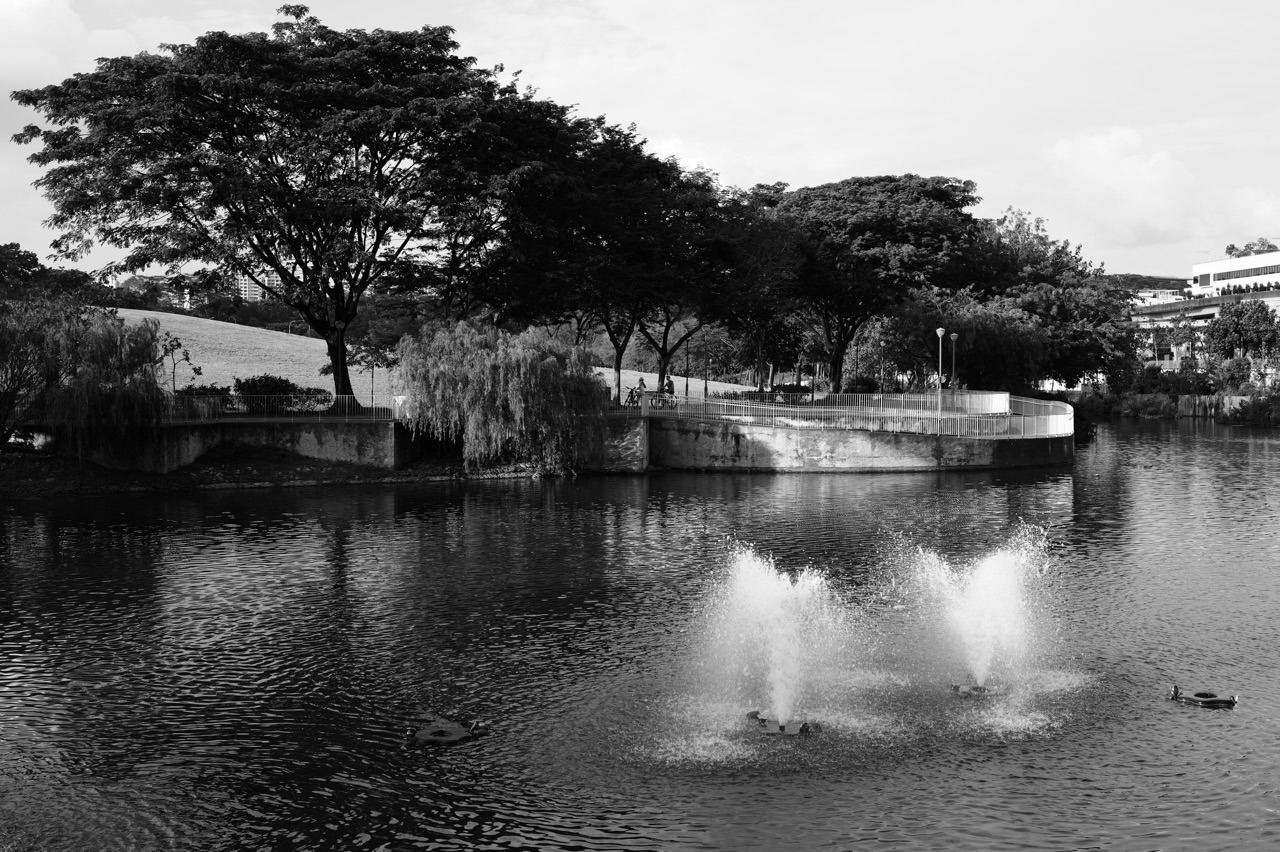
Paths, transport connections, land use, water systems and built spaces all involve trade-offs. A local Punggol Waterway image makes a useful visual reminder: real design asks how to use limited space, distance, time and resources well.
The classroom problem may be simplified, but the underlying habit — define constraints and search for the best feasible outcome — is very real.
Continue the Punggol Advanced Mathematics journey
- The Long Journey From Primary Number Sense to SEC Additional Mathematics
- Secondary 1–2 as the Hidden A-Math Preparation Years
- Secondary 3 — Build One Connected Map
- Secondary 4 and SEC — Turn Knowledge Into Independent Exam Control
- Logarithms and Exponentials — Powers, Scale and Growth
- Trigonometry as a Connected System
- Patterns to Generalisation — Sequences and Binomial Theorem
- Mathematical Metacognition — Plan, Monitor, Check, Recover
Continue through the wider eduKate Punggol ecosystem
- Mathematics Tuition at eduKatePunggol
- Punggol Mathematics Reading Library
- Additional Mathematics Tuition in Punggol
- Additional Mathematics Article Index
- The Secondary Pathway
- Science Tuition at eduKatePunggol
- eduKatePunggol Atlas
Optimisation shows students what Advanced Mathematics is for. Algebra builds the model, functions describe the relationship, calculus finds important points and reasoning decides what the answer means. The result is not just a number. It is a mathematically justified choice.


