
The strongest Mathematics students do more than solve questions. They watch themselves solving. They notice when a route is failing, when an answer deserves doubt, when a sign may be wrong and when it is time to restart from an earlier step.
This ability is mathematical metacognition: planning, monitoring, checking, recovering and reflecting on one’s own problem-solving process. For Punggol students moving into Advanced Mathematics, it becomes increasingly important because questions contain more steps and more opportunities for small errors to travel.
Plan before calculating
Before writing the first line, strong students identify the mathematical object, conditions and likely route. This may take only a few seconds, but it reduces random manipulation.
A useful starting question is: what kind of problem is this, and what would a sensible answer roughly look like?
Monitor while solving
Monitoring means noticing whether the working still makes sense. If the algebra becomes unexpectedly complicated, that may be a signal to reconsider the route. If the graph and equation appear to disagree, something needs checking.
The eduKate article How Mathematical Metacognition Works develops this as a complete learning cycle.
Check at natural boundaries
Students often wait until the final answer before checking. By then, a mistake may be buried under ten lines of correct work built on the wrong starting point.
Better checkpoints occur after expansion, substitution, solving an equation, selecting a trigonometric interval or interpreting a derivative.
Recovery is a mathematical skill
Getting stuck is not the failure. Staying stuck while repeating the same move is the failure mode.
- Return to the last line you trust.
- Name the object again.
- Try another representation.
- Check a prerequisite.
- Simplify the problem temporarily.
- Estimate what the answer should do.
- Switch route if the current one is producing no useful information.
Reflection happens after the question
Once the problem is solved, ask what made it difficult. Was the issue concept, recognition, algebra, notation, calculator input, timing or checking?
This makes the next practice set more intelligent because the student knows what to repair.
Why metacognition improves exam control
Under time pressure, students cannot ask a tutor what to do next. They need internal prompts. Good metacognitive habits turn the tutor’s external questions into the student’s own control system.
This connects directly to Secondary 4 and SEC — Turn Knowledge Into Independent Exam Control.
The error log becomes more useful when it records decisions
Instead of writing only “careless mistake”, students can record where the reasoning drifted: wrong route, missed restriction, algebra slip, calculator entry or failure to verify.
That turns the error log into a map of decision points.
A six-question self-monitoring script
- What is the question asking?
- What mathematical object am I working with?
- What route am I choosing, and why?
- Does this line still preserve the relationship?
- Does the result fit the graph, scale, sign or condition?
- If not, where is the last point I still trust?
The tutor’s goal is to transfer these questions
At first, the tutor may ask them aloud. Over time, the student should ask them silently. This is how support becomes independence.
The broader eduKate tuition system treats this transfer as essential: good tuition should eventually make the learner less dependent on the tutor for routine control decisions.
Why small groups help
In a group of up to three students, learners can hear different self-correction strategies. One student checks graph shape, another checks exact values, another notices domain conditions. The tutor can make those invisible mental habits visible to everyone.
Punggol paths are a useful metaphor
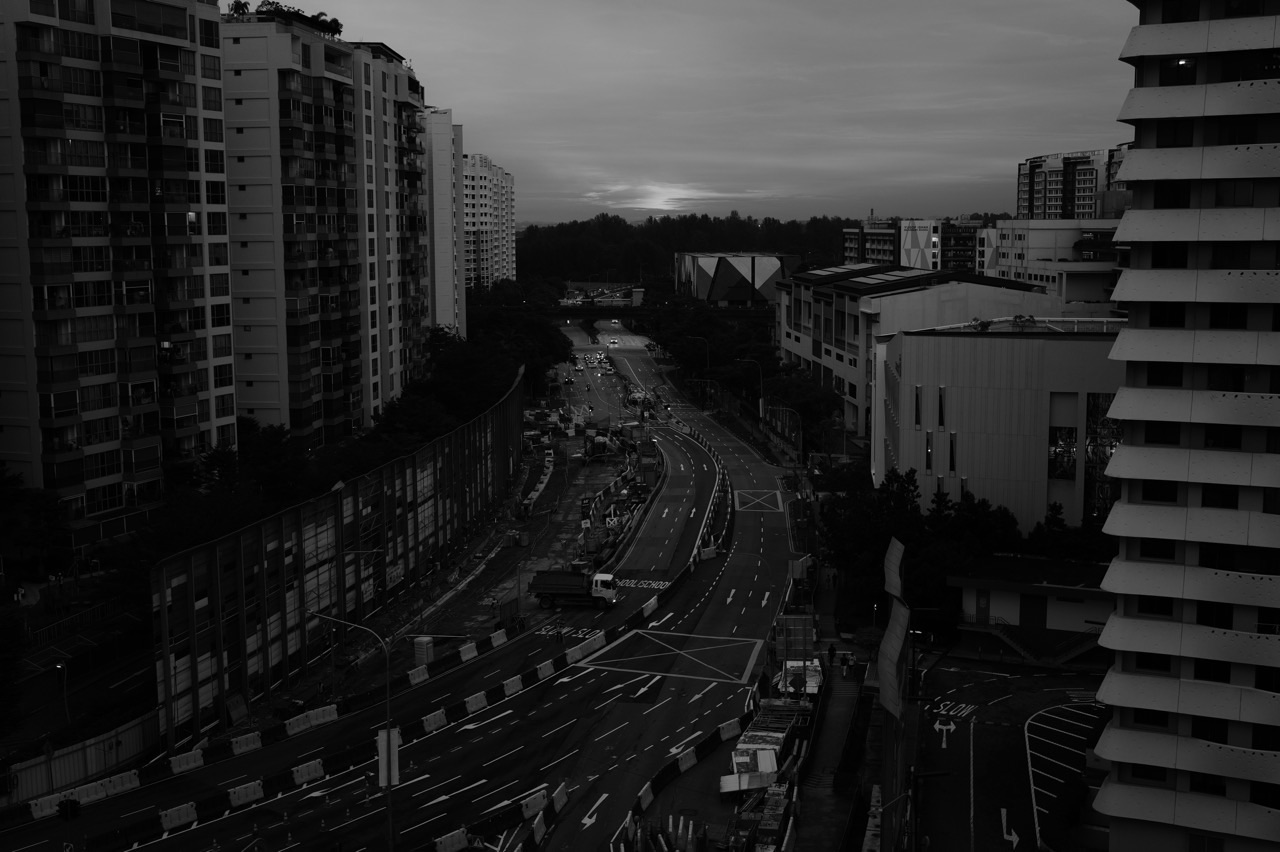
A route through Punggol works because there are junctions, landmarks and ways to recover after a wrong turn. Advanced Mathematics is similar. Strong students do not memorise only one perfect path. They know how to orient themselves when the route changes.
A Punggol Waterway bridge image fits this idea well: progress depends not only on movement, but on knowing where you are in the system.
Continue the Punggol Advanced Mathematics journey
- The Long Journey From Primary Number Sense to SEC Additional Mathematics
- Secondary 1–2 as the Hidden A-Math Preparation Years
- Secondary 3 — Build One Connected Map
- Secondary 4 and SEC — Turn Knowledge Into Independent Exam Control
- From Concrete Examples to Abstract Structure
- Functions Are the Language of Relationships
- Calculus Is the Mathematics of Change
- Calculators, Graphing Tools and AI
Continue through the wider eduKate Punggol ecosystem
- Mathematics Tuition at eduKatePunggol
- Punggol Mathematics Reading Library
- Additional Mathematics Tuition in Punggol
- The Secondary Pathway
- Science Tuition at eduKatePunggol
- eduKatePunggol Atlas
Mathematical independence is not just knowing more formulas. It is being able to manage your own thinking: plan, monitor, check, recover and learn from the route you took. That is what allows knowledge to keep working when the tutor is no longer beside you.


