
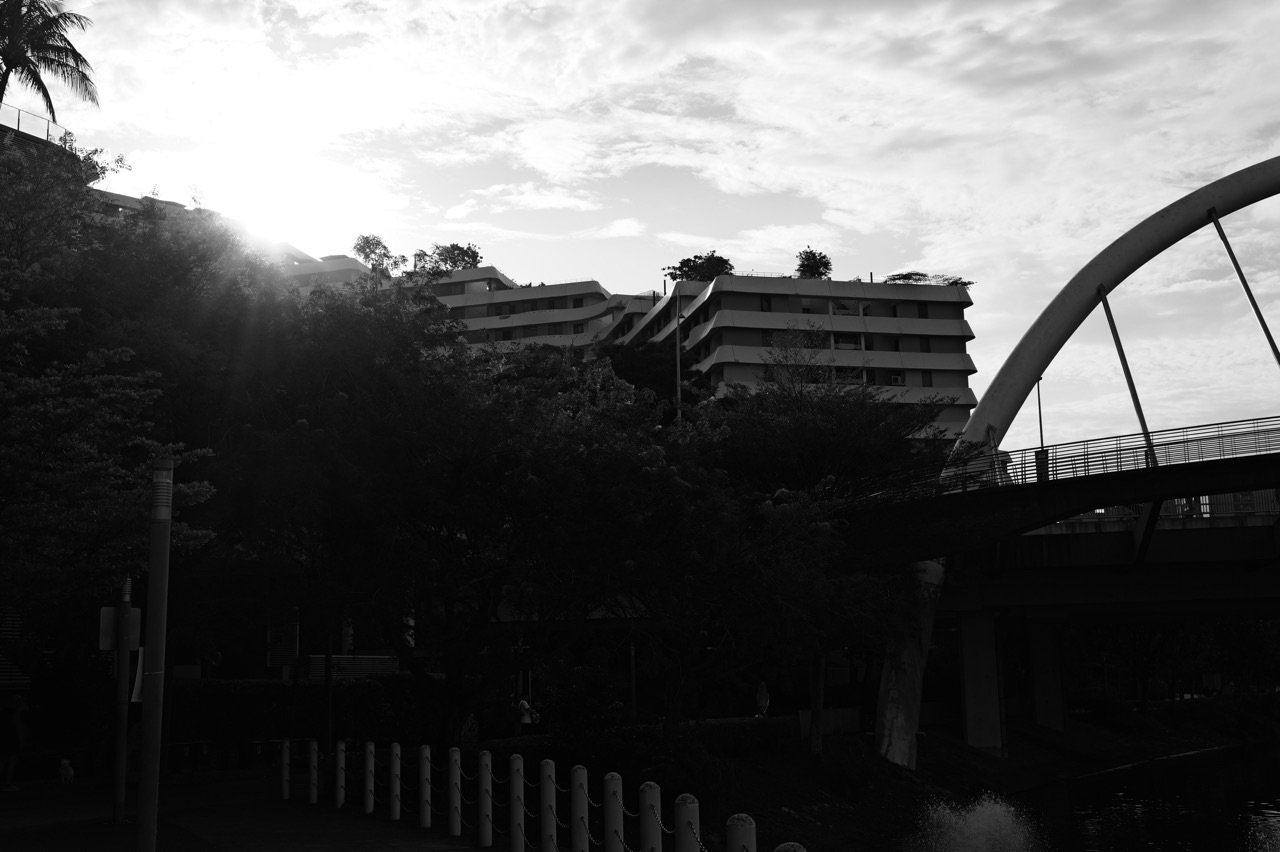
Sunday morning is one of the few times Punggol can feel both active and unhurried.
People are already outside. Cyclists move along park connectors. Runners use the Waterway. Families head for breakfast. Children are in playgrounds. Some residents are on their way to sport, worship, groceries or family visits. Yet the town is not being pulled by the same clock as a weekday.
For searches such as things to do in Punggol, Sunday in Punggol, Punggol breakfast, Punggol cycling, Punggol Waterway, family activities Punggol and living in Punggol, Sunday morning shows the estate at one of its most readable moments.
The useful idea is simple: a town is understood differently when nobody is rushing through it.
The first difference is the clock
On weekdays, departure times dominate. On Saturday, scheduled activities often take over. Sunday allows more households to begin with a range rather than a deadline.
Breakfast can happen at 8:10 or 9:20. A walk can continue because nobody has to be at a classroom in twenty minutes. Children can stop at a playground without the stop needing to be justified against the next appointment.
That looseness is not wasted time. It is part of recovery.
Punggol’s outdoor spaces make Sunday movement easy to begin
Exercise is easier to sustain when it begins close to home.
Punggol’s paths, parks, Waterway, cycling connections and waterfront routes allow families to walk, cycle, jog or simply spend time outside without turning the outing into a major expedition.
This is where urban design becomes part of family behaviour. A parent does not need to persuade everyone into a special fitness programme if ordinary movement is already embedded in the environment.
For route ideas, use Outdoor Things to Do in Punggol.
Breakfast becomes a family event because it has room around it
Weekday breakfast is often fuel. Sunday breakfast can become conversation.
That does not require a café brunch. It can happen at a coffee shop, hawker centre, food court or dining table. The difference is not price. It is whether the meal has enough time around it for people to remain present.
For local food routes, use The Punggol Food Guide.
Children notice more when the family is not moving them between tasks
A slower Sunday creates conditions for unscheduled observation.
A child notices the shape of a bridge, the behaviour of birds, the changing water level, the number of cyclists, the shadow cast by a railing, the price difference between two items or the route a bus takes. None of these observations needs to become a lesson immediately.
That restraint matters. A town can be educational without adults turning every interesting thing into a quiz.
For families who want to develop that idea deliberately, use Education in Punggol | The Town as Classroom.
Sunday is a good day for family without performance
Many family activities become less enjoyable when adults try to optimise them.
The walk must be long enough. The reading must be educational. The sport must build discipline. The outing must create a memory. The meal must be special.
Ordinary togetherness is allowed.
A child can cycle slowly. A parent can sit. A teenager can bring headphones and still be part of the outing. Grandparents can join for food without completing the whole walk. Families do not need to turn Sunday into a project.
The library works differently on a Sunday
During the school week, the library is often treated as a study resource. On Sunday, it can return to discovery.
Browse a shelf that has nothing to do with the syllabus. Read newspapers or magazines. Let younger children choose by cover. Let older children sit with their own interests. If study happens, it can happen; it does not need to own the visit.
Use the Punggol Regional Library Guide for the practical route.
Sunday tuition needs a particularly clear reason
Some families prefer Sunday tuition because it fits work and school schedules. That can be sensible.
But Sunday is also one of the last large pieces of unscheduled family time available before the school week begins. A recurring class therefore carries a real opportunity cost.
The question should not be whether a Sunday slot exists. It should be whether the teaching job is important enough to occupy it and whether the rest of the day still feels like Sunday.
At eduKatePunggol, tuition should remain supplementary. Families can use Contents & Learning Routes to find the correct learning route rather than assuming that more scheduled instruction is automatically better.
A slower morning can support a stronger Sunday night
Rest and preparation are not opposites.
When Sunday begins calmly, the family is less likely to reach evening feeling as if the weekend disappeared. That creates more emotional room for the small reset that comes later: school bags, uniforms, CCA schedules, homework priorities and sleep.
The evening owner already exists at What happens in Punggol | Sunday Night Before School.
Do not spend the whole morning recovering from Saturday
If Saturday is overloaded, Sunday often becomes repair time.
Everybody wakes late. Homework remains. Groceries remain. Laundry remains. A class was moved. The house feels behind before breakfast.
That is sometimes unavoidable. But if it happens every week, the problem may be Saturday design rather than Sunday discipline.
Use the companion article What happens in Punggol | Saturday Morning to examine that first half of the weekend.
A simple Sunday morning model
- Move: walk, cycle, swim, play or simply get outside.
- Eat: make breakfast or lunch a real pause.
- Connect: give family or friends some time without an academic objective.
- Explore: library, park, waterfront, market or neighbourhood.
- Leave margin: do not schedule every hour.
- Return gently: keep the school-week reset for later rather than letting Monday invade the morning.
What Sunday morning tells us about Punggol
Punggol is often described through infrastructure: MRT, LRT, flats, malls, parks, schools and new developments.
Sunday morning shows what that infrastructure is for.
It lets people walk. Eat. Read. Exercise. Meet. Play. Sit. Move between generations. Be close to water. Reach daily needs without turning every outing into a long journey.
A local website should record that layer too, because a town is not only its buildings. It is what people are able to do with an ordinary morning.


