
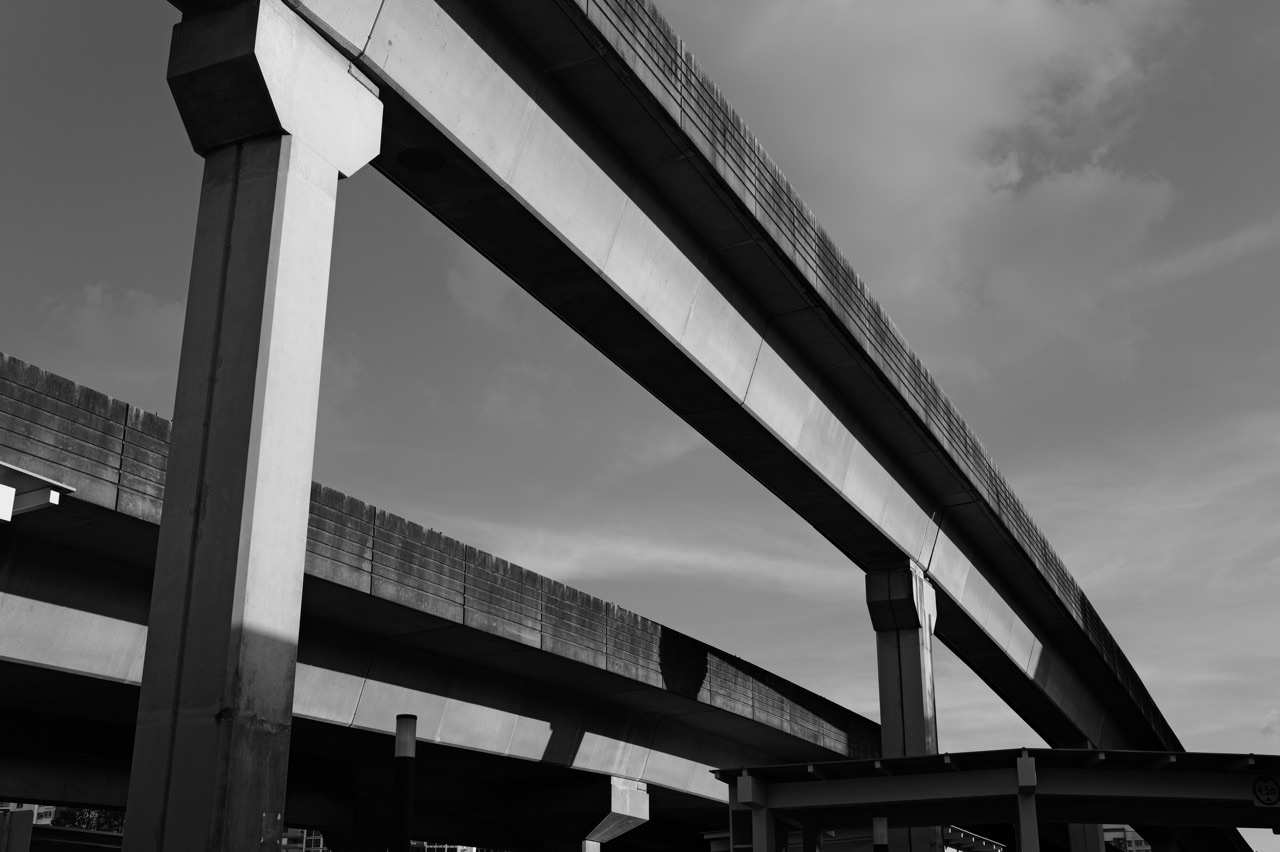
Education in Punggol does not begin and end at the school gate. A child growing up here is surrounded by a working town: reservoirs and waterways, LRT and MRT lines, shops and hawker stalls, parks and cycling routes, housing blocks, construction sites, libraries, community spaces and a rapidly changing digital district. Each of these can become part of a Punggol education when adults help a child notice, question, measure, compare and explain what is already in front of them.
For parents searching for Punggol education, Punggol schools, learning activities, tuition or better ways to support a child at home, the useful idea is not to make every outing academic. It is almost the opposite. Keep ordinary life ordinary, but let it carry more attention. A walk can contain geography. A bus journey can contain mathematics. A supermarket can contain economics and vocabulary. A pond can contain science. A block directory can contain mapping, estimation and systems thinking.
This is the local advantage of learning in Punggol: the town is young enough that its systems are visible, but mature enough that children can see many different layers operating at once. The aim is not to replace school or tuition. It is to make school knowledge attach to reality, so that ideas become easier to remember, transfer and use.
1. The Town Is Full of Curriculum, Even When Nobody Calls It Curriculum
Formal education divides knowledge into subjects because subjects are useful. English teaches language and meaning. Mathematics teaches quantity, structure and relationship. Science teaches evidence and explanation. Humanities teach people, place, time and society. But real life does not arrive in separate folders.
Stand beside Punggol Waterway and several subjects appear together. The child can notice water movement, vegetation, weather, shade, built structures, paths, people, distances and signage. One observation becomes a question. One question becomes a measurement. One measurement becomes a graph. A graph needs language before it becomes an explanation.
That is transfer: knowledge leaving the worksheet and entering the world.
2. Water Teaches More Than “Science”
Punggol gives families unusual access to visible water systems. Children can observe canals, reservoirs, drainage, rainfall, evaporation, plant life, surface conditions and the relationship between built spaces and natural processes.
A younger child might simply notice that one patch of ground dries faster than another. An older child might ask what variables could explain the difference: sunlight, material, airflow, surface area, temperature or drainage. A Primary Science learner can practise observation and cause-and-effect. A Secondary learner can begin thinking in terms of systems, constraints and trade-offs.
The important parent move is not to lecture. Ask one good question and allow the child to look. “What do you notice?” is often better than “Do you remember what evaporation is?” The first invites evidence. The second tests recall.
3. Transport Is a Mathematics Laboratory
The LRT, MRT, buses, walking routes and cycling paths create a quiet mathematics curriculum. Time, distance, speed, frequency, waiting, transfers, cost and route choice all become usable quantities.
A Primary child can estimate how long three stops take. A Secondary student can compare two routes and model the total journey as travel plus waiting plus transfer time. A family can calculate whether leaving five minutes earlier changes the probability of missing a connection. None of this needs a worksheet.
The deeper lesson is that mathematics helps people make decisions under constraints. The “correct answer” may depend on what the family values: shortest time, lowest cost, least walking, greater reliability or easier travel in rain. This is where numbers become judgement.
4. Shops Teach Quantity, Language and Choice
A supermarket, food court or neighbourhood shop contains ratios, unit prices, percentages, packaging language, nutrition labels, persuasive writing and consumer choices. For younger children, simple comparison is enough: which pack contains more, which costs more, which is better value? For older students, the interesting question is why “cheaper” and “better value” are not always the same claim.
English lives here too. Words such as net weight, serving, promotion, expiry, warranty, ingredients, refundable and subscription are part of adult literacy. A child who learns to read the language of ordinary systems is being prepared for life, not only examinations.
Parents do not need to turn every receipt into homework. Once a week, one question is enough.
5. Parks Teach Observation Before Explanation
Children are often asked to explain too quickly. Good explanation begins with noticing accurately. A park can slow the sequence down.
Look first. What species are visible? Where is shade concentrated? Which surfaces are hotter? Where do people choose to sit? Which routes are busiest? What changes after rain? What sounds disappear as distance from the road increases?
Then classify, compare and infer. The child learns that an explanation should be built from evidence rather than invented from confidence.
6. Buildings Teach Systems
A housing block is not only a place to live. It is an engineered system. Lifts, water, electricity, waste, fire safety, access, ventilation, mail, deliveries, security, maintenance and shared spaces all have to work together.
Ask an older child to imagine what would happen if one system failed for six hours. The exercise immediately becomes systems thinking. Which other systems are affected? Which failures are inconvenient and which are dangerous? What redundancy exists? Who is responsible for repair? How would residents receive information?
This is useful intellectual training because modern life depends on systems that become invisible when they work well.
7. Signs Teach Public English
Not all writing is an essay. Public writing has to be brief, accurate and usable. Signs, notices, wayfinding instructions, safety warnings and public announcements are excellent examples.
Children can ask: Who is the reader? What action is required? Why is this word chosen? What information is omitted? Could the message be misunderstood?
This develops audience awareness, one of the most transferable writing skills from Primary situational writing through Secondary functional writing and adult communication.
8. Maps Teach More Than Directions
A map is a model. It simplifies reality so that a user can solve a problem. Punggol is particularly suitable for map learning because families regularly move among neighbourhoods, stations, schools, parks, malls and waterfront routes.
A child can compare a schematic rail map with a street map and notice that neither is “wrong”; they serve different purposes. One preserves network clarity. The other preserves geography. This is a powerful lesson in representation: every model keeps some information and discards other information.
9. History Teaches Children That Places Change
Punggol is a useful place to learn that the present is not permanent. A child sees dense housing, rail lines, parks and waterfront spaces. Older maps and photographs reveal coast, farms, kampongs, roads and industries arranged differently.
The educational value is larger than local nostalgia. Historical thinking asks: What changed? What stayed? What evidence supports the claim? Whose experience is recorded? What did one generation gain and what did another lose?
These are the same questions mature readers use when they evaluate any account of change.
10. A Parent Does Not Need to Become a Teacher on Every Walk
The easiest way to destroy this idea is to overuse it. If every outing becomes a lesson, the child learns to resist the outing.
A better rhythm is light. Notice something. Ask one question. Let the child answer imperfectly. Add one useful word. Move on. Curiosity needs air.
The goal is not maximum extraction from every minute. It is to create a family culture in which knowledge is allowed to connect with life.
11. The Same Town Looks Different at Different Ages
A Primary 1 child may count stations and read signs. A Primary 4 child may compare prices and classify plants. A Primary 6 child may measure, estimate and explain. A Secondary student can evaluate trade-offs, identify assumptions, compare sources and build models.
The environment stays broadly the same. The learner’s resolution increases.
That is one reason ordinary local life is educationally valuable. Families do not need a new attraction every year. They can revisit familiar places with better questions.
12. What Tuition Should Do With Real-World Learning
Tuition can strengthen the formal tools: vocabulary, mathematical method, scientific explanation, reading accuracy, writing structure and examination control. But a strong learning system should also return those tools to the student’s real environment.
If a child can calculate percentage change on a worksheet but cannot compare a discount, the knowledge is narrow. If a child can recite an environmental concept but cannot observe a drainage problem, transfer is weak. If a child can write a composition but cannot explain a route clearly to another person, communication is incomplete.
The standard is not “Can the student do the worksheet?” It is “Can the student use the capability when the surface changes?”
13. A Simple Punggol Family Routine
- Notice: find one thing in the town worth attention.
- Name: give it precise language.
- Question: ask what, why, how, compared with what, or what would happen if.
- Measure: use numbers where they genuinely help.
- Explain: build one claim from evidence.
- Return: revisit the same place months later and see what changed.
That is enough. A town becomes a classroom not because adults announce a lesson, but because children learn to see more of what was already there.
14. Education in Punggol Should Produce a Child Who Can Read the Town
A good education eventually changes the way a student sees ordinary life. Water becomes a system. A map becomes a model. A price becomes a comparison. A notice becomes an audience problem. A train route becomes an optimisation problem. A park becomes evidence. A building becomes infrastructure. History becomes a question about change.
This is not enrichment added on top of education. It is one of the reasons education exists.
Punggol gives families a particularly visible setting in which to practise that habit. The town is still changing. Children can watch it change while they are changing too.
Use one local object through four subject lenses
The town becomes a stronger classroom when one object can generate several legitimate questions. A waterway, station, shopfront, park or building should not be forced into every subject, but many local systems naturally reveal language, quantity, mechanism and evidence at the same time.
The educational job is to let the local object generate the question, then route the deeper subject mechanism to the correct owner.
English: describe, explain and qualify
Ask the child to name what is visible precisely, distinguish observation from inference and explain one relationship in complete sentences. A transport sign can become a reading task. A public notice can become an audience-and-purpose task. A local change can become a short explanatory paragraph.
If the student’s language control becomes the bottleneck, hand the deeper instruction to the English owner.
Mathematics: measure, compare and model
Routes create elapsed-time questions. Shops create percentage and unit-price comparisons. Maps create scale and distance questions. Public data can create tables and graphs.
The Punggol environment supplies the reason to calculate. The Mathematics owner supplies the deeper method when the learner needs it.
Science: identify mechanism and evidence
Water, weather, plants, drainage and engineered systems allow students to ask what mechanism might explain what they observe. The child should then separate what was directly seen from what requires a reliable source or a controlled investigation.
This prevents the town-as-classroom idea from becoming a collection of unsupported local claims.
World knowledge: place the local example inside a larger system
A library belongs to a national information system. A station belongs to a transport network. A waterfront belongs to a larger environmental and planning context. The child should learn when the local example is illustrative and when a larger source is needed.
Local knowledge becomes powerful when it opens outward rather than trapping the learner inside one neighbourhood.
Use a local evidence loop
- Notice one real object or system.
- Ask one bounded question.
- Gather one observation or trustworthy source.
- Use the correct subject tool to explain it.
- Return to the local object and test whether the explanation now makes more sense.
This loop keeps town learning purposeful without turning every family outing into an assignment.
Keep safety and privacy outside the learning ambition
Children do not need to enter restricted areas, photograph strangers, reveal school routines or interfere with infrastructure to learn from Punggol. Public observation and trusted published sources are enough for most family learning questions.
A good local-learning system respects the place and the people inside it.
The return test is transfer beyond Punggol
The child has learned more than local trivia when the same reading, measuring, modelling or verification habit appears in another neighbourhood, a school text, a new Science problem or an unfamiliar map.
Punggol should make capability visible, then release that capability into the wider world.
Continue Through eduKatePunggol
- Contents & Learning Routes
- The Primary Pathway
- The Secondary Pathway
- Punggol Regional Library as the Family’s Second Learning Room
- Learning Independence Through Everyday Responsibility
Explore the Punggol education and town-life library for related guides.


