
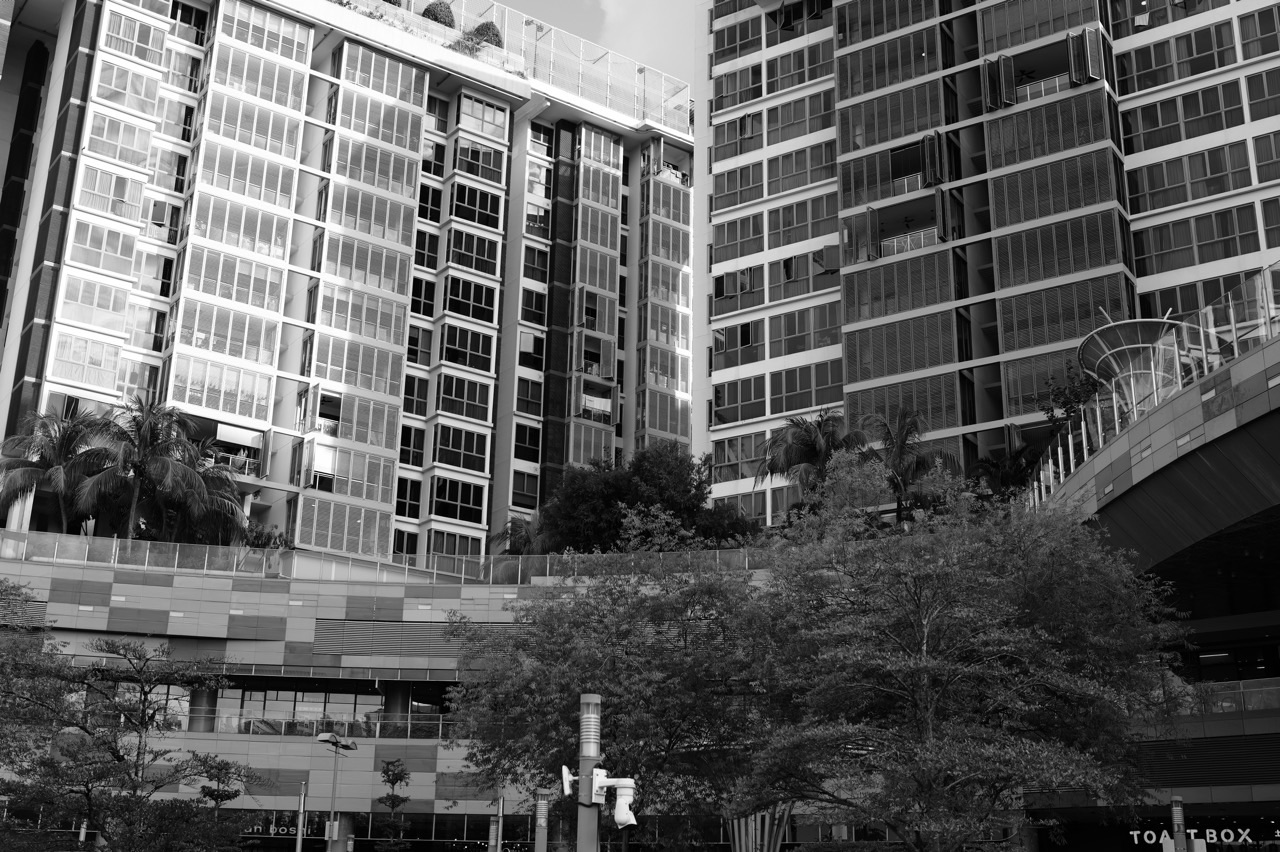
Education in Punggol belongs to a town that is becoming more than a residential address. Punggol Digital District, the Singapore Institute of Technology, community facilities, transport, shops, schools and public spaces are bringing more parts of daily life into the same local environment. A town is not only where people sleep. It can also be where they learn, work and contribute.
This matters for families because the old model of a neighbourhood as a place to leave each morning and return to each night is changing. URA’s current North-East planning describes jobs being brought closer to homes, including through Punggol Digital District. JTC describes PDD as an ecosystem where academia, businesses, government agencies and the community converge. The educational question is what happens when a child grows up seeing more of adult learning and work near home.
The answer should not be romanticised. A mixed-use town still has congestion, trade-offs and uneven opportunities. But it gives families a useful local lens: how do homes, schools, workplaces, transport and public institutions interact, and what capabilities help residents take part rather than simply pass through?
A residential town solves one problem: where people live
Housing is foundational. But a complete life also requires schools, healthcare, food, recreation, work, services, culture, transport and community. When these functions sit too far apart, families pay through time and friction.
Bringing more functions closer together can change the texture of daily life. A parent may spend less time crossing the island. A student may see a university campus during an ordinary trip. A young adult may find work or training nearer home. None of these outcomes is automatic, but proximity changes the possibility set.
The educational value of a mixed-use town is visibility
Children learn partly from what they can see. If work is invisible, careers remain abstract. If higher education is distant from everyday life, university can feel like a remote institution. If public systems are hidden, the child may experience the town as a collection of finished services rather than coordinated human work.
Punggol increasingly allows children to see different layers together: primary schools, secondary schools, SIT, businesses, the library, transport, waterfront spaces and community facilities. The town itself becomes a map of how a society coordinates learning and work.
Learn is broader than school
A town that supports learning does more than contain schools. It gives people places to read, practise, collaborate, ask questions, attend programmes and encounter ideas outside formal lessons.
Punggol Regional Library is one example. SIT is another. Community events, public information, exhibitions, parks and even transport can become informal learning spaces when a child is taught to observe rather than merely consume.
The Punggol Regional Library as the Family’s Second Learning Room develops one practical family route.
Work should become understandable before it becomes aspirational
Children often encounter career advice as titles: engineer, doctor, lawyer, programmer, designer. A town where work is more visible allows a better question: what do people actually do all day, and which problems are they responsible for?
This helps children understand that adult contribution is usually less glamorous and more useful than a title suggests. Work is often maintaining a system, explaining a problem, improving a process, coordinating people, making a decision or repairing something that stopped working.
Contribution is the part that turns a resident into a citizen
A person can live in a place without participating in it. Contribution begins when residents use capability for something beyond private convenience.
- Helping another person navigate a service.
- Volunteering or joining a community activity.
- Reporting a broken facility accurately.
- Sharing useful information without spreading rumours.
- Caring for shared spaces.
- Mentoring a younger learner.
- Building a small project that makes family or community life easier.
The local article From Consumer to Contributor explores this transition directly.
A different kind of neighbourhood changes the school-to-life bridge
Students sometimes experience school knowledge as something that belongs inside classrooms. A town containing visible infrastructure, technology, public services, businesses and environmental systems allows more transfer.
| School capability | Local use |
|---|---|
| Reading | Understand public information, signs, policies and service instructions |
| Mathematics | Compare time, cost, rates, distance and quantities |
| Science | Ask evidence-based questions about materials, water, energy and environment |
| Writing | Explain, request, document and persuade clearly |
| Digital literacy | Use systems without confusing convenience with truth |
This is where education becomes less like preparation for life and more like participation in life.
Closer does not always mean better
Localisation has trade-offs. Bringing work closer to homes can increase activity and convenience, but it can also change traffic, crowding, noise and land use. Bringing more amenities close together can improve access while raising questions about maintenance and shared space.
Children should learn to hold two ideas at once: a change can create real benefits and still require careful management. That is stronger thinking than labelling every new development as either good or bad.
A family project: map one ordinary day
Ask the child to map one ordinary weekday from waking to sleep. Mark where learning, transport, work, food, recreation and community happen. Then ask which activities happen within Punggol and which require leaving the town.
The second question is more interesting: if one activity moved closer to home, what would the family gain, and what might be lost? This turns urban planning into a concrete discussion about time and opportunity.
A strong town supports several parts of life in one network
A place becomes more than a residential address when daily life can connect learning, work, care, recreation, services and contribution without every function requiring a long trip elsewhere. This does not mean every resident should work, study and spend all leisure time inside one town. It means local systems can reduce unnecessary friction and create more realistic choices.
For children, this is a useful way to understand a town as a network of functions rather than a collection of buildings.
Use five town functions as a learning model
- Live: housing, food, daily care, safety, family routines.
- Learn: schools, libraries, tuition, universities, public knowledge.
- Work: jobs, enterprise, services, professional activity.
- Care: healthcare, caregiving, support networks, accessibility.
- Contribute: volunteering, public behaviour, maintenance, community participation.
A balanced local system does not need each function to be equally large. It needs enough connectivity that people can move between them without excessive cost.
Use the child’s ordinary weekday to map these functions
Ask where the child sleeps, learns, travels, eats, plays, receives help and contributes to the household. Then ask which parts happen in Punggol and which require travel elsewhere.
The map shows that a town participates in family life through multiple functions at once.
Learning should not be confined to school buildings
Libraries, transport, shops, parks, public spaces, construction, maps and community facilities all contain questions that can connect to English, Mathematics, Science and world knowledge.
The Town as Classroom guide provides the practical learning layer. Here, the larger point is that a town can support learning because knowledge appears inside everyday systems.
Work changes the rhythm of a place
Where people work affects when they travel, where they eat, which services grow, what skills are visible and how much time families spend moving between home and employment. Bringing workplaces closer to homes can change family routines, but the effect depends on actual jobs, transport, hours and household circumstances.
Students should learn to ask how economic function changes daily movement rather than treating “more jobs” as an abstract number.
Local work can widen a child’s picture of adulthood
Children often imagine work through the occupations they see at home or school. A more diverse local economy can expose them to different professional roles, services, technical work and institutional functions.
Exposure is not destiny. The value is that the child’s model of possible adult contribution becomes broader and more concrete.
Contribution is different from consumption
A resident can use a library, park, transport system and public facility as a consumer. Contribution begins when the person also protects shared resources, follows rules that help others, reports problems responsibly, helps a neighbour or participates in a community activity.
Children should gradually see themselves as participants in shared systems rather than only recipients of services.
Household contribution is the first civic layer
Before volunteering in public, a child can learn contribution at home: return shared items, help a sibling, carry an age-appropriate errand, keep a common space usable and close their own school routines without creating work for someone else.
These small responsibilities teach that shared systems depend on people doing their part.
Use libraries as civic infrastructure, not only study spaces
A library is a place where resources are pooled, borrowed, returned and maintained for many users. Children can learn that access depends on shared rules and reciprocal behaviour.
The Punggol Library Book System turns that civic principle into a practical family routine.
Use transport as shared coordination
Public transport works because infrastructure, operators and users coordinate. Timetables, queues, signs, payment systems and behaviour all contribute to flow.
A child using the LRT independently is not only navigating. They are participating in a shared mobility system and learning that personal movement depends on common rules.
A live–learn–work town still needs connections outward
Local capability should not become isolation. Residents still need access to the rest of Singapore for education, work, culture, family and specialised services. A strong town is connected enough that people can benefit locally and move outward when the need is elsewhere.
This is why the New Connection Changes More Than a Journey Time article belongs beside this one.
Use localisation to teach opportunity cost
If a family can complete more useful activities near home, time previously spent travelling becomes available for dinner, reading, rest, work or caregiving. But localisation can also create more activity, crowding and demand.
Students can learn that urban design changes how scarce time is allocated.
Care work belongs in the town model
Family life depends on caregiving that is often invisible in simple live–work models: taking children to school, helping older relatives, attending appointments, preparing meals and managing household transitions.
A town that reduces the travel cost of care can change family life significantly even when no new academic or commercial opportunity is involved.
Use accessibility as a test of local participation
A place is more usable when children, older people, wheelchair users and families with strollers can reach and navigate its services. Accessibility therefore affects who can participate independently.
The Stroller- and Wheelchair-Friendly Routes in Punggol guide provides the practical access layer.
Teach children that public systems need maintenance
Facilities do not remain useful automatically. Paths need repair. Libraries manage collections. Stations require operations. Parks need maintenance. Digital systems need updates and fallback procedures.
Contribution can therefore include respecting, maintaining and improving shared infrastructure rather than treating it as permanently self-sustaining.
Use one “town function” walk each term
Choose one family route and ask the child to identify where people live, learn, work, care and contribute along it. The child can photograph or note examples without needing a major project.
Over time, the learner sees that the same place can support several functions and that those functions interact.
Primary students can classify functions
Younger learners can identify whether a place mainly supports living, learning, work, care or recreation and notice when one facility serves more than one role.
The goal is to make the town legible.
Secondary students can analyse interactions
Older students can examine how transport affects work access, how institutions attract services, how local jobs change movement, how public facilities support participation and what trade-offs appear when land use becomes denser.
The town becomes a systems case study rather than a list of amenities.
Build a live–learn–work–contribute matrix
| Function | Family question |
|---|---|
| Live | What makes daily family life workable here? |
| Learn | Where can knowledge and capability grow? |
| Work | What forms of contribution and employment are visible? |
| Care | How are children, older people and families supported? |
| Contribute | How can residents help shared systems work better? |
The strongest town gives people more agency
Local services and connections matter because they can reduce the number of tasks that require large amounts of time, money or adult coordination. That can give residents more control over how they allocate their day.
For a child, greater agency may mean travelling to the library independently, managing a small errand, reaching tuition without a parent or contributing to a local activity.
A town becomes educational when the child can explain how it works
Knowing the names of facilities is the beginning. Deeper understanding appears when the learner can explain how transport, learning, work, care and public behaviour connect to make everyday life possible.
That explanation is the point of the live–learn–work–contribute model: a town is not merely where people sleep. It is a system through which people develop capability and participate in shared life.
One final way to test the live–learn–work–contribute model is to ask what the child can now do locally that once required more adult coordination. Perhaps they can reach the library independently, complete a small errand, understand the role of a public facility, use a transport connection confidently or contribute more reliably to household routines. Those changes matter because they show the town becoming usable through growing human capability, not simply through the existence of buildings. A place is educational when children can increasingly read its systems, move through them, care for shared resources and understand where their own actions fit. That is also why local learning should remain practical. The goal is not to memorise every amenity in Punggol. It is to develop enough knowledge, judgment and responsibility that the child can participate in the town with increasing independence while still understanding that other residents have different needs, routes and constraints.
When that participation becomes ordinary, Punggol stops being merely the place around the child and becomes a system the child can understand, use, care for and eventually help improve.
The quiet standard
A town becomes stronger when it helps residents do more than sleep comfortably. It should make learning, contribution, work, care and participation easier to imagine and, where possible, easier to practise.
Punggol’s emerging live–learn–work character gives families a chance to help children see that a neighbourhood is a human system. Buildings and services create possibility. People give that possibility purpose.
Continue through URA’s North-East workplaces plan, JTC’s Punggol Digital District, the Complete Punggol Guide and the eduKatePunggol Atlas.
Explore the Punggol education and town-life library for related guides.


