
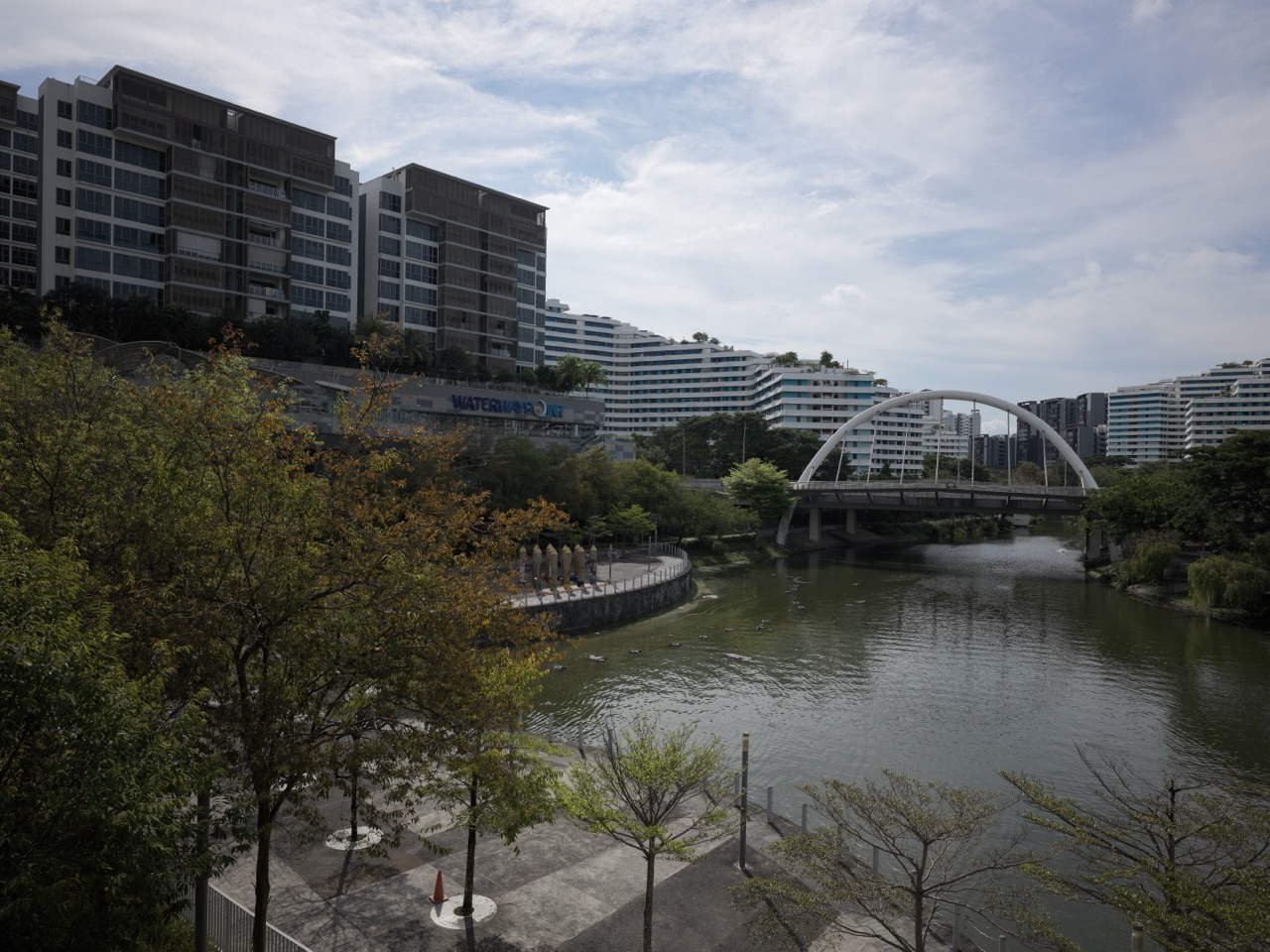

Science tuition in Punggol does not have to remain inside a worksheet. One of the strongest real-world Science systems available to a Punggol family is already built into the town: rain falls onto an urban catchment, moves through drains and waterways, enters reservoirs, is managed as part of Singapore’s water system, and eventually becomes part of a national supply network. For a student, this turns abstract ideas such as the water cycle, systems, variables, measurement, models and evidence into something visible.
Parents searching for Punggol Science tuition, Primary Science tuition Punggol, PSLE Science tuition, Secondary Science tuition Punggol, water cycle Science, reservoir Science or real-world Science inquiry can use this guide as a study/reference route. It connects Punggol Reservoir and the wider local catchment system to the kinds of scientific thinking students already need in school: identifying inputs and outputs, tracing cause and effect, distinguishing observation from inference, reading system diagrams and explaining how one part of a system changes another.
This page does not claim that eduKate operates a reservoir field trip, water-testing programme or separate Science class at the reservoir. It is a public-learning reference owner. Families should use official public routes, follow PUB and NParks rules, and treat the town as a source of questions and evidence rather than as a place to interfere with infrastructure.
The Core Science Idea: Punggol Reservoir Is a System
PUB explains that Singapore channels rain falling on about two-thirds of the country’s land area through rivers, canals and drains into 17 reservoirs. PUB also identifies Punggol Reservoir as part of that local-catchment network. In the Punggol-Serangoon Reservoir Scheme, dams were built across the mouths of the Punggol and Serangoon rivers to create freshwater reservoirs. This gives students a powerful systems model: water arrives, is stored, controlled, moved and eventually treated.
Official background: PUB — Water from Local Catchment and PUB — Punggol-Serangoon Reservoir Scheme learning trail.
Build the Model: Input → Pathway → Storage → Control → Output
A student can represent the reservoir system with five parts:
- Input: rainfall entering the urban catchment.
- Pathway: drains, canals, rivers and connected waterways moving water.
- Storage: the reservoir holding freshwater.
- Control: structures and operating decisions that regulate water movement.
- Output: water moving onward through Singapore’s broader water-supply system.
This model is deliberately simple. The point is not to pretend the student now understands every engineering detail. The point is to make the system visible enough to reason about.
Primary 3–4: Learn to Observe Before Explaining
For younger students, the best use of the reservoir system is not advanced hydrology. It is disciplined observation.
- What can be seen directly?
- What is inferred rather than observed?
- Which parts look natural?
- Which parts are clearly designed or built?
- What evidence suggests water is being guided or contained?
A child might observe a concrete channel, a railing, a water surface, a slope and vegetation. The child should not jump immediately to a claim such as “this part cleans the water” unless there is evidence or an official source supporting it. That distinction between observation and inference is foundational Science.
Primary 5–6: Turn the Reservoir Into a Systems Question
Upper-Primary students can move from observation to mechanism. Useful questions include:
- What happens to rain after it falls on roads and roofs?
- Why does a reservoir need a catchment?
- What is the difference between storing water and treating water?
- Why is a dam important to the reservoir system?
- How can one part of a water system affect another part?
PUB’s local-catchment page also explains that Singapore keeps rainwater collection and used-water collection in separate systems: rainwater travels through drains, canals and rivers to reservoirs, while used water travels through underground sewers to water reclamation plants. That distinction is excellent for PSLE Science because it forces the child to compare two systems by pathway and function rather than by superficial appearance.
Secondary Science: The Reservoir Becomes a Model With Assumptions
Secondary students can go further. Any diagram of the reservoir system is a model, and models simplify reality. A useful student should ask:
- What is included in the model?
- What has been omitted?
- Which flows are continuous?
- Which flows depend on rainfall?
- Which controls are automatic and which are managed?
- What evidence would be needed to test a claim about the system?
This turns a local water system into a lesson in scientific modelling: useful representations are not perfect copies of reality. They are tools for thinking.
A Safe Family Inquiry: Trace the System Without Touching It
A family can conduct a simple public-space observation without collecting water, entering restricted areas or touching infrastructure.
- Choose a legal public route at Punggol Waterway Park or along an official park connector.
- Identify visible built features associated with moving or managing water.
- Record observations in words or sketches.
- Separate each observation from the inference it suggests.
- Check the inference against an official PUB or NParks source.
- Rewrite the conclusion using only claims that the evidence supports.
NParks identifies Punggol Waterway Park as a public park along Sentul Crescent and notes that the Waterway runs through it. The official park page is a useful access reference: NParks — Punggol Waterway Park.
Worked Example: Observation Versus Inference
Observation: water is moving through a channel after rain.
Weak inference: “The channel sends water straight to the reservoir.”
Better scientific response: “The visible channel carries water away from the surrounding area. To determine where it ultimately flows, we need a drainage map or an official source.”
The improvement is not extra vocabulary. It is stronger evidence control.
Worked Example: Storage Is Not Treatment
A common student mistake is to assume that because water enters a reservoir, it is immediately ready to drink. PUB’s local-catchment explanation separates collection from treatment. The reservoir stores collected rainwater as part of the water-supply system; treatment is another process.
This becomes a useful concept chain:
- rain falls;
- rainwater is collected;
- water is stored;
- water is treated;
- treated water enters supply.
Each arrow represents a different mechanism. Good Science answers state those mechanisms rather than compressing the entire system into one sentence.
How This Connects to PSLE Science
- Cycles: water cycle and movement of water through systems.
- Systems: inputs, processes, outputs and interdependence.
- Environment: human-built systems interacting with natural processes.
- Data: rainfall, water level and time-series thinking.
- Open-ended answers: cause → mechanism → outcome.
The broad local learning owner is Punggol Science Inquiry | Turn the Family’s Actual Environment Into Evidence, Questions and Reports.
How This Connects to Secondary Science
- systems modelling;
- measurement and uncertainty;
- variables and controls;
- environmental Science;
- evidence strength;
- fieldwork and observational studies.
For deeper methodological reading, see How Scientific Fieldwork Works, How Scientific Measurement Works and How Scientific Variables Work.
The Parent’s Role: Ask for Evidence, Not the Right Answer
A parent does not need to become a hydrologist. The parent can ask:
- What did you actually observe?
- What are you inferring?
- What source supports that inference?
- What would make your conclusion stronger?
- What part of the system are you still uncertain about?
These questions train Science without giving away the conclusion.
A Simple Inspectable Output
The student can finish with a one-page system report:
- Question: How does rain become part of Punggol’s reservoir system?
- Observed features: only what was actually seen.
- Official evidence: PUB/NParks links.
- System model: input → pathway → storage → control → output.
- Uncertainty: what the student could not verify.
- Conclusion: a bounded answer supported by the evidence.
Study/Reference Boundary
This page is a Science study/reference owner. It does not claim a separate eduKate Reservoir Science class, field-trip programme or water-testing service. Current eduKate service information should be checked through the site’s established tuition routes, while public access and water-system facts should be checked against PUB and NParks.
For the local town owner, see Punggol and Serangoon Reservoirs.
The town becomes Science when the student can observe carefully, model the system, check the source and explain only what the evidence allows.


