
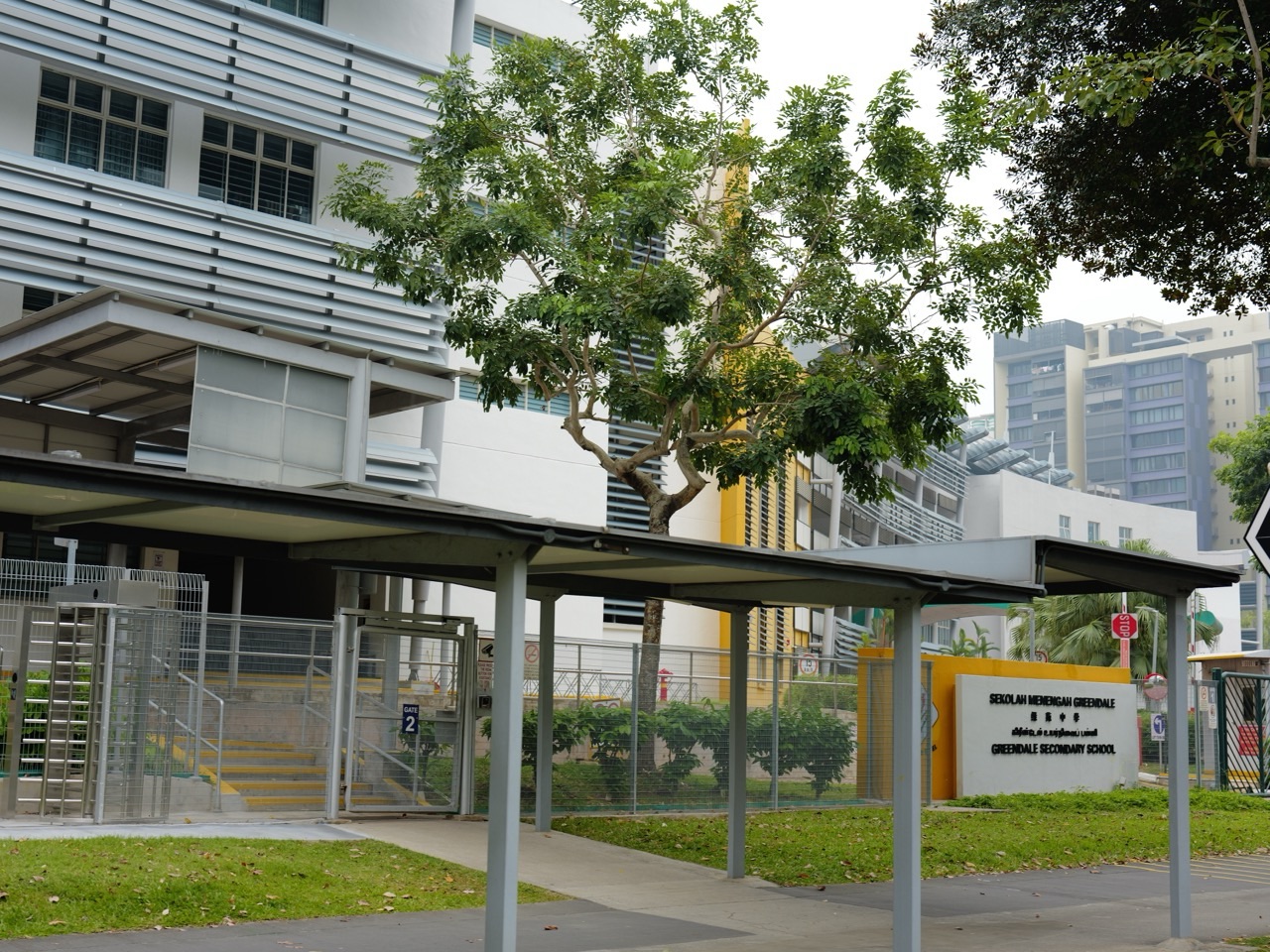
For a Punggol pupil interested in artificial intelligence, online safety, computer systems or cybersecurity, choose a secondary school that teaches real digital literacy, computational thinking and responsible technology use—not one that simply displays the word “AI” on a poster. MOE announced in March 2026 that AI literacy is being strengthened across the curriculum and that the refreshed Code for Fun programme will be made available to all schools in 2027. Within Punggol, Yusof Ishak Secondary has published Infocomm Technology and Robotics clubs with AI, Python and digital media experiences; Greendale Secondary includes coding, electronics and emerging AI technologies in its Design, Technology and Engineering ALP; Edgefield Secondary publishes a Robotics Club; and Punggol Secondary provides ordinary digital and cybersecurity learning within its broader school education. These are different opportunities, not interchangeable professional cybersecurity courses.
When the 2026 PSLE results are released on Tuesday, 24 November at 11.00am, the family first needs the child’s official PSLE Score and eligible PG1, PG2 or PG3 school-entry route. Then compare actual lower-secondary subjects, school-wide technology learning, CCA selection, cyber wellness, Maths and English teaching and daily travel for Secondary 1 entry in 2027. A pupil who enjoys asking AI tools questions may not yet know how software works, and a child who wants to defend computer systems need not be exposed to unauthorised hacking to learn ethical security habits. This guide compares the four Punggol schools’ current programmes and 2026-entry historical cut-offs, and helps parents build six eligible school choices before 30 November 2026 at 4.30pm.
Quick parent summary
• MOE has announced enhanced AI literacy and refreshed Code for Fun availability for schools in 2027.
• Yusof Ishak publishes Infocomm Technology, Robotics and STEM clubs, including AI-related media, Python and robotics activities.
• Greendale’s engineering ALP introduces coding and electronics in Secondary 1 and emerging AI and drone technology in Secondary 2.
• Edgefield’s Robotics Club involves design, programming, testing and competitions; CCA places and activities require confirmation.
• Do not invent a specialist cybersecurity CCA at a school merely because it teaches coding or digital literacy.
• Cybersecurity begins with ethical practice, protecting accounts, recognising scams and checking information, not breaking into systems.
• Formal SEC Computing subjects, school-wide activities and CCAs are separate; compare the actual school offerings and historic PG cut-offs.
AI, programming, robotics and cybersecurity are four different interests
A child might enjoy using a text-generating AI tool to explain homework, writing Python code, building a robot, making digital illustrations or reading about how to protect accounts. These are connected through computing but require distinct skills. Generative AI produces outputs from trained models and can make mistakes. Programming is constructing explicit instructions for a computer. Robotics combines software with physical mechanisms and sensors. Cybersecurity focuses on protecting systems, information and people from threats.
Ask the pupil to explain what they would like to do every week. Do they want to understand why an AI answer is wrong, make a robot follow instructions, write a small program or learn how a family can avoid an online scam? A parent can assess whether the interest is one of curiosity, practical making or online safety rather than selecting a school from a technology buzzword.
A twelve-year-old does not need a professional AI or cybersecurity career plan. Secondary 1 should develop foundations in Mathematics, English, Science, Humanities and responsible computing. The ability to question a misleading claim or describe how a program works can be more valuable than collecting dozens of flashy certificates.
What the Ministry of Education changed for AI literacy
In its 2026 Committee of Supply announcements, MOE describes AI literacy integrated into curriculum, co-curriculum and self-directed learning resources, with developmental milestones for digital and technological skills. The refreshed Code for Fun programme in primary and secondary schools will strengthen AI skills and be made available to all schools in 2027. Cyber Wellness lessons have also been updated to include verifying generative AI information and identifying deepfakes.
This is a national initiative, not an exclusive promise by one of the four Punggol schools. A family should ask how the receiving school plans to implement the updated learning for its particular cohort and which activities will be school-wide rather than selected enrichment. The fact that a programme is available to every school does not mean each Secondary 1 pupil receives an identical AI timetable or a guaranteed Robotics Club place.
MOE’s 2026 guidelines on student devices also matter. Smartphones and smartwatches are restricted during school hours, including recess and co-curricular sessions, subject to authorised exceptions. A technology-oriented school is not an exemption from those national rules; digital learning should use approved devices and supervised contexts.
Compare the four Punggol schools without inventing a cybersecurity speciality
| School | Verified relevant experience | What parents must not assume |
|---|---|---|
| Yusof Ishak Secondary | Infocomm Technology Club: AI, AR, video journalism; Robotics Club: Python and robotic controls | Automatic place in AI training or a formal cybersecurity CCA |
| Greendale Secondary | DTE ALP: Arduino coding, electronics, design and AI-related technology exposure | Every pupil studies advanced cybersecurity or obtains competition places |
| Edgefield Secondary | Robotics Club: programming, drones, design and national competition experience | Every pupil joins Robotics or takes examinable Computing |
| Punggol Secondary | National curriculum, environmental learning and school digital literacy | A specialist AI or cybersecurity programme without official evidence |
The list is drawn from current school-published materials, but programmes, CCA selection and staffing can change. Confirm the 2027 intake’s actual arrangements. A school may teach responsible online behaviour very effectively without running a club called Cybersecurity; conversely, a club featuring AI software does not prove it offers a complete course in computer security.
Yusof Ishak Secondary: AI-related media and Python robotics
Yusof Ishak Secondary at 8 Sumang Walk, Singapore 828676 publishes an Infocomm Technology Club with photography, video journalism, augmented reality, AI and interactive design. Its Robotics Club describes LEGO SPIKE robotics, Python programming and supervised manual and automated drone activities.
For a student who wants to make digital projects, these are concrete CCA choices worth researching. Ask about beginner entry, training days, selection, equipment and what pupils actually learn about accuracy, authorship and online ethics. The pupil should be able to explain their own work rather than rely on a generated project they do not understand.
The school’s S4TEM@YI ALP includes sustainable smart-city STEM, coding and related practical activities. That gives another possible source of technology exposure. However, the school-wide ALP, an Infocomm CCA and a Robotics CCA are three separate educational arrangements, and neither club can be promised until the receiving school confirms its allocation.
Greendale Secondary: coding and emerging technology
Greendale Secondary at 51 Edgedale Plains, Singapore 828866 provides an Applied Learning Programme in Design, Technology and Engineering. Its official 2026 page describes Secondary 1 coding and electronics with Arduino microcontrollers and practical applications such as monitoring hydroponic systems. The Secondary 2 programme adds more complex coding, user interfaces and emerging technologies including AI and drones.
A child interested in logical systems may enjoy seeing code control a physical sensor or model. It can teach debugging, measurement, analysis and teamwork, which are useful foundations for many later fields. Ask how the ALP integrates thinking about privacy, safe technology and sources of error. Do not assume that a general AI awareness component is professional penetration-testing training.
Greendale also describes digital literacy under the National Digital Literacy Programme. Its current school pages are evidence of a learning direction, not a guarantee of a specific 2027 club or advanced subject combination. Compare teaching and school culture alongside the technology theme.
Edgefield Secondary: robotics and systematic problem-solving
Edgefield Secondary at 36 Punggol Field, Singapore 828814 publishes a Robotics Club, updated November 2026, describing national-level robotics, coding and engineering competitions. Pupils design, test and refine solutions, and learn teamwork, adaptability and clear communication.
That makes the club relevant for a pupil interested in programming, though participation in competitions is selected and a new school place does not guarantee an allocated club place. A pupil’s interest in cybersecurity might be nurtured through responsible computing and logical thinking, but it would be false to claim that Edgefield runs a specialist cyber-defence programme without independent school confirmation.
Edgefield’s Growing the Edgefield Mindset also links inventiveness with real-world problems. A family can ask whether ordinary pupils learn how to verify claims, protect personal information or evaluate the effects of technology on people. These are critical cyber-wellness habits that do not require advanced hacking tools.
Punggol Secondary: responsible digital learning within a broad curriculum
Punggol Secondary at 51 Edgefield Plains, Singapore 828870 highlights environmental sustainability and community leadership. Students need digital literacy to research environmental questions, use school learning platforms and communicate responsibly. The school also publishes an Audio Visual Aid Club and other activities. These should not be recast as specialised cybersecurity training unless the school actually offers such a programme.
Parents can ask how ordinary students learn online safety, evidence-based research, data responsibility and the appropriate use of AI-generated material. A pupil may prefer a school with a good academic and wellbeing fit and continue coding through safe external learning without needing a formal cybersecurity club.
The school’s digital learning and ordinary subjects still provide opportunities for problem-solving. Choosing a mainstream school without a prominently advertised AI CCA does not close the door on computing later; future course prerequisites, independent progress and post-secondary options matter.
What a child should learn about cybersecurity at twelve
| Concept | Useful age-appropriate learning | Unsafe assumption to avoid |
|---|---|---|
| Account protection | Use strong unique passwords and approved second factors; avoid sharing credentials | That trying someone else’s account is acceptable practice |
| Phishing and scams | Recognise suspicious links and requests for secrets | Every polished message is genuine |
| Privacy | Avoid publishing school IDs, addresses and private information | A public project needs personal data to be impressive |
| Updates and permissions | Understand why trusted software and permissions matter | Unknown downloads are harmless experiments |
| Evidence and AI | Verify generated text, images and claims against trusted sources | AI answers are always accurate |
| Ethical computing | Learn only on authorised educational systems | Breaking into live systems is a school project |
| Help-seeking | Tell a trusted adult about unsafe contact or suspicious requests | A twelve-year-old must handle a cyber incident alone |
Parents should teach these concepts through discussion and safe settings. A pupil can examine a made-up phishing example or compare two imaginary messages without contacting real accounts, collecting passwords or attempting to gain unauthorised access to computer systems. Cybersecurity should begin with ethics and respect for other people.
If a child encounters a scam, impersonation, harmful image or suspicious school account activity, follow the relevant official reporting and school support channels. Do not publish classmates’ data or use the incident as a challenge to ‘hack back’. School staff and qualified specialists can guide further steps where needed.
A future SEC Computing subject is not automatic
The SEC framework begins in 2027 for relevant graduating cohorts and uses G1, G2 and G3 subject levels. SEAB publishes Computing syllabuses at relevant levels, but the presence of a national examination syllabus does not mean every school offers it to every pupil. School-specific upper-secondary subject choices depend on the cohort, actual curriculum, performance and selection arrangements.
A pupil who enters Secondary 1 in 2027 would normally choose upper-secondary subjects during Secondary 2 in 2028, ahead of starting Secondary 3 in 2029; the school will confirm the actual selection schedule. The pupil may develop an interest in Computing, Design and Technology, Science, Mathematics or Business. Asking the school what it currently offers is useful; promising a future G3 Computing seat from a Primary 6 coding hobby is not.
A young person could later explore polytechnic computing or cybersecurity diplomas, suitable ITE technology courses, JC pathways and university study, subject to the qualifications and requirements in force at the time. Technology changes quickly, so strong fundamentals and ethical habits are likely to remain more valuable than over-specialising at twelve.
The historic 2026-entry Punggol cut-off comparison
The following figures refer to the completed 2026 Secondary 1 intake after PSLE 2025. They are previous final-admitted scores by Posting Group, not certain cut-offs for 2027 or a quality ranking of AI education. A numerically lower PSLE Score represents stronger aggregate examination performance.
| Punggol school | Past PG3 COP | Past PG2 COP | Past PG1 COP |
|---|---|---|---|
| Edgefield Secondary | 14 | 23 | 27 |
| Greendale Secondary | 16 | 23 | 27 |
| Punggol Secondary | 19 | 24 | 27 |
| Yusof Ishak Secondary | 15 | 22 | 27 |
For a PG3 pupil scoring 16 who enjoys technology, Greendale’s old PG3 endpoint of 16 was a previous boundary match, Yusof Ishak’s 15 and Edgefield’s 14 were more competitive, and Punggol Secondary’s 19 was less stringent. That is a reason to consider the full school list carefully, not a prediction that any club or future place is guaranteed.
For PG2 Score 23, Edgefield and Greendale both had historic PG2 endpoints of 23, Punggol Secondary 24 and Yusof Ishak 22. At Score 25, a PG1/PG2 option may be offered, with distinct school histories and starting academic pace. A child should not select the wrong group merely to be near a STEM programme or a friend. Verify actual eligibility on the personalised form.
MOE encourages two or three schools with previous cut-offs less stringent than the child’s PSLE result where suitable. If the local four do not provide enough options, research eligible schools in Sengkang, Hougang and other reachable areas. A school with a manageable journey and thoughtful teaching may serve the child better than a more selective school chosen entirely for a marketing slogan.
A four-week safe learning plan for an AI-curious pupil
Week 1: understand what an AI answer can and cannot tell you
Choose a harmless educational question and compare a generated answer with a trustworthy textbook or official resource. Note where the answer is useful and where it is incomplete. Do not submit private family information or other people’s personal records to a public tool.
Week 2: think algorithmically
Write a simple sequence of instructions for a safe task, such as sorting a list of words or planning a paper maze. Test the sequence and identify where it fails. This teaches debugging without needing to access anybody else’s computer or account.
Week 3: practise recognising suspicious requests
Use fictional messages to identify warning signs such as urgency, requests for passwords or mismatched information. Explain what the child would do: stop, verify using a trusted channel and ask an adult. Do not make the exercise a real phishing attempt against classmates.
Week 4: create a small explanatory project
Ask the pupil to produce a short poster or written explanation of one cyber wellness habit, such as protecting passwords or checking a deepfake claim. Encourage original reasoning and clear sources. The goal is to communicate responsibly, not produce a viral video or claim expert status.
What to ask the schools about AI and cyber literacy
- What digital literacy and AI learning will be experienced by every 2027 Secondary 1 pupil?
- How does the school implement the refreshed Code for Fun or other approved learning opportunities?
- Which current clubs involve Python, coding, robotics, media or supervised AI exploration?
- How are club places allocated, and what can a beginner join?
- What do lessons teach about deepfakes, privacy, misinformation and responsible AI use?
- Does the school offer any actual cybersecurity-focused activity, or is its programme a broader technology ALP?
- Which upper-secondary Computing subjects currently exist and how are later choices made?
- What Mathematics, English and Science support helps pupils explain their own digital work?
- How are school devices managed and what phone-use restrictions apply?
- What is the return journey after late club training from the family’s Punggol home?
A decision worksheet for the final six schools
| Decision factor | Useful evidence |
|---|---|
| Official entry | Actual PSLE total and selected PG1/PG2/PG3 route |
| Historical admission | Correct 2026-entry COP column, clearly marked past |
| Digital education | School-wide AI and cyber wellness programme |
| Optional technology activity | Current club availability, recruitment and real projects |
| Formal future subjects | Actual school Computing and D&T options, no automatic promise |
| Broader learning | Mathematics reasoning, reading, Science and student wellbeing |
| Travel | Morning and late CCA route from the family home |
| Student preference | Would the child enjoy the school without the first-choice club? |
Ordinary S1 posting uses academic merit first, then citizenship, school-choice order and computerised balloting for relevant same-score competition. A STEM interest does not bypass those rules, and being a Punggol resident does not create automatic selected-school distance priority. Rank six schools in genuine preference order after considering the complete education.
The official 2026 PSLE to 2027 Secondary 1 timeline
| Milestone | Announced date |
|---|---|
| 2026 PSLE results released | Tuesday, 24 November at 11.00am |
| MOE S1 Portal opens | 24 November at 11.30am |
| Six-school choice deadline | Monday, 30 November at 4.30pm |
| Posting results | Tentatively Friday, 18 December; final confirmation to follow |
SEAB’s 17 November 2026 statement confirms the official results and submission period. One parent with Singpass can normally submit through the S1 Portal. Ask the primary school for help before the deadline if necessary; accepted DSA-Sec placements can follow separate commitments.
Frequently asked parent questions
Which Punggol school is best for AI?
There is no reliable universal ranking. Greendale’s school-wide DTE ALP and Yusof Ishak’s Infocomm and Robotics CCAs are verifiable examples. Edgefield has Robotics, while Punggol Secondary provides digital learning within its broader curriculum. Ask what the child will actually learn and which activities are available.
Will every student learn AI at secondary school in 2027?
MOE announced strengthened AI literacy and a refreshed Code for Fun programme available to all schools in 2027, but that is not a promise that every pupil will receive identical activities or a specialist AI CCA.
Does a coding or robotics CCA mean formal cybersecurity training?
No. Programming, robotics and protecting systems are distinct activities. Do not claim the school offers a specialist security course without verifying it.
Can a PG1 or PG2 pupil learn coding?
The student’s Posting Group describes academic school entry, not a personal ceiling on curiosity. Availability of clubs and individual subject options follows school rules and eligibility.
Should the child learn real hacking techniques to study cybersecurity?
At twelve, begin with safe ethical digital skills and authorised educational environments. Unauthorised system access is not an appropriate experiment, and learning requires respect for privacy, permissions and safety.
Does a technology-focused school allow smartphones at recess?
MOE’s enhanced secondary-school rules restrict smartphones and smartwatches during school hours from January 2026, including recess, subject to authorised exceptions. School-managed devices and approved learning are separate matters.
Official sources and eduKate reading
- MOE 2026: AI literacy, refreshed Code for Fun for 2027 and deepfake awareness
- Yusof Ishak: Infocomm Technology Club, AR, AI and video journalism
- Yusof Ishak: Python coding and robotics
- Greendale: coding, electronics and AI-related technology exposure
- Edgefield: Robotics Club and competition programme
- MOE SchoolFinder: current school profiles and historical entry scores
- SEAB: PSLE results and 2027 S1 options
- eduKate Punggol: robotics and computing-oriented school fit
- eduKate Punggol: school devices, phone policy and cyber wellness
- eduKateSG: Clementi Mathematics tutorial guide
Final parent move: A child’s interest in AI or cybersecurity is worth nurturing through strong Mathematics, careful reading, responsible programming and ethical digital habits. Compare the four Punggol schools by real programmes, subject teaching, student support and everyday travel, not a technology buzzword. Confirm the actual school-entry route, a balanced historical score range and six genuine preferences.


