
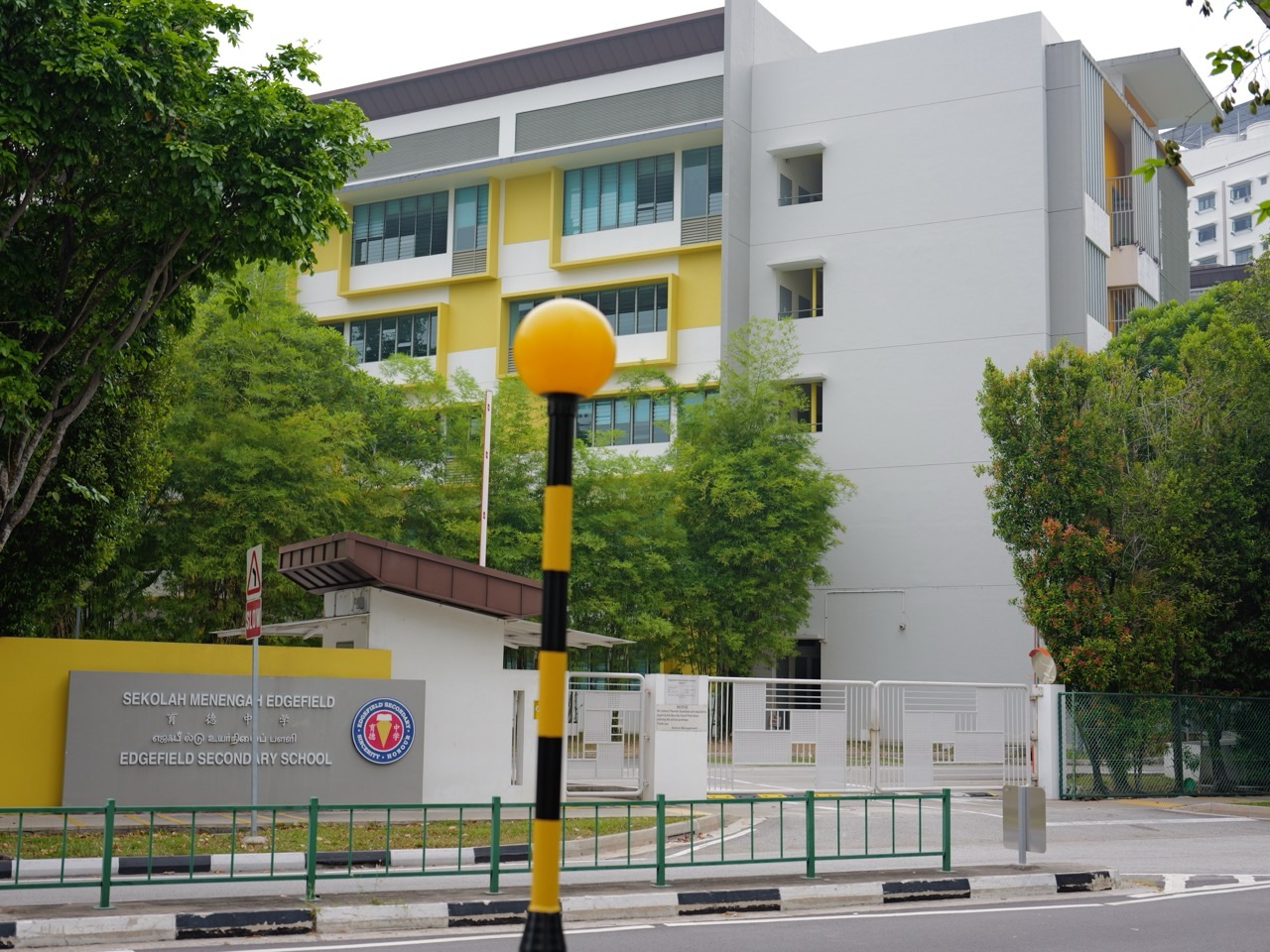
For a Punggol child interested in chess, competitive debate, public speaking or solving difficult puzzles, choose a secondary school that develops reasoning, communication and character while confirming which specific clubs are actually offered. Punggol Secondary publishes an English Language Drama and Debate Society (ELDDS) with school debating and literary activities. Edgefield Secondary publishes English Language Drama and Debate as a performing arts CCA and lists cognitive activities that may include debate competitions. Greendale Secondary provides theatre and broadcasting experiences, while Yusof Ishak Secondary publishes English Drama. A dedicated Chess CCA has not been verified for all four schools, so parents should not equate a pupil’s love of chess with an assured school chess club.
The child’s formal entry still depends on the 2026 PSLE result released on Tuesday, 24 November at 11.00am, and the actual PG1, PG2 or PG3 Posting Group. A debate, chess or speaking interest does not override school posting rules or guarantee a selected CCA place. This guide compares what the four local schools actually publish, explains how to distinguish debate, theatre, journalism and chess, and helps parents check English, Humanities, Mathematics, school culture and daily travel for 2027 Secondary 1 entry. The historical 2026-entry school cut-offs are useful reference points, not promised admission thresholds; ordinary six-school choices close at 4.30pm on Monday, 30 November 2026.
Quick parent summary
• Punggol Secondary publishes ELDDS, including school debating championships, drama and literary activities.
• Edgefield lists ELDDS among its performing arts opportunities and debate-related cognitive development.
• Greendale offers Theatricks! theatre and the Broadcasting Club; these are not identical to a competitive debate team.
• Yusof Ishak offers English Drama, which can develop communication, performance and teamwork.
• A dedicated chess club, tournament team or coach should be confirmed with the individual school; do not invent availability.
• Debate, chess and public speaking all develop useful skills but involve different routines and selection rules.
• Compare the child’s actual Posting Group, historic COP, school fit and six genuine choices.
Chess, debate and public speaking are not one activity
A chess-loving pupil may enjoy quiet concentration, strategy, pattern recognition, planning and learning from a lost position. A debater usually researches a question, constructs an argument, evaluates opposing views and responds under time limits. A public speaker might enjoy explaining a story, leading an assembly, interviewing people or participating in drama. Some students enjoy all three, but a school should be evaluated for the actual interests involved.
A child who speaks beautifully in front of relatives may be nervous in a formal timed debate. Another who plays chess competitively may prefer a small strategic group to a large performing arts CCA. The parent should ask what the child voluntarily practises and why. Does the pupil like tournaments, research, structured reasoning, teamwork, storytelling or the feeling of improving a skill?
Avoid making the child choose between academic success and an intellectual hobby. Reading carefully, explaining evidence, analysing alternatives and tolerating mistakes are relevant to English, Mathematics, Science and Humanities. A good school can help students use those skills in different settings, even if the school does not operate a named chess CCA.
What the four Punggol secondary schools publish
| School | Verified relevant experience | What it is not a guarantee of |
|---|---|---|
| Punggol Secondary | ELDDS: drama, school debating and literature-related activities | Automatic admission to a competition debate team |
| Edgefield Secondary | ELDDS performing arts and cognitive activities including debate-related opportunities | A personal place in every debate event |
| Greendale Secondary | Theatricks! theatre and Broadcasting Club journalism and interviewing | A dedicated competition debate or chess CCA |
| Yusof Ishak Secondary | English Drama with performances and theatre-making | Guaranteed formal debate or chess league selection |
These programmes have been described in the schools’ 2026 official material. They can change in timing, group leadership and CCA allocation from one year to the next. Where the child specifically wants school chess tournaments, ask whether the school has a recognised chess team, approved external participation or another activity; do not assume chess is listed merely because students can play chess at recess.
A child could also enjoy joining a school CCA unrelated to chess while playing chess recreationally or in appropriate family-supported settings. The school can advise whether any external competition results might be endorsed under the applicable LEAPS 2.0 Achievement criteria. That is separate from assuming private chess coaching automatically counts as the pupil’s school-based CCA.
Punggol Secondary: a documented Drama and Debate Society
Punggol Secondary at 51 Edgefield Plains, Singapore 828870, has an official ELDDS page updated May 2026. It describes developing confident speakers and skilled actors, participating in Singapore Youth Festival opportunities, the Singapore Secondary Schools Debating Championships and literary activities such as choral reading. Selected Secondary 1 pupils participated in the National Schools Literature Festival.
This is useful evidence for a child who enjoys arguments, public speaking and literary performance. The child should understand that a CCA may involve drama as well as debate; it is not necessarily a weekly chess tournament or a debating class with no stage activity. Ask how new pupils are introduced, whether beginners can participate and how coaches decide who represents the school at competitions.
A pupil who is nervous about speaking may appreciate gradual opportunities, while one who loves competitive debate may want to know how argument-building and rebuttal are taught. The actual allocation to ELDDS must be confirmed after school posting. An earlier competition result does not guarantee that every new pupil will represent the school.
Edgefield Secondary: ELDDS, reasoning and initiative
Edgefield Secondary at 36 Punggol Field, Singapore 828814, publishes an English Language Drama and Debate Society among its performing arts CCAs. Its Potential Development framework also describes cognitive development activities that may include the Singapore Secondary Schools Debating Championship, Model United Nations and other learning opportunities.
A student interested in argument and leadership may be drawn to these experiences. Ask what ELDDS activities are open to beginners and which advanced competitions are selected. The Growing the Edgefield Mindset ALP develops authentic problem-solving, enterprise and explanation, which can complement communication interests without being identical to a formal debating competition.
An open-house display of a successful ELDDS pupil does not prove every Secondary 1 student obtains the same role. The receiving school should explain club allocation, training commitment and how students can develop confidence before entering demanding competitions.
Greendale Secondary: theatre, broadcasting and communicating evidence
Greendale Secondary at 51 Edgedale Plains, Singapore 828866, publishes Greendale Broadcasting Club, where pupils learn interviewing, filming and journalism, and performing arts that include Theatricks! theatre. A child who enjoys explaining ideas or asking people questions may find broadcasting meaningful, while an aspiring performer might prefer theatre.
These are not automatically the same activity as parliamentary-style or competitive school debate. A journalist’s interview seeks accurate information and a balanced account; a debater argues a position using evidence; an actor tells a story within a performance. All require communication but have different technical and ethical skills. Ask the pupil which experience appeals most.
Greendale’s design and engineering ALP may also suit a chess player interested in logical problems and debugging. That does not imply Greendale offers a formal chess club. Verify the precise CCA list and ask whether the student can continue a chess hobby independently while joining another school activity.
Yusof Ishak Secondary: speaking through English Drama
Yusof Ishak Secondary at 8 Sumang Walk, Singapore 828676, publishes English Drama, involving theatre, school performances, forum theatre and exchanges. The programme develops collaborative performance, storytelling, confidence and technical skills. It may be suitable for a child who wishes to become a stronger public speaker or enjoy scripts and stage activities.
However, an English Drama CCA should not be described as a guaranteed formal debate squad. Ask whether the school has separate debating opportunities and how new students can participate in speech, emceeing or leadership if those are the pupil’s interests. The school has smart-city STEM and leadership programmes that may develop other kinds of analytical thinking.
Yusof Ishak’s Sumang Walk location may be convenient for a household in western Punggol, but other families should test the home-to-school route. A pupil attending late drama rehearsals needs a reliable journey and enough time for other subjects, sleep and family life.
How to research chess without inventing a CCA
Some schools offer chess as a CCA, some provide informal student opportunities and others may not have a dedicated programme. A parent’s enquiry should distinguish the school’s official CCA directory from a casual chess event, a class enrichment activity and a pupil’s independent club. Those are not equivalent. For these four Punggol schools, do not claim a dedicated chess CCA without current school confirmation.
- Ask whether the school has a currently registered Chess CCA, an internal chess interest group or a formal competition team.
- Check whether beginners are welcome and who supervises regular practice.
- If the school does not offer Chess as a CCA, ask whether pupils may take part in approved external competitions and what endorsement rules apply.
- Understand that private chess lessons are not automatically a school-based LEAPS 2.0 Participation activity.
- Ask about study balance, competition days and travel to tournaments.
- Choose a school the child would still enjoy attending even without a dedicated chess club.
A chess player can continue learning with suitable resources, safe supervised activities or reputable external events. The school’s contribution may be to teach good academic reasoning and offer other meaningful CCAs. A child’s strategic talent is not made less valuable because one club title is absent from the school website.
Why strong speech and argument depend on academic foundations
| Skill | Debate/public speaking example | Chess/problem-solving example |
|---|---|---|
| English comprehension | Read the motion and understand evidence | Read instructions and complex positions carefully |
| Reasoning | Show why a claim follows from evidence | Evaluate possible moves and consequences |
| Listening | Understand the opposing argument | Consider a competitor’s response |
| Mathematics | Interpret percentages, statistics and comparisons | Recognise patterns and plan logically |
| Research ethics | Check sources and avoid invented quotations | Respect rules and honest play |
| Resilience | Respond to rebuttals constructively | Learn from a lost game |
| Collaboration | Work with teammates and coaches | Analyse games respectfully with peers |
A pupil may be excellent at debate and still find Mathematics difficult; another may love chess but struggle to give verbal explanations. Those are opportunities for differentiated development rather than proof that a child belongs to a single academic type. Ask the receiving school what feedback and subject-level support will help the student develop both strengths and weaker areas.
Under Full Subject-Based Banding, students may study individual subjects at G1, G2 or G3 levels when eligible. PG1, PG2 and PG3 guide the school-entry route, not a permanent label of debating or chess ability. A parent should never claim that only PG3 students can participate in speaking, clubs or problem-solving activities.
The four local historical cut-off points
The following scores refer to the completed 2026 Secondary 1 intake after PSLE 2025. They are previous last-admitted scores and not the known cut-offs for 2027. They do not measure how well the school teaches debate, chess or public speaking.
| Punggol school | Past PG3 COP | Past PG2 COP | Past PG1 COP |
|---|---|---|---|
| Edgefield Secondary | 14 | 23 | 27 |
| Greendale Secondary | 16 | 23 | 27 |
| Punggol Secondary | 19 | 24 | 27 |
| Yusof Ishak Secondary | 15 | 22 | 27 |
At PG3 Score 17, a child may sincerely prefer Punggol Secondary’s documented debate activities. Its previous PG3 endpoint of 19 was numerically less stringent than 17, while Edgefield 14, Greendale 16 and Yusof Ishak 15 were more competitive. That does not guarantee a place or CCA allocation at Punggol Secondary. It is simply one historic comparison in a broader school-choice decision.
At PG2 Score 23, the old local PG2 endpoints were 23 at Edgefield and Greendale, 24 at Punggol Secondary and 22 at Yusof Ishak. A score-25 pupil may have PG1 or PG2 options and must compare each route consistently. The child should not be pressured into a different Posting Group merely to access a preferred debate club.
If the local four schools do not offer enough suitable historically less stringent options for the child’s actual score, investigate eligible schools in Sengkang, Hougang and other practical areas. A school with a different CCA may still provide excellent teaching and student development. The six choices need to be schools the pupil could attend and appreciate.
Three parent-child examples
The quiet chess enthusiast
This pupil plays chess for long periods but dislikes speaking to strangers. The school should offer a respectful environment with appropriate Mathematics and English learning, while allowing the child to develop friendships through suitable activities. A chess CCA would be a useful feature if genuinely confirmed; its absence need not rule out an otherwise strong fit.
Ask how new Secondary 1 pupils are included in CCAs and how the school supports a student who enjoys concentrated independent tasks. Avoid forcing the child into public speaking to ‘fix’ a quiet personality; small, purposeful communication opportunities may be more appropriate.
The confident debater who enjoys a challenge
This pupil loves arguing a proposition and listening to counterarguments. Punggol Secondary’s ELDDS and Edgefield’s ELDDS deserve research, including the actual incoming-year selection procedures and training times. A school with no confirmed competitive debate CCA might still offer strong oral-language lessons, drama or leadership experiences.
Ask whether the child appreciates evidence and respectful disagreement. A debating contest is not permission to dominate classmates or argue with teachers over every rule. Good debate involves listening, fairness, careful language and constructive feedback.
The pupil who likes telling stories and interviewing people
This pupil might prefer Greendale Broadcasting, Yusof Ishak English Drama or another creative CCA more than formal debate. Ask what they want to practise and whether they are interested in scripts, documentary research, theatre or live presenting. Club allocation remains separate from ordinary S1 school entry.
A safe holiday project: one question, two sides
Step 1: choose a topic suitable for twelve-year-olds
Pick a question such as whether school lunches should reduce food waste or whether students should spend more time reading for pleasure. Choose a topic that does not expose private personal information, shame classmates or require a political allegiance.
Step 2: build two evidence-based arguments
Ask the child to write a short claim, a reason, an example and a possible objection for each side. Explain that a strong debater should understand a fair alternative view, not invent statistics or misrepresent another person’s argument.
Step 3: speak, listen and revise
Invite a willing family member to listen to a one-minute explanation. Ask what was clear and what needs evidence. A quieter child can practise explaining without a public performance. The aim is precision and confidence, not loudness.
Step 4: reflect on reasoning
If the child prefers chess, use a similar thought process: choose a move, explain the possible response and examine whether the original idea still works. This links strategic thinking with the skill of revising a claim after considering evidence.
What to ask at the school
- Which 2027 CCAs involve formal debating, drama, public speaking, Model United Nations, broadcasting or chess?
- Does the pupil need a trial, audition or prior experience, and are there capacity limits?
- Is the relevant club open to beginners or restricted to a selected competition team?
- How are pupils taught to construct arguments without using unreliable evidence?
- Does the school have academic opportunities for pupils who enjoy Maths puzzles or competitive problem-solving?
- If Chess is not a listed CCA, are any school-endorsed external chess activities available?
- How does the school recognise external accomplishments under the actual LEAPS 2.0 rules?
- What are the normal and late CCA training times and the real journey home?
- How do teachers support students who have strong reasoning but difficulty expressing themselves?
- Would the child still enjoy the school if the first-choice club were unavailable?
The six-school decision worksheet
| Factor | Parent’s evidence |
|---|---|
| Entry eligibility | Official PSLE total and selected Posting Group |
| Historical admissions | Correct previous PG3/PG2/PG1 COP |
| Debate / communication | Verified school clubs, normal lessons and selected opportunities |
| Chess | Current school-confirmed provision; do not assume from interest |
| Academic development | English, Maths, Humanities and Science support |
| Student wellbeing | Peer culture, orientation and how new pupils ask for help |
| Practical routine | Safe school-day and late club journey |
| Genuine preference | School the child wants even without a preferred CCA |
MOE advises including two or three schools with previous cut-offs less stringent than the child’s score where suitable. A previous PG3 COP of 19 is numerically less stringent than PG3 Score 16; 14 is more competitive. These historical figures do not supply a valid individual admission probability. Rank all six eligible schools by genuine preference, not by expected chess or debating prizes.
The official PSLE result and choice dates
| Milestone | 2026 timing |
|---|---|
| PSLE results released | Tuesday, 24 November at 11.00am |
| S1 Portal opens | 24 November at 11.30am |
| Six-school choices close | Monday, 30 November at 4.30pm |
| Posting results | Tentatively Friday, 18 December; final confirmation to follow |
SEAB confirmed the dates and holistic school-choice guidance in its 17 November 2026 announcement. A parent with a valid Singpass can submit through MOE’s S1 Portal. Families requiring help should contact the primary school before the deadline. Accepted DSA-Sec placements follow their own applicable conditions.
Frequently asked questions
Which Punggol secondary school has a competitive debate CCA?
Punggol Secondary publishes ELDDS with school debate competition activities, and Edgefield publishes ELDDS and debate-related cognitive opportunities. Check actual selection, training and current incoming-year availability.
Is there a guaranteed Chess CCA at every Punggol secondary school?
No. A dedicated chess club has not been verified for all four schools. Ask each school about actual provision and do not infer a formal club from a casual chess activity.
Is public speaking the same as drama or journalism?
No. The skills overlap, but formal debate, staged performance, interviewing and speeches have different routines and purposes. The child’s actual interests should guide the choice.
Will a good PSLE English result guarantee ELDDS membership?
No. School posting, individual subject results and the school’s CCA allocation are separate. A strong result can show academic ability, but club participation follows the school’s current selection process.
Can a PG1 or PG2 pupil join a debate or communication activity?
Posting Groups are academic entry routes, not measures of character or communication worth. Ask what relevant school-wide and CCA activities are available and their participation rules.
Will debate or chess guarantee a JC or university place?
No. Meaningful participation can develop skills and may later contribute relevant evidence under the actual rules, but future admission requires meeting academic and programme-specific criteria.
Official sources and related eduKate reading
- Punggol Secondary: 2026 ELDDS and school debate activities
- Edgefield Secondary: ELDDS performing arts listing
- Edgefield: cognitive enrichment including debate opportunities
- Greendale: interviewing, reporting and media communication
- Yusof Ishak: English Drama and performance
- MOE LEAPS 2.0: CCAs and recognised student development
- MOE SchoolFinder: school profiles, eligibility and previous COPs
- SEAB: 2026 PSLE release and S1 choices
- eduKate Punggol: detailed performing arts comparison
- eduKate Punggol: books, reading and later Literature options
Final parent move: Help the child develop clear reasoning, respectful communication and enjoyable strategic hobbies without pretending the four Punggol schools run identical clubs. Confirm actual provision and CCA selection, choose a school that suits the whole learner, and submit six realistic preferences based on the actual Posting Group and historical admissions evidence.


