
If your Punggol child loves novels, graphic novels, history books, Science non-fiction or writing their own stories, choose a secondary school that protects curiosity and develops reading, discussion and writing skills alongside a complete academic education. There is no verified, fair ranking showing that Edgefield Secondary, Greendale Secondary, Punggol Secondary or Yusof Ishak Secondary has the ‘best library’ or reading culture for every pupil. These are the four mainstream local secondary schools to investigate after 2026 PSLE results are released on Tuesday, 24 November at 11.00am. The family’s first job is to read the child’s actual PSLE Score and Posting Group options, then ask each eligible school about ordinary English lessons, books, reading spaces, subject choices, CCAs and classroom support.
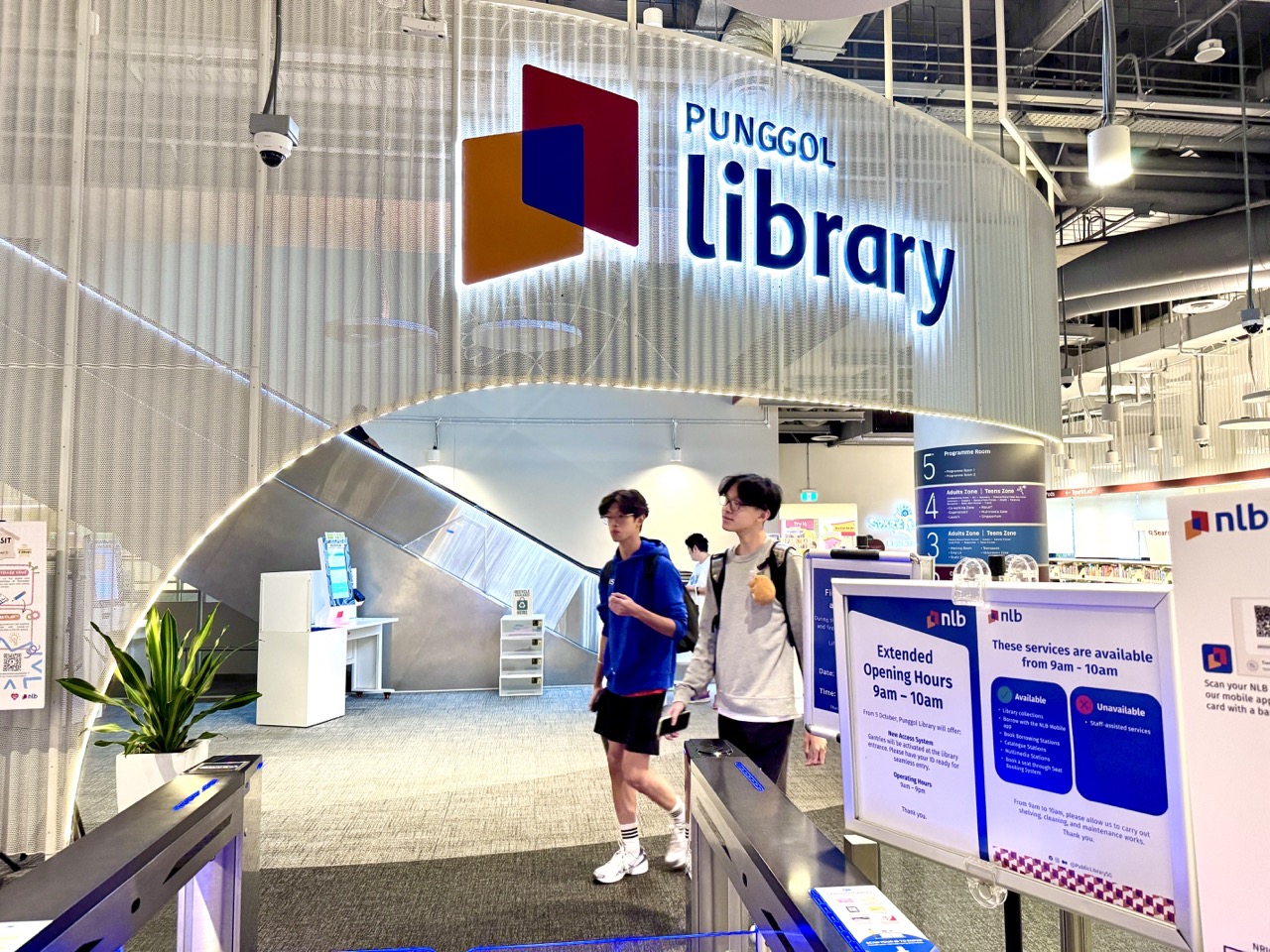
The right choice for a book-loving twelve-year-old is not necessarily the school with the lowest historical PSLE cut-off or the most literary-sounding slogan. A good environment should help the child read widely, analyse evidence, explain ideas and develop friendships while continuing to learn Mathematics, Science and Mother Tongue. Punggol families also have Punggol Regional Library at One Punggol, 1 Punggol Drive, with dedicated spaces for young readers, as an accessible complement to school life—not a substitute for good classroom teaching. This guide explains how to evaluate school reading culture honestly, distinguishes compulsory English learning from a later examinable Literature subject, compares the four schools’ historical 2026-entry PG1/PG2/PG3 cut-offs, and provides a six-school planning method for 2027 Secondary 1 entry before the 30 November 2026, 4.30pm deadline.
Quick parent summary
• Ask what your child likes to read and why: fiction, biographies, poetry, graphic novels, Science or history are different interests.
• Confirm the child’s official PSLE Score, English AL and relevant PG1/PG2/PG3 entry options before ranking schools.
• Compare actual English and Humanities teaching, library access, reading activities, writing feedback and school culture.
• A school library is not necessarily a guarantee of a particular book club or an examinable Literature subject in upper secondary.
• SEAB lists G3 Literature in English K331 under SEC, but not every school necessarily offers every subject or combination.
• Punggol Regional Library at One Punggol provides an additional public reading resource, regardless of which eligible secondary school the child attends.
• Use the correct historical school COP, select six genuinely suitable preferences and submit the S1 form on time.
What being a bookworm tells parents—and what it does not
A child who voluntarily reads has a valuable habit, but book interests vary widely. One pupil may devour fantasy stories yet find formal English composition difficult. Another may enjoy thick science books but have little interest in fictional characters. A third may love manga or graphic novels and become increasingly curious about visual storytelling. Reading interest is a starting point for education, not a ready-made subject combination or future career.
Ask the child what they finished reading recently and which part stayed in their mind. Did they remember a character, a surprising fact, an argument, a mystery or a new word? When a pupil can talk about something they genuinely found interesting, parents learn what kind of school activity may motivate them. Avoid using the conversation to test the child on every page or demand a book report after every recreational read.
An enthusiastic reader can still need support in other areas. English reading confidence does not automatically produce strong Mathematics problem-solving, Science data interpretation or oral presentation. Nor does a less impressive PSLE English AL mean the child should abandon a love of books. Good schools recognise individual strengths and areas for development.
The five questions behind a meaningful reading-culture comparison
| What to compare | Useful school question | What not to assume |
|---|---|---|
| Everyday English teaching | How do teachers teach close reading, writing and evidence-based answers? | A large library alone proves strong English teaching |
| Reading for pleasure | How do students discover books beyond examination texts? | Every child is required to read the same fashionable novel |
| Library access and reading spaces | When can pupils borrow books or use the library within school rules? | Every campus has identical opening hours, seating and stock |
| Student voice | Can pupils recommend books, discuss ideas or write creatively? | A single annual reading event guarantees a rich culture |
| Upper-secondary subject options | Is Literature in English or a relevant Humanities combination offered at the pupil’s eligible level? | Every school offers every SEC Literature syllabus |
| Wellbeing and commute | Does the child have time to read for pleasure after travel, CCA and homework? | The most distant selective school automatically nurtures curiosity best |
Parents should look for details that can be observed or confirmed. Does a school show students how to find a suitable book? Can a pupil ask for reading recommendations? Is the school library genuinely accessible within the pupil’s daily timetable? How do teachers help a student discuss an unfamiliar text respectfully and support arguments with evidence?
Do not manufacture a numerical library ranking without reliable comparable data. An institution can have an impressive physical collection while the child does little independent reading. Another may have a smaller space but teachers who recommend diverse books and make discussion a regular classroom practice. The parent’s goal is to understand the educational environment rather than admire a photograph of shelves.
English Language is not the same thing as Literature in English
Every pupil’s secondary education includes English Language at an appropriate level, with reading, writing, listening and speaking expectations under the curriculum. A child interested in fiction, poems and plays may later consider Literature in English as a formal subject if offered and eligible. The 2027 G3 SEC school-candidate syllabus index lists English Language K300 and separately Literature in English K331, as well as Humanities combinations that include Literature.
The existence of a national examination syllabus does not mean every Punggol secondary school offers it at every level or will offer the same subject combinations to the cohort choosing upper-secondary subjects later. Ask what the school currently offers and how pupils make their subject choices at the relevant stage. A pupil who enters Secondary 1 in 2027 may not make a final upper-secondary Literature decision until later.
A reader who loves non-fiction may prefer History, Geography or Science subjects rather than formal Literature, and that is entirely reasonable. Literature involves careful interpretation of texts, their language, meanings and evidence. Enjoying novels at home can support that learning, but it is not an obligation to choose the subject.
Why a school with a STEM ALP can still be good for a reader
Punggol parents may worry that a school known for technology or engineering does not value language. That does not logically follow. Technical projects require students to read instructions, research evidence, document tests and explain their decisions. A pupil who enjoys Science non-fiction might appreciate a school where these skills connect to real systems.
Likewise, a school with an enterprise or sustainability ALP can involve storytelling, persuasive writing and public communication. A literary interest and an applied learning programme can complement one another. The useful question is what the ordinary English and Humanities lessons look like, not whether the school’s ALP title includes the word ‘literature’.
A family should also ask whether the child has opportunities to try CCAs outside reading. A bookworm may enjoy drama, debate-like activities, art, photography, service or a sport. Secondary school is a place to explore more than one identity, not to spend all free time alone with books.
What to investigate at the four Punggol secondary schools
Edgefield Secondary: writing, presentation and enterprise
Edgefield Secondary at 36 Punggol Field, Singapore 828814 highlights the Growing the Edgefield Mindset programme, which develops initiative and authentic problem-solving. A pupil who loves stories or persuasive writing may find opportunities to practise explaining ideas through projects. Parents should ask the school about regular English reading, writing feedback and any literary or communication CCAs actually available.
The programme’s enterprise theme is not proof that the school automatically provides a specialist creative writing course. The family should seek specific examples of reading, discussion and student participation and verify the current 2027 school arrangements.
Greendale Secondary: words, theatre and design thinking
Greendale Secondary at 51 Edgedale Plains, Singapore 828866 has a Design, Technology and Engineering ALP and performing arts programmes that include Theatricks!, the school’s theatre group. A pupil who loves dramatic stories may enjoy exploring theatre-making, though CCA allocation is separate from school entry and must be confirmed.
A non-fiction reader might be drawn to the school’s design projects and outdoor experiences. Ask how pupils write about design decisions and research evidence, and whether the ordinary English curriculum gives the learner meaningful stretch. Do not assume a theatre CCA guarantees a formal G3 Literature subject.
Punggol Secondary: environmental writing and community inquiry
Punggol Secondary at 51 Edgefield Plains, Singapore 828870 focuses on environmental learning and community leadership. A pupil who reads books about animals, climate and Singapore’s neighbourhoods may find practical links to Science, Geography and community issues. The family can ask how pupils use texts, evaluate claims and communicate research findings.
A child who reads mainly novels may still enjoy the ordinary school community and other CCAs. Ask about the actual school library and English teaching rather than assuming that environmental education replaces language development. A previous admissions cut-off is not a measure of the school’s reading culture.
Yusof Ishak Secondary: stories alongside STEM and leadership
Yusof Ishak Secondary at 8 Sumang Walk, Singapore 828676 offers smart-city STEM and student-leadership activities. Its English Drama CCA may interest pupils who enjoy performing stories, while its STEM experiences can appeal to readers of technical non-fiction.
The child should not be promised a Drama CCA place or a particular Literature subject simply because the school publishes those interests. Ask how ordinary English lessons and reading opportunities work, which activities are selective and what the daily commute would mean for reading time.
Historical Punggol school cut-offs are not a reading quality rating
The following figures are previous last-admitted scores from Secondary 1 entry in 2026, following the 2025 PSLE. They are retrospective school posting outcomes, not predetermined 2027 entry thresholds or measures of English teaching quality. A lower numerical PSLE Score represents stronger aggregate performance.
| Punggol school | Past PG3 COP | Past PG2 COP | Past PG1 COP |
|---|---|---|---|
| Edgefield Secondary | 14 | 23 | 27 |
| Greendale Secondary | 16 | 23 | 27 |
| Punggol Secondary | 19 | 24 | 27 |
| Yusof Ishak Secondary | 15 | 22 | 27 |
A book-loving pupil with PG3 Score 17 might prefer Greendale’s drama or Edgefield’s communication projects. However, their previous PG3 endpoints were 16 and 14, both numerically more competitive than 17. Punggol Secondary’s previous PG3 endpoint was 19, less stringent, while Yusof Ishak’s was 15. These facts inform the school list but do not dictate what the child must prefer.
At PG2 Score 24, Punggol Secondary had a previous PG2 endpoint of 24, a historical boundary match rather than a guaranteed place. The other local PG2 endpoints were 23, 23 and 22, more competitive in that completed intake. At Score 25, a pupil may have a PG1/PG2 option, and the historical Punggol ranges differ greatly between the groups.
A child’s reading hobby does not change formal Posting Group eligibility. When the local four schools offer too few historically less stringent choices for a child’s score, expand the research to eligible schools in Sengkang, Hougang and other manageable areas. A family should not treat a school with a more competitive old COP as necessarily better for reading.
Punggol Regional Library: a resource beyond any one school
Punggol Regional Library is at One Punggol, 1 Punggol Drive, Singapore 828629, with access near Punggol MRT and Sam Kee LRT. The public library includes collections and spaces aimed at families and teenagers, and NLB describes it as an inclusive library. The family can continue using it regardless of whether the child is posted to a Punggol, Sengkang or other secondary school.
The library’s Teenspace is a useful starting point for a Secondary 1 pupil who wants to choose books for enjoyment. A child can browse fiction and non-fiction, borrow through the applicable NLB system or investigate books in another format. The official branch details, programmes and current opening arrangements should be checked before travelling, particularly on public holidays.
The public library is an addition to school learning, not a reason to ignore school culture. The pupil still needs teacher feedback, suitable language-level lessons, friendships and a sustainable route. But a regular library habit can remain stable even if the child finds their new school busy or has a changing CCA schedule.
A low-pressure reading plan for the transition
Week 1: find one book the child chooses voluntarily
Let the pupil browse different genres and select something genuinely appealing, whether that is a novel, graphic work, non-fiction title or a shorter book. Avoid making the choice a status test. A child who reads at an appropriate level with interest may learn more than one forced to struggle through a prestige title they dislike.
Week 2: ask questions that invite interpretation
Ask what surprised the child and what evidence led them to a conclusion about a character or fact. Encourage the child to explain their view and listen to a reasonable alternative. This develops analysis without turning every conversation into a marked comprehension test.
Week 3: connect reading to another subject
A child reading about science might examine a claim and distinguish data from opinion. A history reader might compare two accounts of the same event. A fiction reader could describe how an author builds tension. These connections help pupils see why English comprehension is useful across secondary subjects.
Week 4: communicate something small
Invite the pupil to recommend a book in a short paragraph, voice note or family conversation, explaining what it is about and why someone else might enjoy it. For pupils with a strong reading habit but limited writing confidence, this can provide manageable practice. Do not require a lengthy essay every time a book is opened.
A school visit questionnaire for book-loving families
- What reading experiences and texts are part of regular Secondary 1 English lessons?
- Does the school have a process for recommending age-appropriate books to pupils with different interests or reading strengths?
- When can Secondary 1 pupils use the library, and what are the actual borrowing arrangements?
- Are there opportunities for book discussions, student writing, performance or media projects?
- What feedback do English teachers give on an analytical paragraph, narrative or oral explanation?
- Does the school offer Literature in English or related Humanities subjects at any upper-secondary levels, and what are the actual selection rules?
- How are pupils who read well but struggle with Mathematics or another subject supported?
- How does the school help students who are quieter or enjoy solitary interests make friends?
- Which school-wide ALP, CCA or service opportunities might broaden the pupil’s interests?
- Does the actual school-day and late CCA commute leave enough time for rest and reading for pleasure?
A school may not have every answer about a future 2029 subject-choice year. A truthful description of current subjects and the relevant selection process is better than a promise that the child will automatically get Pure Literature or a particular CCA. Parents can use their notes to make a real comparison without inventing class sizes or library statistics.
Three examples of different readers and school fit
The fiction reader who also enjoys theatre
This pupil may enjoy English Drama at Yusof Ishak or theatre-related activity at Greendale, if available and allocated. They may also enjoy regular English lessons at either of the other local schools. Parents should ask whether the child wants to perform, discuss stories or simply read quietly and whether they can still participate happily if a particular club is unavailable.
The non-fiction reader who loves scientific discoveries
This pupil might find Greendale’s engineering ALP, Yusof Ishak’s smart-city STEM or Punggol Secondary’s environment focus interesting. Reading science non-fiction can motivate investigation, but pupils need to learn how to verify evidence and explain results. The school choice should include Mathematics and Science teaching as well as the reading habit.
The history reader who enjoys community stories
A student fascinated by Singapore history, people and how communities change may value Humanities instruction and service learning. Edgefield’s enterprise, Punggol Secondary’s community leadership and other schools’ projects may offer ways to apply reading and research. Ask about actual History, Geography and Literature options rather than assuming one ALP is the whole curriculum.
The six-choice worksheet for a reader
| Decision factor | Evidence to record |
|---|---|
| Official eligibility | Actual PSLE Score and selected Posting Group |
| Reading experience | What the child genuinely likes to read and discuss |
| English support | Teaching feedback, language-level fit and writing opportunities |
| Literature or Humanities future | Current school subject offering and later selection process |
| Library and interests | Real access, CCA activities and other broad learning experiences |
| Historical school range | Correct previous COP for PG1, PG2 or PG3 |
| Travel and wellbeing | Safe daily journey, after-CCA routine and time for rest |
| Child’s genuine preference | Would the pupil want this school without a particular CCA or club? |
MOE recommends two or three school choices with previous cut-offs less stringent than the child’s total where suitable. For PG3 Score 16, a historic PG3 COP of 19 is numerically less stringent and a previous 14 is more competitive. The old numbers are references, not guaranteed admission probabilities. Rank the six schools in the family’s real order of preference, with the child’s voice central.
Under ordinary S1 posting, academic merit comes first. In relevant same-score competition, citizenship, school-choice order and computerised balloting are used. A Punggol address does not grant automatic ordinary priority at a chosen Punggol school. An interest in reading is an educational strength, but it does not create an exception to the formal school-entry rules.
The official result-day and Secondary 1 choice dates
| Milestone | Date and time |
|---|---|
| 2026 PSLE results released | Tuesday, 24 November at 11.00am |
| S1 Portal opens | 24 November at 11.30am |
| Six-school choices close | Monday, 30 November at 4.30pm |
| Posting result | Tentatively Friday, 18 December; final confirmation to follow |
The timeline comes from SEAB’s 17 November 2026 announcement. One parent with valid Singpass can normally submit through the MOE S1 Portal, and those needing help should contact the primary school before closing time. Accepted DSA-Sec candidates must follow their actual placement commitments.
Frequently asked questions
Which Punggol secondary school has the best library?
There is no verified, comparable public ranking that establishes one local school’s library as universally best. Ask about actual access, borrowing, reading guidance, English teaching and what the child enjoys.
Does a bookworm have to take Literature in English?
No. A reading hobby may support many subjects and interests. Literature is a separate examinable subject where offered and eligible, not a requirement for someone who enjoys fiction.
Will every secondary school offer G3 Literature?
No such guarantee follows from SEAB publishing the national syllabus. Schools decide actual subject offerings and combinations within the national framework. Check the current school and the eventual upper-secondary selection rules.
Can a school with a STEM ALP nurture a reading child?
Yes. Technology, Science and engineering need comprehension and communication too. The best fit depends on actual English teaching, programmes, the child’s other interests and the journey.
Does my child need extra English tuition because they read slowly?
Not automatically. Reading speed, comprehension, fluency and confidence are different matters. Ask the teacher about the actual barrier and appropriate support before adding lessons.
Can Punggol Regional Library help if the child is posted outside Punggol?
Yes. It remains a public library resource independent of which secondary school the child attends. Check NLB’s actual branch hours and book services when planning a visit.
Verified sources and related eduKate reading
- SEAB: G3 Literature in English K331 and English Language K300 SEC syllabuses
- MOE: Full SBB, Posting Groups and individual subject-level learning
- MOE SchoolFinder: verified school programmes and historic score ranges
- SEAB: 2026 results and six-school application dates
- People’s Association: One Punggol location and access
- eduKate Punggol: Punggol Regional Library and teen reading spaces
- eduKate Punggol: choosing a first book at the library’s Teenspace
- eduKate Punggol: English and Humanities strengths with Mathematics support
- eduKate Punggol: matching genuine CCA interests to school fit
- eduKateSG: immutable Secondary 1 learning and first-principles teaching reference
Final parent move: Preserve your child’s love of books while selecting a school that also develops mathematical thinking, scientific curiosity, relationships and wellbeing. Judge reading culture through genuine teaching, library access and student opportunities—not an old cut-off or a library photograph. Use the correct admission route, compare six actual preferences and keep reading for pleasure alive after school begins.


