
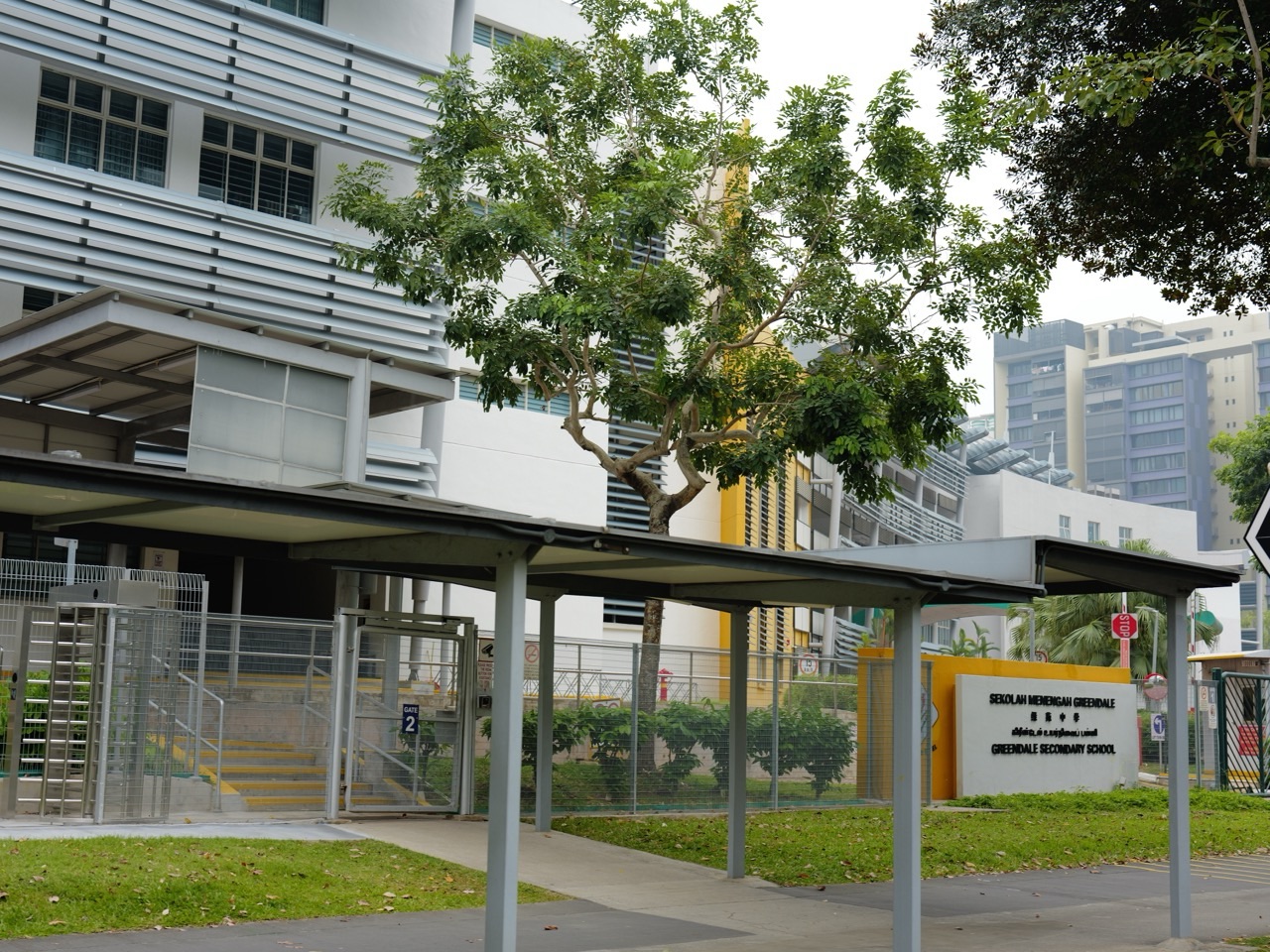
If your child wants to join robotics, football, band, dance, uniformed groups or a STEM club after PSLE, compare actual Co-Curricular Activities (CCAs) and how students are allocated before deciding on a secondary school. Punggol has four mainstream schools to investigate—Edgefield Secondary, Greendale Secondary, Punggol Secondary and Yusof Ishak Secondary—and each offers a different collection of school-wide programmes, CCAs and student experiences. The 2026 PSLE results will be released on 24 November 2026 at 11.00am; the parent’s job is to match the child’s official Posting Group eligibility with a realistic school, then assess whether the CCA and school culture fit the child.
A school that advertises a popular sport or robotics team does not automatically guarantee every incoming Secondary 1 student a place in that CCA. Selection, trials, vacancies, training schedules and sometimes specific DSA arrangements matter. This guide shows Punggol parents how to examine club and sport options honestly, compare school-wide Applied Learning Programmes (ALPs) with CCAs, evaluate travel after training, read historical cut-offs in the right Posting Group, and place six schools in genuine preference order for the 2027 Secondary 1 intake.
Quick parent summary
• Ask your child to name the activity they genuinely want to pursue and why.
• A school-wide ALP or LLP is not the same as an allocated CCA place.
• Check official school CCA lists and each school’s new Secondary 1 allocation rules, which may change year to year.
• Compare PSLE Score and Posting Group before adding a school to the six-choice form.
• Visit or review the school’s open-house resources and ask about trials, costs, timetable and attendance expectations.
• Test the journey home after a late CCA day from your actual Punggol block.
• Keep two or three suitable school choices with historically less stringent cut-offs where possible.
Start with the child, not the trophy cabinet
Parents may be impressed by competition medals, national performance photographs and a strong school reputation. A twelve-year-old may be interested in something quite different: making friends through choir, solving robotics puzzles, joining a team without previous elite experience, or trying a uniformed group for the first time. Both concerns can be valid, but a sustainable CCA begins with motivation and manageable training expectations.
Ask the child to explain what they enjoy: the activity itself, the friends who take part, the coach, an opportunity to compete or simply the possibility of trying something new. If a pupil says ‘I want football because my friend is joining’, explore what happens if the friend enters a different school or does not get a team place. If a pupil loves music but has never learned an instrument, ask whether the school introduces beginners to its musical ensembles.
A meaningful school choice includes the ordinary classrooms as well. A child attends English, Mathematics, Science, Mother Tongue and other subjects repeatedly across the week. The strongest CCA attraction should not hide a school environment or daily journey that is difficult for the child to sustain. A programme that sounds wonderful at an open house should be checked against the actual class experience and support available in Secondary 1.
ALP, LLP, DSA and CCA: four terms parents must not mix up
| Term | What it means | What to check |
|---|---|---|
| ALP — Applied Learning Programme | A distinctive school-based learning approach, often integrated with curricular experiences | Does every Secondary 1 pupil take part, and which activities require selection? |
| LLP — Learning for Life Programme | A school’s character and values development programme | What does it look like in the ordinary timetable? |
| CCA — Co-Curricular Activity | An ongoing sport, club, performing-arts or uniformed-group commitment | What are trial dates, ranked choices, selection and vacancies? |
| DSA-Sec | A separate admission pathway for specified talents, applied before the ordinary PSLE posting process | Has the child actually secured a confirmed DSA place? |
A programme name such as ‘Design, Technology and Engineering’ does not necessarily mean the child has been allocated to a robotics CCA. Likewise, a school that has a Taekwondo-based learning-for-life programme does not guarantee that a specific pupil will join Taekwondo as their CCA. Ask staff to identify the school-wide experience and the elective, selected or trial-based experience separately. Parents should also avoid relying on a past DSA talent list as if it were the ordinary CCA intake process.
Secondary-school CCA participation is part of the wider education experience. Involvement can develop commitment, leadership, relationships and interests over time. For families comparing multiple activities, the most useful questions are about whether the child can participate regularly, whether travel and family commitments allow it, and how the school supports a newcomer at a beginner level.
Punggol’s four schools: what parents can investigate
Edgefield Secondary: entrepreneurship, innovation, arts and sports
Edgefield Secondary School is at 36 Punggol Field, Singapore 828814. Its G.E.M. applied-learning programme encourages students to develop entrepreneurial habits, collaborate and solve real problems. The school describes a Taekwondo-based character-development strand. Its official CCA area includes categories for clubs, performing arts, uniformed groups and sports; the school’s published CCA material has included opportunities such as Entrepreneur Club, art and robotics activities, choir, concert band and several sports.
A child interested in starting a small venture or developing a social-business idea might ask how G.E.M. projects differ from Entrepreneur Club sessions. A pupil who enjoys Taekwondo should ask whether this is experienced during the school-wide learning-for-life programme, offered as a CCA, or both under the latest Secondary 1 arrangements. A parent who likes Edgefield’s location should also inspect the journey after late sports practice rather than relying on the school’s address alone.
The most reliable starting points are the school’s ALP page and its CCA directory. Confirm that the desired CCA is being offered for the child’s cohort, as website archives can include older schedules.
Greendale Secondary: design, engineering, outdoor adventure and performing arts
Greendale Secondary School is at 51 Edgedale Plains, Singapore 828866. Its design, technology and engineering ALP includes coding, problem-solving, prototyping and hands-on projects. Greendale also highlights outdoor adventure education as its learning-for-life programme. Its 2026 Secondary 1 CCA registration information listed various sports, uniformed groups, arts and clubs, including Robotics, Outdoor Adventure Club, Broadcasting Club and other activities.
A child who loves building a programmable robot should distinguish two possibilities: participating in the school-wide STEM ALP and earning a place in Robotics CCA. The school’s DSA design/technology/engineering page describes a specific DSA-related allocation arrangement; that should not be applied casually to ordinary incoming Secondary 1 pupils. For families drawn to outdoor adventure, ask which activities are part of general character education, which are offered as a CCA, and how the school manages safety and training.
Greendale’s official ALP page explains school-wide work in design, coding and building. Its Greendale Xperience hub lists programmes and student development. An older CCA registration page is useful as evidence that ranked preferences and allocations matter, but its 2026 dates should not be treated as 2027 deadlines.
Punggol Secondary: sustainability, leadership, sports and performing arts
Punggol Secondary School is at 51 Edgefield Plains, Singapore 828870. Its official site describes a distinctive applied-learning direction in environmental sustainability and a learning-for-life emphasis on community and youth leadership. It also maintains school CCA resources and 2026 Secondary 1 CCA allocation material. A child interested in environmental science should explore both the sustainability programme and the actual CCA or service opportunities offered to new students.
For a family comparing a school sport with music, the school’s current list of activities is more useful than a single photograph of a concert or team. Ask whether auditions or trials take place, whether beginners can join, what the commitment looks like and how a child’s choices are matched to capacity. The school’s Secondary 1 matters hub includes registration and CCA information. It is a better place to look for the actual cohort’s procedures than a generic social-media claim.
Yusof Ishak Secondary: STEM Club, arts, uniformed groups and sport
Yusof Ishak Secondary School is at 8 Sumang Walk, Singapore 828676. Its S4TEM@YI applied learning concerns science, technology and sustainable smart-city life. The school’s official CCA page lists categories spanning uniformed groups, visual and performing arts, sport and clubs. Examples published by the school include STEM Club, robotics-related learning, choir, Chinese orchestra, drama, Wushu and other activities. The exact 2027 arrangements and allocation rules should be confirmed closer to entry.
The Yusof Ishak STEM Club page describes areas including biodiversity, urban farming, drone programming and engineering. A pupil curious about aeronautics should ask what ordinary CCA participation involves, how beginners are introduced and whether any workshops require selection. Families near Sumang or Punggol West may also find the school journey simpler than for pupils living farther east, but this must be checked from the actual home block.
A practical school comparison by the child’s interest
| Child’s current interest | School questions to investigate | Avoid assuming |
|---|---|---|
| Coding and robotics | Greendale ALP; Edgefield and Greendale robotics-related activities; Yusof Ishak STEM and relevant clubs | A robotics demonstration guarantees a Robotics CCA place |
| Enterprise and making projects | Edgefield G.E.M. ALP and Entrepreneur Club | Every child runs a business or joins a selected entrepreneurship club |
| Environmental science and service | Punggol Secondary sustainability programmes; Greendale hydroponics; Yusof Ishak urban farming | All sustainability learning is a separate CCA |
| Music, drama, dance or art | Each school’s current performing-arts offerings, auditions and experience requirements | An arts CCA can accept unlimited beginners |
| Sports and outdoor challenges | School sports rosters, Greendale outdoor learning, Edgefield sport-based character activities | The advertised sports or LLP automatically become the child’s assigned CCA |
| Uniformed groups and leadership | Published group options, meeting days, commitment and student support | The CCA the child names first will necessarily be allocated |
The table is a research plan, not a ranking or promise of CCA allocation. A school might have excellent options in an area that its ALP title does not mention. Another may provide very strong teaching in a club that is less visible online. Use current school communication, not popularity, as your final source.
You still need to pass the correct PSLE school-choice test
The ordinary S1 process starts with the child’s overall PSLE Score, Posting Group eligibility and the school’s group-specific history. For the completed 2026 S1 intake based on the 2025 PSLE, the Punggol schools had the following historical last-posted figures. They are not the final cut-offs for entry in 2027.
| School | Past PG3 COP | Past PG2 COP | Past PG1 COP |
|---|---|---|---|
| Edgefield Secondary | 14 | 23 | 27 |
| Greendale Secondary | 16 | 23 | 27 |
| Punggol Secondary | 19 | 24 | 27 |
| Yusof Ishak Secondary | 15 | 22 | 27 |
If a child scores 15 and is eligible for PG3, their historic comparison differs sharply from a pupil scoring 22 who may choose PG2 or PG3, or a pupil scoring 25 who may choose PG1 or PG2. The child cannot use one school’s PG1 cut-off against their PG3 score. The selected Posting Group must be considered consistently across the school options in the ordinary form.
A pupil with score 18, for example, might love a club at Edgefield but must recognise its historical PG3 endpoint of 14. Punggol Secondary’s old PG3 endpoint of 19 gives a different historical comparison. The pupil’s interest is still meaningful, but the parent should research other reachable schools and build a six-choice list with two or three less stringent prior cut-offs where appropriate. Neither a famous team nor an old COP makes entry certain.
Where families live in Sumang, Northshore, Oasis or Edgedale, the actual route to Sengkang or Hougang schools may be easier or harder depending on LRT direction and transfers. Parents are allowed to consider schools outside Punggol, provided the child meets the relevant route and school conditions. Use MOE SchoolFinder for each school’s current offering, not assumptions based on distance.
The five questions to ask a CCA teacher
- Is this activity offered to all applicants, or is there a trial, audition, selection or capacity limit for incoming Secondary 1 students?
- How does the school assign CCAs? How many choices must a pupil rank, and what happens when a first preference has no place?
- What is a typical weekly practice schedule, and when do children usually finish on ordinary training and competition days?
- What equipment, uniforms, fees, transport arrangements and family commitments might arise? Which costs can be assisted?
- Can the child still make friends, cope with schoolwork and obtain support if early training or academic expectations become overwhelming?
Ask about changes too. An activity listed on a page created several years ago may have different teachers, schedules or recruitment numbers in 2027. The school can explain how parents will receive updated CCA registration instructions once posting and reporting are complete. Treat old training times as examples, never as a fixed timetable for the new cohort.
How a CCA affects a Punggol family’s weekday
The trip after a normal school day is not the trip after a three-hour training session. A student carrying sports equipment or a musical instrument may find public transport more tiring. During rainy weather, a short outdoor walk can become difficult. Children travelling between Punggol’s LRT stations and the North East Line may need to understand platform directions, station exits, safe crossings and fallback routes.
Measure the actual door-to-gate and school-gate-to-door journeys. A school near Punggol Field may be easy for one family, while Yusof Ishak on Sumang Walk may be substantially more convenient for another. Do not claim that either is always the fastest. Try travelling from the home block during a weekday reporting period and again after the typical late training time. Ask the child to describe the journey independently.
A child who can arrive rested, join school activities and still have time to eat, wash up, study and sleep may benefit more from a sustainable CCA than from an impressive activity at a school that requires an exhausting commute. This is not an instruction to choose the nearest school at all costs. It is a reminder that the child, not a brochure, lives through the timetable.
If the child is already very talented: don’t confuse DSA with S1 posting
Direct School Admission to Secondary Schools (DSA-Sec) is a separate admissions process for certain demonstrated talents. A child who already has a confirmed DSA place should follow the official conditions rather than assume an ordinary S1 selection must still be completed in the same way. The fact that a school has a DSA programme in a sport or technology field does not mean an ordinary PSLE applicant automatically joins its corresponding CCA.
Families who did not secure a DSA place can still select schools through the ordinary Secondary 1 posting exercise if eligible, and explore the receiving school’s CCA process after posting. Avoid telling a disappointed pupil that missing DSA means their interests are no longer welcome in secondary school. Talent and enthusiasm can develop through ordinary CCA participation and later opportunities.
A six-school preference method for the CCA-motivated child
First choose or confirm the applicable Posting Group and remove schools that do not offer the appropriate route or conditions. Second shortlist schools with a real activity or programme that the child likes. Third compare the environment, school support and commute. Finally rank six schools in genuine order of preference and include a mix of historical selectivity, with at least two or three schools whose prior cut-offs were less stringent than the child’s score where suitable options exist.
The ordinary S1 allocation is based on academic merit; when applicants have the same score and compete for a final seat, citizenship, school-choice order and computerised balloting are used as applicable tie-breakers. A parent should not rank a less-preferred school first solely because it seems ‘safer’. A first-choice label does not overcome a stronger PSLE Score.
- Confirm the correct group and school eligibility.
- Write one sentence explaining why the child would like each shortlisted school, not merely its CCA name.
- Ask whether the desired CCA requires a selection or has limited places.
- Check the everyday timetable and late training journey.
- Compare the school’s academic and pastoral support, including how new pupils settle in.
- Use historical cut-offs as a planning signal, not an admission guarantee.
- Rank the six schools honestly and recheck school codes before submission.
- Save the S1 Portal confirmation.
2026 results and 2027 intake: deadlines parents should know
| Event | Announced timing |
|---|---|
| 2026 PSLE results | 24 November 2026, Tuesday, 11.00am |
| S1 Portal opens | 24 November, 11.30am |
| S1 school-choice submissions close | 30 November, Monday, 4.30pm |
| Posting results | Tentatively 18 December 2026, subject to final confirmation |
The timetable is confirmed by the SEAB 17 November 2026 release. The ordinary online choice form is accessed via MOE S1 Posting with a parent’s valid Singpass. Only one parent needs to submit. Contact the primary school before the closing date if assistance is required; do not hold back the submission while hoping for a future CCA promise.
Frequently asked parent questions
If my child chooses a school because it offers robotics, will they get into Robotics Club?
Not necessarily. Club recruitment may involve ranked preferences, a selection exercise or limited places. Ask the school for the actual 2027 Secondary 1 CCA allocation process and what happens if the child does not obtain the first choice.
Is an ALP automatically the same as a CCA?
No. Applied Learning Programmes and CCAs serve different purposes and may have different participation arrangements. A school-wide STEM experience does not automatically allocate the pupil to a specialist club.
What if the child is passionate about an activity that the nearest school does not offer?
Research other schools where the child is eligible and can travel sustainably. Also check whether the school offers related activities or an approved strategic partnership CCA arrangement. Do not assume an external programme is available to every student without school guidance.
Will a strong CCA performance overcome a weaker PSLE Score in ordinary posting?
Do not assume it will. DSA-Sec is a separate pathway with its own requirements. Under ordinary S1 posting, the overall PSLE Score, applicable school route and tie-breakers govern the allocation.
Should we choose a school with the most CCAs?
No single number answers this. A school may have many CCAs but limited places in the one your child wants, or a smaller selection with excellent beginner support and a sustainable schedule. Ask practical questions about participation.
Official school resources and eduKate parent reading
- SEAB: 2026 PSLE results and S1 Posting announcement
- MOE SchoolFinder: current school subjects, programmes and historical score ranges
- Edgefield: school CCA information
- Greendale: ALP, LLP, student development and DSA information
- Punggol Secondary: Secondary 1 and CCA allocation resources
- Yusof Ishak: official CCA categories and activities
- eduKate Punggol: complete local school and score starting guide
Parent conclusion: CCA matters because the student may spend years learning, practising and forming friendships there. It should inform school preference, but it should not replace the correct PSLE eligibility comparison, academic fit or sustainable travel. Ask about the actual activity and allocation, keep a balanced six-school list, and choose a setting where the child can enjoy both schoolwork and life beyond the classroom.


