
If your Punggol child is strong in English, reading, writing, History or Geography but struggles with Mathematics, look for a secondary school that will develop both areas—not a school that lets the child ignore Mathematics. After the 2026 PSLE results are released on 24 November at 11.00am, read the four individual subject Achievement Levels as well as the total and personalised Posting Group. The four mainstream secondary schools physically in Punggol are Edgefield Secondary, Greendale Secondary, Punggol Secondary and Yusof Ishak Secondary. They offer different applied-learning and co-curricular experiences, but no reliable information establishes one as universally the best English or Humanities school for every pupil.
The practical question is whether your child can study English at an appropriate level, enjoy source-based reasoning, literature, debate or communication, and receive clear help for the specific Mathematics concepts they find difficult. Under Full Subject-Based Banding, some pupils are eligible to take individual subjects at different G1, G2 or G3 levels; the actual offer depends on their subject grades, the school and current criteria. This guide shows examples for PSLE Scores 21, 22 and 25, compares Punggol’s completed 2026-entry historical cut-offs, gives parents questions about English and Humanities subjects, and provides a balanced six-school decision plan for 2027.
Quick parent summary
• Read individual English, Mathematics, Science and Mother Tongue ALs rather than choosing a school from the total alone.
• Do not assume a school with an entrepreneurship or STEM ALP lacks English and Humanities teaching.
• Check which English, Literature, Geography, History and Humanities subjects the particular school offers at lower and upper secondary, by G level.
• A strong language AL may create an opportunity for a more demanding English subject level when eligible, even if another subject requires support.
• Ask how Mathematics misconceptions are identified and taught; ‘weak at Maths’ is too broad to guide support.
• For Scores 21–22 and 25, compare both offered Posting Group routes, using the right historical Punggol school column.
• Choose six genuine schools including two or three with less stringent previous cut-offs where suitable, and submit by 30 November 2026 at 4.30pm.
What does being strong in English and Humanities mean?
A pupil may have good reading comprehension, a wide vocabulary, an interest in novels, a talent for speeches or a curiosity about history and how societies work. Those strengths overlap but are not identical. The child who writes creative stories may enjoy Literature, while the pupil who asks why cities develop in particular ways may enjoy Geography. A student who argues confidently about fairness or current affairs may be drawn to Social Studies and debate.
Parents should ask the child to explain what makes a piece of writing interesting and how they know whether a claim is true. Humanities education develops interpretation of evidence, multiple perspectives and reasoned explanations. English education supports careful reading, clear expression and effective communication. These skills are useful in Science, business, design and technology too. None of them is confined to one presumed future career.
A pupil may also be verbally fluent but struggle to structure an essay, cite evidence or organise paragraphs. Another may write very well but avoid speaking in class. Before choosing a secondary school on the basis of a ‘language talent’, identify what the child already does well and which skill can be developed next.
Why weak Mathematics should not define the whole school decision
The label ‘weak at Mathematics’ can hide different problems. Some pupils make arithmetic mistakes despite understanding the concept. Others struggle with fractions, ratio, negative numbers, algebraic notation, word-problem reading or the pressure of timed tests. An English-strong child may understand a long story yet still misinterpret an instruction about ‘more than’ and ‘less than’ in a quantitative problem.
Choose a school that provides clear explanations and feedback. Ask how teachers identify recurring misconceptions and what extra help is available in the actual lower-secondary programme. A school with a well-known STEM ALP does not automatically mean it teaches Mathematics more effectively for every pupil; likewise a school with strong drama activities does not automatically provide weaker or stronger academic support.
The right support may be a short bridging plan for one unstable concept, careful classroom feedback and appropriate independent practice. More tuition hours do not necessarily fix a misunderstanding. A family should preserve the child’s enjoyment of language and Humanities while developing enough numerical confidence to cope with the secondary curriculum.
First decode the overall PSLE Score
| Example subject ALs: English / Maths / Science / MTL | Total | Ordinary route to investigate |
|---|---|---|
| AL2 / AL7 / AL5 / AL7 | 21 | PG2 or PG3 option band; compare school and subject-level consequences |
| AL3 / AL6 / AL6 / AL7 | 22 | PG2 or PG3 option band; confirm personal option |
| AL4 / AL7 / AL7 / AL7 | 25 | PG1 or PG2 option band; compare both routes |
| AL3 / AL6 / AL5 / AL6 | 20 | Usually PG3; still inspect the Mathematics support need |
These are hypothetical examples, not actual children’s results. Their purpose is to show that English strength and Mathematics difficulty can coexist within a total score that gives a particular Posting Group option. The official S1 documents are decisive, especially for pupils who took Foundation subjects or have special circumstances. A school that is a plausible PG2 choice may have a very different historical PG3 range.
Lower numerical PSLE Scores represent stronger aggregate examination performance. But the total does not determine every starting subject level permanently. Under Full Subject-Based Banding, Posting Groups guide the initial route, while eligible students may learn individual subjects at the relevant G1, G2 or G3 level. The receiving school must confirm the actual offer.
Scenario A: English AL2, Mathematics AL7, overall Score 21
Imagine a child who reads and speaks English confidently but finds fractions and multi-step calculations difficult. With an overall Score 21, the ordinary S1 form may offer PG2 or PG3. It would be unwise to select PG3 solely because English is strong without examining how most subjects would start at the more demanding G3 level and whether the child is ready for that overall pace.
A PG2 route may offer a different initial school and subject comparison, with eligibility to study an individual stronger subject at a more demanding level where the current criteria are met. A family should ask whether the English AL supports a suitable level and what Mathematics pace and help are available. The choice is not a judgement of intelligence; it is a plan for learning.
The historical Punggol PG2 cut-offs were 22–24, whereas PG3 cut-offs were 14–19. That is why a Score 21 family may see more locally relevant historical school options under PG2 than PG3. The family should make two separate provisional lists and select one offered route for the ordinary six-school form.
Scenario B: Overall Score 22 and the pupil loves History
A child who spends free time reading about historical events, comparing sources and asking why people made particular decisions may have a genuine Humanities interest. At a total of 22, PG2 or PG3 may be offered. That interest should prompt questions about the school’s lower-secondary Humanities experience, reading and writing expectations, and later upper-secondary subject combinations.
It would be too early to promise Pure History, Literature or any particular combined Humanities combination four years ahead. Schools differ in which subjects they offer, and pupils later make choices under the relevant academic requirements. Ask for the current list of subject offerings and the school’s process for guiding pupils when they approach upper secondary.
A pupil who is weak in Mathematics still needs support with tables, maps, percentages and data interpretation, which arise in Humanities too. The parent can show how numeracy strengthens the child’s ability to read evidence. A strong language interest should be extended, not used to avoid quantitative reasoning.
Scenario C: Overall Score 25, English relatively stronger than Maths
At Score 25, the child may have a PG1/PG2 option on the personalised S1 form. The completed 2026-entry Punggol schools all had historic PG1 cut-offs of 27, while their PG2 cut-offs were 22–24. A parent cannot use a PG1 figure of 27 to conclude that the same child will comfortably enter the school under PG2.
This family should discuss the starting academic pace and real school options. A child strong in English might be eligible to take that individual subject at a more demanding level under appropriate criteria while beginning other subjects at an achievable pace. The exact combinations must come from the receiving school, not an online prediction.
A local school with an appropriate English challenge and consistent Mathematics support may be a better fit than a distant school chosen solely for an entry label. Another family may prefer a suitable out-of-estate school that supports the child’s subject mix. Both choices require verified eligibility and honest travel planning.
What Humanities subjects should parents ask about?
| Subject or activity | What pupils learn | What the family must verify |
|---|---|---|
| English Language | Reading, writing, speaking, listening and reasoning | Current curriculum support and applicable G level |
| Literature in English | Interpreting texts, language, character and theme | Whether formally offered as an upper-secondary subject at the relevant level |
| Geography | Places, environments, patterns and human–physical relationships | School’s lower-secondary experiences and upper-secondary choices |
| History | Evidence, context, causes, change and contrasting perspectives | Actual available subject combinations and guidance |
| Social Studies / Humanities combinations | Civic, societal and source-based investigation | Relevant future SEC combinations and individual subject eligibility |
| Debate, drama, media or writing CCA | Communication, performance, collaboration and creative expression | Actual club availability, recruitment and participation |
SEAB’s 2027 G3 SEC syllabuses list English Language, Literature, History, Geography and combinations of Social Studies with different Humanities subjects. The corresponding G2 syllabuses also include language and Humanities offerings. A national syllabus listing does not prove that every secondary school offers every subject at every level. The actual school timetable and subject-selection criteria remain essential.
What to investigate at Edgefield Secondary
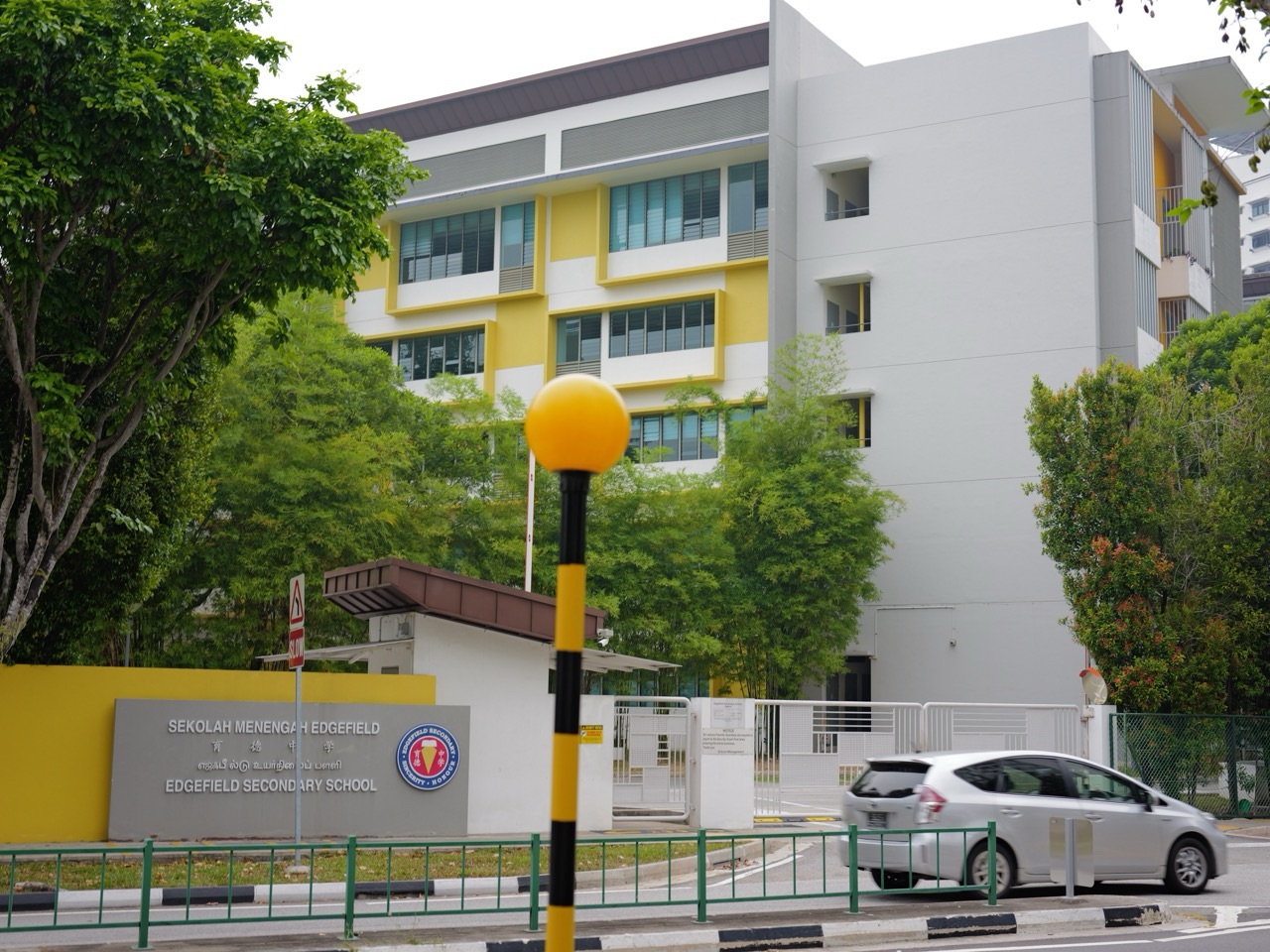
Edgefield Secondary is at 36 Punggol Field, Singapore 828814. Its Growing the Edgefield Mindset programme gives pupils opportunities to develop enterprise, problem-solving and communication. A student who enjoys persuasive writing or presenting ideas may find project-based learning motivating. Ask how teachers build evidence-based explanations, how English feedback is given and what a student can do when they struggle with Mathematics.
The school also has a range of CCAs, including arts and clubs. A pupil may enjoy communication through debate-like discussions, writing, art or enterprise activities without joining one specialist language club. Verify the current 2027 club options, subject combinations and recruitment arrangements rather than assuming a promotional project is guaranteed to every student.
What to investigate at Greendale Secondary
Greendale Secondary is at 51 Edgedale Plains, Singapore 828866. Its technology and engineering ALP may sound unrelated to Humanities, but design thinking also involves understanding people, explaining decisions and evaluating evidence. Its Theatricks! theatre programme and other performing arts activities can interest students who enjoy stories, language and performance.
Ask whether the child can take an appropriate Humanities subject in upper secondary, how students are helped to write clearly and what a new Secondary 1 pupil can actually join. A school with a STEM ALP is not necessarily a poor fit for someone who loves reading. The question is how well its ordinary teaching and school culture suit this particular child.
What to investigate at Punggol Secondary
Punggol Secondary is at 51 Edgefield Plains, Singapore 828870. Its environmental education can provide opportunities to read data, evaluate viewpoints and communicate about local sustainability issues. The school’s published older CCA materials have included English Language Drama and Debating, as well as arts activities; confirm the current offerings for 2027 rather than assuming that a 2025 or 2026 club list is unchanged.
A child interested in Geography may appreciate opportunities to think about the waterway, environment and urban development. Parents should ask how such interests are supported within the actual curriculum and whether corresponding upper-secondary Humanities subjects are offered. The historical cut-off does not tell you how well a particular pupil will learn Geography or Mathematics there.
What to investigate at Yusof Ishak Secondary
Yusof Ishak Secondary is at 8 Sumang Walk, Singapore 828676. Its smart-city STEM ALP can provide opportunities for students to explain real-world issues and justify solutions. Its English Drama CCA offers storytelling, theatre performance and collaborative creativity. These may interest a pupil who enjoys English or wants to practise public speaking.
Ask the school how it supports students with different strengths in English and Mathematics, and what regular writing feedback students receive. A debate or drama activity should complement, rather than replace, core Humanities learning. Families living near Sumang may find travel manageable, while others should test the actual route after a late CCA session.
The four local historical school cut-offs
These figures describe the completed 2026 Secondary 1 intake, following the 2025 PSLE. They are not set-in-advance requirements or guaranteed places for Secondary 1 entry in 2027. Use the selected Posting Group to choose the correct column.
| Punggol school | Historic PG3 COP | Historic PG2 COP | Historic PG1 COP |
|---|---|---|---|
| Edgefield Secondary | 14 | 23 | 27 |
| Greendale Secondary | 16 | 23 | 27 |
| Punggol Secondary | 19 | 24 | 27 |
| Yusof Ishak Secondary | 15 | 22 | 27 |
For PG3 Score 17, the local old PG3 endpoints were 14, 16, 19 and 15, so Punggol Secondary’s 19 was the only numerically less stringent historical endpoint among the four. The child’s language strength cannot turn all four into guaranteed choices. At PG2 Score 24, Punggol Secondary was at the historic PG2 boundary of 24, while other local schools had more competitive earlier PG2 endpoints.
MOE recommends including two or three schools with previous cut-offs less stringent than the child’s score, where suitable. If Punggol alone does not provide a balanced range, research eligible schools in Sengkang, Hougang or elsewhere along a workable travel route. Neither an English talent nor a school’s ALP branding changes the formal school posting rules.
A four-week transition plan that protects both strengths
Week 1: keep reading enjoyable and inspect Mathematics calmly
Allow the child to choose a novel, historical account or other age-appropriate non-fiction reading. Ask one genuine question about what they found surprising, rather than turning every chapter into an examination. For Mathematics, look at a few existing errors and identify whether the main issue is calculation, understanding a concept, reading the problem or presenting workings.
Week 2: practise short evidence-based writing
Invite the pupil to explain a claim in one paragraph: state the idea, give a concrete example and explain how the evidence supports it. This is useful for English and Humanities without requiring a full formal essay daily. In Mathematics, work on one unstable topic such as fractions or ratios using clear examples and short independent retries.
Week 3: connect reading and numerical reasoning
Choose a simple chart from a suitable geography or science context. Ask what it shows, what can be inferred and which claims would be too strong. Then let the pupil calculate a small, appropriate percentage or ratio. This demonstrates that words and numbers work together in evidence-based thinking.
Week 4: prepare a school learning routine
Practise asking a teacher for help, keeping a reading habit, checking a timetable and doing a small amount of independent work. Do not rush through an entire Secondary 1 syllabus before term begins. The aim is to start with confidence, curiosity and the capacity to explain a problem clearly.
Eight school-visit questions for language-and-Humanities families
- Which current English and Humanities subjects are offered at lower secondary, and what combinations are available later?
- How do teachers help pupils learn to use evidence in writing and speaking?
- Does the school offer Literature in English at the specific subject level the pupil may later qualify for?
- What is the process for subject-level decisions under Full SBB, given the pupil’s actual PSLE subject ALs?
- What targeted help is available for a pupil who understands concepts but struggles with Mathematics accuracy or algebra?
- Which debate, theatre, writing, media or service opportunities can an ordinary Secondary 1 student investigate?
- How are CCAs allocated, and what happens if the student’s first club preference is unavailable?
- What is the full route home after a late activity, and can the pupil manage it safely?
A school that answers these questions clearly is more useful than a school’s informal reputation for a single subject. Ask for the 2027 cohort’s current arrangements when available. A programme open to some selected older students is not necessarily a programme that every incoming Secondary 1 pupil can access.
The six-school submission method
- Write down the official PSLE Score and the child’s individual subject strengths, without treating Mathematics difficulty as the entire identity.
- Confirm the actual Posting Group or option bands in the personalised S1 documents.
- Prepare a provisional shortlist that includes schools with appropriate language and Humanities subject options.
- Ask about Mathematics support, school culture and the child’s wellbeing in ordinary lessons.
- Use the same PG1, PG2 or PG3 column for every historical school comparison within the chosen route.
- Include two or three historically less competitive choices where suitable, researching outside Punggol if needed.
- Test weekday morning and late CCA journeys rather than guessing from school names.
- Rank six genuine preferences in order, check school codes and submit through the official portal.
- Keep the confirmation and plan a calm, specific learning transition after actual posting.
In ordinary S1 allocation, academic merit comes first. When otherwise eligible applicants at the same score compete for a final place, citizenship, school-choice order and computerised balloting are the applicable tie-breakers. Living nearby is not ordinary automatic priority. The family should not promise admission simply because a pupil is especially strong in English, nor rank schools entirely by old COP numbers.
The 2026 results and 2027 Secondary 1 calendar
| Event | 2026 timing |
|---|---|
| PSLE results released | Tuesday, 24 November at 11.00am |
| Online S1 Portal opens | Tuesday, 24 November at 11.30am |
| School-choice submission closes | Monday, 30 November at 4.30pm |
| Posting outcome | Tentatively Friday, 18 December; final date to be confirmed |
The timetable is from the SEAB 17 November 2026 release. One parent with valid Singpass can submit through MOE S1 Posting; families who require help should contact the primary school before closing time. An accepted DSA-Sec place or other special route should be handled according to the child’s actual instructions.
Frequently asked parent questions
Does a strong English result mean the child must enter PG3?
No. The overall PSLE Score and personalised S1 options determine the ordinary posting route. Individual English achievement may be relevant to a subject-level opportunity under Full SBB, subject to the current eligibility rules and school arrangements.
Is a STEM-focused school a bad choice for a child who loves History?
Not automatically. The ALP is one part of a wider education. Compare actual Humanities subjects, English teaching, CCAs, teacher support and the child’s interests rather than relying on the programme name alone.
Will every Punggol school offer Pure Literature or History at G3?
Do not assume so. SEAB publishes national SEC syllabuses, but a named school may offer a particular subset of subjects and combinations. Check the school’s current upper-secondary options and selection criteria.
Can a PG2 pupil take English at G3 but Maths at G2?
Different individual subject levels may be possible when the pupil meets the criteria and school arrangements allow. Confirm the actual English grade and available offer rather than promising a combination solely from the total score.
Should we start Mathematics tuition immediately after PSLE?
Not automatically. Identify the specific barrier—fractions, algebra readiness, calculation or reading quantitative questions—and decide whether school support, structured practice or targeted outside instruction is warranted.
What if the child wants to become a lawyer or writer?
Those interests can motivate reading and communication, but Secondary 1 is too early to treat a particular future profession as a guarantee. Strong Mathematics, research, reasoning and personal development remain useful across pathways.
Verified references and related eduKate articles
- SEAB: 2027 G3 SEC English, Literature and Humanities subject syllabuses
- SEAB: 2027 G2 SEC language and Humanities subjects
- MOE: PSLE and Full Subject-Based Banding
- MOE SchoolFinder: school subjects and historical score ranges
- Greendale: theatre and student arts activities
- Yusof Ishak Secondary: English Drama
- eduKate Punggol: PSLE subject grades and posting eligibility explained
- eduKate Punggol: the contrasting Science-strong, Mathematics-developing learner
Parent conclusion: English and Humanities strength is a valuable foundation, not a reason to avoid developing Mathematics. Find a school where the pupil can read, investigate, write and communicate at a suitable level while teachers help repair identified numerical gaps. Compare actual school offerings, accurate historical PG cut-offs, the child’s wishes and daily travel, then submit six eligible and genuinely acceptable school preferences.


