
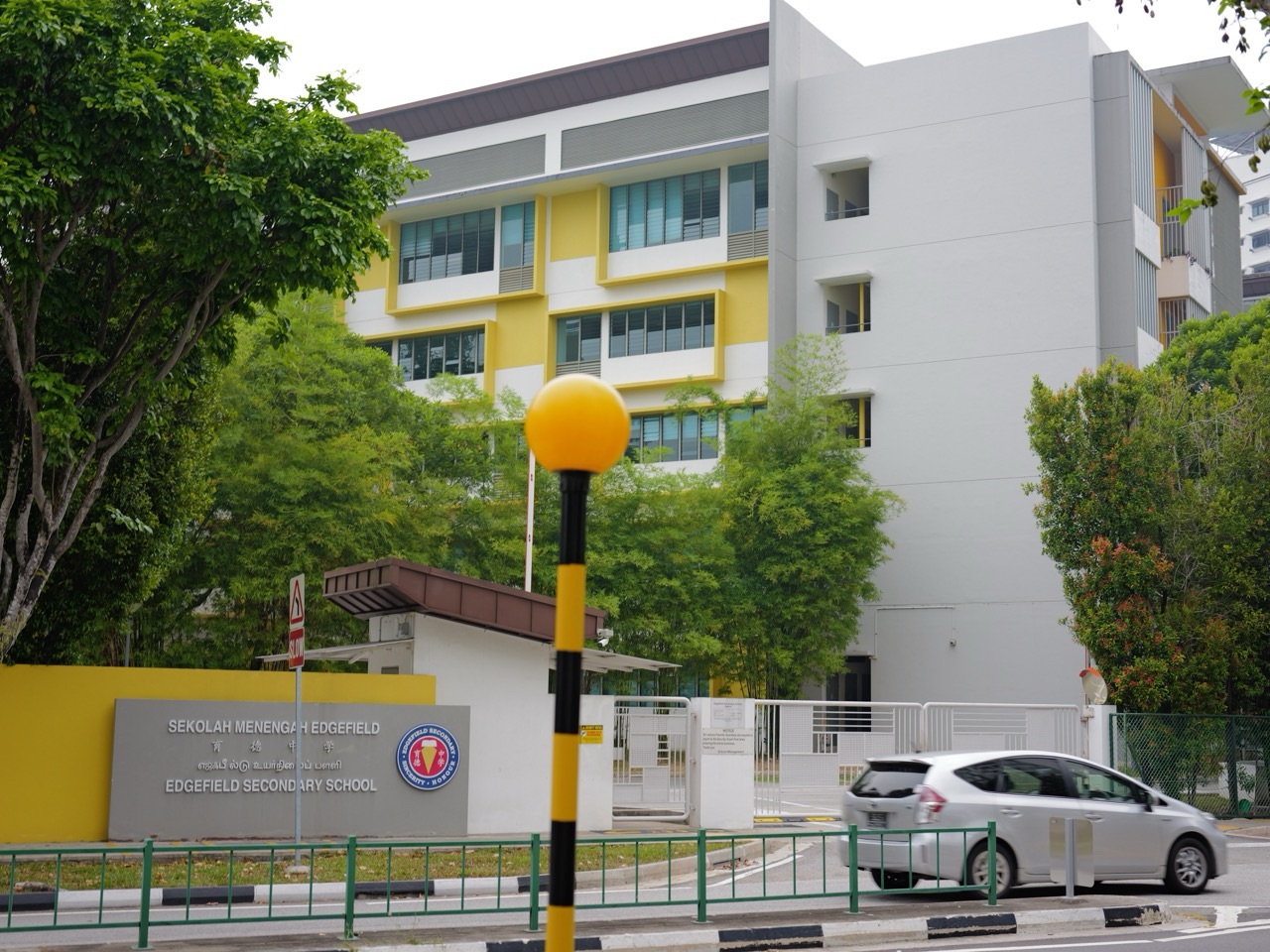
For Punggol parents whose child receives a PSLE Score of 25 on 24 November 2026 at 11.00am, the most useful first step is to read the child’s official S1 Option Form carefully. Score 25 is the usual Posting Group 1 or Posting Group 2 option band. If both routes are offered to your child, you need to choose one for the ordinary Secondary 1 application. In Punggol, the four mainstream schools to investigate are Edgefield Secondary, Greendale Secondary, Punggol Secondary and Yusof Ishak Secondary. Their historical 2026-entry PG1 cut-offs were all 27, whereas PG2 cut-offs were 23, 23, 24 and 22 respectively. This creates two very different school-choice pictures for the same child.
The answer is not to choose PG2 for prestige or PG1 merely because local schools had less stringent previous PG1 cut-offs. Parents should weigh the actual school options, the child’s four subject Achievement Levels, possible individual G2 subjects, workload, confidence, school support and everyday travel. This guide shows a two-route Punggol comparison, explains what a historical cut-off can and cannot mean, and provides a practical six-school preparation plan for Secondary 1 starting in 2027. The previous year’s cut-offs are references, never confirmed 2027 admission promises.
At a glance for parents
• Score 25 may give a PG1/PG2 option on the official form; follow the individual result and school instructions.
• Compare PG1 school figures only with PG1, and PG2 figures only with PG2.
• At the four Punggol schools, the 2026-entry PG1 historical endpoint was 27; PG2 endpoints were 22–24.
• PG1 does not fix every subject permanently at G1; individual subject-level opportunities depend on eligibility and progress.
• The selected Posting Group normally applies to all six ordinary choices.
• MOE recommends two or three less stringent historical options where suitable.
• Submit school choices on the S1 Portal from 24 November at 11.30am to 30 November 2026 at 4.30pm.
Why PSLE Score 25 is a genuine decision, not a label
The PSLE total is the sum of Achievement Levels for English, Mathematics, Science and Mother Tongue, with Standard and Foundation subjects treated under the applicable AL scoring framework. A numerically smaller total reflects stronger PSLE performance. Yet the total alone cannot describe how a pupil learns. Two pupils with score 25 can have different subject strengths, reading needs, practical interests, home circumstances and confidence.
Posting Groups are admission and initial subject-level guides; they should not be mistaken for permanent streams or identities. Full Subject-Based Banding (Full SBB) was implemented from the 2024 Secondary 1 cohort. Students attend mixed form classes for common curriculum learning and may take different subjects at G1, G2 and G3 according to their eligibility, development and later performance. The SEC qualification framework replaces older single-stream descriptions for the relevant secondary examination cohorts.
The first decision for a score-25 family is therefore: which offered route leads to a real school in which this child will learn well? The next decision is the order of schools on a single consistent preference list. Do not reverse that sequence by selecting a fashionable group name and later discovering that the six supposed schools are historically unrealistic or too far away.
The important numbers from the completed 2026 Secondary 1 intake
These are historical figures for pupils admitted to Secondary 1 in 2026 following the 2025 PSLE. The 2027-entry figures cannot be guaranteed in advance of the 2026 PSLE school posting exercise. The last admitted pupil’s total in each group is commonly called a cut-off point (COP); it is a retrospective outcome, not a live seat count.
| Punggol school | 2026-entry PG1 COP | 2026-entry PG2 COP | Address |
|---|---|---|---|
| Edgefield Secondary School | 27 | 23 | 36 Punggol Field |
| Greendale Secondary School | 27 | 23 | 51 Edgedale Plains |
| Punggol Secondary School | 27 | 24 | 51 Edgefield Plains |
| Yusof Ishak Secondary School | 27 | 22 | 8 Sumang Walk |
A score-25 child using PG1 was numerically better than the four local schools’ historical PG1 endpoints of 27. That is helpful reference evidence for a local shortlist, not a promise of admission to all four. By contrast, the same score under PG2 was numerically worse than every Punggol school’s previous PG2 endpoint. Choosing PG2 may require researching schools farther from home with suitable PG2 historical ranges. Some families will see that geographic consequence as acceptable; others will not.
A previous COP of 27 is less stringent than score 25, because 27 is a numerically larger PSLE Score. A previous COP of 23 is more stringent than score 25. The comparison must use the relevant Posting Group and the same intake year. Never mix figures from unrelated groups, treat an unverified internet graphic as official, or calculate an admission probability from a single old COP.
What a PG1 choice can mean in daily Secondary 1 life
Under the usual entry arrangement, PG1 broadly guides the initial level for many subjects toward G1. That does not mean a child is assumed incapable of any more demanding work. Schools use the child’s individual results and relevant criteria to consider subject-level offerings where appropriate. For a score-25 pupil who is especially strong in one subject, ask the actual school whether a G2 subject may be available at Secondary 1 entry and how later adjustments are made.
Some children benefit from a pace that leaves room to build reading and numerical fundamentals, develop organisation and rediscover the pleasure of succeeding in a lesson. A child who likes practical projects, social learning, sports or artistic activities may thrive when the academic timetable is demanding but manageable. That is a positive fit decision; it is not an argument that the child should never be stretched.
Parents should also avoid idealising a school merely because it appears to have a less stringent historical cut-off. A student needs access to teachers, usable feedback, a safe peer environment, appropriate CCAs and sensible travel. An old cut-off does not tell you about the individual pupil’s future friendships or whether a subject teacher will help them overcome a misconception.
What a PG2 choice can mean—and its practical costs
PG2 usually guides more subjects toward G2 at entry. Some pupils with score 25 and a particularly strong relevant subject may be motivated by that initial pace, subject to their actual option eligibility. However, a chosen PG2 route does not make a Punggol school’s historical PG2 endpoint disappear. At score 25, all four local schools had numerically more competitive previous PG2 COPs, so a family planning PG2 should widen the search using official SchoolFinder.
Beyond Punggol, parents can investigate schools in Sengkang, Hougang, Serangoon, Pasir Ris and other areas along practical transport routes. Names such as Seng Kang Secondary, Compassvale Secondary, North Vista Secondary and other schools are prompts for research only; do not add a school to a score-25 PG2 list unless its current eligibility, previous PG2 range and school-specific conditions have been checked. A close school that does not offer a plausible entry route is not a credible backup.
There is also the day-to-day cost of a longer commute. A 13-year-old with early reporting, heavy schoolwork and a late CCA may find that a multi-transfer journey reduces time available for rest, home responsibilities and independent study. Test the door-to-gate journey at school start and after CCA; the child should be able to explain the route and a safe alternative if public transport is disrupted.
Four Punggol schools, four reasons to visit
Edgefield Secondary — enterprise, inventive thinking and teamwork
Edgefield Secondary at 36 Punggol Field has its G.E.M. Growing the Edgefield Mindset applied-learning programme, which develops inventive thinking, collaborative problem-solving and entrepreneurial awareness. Families may want to ask about real Secondary 1 projects, the school culture and how pupils receive individual academic feedback. For a child who learns through doing and discussing, these features may be interesting, but no programme description substitutes for meeting staff and checking the child’s actual entry route.
Greendale Secondary — design, technology and outdoor learning
Greendale at 51 Edgedale Plains presents a design, technology and engineering applied-learning programme with coding and hands-on construction activities; its learning-for-life programme focuses on outdoor adventure. For a child who enjoys building things or learning in teams, these may make lessons more meaningful. Ask how pupils begin these activities, which CCAs actually have vacancies and whether a late-day journey home is workable.
Punggol Secondary — environmental sustainability and leadership
Punggol Secondary at 51 Edgefield Plains highlights sustainability in its applied-learning direction and community and youth leadership as a learning-for-life theme. Ask how students practise research, explanation and service and how the school supports pupils making the primary-to-secondary transition. A school should be chosen for lived education, not solely because it offered the largest numerical PG2 cut-off among the four in one earlier year.
Yusof Ishak Secondary — smart-city STEM and future-ready learning
Yusof Ishak Secondary at 8 Sumang Walk emphasises sustainability, technology and smart-city problems in its S4TEM@YI programme. Its location may especially suit some western Punggol families. Ask what school-wide STEM experiences actually reach Secondary 1 and what opportunities depend on interest, selection or CCA allocation. Its old PG2 cut-off of 22 is not a guarantee—or a permanent bar—for any upcoming applicant.
Two example families with the same score
Family A: strong hands-on learner, uneven English and Mathematics foundations
Suppose a score-25 pupil shows excellent practical curiosity but hesitates when reading long questions, explaining written answers or working with fractions. This family may prioritise a local PG1 school where learning is structured and individual strengths can be developed without creating an overwhelming initial subject load. They should still ask about eligibility to take stronger subjects at the appropriate level and about what progress is needed in Secondary 1.
The family could examine the four Punggol schools under the PG1 historical column and then add reachable schools with similar or less stringent previous ranges. They would seek teachers who help with reading, organisation and mathematical fluency. They should also prepare for secondary-school independence: managing homework, asking for help and travelling safely. None of those steps makes score 25 a prediction of future ability.
Family B: balanced academic confidence, willing to travel for a particular school
Another pupil may have the same overall score but strong confidence, steady work habits and a particular school programme outside Punggol that makes a PG2 route attractive. The family should verify that school’s historical PG2 scores and entry requirements, examine school culture and carry out a realistic commute test. It should not rely on the local Punggol PG1 COPs when assessing a PG2 preference.
If the parent-child discussion favours PG2 after investigating the actual options, that can be a considered choice. The important condition is that the six schools must be real, eligible preferences and not a wish list pasted from an unrelated score table. If the child would be happier and more successful in a local PG1 school, that too can be a principled choice.
The six-school decision procedure for a score-25 pupil
- Keep the official S1 result slip in front of you. Confirm whether both PG1 and PG2 appear on the child’s personalised option form.
- Write out a provisional PG1 shortlist with six actual schools and historical PG1 comparisons.
- Separately write a provisional PG2 shortlist with six actual schools and historical PG2 comparisons. Do not mix the columns.
- Mark school fit: learning pace, support, subject-level opportunity, student wellbeing, culture and a CCA that genuinely interests the child.
- Mark the journey: a normal school morning, a late CCA day and an alternative route if transport is disrupted.
- Talk about both lists with the child. Ask which places feel welcoming and which expectations seem difficult.
- Choose the offered Posting Group intentionally, rather than copying what a friend or neighbour chose.
- Rank six schools within that selected group in authentic preference order, including two or three historically less competitive schools where suitable.
- Check school codes, special programme conditions, any affiliation-related details and the selected group before submission.
- Save the official submission confirmation and tell the child that an old COP is never a personal verdict.
Where scores are equal for a final place, the S1 tie-breakers include citizenship, school-choice order and computerised balloting after the academic-merit comparison. Putting a school higher on a list does not outrank pupils with better eligible PSLE Scores. Being close to a school does not normally award the primary S1 seat. The order should reflect what the family truly prefers, not a superstition about how the computer works.
What to ask about individual G1, G2 and G3 subjects
Questions about subject levels are more useful when specific. Instead of ‘Can my child be promoted?’, ask which subject levels the school initially offers to a child with the actual PSLE subject grades, what assessments and evidence are used for a change, and how a student who takes two levels in different subjects manages class transitions. Also ask when choices are reviewed and how parents will be informed.
Mathematics is a common concern. A student who is stable with fractions, negative numbers and multi-step word problems may have different needs from a student who still finds algebraic notation intimidating. English comprehension matters across Science and Humanities; Science often requires both conceptual reasoning and clear written explanation. A child can grow in these abilities over time, but the support plan should address what is actually missing now.
Parents should not promise G3 Mathematics at entry solely because the pupil has score 25. The option to take individual subjects at a more demanding level is guided by subject-level requirements and school arrangements. Nor should a student taking G1 assume that their later SEC subject levels or JC, polytechnic and ITE prospects have been permanently settled at age twelve. Ask the relevant school for the actual progression guidance.
Results day to submission: specific dates
| Milestone | 2026 timeline |
|---|---|
| 2026 PSLE results collection | Tuesday, 24 November, 11.00am |
| Online S1 Portal opens | Tuesday, 24 November, 11.30am |
| Six-school submission deadline | Monday, 30 November, 4.30pm |
| S1 posting results | Tentatively Friday, 18 December; final date to be announced |
SEAB confirmed the results and submission timetable on 17 November 2026. A parent uses valid Singpass to submit through the official MOE S1 Portal. Only one parent needs to log in. Families requiring assistance should contact the primary school before the deadline. If the child has a confirmed DSA-Sec outcome, check the personal instructions because the ordinary six-school procedure may differ.
Questions parents ask about a score of 25
Does score 25 mean my child must choose PG1?
No. Score 25 is normally an option band offering a PG1 or PG2 route, subject to the actual personalised S1 Option Form. The family should compare both properly before selecting one.
If we choose PG2, can we still list schools with a PG1 cut-off of 27?
No: the PG1 COP cannot be used as a PG2 eligibility proxy. Compare each school’s PG2 history for a PG2 application. The ordinary six-school preference list follows the selected offered group.
Is PG1 a dead end for further academic progress?
No. Full Subject-Based Banding supports different subject levels and progression based on appropriate evidence. Ask the receiving school about G2 subject offers and later reviews; do not infer the child’s long-term pathway from a single posting label.
Can we list all four Punggol secondary schools under PG1?
If the school’s current group-specific conditions allow and the child genuinely likes them, they can be investigated for the shortlist. But the final list should usually also include suitable alternatives, a careful preference order and up-to-date MOE checks. Four similar historical COPs do not make admission guaranteed.
Does the numerically better score of 25 than PG1 COP 27 guarantee an offer?
No. The old cut-off is not a pre-published live threshold. Demand and vacancies change, and competition may produce a different number this year.
Source documents and related eduKate reading
- SEAB: release of 2026 PSLE results, six-school guidance and exact S1 submission dates
- MOE: Secondary 1 Posting and official parent instructions
- MOE SchoolFinder: confirm each school’s actual Posting Group, programmes and previous score ranges
- MOE: PSLE and Full Subject-Based Banding
- eduKate Punggol: detailed score-25 PG1 versus PG2 worksheet
- eduKate Punggol: which schools can my child apply to?
- eduKateSG: Secondary 1 Mathematics transition and small-group learning reference
Final move: With PSLE Score 25, compare two complete and honest school-choice pictures—not two labels. If PG1 suits the child, investigate local schools and individual stretch-subject opportunities. If PG2 suits the child, verify a realistic PG2 school list and accept that it may mean a different commute. Both decisions deserve respect when based on actual eligibility, school fit and the child’s development. Submit one checked six-school list by the official deadline.


