
For a Punggol child who enjoys Science but finds Mathematics difficult, choose a secondary school by looking at both individual PSLE subject results and the school’s actual support for learning—not by assuming a STEM school will automatically fix Mathematics. After 2026 PSLE results are released on Tuesday, 24 November at 11.00am, read English, Mathematics, Science and Mother Tongue Achievement Levels separately, then confirm the total score and available Posting Group. Punggol’s four mainstream local schools are Edgefield Secondary, Greendale Secondary, Punggol Secondary and Yusof Ishak Secondary; each should be considered for its teaching, culture, subject offerings and practical daily journey.
Under Full Subject-Based Banding, the school entry Posting Group guides the initial level of most subjects, but eligible pupils may take individual subjects at different levels. That creates an important question for a child with stronger Science than Mathematics: could a suitable school provide appropriate Science challenge without an unmanageable Mathematics pace? The answer depends on the child’s actual subject ALs, the receiving school’s current criteria and the selected entry route, not merely the PSLE total. This guide compares example scores, Punggol’s historical school cut-offs, real STEM-related programmes and a targeted Mathematics bridging plan for the 2027 Secondary 1 intake.
Quick parent summary
• Read Science and Mathematics ALs individually: two children with the same PSLE total may need different support.
• The total score and personalised S1 options control entry via PG1, PG2 or PG3.
• Full SBB allows eligible students to learn individual subjects at G1, G2 or G3 rather than being defined by one fixed stream.
• For PG1/PG2 pupils, sufficiently strong Standard subject ALs may support a more demanding subject offer; confirm current criteria.
• Compare Edgefield, Greendale, Punggol Secondary and Yusof Ishak by actual programmes, teachers and support—not by a STEM label alone.
• Historical 2026-entry school COPs are reference values, not 2027 guarantees.
• Submit six suitable school preferences by 30 November 2026 at 4.30pm.
Start with a specific strength and a specific difficulty
A parent may describe a child as ‘great at Science but weak in Maths’. Those phrases are a starting point, not a diagnosis. Does the child love biology, experiments, physical science, animals, the environment, or explaining observations? Are they strong at understanding a scientific concept but lose marks when they read a question too quickly? Conversely, does the Mathematics difficulty come from fractions, ratios, basic calculations, interpretation, working presentation or anxiety when numbers appear?
Ask the child to explain one recent Science question they enjoyed and one Mathematics question that felt impossible. The way they begin the explanation often reveals more than asking them to list which subjects they like. A learner may be motivated by science demonstrations but hesitate when data tables or algebraic formulas appear. Another may have strong mathematical understanding but make avoidable mistakes in timed arithmetic.
The school-choice question is therefore not just ‘Which school has the strongest Science?’ Parents should ask how Science is taught at an appropriate level, how Mathematics misconceptions are identified and repaired, and whether the child will be encouraged to persist without being buried in worksheets they cannot understand.
What the PSLE total tells you—and what it hides
The overall PSLE Score is the sum of four mapped subject Achievement Levels, normally ranging from 4 to 32. Numerically smaller totals reflect stronger aggregate PSLE performance. A pupil might receive the same total as another with a completely different pattern of ALs. These differences matter greatly during the Secondary 1 transition.
| Illustrative AL combination: English / Maths / Science / MTL | Total | Why this pupil needs individual attention |
|---|---|---|
| AL5 / AL7 / AL2 / AL7 | 21 | Strong Science, Mathematics foundation and language support to investigate |
| AL6 / AL7 / AL5 / AL7 | 25 | Science may be a stronger relative subject; Mathematics needs a careful bridge |
| AL4 / AL6 / AL4 / AL6 | 20 | Generally PG3; Mathematics may still need specific support |
| AL6 / AL6 / AL4 / AL7 | 23 | PG2; Science relative strength can motivate further work |
These are hypothetical combinations that illustrate different learning needs. The first pupil would ordinarily fall in the 21–22 Posting Group option band, while the second in the score-25 PG1/PG2 option band. The third would ordinarily enter PG3 and the fourth PG2. The correct route comes from the personalised S1 documents, especially when Foundation subjects or unusual eligibility conditions apply.
In the first example, Science AL2 does not erase Mathematics AL7. Likewise, Mathematics AL7 does not mean the child should stop being curious about Science. Both results deserve attention. The sensible ambition is to extend the strength responsibly and repair the weaker foundation without treating the child as defined by either number.
How Full Subject-Based Banding can help
From the 2024 Secondary 1 cohort, Full Subject-Based Banding has been implemented in mainstream secondary schools. Entry is through a Posting Group where applicable, while students may study individual subjects at different General levels (G1, G2 or G3). Form classes are mixed and pupils share a common lower-secondary curriculum, with subject teaching at the relevant levels. This gives pupils room to develop along more than one academic trajectory.
For students posted through PG1 or PG2, MOE’s published guidance includes opportunities to take English Language, Mother Tongue, Mathematics or Science at a more demanding level depending on the individual PSLE subject AL. Published examples indicate that Standard AL5 or better can support a G3/G2 choice in that subject, Standard AL6 can support G2, and Foundation A can support G2. The family still needs the child’s actual offer and current school arrangements: do not promise a G3 subject solely because a table looks favourable.
This is useful for the Science-strong pupil who may be eligible for a challenging Science level but benefit from a more carefully paced Mathematics level. The exact combination must be discussed with the school and student, including timetabling, workload, assessment and the child’s own readiness. A more demanding level is not automatically the right level for every subject.
Case A: Score 21, Science AL2, Mathematics AL7
Consider a pupil with English AL5, Mathematics AL7, Science AL2 and Mother Tongue AL7, giving PSLE Score 21. The ordinary form may offer PG2 or PG3. Choosing PG3 simply because Science is strong could place most starting subjects at a more demanding overall pace, including Mathematics. The family should understand the actual subject demands before choosing, not assume one strong result compensates for every other subject.
Under a PG2 route, the family may be able to discuss an appropriate stronger Science subject level while Mathematics begins at a manageable level, subject to the school’s actual offers and criteria. That could be an educationally attractive combination. But there is no automatic formula that says this pupil must choose PG2; school availability, the child’s confidence and the whole timetable should be considered.
The history of Punggol admission also differs sharply between PG2 and PG3 at score 21. The previous PG2 endpoints of the four local mainstream schools were 22–24, while PG3 endpoints were 14–19. This is an example of why the Posting Group decision changes the realistic geographical school list. A PG3 preference could require looking farther beyond Punggol.
Case B: Score 25, Science AL5, Mathematics AL7
Now consider English AL6, Mathematics AL7, Science AL5 and Mother Tongue AL7: total 25. The ordinary option band may be PG1 or PG2. On the completed 2026 intake, the four Punggol schools all had a PG1 last-posted score of 27, whereas PG2 last-posted scores were 22–24. That does not mean PG1 is universally better; it means the local historical admissions picture differs significantly.
Ask the student about mathematical confidence, then explore the school’s capacity to support that need. Science AL5 may support an appropriately more demanding Science offer when the published subject-specific criteria are satisfied, even if the overall entry route is PG1 or PG2. However, there is no guarantee that a particular combination will be offered to every pupil; the receiving school must confirm the actual options.
A family should not pretend that a PG2 application at score 25 can use the PG1 COP of 27 as a safety reference. If PG2 is chosen, use the PG2 historical column, research schools beyond Punggol when needed and make the six options meaningful. The child should not be pressured into a route solely because its name sounds more prestigious.
Case C: Score 20, a child who wants G3 Science
At an ordinary total of 20, a child normally enters through PG3, with most subjects starting at G3. A relatively weaker Mathematics grade can still create a transition difficulty, even when the overall score meets PG3. This case demonstrates why school choice and subject-learning support are separate tasks. The child’s admissions eligibility may be straightforward, but the actual Mathematics bridge still deserves attention.
The parent should ask about how the school teaches early algebra, negative numbers and fractions, what feedback is provided and how pupils get help when classroom pace feels challenging. Avoid interpreting a PG3 entry as proof that every foundation is already stable. A student may be highly motivated in Science and need a careful plan for Mathematics confidence at the same time.
Punggol’s four secondary schools, with historical score comparisons
The following figures describe the 2026 Secondary 1 intake following PSLE in 2025. They are earlier final admitted scores for each Posting Group, not guaranteed cut-offs for 2027 entry. As always, use the correct group and recheck the school profile in MOE SchoolFinder.
| Punggol secondary school | Past PG3 COP | Past PG2 COP | Past PG1 COP |
|---|---|---|---|
| Edgefield Secondary | 14 | 23 | 27 |
| Greendale Secondary | 16 | 23 | 27 |
| Punggol Secondary | 19 | 24 | 27 |
| Yusof Ishak Secondary | 15 | 22 | 27 |
At score 21, an eligible PG2 application has a historically different local range from a PG3 application. At score 25, an eligible PG1 application also differs from PG2. Parents should separate the admissions question from the subject teaching question. A school may be an eligible choice yet still require a discussion about the right Mathematics and Science levels.
A cut-off point is not a school-quality grade. A child should not be told that their Science potential will be greater or smaller merely because an earlier intake had a lower or higher COP. Student motivation, teaching, subject support, individual opportunities and consistent work matter. The numbers help parents prepare a credible preference list, nothing more.
What to explore in each Punggol school
Edgefield Secondary — enterprise and inventive questions
Edgefield Secondary at 36 Punggol Field highlights Growing the Edgefield Mindset, which encourages initiative, enterprise and solving practical problems. A curious Science learner might enjoy authentic questions and group projects. Parents should ask how Mathematics is explained to pupils who need concepts broken down and how teachers develop accurate scientific writing and reasoning. A branded programme is not an automatic research laboratory or specialist Science CCA place.
Greendale Secondary — technology, design and engineering
Greendale Secondary at 51 Edgedale Plains has a design, technology and engineering direction, alongside outdoor adventure. A student who enjoys building and testing ideas might connect Science with real materials and designs. However, technology projects often require measurement, ratio, spatial reasoning and careful calculations. The parent’s question should be how the school helps students build these Mathematics tools, not whether engineering projects avoid Mathematics altogether.
Punggol Secondary — environment and applied Science
Punggol Secondary at 51 Edgefield Plains highlights environmental sustainability and community leadership. A child fascinated by ecosystems, pollution, biodiversity or local nature might enjoy its practical focus. Ask about how students interpret data, present findings and build the numeracy necessary to evaluate evidence. The environment may provide motivation to strengthen Mathematics rather than an excuse to ignore it.
Yusof Ishak Secondary — smart-city STEM
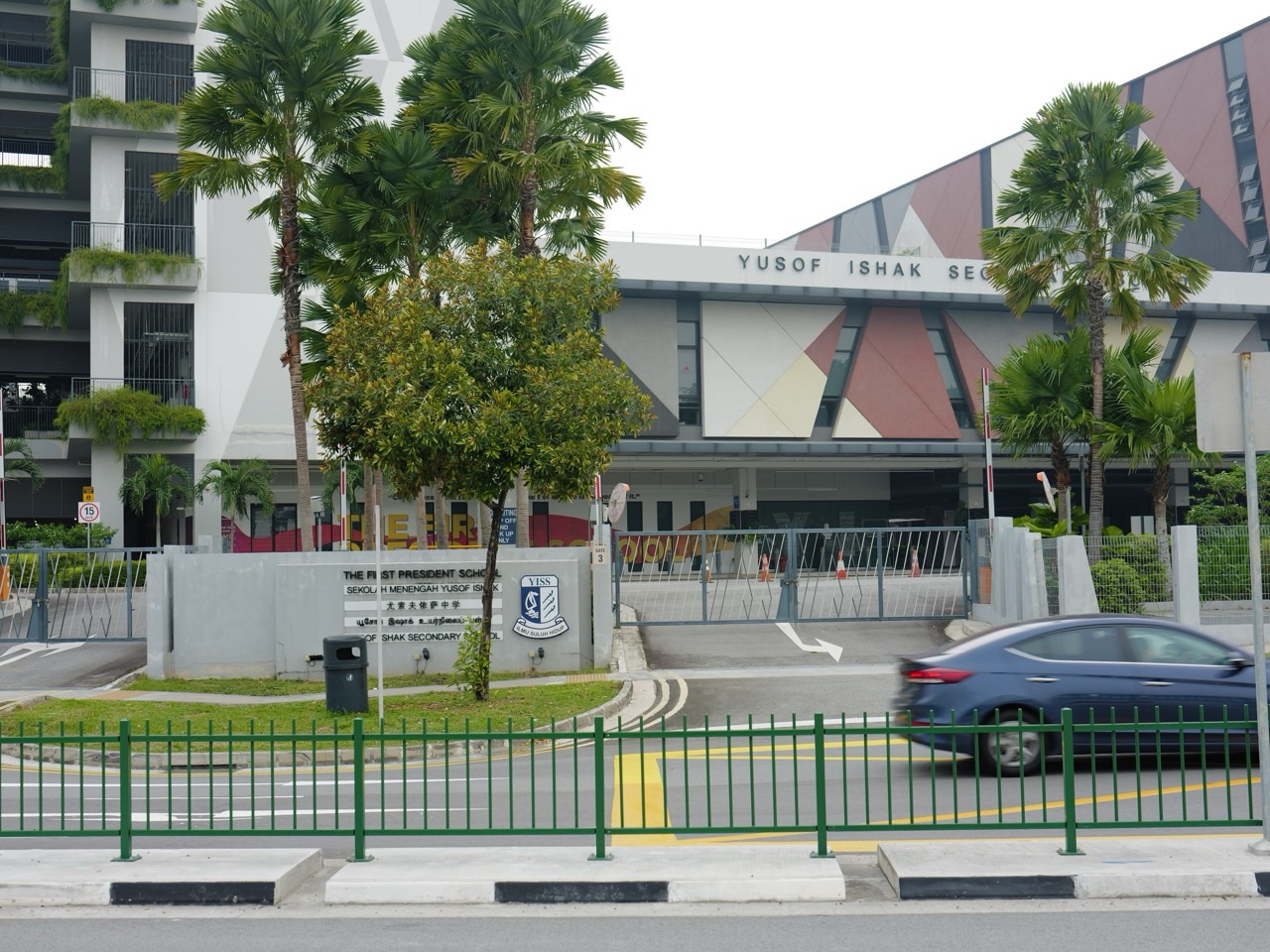
Yusof Ishak Secondary at 8 Sumang Walk highlights sustainability and smart-city STEM. A student may be interested in how science, engineering, data and daily life meet. Parents should clarify which opportunities are school-wide, which depend on a CCA or selection and what the core Mathematics teaching and support look like. STEM enthusiasm can be nurtured while a pupil builds stronger calculations.
Seven Mathematics foundations worth checking before January
| Skill | A simple diagnostic question | Why it matters in Science and secondary learning |
|---|---|---|
| Fractions | Can the pupil compare and calculate unlike fractions without guessing? | Measurements, concentrations and proportional reasoning |
| Decimals and percentages | Can the pupil convert and estimate reasonably? | Data, uncertainty and everyday quantitative comparisons |
| Ratio and rate | Can the pupil explain what stays constant? | Speed, scaling, mixtures and change over time |
| Negative values | Can the pupil place and operate with negative numbers? | Temperature, directed change and future algebra |
| Equations | Can the pupil explain what a symbol represents? | Science relationships and formulas |
| Tables and graphs | Can the pupil read axes, scales and trends correctly? | Evidence-based interpretation |
| Word problems | Can the pupil identify given facts and the question asked? | Understanding experimental questions |
Do not turn this list into seven weeks of punishment. Choose one or two examples from actual schoolwork, ask the child to explain their steps and look for recurring errors. A wrong answer may arise from misreading, an unstable concept, incorrect arithmetic, a sign mistake or poor working presentation. These require different corrections, just as the eduKate Clementi first-principles teaching reference explains.
A four-week holiday Mathematics bridge without overload
Week 1: inspect the existing problem, not the child’s label
Review a few representative Primary 6 questions. Separate the mistakes into reading, concept, calculation, copying and time-pressure categories. Ask the child which mistakes they understand once shown and which still feel unclear. Decide on one priority. A pupil who cannot handle equivalent fractions should not begin with difficult algebraic fractions.
Week 2: repair the first unstable concept
Give clear examples, ask the pupil to explain why the method works and use short independent retries. If ratio and percentages are confusing, work with concrete quantities or diagrams before symbolic shortcuts. Keep the practice brief enough to allow success and honest feedback. Avoid buying multiple workbooks that simply repeat the same misunderstanding.
Week 3: connect the Mathematics to something the child enjoys in Science
Use a simple data table, measured distance, plant growth comparison or other safe science observation to ask for a graph or calculation. Keep the numbers appropriate. The purpose is to show that Mathematics helps the child answer interesting questions, not to make every science activity another examination. Discuss what the result means and whether it is reasonable.
Week 4: practise independent explanation
Give a small mixed set that includes earlier skills and one unfamiliar presentation. Ask the child to say what is known, what is asked, which operation is valid and how to check the result. Parents can support without taking over the problem. Identify any remaining obstacle for discussion with the receiving school once the Secondary 1 timetable is known.
The goal is not to finish a secondary Mathematics syllabus in December. It is to make the first weeks of the new school less intimidating. Strong Science interest should remain a source of joy, curiosity and motivation throughout the transition.
The school questions that matter more than a STEM label
- How does the school check whether a new Secondary 1 pupil has gaps in numerical reasoning, algebra readiness or written comprehension?
- What feedback and additional support are available when a pupil struggles with Mathematics?
- If the pupil is strong in Science, which subject-level options are actually offered under the relevant individual PSLE AL criteria?
- Are particular Science clubs, robotics activities or projects part of the ordinary curriculum, or do they require selection?
- How are mixed form classes and subject groups organised under Full SBB?
- How does the school communicate with families when an early subject-level choice is too demanding?
- What is the route home after late Science, CCA or project activities?
- Does the school help pupils grow confidence across weaker subjects without using humiliating labels?
Ask questions respectfully, using the child’s actual ALs rather than a generic claim. A helpful school will explain its process and the limits of what can be promised before placement. Do not demand a guarantee about subject level or club allocation at an open house.
A school-selection worksheet for the Science-strong, Maths-developing pupil
| Factor | Evidence to record |
|---|---|
| Formal entry | Official total, offered Posting Group and school-specific requirements |
| Science level | Individual Science AL and the actual subject-level offer or criteria |
| Mathematics level | Current foundation, appropriate pace and the school’s feedback process |
| Programme fit | What practical Science opportunities the child truly wants |
| Travel | Actual morning and late CCA route from the home block |
| School wellbeing | Support, orientation, friendships and manageable workload |
| Historical competitiveness | Correct PG-specific previous COP, clearly labelled 2026 intake |
| Preference order | Six schools the child could genuinely attend |
MOE recommends at least two or three schools whose previous cut-offs were less stringent than the child’s PSLE Score, where suitable options exist. At a PG2 score of 21, previous PG2 cut-offs of 22, 23 or 24 were numerically less stringent, but still not guaranteed 2027 admissions. At PG3 score 20, the four Punggol schools’ previous PG3 endpoints of 14–19 were more stringent, so the family should research suitable schools beyond the town.
The ordinary S1 allocation first considers academic merit. In relevant equal-score competitions, the tie-breaker sequence is citizenship, school-choice order and computerised balloting. A higher school preference does not defeat a stronger eligible score, while living near a school is not a general ordinary S1 admissions advantage. Rank schools in genuine order rather than guessing percentages.
After the 2026 PSLE results: the exact action dates
| Event | Announced date |
|---|---|
| PSLE results collection | Tuesday, 24 November 2026, 11.00am |
| S1 Portal opens | 24 November, 11.30am |
| S1 option deadline | Monday, 30 November, 4.30pm |
| S1 posting results | Tentatively Friday, 18 December; confirmation to follow |
One parent with valid Singpass can submit through the official MOE S1 Portal. Families needing assistance should contact the primary school before the deadline. A student with a confirmed DSA-Sec place or another specialised route may have different instructions, so always follow the personalised official documents.
Frequently asked parent questions
Can a PG2 child take G3 Science but G2 Mathematics?
Full SBB allows individual subject-level combinations when the pupil meets the criteria and the school’s arrangements allow them. A strong Science AL may support a more demanding Science offer, while Mathematics may be studied at another appropriate level. Confirm the actual options with the school; do not promise a combination from the overall PSLE Score alone.
Should we pick Greendale or Yusof Ishak because they have STEM programmes?
Both are worth researching for relevant interests, as are Edgefield and Punggol Secondary. A programme theme does not answer how Mathematics will be taught or what individual subject levels are available. Compare actual teaching, student support and school fit.
Does Science AL2 erase Mathematics AL7 in posting?
No. Both AL values contribute to the overall PSLE Score. A strong Science result may be relevant to individual subject opportunities, but the total and the personalised Posting Group still determine the ordinary school entry route.
Does my child need tuition immediately?
Not automatically. Review the exact mathematical gap and the child’s confidence. Targeted explanation, feedback and manageable practice may help, while some pupils improve through school lessons and independent study without extra tuition.
Can a pupil move to a different subject level later?
Full SBB is designed to allow adjustments at suitable points based on strengths, needs, performance and school processes. The current school’s rules and the student’s actual learning should guide any change, rather than assuming an automatic promotion.
What should a parent do if no Punggol PG3 school had a less stringent past COP?
Search eligible schools beyond Punggol in Sengkang, Hougang and other accessible estates. Confirm every school’s correct PG3 range, learning support and real daily journey. An old COP never guarantees a seat.
Official references and related eduKate reading
- SEAB: 2026 PSLE results, deadline and holistic school choice
- MOE: Full Subject-Based Banding and Posting Groups
- MOE SchoolFinder: subject offerings and historical school ranges
- MOE: secondary school subject levels, common curriculum and pathways
- eduKate Punggol: Edgefield, Greendale, Punggol Secondary and Yusof Ishak compared
- eduKate Punggol: PG2 or PG3 at scores 21–22
- eduKate Punggol: PG1 or PG2 at score 25
- eduKateSG: immutable Clementi first-principles Secondary 1 Mathematics tutorial reference
Final parent move: Treat the child as a learner with both strengths and areas to develop. Use the official total and Posting Group to select eligible schools, and the individual Science and Mathematics ALs to ask about appropriate subject-level teaching. Compare the four Punggol schools’ actual learning experiences, widen the search where historic cut-offs require it, and focus on careful Mathematics foundations while keeping Science curiosity alive.


