
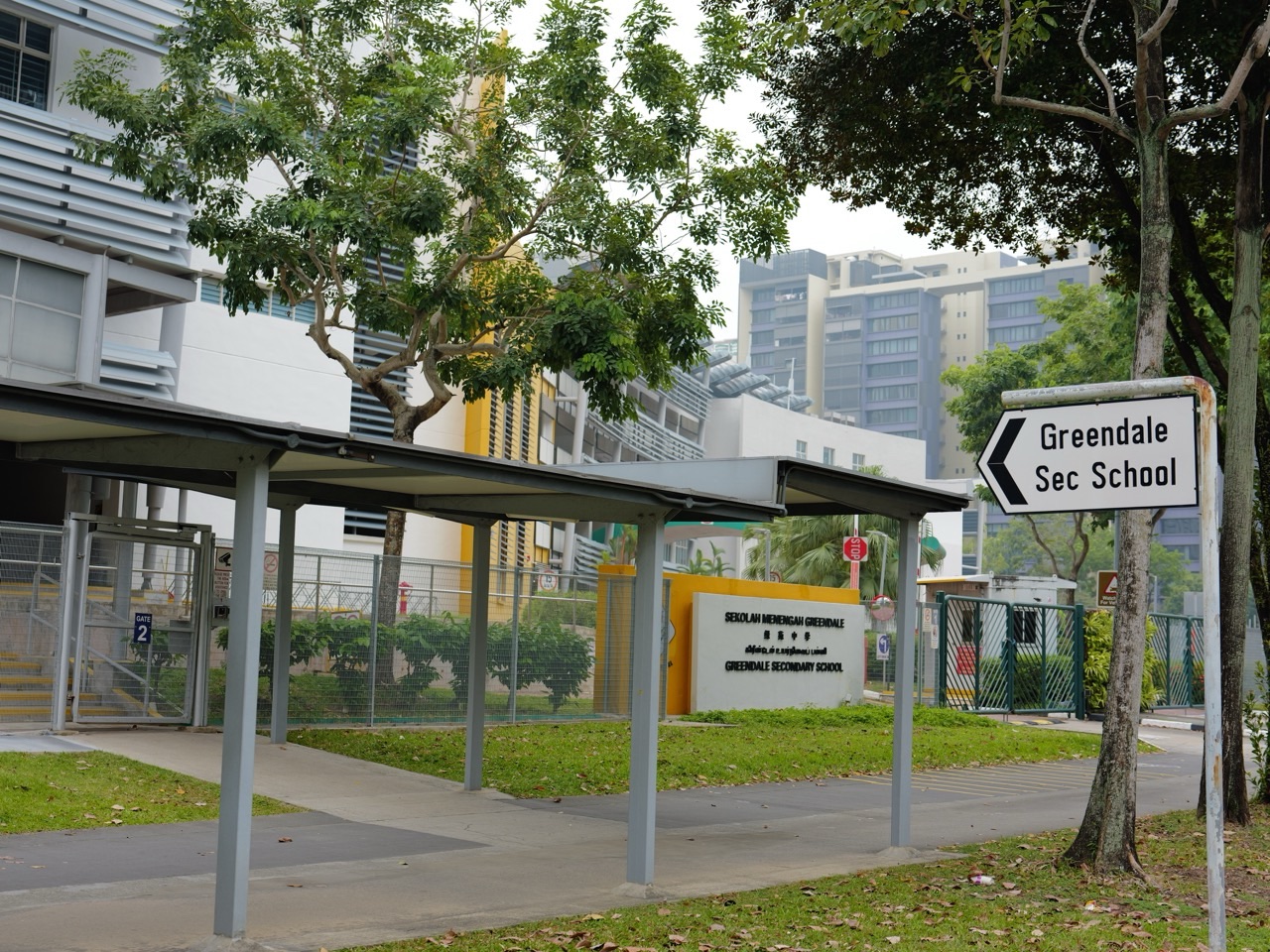
If your child receives a PSLE Score of 21 or 22 on Tuesday, 24 November 2026 at 11.00am, the result may offer a choice between Posting Group 2 (PG2) and Posting Group 3 (PG3) for Secondary 1 in 2027. In Punggol, the four mainstream secondary schools are Edgefield Secondary, Greendale Secondary, Punggol Secondary and Yusof Ishak Secondary. For the completed 2026 S1 intake, their historical PG2 cut-off points were 23, 23, 24 and 22 respectively, while their PG3 cut-offs were 14, 16, 19 and 15. These different numbers make the posting-group decision especially important for local families.
The practical answer is not “always choose PG3 because G3 sounds stronger” or “always choose PG2 because it seems safer”. Parents should compare the child’s actual subject Achievement Levels, the initial learning pace, the schools available under each route, whether specific subjects may be offered at more demanding levels and the daily journey. The chosen Posting Group on the ordinary S1 Option Form applies across all six school choices, so research both scenarios before making one coherent submission. The 2027 intake’s final admission cut-offs do not exist as fixed promises today.
Quick parent summary
• Score 21 or 22 is an important PG2/PG3 option band; use the child’s official S1 eligibility.
• PG2 and PG3 are admission routes; G2 and G3 refer to individual subject levels.
• In the completed 2026 Punggol intake, PG2 history was much less stringent than PG3 for all four local schools.
• Choosing PG2 does not automatically mean every subject must remain G2 for four years.
• A PG3 route may suit some pupils, but verify which reachable schools accept that score under PG3.
• One selected Posting Group normally applies to all six school preferences.
• Submit choices between 24 November 11.30am and 30 November 4.30pm through MOE’s S1 Portal.
The boundary score: why 21 and 22 require a different conversation
For many children, the score-to-posting relationship is relatively straightforward. A score from 4 to 20 ordinarily maps to PG3; scores 23 or 24 to PG2; score 25 can allow a PG1/PG2 choice; and scores 26–30 may map to PG1 under specific subject conditions. But 21 and 22 are option-band scores. The parent must consider a decision that affects both the school shortlist and the initial academic level for most subjects.
The family should not let the phrase “higher Posting Group” substitute for a discussion about readiness. A child may be excellent at Mathematics and Science while needing more structure in English and Humanities. Another may achieve a balanced set of grades but feel anxious at a faster pace. Both can have the same PSLE total. The four individual Achievement Levels, school experiences, learning habits and child’s own voice matter alongside the aggregate.
The first question on result day is not which group looks more prestigious. It is: Under which offered route can my child enter a school where they can make good progress, take appropriate subjects and lead a sustainable daily life?
Posting Group is not the same as subject level
| Term | What it controls | Parent example |
|---|---|---|
| PG2 | A route for ordinary Secondary 1 school posting and a guide to initial learning level | A score-22 child choosing PG2 compares PG2 school score ranges |
| PG3 | A different S1 posting route and initial subject-level guide | A score-22 child choosing PG3 compares PG3 school score ranges |
| G2 | The level at which a particular secondary subject is studied | A student may study Mathematics at G2 |
| G3 | A more demanding subject level where the student meets requirements | A PG2 pupil with a strong eligible subject may be offered G3 for that subject |
Full Subject-Based Banding changes the logic of secondary school. Form classes may contain pupils from different Posting Groups, while individual subjects can be studied at G1, G2 or G3 levels according to eligibility, interests, needs and later performance. Posting Groups are not a child’s permanent identity. They help with the entry route and starting position, not a fixed prediction of character, career or post-secondary outcome.
At the start of Secondary 1, schools can provide options to take some subjects at a more demanding level where the student meets the applicable criteria. This is particularly relevant if the child is strong in English, Mathematics, Science or Mother Tongue but has a total score in the option band. Ask the school which subject-level options are available, what assessment evidence is needed and how the child is supported if a level proves too demanding. Do not promise a G3 subject simply because a child wants it; eligibility and school arrangements still apply.
Punggol’s 2026-entry historical cut-off comparison
The following school figures belong to the cohort that entered Secondary 1 in 2026 after taking PSLE in 2025. They are historical last-posted scores, not forecasts of admission to Secondary 1 in 2027. A numerically larger last-posted PSLE score is generally a less stringent historical endpoint for that group, but it is not evidence of superior or inferior school teaching.
| School in Punggol | Historical PG2 COP | Historical PG3 COP | What the contrast means for a score of 22 |
|---|---|---|---|
| Edgefield Secondary | 23 | 14 | PG2 history is nearer the offered score; PG3 history much more competitive |
| Greendale Secondary | 23 | 16 | PG2 history is nearer; examine technology and engineering fit |
| Punggol Secondary | 24 | 19 | PG2 history offers a numerical buffer; PG3 history below score 22 |
| Yusof Ishak Secondary | 22 | 15 | Score 22 was exactly the old PG2 endpoint; no guarantee |
For a child scoring 22, the table tells a clear but limited story. As a PG2 applicant, the child’s score was at Yusof Ishak’s old endpoint and numerically stronger than the earlier PG2 cut-offs at Edgefield, Greendale and Punggol Secondary. As a PG3 applicant, the score 22 was numerically weaker than all four Punggol schools’ historical PG3 cut-offs. That does not make PG3 illegal or impossible everywhere; it simply means the local PG3 history is not a strong basis for promising a Punggol school.
For a child scoring 21, the same question applies. On the PG2 comparison, score 21 is numerically stronger than all four historical Punggol PG2 endpoints, but that is still not a guarantee. On the PG3 comparison, score 21 is numerically weaker than every local historical PG3 endpoint. A family strongly drawn to PG3 should use MOE SchoolFinder to find actual schools with an appropriate prior PG3 range and check the journey from Punggol. It is misleading to pretend the four local schools alone can support every PG3 score scenario.
Scenario A: a child scores 21 and loves Mathematics
Imagine a child with PSLE Score 21 whose Mathematics is clearly stronger than their English. A parent may worry that PG2 means giving up all advanced Mathematics work, while the child wants to continue improving at a demanding level. That fear may rest on an outdated stream mentality. Under Full Subject-Based Banding, eligible pupils may be offered individual subjects at a more demanding level. The question should therefore be about the child’s actual Mathematics Achievement Level, current eligibility criteria, the receiving school’s subject offers and the child’s working habits.
Ask the school whether G3 Mathematics at entry may be available for the child’s exact PSLE subject performance, what the workload looks like and what support is available if the student struggles. Also ask what the school’s approach is to algebra, fractions, ratio and word-problem reasoning in Secondary 1. A child who understands the methods but makes errors in reading needs different help from a child who struggles with fundamental calculations.
The family might prefer a Punggol PG2 school with the chance to study Mathematics at a suitable level over a distant PG3 school that creates an exhausting journey. Another family might have an easy journey to a suitable PG3 school and a child whose overall academic readiness makes that route genuinely appropriate. The right answer is not universal; it depends on the actual options offered and school fit.
Scenario B: a child scores 22 and is strong in Science but needs English support
The total 22 does not tell us how those points are distributed among English, Mathematics, Science and Mother Tongue. A child may enjoy experiments and be confident in practical Science while reading long explanations slowly. Before choosing PG3 for the sake of one strong subject, discuss what a whole timetable at that starting level may demand. Reading, note-taking, inference and clear explanation appear across Science, Geography, History and other subjects.
A PG2 option may support a suitable initial overall pace while an eligible stronger subject can be considered at a more demanding level. Parents should ask for the exact criteria rather than assume flexibility is automatic. If the child eventually develops greater confidence in English, ask how changes of subject level may be assessed later. Strong students do not lose their potential because of the label used for Secondary 1 admission.
Scenario C: the child wants to stay in Punggol with friends
Friendships are meaningful at twelve, but they do not replace formal eligibility. A child who hopes to enter the same school as friends should understand that classmates may have different PSLE Scores and Posting Group routes. Even children with identical total scores are not guaranteed identical posting outcomes. Help the student distinguish “I hope” from “I am entitled”. That conversation is easier when the parent speaks calmly and has already prepared several schools the child can imagine attending.
For the score-21 or score-22 family that strongly values a short commute and local programmes, the 2026 historical table suggests investigating PG2 routes at all four schools seriously. Do not say “choose PG2 because it is better”; say “PG2 gives us a local group of historically relevant options to compare, while PG3 would require research beyond Punggol according to these historic figures.” This is a more honest statement.
What each Punggol school can offer beyond a score
Edgefield: trying ideas, working with others and resilience
Edgefield Secondary, at 36 Punggol Field, highlights G.E.M. entrepreneurial and inventive learning, as well as sport-based character development. A child who enjoys asking why something works and improving a design may respond well to that environment. Ask the school what Secondary 1 pupils actually do within the programme and how classroom support works for English or Mathematics needs.
Greendale: design, technology, engineering and outdoor experiences
Greendale Secondary, at 51 Edgedale Plains, invites questions about practical problem-solving, coding, building and outdoor adventure. These interests may be particularly motivating for a learner who needs a reason to apply Mathematics and Science. Ask about access to activities, expected teamwork, supervision, and the actual CCA choices rather than treating all published programme names as guaranteed individual experiences.
Punggol Secondary: environment, service and leadership
Punggol Secondary, at 51 Edgefield Plains, provides a useful conversation about environmental knowledge, sustainability and community contribution. A child might discover that looking after local ecosystems involves analysing data, making decisions and communicating responsibly. Those real-world links can build motivation, but the central decision remains whether the school supports the child’s academic and personal development.
Yusof Ishak: sustainable smart-city STEM and leadership
Yusof Ishak Secondary, at 8 Sumang Walk, highlights questions about sustainable technology and future-oriented city life. For a family near Sumang or western Punggol, the route may also be more convenient. A STEM label does not mean every pupil will receive a specialised programme place or that a score-22 PG2 pupil is guaranteed entry because the old endpoint was 22. Confirm current offerings and admissions details.
If PG3 is the family’s preferred route, widen the school search correctly
An ordinary PG3 application for score 21 or 22 should not rely solely on the four Punggol schools’ previous PG3 cut-offs. Search MOE SchoolFinder across reachable Sengkang, Hougang, Serangoon and farther estates where necessary, using the correct posting route and cohort reference. Schools such as Seng Kang Secondary, Compassvale Secondary, North Vista Secondary, Pei Hwa Secondary, Xinmin Secondary and others may be researched as names, but not all will necessarily have the required historical PG3 range or eligibility. Verify individually.
This distinction protects families from two opposite mistakes: falsely claiming that PG3 is impossible for all schools at 21 or 22, and casually naming nearby schools without checking whether their PG3 history makes sense for that score. The form permits a route; it does not promise every school on that route will accept an application successfully.
Travel becomes part of the comparison. A student able to use a direct line or bus safely may manage a school outside Punggol, but a child facing multiple transfers after CCA may struggle. Measure actual home-to-school travel on a weekday and speak with the child about fatigue, punctuality and independence. Do not quote route times without testing.
Use a two-column decision sheet before picking the group
| Parent decision question | PG2 comparison | PG3 comparison |
|---|---|---|
| Which Punggol schools had historically relevant group cut-offs? | All four had endpoints of 22–24 | All four had endpoints of 14–19 |
| Which subject levels may be available? | Confirm G2 baseline and eligibility for individual G3 subjects | Confirm G3 baseline and the child’s readiness |
| How far might our realistic six schools be? | Check Punggol and nearby options | May require a wider geographical search at scores 21–22 |
| What will the daily workload feel like? | Discuss pace, stretch subjects and school support | Discuss sustained subject demands and school support |
| Which route fits our child? | A family judgement based on actual eligibility and strengths | A family judgement based on actual eligibility and strengths |
This table does not declare either route superior. It prevents a family from choosing an academic label without noticing the schools, teaching and journeys attached to it. For some children, a PG2 application with specific G3 subjects may be a strong developmental choice. For others, an eligible PG3 place may fit their readiness and ambitions. Parents should not equate the latter with higher personal worth.
Build all six preferences after choosing the route
- Read the child’s official S1 Option Form and confirm that PG2/PG3 choice is actually offered.
- Prepare a provisional six-school list under PG2 using the right published historical column.
- Prepare a separate provisional list under PG3, including schools outside Punggol where necessary.
- Check each school’s current subject offerings, student-support arrangements, CCA options and official programme requirements.
- Talk with the pupil about which learning environment supports confidence and growth rather than just status.
- Select one Posting Group for the ordinary school-choice submission; do not mix different group COP columns on the final list.
- Put six schools in authentic preference order; the school’s position is relevant in same-score tie cases.
- Include two or three schools with less stringent historical cut-offs where suitable; an old boundary is never a certainty.
- Verify the chosen group, six school names and codes, and save the submission confirmation.
MOE’s ordinary S1 tie-breakers are academic merit first, then citizenship, school-choice order and computerised balloting for unresolved equal-score competition. Home proximity and siblings are not ordinary tie-breakers. If two family favourites look equally good, choose the one the child genuinely likes more rather than trying to game a rumoured admissions algorithm.
The 2026 PSLE-to-2027 school posting timetable
| Event | Timing |
|---|---|
| PSLE results released | Tuesday, 24 November 2026, 11.00am |
| S1 Portal opens | Tuesday, 24 November 2026, 11.30am |
| Online school-choice submission deadline | Monday, 30 November 2026, 4.30pm |
| Posting results | Tentatively Friday, 18 December 2026; await confirmation |
These dates are from SEAB’s announcement of 17 November 2026. The school-choice portal is accessed through MOE S1 Posting with a valid Singpass. A parent who needs help should contact the primary school in good time, not attempt the last-minute form submission without checking the group and choices. A confirmed Direct School Admission case may have different instructions, so refer to the personalised documentation.
Frequently asked parent questions
Is PG3 always academically better than PG2?
No. PG3 ordinarily guides more subjects toward G3 at entry, but subject-level placement under Full SBB is designed to respond to individual readiness. The practical decision includes school availability, strengths, learning needs and wellbeing. Academic ambition can be pursued responsibly under a suitable entry route.
Can a PG2 pupil take Mathematics or Science at G3?
An eligible pupil may be offered an individual subject at a more demanding level subject to the applicable criteria and school arrangements. Confirm the actual PSLE subject grades and current eligibility with the school; the overall score alone is not enough to promise any individual subject level.
If the score is 22 and Yusof Ishak’s old PG2 cut-off was 22, is the place certain?
No. It was the earlier cohort’s endpoint. The 2027 posting result will depend on the current cohort’s choices and capacity. Put the school on the shortlist if it fits, and plan credible alternatives.
Can we put three PG2 schools and three PG3 schools in the same list?
Not in the ordinary form when a single chosen Posting Group applies across the six school preferences. Compare both routes first, then use the chosen group consistently according to MOE’s S1 instructions.
What if the child’s four subject results suggest different needs?
That is precisely why a total-score-only decision can be unhelpful. Ask the primary school or receiving schools about taking subjects at more demanding or less demanding levels and about later progression. Do not attach a permanent identity to a Secondary 1 entry group.
Is it too late to start checking school websites on results day?
It is not too late, but begin as soon as possible. The official submission window runs through 30 November 2026 at 4.30pm. Confirm current details from MOE and school sources; a simple, accurate six-choice list is better than an elaborate but unverified ranking.
Official references and related eduKate guidance
- SEAB: 2026 PSLE release and school posting dates
- MOE: S1 Posting and official personalised instructions
- MOE SchoolFinder: compare the actual school and Posting Group
- eduKate Punggol: four-school comparison and historical cut-offs
- eduKate Punggol: PSLE Score 4–32 school-choice hub
- eduKateSG: Posting Group boundary choice explained
Parent conclusion: At PSLE Score 21 or 22, choosing PG2 or PG3 is a choice about a real school, subject-level arrangements and the child’s present readiness—not the child’s value. Compare both routes thoroughly. Use the 2026 historical Punggol figures as reference, widen the search when necessary, ask about individual subject levels, and submit one properly checked six-choice list before the official deadline. A sensible Secondary 1 start gives the child space to develop confidence and pursue later opportunities.


