
If your Punggol child receives a much better PSLE Score than the family expected on Tuesday, 24 November 2026 at 11.00am, use the official result to reopen the secondary-school shortlist—but do not automatically replace every planned school with the most competitive name you can find. A lower numerical PSLE Score means a stronger PSLE result, and a pupil who expected 24 but receives 18, or expected 28 but receives 22, may have a different Posting Group and set of realistic schools. The result can create new possibilities, including more demanding subject-level opportunities or particular programmes, but it does not guarantee a 2027 place at any named institution.
For a family in Punggol, start by reviewing the four mainstream local schools—Edgefield Secondary, Greendale Secondary, Punggol Secondary and Yusof Ishak Secondary—and then investigate eligible options in Sengkang, Hougang or farther if the child wants them. The school’s prior 2026-entry cut-off points are historical, not fixed 2027 thresholds. Parents have from 24 November at 11.30am until Monday, 30 November at 4.30pm to submit the ordinary six-school choices, where the child is participating. This guide shows how to respond to a pleasant score surprise, compare different Posting Group situations, involve the child rather than chasing prestige, and produce a defensible six-school list.
Quick parent summary
• Compare the actual PSLE result with your old plan; an estimated score is not official eligibility.
• The lower the PSLE total, the stronger the result; check whether the offered Posting Group has changed.
• A better score may broaden school choices but does not mean the family must choose IP or an independent school.
• Compare the correct PG1, PG2 or PG3 historical COP for each school; never mix groups.
• Ask what the child enjoys about the actual school, its curriculum and daily journey.
• Keep two or three genuinely acceptable schools with less stringent prior cut-offs where practical, even after an excellent result.
• Rank six schools in genuine preference order and submit by 30 November 2026 at 4.30pm.
A score surprise changes options, not the child’s identity
Before PSLE results, a family may have prepared a shortlist using a mock-examination result or school assessment. That is sensible as an early research exercise, but the predicted total can never replace the official PSLE result. A pupil who performs more strongly may qualify for a different Posting Group. A child who appears to gain access to more school names may also feel new pressure from relatives or friends.
A good parent response is to recognise the effort and then ask what the child wants from the next school. The child may still prefer a nearby campus, a safe commute, a familiar CCA or a teaching environment visited before results. A better grade should not make those earlier preferences suddenly illegitimate. More choice is valuable when it helps the family find a better fit, not when it creates a competition to impress others.
Tell the pupil that an examination result is evidence of performance on that examination, not a complete prediction of every future talent or career. A high score is worth acknowledging but does not mean every later subject will be easy. The family should still think about independent work habits, friendships, organisation and the child’s willingness to ask teachers for help.
What changes when the official total is stronger?
| Earlier expectation | Illustrative actual result | What changes in the planning |
|---|---|---|
| Expected Score 28, likely PG1 | Actual Score 22 | Possible PG2/PG3 option band and a completely different school-score comparison |
| Expected Score 24, PG2 | Actual Score 18 | Ordinary PG3 school research, not PG2 |
| Expected Score 20, PG3 | Actual Score 12 | Still ordinary PG3 but some more selective programmes may become worth investigating |
| Expected Score 30 with conditional PG1 | Actual Score 25 | PG1/PG2 option band, with two distinct possible school lists |
| Expected Score 16 | Actual Score 14 | Same ordinary PG3 route but a different relationship to previous COPs |
These are hypothetical examples, not actual pupils or guaranteed eligibility decisions. The child’s individual subject results and personalised S1 Option Form are authoritative. For scores 26–30, ordinary PG1 depends on the applicable English and Mathematics subject conditions; parents must not assume the total alone proves eligibility.
The important insight is that a stronger result may change both which school types are worth researching and the daily education they represent. A child who gains access to PG3 schools may start most subjects at G3 under Full Subject-Based Banding. A child in a choice band may have two routes to compare. These are educational decisions rather than trophies.
The PSLE-to-Posting Group reference
| Overall PSLE Score | Usual ordinary entry route | What to discuss |
|---|---|---|
| 4–20 | PG3 | Which PG3 schools and subject-level opportunities fit the pupil? |
| 21–22 | PG2 or PG3 option | Compare both routes’ schools and learning pace before choosing |
| 23–24 | PG2 | Use only the PG2 historical school range |
| 25 | PG1 or PG2 option | Build two provisional lists, then select one |
| 26–30 with required English/Mathematics performance | PG1 | Check AL7-or-better subject conditions and actual form |
| 31–32 or no usual ordinary route | Do not assume a mainstream PG1 option | Seek personalised primary-school advice |
Posting Groups are not the same as G1, G2 and G3 levels of individual subjects. Under Full Subject-Based Banding, the entry group guides the starting position, while eligible pupils may take different subjects at different levels. A pupil with a pleasant result surprise should still be assessed by their individual strengths; don’t assume the new label predicts a permanent future educational path.
The four Punggol schools: historical admission reference
The following figures come from the completed 2026 Secondary 1 intake based on the 2025 PSLE. They are not promises for pupils applying after the 2026 PSLE to enter in 2027. Read the relevant Posting Group’s column; a lower numerical PSLE Score is stronger, and a higher previous COP was numerically less stringent in that earlier intake.
| Mainstream Punggol school | Historic PG3 COP | Historic PG2 COP | Historic PG1 COP |
|---|---|---|---|
| Edgefield Secondary | 14 | 23 | 27 |
| Greendale Secondary | 16 | 23 | 27 |
| Punggol Secondary | 19 | 24 | 27 |
| Yusof Ishak Secondary | 15 | 22 | 27 |
If a child expected PG2 Score 24 but actually receives PG3 Score 18, the relevant local historic column changes. Punggol Secondary’s old PG3 COP was 19, while Greendale’s was 16, Yusof Ishak’s was 15 and Edgefield’s was 14. A parent must not use the PG2 COP of 24 to claim that all four are now comfortable PG3 choices. In the new route the numbers mean something different.
If the actual score is 12, all four local PG3 previous endpoints were numerically less stringent than that score. That makes the schools worthy of careful research, but it does not force the child to abandon them for a distant IP or independent institution. A family can still choose a school whose programme and culture best match the pupil.
If the score is 22 and PG2 or PG3 is offered, compare both lists separately. PG2 history within Punggol was 22–24, while PG3 was 14–19. A child may be more academically ready for one starting pace but the school shortlist may need to be wider. The parent should not select the apparently higher route simply because the score came as a pleasant surprise.
A good result does not make the four schools interchangeable
Edgefield Secondary: enterprise and collaborative learning
Edgefield Secondary at 36 Punggol Field, Singapore 828814 highlights the Growing the Edgefield Mindset programme, with creativity, enterprise and working with others. A strong pupil may be able to extend their learning through real-world problems and presentations, but parents should ask what opportunities ordinary Secondary 1 pupils receive and how teachers stretch learners who are already confident in core subjects.
A pupil who prefers this school because of its atmosphere or short journey can have a principled reason. The old PG3 COP of 14 is evidence of one intake’s posting outcome, not a measure of whether every child will succeed there.
Greendale Secondary: design, technology and outdoor learning
Greendale at 51 Edgedale Plains, Singapore 828866 highlights Design, Technology and Engineering and outdoor adventure. A child whose unexpectedly strong PSLE result accompanies a deep interest in making, building or experimenting may want to investigate this school seriously. Ask how projects develop across the lower-secondary years and how pupils with strong Mathematics or Science can explore extensions.
A strong score does not automatically guarantee a Robotics CCA place or a future Computing examination subject. Check the school’s actual school-wide learning, CCA recruitment and subject offering separately.
Punggol Secondary: sustainability and community leadership
Punggol Secondary at 51 Edgefield Plains, Singapore 828870 offers environmental sustainability and leadership experiences that may engage students with broad interests in Science, the natural environment, data or community service. A pupil who learns best through meaningful projects may value these opportunities without needing the most selective possible historical cut-off.
Parents can ask how the school provides suitable academic stretch and constructive feedback. The point of a strong PSLE result is to encourage further learning, not to declare that one historic COP makes a school beneath the pupil.
Yusof Ishak Secondary: smart-city STEM and leadership
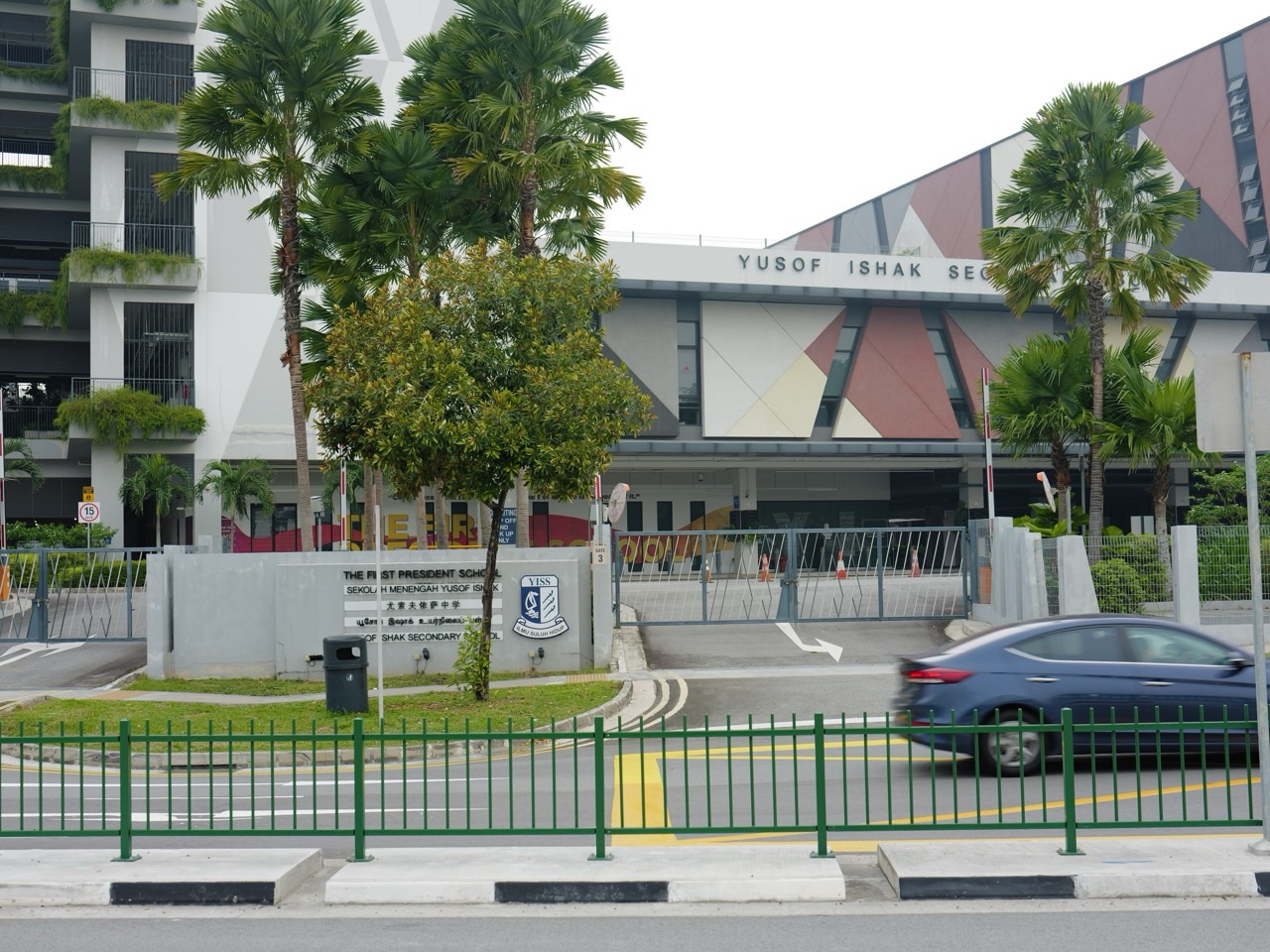
Yusof Ishak Secondary at 8 Sumang Walk, Singapore 828676 highlights sustainable smart-city STEM and leadership. A strong pupil might value the combination of technical exploration and social responsibility. For a family in Sumang, daily travel may be easier than for someone living in eastern Punggol; check the route from the actual home.
Ask which experiences are school-wide and which depend on selection or the CCA allocation process. An unexpectedly low PSLE Score does not ensure access to every school activity the pupil finds interesting.
What about IP, IB and independent schools?
If a child’s actual result is stronger than predicted, a family may wish to research Integrated Programme (IP) schools outside Punggol. These are specific six-year pathways, with individual school eligibility conditions and later pre-university qualifications such as A-Levels or IB. The four Punggol mainstream schools do not offer IP. A parent should check the named school’s track, gender requirements where relevant, fee arrangements and historical IP range before treating it as a real option.
Some independent schools have a separate four-year SEC track alongside IP, while other institutions use different routes. A child who has only just heard about an IP school should not be pressured to select it on name recognition. Ask what the curriculum, reading load, project work, academic feedback and later qualification actually involve. A school that attracts strong PSLE results may still be a poor fit for a particular pupil’s interests or family routine.
For an option-band score or a strong PG3 pupil, mainstream Full Subject-Based Banding remains a meaningful route toward SEC and later JC, polytechnic, ITE or other opportunities according to actual qualifications. A strong score is a reason to investigate, not proof that a particular curriculum is the only acceptable outcome.
A 30-minute family exercise after the result
- Read the official PSLE total, individual Achievement Levels and personalised Posting Group options aloud or together.
- Put the family’s old expected-score shortlist beside the actual results without treating the estimate as a mistake to be blamed on anyone.
- Identify which schools are still formally eligible and which new school or programme categories are worth investigating.
- Ask the child to name three schools they would enjoy attending and two features they value, such as teaching, programme, CCA or school culture.
- Look up the previous cohort’s group-specific cut-offs on SchoolFinder and clearly label them as historical.
- Check whether an IP, IB or independent-school option involves a different curriculum, fee structure or journey.
- Retain at least two or three suitable historically less stringent options where possible.
- Test the school-day journey from the family home, including any late CCA dismissal.
- Rank six schools in genuine preference order, not the order an uncle or internet ranking would prefer.
- Confirm school codes and the selected Posting Group before submitting through the S1 Portal.
The exercise is not intended to produce a perfect numerical ranking. A family cannot assign a valid admission probability by subtracting a PSLE Score from a previous school cut-off. The current year’s cohort and applicants may behave differently. The purpose of past data is to prevent a completely speculative school list while retaining schools the child genuinely wants.
What if the child wants to keep the original school first?
That can be a reasonable choice. Perhaps the pupil visited the school, likes its student culture and finds the journey easy. A stronger result does not invalidate those observations. Ask whether the original school continues to offer appropriate learning challenge and broad opportunities. If so, it may remain a genuine first choice.
Conversely, a pupil may discover a new school that aligns better with strong Science, language or arts interests. It is equally reasonable to change the ranking after learning more. Avoid framing the choice as a debt the child owes to others because the score was better than expected. The child will attend the classes, manage the commute and join the school community.
A parent should distinguish between real educational ambition and status anxiety. If the only argument for a school is that its name will impress relatives, that is not a full plan for the student’s learning. If the school offers a curriculum the child genuinely loves and can access, that is a meaningful reason to consider it.
Don’t throw away safe choices after a good result
MOE’s 17 November 2026 guidance encourages families to include at least two or three schools with previous cut-offs less stringent than the child’s score, where suitable. That advice remains relevant after a pleasant surprise. A high score does not make every ambitious school certain, especially where schools have distinct tracks, affiliation or admission conditions.
For example, a PG3 pupil with Score 14 may have a local historical comparison ranging from Edgefield’s COP 14 to Punggol Secondary’s 19. Edgefield was at the old boundary, while the others were numerically less stringent in that completed intake. This provides several different kinds of option but no guarantees. The child should still like and be able to attend the schools listed.
A family that fills all six places with extremely selective IP schools because the child exceeded expectations may overlook the programme’s special requirements and a realistic travel plan. Stronger performance is a resource that should expand thoughtful choice, not eliminate common sense.
What if the pupil is surprised by their stronger individual subject result?
Sometimes the total does not change the Posting Group but one subject is unexpectedly strong. A pupil might score AL1 in Science and AL5 in Mathematics, or do better in English than previously expected. The family should ask about suitable subject-level stretch and long-term opportunities at the receiving school. Under Full SBB, individual subject levels and progress matter; the entry group is not a permanent declaration of all academic ability.
The parent can support the subject through reading, appropriate projects, meaningful practice and teacher feedback. A strong English result may motivate Literature, speech or humanities exploration; a strong Mathematics result may support increasingly abstract reasoning; a strong Science result may encourage investigation and evidence-based writing. No family needs to predetermine a career because a single AL was better than expected.
The next six days after result day
| Time | What parents can do |
|---|---|
| 24 November after 11.00am | Check official result and personal S1 options |
| 24–25 November | Rebuild the school shortlist using the actual result, not a mock estimate |
| 25–27 November | Explore newly relevant schools, school-specific programmes and transport |
| 27–29 November | Agree on six genuine choices with an appropriate historical range |
| By 30 November at 4.30pm | Submit final S1 preferences and retain confirmation |
| Tentatively 18 December | Check the actual posting outcome when MOE confirms the release date |
The ordinary S1 Portal opens on 24 November at 11.30am, giving families time to research before the 30 November deadline. One parent needs valid Singpass. A family requiring assistance should contact its primary school ahead of closing time. Students with a confirmed DSA-Sec placement should follow their specific instructions, which can differ from the ordinary six-school procedure.
Frequently asked parent questions
If my child gets a much better PSLE Score than expected, must they go to IP?
No. IP is a separate programme with its own school-specific admissions and multi-year curriculum. Mainstream PG3 education under Full SBB is still a valid pathway, and local school fit matters.
Can my child keep a nearby Punggol school as first choice?
Yes, if the school is eligible and the child genuinely prefers its educational environment. A strong result does not impose a prestige hierarchy.
Does a better result guarantee an independent-school scholarship?
No. Scholarships and bursaries have their own award or income criteria. Check each school’s actual requirements and the current MOE Independent School Bursary arrangements where relevant.
Should we rank the most selective school first automatically?
Not automatically. School-choice order should reflect the child’s genuine preferences, and the overall list should be realistically balanced. A more competitive historic COP does not automatically mean better teaching.
Is Score 14 guaranteed for a Punggol school whose previous PG3 COP was 14?
No. The COP was the last admitted score in the earlier exercise, not an advance guarantee. A pupil at the historical boundary still faces uncertainty from the new cohort and any applicable tie-breakers.
What if the stronger result changes our Posting Group?
Use the actual group on the official option form, then compare the correct previous school ranges. Do not reuse the old expected-score school’s Posting Group COP.
Will there be time to visit new schools before the deadline?
The application window runs until 30 November at 4.30pm. Families can check school websites, open-house materials and current school contacts where available. Do not delay submission beyond the confirmed deadline while seeking more information.
Official sources and related eduKate reading
- SEAB: confirmed 2026 results, school-choice guidance and portal dates
- MOE: Posting Groups, individual subject levels and Full SBB
- MOE SchoolFinder: prior intake ranges and school programmes
- MOE: Secondary 1 Posting portal
- eduKate Punggol: IP or local mainstream for strong scores
- eduKate Punggol: how to use the four local schools in six choices
- eduKate Punggol: independent, autonomous and government school comparison
Final parent move: When the PSLE result is stronger than expected, use the new information to widen options without erasing what you already learned about school fit. Look at the child’s actual interests, subject strengths, school culture, route and family routine. A thoughtful six-choice list—rather than a prestige-driven scramble—is the best use of a pleasant surprise.


