
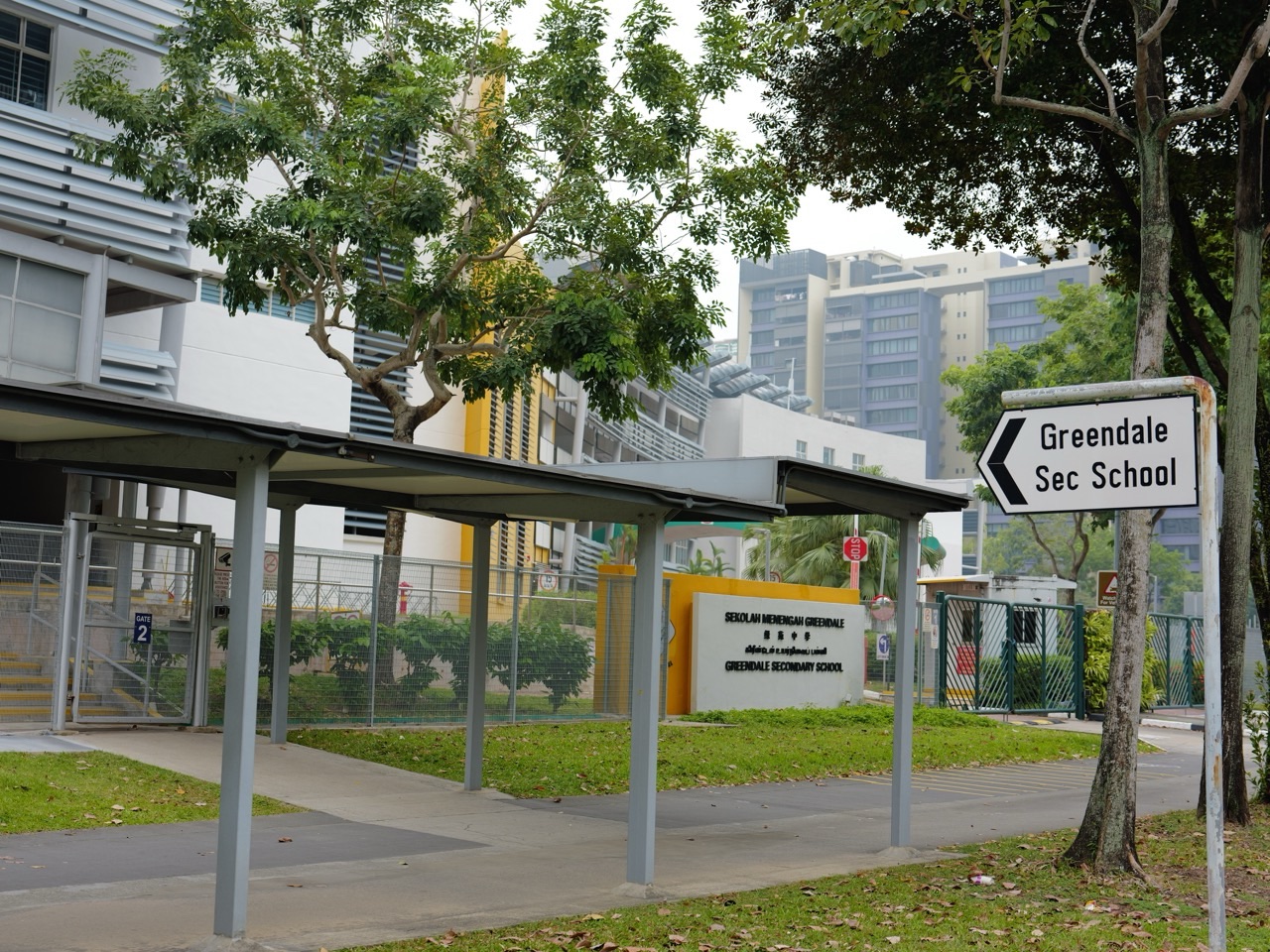
For Punggol parents choosing Secondary 1 after the 2026 PSLE, a government, government-aided, autonomous or independent school is a distinction about how the school is organised, funded and operates—not a ranking of how much your child will learn. The four mainstream secondary schools physically in Punggol—Edgefield Secondary, Greendale Secondary, Punggol Secondary and Yusof Ishak Secondary—are government, co-educational schools. Families also have the option of applying to eligible schools beyond the town, including government-aided, autonomous and independent institutions, depending on the child’s PSLE Score, Posting Group, school type and any separate programme requirements.
When the 2026 PSLE results are released on 24 November at 11.00am, read the personalised school options before comparing labels or fees. For Secondary 1 entry in 2027, the family should consider what the individual school teaches, its culture and CCAs, subject-level opportunities, financial assistance, the full morning and late-CCA commute, and whether the pupil wants the actual curriculum. Independent schools can set different fees and programmes; autonomous schools operate within the government or government-aided sector with certain additional flexibility. None of these features automatically makes a school better for every twelve-year-old. This guide explains the differences, uses the latest completed Punggol school cut-offs, and prepares families to submit six genuine choices by 30 November 2026 at 4.30pm.
Quick parent summary
• Edgefield, Greendale, Punggol Secondary and Yusof Ishak are all government, co-educational mainstream schools.
• Government-aided schools follow national education standards but are operated with support from the government by other school organisations.
• Autonomous schools are government or government-aided schools with some additional flexibility; autonomous is not the same as independent.
• Independent schools set their own fee structures and enjoy greater programme flexibility, but they have their own academic tracks and admissions criteria.
• Compare the correct PG1, PG2 or PG3 historical score range and distinguish SEC, IP or IB tracks where a school offers more than one.
• Eligible families should check the applicable MOE FAS or Independent School Bursary (ISB); the January 2026 criteria may change for 2027.
• Choose six real schools based on educational fit, eligibility, transport and family affordability, not labels alone.
Four different school descriptions parents hear
| School description | What it generally means | Important parent check |
|---|---|---|
| Government school | Government-established and operated, following national requirements | School curriculum, facilities, admissions range and fee category |
| Government-aided school | School established and managed through another body while receiving government aid | Actual school culture, affiliation if any, fees and programmes |
| Autonomous school | Government or government-aided school with additional flexibility in some programmes and operations | Do not assume this means independent-school fees or IP |
| Independent school | More autonomy over fees and academic or student-development programmes | Check full fees, bursaries, exact SEC/IP/IB track and entry route |
| Specialised independent school | Specialised curriculum and admissions for particular talents or disciplines | Check the institution’s separate application process; not necessarily a standard six-choice school |
The first useful distinction is between how a school is governed and what curriculum an individual student studies. A government school can offer excellent technology or arts experiences. A government-aided school can offer the same national secondary qualifications as a government school. An independent school might offer IP, IB or other programmes, but its structure cannot be inferred merely from the word ‘independent’.
Autonomous schools are a subset within the government and government-aided categories; the designation does not imply that a pupil is automatically admitted to IP or enjoys exemption from ordinary examinations. A family should check each school’s current listing rather than treating a loosely described ‘top school’ as if it were a formal institutional category.
Why an autonomous school is not simply a more expensive independent school
MOE’s school-type list distinguishes autonomous schools from independent institutions. Examples listed as autonomous include Xinmin Secondary School, as well as selected government and government-aided schools elsewhere. Examples of independent schools include Raffles Institution, Raffles Girls’ School (Secondary), Anglo-Chinese School (Independent), Hwa Chong Institution, Nanyang Girls’ High School, Methodist Girls’ School (Secondary), Singapore Chinese Girls’ School and St. Joseph’s Institution.
The independent list is not a promise that each institution offers every Posting Group or standard four-year route. Many have highly selective IP programmes; some have separate tracks. A pupil must be eligible for the actual track requested, and the ordinary school’s PG3 cut-off cannot substitute for an IP cut-off at another institution.
An autonomous school may have distinctive programmes, but a child should not be assumed more academically capable merely because they attend a designated autonomous institution. The family’s goal remains to find a school that matches learning readiness and interests. A supportive government school with a short daily journey can be an excellent fit; a specialised programme at a farther school can also be suitable when the child genuinely values it.
What are the four mainstream Punggol government schools?
Edgefield Secondary: government school at 36 Punggol Field
Edgefield Secondary is a co-educational government school at 36 Punggol Field, Singapore 828814. Its Growing the Edgefield Mindset Applied Learning Programme introduces innovation, enterprise and collaborative problem-solving. Its Learning for Life Programme includes sport-anchored character education. For a Punggol family, the right questions concern ordinary teaching, individual subject levels, CCA recruitment and whether the journey works for the child.
The government-school designation does not make Edgefield interchangeable with the other local schools. Each school’s ethos and programmes can shape student experience. A child interested in enterprise may prefer Edgefield’s ALP, while another may prefer a different applied learning environment. Ask the pupil for reasons beyond the school name.
Greendale Secondary: government school at 51 Edgedale Plains
Greendale Secondary is at 51 Edgedale Plains, Singapore 828866. It highlights design, technology and engineering, and character development through outdoor adventure. A child who enjoys making things and learning through practical projects may wish to explore it. For a family comparing government with independent schools, the most useful contrast is not prestige but the actual subjects, daily experience and travel.
Ask what a Secondary 1 student experiences in the ALP, what is offered through a specialist CCA and how teachers support pupils who struggle with parts of Mathematics or English. A signature programme is not an automatic admission guarantee or a substitute for the whole curriculum.
Punggol Secondary: government school at 51 Edgefield Plains
Punggol Secondary is at 51 Edgefield Plains, Singapore 828870. Its environmental sustainability learning and community leadership experiences can interest pupils who value Science, service and collaboration. Parents can ask about the transition into mixed form classes, actual subject-level opportunities and how learners receive feedback when struggling with schoolwork.
A historical COP that appears less stringent than a neighbour’s does not make a government school intrinsically weaker. It describes the last pupil posted in an earlier intake. Teaching, culture, student interests, support and personal progress are separate questions that require a real school comparison.
Yusof Ishak Secondary: government school at 8 Sumang Walk
Yusof Ishak Secondary is at 8 Sumang Walk, Singapore 828676. Its S4TEM@YI learning links science and technology with a sustainable smart-city theme, alongside student leadership. Families in western Punggol may find its location especially practical. The parent should check the student’s route, learning options and actual CCA opportunities.
The four local schools can all be considered according to the child’s eligible Posting Group. None should be described as an IP or IB school merely because a child scores very well. Families who want those routes should compare actual separate school programmes outside Punggol.
How historical PSLE cut-offs compare among the four
These are previous last-posted scores from the 2026 Secondary 1 intake, based on the 2025 PSLE cohort. They are historical references, not guaranteed 2027 admission cut-offs. A lower PSLE total indicates stronger aggregate performance. The correct school column depends on the actual chosen Posting Group.
| Punggol government school | 2026-entry PG3 COP | 2026-entry PG2 COP | 2026-entry PG1 COP |
|---|---|---|---|
| Edgefield Secondary | 14 | 23 | 27 |
| Greendale Secondary | 16 | 23 | 27 |
| Punggol Secondary | 19 | 24 | 27 |
| Yusof Ishak Secondary | 15 | 22 | 27 |
A pupil with Score 12 under PG3 had a numerically stronger score than all four previous PG3 endpoints, though admission in 2027 cannot be guaranteed. A PG3 pupil with Score 18 should note that Punggol Secondary’s old PG3 COP was 19 while the other three were more stringent at 14–16. A pupil with Score 24 ordinarily uses the PG2 column, where the local previous endpoints were 22–24. These patterns help the parent decide how many other schools are needed to build a balanced six-choice list.
At Scores 21–22, an ordinary PG2/PG3 option may be offered; at Score 25, a PG1/PG2 option may be offered. The selected ordinary Posting Group applies across all six school preferences. The family should not take a PG1 COP from one school and compare it with a PG3 score at another. If the child has an unusual Foundation-subject combination, the personalised form and primary school’s guidance take priority.
An independent school with an IP programme may use its own programme-specific historical range; it would be misleading to compare its IP score as if it were a mainstream school’s PG1 endpoint. Before naming any school as realistic for a particular pupil, verify the actual school type, track, sex-specific admission where relevant, affiliation and the correct range through MOE SchoolFinder.
Government-aided schools: different governance, not a different promise of quality
Government-aided schools have histories and management structures that may reflect community, religious or other educational traditions. They follow the relevant national education standards. A family may value a particular school ethos, but the governance label alone does not tell you about teaching quality, pupil wellbeing or current CCA places.
Some government-aided schools have affiliations with particular primary schools, which can affect the applicable admission comparison under the published rules. That does not mean every child from a nearby primary school receives automatic affiliation. The parents should confirm formal status from the named institution and the relevant 2027 school-choice instructions.
In Sengkang, CHIJ St. Joseph’s Convent is an example of a government-aided girls’ secondary school for families to research. It is not in Punggol and not available to every pupil because of its school type and admission route. The family should check its own programme, eligibility, affiliation considerations and travel rather than assuming it is a substitute for a local co-educational government school.
Independent schools: why families should examine fees and programme structure
Independent schools have greater autonomy and can set their own fees. Some offer IP routes that bypass the ordinary Secondary 4 SEC checkpoint and lead toward pre-university A-Levels or an IB Diploma. Others can have a parallel four-year curriculum route. A parent needs to know exactly what programme the child is entering and what the qualification and assessment structure will be, not just that the institution is independent.
Consider a Punggol pupil with a very strong 2026 PSLE Score. The family might investigate an eligible independent IP programme outside Punggol but should still assess school culture, travel, later campus arrangements, academic expectations and subject opportunities. A strong score creates possibilities; it does not compel the child to enter the most expensive or most selective school.
An independent school need not be unaffordable for every household, because bursaries may be available. But nobody should assume a scholarship is guaranteed or that every family pays the same fee. Ask the school for its actual 2027 fees and financial assistance process. Do not copy an independent school’s fee from an old spreadsheet without checking which citizenship and school programme it applies to.
The Independent School Bursary and MOE Financial Assistance Scheme
MOE publishes separate assistance materials for the mainstream government/government-aided sector and independent schools. The Independent School Bursary (ISB) sheet effective January 2026 specifies eligibility by monthly gross household income (GHI) or per-capita income (PCI), along with benefits that vary by income band. Those are the published 2026 arrangements; parents applying for Secondary 1 in 2027 should confirm any updated rules and actual approval.
| Published January 2026 ISB secondary band | Published benefit outline | Parent caution |
|---|---|---|
| GHI at most S$4,000 or PCI at most S$1,000 | 100% subsidy of school, miscellaneous and applicable exam fees; school attire and books, meals and public transport support | Subject to eligibility and current policy |
| GHI S$4,001–5,500 or PCI S$1,001–1,375 | Fees reduced to the same level as eligible students at government and government-aided schools | Check the school’s application and policy |
| GHI S$5,501–9,000 or PCI S$1,376–2,250 | Pay 1.5 times the corresponding government and government-aided school fee | Do not equate this with a fixed school-independent dollar charge |
| GHI S$9,001–12,000 or PCI S$2,251–3,000 | 33% subsidy of school and miscellaneous fees | Current band and school details require confirmation |
The MOE Financial Assistance Scheme (FAS) serves eligible Singapore Citizen students at qualifying government and government-aided schools, according to its own conditions. The 2026 FAS criteria have a similar low-income starting test for its main assistance band, but parents should not assume that the two schemes have identical application procedures or that an independent-school pupil is automatically covered under the mainstream FAS rather than ISB.
Ask about school-based assistance too. Some households may need help even if they do not automatically qualify for the central scheme. Parents should use the official Student Finance System or the school’s authorised forms, disclose household details privately and keep the approval outcome. An online guide cannot assess a particular family’s means-tested status.
Fees are only one part of the family budget
| Expense | Government or government-aided decision | Independent school decision |
|---|---|---|
| School fees | Confirm the applicable citizenship category and standard charges | Confirm the institution’s 2027 fee schedule and any programme-specific costs |
| Financial assistance | Check MOE FAS and school-based help | Check ISB and school-based help |
| Uniform and textbooks | Use the actual receiving school’s list | Use the actual receiving school’s list |
| Travel | Test from home, including CCA days | Test route and campus change where relevant |
| CCAs and enrichment | Ask what is compulsory, optional or selected | Ask the same questions, including whether charges differ |
| Digital learning device | Follow school procurement and subsidy instructions | Follow school procurement and subsidy instructions |
A school that costs more in fees might offer a programme a child genuinely values, but travel, independent work, family time and academic support remain important. A school that costs less is not automatically a poor fit. Discuss the whole cost of attending with the child appropriately—without making them feel personally responsible for household finances.
How autonomous schools fit into a Punggol family’s school search
The MOE school-type list identifies Xinmin Secondary as an autonomous secondary school in the Hougang area. For a Punggol family, Xinmin can be worth researching if its actual Posting Group, past range, school culture, subjects and transport are appropriate. It should not be recommended solely because of the autonomous label.
An autonomous school can have a distinctive learning approach within the national system. Parents should ask what the additional flexibility produces in the student’s everyday education: programmes, teaching arrangements, student development or learning opportunities. That answer is more useful than assuming autonomous is always superior to an ordinary government school.
A pupil who enjoys a particular school programme in Hougang may be willing to make the journey. Another may prefer to remain in Punggol because of strong local friendships and a manageable timetable. Both are valid decisions when the child’s official eligibility and actual school information are checked.
Three family examples
Family A: Score 8, IP-curious and financially cautious
This child has a strong PSLE result and may explore selective programmes outside Punggol, including independent IP routes. The family should check school-specific eligibility, scholarships and ISB criteria and not assume an offer or bursary. They should also visit a local school to understand how mainstream PG3 learning and future SEC pathways compare.
The parent can explain that an IP route is a long curriculum commitment, while a mainstream school offers a different Secondary 4 checkpoint and later progression choices. A pupil’s happiness and readiness matter more than an outsider’s view of the most prestigious option.
Family B: Score 18 in PG3, would prefer to stay in Punggol
The four local schools’ previous PG3 endpoints were 14, 16, 19 and 15. Only Punggol Secondary’s historic endpoint of 19 was numerically less stringent than 18. A parent who insists on an autonomous or independent school without checking the actual historic range and programme could produce an unbalanced list. Broaden research where appropriate; do not treat the governance type as a promise of admission.
The family may decide a suitable mainstream school in Punggol or neighbouring Sengkang is a better everyday fit than an unaffordable or very competitive distant institution. That is an educational decision, not a concession of personal worth.
Family C: Score 25 with a PG1/PG2 choice
For Score 25, the family may have two ordinary entry routes. The local Punggol schools’ past PG1 endpoints were all 27, while their PG2 endpoints were 22–24. An autonomous or government-aided school’s past PG2 number cannot be borrowed from another school’s PG1 figure. The pupil’s subject strengths, learning pace and realistic list of actual schools come first.
A school governance label should not decide PG1 versus PG2. Ask what initial subject level suits the child and whether eligible stronger subjects can be offered at a more demanding level under Full SBB. The programme and support matter far more than a label.
A parent checklist before naming an independent or autonomous school
- Confirm the child’s official PSLE Score, subject ALs and personalised S1 Posting Group options.
- Look up the school’s official type rather than guessing from its reputation or name.
- Check whether the admission route is mainstream SEC, IP, an IB-linked track or a separate specialised selection.
- For government-aided schools, check any relevant affiliation category and correct score history.
- Read the school-specific historical score range for the actual route, not another programme’s COP.
- Request current 2027 fee information, subsidy instructions and necessary equipment charges.
- Test the actual door-to-school-gate journey and late CCA return from Punggol.
- Ask whether the student would enjoy ordinary teaching, not only the school’s signature programme.
- Include two or three suitable historically less competitive school choices where practical.
- Rank six genuine options and submit the final application through the official S1 Portal.
What about future JC, polytechnic and ITE routes?
Full Subject-Based Banding gives students subject levels G1, G2 and G3 according to their eligibility and progression. The Singapore-Cambridge Secondary Education Certificate (SEC) begins in 2027 for relevant graduating cohorts and replaces the old separate O- and N-Level examination qualifications. A pupil who enters mainstream Secondary 1 in 2027 would ordinarily take terminal secondary examinations around 2030 on a four-year route.
IP schools have a different continuous route into their respective pre-university pathways. A child studying at a government or government-aided school can still pursue later JC, polytechnic, ITE or other pathways based on their actual qualifications and the then-current criteria. The school type does not determine a child’s lifetime educational ceiling at age twelve.
Parents should ask each school how pupils receive subject-selection and education-and-career guidance as they progress. A child who becomes interested in science, arts, languages or practical work at Secondary 2 deserves appropriate advice, regardless of whether the school is autonomous, government-aided or independent.
2026 results and 2027 school posting dates
| Milestone | 2026 timing |
|---|---|
| PSLE results released | Tuesday, 24 November at 11.00am |
| S1 Portal opens | Tuesday, 24 November at 11.30am |
| Ordinary S1 choices close | Monday, 30 November at 4.30pm |
| Posting results | Tentatively Friday, 18 December; check later official confirmation |
These dates come from the 17 November 2026 SEAB release. Parents should use the actual S1 Option Form and, where eligible, submit through MOE’s S1 Posting portal with Singpass. Ask the primary school for assistance before the deadline if needed.
Frequently asked parent questions
Are all four Punggol secondary schools government schools?
Yes. Edgefield, Greendale, Punggol Secondary and Yusof Ishak are listed as government, co-educational schools. Their programmes and admission histories are distinct; they should not be treated as four identical options.
Is an autonomous school the same as an independent school?
No. Autonomous schools are government or government-aided schools with additional flexibility, while independent schools operate with greater programme and fee-setting autonomy. Check the current official school classification and relevant cost.
Is an independent school always better academically?
No school type can guarantee a particular pupil’s achievement or wellbeing. Compare actual curriculum, feedback, school culture, learning support, commute and the child’s interests.
Can a family on modest income consider an independent school?
Eligible families may receive Independent School Bursary assistance. The published January 2026 criteria specify income bands and benefits, but the actual 2027 scheme and individual outcome must be confirmed.
Does IP follow automatically from a high PSLE Score?
No. IP is a specific programme with its own selectivity and school conditions. A strong score may justify researching it, but school admission is not guaranteed by an old cut-off.
Can a PG1 child apply to any independent school?
Not automatically. The pupil must meet the particular institution and programme’s formal entry criteria. Do not use the words independent, autonomous or government-aided as substitutes for the actual Posting Group eligibility.
Should the six-school list include only one type of school?
Not necessarily. It can contain eligible schools from different categories if the child genuinely prefers them and the school-selection system permits the relevant options. The whole list should be balanced and feasible.
Official sources and related eduKate articles
- MOE: government-aided, autonomous and independent school lists
- MOE: Independent School Bursary, published January 2026 income criteria
- MOE: government and government-aided schools’ Financial Assistance Scheme
- MOE Student Finance System
- MOE SchoolFinder: school type, programmes, eligibility and historical scores
- SEAB: 2026 PSLE release and Secondary 1 school-choice dates
- eduKate Punggol: IP or local mainstream at strong PSLE scores
- eduKate Punggol: 2027 budget and financial assistance planning
Final parent move: A school label is useful only when it helps identify a real educational and financial arrangement. For Punggol families, compare the four local government schools with any eligible autonomous, government-aided or independent options in terms of the child’s actual learning, curriculum, affordability and daily life. Prepare six genuine school preferences, not a list designed to impress another adult, and confirm the official submission before 30 November at 4.30pm.


