
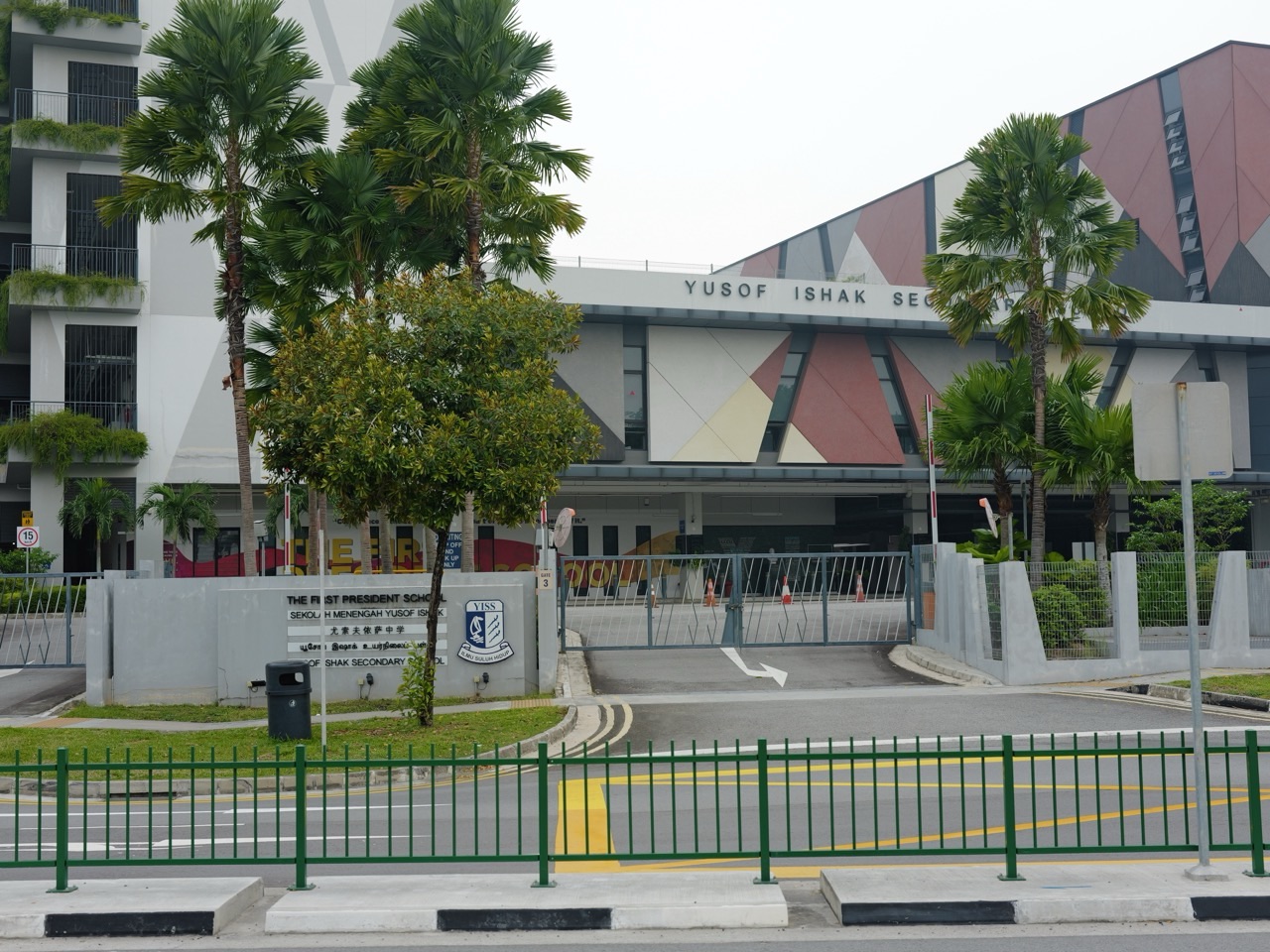
When a Punggol child and parent disagree about a secondary school after PSLE, start by separating what is possible from what each person prefers. The child’s official 2026 PSLE Score and Posting Group eligibility determine the ordinary school application route; the child’s interests, wellbeing and the household’s travel arrangements determine which eligible schools deserve attention. Punggol has four mainstream secondary schools to consider—Edgefield Secondary, Greendale Secondary, Punggol Secondary and Yusof Ishak Secondary—but none is automatically the right school because a parent likes its name or a child’s friends hope to attend.
The results will be released on Tuesday, 24 November 2026 at 11.00am. Families then have until Monday, 30 November at 4.30pm to submit ordinary S1 school choices through the official portal. This guide helps parents handle common disagreements—nearby versus more distant schools, a famous name versus a comfortable learning environment, PG1 versus PG2 at Score 25, and peer-group preferences versus programme fit. It includes the four local schools’ historical score ranges, a decision worksheet and a practical way to arrive at six genuine preferences without promising a 2027 place from old data.
Quick parent summary
• Read the actual PSLE Score and Posting Group options first; do not argue about a school the child cannot apply to.
• Ask the child what they value and why, then explain the parent’s practical concerns calmly.
• Compare school culture, subjects, CCAs, commute and personal support—not only past cut-offs or a brand name.
• The four Punggol schools have different programme themes and historical PG1/PG2/PG3 cut-offs.
• Use one chosen Posting Group consistently across the six ordinary preferences.
• Find two or three historically less competitive but genuinely acceptable choices where suitable.
• The child deserves a real voice, while adults remain responsible for checking rules and meeting the deadline.
Why parents and twelve-year-olds often disagree
An adult sees four years of reporting times, public transport, education costs, academic pressure and household routines. A child sees a school where familiar friends may go, an activity they saw at an open house, the fear of being alone, or the excitement of a particular club. Both viewpoints contain information. The disagreement becomes unproductive when either side assumes the other must be wrong before the actual school options have been checked.
A parent may want a historically competitive school because relatives regard it highly. The pupil may prefer a nearby school where they feel comfortable. Conversely, a parent may insist on the nearest school while the pupil longs for a science or performing-arts programme farther away. These are different versions of the same decision: where can this particular student learn well and manage the day-to-day demands?
The child does not need full responsibility for the technical admissions rules. It is reasonable for adults to verify eligibility, actual programme information, home travel and deadlines. But those checks should help the child participate meaningfully, not be used as a reason to ignore every concern they raise.
First remove options that are not actually available
The S1 Option Form and individual PSLE Score set the formal starting point. In the ordinary mapping, scores 4–20 usually enter PG3, scores 21–22 may choose PG2 or PG3, scores 23–24 usually enter PG2, and score 25 may offer PG1 or PG2. Scores 26–30 can qualify for PG1 subject to the applicable English and Mathematics conditions. Unusual circumstances require the primary school’s guidance; do not infer an actual option from the total alone.
The selected Posting Group in an ordinary option-band case normally applies across all six choices. A parent cannot propose a PG3 choice for one school and compare another school’s PG2 cut-off on the same form merely because the latter number looks more favourable. Under Full Subject-Based Banding, Posting Groups and subject levels are related but distinct: pupils may study different subjects at G1, G2 and G3 when eligible. The parents’ conversation should not turn into a permanent label attached to a twelve-year-old.
Start the family discussion with three clearly separated categories: eligible schools, schools the child would like, and schools the household can support logistically. The strongest shortlist is in the overlap. Where a preferred school falls outside that overlap, identify precisely which issue needs resolving.
The four Punggol schools and what a child might value
| School | Location | Reason a child might want to explore it |
|---|---|---|
| Edgefield Secondary | 36 Punggol Field, Singapore 828814 | Growing the Edgefield Mindset: enterprise, innovation and collaborative learning |
| Greendale Secondary | 51 Edgedale Plains, Singapore 828866 | Design, technology and engineering; outdoor adventure |
| Punggol Secondary | 51 Edgefield Plains, Singapore 828870 | Environmental sustainability, community contribution and leadership |
| Yusof Ishak Secondary | 8 Sumang Walk, Singapore 828676 | Sustainable smart-city STEM, applied science and leadership |
These themes are useful questions, not reasons to label one school as the only place where a child can learn innovation, science or leadership. All schools teach a broad curriculum; what differs is the way distinctive programmes are organised and the opportunities offered. Ask what a normal Secondary 1 pupil actually experiences and which CCAs, workshops or teams require selection. A child may be excited by a demonstration but less interested in the full ordinary timetable.
School location should also be compared honestly. A pupil living near Sumang Walk may have a different journey to Yusof Ishak from one living near Oasis or Edgedale. Another school in Sengkang may be easy to reach by a direct service from a particular home block. Do not settle travel arguments by looking only at a map pin. Try the morning journey and a late CCA return.
The historical Punggol school score comparison
For the completed 2026 Secondary 1 intake based on the 2025 PSLE, the four Punggol schools had the following final admitted historical PSLE Scores. They are separate by Posting Group and are not admissions guarantees for the 2027 intake.
| School | Historic PG3 COP | Historic PG2 COP | Historic PG1 COP |
|---|---|---|---|
| Edgefield Secondary | 14 | 23 | 27 |
| Greendale Secondary | 16 | 23 | 27 |
| Punggol Secondary | 19 | 24 | 27 |
| Yusof Ishak Secondary | 15 | 22 | 27 |
Numerically smaller PSLE scores indicate stronger overall PSLE performance. A historic PG3 cut-off of 14 was more stringent than 19. That does not mean a pupil who enters a school with an old cut-off of 19 will receive poorer teaching. The numbers describe the last admitted pupil in a specific completed exercise, not the quality of a school or the child’s future opportunities.
An old cut-off cannot predict the exact new number or the probability of one pupil’s admission. It is an evidence-based reference used to balance choices. If a family strongly disagrees about a historically ambitious school, the compromise is not to argue endlessly over a made-up likelihood: consider whether that school is a genuine preference, then pair it with suitable and less competitive historical choices where possible.
Disagreement 1: the parent wants a school with a lower cut-off
Suppose a child scores 16 and follows PG3. The parent prefers Edgefield because its historical PG3 cut-off was 14, while the child wants Greendale, which had an old PG3 endpoint of 16. The first problem is an incorrect interpretation of the numbers if the parent assumes Edgefield’s more competitive historical cut-off makes it educationally superior. It shows different previous demand and admission outcomes, not the actual quality of teaching for this child.
Ask the parent to name the educational reason beyond the number. Is there a programme the child would enjoy? A subject offering? A reliable support service? An easy commute? If the answer is only ‘people say it is better’, that is not sufficient to dismiss the child’s preference. The child should then explain why Greendale appeals: perhaps engineering projects, a friend, the atmosphere or an attractive CCA. Check those claims with official school information.
Next remember that at score 16, Greendale’s old PG3 endpoint was exactly 16; that is not a guaranteed future seat. Edgefield’s earlier endpoint of 14 was historically more competitive. The six-school list can reflect ambition and real preferences while containing suitable less stringent historical choices. The family need not agree on which school is objectively best; it needs to agree on a responsible application.
Disagreement 2: the child wants to follow friends
Friendships matter in the transition from Primary 6 to Secondary 1. The fear of entering a school without familiar faces can be genuine. But two children who hope to attend the same school may receive different PSLE totals, have different Posting Group options or choose different programmes. No child should be promised a shared posting outcome merely because friends write the same first choice.
Ask what the child hopes will happen if they join a friend: support during the first week, someone to eat with, an existing study partner or simply a sense of safety. Then look for other ways the receiving school helps new pupils meet classmates. Orientation, CCA activities, mixed form classes and student support may create new social opportunities. It is reasonable to value friendships, but not to ignore eligibility and a viable six-school list.
When a child says they will refuse a school without friends, do not use fear of disappointment as a reason to make a dishonest admissions claim. Explain that the family can record the preference while preparing other schools the child might grow to like. Visit a school or review its student-life resources and ask which parts of the transition feel most worrying.
Disagreement 3: the parent wants the nearest school
Parents may have good reasons to prefer a local school: safe travel, younger siblings, work schedules, transport spending and the ability to respond when a child is unwell. These constraints deserve respect. However, a longer journey is not necessarily unmanageable. A school outside Punggol might be reachable on a direct bus or MRT route, while a school inside Punggol could require awkward transfers from the family’s block.
Instead of debating ‘near’ and ‘far’ as opinions, test actual journeys. Note the front-door departure, waiting, transfers, road crossings, school-gate arrival, route home after CCA and backup plan for disruption. A parent may discover that the distant school is workable. The child may discover that the desired school would require an exhausting daily routine. Both should be able to update their views when evidence changes.
The child should not be expected to cover a difficult journey simply to prove independence. Nor should they be prevented from considering any out-of-estate school because the parent once attended the neighbourhood school. Ask whether the route is sustainable for several years, not whether a single demonstration journey can be completed.
Disagreement 4: Score 25 and the PG1-versus-PG2 choice
At PSLE Score 25, the official form may allow the pupil to select PG1 or PG2. This can lead to tension if the parent sees PG2 as automatically more desirable while the child prefers a PG1 school nearby, or if the child wants a demanding subject pace while the parent worries about academic stress. Both should look at actual subject Achievement Levels and the range of schools the chosen route makes relevant.
All four Punggol schools had historic PG1 cut-offs of 27 in the completed 2026 intake. Their historic PG2 endpoints were 22–24. Therefore, a score-25 child’s local school-choice picture is quite different under PG1 and PG2. The family should prepare separate provisional lists for both offered routes before making a group choice; the local PG1 figures cannot be borrowed for a PG2 application.
There is no reason to describe PG1 as a permanent dead end. Full Subject-Based Banding allows subject-level differences and further progression when students meet the relevant criteria. Conversely, there is no guarantee a pupil can take any chosen G2 or G3 subject on demand. Ask the receiving school about actual eligibility and support, as well as later decisions under the SEC framework. The right route depends on both a manageable start and opportunities to grow.
Disagreement 5: the child wants the school with a famous club
An open-house performance or robotics demonstration can be compelling, especially to a pupil who has just finished PSLE. Yet a club advertised on a website may require trials, auditions or limited allocations; a school-wide Applied Learning Programme is not automatically identical to a specialist CCA. Ask what a new student is guaranteed to experience and what is subject to selection.
The parent should not dismiss the interest as trivial. A motivated pupil may participate more fully when they enjoy the school’s co-curricular life. But the child also needs ordinary subjects, friendships, a manageable workload and a route home after training. A useful compromise is to find a shortlist of schools with related opportunities, then compare actual access rather than putting one unverified club above every other consideration.
A method for reaching a decision without winning an argument
- Each person writes three important needs privately before discussing school names.
- The child explains why each preferred school matters, in their own words.
- The adult explains practical constraints such as travel, safety, cost and academic support without using school prestige as a substitute for evidence.
- Together, check official eligibility and the correct Posting Group; remove schools that cannot be considered under the selected route.
- Use MOE SchoolFinder and school websites to check programmes, individual subject-level arrangements, CCAs and school types.
- Compare actual travel through one ordinary school morning and a late CCA scenario.
- Choose six schools the family could genuinely accept, including two or three with historically less stringent cut-offs where suitable.
- Put those six names in honest preference order and check the school codes before submission.
- Retain the official submission confirmation and explain that allocation remains uncertain until the results are released.
A conversation can be short and structured. Give the child time to reflect between the first discussion and the final ranking. It helps to write down points of agreement, such as ‘must be safe to travel home independently’, ‘must have suitable Mathematics support’ and ‘would like a performance or technology CCA’. Those agreements can narrow the choices without either person needing to surrender their entire view.
What to say when a child is visibly disappointed
Avoid treating the child’s score as a character judgement, a permanent forecast or a reason they no longer deserve a say. A parent can acknowledge that some school choices may be less realistic than hoped while still focusing on what the family can do. The immediate tasks are eligibility, appropriate schools, communication and the official submission. The future is much broader than any single school name.
If the child is distressed, ask whether the concern is a friendship, fear of unfamiliar teachers, a subject difficulty or the sense of disappointing an adult. Different problems need different support. A short school visit, a conversation with a trusted primary teacher or a specific reassurance about orientation may be more useful than another argument about cut-offs.
Some pupils may show prolonged distress, refuse ordinary activities or be unable to discuss the next school calmly. Families should contact the primary school for support and appropriate guidance rather than prolong an admissions debate. The purpose is to help the child enter the next stage safely and supported, not to minimise a genuine difficulty.
A private family school-choice comparison
| Decision criterion | What the parent records | What the child records |
|---|---|---|
| Academic fit | Actual Posting Group eligibility and support needed | Subjects they enjoy or find challenging |
| School environment | Student support, teacher communication and structure | Whether they can imagine belonging there |
| Activities | Actual CCA options and availability | What they want to try and why |
| Travel | Real school-day route and family practicality | Whether they can manage the journey independently |
| Historical COP | Correct completed-year value for the chosen PG | Understanding that it is a reference, not a promise |
| Preference order | Schools the household can genuinely support | Schools the pupil actually wants to attend |
This worksheet is not a popularity vote. The parent must ensure legal and practical eligibility, while the child provides important evidence about motivation and comfort. If a school is appealing to one person but unacceptable to the other, identify the reason. Perhaps an alternative can resolve it; perhaps the household has a real constraint that must be acknowledged.
The ordinary school posting rules still apply
Academic merit is the foundation of the ordinary S1 posting exercise. For eligible pupils with the same PSLE score competing for the final place, citizenship, school-choice order and computerised balloting are used as applicable tie-breakers. A higher preference does not defeat a pupil with a stronger eligible PSLE Score. Living next to a school is not the normal choice tie-breaker. The family should rank six schools in genuine order, not try to game a rumour.
MOE’s 17 November 2026 release encourages at least two or three schools whose previous cut-offs were less stringent than the child’s score, where suitable. For a PG3 pupil scoring 16, a historical PG3 COP of 19 was less stringent than the pupil’s result, while a COP of 14 was more stringent. The same comparison must use PG2 values for a PG2 applicant and PG1 values for a PG1 applicant. Nobody should translate a difference of one or two score points into a guaranteed 2027 seat.
The calendar that should settle the conversation in time
| Milestone | 2026 timetable |
|---|---|
| PSLE results available | Tuesday, 24 November, 11.00am |
| S1 Portal opens for choices | Tuesday, 24 November, 11.30am |
| S1 Portal deadline | Monday, 30 November, 4.30pm |
| S1 posting result | Tentatively Friday, 18 December; await official final date |
Parents can use Singpass to submit their child’s choices through the S1 Portal; only one parent needs to log in. If assistance is required, contact the child’s primary school in advance of the 30 November deadline. A confirmed DSA-Sec offer may change ordinary school-choice requirements; always follow the child’s official documents. The family should not wait until agreement is perfect or a school promises an outcome before meeting the submission deadline.
Frequently asked parent questions
Should my twelve-year-old get the final say?
The child should have a meaningful voice, but adults are responsible for checking official rules, safety and family constraints. A collaborative decision is usually more useful than an adult-only choice or an unrestricted pupil vote.
What if my child wants a school with a more competitive historical cut-off?
A historically ambitious school can be a genuine preference if the child is formally eligible, but the six-school list must still be balanced. Do not tell the pupil admission is assured and do not make every choice depend on the same kind of uncertain old boundary.
What if my child wants to go where their friends go?
Ask why the friends matter, explain that actual allocation may differ, and investigate how other eligible schools support new friendships. Friends can be a consideration, but should not override all school fit and eligibility evidence.
Does a shorter commute mean a place is more likely?
No. A shorter journey may make a school more suitable for the family, but it does not confer ordinary S1 school-choice priority. Compare the child’s correct Posting Group and historical cut-offs.
Should we choose PG2 instead of PG1 at Score 25 because it sounds better?
Not automatically. The actual option, subject strengths, starting pace, individual subject-level flexibility and schools available under each group matter. Compare two coherent possible lists rather than labels.
Can the child change interests after choosing a secondary school?
Yes. Children develop new interests over time. Choose a school that offers broad learning, supportive teachers and opportunities to explore, rather than relying on one possible career or CCA identity.
Official sources and eduKate guides for parents
- SEAB: 2026 PSLE result release and official S1 choice advice
- MOE: S1 Posting rules and Singpass portal
- MOE SchoolFinder: actual school programmes, types and historical cut-offs
- eduKate Punggol: Edgefield, Greendale, Punggol Secondary and Yusof Ishak comparison
- eduKate Punggol: score 25 and PG1 versus PG2
- eduKate Punggol: compare schools in Punggol and Sengkang
- eduKate Punggol: choosing when the child has no career plan
- eduKateSG: Secondary 1 academic transition and supporting learning foundations
Final parent move: The adult’s job is to make the application accurate, practical and submitted on time. The child’s job is not to win an argument, but to contribute honestly about where they can learn, belong and grow. Check the Posting Group, build a realistically balanced shortlist, test the journey and agree on six school names in genuine preference order. A thoughtful compromise is better than a supposedly perfect school selected without listening to the child.


