
G1 Social Studies Issue 4, Protecting Our Environment, teaches Singapore lower-secondary students why people depend on natural resources, how human activities can cause pollution, resource depletion and climate change, and what individuals and countries can do to reduce harm. It goes beyond telling children to recycle. The key question is whether a student can explain a relationship: where a resource comes from, how an activity affects it, what evidence supports a claim, and which practical response could help. For a Punggol family, everyday examples include water use, electricity, packaging, green spaces and responsible waste handling.
The official 2024 MOE Lower Secondary G1 Humanities Teaching and Learning Syllabus, implemented from the 2024 Secondary 1 cohort, names Issue 4 as “Protecting Our Environment”, with inquiry focus “How far can we protect the environment?” Its guiding questions cover dependence on the environment, effects of human activities and ways to protect it. The syllabus includes the 3Rs, water and energy conservation, alternative energy, regional haze cooperation and international climate efforts. It is a lower-secondary G1 Social Studies unit, not a separate national G1 SEC Social Studies paper in 2027. A parent can begin by tracing an everyday product to the natural resource it requires.
- Exact MOE topic: G1 Social Studies Issue 4 — Protecting Our Environment.
- Inquiry: How far can people and countries protect the environment?
- Key ideas: interdependence, natural resources, resource depletion, pollution, climate change, conservation and sustainability.
- Three pollution categories: land, air and water, with different sources and consequences.
- Daily actions: Reduce, Reuse and Recycle; make sensible choices about water, waste and energy.
- Wider cooperation: ASEAN efforts on haze and United Nations efforts on climate change are syllabus examples.
- Evidence skill: distinguish observed waste, measured pollution, predicted impacts and unsupported environmental claims.
- Curriculum: lower-secondary G1 Humanities, not a separately coded 2027 G1 SEC exam.
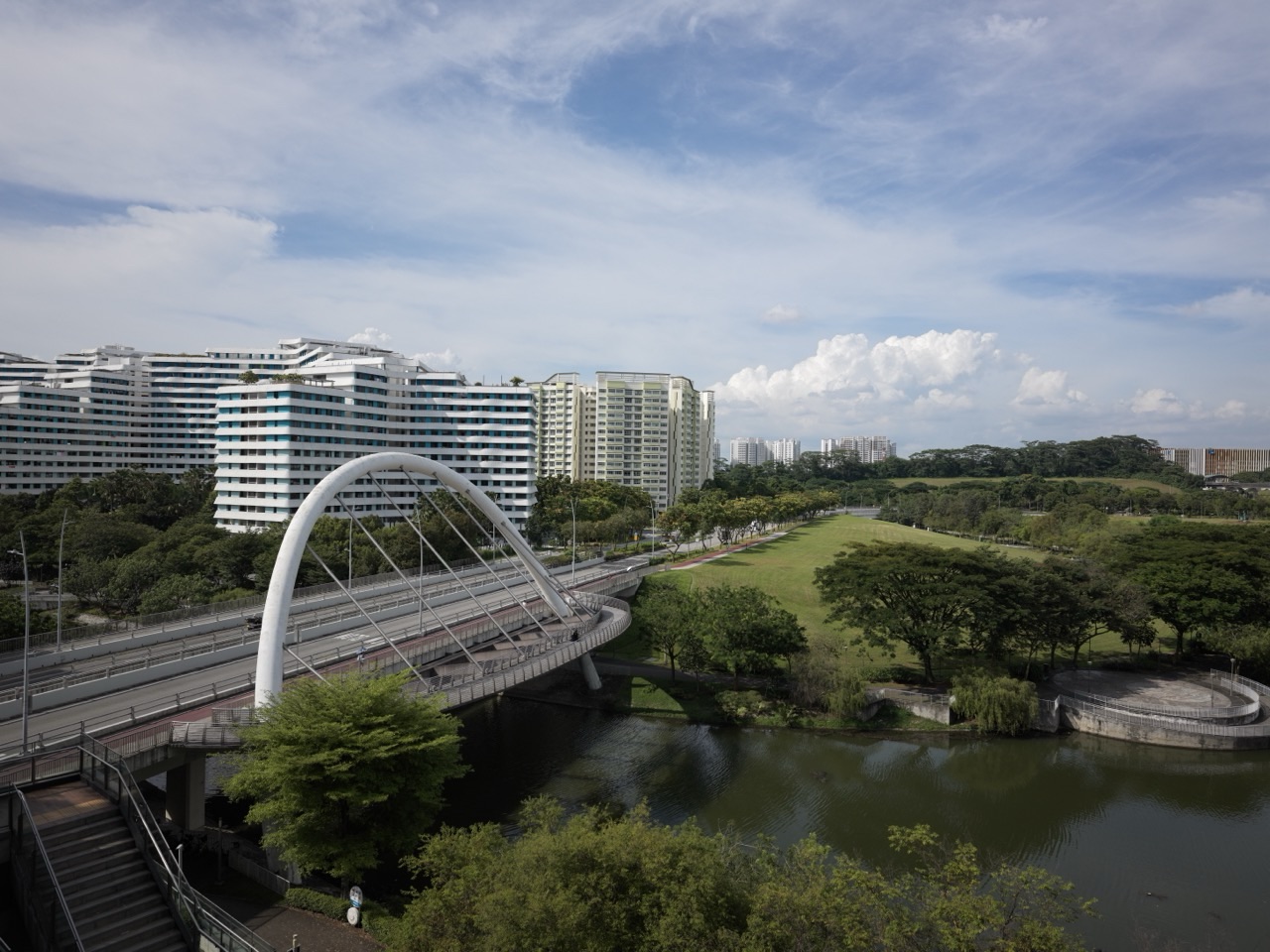
- Punggol example: a waterway and nearby paths can prompt inquiry, but a photograph cannot prove water quality.
- Parent’s next step: choose one environmental issue, define an achievable goal and test whether an action targets the cause.

What happens during this G1 Social Studies issue?
Students examine resources on which people depend, then look at consequences of pollution, depletion and climate change. A teacher may use a public information graphic, map, photo, article or data table. Pupils describe what the source establishes, explain a cause-and-effect relationship and consider responsible options. The goal is not simply to make the child feel guilty for using resources; it is to understand how human and environmental systems interact and which decisions can change outcomes.
The final inquiry invites evaluation rather than a slogan. Individuals can influence some everyday habits, while institutions and countries handle larger infrastructure and transboundary concerns. A good answer discusses both, with appropriate evidence and a realistic limitation. Schools choose their own class activities and appropriate assessments. There is no universal 2027 national G1 SEC Social Studies paper for this lower-secondary issue, so begin with the actual school task.
PG1 versus G1: clear up the labels first
Posting Group 1 is a secondary admission arrangement under Full Subject-Based Banding. G1 is a subject level. Protecting Our Environment is Issue 4 in the lower-secondary G1 Social Studies curriculum, which belongs to integrated Humanities. A pupil may offer other subjects at different levels where school criteria permit. Do not assume that the presence of environmental content creates a separate national SEC Geography or Social Studies paper.
The labels matter when choosing practice materials. A 2027 G3 Geography examination paper may cover different content and demand much more technical knowledge than this MOE issue. A Punggol parent should ask the school teacher which concepts are currently taught and what students need to demonstrate. The immediate aim is to help the child identify an environmental process and explain it clearly, not to start a future exam years ahead.
People depend on environmental resources
Clean water, air, soil, materials, food and energy sources all support human life and economic activity. Even a factory-made product depends on resources obtained from nature. Paper can originate from plant fibre; metals from minerals; many plastics from fossil-based raw materials. Understanding these connections helps students see why resource decisions matter beyond a household rubbish bin. The environmental system provides inputs while human activities can also change its condition.
A useful home exercise is to choose one notebook, container or piece of clothing and trace it to its raw materials. The child should distinguish what they know from what requires checking for a specific brand. They do not need a complete industrial life-cycle analysis. The learning outcome is an accurate sequence connecting nature, production, use and disposal. Once that sequence is understood, questions about responsible consumption become more meaningful.
Interdependence: two directions of influence
Interdependence means people depend on the environment while their actions also affect it. A community depends on water, for example, but its land use and waste handling can influence water quality. Agriculture relies on healthy soils yet can also change soil conditions. Urban development creates homes and services while using land and materials. A student should explain a particular relationship rather than recite that everything is connected.
Draw a simple diagram showing resources entering a fictional neighbourhood and outputs leaving it. Water enters households through infrastructure; used water must be handled appropriately. Products enter shops; packaging and discarded items require collection. Ask what happens when one part of the system is not managed well. The goal is to move from isolated environmental words to a clear description of processes.
Renewable resources are not limitless
Resources can replenish through natural processes, but “renewable” does not mean unlimited. Trees may grow again, yet a forest can be damaged faster than it recovers. Water moves through a cycle, yet available clean water depends on rainfall, treatment and protection. Fossil fuels form on timescales far beyond ordinary human use, making them effectively non-renewable for current energy decisions. These distinctions help avoid misleading answers about resource sustainability.
Ask the learner to compare a fictional managed forest and a fossil-fuel deposit. Which resources can replenish over relevant timescales, and under what conditions? What happens if consumption exceeds renewal? An accurate answer discusses rate, supply and quality. It does not declare every renewable resource harmless or every alternative material automatically superior.
What is resource depletion?
Resource depletion means a reduction in the availability of a resource through consumption or other processes, sometimes faster than it can be replenished. The syllabus includes this among the effects of human activity. Students should identify the resource involved, how the loss occurs and what practical consequences may follow. “The environment gets depleted” is too vague to demonstrate understanding.
Imagine a fictional small reservoir experiencing low replenishment while demand remains high. Stored water would fall under those assumptions. The example illustrates a mechanism, not the actual state of Singapore’s or Punggol’s reservoirs. The distinction is important: a teaching scenario can be useful without claiming a real environmental problem. For factual local claims, the student needs appropriately dated official information.
Land pollution: from waste to consequence
Land pollution involves harmful materials or waste affecting soil, habitats or public spaces. Ordinary visible litter may create a cleanliness concern, while some hazardous substances carry more serious risks. Not all materials or pathways are identical. A good answer explains where waste comes from, where it goes and how it can cause harm. The presence of one piece of rubbish does not establish the full environmental condition of a neighbourhood.
Use a fictional photo of discarded food packaging beside a walkway. Ask what is directly observable and what additional evidence would be needed to estimate how much waste is produced over time. Then discuss disposal facilities, responsible behaviour or waste reduction as possible responses. Students should not confront strangers or handle unknown hazardous waste as part of a school inquiry.
Air pollution and measured evidence
Air pollution involves harmful or unwanted substances in the air. It can arise from multiple sources, including some combustion activities, industrial processes and regional smoke events. Students should distinguish a possible source from a measured level. A grey sky or unpleasant smell cannot by itself establish the concentration of a particular pollutant. Reliable monitoring and appropriate scientific methods are necessary for precise claims.
A simple source exercise compares an official air-quality reading with an undated photo. The reading has a specified measurement, time and location, while the photograph supplies visual context without proving a pollutant level. Ask which claim each source supports. A student who checks dates and measurement definitions before interpreting evidence is developing a useful habit for both Social Studies and personal safety.
Water pollution and the limits of appearance
Water pollution can occur when harmful substances enter rivers, lakes, canals or coastal waters. Possible routes include improper discharge and runoff under certain conditions. Water that looks clear is not necessarily safe to drink; water that looks brown after rain is not automatically evidence of unlawful pollution. The real question is which substances are present and how they affect the environment, something a photograph cannot reliably determine.
Punggol Waterway can prompt discussion of responsible behaviour around an urban water feature, but a family photograph cannot establish its chemical or biological water quality. Children should not collect unknown samples or drink untreated water for an informal experiment. Use school-provided data or fictional measurement tables instead. This teaches the value of evidence and appropriate safety boundaries.
Climate and weather are different
Weather describes conditions over a short period, while climate concerns patterns measured over longer times. Climate change refers to sustained shifts in those patterns and the broader climate system. One unusually hot afternoon does not, on its own, prove long-term climate change. One cool day does not disprove it either. Students need to recognise why long-term records and scientific analysis are used for wider conclusions.
For a classroom example, give daily temperature readings and then a long-term trend drawn from a reliable source. Ask what each dataset can tell us and what it cannot. A student should not use a single measurement to describe a decades-long trend. This distinction improves information literacy far beyond environmental topics, especially when online posts promote dramatic conclusions from isolated events.
Natural greenhouse effect versus enhanced greenhouse effect
The natural greenhouse effect helps maintain Earth’s temperatures by affecting the movement of heat through the atmosphere. The enhanced greenhouse effect refers to additional warming associated with increasing greenhouse-gas concentrations, including from human activities. Calling all greenhouse gases inherently bad is inaccurate; the distinction is between a natural process and changes that intensify it. At G1 level, a clear conceptual explanation is more useful than complex calculations.
Social Studies then asks how people are affected and what responses may reduce emissions or manage consequences. Scientific mechanisms and civic decisions are connected but not identical questions. A child should understand that some solutions require technology, planning and cooperation rather than a single household action. Keep the explanation evidence-based instead of presenting every weather event as proof of a particular cause.
Reduce, Reuse, Recycle: what each one changes
Reducing means avoiding unnecessary use or waste. Reusing means using an item again where it remains suitable and safe. Recycling means processing accepted waste materials into resources for further production. These are not interchangeable. A recyclable package may still require resources to make and transport; a reusable product needs appropriate cleaning and a sufficiently useful lifetime. Recycling rules also depend on local collection systems.
Ask the child to consider a durable drinking bottle. Using it repeatedly may avoid buying some disposable bottles. When it reaches the end of use, correct material handling may enable recycling where facilities accept it. The student should explain which stage each choice affects rather than claim that one recycled item erases all environmental impact. This is the difference between a clear mechanism and a slogan.
When a green action is truly useful
A proposal should name a problem, describe an action and identify evidence that would show whether the result improved. If a fictional school wants fewer disposable cups, it might count cups used at comparable events before and after a change. A colourful recycling poster is not proof of lower waste by itself. The measure must relate to the actual goal.
Ask whether the intervention creates new costs or practical challenges. Reusable containers require cleaning and suitable storage. The child need not conduct an advanced life-cycle study, but should recognise that effectiveness depends on circumstances. An honest conclusion may be provisional until better data are available. Good environmental decisions are based on testing and revision, not wishful thinking.
Water conservation without compromising hygiene
Water conservation involves preventing avoidable waste and using water appropriately. Leaks should be reported to responsible adults for suitable maintenance. Ordinary hygiene, food safety and health needs should not be sacrificed in an effort to reduce consumption. Students should distinguish unnecessary use from essential use. A thoughtful answer describes a specific habit and explains how it could reduce waste.
Give a fictional household estimate in which 120 litres of avoidable usage falls by 30 litres. Under those assumptions, the reduction is 25% of the original amount. That is a simple Mathematics example, not a claim about a real household bill. To measure actual impact, a family would need a comparable baseline and reliable readings. Numbers are useful only when the method and reference quantity are clear.
Fossil fuels, energy and everyday decisions
Fossil fuels such as oil, natural gas and coal are non-renewable sources of energy on human timescales and release carbon dioxide when burned. The syllabus asks students to examine sustainable use of fossil fuels and conservation of energy. A learner should understand that electricity use depends on power and operating time, and that generation methods affect environmental consequences. The mere presence of an electronic device does not reveal its full environmental impact.
A fictional 20-watt lamp running for five hours uses 100 watt-hours, or 0.1 kWh. If its operating time is reduced with the power unchanged, its energy consumption falls accordingly. Students can explain this relationship before discussing cost. The illustration does not state today’s electricity tariff, and actual devices may draw different power under different conditions. Accurate labels and units are essential.
Alternative energy sources and trade-offs
Solar, wind, hydro and other energy sources may help reduce reliance on some fossil-fuel generation under suitable conditions. Each technology has infrastructure, material, location and operating considerations. A student should avoid claiming that every renewable installation produces constant power or has zero environmental footprint. The correct question is what benefit the technology can offer, what conditions affect it and how a larger energy system meets demand.
For example, solar output varies with sunlight. A grid may need storage or other sources to maintain reliable electricity supply at different times. The Social Studies task is not to engineer the entire power network. It is to recognise that environmental choices require practical planning alongside desirable goals. A balanced answer names one benefit and one realistic limitation.
ASEAN and haze: environmental issues cross borders
The MOE syllabus includes ASEAN efforts to address regional haze as an example of collective action. Smoke and other airborne pollutants can travel across national boundaries, meaning communities may be affected by activities elsewhere. The issue demonstrates that some problems cannot be managed by one household or country alone. Students should discuss cooperation without blaming all people from a particular nation for the actions of specific actors or processes.
A relevant source might describe regional monitoring or environmental commitments. The learner should distinguish an intended policy from a measured outcome. A historical haze example may not describe current conditions; students should check dates. For real safety decisions during a haze episode, use current official environmental information rather than an old photograph or a forwarded claim.
United Nations and climate cooperation
The syllabus identifies United Nations efforts to tackle climate change as an example of concerted international action. Countries may cooperate through negotiation, shared goals, reporting and agreed initiatives. But an announced target is not the same as proof of completion. Students should ask what the cooperation aims to achieve and what evidence indicates implementation or progress.
In a fictional exercise, two neighbouring countries share an environmental problem. Local steps may help, yet broader coordination may address a cause that crosses borders. The student can compare what individuals, communities and governments can reasonably influence. The aim is understanding collective responsibility rather than memorising every treaty or assuming one conference solves climate change.
Individual and collective responsibility
Individuals can choose how to use water, energy and materials. Schools, businesses and governments can influence infrastructure, standards and larger systems. Social Studies encourages thoughtful participation without making teenagers responsible for every global problem. A child should learn both that personal choices matter and that structural decisions can determine the available options. A serious response identifies which actor can realistically make a particular change.
Imagine a school wanting to reduce lunch waste. Students may make appropriate choices, while the school arranges suitable facilities and food vendors consider workable practices. The plan should not blame one child for a system-wide issue. A good answer describes how different responsibilities fit together and how success could be checked. This is more practical than simply saying everybody must help.
Sustainability is not a marketing adjective
Sustainable use considers present needs and longer-term consequences. A product labelled “green” does not necessarily have a lower total impact than all alternatives. The claim should identify what was improved: material sourcing, reduced energy use, repairability or another relevant feature. Students should distinguish evidence-based environmental information from vague marketing. This is consumer literacy and source evaluation.
A fictional stationery product claims to be “100% planet-friendly.” Ask what the phrase means and which evidence would be needed. It might use recycled material, yet still require manufacturing, transport and disposal. A precise statement about a documented proportion of recycled content is easier to evaluate than a universal slogan. The learner should not automatically reject all sustainability claims, but should examine their scope.
Punggol and urban environmental learning
Punggol contains waterways, housing, transport infrastructure, park connectors and community facilities. These offer ways to observe relationships between human use and environmental features. A family can ask why trees provide shade near a path or what kind of waste facilities are visible. However, photographs alone cannot establish overall biodiversity, local pollution trends or whether a particular development meets environmental standards.
A safe task is to use a public photo and identify one visible natural element, one built element and an interaction. Then ask what additional source would be needed for a stronger environmental claim. Avoid entering restricted sites, collecting unknown materials or confronting members of the public. Local learning should make the child more accurate and curious, not create new hazards.
How Issue 4 links with Geography
G1 Geography’s first exposure unit covers forest resources, deforestation and the enhanced greenhouse effect. Its second studies housing developments and the built environment. Issue 4 of Social Studies adds questions about responsible decisions, conservation and cooperation. These topics reinforce one another, but each discipline asks a different kind of question. Geography may explain a physical process, while Social Studies may evaluate how people respond.
A student might first explain how clearing forest cover can affect habitats, then discuss how a community could balance housing demand with environmental protection. The child should not assume that every project creates identical impacts. Each claim needs location, conditions and evidence. Interdisciplinary learning is most useful when connections are clear and differences are respected.
A four-week parent learning plan
Week 1: trace three everyday items back to natural resources and explain interdependence. Week 2: compare fictional land, air and water pollution cases, naming the relevant source and consequence. Week 3: study the 3Rs and basic water or energy calculations. Week 4: use a short source about an environmental action or international cooperation to evaluate what it can achieve and what remains uncertain.
Each week should include one fresh independent task after the explanation. If the learner can correctly identify a cause, an impact and an appropriate response without being told the method, progress is visible. If the same mistake repeats, ask the school teacher for specific guidance rather than simply adding more pages. A short, thoughtful exercise is preferable to an unrelated collection of environmental slogans.
Three students, three learning obstacles
Alicia believes that recycling a disposable item erases the environmental cost of producing it. Her tutor separates reduction, reuse and recycling, then asks which stage each action affects. Ben sees a cloudy-water photograph and claims it proves a company caused pollution. His teacher asks what measurement and source information would be needed. Mira assumes solar panels generate identical electricity every hour, so her tutor introduces the effect of sunlight conditions and the role of wider power systems.
Their improvement appears when they solve new situations independently. Alicia can compare two product-use choices, Ben qualifies a claim based on evidence and Mira recognises a practical limitation of energy technology. The aim is sound judgment, not more impressive vocabulary. Social Studies rewards careful relationships between facts and conclusions.
How to answer the inquiry question
“How far can we protect the environment?” invites an evaluated answer. A student may argue that responsible consumption and conservation can reduce some waste, while larger pollution and climate issues often require institutions, technology and international cooperation. The child should use the evidence provided in the school question and acknowledge a limitation rather than simply say people can or cannot protect nature.
A useful structure is claim → evidence or example → mechanism → limitation → judgment. If the question concerns haze, discuss relevant regional action rather than an unrelated paragraph about reusable cups. If it concerns household energy, focus on consumption and practical conservation. A concise relevant response is stronger than an expansive answer that does not address the issue asked.
School assessment and when support helps
This is a lower-secondary G1 Humanities issue, not an independently coded 2027 G1 SEC Social Studies paper. School tasks may evaluate concepts, source interpretation, short explanations and inquiry. A lower mark may arise from misreading a chart, confusing weather and climate, or recommending an action unrelated to a cause. Diagnose the first error before choosing practice.
eduKate offers small-group tuition in Punggol for its available programmes. Confirm whether specialist Humanities support is offered rather than assume a dedicated class exists for every issue. If a child is progressing well through school feedback and modest independent learning, extra tuition may be unnecessary. The purpose of support is to reduce confusion, build critical thinking and preserve a manageable routine.
A practical environmental action table
| Issue | Possible action | Evidence needed |
|---|---|---|
| Unnecessary packaging | Reduce avoidable single-use items | Comparable item counts and practical conditions |
| Wasted water | Report leaks and improve appropriate use | Reliable consumption or maintenance records |
| Unnecessary electricity use | Reduce avoidable operating time | Power and duration, with a clear baseline |
| Regional haze | Regional monitoring and cooperation | Dated environmental readings and policy outcomes |
| Climate change | Emissions reduction and coordinated measures | Credible long-term data and verified implementation |
A worked school inquiry: do clearer recycling labels help?
Imagine a fictional secondary school where students often place food-stained packaging into a recycling bin even though the collection rules do not accept it. A student proposes clearer signs. Before claiming the signs will solve the problem, the class should ask what waste categories are actually accepted, which items students find confusing and how the observation will be made fairly. The teacher could provide a hypothetical table of ten items and ask which belong in each bin. The point is understanding the collection system and the consequences of incorrect sorting, not publicly blaming pupils or handling contaminated waste.
The student could compare an initial fictitious count of incorrectly sorted items with a later count after information was improved, ensuring the two periods are reasonably comparable. Suppose 24 items were misplaced in Week 1 and 15 in Week 2. Under those assumptions the count fell by nine items, a 37.5% decrease relative to the original 24. That does not by itself prove the sign was the sole cause, because the number of users, type of waste and collection conditions might also have changed. The student has learned a crucial distinction between an observed association and a demonstrated cause.
A responsible conclusion might say, “The records show fewer incorrectly sorted items in the second period. Clearer signs may have helped, but we would need comparable usage information and further observations to judge the effect confidently.” That is stronger than writing, “Our poster saved the environment.” It is also more useful for future improvement. If confusion remains high for a particular material, the next action could be to test whether instructions need examples or whether the bin placement itself contributes to mistakes. Inquiry should lead to a reasoned revision, not a celebration based on an unsupported claim.
A seven-step source-checking method for environmental claims
When a child sees a claim about water quality, air pollution, climate change or a new sustainable product, give them a short process. First, identify the exact environmental problem being discussed. Second, find who published the claim. Third, check the date and location. Fourth, identify what was measured or observed. Fifth, distinguish the result from any explanation of its cause. Sixth, ask who might be affected and which practical response is proposed. Seventh, consider which missing information could change the conclusion. The steps can be applied to a simple fictional school worksheet before moving to reliable public educational sources.
For example, a social-media caption claims that a photograph of Punggol Waterway proves its water is dangerously polluted. The photograph is a source about appearance, not a scientific water test. The student should identify the missing date, sample measurements and relevant official information before repeating the allegation. A contrasting claim that clear-looking water is definitely safe is also unsupported. This does not mean dismissing genuine concerns. It means collecting the right evidence and passing a credible report to the appropriate institution if a real environmental problem is suspected, without confronting people or attempting unsafe sampling.
This habit prepares pupils for later Science and Humanities learning, but it also improves ordinary decisions. A family comparing two products may ask which environmental feature is actually documented instead of relying on packaging colours. A student reading a chart should check units and the time period. A teenager discussing climate news should avoid turning one weather event into a decades-long trend. Each example reinforces the same principle: precision about what a source establishes makes environmental care more constructive.
Frequently asked questions
What is G1 Social Studies Issue 4?
Protecting Our Environment, with inquiry focus on how far people can protect the environment.
Is the topic only about recycling?
No. It also covers resource use, pollution, climate change, conservation and collective action.
What are the 3Rs?
Reduce, Reuse and Recycle, which affect different stages of use and waste handling.
What is resource depletion?
A reduction in resource availability through use or other processes, potentially faster than replenishment.
Does clear-looking water prove it is safe?
No. Appropriate testing and standards are needed to evaluate water quality.
Does one hot day prove climate change?
No. Climate involves longer-term patterns rather than one day’s weather.
What is the enhanced greenhouse effect?
Additional warming linked to increasing greenhouse-gas concentrations, including from human activities.
Are renewable energy sources impact-free?
No. They also involve materials, land, infrastructure and operational trade-offs.
Why is ASEAN mentioned?
Regional cooperation on haze is an example of addressing a cross-border environmental issue.
Why is the United Nations mentioned?
It illustrates wider international cooperation on climate change.
Is there a national 2027 G1 SEC Social Studies paper?
No. This is a lower-secondary G1 Humanities issue assessed through school learning arrangements.
What does ‘How far’ ask for?
An evidence-based judgment about what can be achieved and what limits remain.
Can my child test Punggol Waterway water at home?
Do not handle or test unknown water without suitable school supervision. Use reliable public information or fictional data.
How can I help quickly?
Choose one item, identify its natural-resource origin, explain one impact and consider a practical response.
Official MOE syllabus and further reading
- MOE: G1 Humanities syllabus, Issue 4 Protecting Our Environment
- G1 Social Studies: all four issues and inquiry skills
- G1 Geography: forests, deforestation and the enhanced greenhouse effect
- G1 Geography: housing and sustainable built environments
- G1 Social Studies Issue 3: conflict, peace and cooperation
- SEAB: national 2027 G1 subject directory
Parent takeaway: ask your child to explain one environmental problem through its cause, consequence, possible action and limitation. Then ask how they would verify the action worked. This turns environmental concern into clear reasoning and practical responsibility.
Continue with the connected guide: What happens in Full Subject Based Banding | FullSBB Life 2027 Complete Parent Guide and Topic Hub. Use its linked index to compare the related questions and choose your next reading.


