
G1 Geography’s Forest Resources in the Natural Environment is Unit 1 of the Geography Humanities Exposure Module in Singapore’s Lower Secondary G1 Humanities syllabus. It helps students explain the difference between natural and human-made resources, why forests support healthy ecosystems and how human activities such as deforestation affect living things and the climate. A student does not need to memorise every tree species to get started. They should be able to look at an everyday object, trace its materials to the natural world and explain why a change in the environment can affect people and other living things.
MOE’s 2024 Lower Secondary G1 Humanities Teaching and Learning Syllabus, implemented from the 2024 Secondary 1 cohort, combines Social Studies with three Humanities Exposure Modules—Geography, History and Literature in English. The Geography module has two units: forests and natural resources, followed by housing development and the built environment. This is a lower-secondary learning module, not a separately coded G1 national SEC Geography examination in 2027. For Punggol parents, the next useful step is to ask the child to identify one observed fact, explain a geographical relationship and support it with a reliable source rather than copying a long environmental slogan.
- Exact MOE module: Lower Secondary G1 Humanities, Geography Exposure Module, Unit 1: Forest Resources in the Natural Environment.
- Main topics: the natural environment, natural and human-made resources, the value of forests, deforestation and the enhanced greenhouse effect.
- Core geographical skill: describe a visible feature, explain a cause-and-effect relationship and recognise what a source cannot prove.
- 2027 examination distinction: this is school learning under MOE’s lower-secondary Humanities syllabus, not a separate K-code national SEC G1 Geography paper.
- Simple Punggol example: observe trees, pathways, water and housing from a public park connector; distinguish human-built surfaces from natural elements.
- Safety and accuracy: do not disturb habitats, gather protected plants or assume that one local photograph demonstrates global deforestation.
- Parent’s first check: can the child explain where the material in an everyday object originated and why resources are valuable?
- Four-week plan: resources, forests, deforestation, then evidence-based action.
- Next topic: Housing Developments in the Built Environment, the second Geography Exposure Unit.

What happens in the G1 Geography forest module?
Students begin with the idea that Earth contains both living and non-living natural features. They study how resources come from natural processes and how people turn those resources into products. They then examine forests as ecosystems that support living things and help sustain important environmental processes. Finally, they consider what can happen when forests are permanently removed, including habitat loss, increased atmospheric carbon dioxide and environmental change. Teachers may use maps, photographs, short texts and simple observations. They can ask pupils to describe what they see, connect causes to effects and suggest responsible choices.
The module is intentionally accessible. It is designed to introduce geographical thinking through everyday examples rather than require the full breadth of an upper-secondary Geography examination. That does not mean it has little intellectual value. A student who can explain why a wooden chair ultimately depends on forest resources, why soil protection matters, or why a claim about climate requires evidence is learning to reason across systems. These foundations help with Science, Social Studies, consumer literacy and future work. The teaching focus is clear understanding rather than the quantity of environmental facts memorised.
The difference between Posting Group 1 and G1 Geography
Posting Group 1 (PG1) helps organise initial Secondary 1 admission under Full Subject-Based Banding. General 1 (G1) describes a subject level. The Geography content discussed here is one exposure unit within the integrated G1 Humanities curriculum; it is not necessarily a separate weekly examinable Geography subject or a national examination entry. A student may encounter different Humanities themes during lower secondary, and the school decides its teaching sequence and assessments. Parents should use school documents for the child’s actual current syllabus rather than infer lessons from a future SEC examination code.
A student who enjoys landscapes or nature may later consider Geography at a different General level where the school’s subject combination and eligibility rules permit. However, completing the G1 exposure unit does not automatically qualify the learner for a particular upper-secondary course. Families should ask the school what is offered and which evidence of readiness matters. The immediate task is simpler: strengthen geographical observation and explanation. A child should be encouraged to investigate a question without feeling their entire future depends on the label of one module.
What is the natural environment?
The natural environment includes living things—plants, animals and other organisms—and non-living features such as rocks, water and landforms that exist through natural processes. A river, forest or mountain is part of the natural environment. Human activities can alter those features, but the distinction remains useful when identifying the source of resources. A street lamp, school building or concrete walkway is part of the built environment because people constructed it. A tree planted beside a paved path is a natural living element in a human-designed setting. The two environments often exist together.
For a Punggol learning activity, a child might examine a safe public view that contains a tree, a canal, a pedestrian bridge and housing blocks. They can label each visible feature and ask which were built, which are living and which combine human planning with natural processes. Some features are less simple than they first appear: an engineered waterway contains water, which is natural, but its channel may have been designed by people. This is a chance to improve precision. Students should not be forced into inaccurate categories when an explanation involving both environments is more truthful.
What is a natural resource, and how does it become a product?
Natural resources are materials and other useful features from the natural world. Human-made products use or transform these resources. Timber can be processed into furniture, minerals into components, water used in production, and plant materials into textiles or food. The key relationship is that the finished product may look far removed from its original source. An object made in a factory is not independent of nature simply because a machine performed the manufacturing. Students should trace the chain backwards and recognise the environmental resources involved.
Consider a school exercise book. Its paper generally originates from plant-derived fibres, often wood pulp, although recycled paper and alternative fibres can be used. The book may also include ink, glue and binding materials. Students can draw a simple chain: tree or recycled fibre → processing → paper → notebook. Ask where the raw materials came from, what resources were needed along the way and how recycling may reduce the demand for some fresh raw materials. The example is illustrative, not a full life-cycle analysis of a particular brand.
Why does the syllabus distinguish natural and man-made resources?
The distinction helps students avoid thinking that materials simply appear on shop shelves. A natural resource exists through natural processes, while a human-made material or product results from people transforming resources into a useful form. For instance, sand and limestone are natural resources involved in producing glass, and latex from rubber trees has industrial uses. Students should explain the transformation at the level their teacher expects rather than memorise obscure manufacturing recipes. The point is to connect consumption and environmental resources.
This also reveals why products can carry hidden environmental costs. A wooden table may require timber harvesting, transport, processing and finishing. A metal shelf may require extracting and processing minerals. There is no universal answer that one material is always better in every context; durability, energy use, sourcing and disposal matter. A lower-secondary learner can practise asking what information would be needed for a fair comparison. This is a stronger habit than declaring all wood environmentally harmful or all recycled materials automatically harmless.
What makes a forest an ecosystem?
A forest is not just a cluster of trees. It contains plants, animals, microorganisms, soil, water, light and many relationships among them. Plants provide food and habitats; insects and other animals can contribute to pollination or nutrient cycling; decomposers help break down dead material. The forest’s living and non-living components interact. This is why clearing an area can have effects beyond removing visible trees. Changes to shelter, soil, moisture and food sources can influence many organisms.
Ask the learner to draw a simple relationship diagram rather than an artistic forest scene. Connect a tree to shade, leaf litter, habitats and photosynthesis. Connect soil to water retention and plant roots. Explain that the links are examples and may differ between forests. A student who can describe two relationships and what might happen if one changes is showing geographical understanding. The aim is not to claim every forest contains the same species or to present a neat diagram as proof of a complete ecosystem.
How forests benefit humans and other living things
The MOE module identifies several benefits: forests supply materials and food, offer habitats, provide opportunities for recreation, store carbon and help reduce soil erosion. Each effect has a mechanism. Tree roots can help stabilise soil in appropriate conditions. Plants take in carbon dioxide during photosynthesis and incorporate carbon into biomass. Forest cover provides space and ecological conditions on which many organisms depend. Students should link a benefit to its process rather than state a list without explanation. Different forests vary, and a particular benefit should be described at a scale the evidence supports.
A walk through an urban park can help illustrate shade and recreation, but an urban park is not automatically equivalent to a mature tropical forest. Forests can support much greater biodiversity or different ecological processes than an individual landscaped green space. A student should recognise that distinction. Parents can discuss how urban tree cover benefits people while explaining that the specific forests studied in the curriculum may be located elsewhere in the world. Local observation is a bridge to understanding, not a substitute for accurate geographical categories.
Photosynthesis, carbon and the climate connection
Plants use light energy to make sugars from carbon dioxide and water during photosynthesis, releasing oxygen as a by-product. Carbon becomes part of plant tissues and can be stored in vegetation and soil. Forests therefore play an important role in the carbon cycle. The relationship is more complex than saying each tree permanently removes a fixed amount of carbon dioxide regardless of circumstances. Growth, decomposition, disturbance and land-use change affect carbon storage. At the G1 level, the main idea is that forests interact with the atmosphere and support healthy ecosystems.
The greenhouse effect itself is a natural process that helps Earth remain warm enough for life. The enhanced greenhouse effect refers to additional warming associated with increased concentrations of greenhouse gases, including carbon dioxide from human activities. Students should not confuse the natural greenhouse effect with the harmful consequences of increasing it. Nor should they describe every hot day as proof of climate change. Climate patterns require long-term evidence, while a particular day’s weather is a short-term observation. Careful language prevents a useful topic from becoming a collection of misleading slogans.
What is deforestation?
Deforestation refers to the permanent removal of forest cover, typically linked to changing land use. Forests may be cleared for agriculture, infrastructure, settlement or other purposes. A forest damaged by a short event is not necessarily the same as an area permanently converted to another use, although both can affect ecosystems. Students should describe what happened and why rather than assume every photograph of felled trees shows the full history. The causes of forest change differ by region, policy, market demand and local circumstances.
An important learning step is distinguishing direct and indirect effects. The direct effect of clearing trees is the loss of vegetation. A further effect may be reduced habitat availability for particular species. Soil may become more vulnerable to erosion under some conditions. Changing carbon storage and emissions can affect the climate system. These consequences do not all happen at the same speed or in the same manner. A strong short answer identifies one mechanism and explains it, rather than listing every possible environmental harm without a link.
Deforestation and biodiversity: why losing habitat matters
Biodiversity refers broadly to the variety of living things and ecological variation. Different species have different habitat needs. When a forest area is cleared, some organisms lose food, shelter or breeding sites. Fragmentation can separate populations and make movement between habitat patches harder. A student can understand the idea through a simple hypothetical diagram: two forest patches connected by a strip of vegetation before development, then separated afterward. The question is how the change could affect movement, not whether every animal responds in the same way.
The learner should avoid exaggerated claims such as “all animals will die when a single tree is cut.” Scientific and geographical reasoning benefits from conditions and evidence. Some species are more sensitive to change, others may adapt, and the effects depend on scale. Explain that environmental concern is strongest when paired with accurate descriptions. This also helps students discuss conservation responsibly: protecting important habitats, connecting green spaces and reducing avoidable damage may require planning and trade-offs.
How deforestation can affect soil and water
Vegetation can influence how water reaches the ground, infiltrates soil and moves through a landscape. Roots and soil structure can affect stability and erosion. Removing forest cover can increase the exposure of some soils to rainfall impact, but the outcome depends on slope, rainfall intensity, soil type and land management. A simple classroom investigation might use a teacher-provided drawing showing a vegetated slope and a bare slope. Ask which factors differ and what additional information would support a conclusion about runoff. This builds causal thinking without risky outdoor experiments.
Students should also recognise that clean water, sediment movement and soil conservation matter beyond remote forests. Communities need reliable water systems and healthy landscapes. Human development therefore has to consider drainage, pollution and environmental impact. A student who understands why exposed soil may wash away can later use the same thinking when examining construction sites or urban green-space plans. They should never assume a particular site is breaking environmental rules merely because exposed earth appears in one photograph.
How to read a map of forest loss honestly
A map may show forest cover in two years, areas of clearing or a regional estimate. A student should check its legend, scale, date, geographic boundary and definition of forest before drawing conclusions. A dark colour may indicate dense forest, high loss or something else entirely. The same image cannot be interpreted without its legend. Maps also simplify the world. They can show a spatial pattern without explaining the social decisions that produced it. A good Geography answer starts by describing what the map actually displays.
A hypothetical map might show a district with 60 square kilometres of forest in Year A and 45 in Year B. The recorded decrease is 15 square kilometres, or 25% of the original area. That is a mathematical change within the fictional data. It does not prove the cause was one particular industry, nor does it establish what happened to species or communities without more evidence. Teach the learner to calculate carefully and avoid assigning an unsupported explanation to the numbers. Map reading and evidence evaluation work together.
| Claim | What would support it? | What would not be enough? |
|---|---|---|
| Forest cover decreased in a stated area | Comparable dated maps or reliable survey data using the same definition | An undated photograph of a cleared patch |
| A species lost suitable habitat | Habitat and species information across the affected area | A photo of one animal |
| Clearing caused local soil erosion | Relevant observations, site conditions and suitable comparison | Assuming that every exposed surface erodes identically |
| An action reduced environmental harm | A defined baseline and follow-up measure | A promotional slogan saying a project is green |
Can we learn about forests from Punggol?
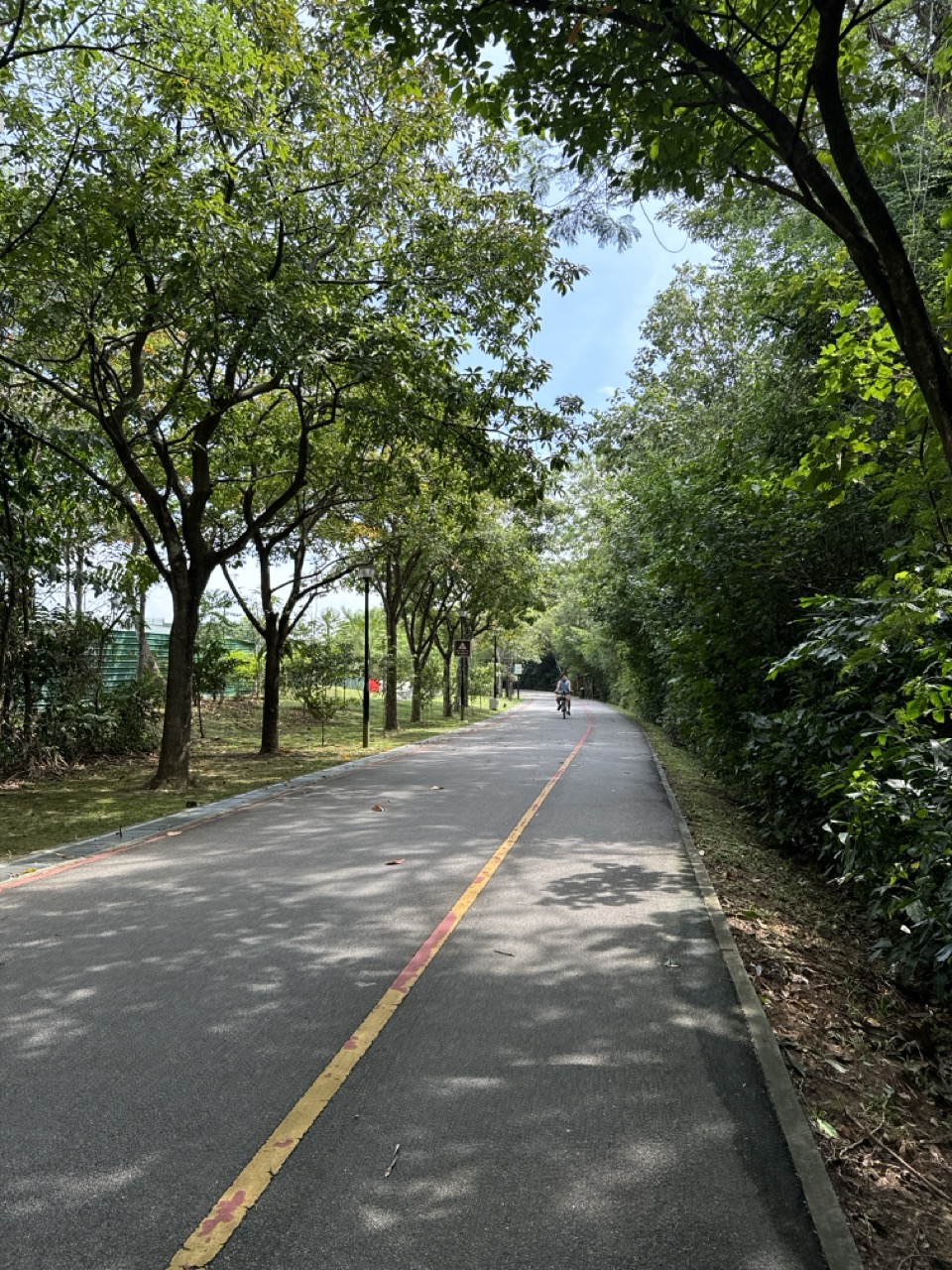
Punggol’s parks and park connectors can help students notice natural and built features living beside one another. A family can compare tree shade with exposed pavement, observe the role of vegetation around a path or discuss how people use green space. These are starting points for questions, not a claim that a local park is an untouched forest ecosystem. The child should be able to explain which observations belong to the immediate location and which ideas must be studied through wider information.
A useful safe activity is to choose a public path and ask the student to identify three living features, two human-built features and one interaction between them. They might notice a tree providing shade along a walkway or a drain directing rainwater from a paved surface. Ask whether the photograph proves the feature’s complete environmental impact. Usually it does not. This creates a natural opportunity to talk about evidence, context and why environmental planning involves more than adding one decorative tree.
Why planting trees is not the whole environmental answer
Planting trees can be valuable, but the effect depends on species, location, survival and long-term care. Protecting an existing healthy ecosystem may provide benefits that cannot be recreated immediately by planting saplings. Students should distinguish forest conservation, reforestation, afforestation and urban greening rather than use them as identical words. A G1 learner need not memorise every technical term at once, but should understand that different actions solve different problems. The best recommendation identifies the actual environmental concern and what evidence would show an improvement.
Consider two hypothetical proposals. One protects a threatened forest corridor; another plants shade trees beside a school. Both may be useful. The first addresses ecological continuity and habitat, while the second may improve a built environment for people. They should not be ranked using a single slogan such as “more trees are always better.” Ask what the goals are, which benefits are expected, who will maintain the project and how results can be measured. This is introductory environmental decision-making grounded in purpose.
How Geography links to Science and Social Studies
Science can explain mechanisms such as photosynthesis, energy and ecosystem relationships. Geography asks where natural and human systems interact and what patterns appear. Social Studies asks how societies make choices when resources and needs compete. Literature may give readers a personal perspective on environmental change. The 2024 G1 Humanities syllabus deliberately connects these disciplines, so parents can help the child notice the different questions rather than teach them as unrelated subjects. A topic becomes easier to remember when the learner understands why each discipline studies it.
For example, housing development requires land and materials. Geography examines where those resources come from and how the environment changes. Social Studies considers community needs and shared responsibilities. History can show how housing decisions evolved in Singapore. A student who sees these connections can explain a contemporary issue more fully without needing advanced examination essays. The goal is not to use impressive vocabulary. It is to give a coherent explanation that connects facts, processes and people’s decisions.
Typical mistakes and the correct teaching response
- Mistake: natural and man-made resources are treated as unrelated. Ask the child to trace a common product back to its raw materials.
- Mistake: a planted park is called an untouched rainforest. Discuss the difference between landscaped green space and a forest ecosystem.
- Mistake: climate and weather are treated as identical. Contrast daily observations with long-term climatic patterns.
- Mistake: deforestation is said to cause every problem everywhere. Require one mechanism, local conditions and appropriate evidence.
- Mistake: a map is read without its legend. Check the scale, date and meaning of symbols before interpreting.
- Mistake: environmental care is reduced to slogans. Ask what action addresses which problem and how success could be checked.
- Mistake: students copy notes but cannot explain a relationship. Use a fresh example and ask for cause, evidence and consequence.
- Mistake: one photograph is treated as a complete trend. Explain the difference between an observation and a broader generalisation.
Four weeks of G1 Geography forest learning
Week 1 — Resources and the natural environment
Select three familiar objects—a notebook, a glass cup and a wooden shelf—and trace the original natural resources involved. Ask what has been transformed by people and which parts of the chain remain uncertain. Draw a simple diagram for one product. Then compare a photograph of a natural feature with a built structure and explain the difference. Keep the questions short enough for the learner to answer independently. The goal is a stable foundation for later environmental reasoning, not an encyclopaedia of raw materials.
Week 2 — Forest functions and ecosystems
Use a teacher-approved image or simple diagram to identify trees, other organisms, soil and water. Ask for two relationships—for example, trees and habitat or roots and soil. Then ask what might happen if a relationship is disrupted. Encourage conditional language and avoid unsupported claims that every forest behaves the same way. A child who can draw and explain a useful relationship has made better progress than one who copies twenty forest facts without understanding them.
Week 3 — Deforestation and the enhanced greenhouse effect
Provide a short reliable explanation of deforestation and a simple diagram of carbon movement. Ask the student to distinguish the natural greenhouse effect from its human-enhanced form. Give a hypothetical land-use example and request one direct effect and one possible indirect effect. Discuss which information would be required before making a stronger claim. The aim is causal clarity. If the student confuses climate with weather, work on that distinction first instead of introducing more advanced global data.
Week 4 — Source reading and responsible action
Give two maps or statements based on clearly labelled fictional data and ask what can and cannot be concluded. Then ask the student to propose one practical environmental action with a stated aim and a way to check the outcome. Compare the answer with Week 1 for precision and independent reasoning. If the child still confuses concepts, request teacher feedback on the specific issue. A short and coherent response is more useful than an elaborate essay constructed from copied environmental slogans.
Three students, three different problems
Alicia knows the environmental terms but cannot describe the source
Alicia can define deforestation and biodiversity but sees a map with red and green regions and immediately says the entire country is losing all its forests. Her teacher asks her to read the legend, dates and boundary before interpreting. The red colour actually indicates areas with an identified change, not the absence of all forest. Alicia revises her answer to describe the supported pattern. On a new map she checks the legend independently. Her improvement is not memorising another definition; it is recognising that evidence must be read before a conclusion is made.
Kai Kai understands trees but confuses products and materials
Kai Kai says a plastic ruler is man-made and therefore has nothing to do with natural resources. His tutor asks where its raw materials originate. The child sees that manufacturing transforms resources obtained from the natural world. He draws a simple sequence connecting source materials and useful products. Later he applies the reasoning to a glass bottle and a notebook without prompts. The learning target is the relationship between natural processes and human production, not collecting examples of rubbish or debating every industrial process in detail.
Mira cares deeply about the environment but makes unsupported claims
Mira wants a school to plant hundreds of trees because she believes this will instantly solve all climate problems. Her teacher respects her concern while asking what the school can realistically influence, how trees would be maintained and what outcomes could be measured. Mira revises her plan to identify a specific local benefit, such as shade in a suitable location, and distinguishes it from global climate effects. Her environmental commitment becomes more useful because the proposal now has a purpose, scale and realistic evidence requirements.
What should parents understand about assessments and later subject choices?
The Geography exposure module forms part of lower-secondary G1 Humanities. Schools use classroom activities, inquiry and assessments appropriate to their teaching plan. There is no separate 2027 national SEC G1 Geography paper simply because the word “Geography” appears in the module title. A student who later qualifies for G2 or G3 Geography or Combined Humanities faces different official syllabuses and eligibility arrangements. Ask the school what is available rather than assume the child will sit the same examination as someone taking Geography at another General level.
For immediate improvement, inspect actual school work. A student may lose marks by ignoring a map key, confusing two terms, omitting a causal link or writing an unsupported conclusion. These require different responses. External support should identify the first reasoning gap and check a fresh example, not simply add more general environmental worksheets. Many families can help effectively with a short conversation about an everyday object or a safe outdoor observation. The aim is to build independent curiosity and accuracy, not pressure for early national-examination performance.
When a small-group tutorial may help
eduKate offers small-group tuition in Punggol in its available programmes, but families should confirm whether specialist G1 Geography support is offered rather than assume every module has a dedicated class. A tutor might help with reading instructions, interpreting graphs, drawing simple diagrams and using evidence in a short answer. These skills also support Science and English. The best starting point is the child’s current school level, a marked task and one repeated type of error. If the learner is progressing through classroom feedback, extra tuition may be unnecessary.
A calm routine should leave room for ordinary family life and outdoor enjoyment. The child does not need to be questioned at every park visit or made to collect data in unsafe places. A short reflection afterwards can connect a real observation with one geographical concept. The educational goal is a student who notices the environment, knows that claims need evidence and understands that human needs and ecological systems interact. That is valuable regardless of later examination choices.
Frequently asked questions about G1 Geography forests
Is Forest Resources a standalone national G1 Geography SEC subject?
No. It is Unit 1 in MOE’s lower-secondary G1 Humanities Geography Exposure Module, not a separately coded 2027 SEC G1 Geography paper.
When did the module begin?
The MOE Lower Secondary G1 Humanities syllabus was implemented from the 2024 Secondary 1 cohort.
Does the syllabus focus only on Singapore forests?
No. It uses general Geography concepts about forests, resources, ecosystems, deforestation and global environmental effects, with everyday examples and cross-subject connections.
What is the difference between the natural and built environment?
Natural features exist through natural processes; the built environment consists of changes and structures created by people. They can coexist in one place.
Is a park the same as a forest?
Not automatically. Urban landscaped parks and forests differ in their ecological structure and context.
How do forests help the carbon cycle?
Plants take in carbon dioxide through photosynthesis and store carbon in biomass and soil, among other important ecosystem processes.
Does one hot day prove climate change?
No. Weather is short-term; climate requires patterns measured over longer periods.
Can a photograph prove deforestation is increasing globally?
No. An image can show a particular location and moment; wider trend claims require appropriate data and context.
How can I help a student with a question that asks “explain”?
Ask for the relevant cause, the process connecting it to the effect and evidence appropriate to the question.
Can the child later study Geography at another level?
Potentially, subject to school offerings and eligibility. Ask the child’s school; the exposure module does not automatically confer another subject level.
What is the next Geography unit?
Housing Developments in the Built Environment, which explores housing types, human needs and environmental consequences.
Should I start with SEC past papers?
Usually not for a Secondary 1 learner studying this module. Start with the MOE lower-secondary learning outcomes and current school tasks.
Official references and next reading
- MOE: official 2024 Lower Secondary G1 Humanities syllabus (Geography Unit 1 on forest resources).
- What happens in G1 Humanities: the overall Social Studies and exposure-module guide.
- How PG1 Works: Geography maps, fieldwork and data interpretation.
- How PG1 Works: Social Studies and source reading.
- SEAB: 2027 national SEC G1 subject directory.
Next step: Ask the child to connect one familiar product to a natural resource, then explain one benefit forests provide and one consequence that could follow their removal. A correct, independently explained relationship is the beginning of sound Geography.


